
Why I’m Voting New Zealand Loyal This Saturday

I’m voting for New Zealand Loyal this Saturday. I make a point of never voting for the same party two elections in a row, because I don’t want to feel like I can ever trust one of the bastards. I voted ALCP in 2020, so can’t vote for them again this year, and don’t want to abstain again like I did in 2017.

The mainstream parties, however, don’t appeal. National and ACT seem like nasty money-worshippers. Labour and Greens hate me because I have white skin. All four are globalists who want more cheap labour imports, leading to lower wages and higher rents, the last thing my working-class family needs. I cannot, with good sense, vote for any of them.

New Zealand First is not really an alternative. They might be nationalist instead of globalist, which is a big plus. But they are still opportunist liars. Their refusal to support cannabis law reform demonstrated to me that they’re not really interested in freedom. As such, I could not support them with a clean conscience.

As existing followers of my work will know, I am an alternative centrist. This means that I oppose the political establishment (alternative), but consider the alternative left and the alternative right both dangerous extremists (centrist). I believe the American Revolutionaries came closer than anyone else to getting it right.

So when I went to see Liz Gunn and Peter Vaughan of New Zealand Loyal speak in Nelson on the 5th October, I went expecting to not vote in this year’s election. None of the other parties, I already knew, were alternative centrists. The closest was the Hamas-supporting Greens on the alternative left and the soulless ACT Party on the alternative right. Neither were good enough.

At the Nelson meeting, Gunn put forward what I felt to be a nationalist alternative centrist narrative, one that I have long argued for myself.

It was nationalist. Gunn’s refusal to work with globalists particularly appealed (the globalists are the ‘them’ of “Loyal to you. Not to them”). One of the messages that I endeavour to push is that globalists are the natural enemy of every single national group that wants to live in peace. Unfortunately, few New Zealand politicians accurately perceive the globalist menace (Peters is perhaps the only other).

It was alternative. Gunn excoriated the political establishment and their various freedom-thieving schemes, and showed interest in a number of issues that the mainstream media would dismiss as “conspiracy theory”. Among these were water fluoridation, Marsden Point, the United Nations, the World Health Organisation and the World Economic Forum.

It was also centrist. To win the right-wing voters, there were the obligatory spiels about the 1% tax and the evils of Labour’s abortion law. But it wasn’t all right-wing. Gunn also expressed her support for the Portuguese model of ending the War on Drugs, and suggested that, if a NZ Loyal supporter didn’t have an NZ Loyal candidate in their electorate, they should vote for the ALCP one (which I will do, being in the Te Tai Tonga electorate).

I’m appalled by leftists. I hate it how they have completely abandoned the New Zealand working-class in favour of fashionable issues coming out of American universities. Workers can’t own homes but they expect me to care about trans rights? I hate it how I can’t talk to them about how working-class Kiwis would benefit from less immigration, lest they sneer at me and call me a racist.

I’m even more appalled by the right-wing attitude to life. The snivelling, moralising, cowardly forces that wanted to ban Mortal Kombat video games and ban Eminem CDs and ban cannabis and ban everything that anyone might enjoy in life, lest one displease some sadistic patriarch in the clouds, are not friends of mine either. To deny life is a slave’s mindset.

I’m most appalled by the New Zealand political establishment. It is sadistic to sit and support the status quo while so many Kiwis are suffering from homelessness, inaccessible mental healthcare, poverty wages and traumatic stress disorders. If the left wing and the right wing are misguided, the political establishment is cruel.

So I’m an alternative centrist. I was already convinced of New Zealand Loyal’s alternative credentials, thus the support for ending the Drug War sealed the deal for me.

The fact that many of the influencers in the so-called “freedom movement” take the authoritarian side when it comes to the Drug War had already ruled out that I would ever support them. Those who took the authoritarian side on vaccine mandates aren’t allowed to be prominent in the freedom movement, so why should those who take the authoritarian side on the War on Drugs?

Liz Gunn stands out to me, among all the others, as a genuine supporter of freedom.

That Liz Gunn and NZ Loyal take good ideas from both extremes of the alternative spectrum is why I am voting for them on Saturday. They might not get 5%, and, if they do, they might not be any good. But I will still support them on the grounds that they appear to be the closest there is to the nationalist alternative centre.

*

For more of VJM’s ideas, see his work on other platforms! https://linktr.ee/vjmpublishing
For even more of VJM’s ideas, buy one of his books! https://www.amazon.com/author/vincemcleod

*

If you enjoyed reading this essay/article, you can get a compilation of the Best VJMP Essays and Articles from 2021 from Amazon as a Kindle ebook or paperback. Compilations of the Best VJMP Essays and Articles of 2020, the Best VJMP Essays and Articles of 2019, the Best VJMP Essays and Articles of 2018 and the Best VJMP Essays and Articles of 2017 are also available.

*

If you would like to support our work in other ways, subscribe to our SubscribeStar fund, or make a donation to our Paypal! Even better, buy any one of our books!


Possible Coalitions After The NZ General Election On October 14th 2023

It’s looking likely that the 2023 New Zealand General Election will be a close-run affair. It’s also looking likely that we won’t know who the next ruling power/coalition of powers will be for several weeks, as we must wait for negotiations to conclude. This article looks at who the next ruling coalition might be.

1. National, ACT, New Zealand First

Seemingly the most likely coalition at time of writing. The received wisdom seems to be that it’s National’s election to lose. This wisdom is the result of National’s relatively high polling – between 36% and 38% recently – and the fact that Winston Peters has previously promised to not work with Labour again.

If National gets 38% of the vote, ACT 9% and NZF 7%, that would give them enough Parliamentary seats to form a by-election proof majority. As of today this seems like the most likely outcome. It would make Chris Luxon the Prime Minister, and could very well collapse quickly on account of squabbling between the nationalist Peters and the globalist David Seymour.

1a. National, New Zealand First with confidence and supply from ACT

This would be the reverse of the 2017 Canterbury Government, with National replacing Labour and ACT replacing the Greens. It appears to be the second-most likely election outcome at time of writing, following the assumption that Peters will keep to his promise of not working with Labour.

This is David Seymour’s nightmare option, even though it appears to be much more stable than outcome 1. If New Zealand First goes past ACT over the next week, and wins more seats on election night, it becomes highly likely. Chris Luxon might prefer this option instead of option 1 in order to avoid the mess of a three-way coalition.

1b. National, ACT

Chris Luxon and David Seymour’s preferred option. A coalition between National and ACT would allow them to go full capitalist without any kind of nationalist handbrake. They could cut as much welfare and import as much cheap labour as they wanted. They could put interest deductability back on landlords’ mortgages and scrap the Fair Pay Agreements.

It seems that many are switching to New Zealand First in the hope that Peters might moderate some of this push towards soulless capitalism. Those switching appear to be coming from both National and Labour. Many centrists appear to now believe that voting for Peters is the only way to prevent Luxon and Seymour from running riot.

2. Labour, Greens, Maori Party

The dreaded “Coalition of Chaos”. The thought of Labour, Greens and the Maori Party working together without the calming reason of Winston Peters evokes all sorts of Communist horrors. Fears of capital gains taxes and wealth taxes – or possibly even private land confiscation – haunt the nightmares of wealthy people the country over.

That’s not all. A Labour, Greens, Maori Party coalition would make co-governance a reality for New Zealand. This could raise racial tensions in New Zealand to American levels. Already we have the Groundswell protests, the Stop Co-Governance tour and a variety of protest parties running for election. A coalition with the Maori Party in it could cause a boilover.

2a. Labour, New Zealand First with confidence and supply from Greens and/or Maori Party

This option appears to be considered the third-most likely by election observers at time of writing. It’s what is likely to happen if Peters decides that he can’t trust the right-wing parties, which would rule out option 1. It’s likely that Labour and New Zealand First would both prefer this outcome to any other left-wing outcome.

It’s the property industry’s nightmare scenario. A repeat of 2017’s Canterbury Government would mean the property industry’s hope of tax deductions for mortgage interest on investments would be gone. It could even mean a mass house-building program, which would relieve the artificial scarcity of housing, destroying profits.

National voters would be outraged, again, if Peters went with Labour again. But just as they couldn’t do anything about it in 2017, they won’t be able to do anything about it if Labour gets 35 seats, the Greens 17 and New Zealand First 9 or more. That would be 61 seats, and that’s enough.

2b. Labour, Greens, Maori Party, New Zealand First

For all the talk about a National/ACT government vs. a National/ACT/NZF one, the 2023 General Election is far from a done deal. It seems to be assumed by the herd that this particular coalition choice is unworkable because Labour has plummeted in the polls and Peters has said that he won’t go into coalition with Labour.

2017 proved to all that elections are won by coalitions of 61 or more seats, not by the party with the most votes. National Party voters were livid in 2017 when Winston Peters chose to go into a coalition with the Labour Party. But Peters reasoned, understandably, that his heavily Maori and working-class white constituency would not be well served by a National government.

That same calculus applies in 2023. In fact, Chris Hipkins is so weak that Peters could even demand that he be the Prime Minister in such an arrangement, otherwise he would go with National. If Hipkins agreed, and National couldn’t match it, then this outcome becomes very likely. It might be a mess, but then again it might not.

3. National, Labour

The “Grand Coalition” has been written about before, and seems more likely with every day that passes. The Leaders’ Debates showed that there is very little difference between the two major parties. Many have asked, therefore: why don’t National and Labour just join forces, and keep the “extremists” in ACT and the Greens out?

This is more likely to happen the more difficult post-election negotiations are. If Peters holds the balance of power again, some will be worried about a repeat of 1996, when negotiations took several weeks. If NZ Loyal or TOP manage to win any seats, those negotiations will be even harder. Difficulties will make Luxon and Hipkins look at each other and see potential alllies.

4. National, Greens

This possibility is certainly unlikely. But if National wins 36% and the Greens win 13%, Luxon might decide that working with the Greens – and chucking them a few bones – could be more stable than a coalition where Peters and Seymour were expected to work together.

This outcome is probably the “Suicide Coalition” from the Greens’ point of view. Throwing their support behind a right-wing government would cause many of their members to abandon the party. Many, if not most, of their voters would be outraged to see Green MPs help the National Party back into power. Hence, this is one of the least likely outcomes.

5. A coalition with/without New Zealand Loyal or TOP

If an outsider party such as New Zealand Loyal or TOP won any seats, all the above calculations go out the window. Even three seats would be enough to have a good chance of holding the balance of power and therefore being able to force some concessions.

If New Zealand Loyal won the balance of power, the grand coalition will truly be on the cards, especially if New Zealand First wins a lot of seats. It’s unclear whether NZ Loyal, who appear to be alternative centrist, have a preferred coalition partner out of National or Labour. In all likelihood, they will expect to sit outside of government for at least their first term.

If TOP won the balance of power, however, it could be different. Understanding New Zealand 3 revealed the extent to which TOP voters are similar to Greens voters, and those TOP voters would surely be as outraged as the Greens ones to see their party support a right-wing government. A coalition of Labour, TOP, Greens and/or New Zealand First might be possible to keep the Maori Party out.

6. No coalition, new election

Luxon has threatened to take New Zealand back to the polls if he doesn’t get what he wants on October 14. In other words, if negotiations between National, ACT and New Zealand First don’t produce a workable coalition, then we might need to vote again, in the hope that the new vote tallies do produce such a coalition.

This can be comfortably said to be an empty threat, for several reasons. The first is that it would damage market confidence in New Zealand’s stability. The second is that the voters are likely to punish whoever they blame for having to vote again, and Luxon won’t want that to be him. Much more likely that a grand coalition forms in such an instance.

In summary, the 2023 New Zealand General Election appears in foresight to have a greater variety of realistic outcomes than any previous election. A great number of people will be dismayed and appalled by the results.

*

For more of VJM’s ideas, see his work on other platforms! https://linktr.ee/vjmpublishing
For even more of VJM’s ideas, buy one of his books! https://www.amazon.com/author/vincemcleod

*

If you enjoyed reading this essay/article, you can get a compilation of the Best VJMP Essays and Articles from 2021 from Amazon as a Kindle ebook or paperback. Compilations of the Best VJMP Essays and Articles of 2020, the Best VJMP Essays and Articles of 2019, the Best VJMP Essays and Articles of 2018 and the Best VJMP Essays and Articles of 2017 are also available.

*

If you would like to support our work in other ways, subscribe to our SubscribeStar fund, or make a donation to our Paypal! Even better, buy any one of our books!
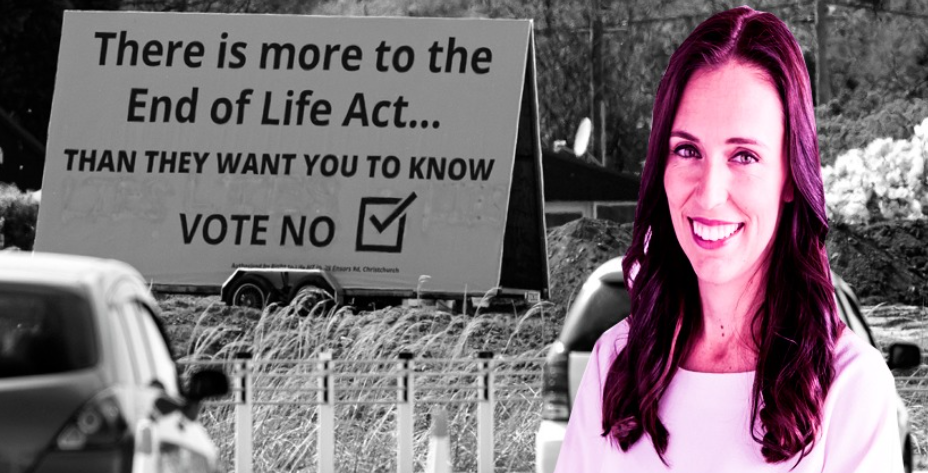
Why People Are Helping Tom Phillips Hide From The Police

When I was younger, I had a family member in the trade of supplying medicinal cannabis to people with various conditions, including Huntington’s disease. One day the New Zealand Police caught wind of his operation, so they came to his house, arrested him, and chucked him in a cage with rapists and murderers for nine months.

He came out damaged – not physically, but with a transparent case of C-PTSD. Evidently the nine months of constant physical threat caused serious trauma and brain damage. He came out paranoid, aggressive, bullying, abusive and impulsive, seeing threats and dangers everywhere. Another casualty of the War on Drugs.

Shortly afterwards (in 1990), I was watching the television news with some of my family when there was a report about a Police officer who had died falling from a helicopter sling during a cannabis recovery operation. Upon hearing this, my family cheered. Comments about how the only good pig was a dead one were made. A dead Police officer was a dead enemy.

Our family suffered greatly from the law against cannabis, and we are far from the only ones. This century alone, tens of thousands of Kiwi families have been destroyed by cannabis prohibition – destroyed by New Zealand Police officers who mindlessly enforced a cruel and unjust law written by scum politicians.

The net result is that everyone in my family – like tens of thousands of others – hates the Police. We don’t see them as heroes keeping the community safe, but rather as the footsoldiers of tyrannical filth – no different to the enforcers of every other despot.

Upon hearing such things, most mainstream Kiwis react with denial. My family must just be really fucked up, most people conclude. But mainstream Kiwis, secluded from the underbelly of society, don’t understand that there is a large segment of the New Zealand population who hate the Police and consider them the enemy of anyone who wants to live freely in peace.

Many such Kiwis are wondering how “fugitive” Tom Phillips has managed to evade the New Zealand Police for so long. The part of New Zealand in which Phillips is hiding is not so big, the Police have surveillance capacities that most of us couldn’t dream of, and Phillips has been featured on television several times. Why haven’t they got him yet?

Based on the fact that my own family has harboured people on the run from the law, I can make a good guess. In all likelihood, Phillips has an entire community of people looking out for him. They know that the Police are looking for Phillips – and that makes him the good guy, the same way that Sauron hunting for Frodo made Frodo the good guy.

Because law enforcement has always eagerly served tyrants, there have always been communities that served as Underground Railroads, helping to keep the victims of oppression free from “justice”. In principle, there is little fundamental difference between an Underground Railroad hiding escaped slaves from the authorities, and a hypothetical community of social outsiders hiding other people falsely accused of being criminals, whether political dissidents, spiritual sacrament users or Tom Phillips.

I can all but guarantee that there are at least a hundred people who know where Tom Phillips is, and they’re all keeping quiet because they hate the Police, knowing them to be agents of tyranny. Almost certainly those hundred personally know victims of previous human rights abuses carried out by New Zealand law enforcement. These people feel that by defying the Police, who are evil, they are doing good.

Understanding why Tom Phillips has so many supporters is a matter of understanding why the New Zealand political establishment has so many enemies. And this has a simple explanation: the New Zealand political establishment is evil, and has a history of causing suffering to innocent people without moral justification.

There is only one possible solution to this dilemma.

It’s not to reform the Police. The Police will always be the same: unthinking dogs obeying their masters. They’re incapable of being anything else. In practice, the Police are a tool, like an automatic rifle. Used wisely, they’re capable of preventing great harm. Used unwisely, they’re capable of inflicting great harm.

Therefore, our solution is to reform the political class, so that they do the right thing, and do not direct the Police to cause harm. All victimless crimes must be abolished. Those who made crimes out of victimless actions have to be punished. Those who waged the War on Drugs on the New Zealand people have to be tried with treason.

If we want the New Zealand Police to operate in harmony with the population they’re policing, and not as an America-style cudgel of the state with which the population are beaten into submission, then we need a new policing philosophy. Perhaps one in which individual Police officers were empowered to – or perhaps even obliged to – disobey unjust laws. This may be impossible without a New Zealand Constitution.

*

For more of VJM’s ideas, see his work on other platforms! https://linktr.ee/vjmpublishing
For even more of VJM’s ideas, buy one of his books! https://www.amazon.com/author/vincemcleod

*

If you enjoyed reading this essay/article, you can get a compilation of the Best VJMP Essays and Articles from 2021 from Amazon as a Kindle ebook or paperback. Compilations of the Best VJMP Essays and Articles of 2020, the Best VJMP Essays and Articles of 2019, the Best VJMP Essays and Articles of 2018 and the Best VJMP Essays and Articles of 2017 are also available.

*

If you would like to support our work in other ways, subscribe to our SubscribeStar fund, or make a donation to our Paypal! Even better, buy any one of our books!

Correlations With Special Voting Yes In The Euthanasia Referendum

VariableSpecial voting Yes for Euthanasia
Honours degree0.750
Master’s degree0.746
Working in professional, scientific or technical services0.743
Special voting Yes for cannabis0.742
Working as a professional0.700
Voting Greens 20200.697
Bachelor’s degree0.687
Personal income $70,000+0.685
No children0.663
Mean personal income0.654
Working in information media or telecommunications0.623
Following Judaism0.617
Doctorate0.613
Voting The Opportunities Party 20200.602
Working in financial or insurance services0.558
Median personal income0.553
Working in arts or recreation services0.544
Part-time study0.499
Aged 25-290.499
Working in rental, hiring or real estate services0.485
Voting Sustainable NZ 20200.469
Receiving income from interest, dividends, rent, other investments0.462
Aged 30-340.435
Aged 20-240.433
Percentage of electorate overseas-born0.397
Receiving income from self-employment or owning one’s own business0.390
Turnout rate0.366
Following Buddhism0.364
Employed full-time0.349
Own house in family trust0.338
Working in accommodation or food services0.314
Aged 35-390.309
Receiving income from Student Allowance0.298
Asian0.279
Working as a manager0.277
Receiving wage or salary0.275
Following no religion0.274
Aged 40-440.234
Never married0.234
Level 6 diploma0.232
Enrolled in an urban electorate0.220
Aged 45-490.205
Working in public administration or safety0.198
Employed part-time0.194
Voting ACT 20200.174
Voting National 20200.168
Following Hinduism0.165
Personal income $5,000-$10,0000.143
Following Spiritualism or a New Age religion0.136
Enrolled in a North Island electorate0.135
Voting TEA Party 20200.129
European0.125
Personal income $50,000-$70,0000.115
Neither ownership of house nor house in family trust0.113
Working as a clerical or administrative worker0.109
Currently unpartnered0.108
Working in education or training0.094
Following Islam0.086
Level 3 certificate0.070
Aged 50-540.069
Personal income < $5,0000.030
Percentage of voting age population enrolled0.025
Percentage of males in electorate0.019
Full-time study0.013
Working in wholesale trade0.004
One child0.000
Working as a sales worker-0.005
Working in administrative or support services-0.009
Voting Heartland NZ 2020-0.015
Percentage of females in electorate-0.019
Receiving no source of income-0.058
Not studying-0.061
Aged 85+-0.083
Voting Labour 2020-0.092
Aged 55-59-0.103
Married (not separated)-0.107
Currently partnered-0.108
Aged 70-74-0.118
Two children-0.123
Aged 65-69-0.132
Aged 75-79-0.149
Aged 60-64-0.149
Mean age-0.155
Voting NZ Outdoors Party 2020-0.160
Working in mining-0.166
Aged 80-84-0.178
Working in healthcare or social assistance-0.184
Unemployed-0.195
Receiving income from NZ Super or Veteran’s pension-0.210
Voting New Conservative 2020-0.212
Voting Social Credit 2020-0.214
Working in construction-0.214
Voting Maori Party 2020-0.215
Enrolled in a Maori electorate-0.217
Pacific Islander-0.221
Median age-0.221
Voting Vision NZ Party 2020-0.233
Working as a community or personal services worker-0.236
Working in electricity, gas, water or waste services-0.243
Working in retail trade-0.253
Working in other services-0.270
Own or part own house-0.273
Voting New Zealand First 2020-0.275
Voting ONE Party 2020-0.298
Voting Advance NZ 2020-0.308
Voting ALCP 2020-0.312
Following a Maori religion-0.315
Maori-0.322
Receiving income from Supported Living Payment-0.354
Working in agriculture, forestry or fishing-0.367
Receiving income from Sole Parent Support-0.373
Following Christianity-0.394
Not in the labour force-0.394
Percentage of electorate New Zealand-born-0.397
Receiving income from Jobseeker Support-0.398
Divorced/separated/widowed-0.414
Working in transport, postal or warehousing-0.424
Working as a technician or trades worker-0.437
Three children-0.493
Receiving income from ACC or private work insurance-0.521
Personal income $20,000-$30,000-0.527
Personal income $10,000-$20,000-0.537
Level 5 diploma-0.541
Six or more children-0.555
Object to answering how many children-0.561
Level 2 certificate-0.572
Level 1 certificate-0.587
Personal income $30,000-$50,000-0.597
Level 4 certificate-0.597
Working as a machinery operator or driver-0.617
Working as a labourer-0.635
Five children-0.647
Working in manufacturing-0.655
Four children-0.667
No NZQA qualifications-0.727

*

This table is an excerpt from the upcoming 3rd Edition of Understanding New Zealand, by Dan McGlashan and published by VJM Publishing. Understanding New Zealand is the comprehensive guide to the demographics and voting patterns of the New Zealand people.