

Elemental Illusions And Elemental Delusions

1. The Prime Illusion is to believe that the physical world is the prima materia.

2. The Prime Delusion is to believe that one’s own consciousness is separate and distinct from all other consciousnesses.

3. The Prime Illusion belongs in the same category as other illusions such as that the Sun rotates around the Earth or that the Earth is flat.

4. Just because the physical world looks real doesn’t mean that it’s the prima materia. This status is reserved for consciousness.

5. The Elementalist laughs at people who believe the physical world is the prima materia, especially if this belief causes them to fear death.

6. Such people are as laughable as those afraid to travel in a boat lest they fall of the edge of the Earth.

7. The Prime Illusion is capable of causing horrific suffering to oneself.

8. The Prime Delusion belongs in the same category as other delusions such as that the existence of the divine cannot be proven or demonstrated.

9. Just because other consciousnesses cannot be proven to exist by empirical means doesn’t mean that their existence is less certain.

10. The Elementalist doesn’t laugh at people who believe that their consciousness is separate and distinct from all other consciousnesses. Such people are extremely dangerous.

11. The Prime Delusion is capable of causing horrific suffering to others.

12. A person is anxious if they suffer from the Prime Illusion to a minor extent. They are insane if they suffer from the Prime Illusion to a major extent.

13. A person is narcissistic if they suffer from the Prime Delusion to a minor extent. They are psychopathic if they suffer from the Prime Delusion to a major extent.

14. The purpose of spiritual practice is to overcome such illusions and delusions.

15. A person suffering from either the Prime Illusion or the Prime Delusion can be said to be unenlightened.

16. The less enlightened a time, a place, or a group of people, the more prevalent the Prime Illusion and the Prime Delusion will be.

17. The Prime Illusion and the Prime Delusion have so much power because they cannot be disproven by appeal to empirical data.

18. The Prime Illusion and the Prime Delusion have to be transcended on a spiritual level. This is achieved by raising one’s frequency high enough to be immune to illusions and delusions.

19. Full belief in either the Prime Illusion or the Prime Delusion will prevent a consciousness from advancing more than halfway up the Great Masculine Axis.

20. Partial belief in either the Prime Illusion or the Prime Delusion will prevent a consciousness from reaching the Summer Pole.

21. Compassion, when exercised on a spiritual level, is mostly a matter of helping people overcome the Prime Illusion and the Prime Delusion.

22. Elementalism, in that it provides the cure to the Prime Illusion and the Prime Delusion, is a path away from suffering.

23. Identifying with the body intensifies both the Prime Illusion and the Prime Delusion.

24. Identifying with the consciousness weakens both the Prime Illusion and the Prime Delusion.

*

This chapter is an excerpt from Elemental Elementalism, the foundational scripture of the new religion of the Age of Aquarius.

*

If you enjoyed reading this essay/article, you can get a compilation of the Best VJMP Essays and Articles of 2020 from Amazon for Kindle or Amazon for CreateSpace (for international readers), or TradeMe (for Kiwis). A compilation of the Best VJMP Essays and Articles of 2019, the Best VJMP Essays and Articles of 2018 and the Best VJMP Essays and Articles of 2017 are also available.

*

If you would like to support our work in other ways, please consider subscribing to our SubscribeStar fund. Even better, buy any one of our books!
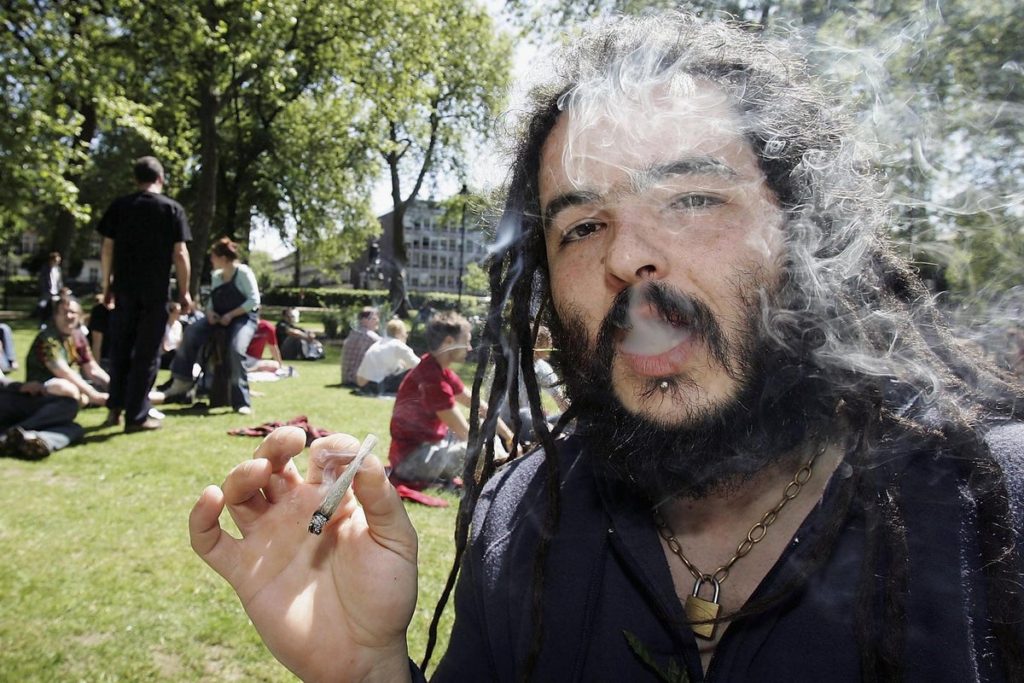
Terrorism Works! For Proof, Compare The Treatment Of Cannabis Users To The Treatment of Muslims

The ruling classes of the West make a strenuous effort to deny the effectiveness of terrorism. They make a big show of not negotiating with terrorists, and claim always that their calculations are not influenced by terrorist atrocities. Their actions, however, demonstrate the exact opposite. The sad fact is that terrorism does work, and proof of this is all around us.

Everyone knows that cannabis users are peaceful people. The typical cannabis user is some kind of hippy who considers violence to be the last resort of the bestial. Violence at music festivals where people are smoking cannabis is almost unheard of, and when it happens it’s usually because someone brought alcohol or meth in.

Unfortunately, this peacefulness doesn’t work out very well for the cannabis users. The Clay Tenet of anarcho-homicidalism holds that violence is the basis of self-defence, and the unwillingness of the average cannabis user to get violent has led to a failure to defend themselves against abuse.

Governments all around the world are happy to abuse cannabis users for the flimsiest of reasons. In New Zealand, a referendum where 50.7% of the respondents voted to lock cannabis users in cages was taken as sufficient justification to do exactly that. Governments everywhere know that they can abuse peaceful people as much as they like.

This willingness to abuse cannabis users is not limited to governments. The corporate world is also happy to pile in. The New Zealand Herald, most conspicuously, took advertising money from Family First to spread malicious lies about cannabis users. Many other mainstream media outlets gleefully ran advertisements calling for the continued persecution of cannabis users, even when those advertisements were clearly lying.

Contrast the treatment of Kiwi cannabis users with the treatment of Muslims.

The Labour Party falls over itself to appease Muslims. After the Christchurch mosque shootings, the Sixth Labour Government grovelled profusely to the resident Muslim community. Jacinda Ardern even went as far as appearing in an Islamic headdress, even though a large proportion of Labour voters are from demographics hated by Muslims, such as homosexuals and professional women.

Labour has now gone so far to appease Muslims that it’s willing to destroy the most precious aspect of Kiwi culture: free speech. The latest authoritarian proposal is to put Kiwis in cages for up to three years for “offensive speech”, where the definition of ‘offensive’ is left wide open to interpretation by the fashions of the day.

This proposal has been pushed by prominent Muslims such as Anjum Rahman, who has long campaigned for the abolition of free speech in New Zealand. Muslims have pushed similar laws in other Western countries, following their religious imperative to eradicate the local cultures of every place they conquer. The most notable example is Scotland, where it has now been made illegal to speak ill of Islam in one’s own private dwelling.

Why would New Zealand institutions such as the Government and the mainstream media treat a foreign cult of hate with more respect and decency than their own cannabis-using kin? It’s very difficult to imagine the Sixth Labour Government passing a law affecting Muslims without consulting them, or the New Zealand Herald taking money to advertise an anti-Muslim political position.

So why do people grovel to Muslims yet put the boot into cannabis users at the first opportunity?

The simple answer is that people are cowards, especially people with ambitions to be seen as moral authorities by the wider public. As Christopher Ryan’s character put it in The Young Ones episode Cash: “These people respect strength.” Here, strength is defined in the basest possible terms, as the ability and will to cause physical suffering to one’s enemies.

The 1,400-year trail of corpses and carnage that Muslims have left throughout the world is enough to make clear to all that opposing their will comes with an implicit threat of violence. Many tens of millions have been faced with the choice of either submitting to Islam or having their throats slit, and the descendants of those who chose to submit now comprise some 25% of the world’s population.

That proportion of the 25% who live in Western countries have not been shy about using violence to intimidate their hosts.

The last six years in Europe have given us the November 2015 Paris attacks (130 killed), the July 2016 Nice truck attack (86 killed), the June 2016 Atatürk Airport attack (45 killed), the March 2016 Brussels bombings (32 killed), and the May 2017 Manchester Arena bombing (22 killed), among dozens of smaller atrocities. None have happened in New Zealand yet, but every intelligent person can see them coming.

The Labour Party knows that an unwillingness to institute hate speech laws will anger Muslims. They also know that there is a fair chance, if Labour does anger Muslims, that those Muslims will lash out with violence. As such, Labour has made a show of submitting to them.

They have no such concerns about cannabis users, who are peaceful people.

Had cannabis users in Europe murdered thousands of prohibitionists over the past decade, the cannabis laws in New Zealand would be entirely different today. No-one would have dared to come out opposing cannabis law reform in last year’s referendum, and without visible opposition the reform side would have won heavily.

The grim reality is that terrorism works, because it makes other people become compliant to your will out of fear of being targeted next.

The solution, however, is not for cannabis users to start committing acts of terror. The solution is for our legal system to recognise principle ahead of expediency. To achieve this, it has to be torn down and reformed based on a coherent ideology such as the Sevenfold Conception of Inherent Human Rights. With such a solid philosophical basis, our legal system can definitively put right ahead of might and thereby deter terrorism instead of encourage it.

*

If you enjoyed reading this essay/article, you can get a compilation of the Best VJMP Essays and Articles of 2019 from Amazon for Kindle or Amazon for CreateSpace (for international readers), or TradeMe (for Kiwis). A compilation of the Best VJMP Essays and Articles of 2018 and the Best VJMP Essays and Articles of 2017 are also available.

*

If you would like to support our work in other ways, please consider subscribing to our SubscribeStar fund. Even better, buy any one of our books!

Tobacco Prohibition Will Fail Like Alcohol And Cannabis Prohibition Failed

The New Zealand Government announced yesterday that they intend to prohibit tobacco. Being the mealy-mouthed, gutless scum that they are, they didn’t outright state this. Rather, they obfuscated the fact that tobacco use will effectively become illegal by introducing new regulations that make it technically still legal, but practically all but impossible to get hold of.

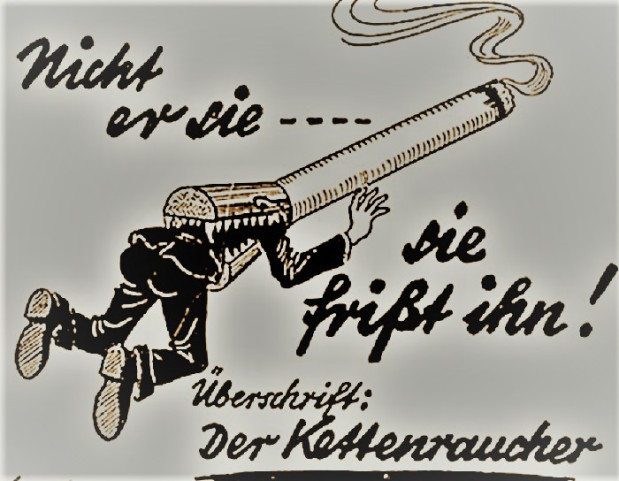
The new regulations will make New Zealand one of the most stringently anti-tobacco jurisdictions in the world. In becoming so, New Zealand will pick up the baton once held by Nazi Germany, which was the first country to widely persecute tobacco users on the grounds of public health. The Sixth Labour Government, also being authoritarian socialists, have copied the Nazi idea of prohibiting tobacco out of supposed concern for the public health.

The reality is that tobacco prohibition will be an expensive and pointless failure. This we can say with confidence, because alcohol and cannabis prohibition were also expensive and pointless failures. So why is Labour going through with a policy that obviously won’t work?

As the great historian Basil Henry Liddell Hart wrote in Why Don’t We Learn from History?, one of the main reasons why politicians keep making mistakes is that they keep denying reality. Politicians denied that alcohol played a role in good mental health by facilitating sociability. They also denied that cannabis was a psychiatric medicine that alleviated anxiety and depression. Both of these denials of reality, motivated by puritanical authoritarianism, led to enormous suffering.

The fact is that tobacco is an excellent medicine for Post-Traumatic Stress Disorder. This reality is denied by today’s politicians, who parrot the addiction myth promulgated by puritanical authoritarians. But it’s well understood by the many people who use tobacco to treat the suffering associated with conditions like PTSD, C-PTSD and schizophrenia. It had been understood by most people for centuries, until the addiction narrative took root.

What people who use tobacco to treat the symptoms of psychiatric conditions understand is that prohibition simply doesn’t work.

It didn’t work for alcohol – alcohol prohibition simply created a black market that empowered criminal empires and led to countless deaths. It didn’t work for cannabis – cannabis prohibition simply created a black market that empowered criminal empires and led to countless deaths. It won’t work for tobacco either.

There is already a black market for tobacco in New Zealand, and it’s estimated to comprise 11.5% of the size of the total market. That hasn’t yet led to criminal empires and countless deaths – but it will. This is inevitable.

By making tobacco a high-value item, instead of the low-value item it is when freely traded on the legal market, the Government has created an incentive for the black market to supply it. This means, instead of being mostly sold by retailers like dairies, criminals will move in and dominate the tobacco trade. The predictable consequence of this is more violent crime.

Another predictable consequence of prohibiting tobacco is that the suicide rate will skyrocket. Although it’s denied by the political class, tobacco is a mental health medicine, and many New Zealanders are only just hanging in there thanks to the solace it offers. A ban on tobacco will force these already mentally vulnerable people to go cold turkey. This will make them act impulsively and irrationally.

Yet another predictable consequence is that future tourist receipts will plummet. Why would a tobacco user choose to vacation in a country where tobacco is prohibited? They’d rather go almost anywhere else. Tourists rarely visit countries that have alcohol prohibition, because those places are horrible, soulless hellholes. Unfortunately for us, that’s how many tourists will now perceive New Zealand.

It might seem incredible that the Sixth Labour Government came to power in 2017 with the promise to stop persecuting medicinal cannabis users, but instead expanded the War on Drugs to include tobacco.

The simple explanation is that the Sixth Labour Government are authoritarian. This is why they refuse to countenance returning freedoms to the New Zealand people, but are quick to take freedoms away. They came to power in 2017 promising to allow Kiwis the right to use medicinal cannabis, but instead took away our firearms rights, our free assembly rights and now our free speech rights and our rights to use tobacco medicinally.

As George Orwell wrote, the future is a boot stomping on a human face, forever. New Zealand voters in 2017 might never have guessed that the boot would be worn by a breeding-age woman, but that’s the sort of surprise that the ruling class likes to throw the people’s way to keep us off-balance.

Understanding the Sixth Labour Government is as simple as understanding authoritarian socialists stomping down the people and the brainless NPCs who applaud it. This week’s announcement of the intention to prohibit tobacco will achieve no other purpose than to show the New Zealand people who their masters are. It will cause more suffering than it alleviates.

*

If you enjoyed reading this essay/article, you can get a compilation of the Best VJMP Essays and Articles of 2019 from Amazon for Kindle or Amazon for CreateSpace (for international readers), or TradeMe (for Kiwis). A compilation of the Best VJMP Essays and Articles of 2018 and the Best VJMP Essays and Articles of 2017 are also available.

*

If you would like to support our work in other ways, please consider subscribing to our SubscribeStar fund. Even better, buy any one of our books!

How Long Until Wages Catch Up To The Housebuying Power Of 1992?

The long-term strategy for building economic wealth appears to be holding house prices steady while waiting for wages to catch up. This article does the maths to answer one question: how long until the average wage has the same housebuying power of the average wage in 1992?

In 1992, the average New Zealand house price was $105,000. The average wage at that time was almost $15 per hour. This means that most Kiwis found themselves able to buy a house after 7,000 hours of labour.

By 2021, the average New Zealand house price has climbed to some $750,000, while the average wage languishes at around $34 an hour. This means that most Kiwis today are looking at putting in 22,000 hours of labour before they can get to the position of homeownership.

Economists predict that the average New Zealand house price will increase by double-digit percentages in 2021. 5% increases are expected for the two years after that, up until March 2024, which is as far ahead as anyone responsible will try to predict.

Let’s make two assumptions: firstly, that these forecasts are broadly correct; secondly, that house prices stop increasing after March 2024, allowing wages to catch up.

This suggests that house prices will top out at a national average of about $910,000 ($750,000 x 1.10 x 1.05 x 1.05). This assumes that they increase by around 10% in the year to March 2022, and then 5% for the two years after that, before remaining stable thereafter. The reality is, of course, anyone’s guess, but let’s say for simplicity’s sake that house prices reach $910,000 by March 2024 and then stay there in perpetuity.

To buy a $910,000 house with 7,000 hours of labour, a worker would have to be getting paid $130 per hour. Assuming that all other things (labour share, taxes, rents, non-rent living costs) are equal, $130/hr is what the average wage would have to be for the average worker to have the same housebuying power as the average worker in 1992.

As mentioned above, the average wage in New Zealand is around $34 right now. This means that it has to increase 3.82 times for the average worker to have the same housebuying power that the average worker had in 1992 – without house prices increasing beyond March 2024.

Wage growth over the past 28 years in New Zealand, from just under $15 an hour in 1992 to around $34 an hour at the end of 2020, has run at about 3% per annum.

If we assume future wage increases of 3% per annum, and no further house price increases beyond March 2024, then we will have to wait around 48 years for the average wage to catch up to the housebuying power that the average wage had in 1992.

In reality, it’s unlikely that house prices will remain exactly the same for the next 48 years. When the Boomers start dying off en masse, beginning in about 15 years, the demand for housing will rapidly fall all across the Western World. At that point, house prices could go in any direction depending on how much immigration takes place.

Of course, if house prices continue to increase beyond March 2024, then wages will simply never catch up. The West will become more and more verticalised until we effectively regress into a feudal-style economy where 99% of people are renters for life.

What can be said with confidence, however, is that it will take around half a century, at current rates, for wages to catch up to the point where the average worker has the same housebuying power they had in 1992. And that is even if one assumes that house prices don’t continue to increase.

*

If you enjoyed reading this article, you can get a compilation of the Best VJMP Essays and Articles of 2019 from Amazon for Kindle or Amazon for CreateSpace (for international readers), or TradeMe (for Kiwis). A compilation of the Best VJMP Essays and Articles of 2018 and the Best VJMP Essays and Articles of 2017 are also available.

*

If you would like to support our work in other ways, please consider subscribing to our SubscribeStar fund. Even better, buy any one of our books!