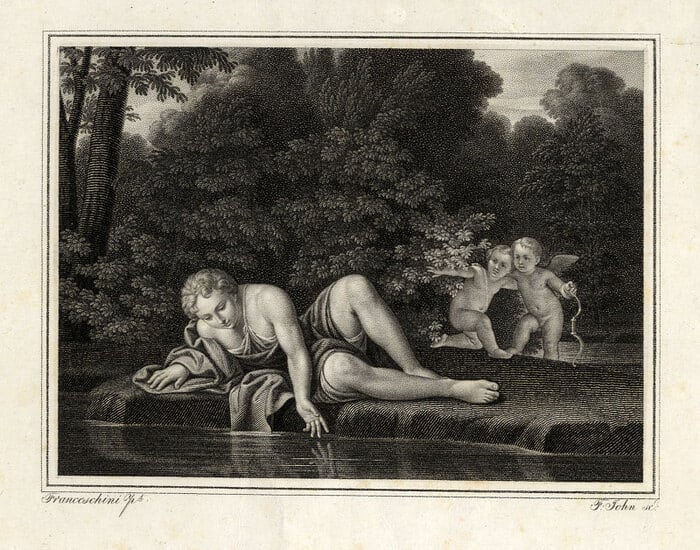
Thoughts On Suicide From Someone Who Hasn’t Done It Yet

I have endured a lot of suicidal ideation in my life. As I have written and spoken about at length previously, I have a traumatic stress disorder that has damaged my nervous system. This has led to constant hyperarousal of the hypothalamic-pituitary-adrenal axis, which is deeply unpleasant to experience. Symptoms of this include nausea, insomnia, anxiety and depression. This has involved a lot of vomiting, a lot of migraines, and a lot of deep breathing until the pain has passed. Although I strive always to say Yes to life, and although I have never made a suicide attempt, I am very tired and will be relieved when this life is over.

This essay has been inspired by the passing of Shane Christie, former Tasman Makos captain, who was well-known in Nelson. I now know a handful of people who have died by suicide, and many others who have made a genuine attempt to die. Many VJMP readers will know at least one suicide victim. The New Zealand nation suffers some 600 suicides every year. Despite our familiarity with the subject, it’s not well understood.

The first thing that people ought to know about suicide is that it’s done because people want the suffering to end.

I was about 13 the first time I felt true suicidal ideation. I had been having a bad time as a result of my mother getting institutionalised for an acute psychotic episode (again). This was the first time it occurred to me that death would solve my problems (I did not believe in reincarnation at this time). I was walking through town, and I realised that I could permanently liberate myself from physical suffering by throwing myself under a truck.

Since then, I have always suffered suicidal ideation to some degree or other, although much less in recent years. It was worst at particular times. 2003, when I realised the West was committing suicide; 2006, when my marriage fell apart; 2013/14, when my grandparents were dying. At these times, the thought of anything in the future evoked the deepest dread. The future itself seemed to be an infinitude of misery, inescapable, an ocean in which I had already drowned and sunk to the bottom. Often I would walk across a bridge and wonder if it could really be so painful to dive head-first onto the road below.

These are typical thoughts for a person tempted by suicide.

I have kept going for mostly two reasons – one, I received unconditional love from my grandparents, which created a large part of me, deep inside, that thought the world was maybe a sort of okay place, despite the bountiful misery elsewhere; two, I was lucky enough to be born really smart and I wanted to see where this could lead. It seemed like an egregious waste to throw that away. In recent years there has been a third reason: the Elementalist imperative to live in a manner that entertains the gods, which involves overcoming suicidal ideation.

People who have more-or-less decent lives usually don’t appreciate how unwelcoming life is for those at the bottom of society. If you were abused as a child, you learn that the world would be better off without your presence. If you were abandoned by one or both parents (and over 20% of New Zealand children grow up without a father in the home), you learn as a child that the world doesn’t want you. Add on top of this the confusion that comes from sexual abuse (this didn’t happen to me, but it happens to many), and it’s understandable why so many make the decision to exit.

I actually hope to die by suicide, which might sound strange. But this is only because I would like to go out on my own terms, mentally prepared. The way Hunter S Thompson did it – just as the decline into old age began – strikes me as ideal (this is still at least 25 years away). Dying in such a manner would not necessarily be a tragedy.

In my religion, Elementalism, there are tragic and understandable suicides. An understandable suicide is when there was, rationally considered, no quality of life remaining. A typical example is an elderly person with terminal cancer. Only sadists would demand that such a person carry on when they don’t want to.

A tragic suicide is when there was significant quality of life remaining. Many tragic suicides are when people surrendered to a bout of depression. These are cases when a person might have gone on to live a decent life, but succumbed in the moment to what should have been a temporary impulse. These cases are truly tragic because of all the lost opportunity they represent.

It’s important to me to reduce the amount of tragic suicides. I support this in my personal life by keeping a friendly ear open for depressed friends and family. I support this in my civic life by advocating for investment in mental health care, particularly for treating depression. Many people don’t realise that a large proportion of suicides are effectively depression deaths. It’s also not well known that depression is usually treatable to a major extent.

The biggest problem with depression is that, when you have it, you don’t think rationally. You become deluded. It’s entirely possible, when depressed, to think that everyone hates you and wants the worst for you. In reality, even if you have a lot of enemies, you don’t have that many. But when depressed, you can feel hate oozing out of every face you see. It’s easy to convince yourself that you’re not wanted on Earth.

Another big problem with depression is that if you ask your doctor about it they will throw you on antidepressants and tell you to get back to work. These antidepressants probably won’t be very effective and will probably come with awful side effects. The doctor won’t do the most helpful thing, which is explain to you what depression is and why you have it. So you will have to learn about it from somewhere else.

What I plan to do is to keep informing people about the reality of depression in particular and of mental illness in general. I feel like my own life has been saved thanks to being able to access useful and accurate information about the condition. I feel great joy at the thought I could save another life by popularising such information.

*

For more of VJM’s ideas, see his work on other platforms!
For even more of VJM’s ideas, buy one of his books!

*

If you enjoyed reading this piece, buy a compilation of our best pieces from previous years!

Best VJMP Essays and Articles of 2023
Best VJMP Essays and Articles of 2022
Best VJMP Essays and Articles of 2021
Best VJMP Essays and Articles of 2020
Best VJMP Essays and Articles of 2019
Best VJMP Essays and Articles of 2018
Best VJMP Essays and Articles of 2017

*

If you would like to support our work in other ways, make a donation to our Paypal! Even better, buy any one of our books!
Coping With The Transition To A Low-Trust Society

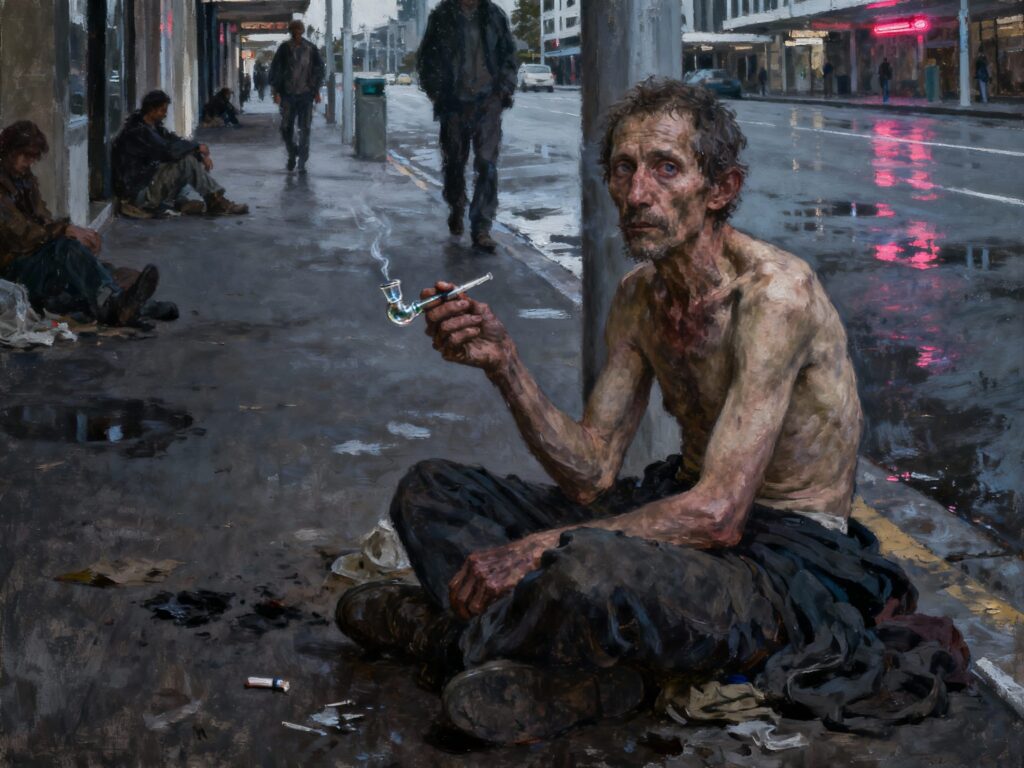
Everyone with any sense can feel that society is breaking down. The general atmosphere is much less pleasant than it was ten, even five years ago: more anger, depression, madness. Less laughter is heard. All the economic news is bad, and people no longer speak of the future as a friend, but as an enemy collecting a debt.

There is precedent for understanding what is happening: broken families.

There are many broken families in our society. These families are broken societies in microcosm. It’s common for parents in broken families to be negligent or abusive, even to have abandoned their own children. This is closely analogous to how governments work in broken societies. What the New Zealand Government did to its own people with Ruthanasia differs only in scale from what a parent does when it abandons its family, and Ruthanasia was only the worst of many examples of governmental neglect. More are to come.

Broken families produce low-trust people. Trust is essentially a person’s estimation of the probability of encountering honourable behaviour. Neglecting one’s children is a highly dishonourable act, a total failure to be an adult. A child so neglected will very likely grow up to be a low-trust adult. They will seldom punish dishonourable conduct, having normalised it, and they will seldom reward honourable conduct, believing it to be an aberration.

Broken societies are full of low-trust people. They expect the worst from others. As such, they’re not willing to give any “benefit of the doubt”. This makes them generally unpleasant to be around. But, like broken families, they aren’t natural. They only exist when an authority figure refuses to do their job properly. This is why low-trust societies are full of rebels and revolutionaries. As Western society becomes lower and lower trust, we can expect more dissidents of all kinds, especially violent ones. As low-trust neighbourhoods produce gang members, low-trust societies produce revolutionaries and tyrants.

A high-trust environment is honour based. Respect is apportioned on the basis of honourable conduct. People’s reputations for past honourable conduct determine the extent to which they are respected. Sophocles once said “Better to fail with honour than succeed by fraud”. In high-trust environments, a person can expect to lose but still be respected.

A low-trust environment is fear based. Respect is apportioned on the basis of malice. Only people malicious enough to do harm are respected; everyone else is exploited. In a low-trust environment, exploiting people is seen as intelligent. A caring person is just a target. Kind people are stupid, because if they were smart they would have perceived that they were operating in a low-trust environment. Low-trust people don’t view the kind as the freemasonry of society (which they are in high-trust environments). They view the kind as wolves would view a lamb.

For instance, people in Thailand have different attitudes to theft to people in Singapore. In Thailand, if you leave your property unguarded, the assumption is that you’re too stupid to deserve to own that property, and therefore stealing it is okay. The logic is similar in gang environments: if you’re too weak to defend your property through fighting for it, them you’re too weak to deserve to own that property, and therefore stealing it is okay. This kind of logic will become more common in the future.

In a low-trust environment, you exploit people up until the point where they push back. The low-trust presumption is that they would do they same to you if they could.

In a low-trust environment, you expect people to be lying. Speech is not assumed to be factual: people are assumed to be “talking shit” unless proven otherwise.

Low-trust thinking and short-term thinking overlap a great deal. As such, a high time preference is another psychological weakness we will have to contend with in the future. People in low-trust families don’t make rational long-term decisions. Neither do governments in low-trust societies. Probably Western governments will torch their economies in coming decades to keep Boomers in comfort. What comes after then will be a truly low-trust environment.

Coping with low-trust environments is primarily about lowering expectations. Lose the expectation of honourable conduct. Lose the expectation that your property rights will be respected. This means to become more cynical, paranoid and suspicious, which is a shame. But it’s a reasonable reaction to the way society is going. High-trust people are going to get destroyed.

Also important in the transition to a low-trust environment is learning to control oneself (to some extent this is downstream of lowering expectations). Living in a low-trust environment is stressful. One’s threat detection mechanisms are often running at full power. Adapting to a low-trust environment means suppressing emotion, both in range and intensity. Unfortunately this means that many people will become sadistic, even psychopathic. But many will have to choose between honour or survival in coming years.

Because low-trust environments are fear based, overcoming one’s fear of death will gain you respect. Thus, a genuinely spiritual attitude will gain you respect. People in low-trust environments have only contempt for the superficially spiritual. But if a person’s spirituality enables them to endure physical deprivations, stresses, threats and intimidation, they will do much better in low-trust environments than non-spiritual people.

*

For more of VJM’s ideas, see his work on other platforms!
For even more of VJM’s ideas, buy one of his books!

*

If you enjoyed reading this piece, buy a compilation of our best pieces from previous years!

Best VJMP Essays and Articles of 2023
Best VJMP Essays and Articles of 2022
Best VJMP Essays and Articles of 2021
Best VJMP Essays and Articles of 2020
Best VJMP Essays and Articles of 2019
Best VJMP Essays and Articles of 2018
Best VJMP Essays and Articles of 2017

*

If you would like to support our work in other ways, make a donation to our Paypal! Even better, buy any one of our books!
The Long Walk Out Of The Desert

Of all the trials and travails that the West has suffered over the past 120 years, one of the most arduous remains. Although the West went through a renaissance of its own greatness some centuries ago, this was mostly limited to scientific and artistic achievements. There is still a Major Renaissance to come. The first stage of this is to overcome Abrahamism in all aspects: the Long Walk out of the Desert.

The phrase ‘Long Walk out of the Desert’ was coined by an X poster known as MarbleBust. In this context, “The Desert” refers to the desert of Abrahamic religion, where white people have been wandering, lost, for many centuries.

Desert life is infamously cheap. The history of the Near and Middle East is the history of one massacre after another. Out-group antipathy has never in human history reached such extremes as in these desert cultures. And their religions reflect this: they are cruel, deceitful, treacherous, monstrous. All of Judaism, Christianity and Islam are supremacist in nature, considering outsiders somewhere between filth and cattle.

Whether owing to exaggerated and prolonged degeneracy, unfortunate chance historical events, a counter-reaction to the Roman Empire, an unusual gullibility on the part of the Europeans or perhaps that we are now in the Kali Yuga, the desert religions are predominant in Europe today. This puts us in a situation where, in order for us to return to spiritual narratives suited for us, we must abandon those that have been pushed on us for centuries. We must take that Long Walk out of the Desert. That requires a solid grounding in our history.

The desert religions conquered the West in stages.

The first stage was the decision of Constantine in 313 CE, with the Edict of Milan, to accept Christianity as a legitimate religion. Up until then, it had been recognised by the Romans for what it was: yet another Jewish slave cult based around some egomaniac’s claims to be the prophecised Messiah. They treated it as they would have done any other degeneracy. But with the Edict of Milan, Christianity started to be treated with respect by European rulers.

The second stage was the decision of Theodosius in 380 CE, with the Edict of Thessalonica, to make Christianity the official religion of the Roman Empire. This was the date upon which Europeans abandoned the religions of Europe for the religions of the desert. If there was a Long Walk into the Desert, this was when it began.

The third stage was when Theodosius, in 391 CE, outlawed the practice of European religion. This was mostly due to pressure from Christians obeying passages such as Exodus 22:20, which calls for the destruction of worshippers of gods other than Yahweh (Yahweh is a jealous god). From this moment onwards, the European religions were in the descendancy.

The fourth stage was the destruction of the Eleusinian Mysteries and the murder of its priests in 396 CE, under the Christian and Gothic king Alaric. The mystery school at Eleusis was one of the major reasons for the greatness of Greco-Roman culture: it was famous for liberating its participants from fear of death, which allowed them to live heroic lives from then on. With these mysteries destroyed, Europeans entered an age of fear and superstition involving subjugation to the desert religions. Thus, we have been “in the desert” for over 1,600 years already.

The fifth stage was the progressive Christianisation of Northern Europe, with events such as the Massacre of Verden (in 782 CE) and the Northern Crusades. The Albigensian Crusade could perhaps be included here. These events saw the murder of great numbers of people for refusing to abandon the European religions.

After Christians had hunted down the last remaining followers of the European religions to the remotest islands and forests, Christianity reached the apogee of its power. But because Christianity was not natural to us, and was forced on us, as soon as it weakened it began to die. European culture returned with the Renaissance, and, although Christians killed as many as they could to keep it down, it flourished.

Some 800 years after the start of the Renaissance, few Westerners are still Christian. But many Christian habits still linger, and many Christian assumptions are still taken for granted, especially moral assumptions. These lingering artefacts continue to lower the quality of life all over the West.

The Long Walk out of the Desert refers to the replacement of all Abrahamic morality and thought with a morality and thought appropriate to Westerners today.

We must stop seeing Jews as people who brought us spiritual gifts, and start seeing them as spiritual enslavers. Abrahamism did not bring us liberation from spiritual ignorance: we already had Plato. Neither did it bring us sophisticated ethics or metaphysics: we already had Aristotle. What it did bring us was a replacement of our own native culture and moral philosophy with one that put Jews, and Jewish culture, front and centre.

We must also realise that Abrahamism was forced on our ancestors through violence. The narrative that our ancestors realised European religions were for savages, and switched them out for a Jewish religion based around a dead rabbi, is nonsense. Our ancestors were murdered by Christian invaders and forced to submit, in much the same way that people in Africa, the Middle East and Asia are forced by Islamic invaders to submit to the god of Abraham today.

Perhaps most importantly, we must stop seeing Christian morality as an advance over Greco-Roman morality, and see it for what it is: a massive retrograde step. It did not end human sacrifice. It did not end slavery. It did not unite us in a vision of something higher. What it did do was deliver us into mindless superstition and a thousand-year Dark Age. It switched the master morality that had brought us so much glory for a wretched slave morality that brought us a millennium of stagnation.

Part of this moral revaluation is to no longer view passivity, tolerance and weakness as virtues. This does not, in any sense, mean that we have to swing to the exact opposite of those supposed virtues like Muslims. The correct approach is as Aristotle recommended in The Nicomachean Ethics: to find the correct balance between too much and too little. The right amount of assertiveness, instead of all or nothing like a Semite.

This will require that we get over our squeamishness about e.g. the death penalty, drugs and border enforcement. Christian “sanctity of life” must be replaced with an understanding that life, although precious, is sometimes not worth living. Christian hysteria about pharmakeia must be abolished. National borders must be enforced again, no matter what the Catholic Pope says about Rabbi Yeshua having been a refugee. We have to do all of these things to save ourselves.

The Long Walk out of the Desert, and the desert religions, will be complete when we have constructed a theological, philosophical, moral and ethical system that can guide us through this century and beyond.

*

For more of VJM’s ideas, see his work on other platforms!
For even more of VJM’s ideas, buy one of his books!

*

If you enjoyed reading this piece, buy a compilation of our best pieces from previous years!

Best VJMP Essays and Articles of 2023
Best VJMP Essays and Articles of 2022
Best VJMP Essays and Articles of 2021
Best VJMP Essays and Articles of 2020
Best VJMP Essays and Articles of 2019
Best VJMP Essays and Articles of 2018
Best VJMP Essays and Articles of 2017

*

If you would like to support our work in other ways, make a donation to our Paypal! Even better, buy any one of our books!
Clinical Narcissism: Think Lightly Of Yourself And Deeply Of The World

Guest Post by Thomas S.

According to ancient Greek mythology, Narcissus was a youth of incomparable beauty, born from the coupling of the river deity Cephissus and a nymph named Liriope. Such was his beauty that bewildered and broke the hearts of all those who chanced to see him, that the blind prophet Tiresias cautioned Liriope that her son would live a long life, so long as he never came to know himself.

Followed by wanton eyes and beseeched by the lusts and longings of hopeful lovers, Narcissus would reject all advances made upon him. This eventually led to a curse by Ameinias, who upon rejection was handed a sword with which to commit suicide, but not before appealing to Nemesis, the goddess of revenge, that Narcissus would never be able to obtain the one he would one day fall in love with.

It was after losing his way while out hunting in the forest one day, that this curse of Ameinias, as well as the prophecy of Tiresias, would eventually bear fruit. Tired and thirsty, Narcissus happened upon a pool of water, which he stooped over to drink from.

Meanwhile, a mountain nymph named Echo was weeping nearby, having been the most recent suitress to have been rejected by Narcissus after having fallen in love with his beauty and made shy advances upon him.

Interestingly, the nymph, who had been cursed by Hera, the Queen of Heaven, for having deliberately distracted her with idle gossip in order to prevent her from discovering the affairs of her husband Zeus, was only able to utter the last few words of another, and was otherwise deprived of the ability of speech.

Unable to bear the torment of rejection by Narcissus, the mountain nymph was consumed by grief and her physical form melted away, leaving nothing more than a whisper, capable only of mimicking the words spoken by another, as is our experience of an echo still to this day.

While Echo’s voice trailed away, Narcissus scooped water from the pool in order to quench his thirst. As he did so however, a charming face below the shimmering waters caught his eye and soon became the object of his own heart’s desire – an object, which as per the curse of Ameinian, would remain unobtainable to him.

Forgetting his thirst, Narcissus reached toward his own reflection, while his reflection reached upward in return, only to be dispersed by the splashing until the stillness of the waters resumed between each failed attempt to clasp his beloved’s hand.

Eventually, Narcissus gave up his life due to the torment of being unable to attain himself, and was transformed into the daffodil flower.

Like many Greek myths which are etiological in nature, the story of Narcissus offers an explanation for why observable phenomena within our human experience, have come to be.

Clinical Narcissism

In the modern day, this same phenomenon of excessive self adoration, which was also evident in ancient times and thus deserving of an origin story, has come to be known as the narcissistic personality disorder, which can also sometimes be regarded as being pathological in nature.

While a high degree of variability of character is evident in those diagnosed with the condition, such as being either socially reclusive or highly extroverted, self-loathing or self aggrandising, having a history on the right or the wrong side of the law, and demonstrating all manner of success or failure in the professional field, narcissism can be problematic to diagnose clinically.

Additionally, there are specific clinical subtypes of this condition, and while narcissism is often associated with the grandiose and overtly arrogant and exploitative stereotype, there are also those who are fragile, shy and hypersensitive to the evaluations of others while harbouring deeply envious as well as grandiose delusions.

Both subtypes however, are excessively self-absorbed and it is possible for a narcissist to fluctuate between these states, depending on life’s circumstances.

It is also possible for a narcissist to exhibit a mix of these qualities, as well as for a narcissist to be ‘high functioning’ and able to employ their character traits in order to succeed, while their competitive, attention seeking and sexually provocative traits can often go unrecognised.

Former New Zealand Prime Minister Jacinda Ardern for instance, could be described in this way, for she employed various devices and rhetoric around themes of compassion and kindness, which all turned out to have been self-serving and politically expedient tools, rather than sincere sentiments. The effects soon wore off during the tyranny which ensued during her time in office.

Despite the diversity of narcissistic personalities, there are however, several indicators which have been published by the American Psychiatric Association, which may contribute to such a diagnosis when several exist concurrently in an individual.

These indicators are as follows:

1. Has a grandiose sense of self-importance (e.g., exaggerates achievements and talents, expects to be recognized as superior without conmmensurate achievements).
2. Is preoccupied with fantasies of unlimited success, power, brilliance, beauty, or ideal love.
3. Believes that he or she is “special” and unique and can only be understood by or should associate with, other special or high-status people (or institutions).
4. Requires excessive admiration.
5. Has a sense of entitlement (i.e., unreasonable expectation of especially favorable treatment or automatic compliance with his or her expectations).
6. Is interpersonally exploitative (i.e., takes advantage of others to achieve his or her own ends).
7. Lacks empathy: is unwilling to recognize or identify with the feelings and needs of others.
8. Is often envious of others or believes that others are envious of him or her.
9. Shows arrogant, haughty behaviors and attitudes.

Of course, it is reasonable to expect that most people experience some degree of arrogance, selfishness and other character flaws, although clinical narcissism is a condition deeply affecting an individual’s self-esteem, sense of identity and their relations to others.

While the causes of clinical narcissism are not definitively known, there are indications that several factors, including genetics, childhood trauma and parenting, as well as cultural factors, may all contribute to an individual displaying a narcissistic personality disorder.

In particular, abuse, neglect, or parental overindulgence may inhibit the development of a child’s expectations in regards to themselves and other people. Adoption, divorce and losing a parent prematurely through death are also factors which may put a child at risk of developing a narcissistic complex.

Unfortunately however, many cases of emerging clinical narcissism in childhood and adolescence are left to develop without intervention through counselling or behavioural therapy. And later in life, many narcissists remain wholly unaware of their own character flaws and unwilling to admit that they could do well to improve themselves.

And while many narcissists do eventually self destruct under the weight of their own absurdities, the tragedy is that few are willing to learn from these mistakes, instead placing blame on those around them whenever discrepancies are called to account.

True Wealth Of Character

Unlike the narcissist however, there are those in life who in addition to a high degree of personal achievement, also demonstrate those qualities which may be regarded as wealth of character, such as genuine humility, renunciation, compassion and so forth.

The Japanese swordsman Miyamoto Musashi, who lived in the sixteenth and seventeenth centuries for instance, was a revered martial artist who attained the status of a kensei and was regarded as the most accomplished swordsman of his time, capable even of fighting with a sword in each hand.

After a life of considerable achievement, he eventually took to Buddhism in his later years, retiring from martial arts and taking to deep contemplation and a solitary existence. Musashi produced two works during his retirement, Go Rin No Sho, or The Book of Five Rings, as well as Dokkodo, or The Path of Aloneness.

Both books were passed on to his students in the days prior to his death and have been widely studied in many languages in the centuries since. Most significantly, according to precept four of Dokkodo, Musashi advises one to “think lightly of yourself and deeply of the world”.

As this precept suggests, Musashi was grounded in a higher reality afforded by spiritual practice and practical renunciation, rather than base egoism. And interestingly, the seeds of this worldly detachment had also been tended to and nurtured prior to his retirement, throughout his career as a mendicant swordsman where he was confronted with the impermanent nature of life on a regular basis.

This deep sense of renunciation or detachment is one of six primary opulences in life, and is a precursor to the development of finer qualities of character, beyond the base animalistic ambitions. The opulence of wealth for instance, is rendered more desirable when complemented by detachment and a man who humbles himself despite his status, endears himself to others.

Those who are preoccupied by the low-hanging fruits and the bondage associated with self-absorption and egoism however, whether they be clinical narcissists, or simply those who indulge too frequently in their lower nature, are unable to obtain or sustain true wealth of character, despite their worldly achievements.

*

Thomas S. is a Kiwi writer with an obsessive interest in the truth, especially when it comes to spirituality and politics.

*

If you enjoyed reading this piece, buy a compilation of our best pieces from previous years!

Best VJMP Essays and Articles of 2023
Best VJMP Essays and Articles of 2022
Best VJMP Essays and Articles of 2021
Best VJMP Essays and Articles of 2020
Best VJMP Essays and Articles of 2019
Best VJMP Essays and Articles of 2018
Best VJMP Essays and Articles of 2017

*

If you would like to support our work in other ways, make a donation to our Paypal! Even better, buy any one of our books!