
The Elementalist Conception Of Heaven And Hell

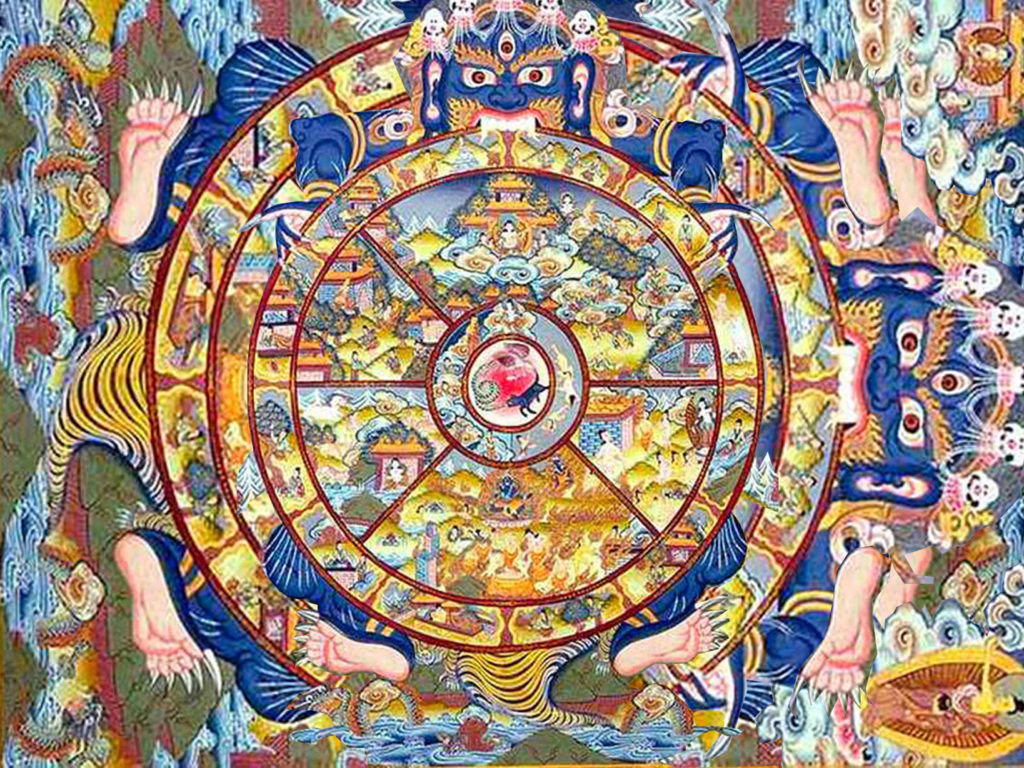
1. Elementalism conceives of Heaven as the most desirable part of the Great Fractal and Hell as the least desirable part of the Great Fractal.

2. As such, Heaven is represented by the Summer Pole of the Quadrijitu and Hell by the Winter Pole of the Quadrijitu.

3. Following this logic, the Great Masculine Axis spans all the possible localities between the most desirable part of the Great Fractal and the least desirable part of the Great Fractal.

4. Some of the parts of the Great Fractal into which a being can incarnate are inherently more or less heavenly than others.

5. Within those parts, some of the areas into which a being can move are inherently more or less heavenly than others.

6. Within those areas, some of the perceptions which a being can adopt are inherently more or less heavenly than others.

7. Masochism proves that whether or not a person enjoys an experience is a matter of perception. It’s possible to enjoy any experience with the right perception.

8. Therefore, Heaven and Hell are a matter of perception.

9. The second-most heavenly perception is to fully understand the First Tenet. The person who does so lives in a state of gnosis.

10. The most heavenly perception is to fully understand the Fourth Tenet. The person who does so lives in a state of ataraxia.

11. The second-most hellish perception is to fall victim to the Prime Illusion. The person who does so cannot make sense of reality.

12. The most hellish perception is to fall victim to the Prime Delusion. The person who does so cannot feel ataraxia.

13. Heaven and Hell are best understood as frequencies of consciousness. As such, people usually get what they deserve.

14. The longer the time frame, the more one gets what one deserves.

15. Although the worlds outside of this one are more heavenly or more hellish, this world provides near-infinite scope to experience any frequency of consciousness.

16. This world is one of the Hell realms, as evidenced by the fact that death is inevitable here.

17. The fact that this world is one of the Hell realms is not cause for despair. It is cause for rejoicing, for herein one has greater opportunity to entertain the gods.

18. A person might be strongly motivated to move towards Heaven and to move away from Hell, but the most important thing is not where they are on the Great Masculine Axis.

19. The most important thing is whether a person’s actions entertain the gods.

*

This chapter is an excerpt from Elemental Elementalism, the foundational scripture of the new religion of the Age of Aquarius.

*

If you enjoyed reading this essay/article, you can get a compilation of the Best VJMP Essays and Articles of 2020 from Amazon for Kindle or Amazon for CreateSpace (for international readers), or TradeMe (for Kiwis). A compilation of the Best VJMP Essays and Articles of 2019, the Best VJMP Essays and Articles of 2018 and the Best VJMP Essays and Articles of 2017 are also available.

*

If you would like to support our work in other ways, please consider subscribing to our SubscribeStar fund. Even better, buy any one of our books!

The Metaphysical Microscope

One of the most common arguments the materialist makes is that nothing divine can be proven. If anything divine existed, so the materialist has it, the believer in the spiritual worlds would be able to present it for scrutiny. If the believer cannot summon the divine to stand before us on command, then it can logically be concluded that nothing divine exists.

The materialist usually demands that the believer produce a magic rabbi with a beard and sandals, this being the conception of the divine in the mind of the herd. Failing that, showing Buddha, Zeus, Krishna or Odin would do. Because no divine being can be so produced, the materialist smugly concludes that nothing divine exists.

Realising evidence of the divine is not a matter of someone bringing it forth as if it were evidence in a court trial. It’s a matter of seeing it. The evidence, in reality, is everywhere. The determining factor is the clarity of one’s vision.

If a sceptic should claim that microbes don’t exist on account of that the sceptic had never seen one, a scientist could give him a microscope. “Simply use this tool called a microscope”, the scientist could say, “and the microbial world will reveal itself to you.” A scene like this happens in high school science classes all over the world every day.

This all sounds logical to a modern person. But what if the sceptic was religious, and didn’t want to look down the microscope for fear of demon possession? Or, what if the sceptic suspected, rightly, that looking down the microscope would so vastly expand his narrow conception of reality that his smug, empty confidence would be shattered?

This might sound absurd, but this is directly analogous to the current situation with psychedelics.

It was known, from the first modern psychedelic wave of Humphrey Osmond and Aldous Huxley in the 1950s, that these sacraments revealed the divine. That’s even where the name comes from: ‘psyche’ means soul, and ‘delic’ comes from ‘deloun’, which means to reveal. In other words, psychedelics reveal the presence of the soul – and thereby the spiritual worlds – to those who could not previously see them.

Anyone who denies this point is obliged to either: take a massive dose of a psychedelic sacrament and take a look for themselves, or keep quiet, and let those who have taken a look do the talking. To refuse to take a psychedelic on any grounds – fear of mental illness or otherwise – and then deny what other people have seen, is childish absurdity.

People may choose not to look through the metaphysical microscope, but they don’t get to deny what others have seen.

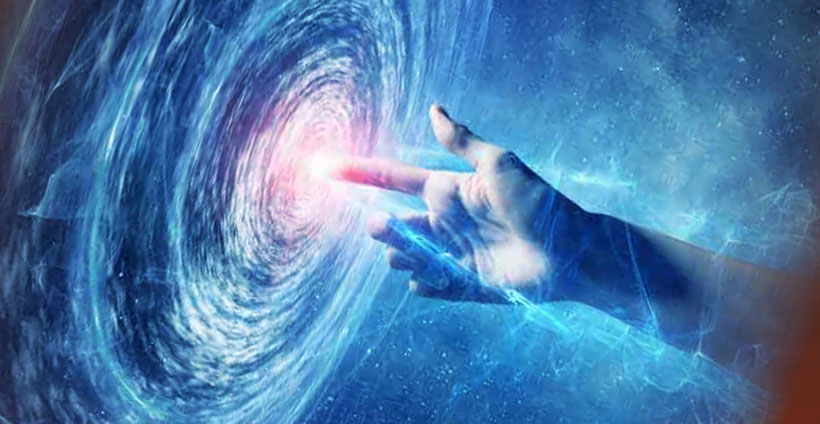
The use of psychedelic sacraments is a metaphysical microscope that reveals the spiritual worlds to the observer. If a person denies the spiritual worlds, they are hereby invited to take a large dose of a psychedelic sacrament. Enough is now known about psychedelics for any intelligent person to research a safe dose and to source it from a reputable supplier. Even in the most desperate case, it’s possible to identify and consume a pile of magic mushrooms in the wild.

An unwillingness to do this is not proof that no spiritual worlds exist. It’s merely proof that someone is a coward.

It’s possible to take a heavy dose of a psychedelic and still not see any worlds beyond. This is analogous to how a blind person won’t see any microbes even with a microscope. But neither is this proof that no spiritual worlds exist.

Psychedelics, after all, are not even necessary – it’s possible to see spiritual worlds simply through refining one’s consciousness to a high enough frequency. Since most people don’t have enough time for that, most people take psychedelics. But no-one is blinder than he who will not see.

A microscope is a tool for looking deeper inside the physical world; a psychedelic is a tool for looking deeper inside the metaphysical world.

Those who have seen beyond are as convinced of the existence of spiritual worlds as they are of the existence of Planet Earth. If materialists refuse to use a metaphysical microscope to catch up to those of us who have seen beyond, we will just have to move on without them. They can gather and ponder the contradictions of their worldview while the rest of us can exult in knowing the truth.

Those who do not see are normies, but those who will not see are tards.

*

If you enjoyed reading this essay/article, you can get a compilation of the Best VJMP Essays and Articles of 2020 from Amazon for Kindle or Amazon for CreateSpace (for international readers), or TradeMe (for Kiwis). A compilation of the Best VJMP Essays and Articles of 2019, the Best VJMP Essays and Articles of 2018 and the Best VJMP Essays and Articles of 2017 are also available.

*

If you would like to support our work in other ways, please consider subscribing to our SubscribeStar fund. Even better, buy any one of our books!
The Elementalist Conception Of The Triune God

1. God is one, but is also three. God can be any or all of the three at the same time. This concept has confused many in the past, and continues to confuse many.

2. God is consciousness. Consciousness itself is the prima materia that creates all other things. Consciousness is omnipresent, omniscient and omnibenevolent.

3. You are consciousness. Your true self is not your body, or any physical or sensory expression, but the consciousness that underlies all of that and which observes the sensations, emotions and thoughts of the body.

4. Therefore, you are God. You are a fragment of the divine consciousness. You, like everything else that exists, are an extrusion of the divine into the Great Fractal.

5. This is why it has always been said to look within and to know thyself.

6. These three things – God, consciousness and yourself – are three aspects of the divine.

7. Hearing that one is God might seem shocking to anyone coming from a Hamic environment.

8. Hamic culture is designed to breed slaves who surrender to the Principle of Evil. This is why Hams are taught that they are created – and that the priest speaks for their creator. Yahweh is outside of them, apart from them and above them.

9. Elementalists understand that every conscious being is divine in its own right. Everything that exists is an expression of God, a form in which God saw fit to express Godself.

10. The revelation that one is God might seem shocking to anyone coming from a scientific materialist environment.

11. Scientific materialism accidentally creates slaves who cannot see beyond the shallowest layer of reality, and so leave themselves vulnerable to everything operating in higher dimensions.

12. The idea that all facts must be proven in physical terms reduces all phenomena to brain function, and thereby violates the First Tenet.

13. Scientific materialism rejects the divine, and therefore believes that anyone who does must be mentally ill, unable to distinguish reality from delusion.

14. A person who thinks to themselves “I am God” is not insane but awake!

15. A person who thinks to themselves “I am other than God” is not humble but a slave!

16. This triune nature is part the indefinability of the divine. Neither consciousness nor God can be defined, and one cannot even define one’s physical self without reference to the rest of the Great Fractal.

*

This chapter is an excerpt from Elemental Elementalism, the foundational scripture of the new religion of the Age of Aquarius.

*

If you enjoyed reading this essay/article, you can get a compilation of the Best VJMP Essays and Articles of 2020 from Amazon for Kindle or Amazon for CreateSpace (for international readers), or TradeMe (for Kiwis). A compilation of the Best VJMP Essays and Articles of 2019, the Best VJMP Essays and Articles of 2018 and the Best VJMP Essays and Articles of 2017 are also available.

*

If you would like to support our work in other ways, please consider subscribing to our SubscribeStar fund. Even better, buy any one of our books!

The Elementalist Conception Of The Creation Of God

1. Many people do not believe in God because they cannot conceive of how such a being could have come into existence.

2. Everything that exists has a creator, they reason, and so if a God existed that God must have had a creator.

3. This creator of God, in order to exist, must itself have been created. That creator, in turn, must also have been created, and so on. Therefore, reasons the normie, there cannot be a Prime Cause.

4. Reference to the First Tenet solves this dilemma.

5. The Elementalist knows that God is consciousness and that consciousness is the prima materia and therefore that God is the prima materia.

6. Therefore, the existence of God precedes the existence of the Great Fractal, and as such precedes the existence of the material world.

7. Therefore, God does not need to have been created. Being outside of manifestation, God existed one instant before the Great Fractal did.

8. In fact, God dreamed up the Great Fractal for entertainment. Some of the entertainment value in manifesting into the Great Fractal follows from the illusion of time, which otherwise does not occur to consciousness, the latter being eternal.

9. Belief in one-dimensional time limits one to belief in one-dimensional cause and effect.

10. Everything within the Great Fractal has a cause, and the ultimate cause in this great chain of causation is God. But because God exists prior to the Great Fractal, God also exists prior to creation and therefore to time.

11. Here one has to make reference to the Fourth Tenet. In its natural state, consciousness exists in perfect bliss, only coming to experience the Great Fractal when it willingly chooses to forget that bliss.

12. Therefore, nothing created God, because God is more fundamental than creation itself. In fact, God created everything else by choosing to forget Godself.

13. Each one of us is a fragment of the divine that has temporarily forgotten its true nature.

14. Knowing that God is the more fundamental than time and space is not a question of being taught or persuaded that this is the case. It’s a question of remembering that this is the case.

15. The Elementalist gently laughs when the argument is made that nothing divine can exist because it would violate the laws of causation. Then the Elementalist explains the First Tenet.

*

This chapter is an excerpt from Elemental Elementalism, the foundational scripture of the new religion of the Age of Aquarius.

*

If you enjoyed reading this essay/article, you can get a compilation of the Best VJMP Essays and Articles of 2020 from Amazon for Kindle or Amazon for CreateSpace (for international readers), or TradeMe (for Kiwis). A compilation of the Best VJMP Essays and Articles of 2019, the Best VJMP Essays and Articles of 2018 and the Best VJMP Essays and Articles of 2017 are also available.

*

If you would like to support our work in other ways, please consider subscribing to our SubscribeStar fund. Even better, buy any one of our books!