Clown World Chronicles: What is A ‘Dhimmi’?

With a world being thrown into upheaval, many concepts once thought forgotten are making a resurgence. This is often a good thing, as VJM Publishing has tried to show with our work on alchemy, elementalism and esotericism, but it can also be a bad thing. As this essay will explain, one of the concepts we will again have to familiarise ourselves with is that of the dhimmi.

Growing up with stories about World War II, an idea of what constituted an awful person arose. It wasn’t good to be a coward, and it wasn’t good to be the sort of person who shot prisoners, but the worst sort of person was the kind that collaborated with the enemy. These collaborators were a particular kind of traitor, but of the lowest possible sort.

The actions of men such as Vidkun Quisling, the Norwegian who collaborated willingly with the Nazis during the Norwegian Occupation, became infamous. When Germany invaded Norway in 1940, Quisling volunteered to lead a local version of the Nazi Party, with him as head. This was considered such an obscenity that Quisling was executed as soon as the Nazis were expelled.

Warfare has always had collaborators, a consequence of the depravities that it inflicts upon soldier and civilian alike. The first enemy of warfare may be the truth, but the second might be common decency, as people are flung into situations where they are forced to do terrible things or die. The conditions of warfare mean extreme shortages of food, medicine and safety, and that means desperation.

Sometimes there is so much warfare and so many collaborators that a specialist vocabulary arises to describe them. During the Islamic conquests, collaborators were so common that they were given the title dhimmis (“protected person”). A dhimmi was given certain rights, such as exemption from persecution, as long as they paid the jizyah, or special tax. This was a form of protection money and therefore a sign of submission.

A dhimmi, then, is one who collaborates with an invading Islamic force to secure personal benefits at the expense of their people as a whole. Because the Islamic conquests were so vast, there are many stories of dhimmis in different cultures, but all of them share the quality of being considered execrable cowards.

Becoming a dhimmi isn’t necessarily a dumb move, even if it’s a morally deficient one. As many of the Norwegian women who hooked up with Wehrmacht soldiers during the Norwegian Occupation discovered, collaboration can secure food and other resources if the enemy ends up being triumphant.

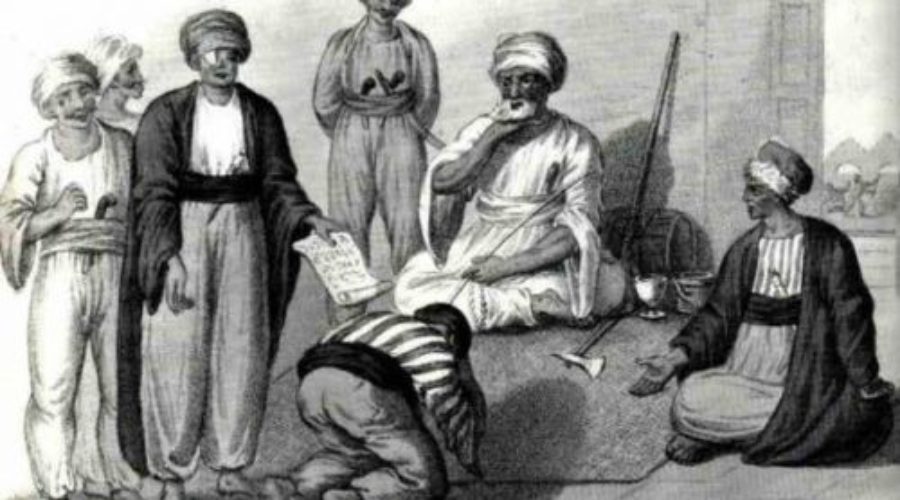
Dhimmitude could be considered a kind of prostitution. As can be seen by the image above, anyone who becomes a dhimmi can expect to be praised in the most effusive of terms. The most gratifying thing a jihadist can experience is to see an infidel submit to the will of Islam, whether that be conversion or paying tribute. It’s the same sort of gratification a man feels watching a woman suck his cock.

A lot of Westerners feel that they can already see the writing on the wall, and believe that some form of Islamic conquest is inevitable. It was being seriously asked 15 years ago if France was on its way to becoming a Islamic state; now people just shrug their shoulders and await the inevitable.

A dhimmi in a modern context would be someone who actively supports Islamic interests ahead of those of her own people, in exchange for the hope of goodwill from Muslims as a whole. This could be for a variety of reasons, such as votes from the Muslim voting bloc within the country or support from Muslim countries when it comes to fulfilling future United Nations ambitions.

British Member of Parliament Jo Cox was a classic example of a dhimmi. Elected to serve the Batley and Spen constituency of West Yorkshire, she instead spent most of her time campaigning for refugees and ethnic diversity. Many considered her assassination a predictable response to her support of foreigners over her own people.

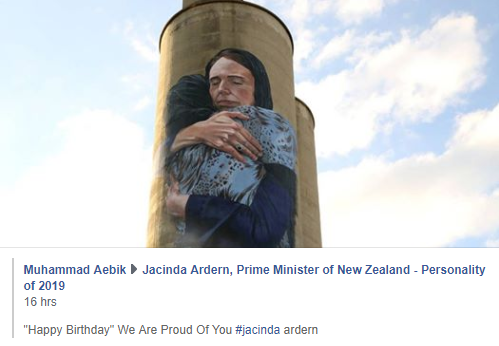
Jacinda Ardern is another example of a dhimmi. Ardern could be said to be “The world’s favourite dhimmi” on account of her response to the Christchurch mosque shootings, which was to excoriate white men in general while opening the door to further Muslim immigration. Her crackdowns on the rights of New Zealanders to possess firearms and to free expression made every jihadist in the world grin from ear to ear.

These young women have calculated that Islam will be much more influential, perhaps even dominant, in a few decades, and therefore the time to ingratiate oneself with them is now. They want to show themselves to be great friends of Islam, in the hope that Muslims will treat them more favourably when they assume power. They have deeply internalised a sense of dhimmitude, the condition of accepting being a dhimmi.

The left-wingers who prioritise Muslim refugees over their own homeless are deep into dhimmitude. As is often the case with slaves, dhimmitude can become so deeply internalised that the dhimmi thinks their behaviour is natural, even admirable. But the actions of women like Cox and Ardern are little different to those of the women who prostituted themselves to the victorious Nazi armies. After all, human nature hasn’t changed in many thousands of years.

In any case, the West is likely to see a lot more dhimmitude in coming decades, as the Muslim population – and therefore their militancy – continues to increase. Soon it will become important to identify dhimmi politicians like Cox, Ardern and Angela Merkel, so that they can be counteracted before they destroy our societies from the inside.

*

If you enjoyed reading this essay, you can get a compilation of the Best VJMP Essays and Articles of 2018 from Amazon for Kindle or Amazon for CreateSpace (for international readers), or TradeMe (for Kiwis). A compilation of the Best VJMP Essays and Articles of 2017 is also available.

The Conceit of Silver

Alchemically speaking, there are two great conceits – one lesser and one greater. The lesser one is known as the Conceit of Iron, and relates to the arrogance that comes with physical dominance. The greater one, generally speaking, comes with intellectual dominance, and is closely related to the concept of hubris. This essay will examine what is known as the Conceit of Silver.

Silver is the first of the two precious metals, and one arrives in the realm of silver once iron is sufficiently brightened. As one progresses up the alchemical scale, thought moves from the simple bipartite distinction of strong/weak to the new distinction of smart/dumb. As such, there are now two distinct kinds of weak: the dumb-strong, and the dumb-weak.

The Conceit of Silver is not the same thing as simply thinking one is smarter than everyone else, although it is related. If one is intelligent enough to dominate both attractive women and muscular men, it’s very easy to become arrogant. Possessing unusual intelligence can feel like a superpower, because it makes it much easier to create change in accordance with one’s will.

The problem is that silver, by itself, cannot make moral decisions. Intelligence is a great thing, but without wisdom it can only ever be directed towards fulfilling egoic desires. Without the capacity to feel empathy for other sentient beings, an individual cannot act to end the suffering of them. Such a person is unenlightened.

Without at least some of the element of gold, a person acting in the realm of silver will act to accumulate resources or to raise their social standing, not to reduce the suffering of other sentient beings. Much of the moral grandstanding that people of silver engage in claims to achieve the latter, while really achieving the former. It isn’t always clear how much of this is conscious and how much is unconscious.

The Conceit of Silver is, in short, the belief that higher intelligence, education or social standing makes one a moral authority.

This happens in two major ways: by thinking one is gold when one is silver, or by denying the existence of gold altogether. This is a very easy mistake to make if one is of the silver, because if one is aware of such, then it follows as a general rule that most of the rest of the world is baser. Generally speaking, others are dumber, and their desires short-sighted. But this rule does not always hold.

The classic example of the Conceit of Silver is when a person achieves a high position through scheming, inheritance or politics, and then assumes that they must possess a commensurate moral superiority. At its worst, this conceit can lead a person into thinking that their individual egoic desires are the same as the Will of God. Such a person can be extremely dangerous if in power.

The Conceit of Silver is that it assumes itself to be divine. Individuals prone to this conceit are apt to say things like “Intelligence makes humans unique from the rest of the animal kingdom,” inspired by their failure to appreciate the perspectives of others. This will usually reinforce a belief that intelligence confers moral authority, or, even worse, a belief that education or birth station confers moral authority.

In fact, there’s an argument that the only reason why intelligence evolved so prodigiously in the human animal is because our social structure allowed for an unprecedented degree of scheming, lying, backstabbing, cheating and all kinds of general skullduggery. From this perspective, intelligence could even be seen as a moral negative, a sign that one clings to material power.

Finding an example of the Conceit of Silver is easy. All it takes is to go to a university and to find a person who believes that they might be smarter than everyone else there. At any university, there will be plenty of them. In the absence of a university it’s only necessary to find a place where intellectuals gather, or even a professional association.

Almost invariably, when a person becomes intelligent enough, they start to assume that they are a moral authority of some kind. They start to conflate their understanding of how systems are with how systems should be. People who do this are not always wrong – understanding a system often does lead to an understanding of how that system could be optimised to minimise the suffering it causes. But that isn’t necessarily so.

It isn’t easy for an intelligent person to agree that their brainpower is not particularly valuable in comparison to wisdom. The majority of intelligent people make a living out of their brainpower by way of learning a valuable profession. It’s therefore very hard for them to set all of this silver aside, and to admit that possession of it doesn’t make someone a morally superior person.

It takes a mercurial sort of personality to admit that one’s intelligence, however vast, is not sufficient to conclude that one is fundamentally more valuable. That, despite being smarter, one might be of less value than a person of iron or clay if the right circumstances arose, or if one had the wrong moral direction. This element of mercury is necessary for the alchemist to successfully transition from silver to gold.

The truth is that gold is the most malleable of all metals, and that gives it one paradoxical quality: it doesn’t resist when claims to leadership are made by men of silver. Because silver is harder than gold, it’s usually possible for those of silver to force those of gold out of leadership positions by way of intimidation or verbal and social aggression.In today’s degraded age, this has taken place all over the world.

The universities, the religious and spiritual movements and the political movements have all been taken over by materialists pushing some irrational political ideology or other. The element of gold has been pushed to the peripheries, making it possible to ask whether we live in the Kali Yuga. The Conceit of Silver is everywhere.

*

If you enjoyed reading this essay, you can get a compilation of the Best VJMP Essays and Articles of 2018 from Amazon for Kindle or Amazon for CreateSpace (for international readers), or TradeMe (for Kiwis). A compilation of the Best VJMP Essays and Articles of 2017 is also available.
Zomblique’s Philosopher

"The mind is like a cellar,” Zomblique's philosopher Mr. Boggs opined in a hollow voice which seemed to ring out from inside a tin can.

"The mind is like a cellar," he repeated with self-assured gusto after a long pause.

Zomblique's right hand shuddered as it hovered above the blank paper pad, the great plume of the quill wavering like a strutting peacock.

"The mind is like a cellar," Zomblique repeated deflatedly and set his pen back in the inkpot, drumming his fingers on the desk in frustration. "Boggs by name, Boggs by nature," he muttered through his teeth.

The mechanical philosopher was not working out. He could never afford another, for there would never be sufficient coin. Not so long as the only thing the wretched clockwork theorist was spouting was precisely such nonsense as this.

Truism after truism, empty beatitude after beatitude, triteness, passing conjecture, idle wonder.

Sellard's Philosopher, a dedicated aphorist belonging to his neighbour, had run like a top since it had first come into his possession. Dourf owned a verifiable man of letters, a clockwork vintage of one hundred and fifty years in age, still putting forward no less than three sweeping theories per week, publications in major journals at least once per month. His wife and children did not go hungry. Creech had a model that was a patent Fool, not even a Philosopher and it still managed to successfully produce biting satire of a somewhat dark although entertaining tone.

Zomblique bit into the lace sleeve that covered his hand and attempted to stifle the misery that clutched at his throat. A lone tear escaped. The swine rustled impatiently in the sty, the baby cried plaintively.

Fitting on his leather gloves to avoid the philosopher's sharp edges, Zomblique set his chest of pauper's tools next to the chair in which the automaton was seated.

Tuning the fickle machines was more art than science, or so he had been told, and each model was unique. No more than one was ever produced by any one craftsman. Which combination hadn't he tried? Dourf had suggested alternately tightening and loosening the brace that held the mandible in place, to no avail. His grandfather who had been the original owner of the philosopher suggested setting the misericord beneath its left shoulder deep enough so that it was pressing upon, but not puncturing, the diaphragm corresponding to the human heart. 

It made no difference. He had measured the cranium and expanded and contracted the skull with drift punch and tongs – nothing. Although walking models were said to fare better, the sitting and reclining models also had their strong suits. Zomblique's philosopher had not responded favorably to any variation in positioning. He had tried setting him as if gazing aloofly out of a window, as though aspiring to grasp the heavens. He had tried posing the thumb and forefinger to thoughtfully cradle the chin.

"Hungry dogs will eat dirty pudding," Mr. Boggs mumbled.

Dourf climbed down the ladder, followed by his lanky companion, the artifice known as Vesselius. Brass bones encased in handsomely-grained walnut, studded with small levers and dials, emblazoned with esoteric glyphs and almost perfectly silent but for the quiet whirring of gears. A darkly shining monocle regarded the limp philosopher with what appeared to be sympathy.

"Vesselius, something inspiring please," Dourf requested in his unusually soft tone.

The mechanical thinker stood in silence for some moments before adopting a theatrical stance and looking to the skies as though there were no ceiling, he spoke:

"It is only the deepest motivation which inspires each and every human action, and it is the vain fear of vulgarity which lies the deepest and closest to man's heart."

Zomblique slapped his face with both palms and began to weep.

There was a long silence. The animatron maintained its pose as gears whirred, quietly contriving another profound aphorism.

"A little cynical," Dourf offered by way of consolation.

"I would cut off my thumbs for cynicism," moaned Zomblique. “Please leave us be."

Dourf and his machine crept back up the ladder to the sunlight above, a realm where Zomblique would perhaps occasionally visit, but never dwell.

To his surprise, Mr. Boggs suddenly stood up. Zomblique's jaw nearly dropped. With clacking wooden feet he made his way to the ladder and followed after Dourf and Vesselius.

"Yes, that's right you wretch. Go with them, you're of no use to me."

Mr. Boggs awkwardly clambered up the ladder. Before his head went through the trapdoor he turned to Zomblique with his typical empty expression and issued his parting words.

"The mind is like a cellar."

The mechanism left, never to return.

Through the swinging doors, the sullen Zomblique returned to the stink of the underground sty, and the croaking and barking of angry swine.

All that remained was the empty cellar, a fine chair and writing desk. Finally without either the consternations of Zomblique nor the dubious adages of Mr. Boggs there was a beautiful silence - a silence that belonged there.

*

Simon P Murphy is a Nelson occult philosopher and the author of His Master's Wretched Organ.

Slave Morality in 2019

Some people have made the assumption that, because Christian morals have faded from the zeitgeist in recent decades, Nietzschean concepts like slave/master morality are no longer relevant. As this essay will examine, this is not only wrong but the opposite of the truth. Slave morality, in 2019, is more influential than ever before.

The slave/master morality dichotomy comes from The Genealogy of Morals. In this book, Nietzsche outlined the distinction between the master morality that arises in a state of Nature, which divides the world into good and bad, and the slave morality that arises after civilisation and which divides the world into good and evil, with the evil being the same as the good of the master.

Understanding slave morality is to understand resentment: the man with slave mentality resents the man with master morality, and seeks to bring him down. This resentment is the emotion that arises when the ego cannot get consensual reality to conform to its will, as a slave cannot. Resentment is, therefore, the natural consequence of weakness, whether that weakness be physical, emotional, intellectual or spiritual.

One major problem with the modern world is that it is heavily overpopulated. We are coming up to 8,000,000,000 human inhabitants on this planet. This means that the vast bulk of us have effectively no influence over the course of the world, or even over our own lives. We can only move around in small boxes built by other people.

The result is that there are now previously unheard of levels of resentment in our society. This resentment has found a florid range of expression.

Social Justice Warrior culture is one of most apparent examples. The resentment of the weak can be clearly heard in the cries about privilege and oppression. The mantra of SJW culture is that whoever has power is automatically the bad guy in any conflict against someone with less power. The intention of SJWs is the same as that of the slave moralist: to rip down anyone strong and call them evil.

As Ted Kaczynski pointed out in Industrial Society and Its Future, these impulses on the part of the leftist can’t ever be satisfied. Their passion to change the world comes from the resentment of being stupid and ignorant, and this doesn’t go away no matter who they destroy. So every time they succeed in destroying someone, they simply move on to the next target.

Therefore, as long as resentment exists, there will be Social Justice Warrior culture. This culture will, like slave moralities everywhere, try and destroy anyone who is happy. SJW culture chooses to do this by calling them bigots, Nazis and racists, and declaring that all good in their lives is privilege that has been stolen from someone else.

Related to SJW culture is ethnomasochism. This is when a person derives a particular kind of thrill from running down their own people. In the same way that a regular masochist will tell his dominatrix that everything he does is wrong, so does the ethnomasochist declare that the history of his people is littered with acts of irredeemable evil.

This ethnomasochism is related to the Holocaust religion, in the sense that it posits a white boogeyman whose excessive in-group favouritism has brought terrible suffering and evil to the world. In the quasi-religious context of ethnomasochism, ‘sin’ is replaced with ‘racism’, which has to be beaten out of society by ripping down anyone who suggests it’s okay to be white.

The resentment of the ethnomasochist leads them to destroy their own nation through support for things like open borders and the mass immigration of Muslims and Africans. The paradoxical fact that they derive a sense of control from this can be explained by comparing the mentality to someone who cuts their own arms: if one must suffer, then at least one can learn to suffer on demand.

Trans culture is a third example. Many men who have found that they don’t come up to the mark as men, i.e. men who women are not naturally attracted to, also find that they can get more attention if they pretend to be women. This is particularly common among men who are physical weaklings. This behaviour mimics a mental illness known as gender dysphoria.

The fundamental motivation for many of these people is to destroy the legitimate enjoyment that normal people get out of natural interactions between masculine and feminine. They want to destroy the natural concept of both “man” and “woman” so that healthy people who fit into these roles cannot enjoy them. A generation ago, homosexuality filled this social niche, but today it’s no longer shocking enough to do so.

Already trans culture has had enough of an impact to make it difficult for quality women to find a man worth being devoted to. By continuing to delegitimise and denormalise healthy expressions of masculinity and femininity, those who promote trans culture find expression for their resentment by destroying the natural and the beautiful.

The inability to understand the importance of free speech or the right to self-defence is yet another example. When a person with slave mentality gets into power, as has happened in New Zealand with the ascension of Jacinda Ardern to the Prime Minister’s position, they are liable to strip these rights away from the populace.

This is made possible by the resentment of the dumb and boring conformists who have nothing interesting to say. Slaves don’t care about the erosion of free speech because they have nothing to say worth listening to, and therefore are not impacted by the loss of an ability to speak, any more than the average person would be impacted by a ban on professional boxing.

People with slave morality don’t understand the desire of master moralists to have the ability to defend themselves either. After all, the defining feature of a slave is that he will not defend himself if he is beaten. The resentment that comes from being this weak manifests as a desire to remove other people’s ability to defend themselves.

A fifth way is the bizarre alliance with Islam. As a psychologist writing in New English Review has explained, Islam is the perfect religion for the resentful who like to see themselves as victims. It takes the same persecution mania as the other Abrahamic cults and raises it to another degree. Muslims resent the current order of the world, and so they are natural allies to the slave moralists.

Many secular Westerners with slave mentality have powerful sympathies for Islam, and can relate to a person throwing their life away in a suicide bombing. After all, the more one resents life, the less value one puts on it. As Nietzsche wrote, the slave moralist is the one who has said ‘No!’ to life, and there is no more vivid expression of this rejection of life than a suicide bombing.

The depth of the resentment can be seen by the size of the cognitive dissonance that arises when the Islamophile is asked about Islam’s attitude to women and homosexuals. Despite the brutally cruel oppression of these groups by Muslim culture, the resentment of the Islamophile is so great that all of these crimes will be swept under the carpet. In this sense, the Islamic apologist is to this generation what the Communist apologist was to the previous one.

These are merely a sample of all the various ways that slave morality expresses itself in 2019. The frightening thing is that, as the world gets more impersonal and more overpopulated, slave morality looks set to become even more influential. The only solution appears to be a massive cull, and an emptying out of the cities where this cancerous mentality has its strongholds.

*

If you enjoyed reading this essay, you can get a compilation of the Best VJMP Essays and Articles of 2018 from Amazon for Kindle or Amazon for CreateSpace (for international readers), or TradeMe (for Kiwis). A compilation of the Best VJMP Essays and Articles of 2017 is also available.