The Clown World Concept
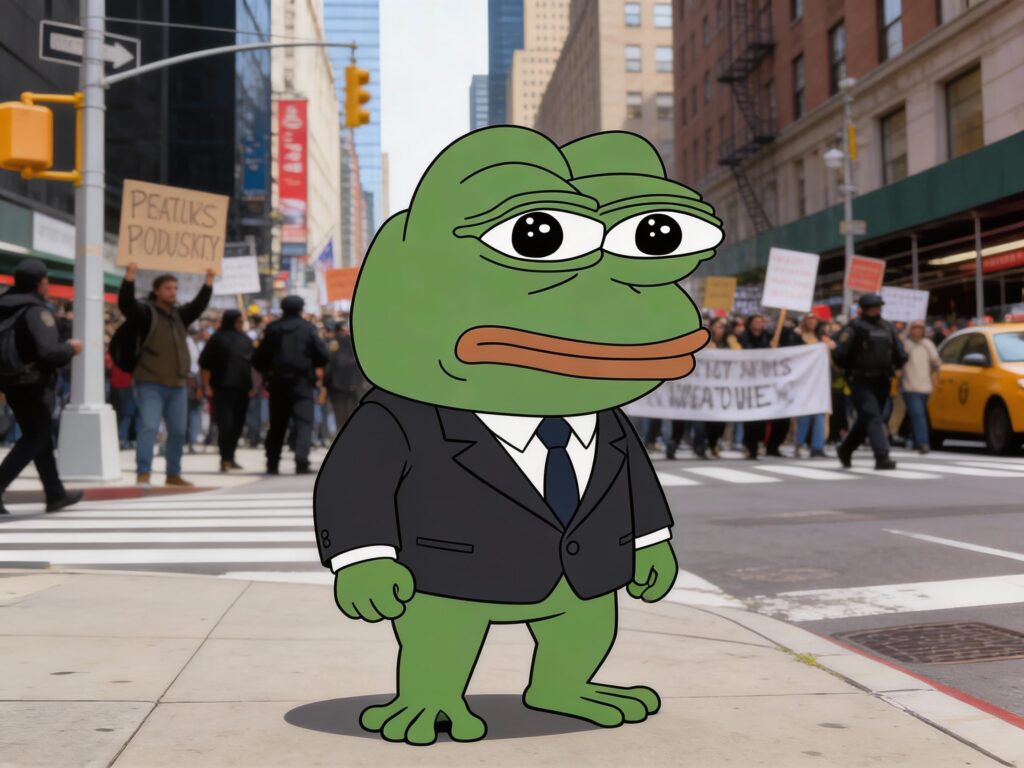
‘Clown World’ is a term used to describe the idea that ordinary life has become like a twisted circus where nothing is as it should be. The term is used everyday on any Internet forum devoted to cyberculture, in particular on imageboards such as 4chan. Clown World not only describes the end result of the Black Iron Prison, it heralds the overcoming of that same prison.
The term ‘Clown World’ is a development from the concept of ‘Bizarro World’, which is a fictional planet appearing in the DC Comics Universe. Thanks to the success of these comics, the term ‘Bizarro World’ entered popular culture as a term describing a world where everything was inverted, or the opposite of how it ought to be.
In the digital age, Bizarro World has transformed into Clown World. Like Bizarro World, Clown World is where everything is the opposite of Normal World. But, unlike Bizarro World, Clown World refers to the environment we find ourselves in here and now, and not some distant, fictional planet. The term is used by people who feel that something is deeply wrong with today’s society.
In Clown World, the mainstream media confuses instead of informs. Law enforcement agencies harass instead of protect. Spiritual authorities no longer believe in anything beyond the material. The University system no longer knows truth from political expedience. Medical authorities seek profit before health. Government agencies, instead of defending our interests, corral us like cattle.
In the digital age, people are no longer astonished by strangeness. Novelty, instead of alleviating boredom, merely adds to the confusion of overstimulation. So today, instead of life seeming bizarre like it did 50 years ago, it seems like a demented clown show.
Although this concept sounds dark, the point of it is not to dwell on that darkness. The underlying idea of Clown World is that the current difficulties of life in the West can be overcome by laughter. This is why my book on the subject, Clown World Chronicles, is written as a satire (if a grim one).
The green cartoon frog on the front cover of Clown World Chronicles is named Honkler. This character can be found any time something truly absurd is happening. The horns in both of his hands provide the musical backdrop to Clown World: an obnoxious honking, like something from a cheap carnival show. The mockery of Honkler calls us to see the humour in Clown World, instead of falling into despair.
Although some contend that the Clown World concept is inherently a right-wing idea, particularly associated with the alternative right, this is not accurate. It’s true that the counter-culture of 2026 is primarily right-wing, unlike the counter-culture of 1972, which was primarily left-wing. But the humorous element of today’s counter-culture comes from the alternative centre.
The alternative centre rejects the Establishment, but they also reject the alternative left and the alternative right, who they consider dangerous extremists. In the eyes of the alternative centre, the alternative left and alternative right are almost as responsible for Clown World as their opposite numbers in the Establishment.
Clown World is all around us today. It can be found any time someone says “That’s ridiculous!” in response to a news report that sounds too absurd to be true – but is.
Honk Honk!
The Causes Of Clown World
Clown World is the result of two principal forces.
The first is a natural historical decay process. This is often summarised in cyberspace as the “Hard times lead to strong men, strong men lead to good times, good times lead to weak men, weak men lead to hard times” cycle.
First outlined in Plato’s Republic, this process describes how the initial state of Nature was tamed by determined pioneers, who created great wealth. The comfort provided by this wealth led to people becoming soft, and this softness led to bad decisions which eventually recreated the poverty of the original state of Nature.
In the modern timeline, the economic golden decades following World War II led to greater wealth than at any other time in history. Never before did people have access to such a wide range of material comforts and pleasures. But this led to a uniquely entitled and infantilised population.
At this point in the decay cycle, society places its worst members in charge.
Right now, the West is in the “weak men lead to hard times” part of the cycle. The people captaining the Western Ship of State have never known struggle. This is why they are preoccupied with trivial issues, and it’s why they are incapable of standing up for the truth.
The second major force behind Clown World is deliberate agitation and destruction for the sake of control. This agitation and destruction is wrought by globalist interests known collectively as the Globohomo Gayplex, or Globohomo for short. Globohomo is the sadistic force that controls today’s mainstream media and culture.
These controllers are themselves divided into two major groups, who operate in alliance against the rest of us.
The first, and most powerful of these, are the neoliberals. Neoliberalism is the prevailing economic paradigm of the Western World, and has been ever since Ronald Reagan and Margaret Thatcher pushed it on us in the 1980s. According to neoliberalism, borders are an impediment to economic growth, and therefore the West needs to import as much cheap labour as possible.
Neoliberals are the same enemy that the human race has faced since that enemy invented usury in Babylon – silver magicians. Their obsession with money has led them to put immediate, material concerns above long-term, spiritual ones. The end result is a tawdry, soulless consumerism that leaves people in despair.
The second major group of people responsible for Clown World are the Marxists. These are the same pseudo-revolutionaries that destroyed Russia, China, Cambodia and dozens of other places, and who wish to radically transform the West along similar lines.
In Clown World, these Marxists aim to cause as much chaos as possible. Their belief is that society must be destroyed so that a new one can be built on revolutionary principles.
Unlike the old Marxists, who were obsessed with the question of class, the new Marxists care only about race. The vanguard of this new Marxism are the Brown Communists. These people push the same resentment-fuelled hate narrative as the regular Communists, only they hate white people instead of the bourgeoisie, and they claim to speak for brown people instead of the proletariat.
How They Push Clown World On Us
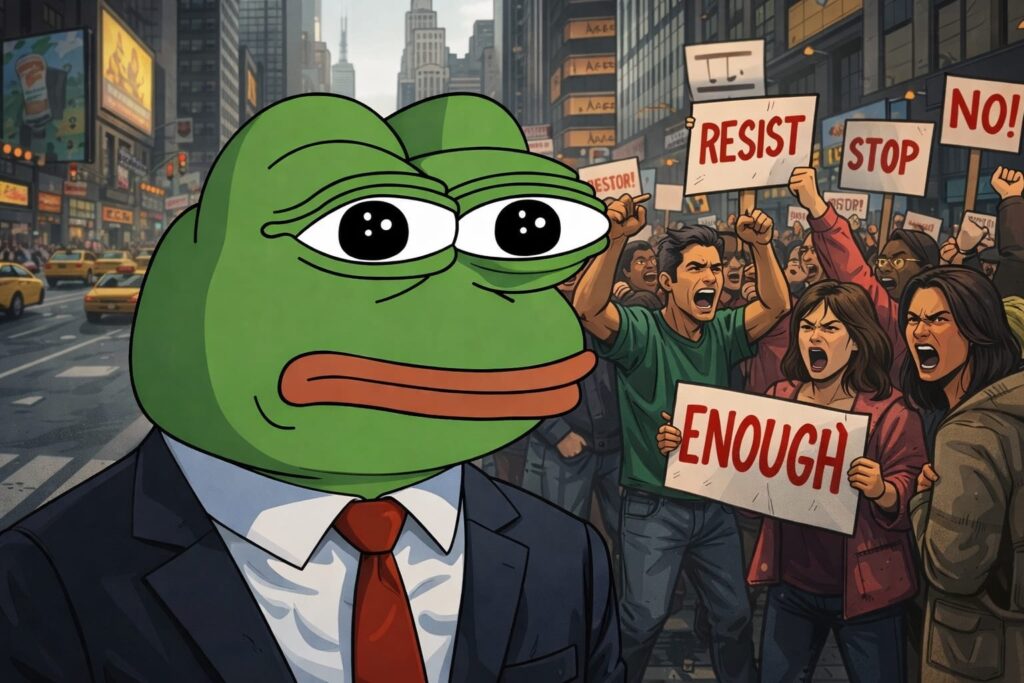
Clown World is pushed onto us by both the neoliberal and the Marxist wings of Globohomo, working in concert. Their main strategy is to normalise low-frequency behaviours, emotions and attitudes. They achieve this by controlling the information we receive, and feeding it to us in such a way that it warps our perceptions of reality.
The neoliberals can achieve this perception control through their control of the apparatus of propaganda, i.e. the mainstream media. The vast majority of mainstream media concerns are ultimately owned by international banking and finance interests such as BlackRock and Vanguard, and these interests instruct the media to only run stories that serve the globalist agenda.
By showcasing debates between two apparently opposing sides, the mainstream media can create the impression of lively political discourse. But, inevitably, the two sides showcased will both be loyal to the same set of globalists behind the scenes, and will not criticise them ever.
The most typical way Globohomo creates the illusion of genuine political exchange is by setting up debates between neoliberals and Marxists, both globalists. The ensuing debates over trivial issues create the perception that anything is up for discussion and questioning, except globalism itself. Anyone arguing for the well-being of their own people in the face of globalist interests is never given a platform.
By not platforming certain ideas, the masses come to think that those ideas don’t exist, or that they have very little popular support. Aldous Huxley once observed that “By simply not mentioning certain subjects… totalitarian propagandists have influenced opinion much more effectively than they could have by the most eloquent denunciations.” This is just as true of neoliberal totalitarians as of Nazis or Communists.
Control of the media narrative is also used to stifle dissent by destroying the reputations of any wrongthinker who can find a platform. The globalists achieve this in two major ways: either they smear their enemies as insane, or they smear them as evil. In practice, the method chosen depends on the competency of the target: if incompetent then insane, if competent then evil.
This smearing is then used to manipulate our fear of social exclusion. The television tells us that, if we agree with the people smeared as insane or evil, then we will be targeted next.
The Marxists achieve perception control through the influence gained from their successful completion of the Long March Through the Institutions. This was the name given by Marxist activist Rudi Dutschke to the strategy of transforming society by infiltrating all of society’s institutions, and then subverting them to serve Marxist interests.
Thanks to their control of the institutions, particularly the educational institutions, the Marxists have been able to normalise all kinds of false and destructive ideas, particularly ideas about how the lowest should be championed and the highest torn down. Modern classrooms are now places of indoctrination and not learning. Any student who questions the dogma is humiliated into silence by the rest of their class.
Neoliberals and Marxists, despite their surface differences, have come together as a globalist anti-spiritual alliance. This is typically seen when a Marxist journalist student writes some propaganda for a mainstream media outfit, and then the neoliberal editor of that outfit approves it for publication because it serves the interests of his globalist paymasters.
The end result is that Clown World is normalised through the mainstream media, making it seem inescapable.
Where Clown World Is Going In 2026
The future of Clown World looks like an extremely unpleasant place. Globohomo is eager to turn up the heat and bring the rest of us further into enslavement. From today’s vantage point, four existing trends are likely to worsen into 2026.
The first trend is physical control. This will be tightened through increasing surveillance.
Advanced facial recognition technologies are now a reality thanks to the greater bandwidth afforded by 5G. This has made it possible to set up a network of cameras that can track multiple details about a person in real time. Not only their movements, but also their emotional and mental state can be detected from cameras connected to algorithms that can recognise signs of distress, anxiety, tiredness, hunger, rage etc.
This data enables the authorities to see precisely who each of us interacts with, and when, and where, and for how long. They can also make a good guess at why we’re interacting with those others. If their algorithms detect that people might be gathering to conspire against them, pre-emptive arrests become a possibility.
The second trend is emotional control. This will be achieved through provoking fear and apathy.
The mainstream media will reach new levels of hysteria next year. We can expect that hype about an impending war with China will reach unprecedented levels. As with the coronavirus hysteria, which also dominated media space, anyone who doesn’t go along with it will be ostracised for not doing their part towards the greater good.
The foremost methods for provoking apathy will be increasing doses of pharmaceutical drugs and increasing levels of climate alarmism, nihilistic attitudes and general despair on the mainstream news shows. These shows will continue to preach the message that not only is the world a terrifying and awful place in which to live, but it will get worse, and there’s nothing anyone can do about it.
The combination of fear and apathy results in an inability to resist the Clown World ruling class. The thought of resistance is made to seem too daunting, too unrealistic, and our fellow man too unworthy of it.
The third trend is intellectual control. In principle, this has already been achieved long ago. But in 2026, it will intensify.
Globohomo will forbid the discussion of certain ideas by destroying the reputations of anyone who tries. Anti-globalists and nationalists will continue to be demonised as white supremacists and potential terrorist threats. Anyone considered a wrongthinker will be compared to Adolf Hitler, Anders Breivik and Brenton Tarrant.
This tightening of intellectual control will be starkest in the research institutions. As discussed in the previous section, globalists have already infiltrated the university system to the extent that they can expel non-globalists at will. In fact, they can expel anyone for wrongthink at any time, and the definition of wrongthink can change on a daily basis as objectives change.
The globalists will be aided in this by artificial intelligence. Algorithms already exist that can detect content of a particular nature and scrub it from social media. Because the large social media companies are all owned by globalists, they can work in concert to delete unwanted content before it can spread to a wider audience.
The fourth trend is spiritual control. As with intellectual control, globalists have already achieved this long ago and intend to tighten it in 2026.
The controllers of Clown World will increase their spiritual control over the rest of us by continuing to subject us to the Clown World Fork, which is when we are forced to choose between an Adharmic religion or atheism. Anyone following a Dharmic religion is then smeared as insane or evil, and thereby prevented from holding real political power.
The most influential of the Adharmic religions are the Abrahamic cults and their atheistic equivalent: Marxism. All of these religions prioritise the destruction or enslavement of outsiders as a legitimate means of gaining control. The consequence of promoting these religions today, as it has been for centuries, is to divide and conquer by sowing discord and strife. As such, Globohomo happily promotes any and all of them.
Related to this will be the continued resistance of Clown World governments to the legalisation of spiritual sacraments such as cannabis and the psychedelics. Knowing these sacraments to be medicines that liberate people from spiritual slavery, the controllers of Clown World will continue to demonise users of them as insane, and to dismiss the treasures of spiritual insight as worthless.
The net result of all of these trends might not be significantly worse than 2025. If there is war in the South China Sea, or a drastic escalation in Ukraine, however, all four trends will accelerate sharply.
How To Resist Clown World
Resisting the further decay of Clown World comes down to a combination of knowledge and will.
The first thing to understand is that Clown World is a reality. Things are now worse than they have been at any time since World War Two. Even the atmosphere of the World Wars lacked the total despair of Clown World. Today, a sadistic and soulless globalist ruling class terrorises a world of utterly demoralised slave populations. Our situation is truly bad.
The second thing to understand is that Clown World is limited in time. It is not a historical inevitability, and is not the final result of historical change, but merely a phase that all societies decay into – and then rise out of. We are living in Clown World today because of a century of bad decisions made by weak Western leaders. We will rise out of it when we put strong leaders in power – not authoritarians, but those who have seen beyond in a spiritual sense.
The third, and most important, thing to understand is that we are more powerful than them. We know that we are afraid and that Globohomo is powerful, but the fact remains: they can only rule us with our consent. They can use trickery, but this is only effective thanks to our decision to remain ignorant. All Globohomo’s power is given to them, by us. We can take it back.
With the right understanding in place, taking the right actions is only a matter of willpower.
The easiest way to contribute to the truth movement is to organise into groups based on geographical proximity, and to share information within those groups. Something as simple as a Telegram group called ‘Truth Seekers X’ (where X is the name of your town) or ‘Save Us From Y’ (where Y is the name of a politician) is a good start towards waking a large number of people up.
Anyone can start their own media organ and build followers by sharing quality information. Josef Goebbels once wrote that totalitarian propaganda needs complete control of all narratives in order to be effective. It follows, therefore, that one great way to counter totalitarianism is to promote alternative narratives.
It doesn’t matter exactly what those alternative narratives are. The main thing is to question Globohomo when it demands that we live in fear and submission.
Willpower also comes into play when making the right spiritual decisions. On one level, Clown World is the final result of all the times we chose to do harm to others because of selfish reasons. It is therefore a manifestation of our own karmic debt.
Wholesale resistance to Clown World will only be possible with a revival of true spirituality. Such a revival must happen, given the cyclical nature of history, and given that we are currently at a low point in that cycle. It’s only a matter of putting our hearts and minds behind it.
Clown World was foretold a long time ago. Such bad times always occur at the end of great ages, such as our current transition from the Age of Pisces to the Age of Aquarius. It is possible that Clown World will become even worse in coming years but, after it, a great Golden Age will begin.
*
Vince McLeod is an occult philosopher, psychedelic enthusiast, satirist and social critic. He has a master’s degree in Psychology from the University of Canterbury, and is the author of Clown World Chronicles, the complete guide to the collapse of the Western World, as it happens.