Racism Of The Gaps

The phrase “God of the gaps” is used to mock a particular kind of religious fundamentalist – the type who leaps on every gap in scientific explanation of natural phenomena, and declares it proof of God’s existence. Were the gap not proof of God’s existence, so the argument goes, then the materialist scientist ought to be able to explain it.

Thus, phenomena like the existence of the cosmos, the origin of life, the cause of diversity in animals and plants and the existence of consciousness are regularly attributed to the workings of God. If a scientist can’t explain them, then Goddidit.

The mockery is motivated by the fact that fanatics view the entire world through the lens of their obsession, and so they find that obsession everywhere, in every nook and cranny of reality. Hence, the religious fanatic sees their god hiding in every gap of the natural world, which seems ridiculous to others.

Today, in the Clown World of 2023, those who want to get a big dopamine hit from feeling morally superior to other people don’t use God. They use race. No-one cares about God any more. But race is everywhere and everything in the multicultural West. It’s rare now to find one street, one workplace or one television show without prominent virtue-signalling.

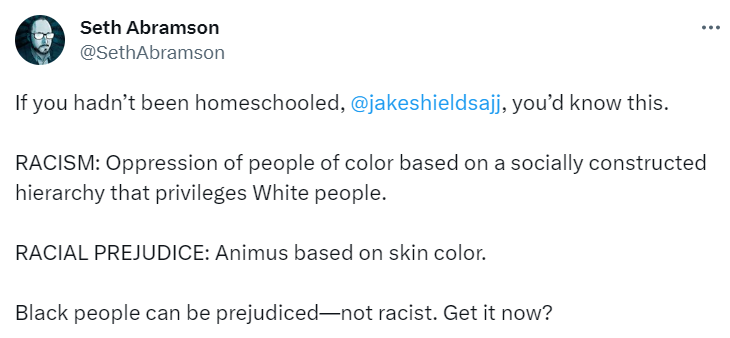
As such, there now exists a phenomenon that can be referred to as “the racism of the gaps”. This is when differences in outcome between any two human populations is ascribed to racism before any other explanation is considered, or when more plausible but non-race-based explanations are rejected. If a person from Race A has any kind of advantage over, or better outcome than, a person from Race B, then the gap is best explained by racism.

The most common example of the racism of the gaps fallacy relates to the so-called “wage gap”. The logic is that non-whites earn less money than whites because institutional racism discriminates against non-whites. This racism means that non-whites are passed over for promotions, or not hired in the first place, thereby giving them fewer opportunities to make money.

Blank slate logic only holds if a person believes that all human populations are precisely the same in all intellectual measures. The simple fact that most Asian groups in the West do as well, or better than, white people, despite suffering as much, or more, prejudice than much less successful immigrant groups, is sufficient evidence to disprove blank slate theory.

Moreover, the psychological literature clearly states that the most important factor determining the income of any individual or group is IQ, and the measured IQs of all the various races in the West correlate strongly with their economic outcomes. If the various races are as wealthy as the science predicts they should be, what’s the problem?

The term ‘racism of the gaps’ mocks the fact that no social justice warrior has ever been able to quantify the effect that all the supposed white supremacy has had on the beleaguered non-whites of the world. All the science explaining the differences between races is thrown out the window in preference of a Cultural Marxist narrative about racism – it’s right to mock such low-IQ thought processes.

Racism of the gaps also appears when people ask, for example, why there are so few Maoris or Pacific Islanders in the New Zealand cricket team. The implication is that some nefarious white conspiracy is preventing them from accessing opportunities. The reality, of course, is that Maoris and Pacific Islanders prefer to play other sports.

No-one makes the claim that the NRL is racist in favour of Maoris and Pacific Islanders because they are heavily over-represented in rugby league. The people pushing the racism of the gaps fallacy only care about something if there’s a racial angle that can be exploited, especially an anti-white one.

Much like the term ‘racism’ itself, ‘racism of the gaps’ refers to a deliberate strategy to undermine Western society by setting different racial groups against each other. It’s pushed by the ruling class, particularly the globalist ruling class, who want all the peoples they rule over divided and conquered along every possible fracture line. Thus they claim racism where it doesn’t exist, in order to stoke tensions and mistrust.

The best way to stop this pernicious logic from becoming even more widespread is to mock it at every turn. Any time someone leaps to blame racism for some difference in outcome, on flimsy and unscientific evidence, laugh at them for committing the racism of the gaps fallacy. Make them feel stupid for pushing long-debunked blank slate nonsense.

*

If you enjoyed reading this essay/article, you can get a compilation of the Best VJMP Essays and Articles from 2021 from Amazon as a Kindle ebook or paperback. Compilations of the Best VJMP Essays and Articles of 2020, the Best VJMP Essays and Articles of 2019, the Best VJMP Essays and Articles of 2018 and the Best VJMP Essays and Articles of 2017 are also available.

*

If you would like to support our work in other ways, subscribe to our SubscribeStar fund, or make a donation to our Paypal! Even better, buy any one of our books!

Decolonisation In Practice: A Historical Perspective

It’s common to hear demands nowadays for something called “decolonisation”. Apparently colonisation was the worst thing that ever happened to the peoples of the New World, and justice cannot be served until it is reversed. The media, educational and political machinery of the West is fully behind pushing the term and its logic. But what is it?

Some definitions of decolonisation refer to the colonised nation becoming independent of the colonising power. But this cannot be the sense in which most people use the term, because New Zealand has been independent from Britain for decades already and there are still calls for decolonisation. So the term must mean something else.

In most discourse, ‘decolonisation’ is a synonym for white erasure. This means the systematic removal of all white people and all white culture. It means the destruction of all white institutions – whites must not be allowed to organise in any sense. It means the criminalisation of all pro-white speech, even if spoken in self-defence (see the ‘It’s Okay To Be White‘ saga for proof). It means the demonisation of whites in speech and media (as per Marama Davidson).

Understanding this, it’s possible to look back on historical examples of decolonisation to get some clues about how it works in practice.

The first major example is Haiti. The island contained the first European settlement in the Americas, founded by Christopher Columbus in 1492. The French built it into a sugarcane colony, creating immense wealth from the product of slave labour. At one point, there were some 30,000 French living there and 700,000 African slaves.

Decolonisation came in the form of the Haitian Revolution, beginning in 1791 and ending in 1804. This sentence, from Wikipedia, says it all: “On 1 January 1804, Dessalines, the new leader under the dictatorial 1805 constitution, declared Haiti a free republic in the name of the Haitian people, which was followed by the massacre of the remaining whites.”

A second major example comes from Algeria. A French colony since 1830, Algeria was considered an integral part of France for over a century. Algerian French culture was established enough that it managed to produce a mind as great as that of Albert Camus. After Algeria became independent in 1962, some 800,000 French colonials were driven to France.

The next major example is Rhodesia. The white population of Rhodesia peaked at around 300,000 in the mid-1970s. After the Rhodesian Bush War and the reformation of Rhodesia as Zimbabwe in 1980, wholesale ethnic cleansing began. Between 1980 and 1990, some two-thirds of the white population were driven overseas.

Rhodesia is, along with Haiti and Algeria, an archetypal decolonisation story, in the sense that it ended with the extermination of white settlers. Anyone who thinks that decolonisation is about equity is either dishonest or stupid. The spectre of decolonisation should, if we are thinking clearly, invoke images of mass slaughter and rape.

South Africa is the best major example of ongoing decolonisation today. Since 1993, the year of the referendum that introduced black rule, the white proportion of the population has halved, from 16% to 7.5%. Almost one million white South Africans have been driven overseas, an ethnic cleansing that surpasses Algeria in absolute numbers, if not proportion.

Decolonisation in New Zealand would likely involve a path similar to the places above. There is a sizable number of radicals, aided by the usual communists and fellow travellers, who dream of doing to white New Zealanders what was done to white people in Haiti, Kenya, Algeria, Rhodesia, South Africa and other places. Some of them are influential.

It might be argued that Maoris simply don’t have the numbers to repeat the wholesale ethnic cleansing of Haiti, Algeria or Rhodesia. That may be true, but the main principle of decolonisation is the progressive exclusion of all white people from all positions of power or influence, however long it takes. This can be enacted without needing to win any military victory.

For example, some co-governance arrangements involve a 50:50 powershare between Maori interests and non-Maori interests. This is naturally a form of white erasure because it reduces the proportion of power held by whites, from the 70% befitting their population, to less than 50%.

From there, it’s possible to disenfranchise white people further by awarding scholarships preferentially to non-whites, by reserving spaces in prestigious educational courses specifically for non-whites, requiring some proportion of Government procurement to be made with non-white businesses, funding and promoting non-white arts and media, and dozens of other tactics.

It’s easy to imagine that, after a few decades of this, the situation for New Zealand’s whites would start to look like the situation of South African whites today.

The reason why co-governance is so controversial is that New Zealand’s white majority, consciously or not, can sense that the push for it is motivated by the same sentiments that led to the extermination of white populations elsewhere. As such, resisting co-governance might prove to be a matter of survival.

Decolonisation, in practice, amounts to white erasure. It’s not a sure thing that we will ever read the phrase “massacre of the remaining whites” in the context of New Zealand. However, it’s apparent that there are radical elements in New Zealand who would like to massacre whites, and that there are powerful foreign interests who would like to encourage such a thing in order to destabilise an enemy.

*

If you enjoyed reading this essay/article, you can get a compilation of the Best VJMP Essays and Articles from 2021 from Amazon as a Kindle ebook or paperback. Compilations of the Best VJMP Essays and Articles of 2020, the Best VJMP Essays and Articles of 2019, the Best VJMP Essays and Articles of 2018 and the Best VJMP Essays and Articles of 2017 are also available.

*

If you would like to support our work in other ways, subscribe to our SubscribeStar fund, or make a donation to our Paypal! Even better, buy any one of our books!

Understanding New Zealand 3: Demographics and Voting Patterns of Euthanasia Referendum Voters

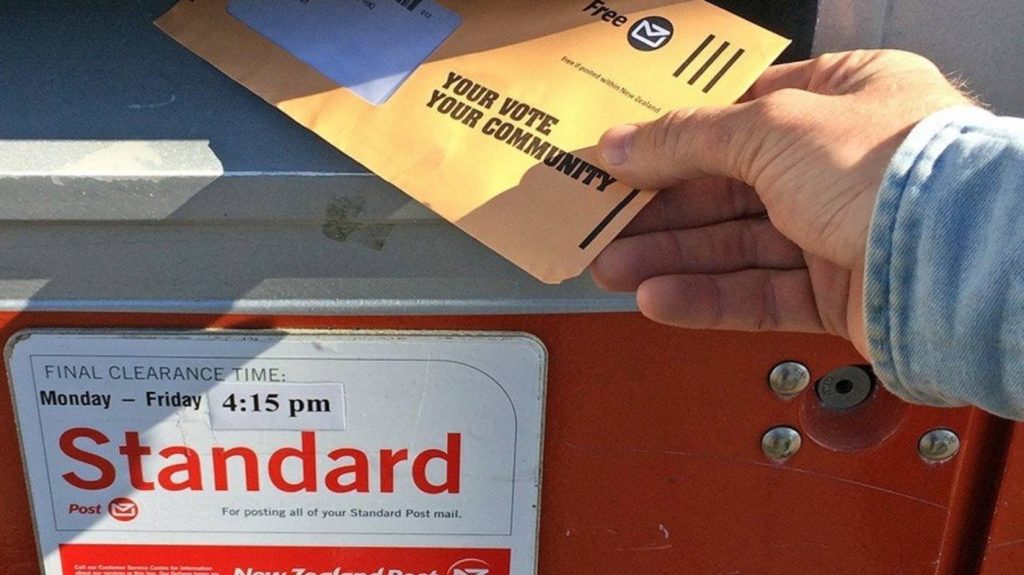
The euthanasia referendum took place at the same time as the cannabis referendum. It attracted much less attention than the cannabis one, probably because a vote in favour of reform appeared to be inevitable from the beginning. In the end, 1,893,290 people voted in favour of euthanasia, with only 979,079 against, meaning that 65.1% were in favour of reform.

Although the euthanasia issue is usually presented as one of religious morality, it’s much more complicated than that.

As with the cannabis referendum, the normal ballots for both General Electorates and Maori Electorates were placed in the same box, making it impossible to draw meaningful statistical inferences about voting patterns. This chapter, therefore, focuses on special votes only.

VariableSpecial voting Yes for euthanasia
No religion0.27
Buddhism0.36
Christianity-0.39
Hinduism0.16
Islam0.09
Judaism0.62
Maori religions-0.31
Spiritualism and New Age0.14

It’s true that, as with cannabis law reform, the main opponents to euthanasia were Christians. Perhaps surprising to most, however, sentiments were not particularly strong about the topic in either direction. Although the correlation between being Christian and special voting Yes in the euthanasia referendum was significantly negative, at -0.39, this was weaker than the correlation between being Christian and special voting Yes in the cannabis referendum (-0.48).

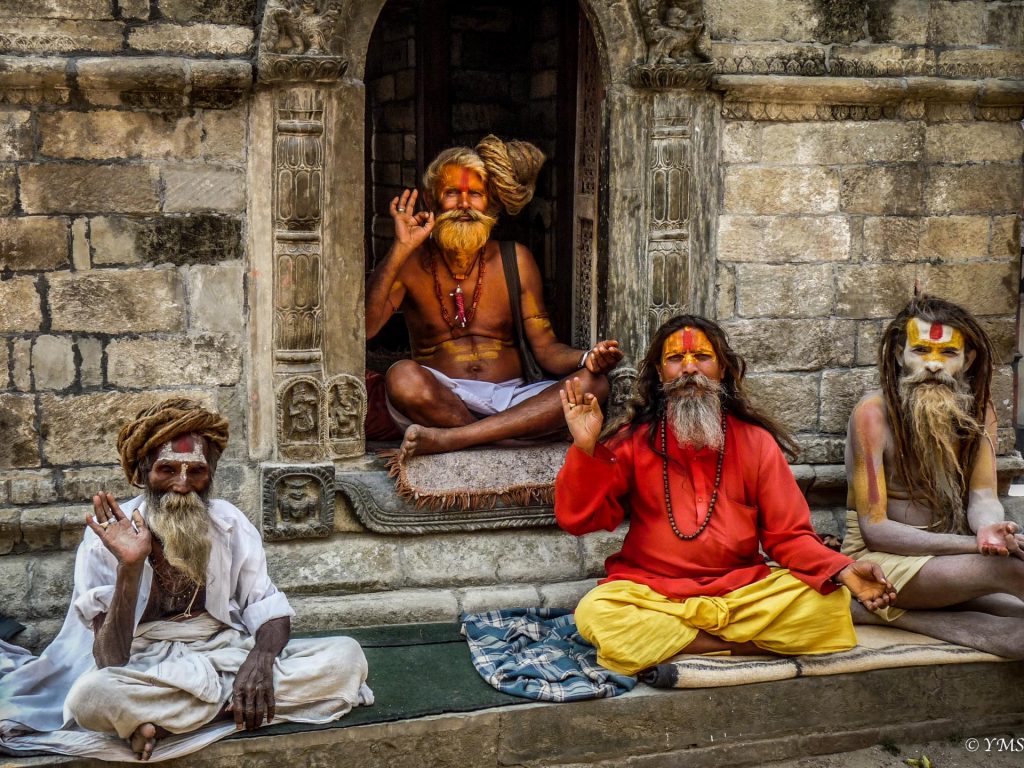
Spiritualists and New Agers, Buddhists, Hindus, Jews and the non-religious were the most likely to special vote Yes in the euthanasia referendum. These groups don’t tend to have superstitious beliefs about keeping people alive even when terminally suffering, which is primarily a Christian belief, itself a consequence of the Christian non-belief in reincarnation.

Also surprising is that the correlation between special voting Yes in the euthanasia referendum and having no religion was only 0.27. This was significant, but only barely so.

The fact that it was significant reveals the extent to which materialists in general support legal access to euthanasia. The fact that it was only barely so reveals the extent to which superstitions around death are universal in nature and not restricted to the followers of any particular religious tradition.

VariableSpecial voting Yes for euthanasia
No qualifications-0.73
Level 1 certificate-0.59
Level 2 certificate-0.57
Level 3 certificate0.07
Level 4 certificate-0.60
Level 5 diploma-0.54
Level 6 diploma0.23
Bachelor’s degree0.69
Honours degree0.75
Master’s degree0.75
Doctorate0.61

Underlining the degree to which fear of euthanasia is mostly an irrational one, but not necessarily religious in origin, are the correlations between educational attainment and special voting Yes in the euthanasia referendum.

The correlation of -0.73 between having no NZQA qualifications and special voting Yes in the euthanasia referendum was much stronger than any correlation between religious belief and special voting Yes, whether negative or positive. This correlation cannot entirely be explained by appealing to the fact that older people, who tend to be more conservative on such issues, tend to also be less well educated (see below).

Likewise, the correlations between having a Master’s degree or an honours degree and special voting Yes in the euthanasia referendum were both 0.75. This is probably because educated people have thought about the issue more, and are more likely to conclude that death is nothing to fear, and that forcing the terminally ill to stay alive is immoral.

Historically, the strongest pro-euthanasia support has come from those educated into a scientific materialist framework. This is probably because such people have the least superstitious worry about going to Hell if they end their own lives.

VariableSpecial voting Yes for euthanasia
Working in agriculture, forestry or fishing-0.37
Working in mining-0.17
Working in manufacturing-0.66
Working in electricity, gas, water or wastewater-0.24
Working in construction-0.21
Working in wholesale trade0.00
Working in retail trade-0.25
Working in accommodation or food services0.31
Working in transport, postal or warehousing-0.42
Working in information media or telecommunications0.62
Working in financial or insurance services0.56
Working in rental, hiring or real estate services0.49
Working in professional, scientific or technical services0.74
Working in administrative or support services-0.01
Working in public administration or safety0.20
Working in education or training0.09
Working in healthcare or social assistance-0.18
Working in arts and recreation services0.54

There are strong correlations between the average education level of an occupation and that occupation’s willingness to special vote Yes in the euthanasia referendum.

The strongest positive correlations between working in a particular occupation and special voting Yes in the euthanasia referendum were for the typically highly-educated professions such as professional, scientific or technical services (0.74), information media and telecommunications (0.62) or financial and insurance services (0.56).

The typically poorly-educated professions were much less likely to support euthanasia. The correlation between voting Yes in the euthanasia referendum and working in manufacturing was -0.66; with working in transport, postal or warehousing it was -0.42; with working in agriculture, forestry or fishing it was -0.37.

It might seem strange that education level was a much stronger predictor of opposition to euthanasia than religion. After all, the ban on euthanasia was initially motivated by religious sentiments. It appears that superstition is highly prevalent among the poorly-educated in New Zealand, even more so than among the religious.

VariableSpecial voting Yes for euthanasia
Working as manager0.28
Working as professional0.70
Working as a technician or trades worker-0.44
Working as community or personal services worker-0.24
Working as clerical or administrative worker0.11
Working as sales worker-0.00
Working as machinery operator or driver-0.62
Working as labourer-0.64

As with industries, professions were much more likely to support euthanasia if they were educated.

The best-educated profession is working as a professional, and the correlation between special voting Yes for euthanasia and working as a professional was a very strong 0.70. Working as a manager was also significantly correlated with special voting Yes for euthanasia, although the correlation was much weaker, at 0.28.

The least-educated professions had the strongest negative correlations with special voting Yes for euthanasia. These were working as a machinery operator or driver (-0.62) and being a labourer (-0.64). To some extent these correlations can also be explained by the fact that many machinery operators, drivers and labourers are Maori or Pacific Islander, who tended to oppose euthanasia.

VariableSpecial voting Yes for euthanasia
Age 20-240.43
Age 25-290.50
Age 30-340.44
Age 35-390.31
Age 40-440.23
Age 45-490.21
Age 50-540.07
Age 55-59-0.10
Age 60-64-0.15
Age 65-69-0.13
Age 70-74-0.12
Age 75-79-0.15
Age 80-84-0.18
Age 85+-0.08

Young people are, of course, more removed from death than older people. This could perhaps lead to them being more blase about the subject, explaining their support for euthanasia. Old people are significantly more Christian than young people, but did not vote against euthanasia in significant numbers. The truth is that euthanasia has reasonably broad support across all age groups.

All of the age groups from 45-49 years old and above had no significant correlation with special voting Yes in the euthanasia referendum. This result will surprise the many who would have expected significant negative correlations. Old Christians seem to be much less against euthanasia than they were against cannabis – perhaps because euthanasia prohibition threatens to cause suffering to them, whereas cannabis prohibition mostly causes suffering to others.

VariableSpecial voting Yes for euthanasia
No children0.66
One child0.00
Two children-0.12
Three children-0.49
Four children-0.67
Five children-0.65
Six or more children-0.55

One of the strongest correlations was between special voting Yes in the euthanasia referendum and having no children – this was 0.66. This can mostly be explained by the existence of a strong correlation between special voting Yes in the euthanasia referendum and having no NZQA qualifications.

There was a correlation of -0.67 between having four children and special voting Yes in the euthanasia referendum. This might best be explained by reference to the fact that those with four children tend to be less well educated than the average, and the less well educated tend to oppose euthanasia.

An alternative explanation is that those with the strongest pro-life sentiments will both have many children and oppose euthanasia. These sentiments, contrary to popular belief, are far from necessarily Christian. Some will be, but most not.

VariableSpecial voting Yes for euthanasia
Yearly income < $5,0000.03
Yearly income $5,000-$10,0000.14
Yearly income $10,000-$20,000-0.54
Yearly income $20,000-$30,000-0.53
Yearly income $30,000-$50,000-0.60
Yearly income $50,000-$70,0000.12
Yearly income $70,000+0.69

This set of correlations is unusual. They start relatively neutral, then become significantly negative as people become wealthier, and then become significantly positive as people become still wealthier. This is different to the usual linear pattern seen in correlations between e.g. education and income.

Probably this pattern can best be explained by appeal to the fact that the wealthiest segment of the population is also the most highly-educated, whereas the middle-wealthiest segment is the poorest educated, and the poorest segment of the population, because it is mostly comprised of students, pensioners and young workers, is a blend of both.

Therefore, the wealthiest and most highly-educated Kiwis special voted Yes for euthanasia, the middle-wealthy and most poorly-educated Kiwis voted against it, and the poorest and middle-educated Kiwis were inbetween the two.

VariableSpecial voting Yes for euthanasia
Born in New Zealand-0.40

A very curious result is that those born in NZ were significantly less likely to vote for euthanasia. Being NZ-born made a person even more likely to vote against euthanasia than being a Christian did.

This is primarily a function of the fact that NZ-born voters are significantly less educated than foreign-born ones, and poorly-educated people voted heavily against euthanasia. The sort of person who immigrates to a foreign country tends to be the sort of person who is not superstitious.

VariableSpecial voting Yes for euthanasia
NZ European0.13
Maori-0.32
Pacific Islander-0.22
Asian0.28

There were no strong correlations between belonging to a particular race and voting a particular way in the euthanasia referendum. There was a significant negative correlation between being Maori and special voting Yes in the euthanasia referendum, and there was a significant positive correlation between being Asian and special voting Yes. However, neither was particularly strong.

Perhaps the most curious outcome here is the fact that Asians were the race most likely to vote in favour of euthanasia law reform, at the same time as being the race least likely to vote in favour of cannabis law reform. This is especially noteworthy given the strength of the correlation between special voting Yes for euthanasia and special voting Yes for cannabis (see below).

Also noteworthy is the fact that Maoris and Pacific Islanders voted similarly on euthanasia, when their votes were very different on cannabis. Just because pan-Pacific opposition to some reforms (like euthanasia) might exist, doesn’t mean that it exists with regard to other reforms (like cannabis).

VariableSpecial voting Yes for euthanasia
Special vote Yes for cannabis0.74

One of the strongest correlations of all was between special voting Yes in the euthanasia referendum and special voting Yes in the cannabis referendum. This is because Yes voters in both instances tended to be young and well-educated. Most people in this category felt that both euthanasia prohibition and cannabis prohibition were antiquated laws that reflected the morality of a bygone age.

The major difference between the two is that those special voting Yes in the euthanasia referendum tended to be foreign-born, whereas those special voting Yes in the cannabis referendum were more likely to be New Zealand-born.

VariableSpecial vote Yes for euthanasia
Voting Labour 2020-0.09
Voting National 20200.17
Voting Greens 20200.70
Voting ACT 20200.17
Voting New Zealand First 2020-0.28
Voting Maori Party 2020-0.21
Voting New Conservative 2020-0.21
Voting The Opportunities Party 20200.60
Voting Advance NZ 2020-0.31
Voting Sustainable NZ 20200.47
Voting ALCP 2020-0.31
Voting TEA Party 20200.13
Voting Heartland NZ 2020-0.02
Voting Social Credit 2020-0.21
Voting NZ Outdoors Party 2020-0.16
Voting ONE Party 2020-0.30
Voting Vision NZ Party 2020-0.23

The party correlations provide more evidence for the trends already outlined.

The parties with well-educated voters tended to support euthanasia. The correlation between special voting Yes in the euthanasia referendum and voting Greens was 0.70; with voting The Opportunities Party it was 0.60; with voting Sustainable NZ it was 0.47. All of these parties make a point of basing their opinions on evidence, and therefore they reject the “if you kill yourself you go to Hell” narrative.

Advance NZ and ALCP had two of the most poorly-educated voting blocs, and those blocs were also the least likely to support euthanasia. The correlation between special voting Yes for euthanasia and voting for either party in 2020 was significantly negative, at -0.31. There was also negative correlations between special voting Yes for euthanasia and voting ONE Party, Vision NZ, Maori Party or New Conservatives.

Considering that ACT voters tend to be highly educated, and that many of them are Chinese (who tend to support euthanasia), it might seem surprising that the correlation between voting ACT in 2020 and special voting Yes for euthanasia was only 0.17. This can be explained by the fact that ACT voters in 2020 were much older than they usually are, and old people tended to oppose euthanasia.

VariableSpecial vote Yes for euthanasia
Median income0.55
Mean income0.65

There were strong correlations between personal wealth and support for euthanasia. The correlation between special voting Yes for euthanasia and median income was 0.55, and with mean income it was 0.65. These two correlations lay bare the extent to which the people near the top of society supported euthanasia reform.

It’s not likely that wealth, by itself, makes a person more likely to support euthanasia. More likely it’s education that does so, and since wealth is highly correlated with education it’s also correlated with support for euthanasia.

In summary, those who cast a special vote for Yes in the euthanasia referendum were primarily well-educated. They varied greatly in race, income, religion and age, but the strongest correlations with special voting Yes for euthanasia were with educational levels.

Euthanasia, unlike cannabis, was an issue on which the ruling class were mostly agreed. This is, at least partly, because the ruling class is almost entirely materialist. This materialism apparently makes it easier to see the benefit in “death with dignity” measures such as euthanasia, but does not make it easier to see the benefit in legalising spiritual sacraments such as cannabis.

*

This article is an excerpt from the upcoming 3rd Edition of Understanding New Zealand, by Dan McGlashan and published by VJM Publishing. Understanding New Zealand is the comprehensive guide to the demographics and voting patterns of the New Zealand people.
*

If you enjoyed reading this essay/article, you can get a compilation of the Best VJMP Essays and Articles from 2021 from Amazon for Kindle or Amazon for CreateSpace (for international readers), or TradeMe (for Kiwis). A compilation of the Best VJMP Essays and Articles of 2019, the Best VJMP Essays and Articles of 2018 and the Best VJMP Essays and Articles of 2017 are also available.

*

If you would like to support our work in other ways, subscribe to our SubscribeStar fund, or make a donation to our Paypal! Even better, buy any one of our books!

The Problem Of Sub-Global Identities

The grand political battlefield of the 21st Century so far is identity. Who am I? Who are we? Such questions used to have obvious answers, but 60-70 years after the first waves of cheap labour imports swept into Western countries, it’s no longer clear. The greatest difficulty comes from the fact that confusion around these issues is deliberately generated by nefarious actors.

Answering the question of Who am I? or Who are we? is hard enough when it’s being asked without interference. The world is a marvellously complex kaleidoscope of human expressions at the simplest of times. But when globalists deliberately muddy the waters in order to promote their own interests, it starts to get tricky.

Globalists have always known one thing: in order to maximise globalist consciousness, all identities relating to groups smaller than the globe have to be destroyed. This is true for every level of organisation from the race down through the nation to the community and the family. These sub-global identities, as competitors to globalist identity, have to be smashed.

When you’re trying to create a One World Government, you need people loyal to the concept of globalism above all else. These people need to be conditioned to think of themselves as humanity first and foremost. They must not be allowed to think of themselves as anything sub-global. All sub-global identities weaken loyalty to the One World Government.

The simplest way to ensure this loyalty is to condition them, through indoctrination at school and propaganda through the television, that all sub-global identities are for low-status people. This is done eagerly by the Marxists in the teachers’ corps, who tell their pupils that nationalism caused the world wars and that racism is the single biggest issue facing the West.

Hollywood assists with a parade of caricatures: moronic rednecks, vampiric Nazis, small-town lowlives, bickering married couples. Each one helps create the impression that only through hate could a person have a sub-global identity, and that those with globalist consciousness always win in the end.

It isn’t just communists on the authoritarian left who wish to destroy all sub-global identities.

Capitalists also seek such destruction, and also encourage globalist consciousness. This they do not for ideological reasons (as the communists), but out of a drive to maximise profit potential – it’s well known that anyone who derives joy and meaning from their family or nation will consume less than an atomised individual.

The common refrain from the corporate media is that families just make your life worse. Extended families, like races and nations, are for rednecks only. The compleat 21st Century person lives as an individual, only to consume. Identity comes not from family, nation or race, but from consumption choice. Thus, it’s not anything important, just a mask that one can put on and take off as needed.

Nations make your life worse as well – they just drag you into wars. Corporate media denies that nations offer individuals a sense of belonging, meaning, culture, history and structure. The impression we’re given is that nations are merely a vehicle by which the ruling class can call you up to die in some overseas adventure. In other words, national ties are burdensome and should be discarded.

Aside from destroying sub-global consciousness, the world’s ruling class also promotes global consciousness.

Brand consciousness is one of the most obvious ways they do this. The forced “Holden vs. Ford” meme is a favourite corporate trick to raise brand awareness and, by necessity therefore, to lower racial, national or familial awareness. Coke vs. Pepsi, Sega vs. Nintendo, McDonald’s vs. KFC are all presented to us as globalist alternatives to sub-global identities.

Franchise sport is one of the subtler ways they do this. Instead of supporting representative teams, which represent real-world phenomena such as provinces and nations, people are induced to support franchise clubs which have no connection to the locale in which they play. Arsenal fans will still support Arsenal even when none of their players are English. They might as well support McDonald’s.

On top of these moves comes the ever-present kumbaya mentality of blank slatism, which claims that all human populations are exactly the same and interchangable. Because all humans are exactly the same, according to this mindset, there’s no point in thinking about sub-global identities. Racial or national identities have no meaning.

The solution to these globalist aggressions is whole-hearted embrace of sub-global identities, without the out-group antipathy stereotypical of such actions.

Embrace identifying with your nation, your race, your province, your city or town. Laugh in the faces of those who call you a bigot for this. Refuse to go along with the mindless supremacism of trashy people who happen to share an identity with you.

Go even further than this. Act as the solar energy that returns your race, your nation, your province to the embrace of the divine. Shine above those who would call you immoral for rejecting globalist narratives. Never forget that you are free to decide your own identity.

*

If you enjoyed reading this essay/article, you can get a compilation of the Best VJMP Essays and Articles from 2021 from Amazon as a Kindle ebook or paperback. Compilations of the Best VJMP Essays and Articles of 2020, the Best VJMP Essays and Articles of 2019, the Best VJMP Essays and Articles of 2018 and the Best VJMP Essays and Articles of 2017 are also available.

*

If you would like to support our work in other ways, subscribe to our SubscribeStar fund, or make a donation to our Paypal! Even better, buy any one of our books!