

Could New Zealand Legalise Cannabis On Maori Land?

The outcome of last year’s cannabis referendum was bitter for many Maori people. Despite that some 80% of Maoris voted in favour of changing the law, heavy anti-cannabis sentiment among Pacific Islander and Asian voters saw the referendum ultimately fail. Fortunately for all, an elegant solution exists overseas, and we could copy it.

The 2020 cannabis referendum was close. 50.7% of eligible voters wanted to continue with cannabis prohibition, and 48.4% did not. There was a significant positive correlation between being New Zealand-born and voting Yes in the referendum, so within that 50.7% were a large number of recent immigrants, particularly Chinese ones. Some 80% of Chinese voters voted in favour of locking Kiwi cannabis users in cages.

There are roughly 250,000 ethnic Chinese in New Zealand. Assuming that 80% of them were eligible to vote in the referendum, and assuming that 80% of those did, that gives us 160,000 ethnic Chinese voters. We know from above that 80% of those voted in favour of cannabis prohibition, which gives us 128,000 Chinese No voters opposed to 32,000 Chinese Yes voters. This represents a majority of around 96,000 for the No side among Chinese voters.

In the cannabis referendum overall, 1,474,635 people voted in favour of the continued persecution of cannabis users, and 1,406,973 voted to end it (for more detail on who these people were, see Understanding New Zealand 3). This means that the No side won the cannabis referendum by 67,662 votes.

So a little bit of primary school-level maths shows us that non-Chinese voters wanted to change the cannabis laws. But the native Kiwi majority that wanted reform was forced to endure further prohibition because of the wishes of recent immigrants, often from totalitarian political systems, and with little understanding of our culture.

For someone born in New Zealand, with centuries-deep roots in New Zealand, it seems outrageous to me that voters who came to New Zealand in the last decade took away our right to use cannabis. The voters who have flooded into the country since John Key threw the borders open have no real loyalty to, or respect for, the New Zealand people. They shouldn’t be deciding what rights the rest of us have.

That mostly rural-dwelling Maoris wanted legal cannabis, but got trumped by city-dwelling Pacific Islanders and Asians, has worsened existing social tensions in New Zealand. Maoris already had reason to resent the cannabis laws, which were forced on them by outsiders in the first place. The Sixth Labour Government’s response to their 80% support for legal cannabis has been, so far, to tell them to go fuck themselves.

One obvious, and obviously superior, solution presents itself.

In 2014, the United States Federal Government stated that it would not interfere with any Indian reservation or territory that wanted to legalise cannabis on its land. This declaration was a formality that followed from their already declared policy of non-interference with legal cannabis in Colorado.

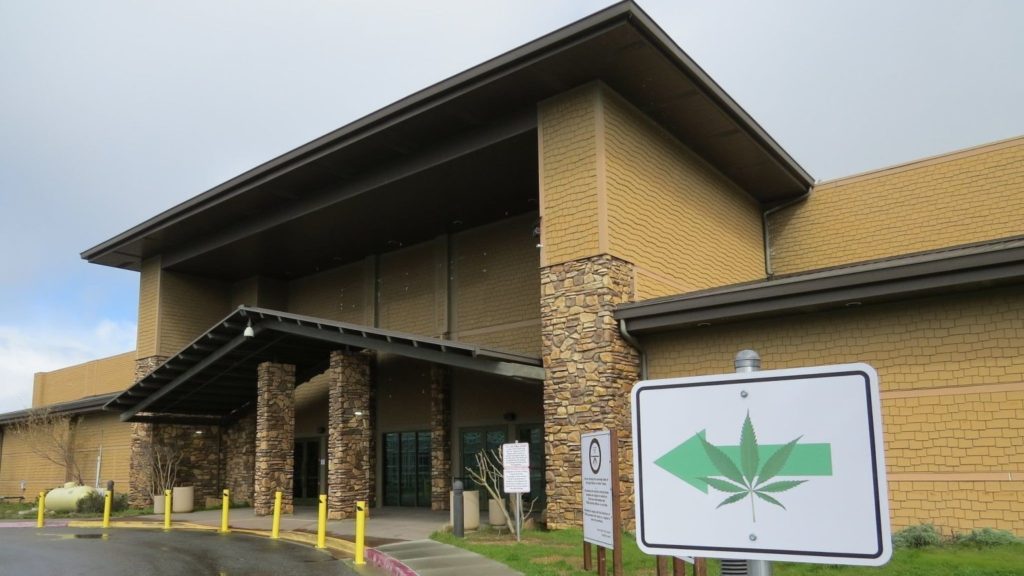
One tribe, that of Squaxin Island in Washington, opened a legal cannabis store called ‘Elevation’ in 2015. First nations peoples in Canada have also allowed for legal cannabis sales on their lands. Native tribes in the Americas are generally pro-cannabis for the same reasons that Maoris are: they know it’s much better for them than alcohol is and that cannabis prohibition was pushed on them by outsiders.

This article proposes that the New Zealand Government allow individual Maori tribes to legalise and sell cannabis on their land.

There are two major benefits to this proposal.

The first, and most major, is that it shows some respect to the 48.4% of Kiwis and roughly 80% of Maoris who want a legal respite from cannabis prohibition. Currently, these two groups of people are told that they just have to eat shit, because neither a Labour nor a National Government will do anything about the cannabis laws.

Legal cannabis sales on Maori land would allow for the pro-cannabis half of the population to freely access and to use cannabis there, away from the judgment of those who think they’re scum. This would allow for the custodians of that land to build cannabis dispensaries, cafes and accommodation for the cannabis tourists. If the anti-cannabis half of the population doesn’t like it, they can stay in the cities and drink booze.

The second major benefit, or group of benefits, relate to the tourism potential of this proposal.

If you’re a young Western tourist, and you can choose between travelling to the American West Coast and using cannabis and alcohol, or travelling to New Zealand and using alcohol only, it’s an easy decision. About as easy as choosing between travelling to a Western country and using alcohol or travelling to a Middle Eastern theocracy and using nothing.

Legalising cannabis on Maori land would create a massive tourism boost in rural and impoverished areas like Northland and the East Coast of the North Island. These areas would benefit from both domestic and international tourists, and it would also create a spillover tourism effect for non-Maori businesses who catered to the international tourists who would otherwise have gone to a country with legal cannabis.

The idea of legalising cannabis on Maori land is a sure win for the first party to propose it. It’s the kind of solution that New Zealand needs. Unfortunately, our current parties are either bereft of imagination or more interested in grandstanding than making positive, practical solutions.

*

If you enjoyed reading this essay/article, you can get a compilation of the Best VJMP Essays and Articles of 2020 from Amazon for Kindle or Amazon for CreateSpace (for international readers), or TradeMe (for Kiwis). A compilation of the Best VJMP Essays and Articles of 2019, the Best VJMP Essays and Articles of 2018 and the Best VJMP Essays and Articles of 2017 are also available.

*

If you would like to support our work in other ways, please consider subscribing to our SubscribeStar fund. Even better, buy any one of our books!

VJMP Anzac Day Address 2021: A Radical Proposal For The Future Of Anzac Civilisation

The future of Western Civilisation is starting to look grim. It appears as if we are transitioning into tyranny – as Plato and Aristotle warned was the inevitable fate of democracies. This proposal suggests that the Anzac Empire intentionally position itself as the last bastion of free civilisation, in stated opposition to globalist tyranny.

The cancer of identity politics has destroyed both America and Europe. No-one knows who they are anymore. No-one can agree on anything anymore. The resulting confusion has led to a permanent state of low-level civil war. Aristotle explained in Politics how this state inevitably leads to the rise of a dictator, as people realise that only a ruthless strongman can get anything done.

This cancer has also infected Anzac civilisation. Over recent decades, a concerted effort has been made to erase our culture and to create a division between the white settlers and the natives. Today’s mainstream media pushes a narrative of white Anzacs battling for supremacy against the natives, as if any victory for one side inevitably meant a defeat for the other.

However, the low population of Anzacistan means that the emotional pressure of this cancer is weak. In the same way that the low population of revolutionary America allowed it to make rapid ideological changes that took it on a greatly different path to Europe, so too can we make rapid ideological changes that take us on a greatly different path to the rest of the West.

Americans have been enslaved by a power structure that has deliberately pit them against an implacable African minority. Europeans have, likewise, been enslaved by a power structure that has deliberately pit them against an implacable Muslim minority. It is apparent that this globalist power structure has a similar plan to divide and conquer Anzac civilisation.

That is, unless we organise to stop them.

It’s time for a revolutionary vanguard of Anzac nationalists to stand up and take control of the direction of our civilisation. In doing so, we must explicitly reject the neoliberal totalitarianism that has befallen the West over the past four decades. We must explicitly reject the debt slavery, the open borders, the soulless consumerism and the struggle sessions. We must plot a new course through this new century.

This proposal is for the Anzac people to recognise:

1 – That the current order of the world is disintegrating;

2 – That this disintegration will cause immense suffering to those peoples of the world who rely on good order to provide a decent upbringing for their children;

3 – That the most effective way for those people to avoid this suffering is to reassemble in the Southeastern corner of the world and bring a new political order into being.

The great waves of colonisation, from Europe and elsewhere to the New World, primarily attracted a certain type of person. The landed gentry and the peasantry mostly stayed behind, unwilling or unable to change their environment. Those who did make the move were mostly those from the rising middle classes. This is why people from the New World today are more masculine than their Old World counterparts.

People from the New World, in comparison to people from the Old, are extraverted, adventurous, assertive, dynamic and determined. These are the kind of people who build new countries. They are the same ones who built Australia and New Zealand, and we can enlist them to build an Anzac Empire.

This Anzac Empire could rise by intentionally attracting 100 million or so of the most creative, ambitious and tenacious people from America and Europe as they collapse into brazilianised cesspits over the next 80 years. In doing so, we would chiefly appeal to the young and educated people who are currently getting strangled by their moribund home economies and suicidal popular cultures.

This proposal would make the lands of Anzac into one great citadel of civilisation, where the valued learnings of the past can be preserved as the rest of world disintegrates into chaos. By attracting the most intelligent people from the formerly wealthy parts of the world, we will ensure a rise akin to that of America during the 19th and 20th Centuries.

In 1860, the population of America was just over 30 million, roughly the same as that of the Anzac Empire today. A century later, the American population was 180 million and the nation was established as the most powerful military, economic, scientific and cultural force since the Roman Empire.

The Anzac Empire could undergo a similar transformation – from middle power to world’s leading nation – over the next century. All we would have to do is maintain (or, even better, improve) the genetic and cultural infrastructure of these lands by encouraging immigration from high-IQ cultures that look after their children, and discouraging immigration from low-IQ cultures that don’t look after their children.

First of all, we need to clear the current crop of scum out of our ruling institutions. This will require that our revolutionary vanguard swear never to work with, accommodate or appease any globalist or authoritarian elements. Any and all such elements must be forever excluded, because their presence will prevent the rest of us from introducing a fair set of laws that suit our genetic and cultural temperament.

One of the laws of this new empire must be that anyone promoting the mass importation of cheap labour, or immigration from r-selected countries, is sentenced to death. Anyone championing mass immigration for the sake of pumping up house prices must die so that the Anzac people – and the world – may live.

Other laws can follow the Sevenfold Conception of Inherent Human Rights.

This radical proposal for the future of Anzac civilisation is that the K-selected and noble people of the world fall back to our Southeastern corner, so as to best outlive the deluge of chaos and misery that the ongoing population explosion of the r-selected is inflicting upon the rest of Planet Earth. Let the Anzac Empire become an eternal citadel of all that is valuable in the world, the worthy heir to the Greco-Roman-Anglo culture that preceded us.

*

If you enjoyed reading this essay/article, you can get a compilation of the Best VJMP Essays and Articles of 2019 from Amazon for Kindle or Amazon for CreateSpace (for international readers), or TradeMe (for Kiwis). A compilation of the Best VJMP Essays and Articles of 2018 and the Best VJMP Essays and Articles of 2017 are also available.

*

If you would like to support our work in other ways, please consider subscribing to our SubscribeStar fund. Even better, buy any one of our books!
The Geopolitical Order Of The Coming Age Of The World

A medieval map of the world conceptualised it as a cloverleaf, in which Jerusalem occupied the central node, with three major areas of political influence spreading out from it. In the 16th Century, it seemed like the three major areas of the world were Europe, Asia and Africa, with America looking on from afar.

Occupying a place at the confluence of several major trade routes was the basis for Jerusalem’s rise to prominence. It allowed them to gather massive amounts of taxes, and to easily send Abrahamic missionaries to all parts of the world. Eventually, so many of those missionaries had reached Europe that it fell under the dominion of the God of Abraham.

In the World Age stretching from the end of the Egyptian Age to now, otherwise known as the Age of Pisces, the God of Abraham reigned triumphant, and the world seemed to be centered on Jerusalem.

The Age of Pisces, however, is ending, and the Age of Aquarius is beginning. This term refers to a new spiritual age, but, as per the Second Hermetic Principle, these spiritual changes will be reflected in the material world. A new spiritual order will mean a new geopolitical order. There are several clues as to what that new order might look like.

The coming geopolitical age of the world will have a similar structure to the old, in that there are three major powers, each of which is either allied or at war with the other two. The major difference is that the new geopolitical order will be based around the East instead of the West.

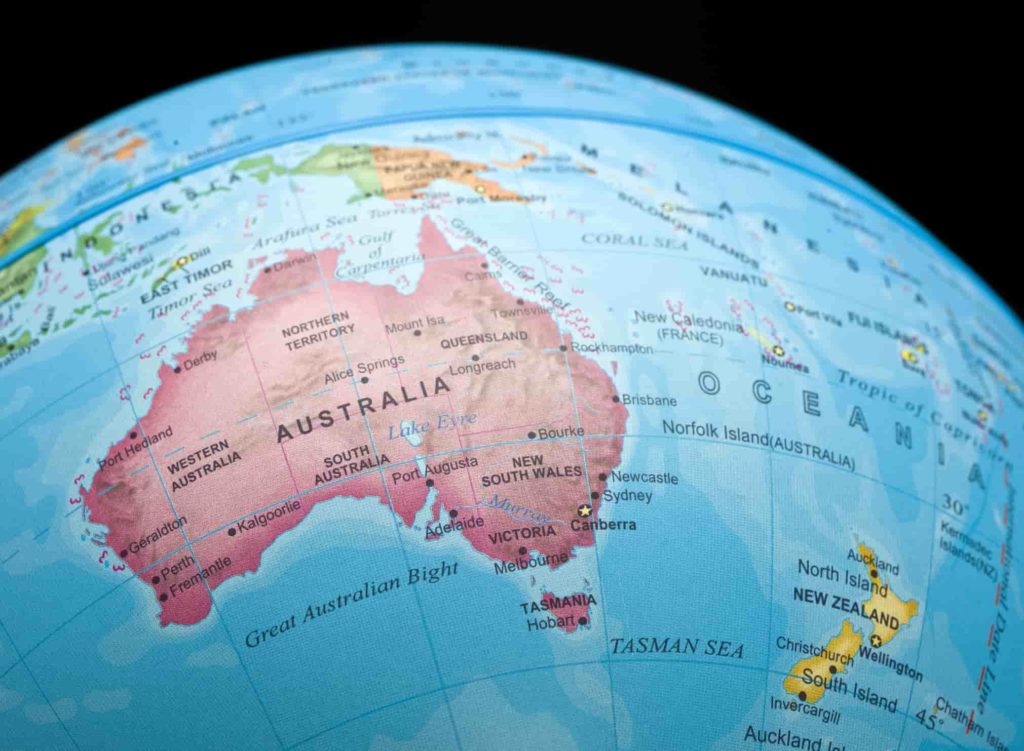
The shape of this new world will be like a three-leaf clover based around Singapore. Instead of Jerusalem, Singapore will be the highly wealthy trade hub at the centre of the world. Instead of Europe, Asia and Africa, the world powers will be China, India and the Anzac Empire.

That Singapore will be the centre of the new age of the world is guaranteed by the fact that whoever controls Singapore controls the Malacca Straits, and whoever controls those straits controls a chokepoint that not only connects the Pacific and Indian Oceans but which also oversees half of the world’s shipping. The Malacca Straits are the Levant of the new age – they are where worlds collide.

That China and India will play major roles in the new order of the world is appropriate for two major reasons: their vast populations and their previous historic influence. At time of writing, in 2021, both of these nations possessed immense untapped potential.

The populations of China and India will wane as they continue to become wealthier. The Chinese birthrate is already below replacement level, and below one child per woman in major centres like Shanghai and Beijing. The Indian fertility rate has fallen to replacement level, and looks set to fall below that in coming decades.

Both of these major powers will be moderately economically advanced by the time the new age of the world is underway (instead of being highly advanced in the cities and backwards elsewhere). Their great power and influence will come from their vast populations, which should still be around a billion each by the end of the century.

The birthrate of Anzacistan has also stabilised (although it’s higher than that of wealthy Chinese and Indians), but the Southeasterners have one crucial advantage over India and China: they can take mass amounts of immigration.

The population of Australia and New Zealand combined is, in 2021, only 30 million, but that is similar to the American population of 1860. So although the combined Anzac GDP might be only 1.6 trillion, compared to India’s 2.6 trillion and China’s 14.8 trillion, the Anzac Empire has vast untapped potential in the form of underpopulated land.

By 1890, the American population had grown to 60 million, and by 1930 it had swelled to 120 million. If the Anzac Empire would enact policies that allowed for a similar level of population growth, then, assuming the average quality of the genetic infrastructure was maintained, it could be a force as powerful as today’s Russian Federation by the end of the 21st Century.

Africa and Europe will continue to decline into irrelevance. As of today, both Britain and France could project more power into Singapore than any of China, India or an Anzac Empire. In the new age of the world, both Britain and France will fall away, ruined by their suicidal decision to accept mass Muslim and African immigration. Africa doesn’t have the genetic infrastructure to ever become a power.

In the beginning of the new age, the Anzac Empire would work very closely with America. This is a natural alliance on account of the shared culture, history and values of the two nations. It would also work very closely with Singapore (New Zealand’s ban on foreign buyers of property has two exemptions: Australians and Singaporeans), for similar reasons.

As the new age progresses, the Anzac Empire will become a great power in its own right, and America will once again take more of a support role in a wider Pacific sense. The basic geopolitical order of the new age of the world is all but certain at this point, barring any major upheavals.

*

If you enjoyed reading this essay/article, you can get a compilation of the Best VJMP Essays and Articles of 2019 from Amazon for Kindle or Amazon for CreateSpace (for international readers), or TradeMe (for Kiwis). A compilation of the Best VJMP Essays and Articles of 2018 and the Best VJMP Essays and Articles of 2017 are also available.

*

If you would like to support our work in other ways, please consider subscribing to our SubscribeStar fund. Even better, buy any one of our books!

How Long Until Wages Catch Up To The Housebuying Power Of 1992?

The long-term strategy for building economic wealth appears to be holding house prices steady while waiting for wages to catch up. This article does the maths to answer one question: how long until the average wage has the same housebuying power of the average wage in 1992?

In 1992, the average New Zealand house price was $105,000. The average wage at that time was almost $15 per hour. This means that most Kiwis found themselves able to buy a house after 7,000 hours of labour.

By 2021, the average New Zealand house price has climbed to some $750,000, while the average wage languishes at around $34 an hour. This means that most Kiwis today are looking at putting in 22,000 hours of labour before they can get to the position of homeownership.

Economists predict that the average New Zealand house price will increase by double-digit percentages in 2021. 5% increases are expected for the two years after that, up until March 2024, which is as far ahead as anyone responsible will try to predict.

Let’s make two assumptions: firstly, that these forecasts are broadly correct; secondly, that house prices stop increasing after March 2024, allowing wages to catch up.

This suggests that house prices will top out at a national average of about $910,000 ($750,000 x 1.10 x 1.05 x 1.05). This assumes that they increase by around 10% in the year to March 2022, and then 5% for the two years after that, before remaining stable thereafter. The reality is, of course, anyone’s guess, but let’s say for simplicity’s sake that house prices reach $910,000 by March 2024 and then stay there in perpetuity.

To buy a $910,000 house with 7,000 hours of labour, a worker would have to be getting paid $130 per hour. Assuming that all other things (labour share, taxes, rents, non-rent living costs) are equal, $130/hr is what the average wage would have to be for the average worker to have the same housebuying power as the average worker in 1992.

As mentioned above, the average wage in New Zealand is around $34 right now. This means that it has to increase 3.82 times for the average worker to have the same housebuying power that the average worker had in 1992 – without house prices increasing beyond March 2024.

Wage growth over the past 28 years in New Zealand, from just under $15 an hour in 1992 to around $34 an hour at the end of 2020, has run at about 3% per annum.

If we assume future wage increases of 3% per annum, and no further house price increases beyond March 2024, then we will have to wait around 48 years for the average wage to catch up to the housebuying power that the average wage had in 1992.

In reality, it’s unlikely that house prices will remain exactly the same for the next 48 years. When the Boomers start dying off en masse, beginning in about 15 years, the demand for housing will rapidly fall all across the Western World. At that point, house prices could go in any direction depending on how much immigration takes place.

Of course, if house prices continue to increase beyond March 2024, then wages will simply never catch up. The West will become more and more verticalised until we effectively regress into a feudal-style economy where 99% of people are renters for life.

What can be said with confidence, however, is that it will take around half a century, at current rates, for wages to catch up to the point where the average worker has the same housebuying power they had in 1992. And that is even if one assumes that house prices don’t continue to increase.

*

If you enjoyed reading this article, you can get a compilation of the Best VJMP Essays and Articles of 2019 from Amazon for Kindle or Amazon for CreateSpace (for international readers), or TradeMe (for Kiwis). A compilation of the Best VJMP Essays and Articles of 2018 and the Best VJMP Essays and Articles of 2017 are also available.

*

If you would like to support our work in other ways, please consider subscribing to our SubscribeStar fund. Even better, buy any one of our books!