

Slave Morality in 2019

Some people have made the assumption that, because Christian morals have faded from the zeitgeist in recent decades, Nietzschean concepts like slave/master morality are no longer relevant. As this essay will examine, this is not only wrong but the opposite of the truth. Slave morality, in 2019, is more influential than ever before.

The slave/master morality dichotomy comes from The Genealogy of Morals. In this book, Nietzsche outlined the distinction between the master morality that arises in a state of Nature, which divides the world into good and bad, and the slave morality that arises after civilisation and which divides the world into good and evil, with the evil being the same as the good of the master.

Understanding slave morality is to understand resentment: the man with slave mentality resents the man with master morality, and seeks to bring him down. This resentment is the emotion that arises when the ego cannot get consensual reality to conform to its will, as a slave cannot. Resentment is, therefore, the natural consequence of weakness, whether that weakness be physical, emotional, intellectual or spiritual.

One major problem with the modern world is that it is heavily overpopulated. We are coming up to 8,000,000,000 human inhabitants on this planet. This means that the vast bulk of us have effectively no influence over the course of the world, or even over our own lives. We can only move around in small boxes built by other people.

The result is that there are now previously unheard of levels of resentment in our society. This resentment has found a florid range of expression.

Social Justice Warrior culture is one of most apparent examples. The resentment of the weak can be clearly heard in the cries about privilege and oppression. The mantra of SJW culture is that whoever has power is automatically the bad guy in any conflict against someone with less power. The intention of SJWs is the same as that of the slave moralist: to rip down anyone strong and call them evil.

As Ted Kaczynski pointed out in Industrial Society and Its Future, these impulses on the part of the leftist can’t ever be satisfied. Their passion to change the world comes from the resentment of being stupid and ignorant, and this doesn’t go away no matter who they destroy. So every time they succeed in destroying someone, they simply move on to the next target.

Therefore, as long as resentment exists, there will be Social Justice Warrior culture. This culture will, like slave moralities everywhere, try and destroy anyone who is happy. SJW culture chooses to do this by calling them bigots, Nazis and racists, and declaring that all good in their lives is privilege that has been stolen from someone else.

Related to SJW culture is ethnomasochism. This is when a person derives a particular kind of thrill from running down their own people. In the same way that a regular masochist will tell his dominatrix that everything he does is wrong, so does the ethnomasochist declare that the history of his people is littered with acts of irredeemable evil.

This ethnomasochism is related to the Holocaust religion, in the sense that it posits a white boogeyman whose excessive in-group favouritism has brought terrible suffering and evil to the world. In the quasi-religious context of ethnomasochism, ‘sin’ is replaced with ‘racism’, which has to be beaten out of society by ripping down anyone who suggests it’s okay to be white.

The resentment of the ethnomasochist leads them to destroy their own nation through support for things like open borders and the mass immigration of Muslims and Africans. The paradoxical fact that they derive a sense of control from this can be explained by comparing the mentality to someone who cuts their own arms: if one must suffer, then at least one can learn to suffer on demand.

Trans culture is a third example. Many men who have found that they don’t come up to the mark as men, i.e. men who women are not naturally attracted to, also find that they can get more attention if they pretend to be women. This is particularly common among men who are physical weaklings. This behaviour mimics a mental illness known as gender dysphoria.

The fundamental motivation for many of these people is to destroy the legitimate enjoyment that normal people get out of natural interactions between masculine and feminine. They want to destroy the natural concept of both “man” and “woman” so that healthy people who fit into these roles cannot enjoy them. A generation ago, homosexuality filled this social niche, but today it’s no longer shocking enough to do so.

Already trans culture has had enough of an impact to make it difficult for quality women to find a man worth being devoted to. By continuing to delegitimise and denormalise healthy expressions of masculinity and femininity, those who promote trans culture find expression for their resentment by destroying the natural and the beautiful.

The inability to understand the importance of free speech or the right to self-defence is yet another example. When a person with slave mentality gets into power, as has happened in New Zealand with the ascension of Jacinda Ardern to the Prime Minister’s position, they are liable to strip these rights away from the populace.

This is made possible by the resentment of the dumb and boring conformists who have nothing interesting to say. Slaves don’t care about the erosion of free speech because they have nothing to say worth listening to, and therefore are not impacted by the loss of an ability to speak, any more than the average person would be impacted by a ban on professional boxing.

People with slave morality don’t understand the desire of master moralists to have the ability to defend themselves either. After all, the defining feature of a slave is that he will not defend himself if he is beaten. The resentment that comes from being this weak manifests as a desire to remove other people’s ability to defend themselves.

A fifth way is the bizarre alliance with Islam. As a psychologist writing in New English Review has explained, Islam is the perfect religion for the resentful who like to see themselves as victims. It takes the same persecution mania as the other Abrahamic cults and raises it to another degree. Muslims resent the current order of the world, and so they are natural allies to the slave moralists.

Many secular Westerners with slave mentality have powerful sympathies for Islam, and can relate to a person throwing their life away in a suicide bombing. After all, the more one resents life, the less value one puts on it. As Nietzsche wrote, the slave moralist is the one who has said ‘No!’ to life, and there is no more vivid expression of this rejection of life than a suicide bombing.

The depth of the resentment can be seen by the size of the cognitive dissonance that arises when the Islamophile is asked about Islam’s attitude to women and homosexuals. Despite the brutally cruel oppression of these groups by Muslim culture, the resentment of the Islamophile is so great that all of these crimes will be swept under the carpet. In this sense, the Islamic apologist is to this generation what the Communist apologist was to the previous one.

These are merely a sample of all the various ways that slave morality expresses itself in 2019. The frightening thing is that, as the world gets more impersonal and more overpopulated, slave morality looks set to become even more influential. The only solution appears to be a massive cull, and an emptying out of the cities where this cancerous mentality has its strongholds.

*

If you enjoyed reading this essay, you can get a compilation of the Best VJMP Essays and Articles of 2018 from Amazon for Kindle or Amazon for CreateSpace (for international readers), or TradeMe (for Kiwis). A compilation of the Best VJMP Essays and Articles of 2017 is also available.

Understanding the Globalist/Nationalist Dichotomy

In psychologist and political scientist Lee De-Wit’s recent book ‘What’s Your Bias?‘ he spoke of a new order of political alliances. The political order of today, he contends, is no longer a matter of change vs. stability, as it was during the French Revolution, or a matter of labour vs. capital as in the Industrial Revolution. Today it’s nationalist vs. globalist.

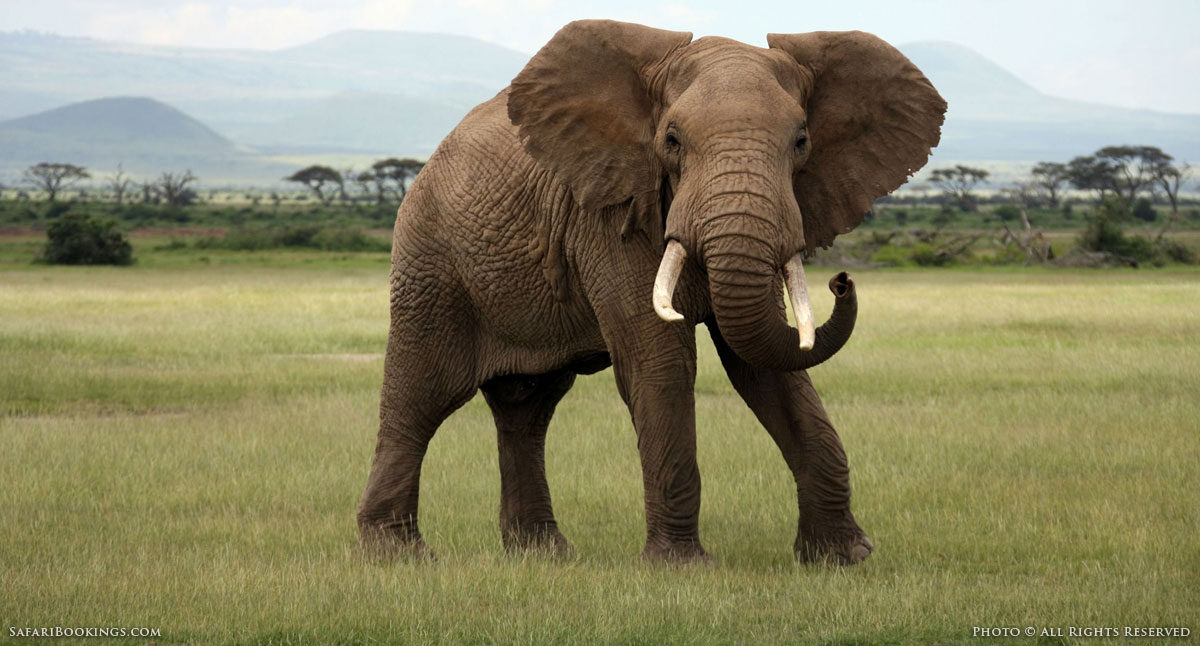
The natural basis of solidarity is biological. The strongest bond in the world is between the mother and offspring of animal species, in particular K-selected species such as humans and elephants. Mothers of any mammal species become dangerous if their offspring are threatened; many men have been killed by wandering between a mother bear and her cubs. This fierce willingness to protect is the basis for all solidarity.

It is in order to work in accordance with this natural bond that men choose to form monogamous families. The formation of a nuclear family allows for the maximum possible division of labour, so that the mother is able to fully utilise her natural love for her offspring, while the father is able to fully utilise his muscular advantage in gathering resources. Therefore, the father works with the natural solidarity of mother and child.

Families naturally bond together and form tribes, with a chieftain who settles disputes. These tribes naturally form together and form clans, and these clans naturally bond together and form nations. This process of natural bonds of solidarity leading to higher levels of social order was described by Aristotle in Politics. A nationalist, therefore, is someone who identifies with their wider kin group.

Globalism comes from the other direction. The first truly global system was the British Empire, because the British were the first to control the ocean navigation routes of the entire planet. This they achieved after their victory at the Battle of Trafalgar. Being in control of a global system, the British used it to meet their desires for increased material prosperity.

They did this in a manner similar to the previous empires, such as the Spanish and Portuguese – they imposed it on whoever had the materials. Because controlling the sea lanes made them militarily unstoppable, it was not necessary to obtain the consent of the people who lived on top of those resources. If the British respected the locals enough, they worked with them; if not, they butchered them.

Globalist logic, therefore, is not to see the nation as a family to which one belongs, but as a collection of resources that one exploits. The horrific thing about globalist logic is that it reduces human beings to dollar values and spreadsheet entries. This is why the idea of globalism imposing itself on the nation engenders so much anger among those who are loyal to a kin group.

Whether or not a person is a nationalist is primarily a matter of whether they are loyal to the people of the nation, or loyal to foreign ideologies and interests that might seek to exploit it. A person cannot be neither, unless they are also indifferent to all of the political issues influenced by this dichotomy, and those are many.

For instance, whether or not a person was born in New Zealand has a moderately strong correlation with their likelihood to vote for a nationalist party. Dan McGlashan showed in Understanding New Zealand that the correlation between being born in New Zealand and voting for the New Zealand First party was 0.54.

This is entirely logical, because there’s no point in having in-group loyalty towards a group that you don’t really belong to. If a person is born overseas, then it’s much easier for them to up sticks and move to yet another country. A person born in New Zealand, however, probably has cousins (and aunts and uncles etc.) also born here. Therefore, the New Zealand nation is their kin group.

Globalists are the children of the Empire. They don’t necessarily have loyalty to the people who they live around, because their immediate ancestors are often from somewhere else. Because the people around them are not part of their wider kin group, they feel no need to make decisions with that kin group in mind. They are comfortable exploiting them for the sake of their own personal gain, or for the gain of their kin group.

A nationalist, then, represents their people, whereas a globalist represents either another kin group somewhere else, themselves or an ideology. This ideology can be anything, but it’s usually the ideology of the Empire itself. A thousand years ago, the globalist ideology was Christianity. Today, the globalist ideology is neoliberalism, otherwise known as globohomo.

An important point is that this globalist-nationalist dichotomy cuts right across the left-right dichotomy, and could be argued to have replaced it.

The world’s globalists are split across the left and the right wings.

The left-wing globalists are ecocommunists who want a one world government that manages and allocates all of the world’s resources. These ecocommunists see ecological crises – and the perceived threat of such crises – as a great opportunity to get people to accept a global government. Mass immigration is great because it destroys national loyalties, making people more willing to accept being loyal to a global system.

The right-wing globalists are hypercapitalists who don’t want any government at any level. These free marketeers are in favour of globalism for purely economic reasons. They don’t care about the effect that importing cheap labour has on working class neighbourhoods, because they don’t live in them. All they want is the freedom to come, plunder, and then leave with the loot, and therefore laws protecting the nations are opposed.

Neither of these groups care much for natural bonds, such as to family or village. They are simply those with loyalties elsewhere, or to themselves only. ‘Globalist’ is, therefore, not at all a euphemism for Jew. An Englishman living in Auckland who has no loyalty to New Zealand is just as much the globalist as any New York Jew working in high finance.

The nationalists, likewise, are split across the left and the right wings.

Left-wing nationalists opposes mass immigration on account of the effect it has on the nation’s workers. They are concerned about the effect that a reserve pool of cheap labour will have on their people’s wages. They are also concerned that mass immigration will destroy the solidarity necessary for the nation to agree to welfare measures like a UBI.

Right-wing nationalists, by contrast, oppose mass immigration for the reason that they dislike people not of their nation, and believe they should stay away. Right-wing nationalists have problems with things like racemixing, which left-wing nationalists don’t really care about. Both sides also sharply disagree when it comes to measures such as work for the dole or drug law reform. Right-wing nationalists don’t care about working-class wages and don’t want a UBI anyway.

Because of their shared opposition to globalism, left-wing nationalists often get lumped in with right-wing nationalists by globalist propagandists. This has led to the absurd spectacle of politicians who are supposedly working-class representatives championing things like raising the refugee quota, despite that it instantly weakens the bargaining position of the native working class.

*

If you enjoyed reading this essay, you can get a compilation of the Best VJMP Essays and Articles of 2018 from Amazon for Kindle or Amazon for CreateSpace (for international readers), or TradeMe (for Kiwis). A compilation of the Best VJMP Essays and Articles of 2017 is also available.
The Empire vs. The Nations

All throughout history, there has been a neverending struggle between two implacably opposed forces. Much like good and evil themselves, human history has been characterised by an eternal struggle between an Empire that sought to conquer the world and the Nations that sought to resist. This essay elucidates.

Much as the Sun beats down from above, its rays bringing order to the Earth that receives them, so too does the Empire impose itself from above, onto the Nations that form from below.

On the world stage, the Empire is the force that seeks to subjugate all the nations. It is based around the idea of central rule, where a single leader imposes a code of laws on its subjects. The Nations are those who rise up from the soil and who self-organise based on natural similarities between members of a wider kin group.

On one level, the words democracy and republic means the same thing. But they reflect different perceptions. Democracy means rule of the masses, deriving from demos, which means people, and -cracy, which means form of rule. Republic also means rule of the masses. The difference is that democracy is a national concept, whereas republicanism is an imperial one.

The concept of democracy, in a Greek sense, is easy to understand if one if familiar with Aristotle’s Politics. In the same way that the head of a family makes decisions of behalf of their family, who gives them power, so does a chieftain make decisions on behalf of their village, a baron on behalf of his county, and a king on behalf of his nation. This is all good and well, but the bottom-up structure of every nation clashes with the top-down system imposed by the Empire.

This conflict between top-down and bottom-up systems can be seen all throughout history. In a sense, it doesn’t really matter what or where the Empire is, or whether it’s Roman, Mongol, British or American. At the centre of the Empire is the one who wields the Spear of Destiny, for they are the one who directs the course of this Empire, and the course of Empire reflects them and their will.

The two are fated to clash because the morals of the two systems are entirely different.

The moral virtues of the Empire are all about expedience. The Empire cares about control and profit. Its basic inclination is to expand. Enjoyment of life comes from glory and domination. The Empire believes that it has a moral blueprint that can serve for all human life, and therefore they’re doing the Nations (i.e. the barbarians) a favour by subjugating them. The Empire has no problem with the Big Lie.

By contrast, the moral virtues of the Nations are the same moral virtues that allow one to thrive in a state of Nature. The Nations care about the physical and mental health and strength of their peoples. Their basic inclination is to remain the same, and to enjoy life, which comes from interaction with people and places that they love, and from being at peace with God.

Alchemically speaking, it could be said that the Empire was of iron and silver while the Nations were of clay and gold. The Empire values cheap labour, willing mercenaries and the kind of science that builds artillery, battleships and railroads. The Nations value good sex, good food, being healthy and a direct spiritual connection to God and the Great Fractal.

In most cases, the desires of the Empire and the Nations are the same. Both want peace. Both want order. In most cases, they also agree on how to achieve this. Both the Empire and the Nations strive to keep their citizens fed and entertained. Their approach is, however, entirely different.

The Empire believes the state of Nature to be a state of war, and consequently declares it a good thing that the Empire imposes order. The greatest motivation of the Nations is to resist the impositions of Empire and to live a life in accordance with Nature, which they believe to be a state of peace until disturbed by Empire.

Because of this difference in approach, certain political issues cause great tensions.

Open borders seems like a great idea for the Empire, because it allows them to import cheap labour en masse to any territory they desire. If a Caribbean island starts a sugar plantation, the Empire can’t wait to import 10,000 Africans to work it. The Nations, however, hate open borders, because open borders means the destruction of all national, regional and local solidarity and culture.

The question of open borders has divided our societies into imperialists who want to import capital and workers as fast as possible, and who are pro-immigration, and nationalists who want to emphasise bonds of solidarity between kin and neighbours, and who are anti-immigration. Both sides declare the other evil, accusing one of being soulless money-worshippers and the other of being narrow-minded bigots.

The matter of religion and spirituality also causes great conflict. The desire of the Empire is to have a “Holy Land” that all of its children look to, and a single religious template into which all spiritual inquiry must be forced. The Nations, however, tend to resist this centralisation. The spirituality of the Nations tends to revolve around great local men who have achieved gnosis by discovering or developing a particular methodology.

The religion of the Empire is that which inspires them to conquer and to impose their order; the spirituality of the Nations is what which inspires them to resist and to tell the truth in the face of expedient lies. In our iteration of the world, societies are split between imperialists who usually support some form of Abrahamism, and nationalists who are more interested in direct gnosis and local traditions.

In many of the great issues of today, it’s possible to see that, fundamentally, these issues have arisen because of the conflict between the Empire and the Nations. Where it really gets tricky is that this conflict, much as the conflict between good and evil, runs through every human heart.

There are two types of people, therefore: children of the Empire, and children of the Nations. If you are a child of the Empire you probably speak English as a native language. You probably feel most at home in universities and airports. If you are a child of the Nations you might speak anything as a native language. You don’t feel home in places but in one particular place.

New Zealanders, like all children of the Empire, have a unique dilemma. The vast majority of us are raised speaking English, the Empire’s language. As such, we have a very weak national identity. Many New Zealanders are perfectly happy moving to Sydney or London and working there. There is almost no culture shock when one moves from one part of the Empire to another, but the economic opportunities may be many times greater, and so the pull is extremely strong.

Over the past century, however, a nationalist sentiment has slowly risen. This was first inspired as a reaction to the indifference with which Empire administrators treated the well-being of our soldiers in World War One. After Gallipoli and Passchendaele we came to understand that being children of the Empire was to be so much cannon fodder. Self-rule was the only way to have the requisite dignity.

Therefore, many of us suffer from divided loyalties. A line runs through the hearts of many New Zealanders: do they choose the Empire side, and emphasise the great wealth and economic opportunity that comes with being a native English speaker with an Anglosphere passport, or do they choose the Kiwi side, and emphasise loyalty with their neighbours and region?

*

If you enjoyed reading this essay, you can get a compilation of the Best VJMP Essays and Articles of 2018 from Amazon for Kindle or Amazon for CreateSpace (for international readers), or TradeMe (for Kiwis). A compilation of the Best VJMP Essays and Articles of 2017 is also available.

Selectionism: The Prejudice That The World May Not Be Ready For

People are always chimping out over all society’s prejudices: sexism, racism, homophobia etc. are all variously blamed for the world being an unpleasant place to live in. While all of these prejudices have certainly contributed to the miseries of the past and present, there’s one prejudice that few are aware of, and even fewer have spoken of. This prejudice is selectionism.

Sexually reproducing species fall along a continuum that has two poles referring to the two extreme reproductive strategies described by Robert MacArthur and Edward O. Wilson. These are known as the K strategy and the r strategy. The existence of this dichotomy has given rise to the existence of a prejudice that the world is yet to formally understand.

Among K-selected groups, the population is determined by the carrying capacity of the environment. Breeding rates are relatively low, which allows for high rates of parental investment. Consequently, the young take longer to mature. They also have longer lifespans on average and are larger. Examples are large mammals, especially humans and primates, as well as birds.

Among r-selected groups, the population is determined by the biotic potential of the individuals involved. In other words, the reproductive potential. Breeding rates are relatively high, and parental investment is low. The idea is to breed them and get them into adulthood as soon as possible. Examples are amphibians, insects and small mammals such as rodents.

It has long been noted that certain human groups are more K-selected than others. It’s apparent just by travelling around the world that some people have larger families than others, that some people mature more quickly than others and so that some people reach adulthood with greater levels of parental investment than others.

Those who get to adulthood with greater levels of parental investment tend to be healthier, both mentally and physically, and they also tend to be better educated, and thus wealthier. So K-strategists tend to produce higher standards of living than r-strategists, whether one observes at the family or the national level.

Almost without exception, the person noting such things considers themselves to be more K-selected than average. After all, in order to be educated well enough in order to understand ethology, a person generally needs to be the recipient of a large amount of parental investment, and if a person receives that then it’s likely that they are descended from K-strategists.

Selectionism, then, is a prejudice against those groups who use, or are perceived to use, an r-selected reproductive strategy. It’s essentially a bias in favour of K-strategists. A selectionist, therefore, would have a very strong in-group preference towards others they perceived to be K-selected. They would consider other K-selected groups to be superior.

Of course, there is a very real sense in which the K-selected are morally superior: their greater level of parental investment tends to lead to a healthier and better educated offspring, which tends to lead to a wealthy and prosperous society. Almost everyone agrees that a father that stays around to raise his children is morally superior to one who abandons them, and this near-universal agreement is why selectionism has so much power.

The interesting thing about it is that it cuts across and through the ordinary conceptions of races and classes. A selectionist couldn’t care less about interracial marriages between different K-selected groups. Neither could they care about marriages between different classes, as long as the family stays together and the children are raised into functioning adults.

So selectionism is entirely different to racism. Whereas the racist German and the racist Korean don’t want their children marrying each other for fear of diluting their particular racial gene pool, the selectionist sees no inherent problem. As long as their children don’t marry r-selected people, who are liable to abandon or neglect the grandchildren, the selectionist is happy.

Selectionism already exists as a prejudice, although not many people are aware of K and r selection – it’s just hidden by way of being conflated with other things.

For example, when a person chooses to look down on another race, class, family or other group of people, it’s commonly the case that they perceive that other group to be more r-selected than their own. They consider that other group to breed faster and more recklessly, and to invest less time in raising their offspring, thereby lowering the average human capital of society. In other words, they consider that other group to be more like a pest animal.

This is the basis of all group prejudice. What this essay suggests is that the group prejudice against r-strategists may come to replace all current prejudices against other races, classes or traditions. Instead of seeing blacks as pests, or the working class as pests, or Muslims as pests, this essay suggests that, in the future, people’s prejudices will fall along selectionist lines instead.

Concepts such as racism will eventually stop making sense on account of widespread race mixing. There are two separate forms of racism: excessive in-group preference and excessive out-group aversion. There is no difference between the two in a selectionist context, because K and r-selection make up a binary and mutually exclusive spectrum. Consequently, stronger in-group preference must also be weaker out-group preference in the context of selectionism.

The frightening thing about selectionism is that people who follow it might have a point: if the r-selected breed at greater rates within the same environment as the K-selected, and begin breeding earlier on account of earlier maturity, then they will inevitably overwhelm the K-selected unless they are prevented or somehow discouraged from doing so.

Selectionism, therefore, reflects a fundamental political dilemma. If the K-selected are taxed to support the greater breeding rates of the r-selected, then society itself will become more r-selected, and so all the good things brought about by heavy parental investment in offspring will disappear. Many of the people who appear to be racist, classist or otherwise prejudiced are aware of this equation.

It can be seen, then, that the idea of selectionism already has a powerful appeal, and it’s an appeal that may grow in pace with the numbers of the r-selected. Selectionism may be the prejudice that the world is not yet ready for.

*

If you enjoyed reading this essay, you can get a compilation of the Best VJMP Essays and Articles of 2018 from Amazon for Kindle or Amazon for CreateSpace (for international readers), or TradeMe (for Kiwis). A compilation of the Best VJMP Essays and Articles of 2017 is also available.