
History Is The Patterns Of Conflict Between Master And Slave Moralities

Many historical theories view the world as an eternal struggle between two forces. The Christians call it good and evil, the Communists call it the proletariat and the bourgeoisie, and the Nazis call it the Aryan and the Jew. A previous essay here suggested it was between the K and r-selected. This essay takes a new approach: that Friedrich Nietzsche was more accurate than anyone else, and the true eternal struggle is between those with a master mentality and those with a slave mentality.

In The Genealogy of Morals, Nietzsche described two basic forms of morality.

Master morality judges actions on the basis of good or bad. Nietzsche defines master morality as the morality of the strong-willed: it is championed by the noble and the powerful. This doesn’t mean that master morality is mere domination – it also prizes honesty and an accurate appraisal of one’s own weaknesses. People with this mentality are not concerned with what the herd thinks. They prefer to pursue their own self-defined form of excellence.

Slave morality, by contrast, judges actions on the basis of good or evil. In slave morality, strong people are equated with evil. In slave morality, goodness is equated with passivity, timidity, agreeableness and an insipid kindness. Slave moralists aren’t concerned with accurate viewpoints – they simply believe whatever makes them feel good. Questioning the herd is a great sin, because it requires strength and therefore only someone evil would do it.

The masters are always fewer in number, and the slaves more numerous. In this regard, master and slave morality maps fairly closely to the mentality of the K-selected vs. the mentality of the r-selected. The major differences are that K-selected people are liable to suffer from pathological altruism, whereas the master morality (not feeling pity) does not, and that r-selected people do not lack vitality and are not prudish, whereas the slave morality is neurotic.

The true course of history has been the ebb and flow of these two different forms of morality.

Nietzsche himself wrote that the ancient Greco-Roman culture encapsulated master morality, but was subverted from the inside by Christianity, one of the original forms of slave morality. When Christianity became the official religion of the Roman Empire in 323 A.D., Westerners became slaves, our natural spiritual traditions having been thoroughly destroyed and replaced with superstition.

This victory of slave morality endured until the Renaissance (an event which a previous essay here called the Minor Renaissance). At this time, some of the old master morality returned in the form of the quest for scientific knowledge, previously hidden or taboo philosophy and exploring the world. Unfortunately, this didn’t last.

The 19th Century was a relative high point for master morality (of course, Nietzsche didn’t know this). During this decade, the European Empires reached their greatest extent. The British Empire had achieved such a state of dominance that it was able to settle Australia and New Zealand – lands on the other side of the planet – at the same time as providing most of the settlers to North America, and all this while keep the world’s shipping lanes open.

Unfortunately, there was no Major Renaissance, as the wider Western consciousness kept falling at the first three hurdles of dumb Abrahamism, blind Materialism or deaf Satanism. The West never managed to revive the master spirituality it had before being poisoned by Christianity some 1,700 years ago.

It has long been observed that empires tend to fall from the inside, rather than get smashed by any outside force. The reason for this is the internal rise of slave morality. The reason why the West has fallen into the decrepitude that it has is because slave morality has risen to the point where it is normal. Accordingly, we are weak.

It has also long been observed that good times lead to weak men, who then create hard times, which leads to strong men, who then create good times. This has been discussed here as the Red Pill-White Pill-Blue Pill-Black Pill sequence. New Zealand philosopher Rick Giles describes it as the Dignity Culture-Honour Culture-Victimhood Culture-Slave Culture quadrichotomy.

Hard times lead to strong men by process of selection. When times are hard, there’s not enough surplus to waste any of it. Therefore, the people in charge of resources have to be discriminating. Even more pressing is the fact that, when times are hard, people will fight over what little resources exist. This fighting, being in the realm of iron, rewards the hard and those who can do without.

This Spartan sense of miserliness leads to efficiency and a masterly mindset. When things operate efficiently, life is good. Everyone has their needs met and, as is usually the case when people’s needs are met, they become wealthy. When everyone is wealthy, everyone tends to be happy, and it is as if a Golden Age had descended upon the land.

When everyone has their needs met, they stop being hard. No-one with a full belly wants to fight – better to just wait until the problem goes away. If there’s no food in the cupboards, that’s when it’s time to worry. People in the “fat and happy” mindset tend to ignore challenges rather than respond to them.

This doesn’t only lead to physical softness but, more crucially, it leads to mental softness. This mental softness prevents people from being able to make sharp and accurate distinctions between the phenomena they encounter. Consequently, they become apathetic and indifferent, a malaise that they mistake for the virtue of tolerance.

This apathy and indifference leads to a failure to adequately deal with corruption. Either corruption is ignored, or the corrupt are not punished – a slave’s mindset. Because no-one is strong enough to challenge the corrupt, they come to positions of dominance. When corrupt people are in power, hard times are just around the corner. And so, the cycle repeats.

In today’s Clown World, slave morality has the total ascendancy. We are so apathetic that our politicians can kick us in the guts on a daily basis and we just roll over and take it. The total victory of slave morality is, perhaps, the fundamental explanation as to why Clown World is the way it is. This is a world without masters. The slaves have completely inverted natural morality.

What’s needed is the Major Renaissance. This would constitute a spiritual renaissance that would reconnect the people of the Western World to God. Being reconnected to God, we would then possess the necessary illumination to see the path forward in the darkness. We need a new set of masters for a new age.

*

If you enjoyed reading this essay, you can get a compilation of the Best VJMP Essays and Articles of 2018 from Amazon for Kindle or Amazon for CreateSpace (for international readers), or TradeMe (for Kiwis). A compilation of the Best VJMP Essays and Articles of 2017 is also available.

*

If you would like to support our work in other ways, please consider subscribing to our SubscribeStar fund.

Hard Eugenics And Soft Eugenics

In the aftermath of World War II, certain ideas came to be blamed for the war, and so became extremely unfashionable. Anti-Semitism, supremacist nationalism and eugenics were among the foremost of these ideas. However, much like slavery after the American Civil War, some of these ideas just changed form rather than disappear.

When the Industrial Revolution swept over the Western World, it brought with it a godless kind of materialism. It taught us that the way to wealth and power was mastery of the material world and its laws, and that spirituality was merely a distraction. In the wake of this came an entirely new set of moral values that had not previously existed.

One of these new moral values was the idea of productivity. This meant that the people who did more work for their masters were prized higher than those who did less. This idea of productivity meant that the world became divided into the deserving productive and the undeserving unproductive. The idea of getting rid of people who weren’t productive enough followed in short order.

Within a few hundred years, this latter idea had evolved into what was called eugenics. This is the deliberate effort to improve the genetic stock of the nation by encouraging the breeding of those considered to have good genes, and discouraging the breeding of those considered to have bad genes. The idea is that the lazy, dumb, infirm etc. will become fewer in number if those likely to produce them are coerced into breeding less.

The breeding restrictions that come with eugenics are motivated by a variety of reasons, but what those reasons boil down to is an appeal to the greater good. Usually this means that the continued existence of the person killed would have been a detriment to the greater good because of the waste of the resources necessary to keep them alive. Sometimes it is suggested that it’s cruel to keep people alive when they appear to be suffering.

Although the idea of eugenics is most typically associated with the Rassenhygiene of Germany before and during World War II, the idea was first popularised in America just after World War I. Adolf Hitler even referenced the work of Americans such as Margaret Sanger as an example of how Germany ought to carry out eugenics programs against their own population.

In Germany, the Aktion T4 program saw the sterilisation, and then the extermination, of several hundred thousand people who were deemed to be either physically or mentally defective. This occurred in a variety of ways, from lethal injection to gas chambers (the idea of exterminating people in gas chambers was first thought up for use on schizophrenics).

This approach can be described as hard eugenics. This is when the Government kills you outright.

As mentioned above, hard eugenics became extremely unfashionable thanks to the German loss in World War II. But the desire of the ruling classes to commit eugenics on their populations did not go away. The fundamental desire to be in charge of a productive population, rather than an unproductive one, didn’t change.

It was observed, after hard eugenics became unfashionable, that the people who had been slated for extermination all had one quality in common: they were poor. Being mentally or physically infirm makes it all but impossible for one to trade one’s labour for a decent wage. In all but the most exceptional cases, it guarantees a life of impoverishment on society’s fringes.

Therefore, it was possible to institute measures that didn’t directly kill people, but which made their lives so miserable that they killed themselves. All that was necessary was to institute measures that made it hard to be poor. The modern way to do this is by applying constant stress over housing, healthcare and job security.

Soft eugenics, then, is when the Government makes your life so shit that you either kill yourself or withdraw from attempting to reproduce.

Like hard eugenics, this is also achieved in a variety of ways, although the fundamental element to it is the weaponisation of despair. Life is made to appear so hopeless, so meaningless and so pointless, that withdrawal from it seems like the only reasonable option. Despair is used as a weapon, to drive people whose survival is already marginal to suicide.

This has the same eugenic effect as hard eugenics without all the drama.

Soft eugenics has become so fashionable today that average life expectancy is now starting to decrease in America. This decrease is because of the sharp increase in what are called “deaths of despair”. Many of these deaths are suicides by gunshot, and many are quasi-suicides in the form of opiate overdoses. Their common factor is a person who gave up on life.

Making people give up on life is how soft eugenics works. This is primarily achieved by paying shitty wages, so that workers are always in a state of financial precarity. It’s also achieved by destroying communities through mass immigration, so that no-one knows their neighbours. A further tactic is a democratic political system that transparently doesn’t give a fuck about anything other than lobbyist dollars.

The tendency to give up on life is accelerated by a popular culture that only permits discussion of the lowest common denominator of thought. In our current society, anyone who thinks for themselves will be ostracised to such a degree that proper human function becomes very difficult. It’s only permissible to march in lockstep with the hordes of morons – the alternative is to get bullied towards suicide.

Political correctness plays its part in soft eugenics, especially nowadays. The more politically correct a society becomes, the greater the cognitive resources that each individual member of it must devote to self-policing. This means fewer cognitive resources left over for actually living. Therefore, the more politically correct a society is, the more heavily it practises soft eugenics.

Cannabis prohibition has been a central plank in governmental efforts to get the more vulnerable elements of their populations to kill themselves. Many people on the margins have found that cannabis is an essential tool for dealing with the depression that comes with a tough life. Making it harder to get hold of this medicine only serves to push vulnerable people towards suicide. This is the plan.

In the case of New Zealand, we do not practice hard eugenics but the practice of soft eugenics is very strong. New Zealand is a paradise for the wealthy, but a hell for the poor. Our practice of soft eugenics is taken to an extreme degree here, which is why we have the highest youth mortality rate in the entire OECD, even ahead of places like Mexico and Turkey.

We no longer kill the mentally and physically infirm – now we just make their lives so shit that they kill themselves. Because we’re not directly responsible for the suicides, we can claim that it isn’t a form of eugenics. But it is – it’s just a softer form of what the Nazis did.

*

If you enjoyed reading this essay, you can get a compilation of the Best VJMP Essays and Articles of 2018 from Amazon for Kindle or Amazon for CreateSpace (for international readers), or TradeMe (for Kiwis). A compilation of the Best VJMP Essays and Articles of 2017 is also available.

*

If you would like to support our work in other ways, please consider subscribing to our SubscribeStar fund.
The Equalitarian Dogma – The World’s Most Damaging Lie

The most strenuously defended falsehood in the world today is not a religion (at least not a recognised one), but a pseudo-scientific dogma. It is the dogma of Equalitarianism. This is the assertion that there are no inherent differences between different human groups, or at least no psychological ones. This dogma, as this essay will show, is the world’s most harmful lie.

There is no doubt that there is large variation among and between almost all human groups in almost all measures. Over a hundred years of scientific literature establishes that this is the case. Not only is there great variation in physical traits such as height, body build and skin colour, but there is also great variation in psychological traits such as IQ and proclivities towards certain behaviours.

The question that does get debated is whether or not this variation is natural or whether it is a function of the environment. This is the great debate in psychology, and is known as the nature versus nurture debate. It’s an extremely important question, because a person’s answer to it is strongly related to their political beliefs. As has been discussed here before, people’s beliefs about human nature are closely tied to their political beliefs. One often predicts the other.

One could argue that the elementary political question is: should the differences between people be made smaller?

The response to that question is usually “It depends.” More specifically, most people usually feel that the answer depends on whether those differences between people are natural or not. Responses to the elementary political question tend to vary based along these lines.

Those who think that the differences between people are natural tend to think that it’s pointless to try and make them smaller. These people would point to the clear differences in height between different races, even when you control for environmental factors such as wealth – just compare the Japanese and Koreans with the Russians and Mongolians. Nature throws up a great amount of variation, and it’s more efficient for us to just let it be.

Those who think that the differences between people are unnatural tend to think that it’s immoral to let them continue to exist. If differences are unnatural, then they must be the result of prejudices inherent to the structure of society. Therefore, we’re morally obliged to restructure society such that those prejudices no longer exist. The favoured strategy for achieving this is mass brainwashing campaigns.

The trouble is that an elementary grounding in science is enough to know that different races will be different in all kinds of ways, it’s just a question of by what measure, in which direction, how much and how meaningfully.

By the time most people are eight years old, they have learned that no two snowflakes are the same. The reason for this is that there are no two identical things anywhere in Nature. There are no two identical people, or mountains, or even worms. All are different by virtue of the fact that there are no two identical things anywhere in the material world.

A more advanced understanding of Nature, in particular evolution, teaches us that no two subgroups of the human species will have gone through precisely the same selective pressures over the course of their biological past, and therefore no two subgroups of the human species will be the same either. This is true no matter which measure one uses. In order words, all subgroups of the human species are different, despite the presence of underlying similarities.

Therefore, we can conclude that the Equalitarian Dogma doesn’t stand up to even the most basic scientific scrutiny. It’s not just that the evidence doesn’t support it – elementary scientific principles rule it out from the beginning. However, the Equalitarian Dogma and its supporting dogmas such as the Blank Slate Theory still hold immense sway among the vast majority of people unqualified to understand the science.

The Blank Slate Theory holds that genetics have no influence on a person’s behaviour or personality – all of their behaviours can be best explained by reference to the environment in which they were raised. Humans are born into the world as if a tabula rasa – or blank slate – upon which practically anything can be inscribed.

This is the basis of the Equalitarian Dogma. If we are all the same, then the only way to explain our transparent differences is by appeal to the different environmental influences that have been present during the lives of each person.

A corollary to the Blank Slate Theory is that, as people are simply the products of their environment and nothing else, it’s possible to shape them into anything at all, simply by controlling the schedule of rewards and punishments under which they are raised. Any child could become a university professor or a gang member – it all depends on what shapes their minds when they are growing up.

It’s true that human infants are born into a state of extreme juvenility, and that they learn very quickly by mimicking their elders. It’s also true that the human brain at birth is the most plastic organ of any invertebrate creature. This means that human personalities are supremely malleable – but only up to a point.

The reality is that human behaviour can be shaped by the environment, but only with the bounds of possibility determined by genetics.

For example, the precise height of a man may be influenced by the quality of the nutrition that he received as a child, but this influence only applies to a particular range of height. A lack of nutrition might mean a man grows up stunted, skinny or even sickly, but it won’t make him a dwarf. Likewise, it’s not possible to reliably produce seven-foot tall giants simply by feeding them great quantities of food as children.

The reason why this is so important is because incorrectly understanding the reality about the human condition causes us to make terrible decisions.

The popularity of the Blank Slate Theory among political leaders in Europe caused them to open their borders to millions of Muslim and African immigrants this century, in the belief that those people could simply be conditioned into becoming the same as the native Europeans. Everyone knew they were different, but because of the Blank Slate Theory it was assumed that their children would grow up just the same as any European.

The idea was that, owing to the immense gratitude they would have from being so generously raised from the filth of their home countries, the Muslims and Africans would throw off their old cultural values like so many iron shackles, and embrace the cultural values of Europe. Having done so, they would then be identical to other Europeans.

The reality, of course, was that these Muslims and Africans behave differently to the natives for genetic reasons, and cannot simply be conditioned to suppress their sexual and violent urges the same way a European can. Consequently, all the education didn’t do much. Europe has learned this the hard way, through suffering hundreds of millions of sex crimes and crimes of violence, but they did not need to suffer in this manner.

They only suffered because they made incorrect assumptions about the nature of the human animal.

The Equalitarian Dogma has caused, and continues to cause, tremendous suffering to the people of the West by exposing them to the presence of people who aren’t the same as Westerners when it comes to civility or natural empathy. The assumption that all people are exactly the same implies the assumption that all people commit sex and violence crimes at the same rate as Westerners. It leads to a failure to correctly discriminate between relatively harmful and relatively harmless influences.

The Equalitarian Dogma is the greatest evil in the world because it causes more suffering than any other dogma.

The most evil thing about it is that, like all dogmas, it makes violence between those who submit to it and those who don’t all but inevitable. Those who submit to it truly believe that they are morally superior to those who don’t, and that their opponents are Nazis who only believe in human biodiversity out of pure hatred. This sneering superiority makes dialogue with them all but impossible, and therefore makes violence all but inevitable.

The Equalitarian Dogma has led to a situation where there are now forty million Muslims and Africans in Europe who cannot realistically be integrated, and their continued and growing presence in Europe means continued and growing misery. Eventually one of two things will happen – this population will be expelled violently, or the ruling classes will be destroyed in the native people’s desire to punish someone for what’s been done to them.

Inaccurate, dogmatic conceptions of reality must be opposed at every turn. No matter how virtuous a person may feel for holding them, they cause nothing but misery.

*

If you enjoyed reading this essay, you can get a compilation of the Best VJMP Essays and Articles of 2018 from Amazon for Kindle or Amazon for CreateSpace (for international readers), or TradeMe (for Kiwis). A compilation of the Best VJMP Essays and Articles of 2017 is also available.

*

If you would like to support our work in other ways, please consider subscribing to our SubscribeStar fund.

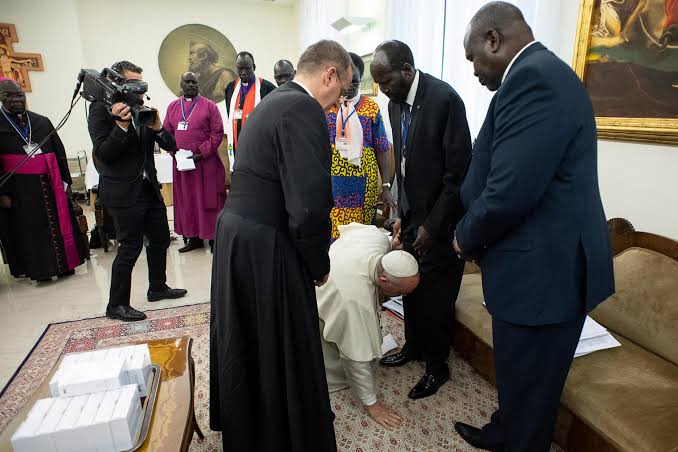
Next Year’s Referendums Will Pit The Church Against The People Of New Zealand

At the time of next year’s General Election, there will be at least two referendums. One will relate to cannabis law reform, the other to euthanasia. Both of them are likely to be fairly divisive, pitting large sections of the New Zealand population against each other. One of these conflicts, as this essay will examine, will be the Church against the people of New Zealand.

The Church is commonly perceived to be conservative. This is a mistake. People make this mistake because the Church opposes all kinds of social reform. But they don’t oppose all social reform – the Church is happy to open the borders to masses of illiterate Third Worlders who cannot be integrated. They only oppose some social reform, and there is a pattern to it.

The common thread to all the Church’s actions is that they all increase the power of the Church by increasing the suffering of the New Zealand people.

Christianity has always preyed on desperation. The more desperate a person is, the more willing they will be to subject themselves to the predation of the local vicar or priest. The more pitiful and wretched the man, the more likely they are to find salvation in a book of fairy tales about a magical Jewish carpenter. And when they do, they tend to write the Church into their wills.

It has always been a maxim of Abrahamism that misery will cause people to turn to the God of Abraham out of desperation. Happy people don’t need the God of Abraham – ample evidence comes from the declining rates of Christianity among the wealthy nations of Europe over the past hundred years.

If you’re the Church, happiness is bad for business. Therefore, the more misery they can create, the more powerful they grow.

In the same way the Church opposed the anti-smacking law (because they know child abuse leads to suffering) and they opposed homosexual law reform (because they know persecution of homosexuals leads to suffering), so too will they oppose cannabis law reform and euthanasia law reform. Their desire is to force New Zealanders to suffer, in the hope that our suffering causes us to give up on the material world and turn to Jesus.

The Church has never liked cannabis, for multiple reasons. This is strange if one considers that the Christian Bible states that God put cannabis here for our benefit (see Genesis 1:29). It’s not strange, however, if one understands that the Church is really a political entity and not really a spiritual one. Their primary objective is to grow in Earthly power, not to alleviate the spiritual suffering of New Zealanders.

One reason the Church has always supported the persecution of cannabis users is because cannabis is a spiritual sacrament that connects people to God, and the Church can’t earn money if people are connected to God by their own actions. The Church can only earn money by acting as an intermediary, and to that end they foster the need for an intermediary. This is why they have made such an effort, historically, to destroy all genuine spiritual and magical traditions.

Another reason is because cannabis is a medicine. As mentioned above, the Church gains power from people’s suffering and misery. Opposing cannabis law reform is the same thing as promoting anxiety, depression, insomnia and stress. All of those things create the kind of desperation that drives people into the arms of the Church or a particular congregation.

It’s for these reasons that cannabis is opposed by the Church and by Christians such as Bob McCoskrie.

The Church has never liked euthanasia either, as evidenced by the upset shown by Christian fundamentalist Alfred Ngaro at New Zealand First’s unwillingness to block the referendum on the issue. They have always known that the immense suffering that usually precedes death makes the dying person vulnerable to all kinds of trickery – in particular, a person is most likely to change their will to bequeath something to the Church when dying.

From the Church’s perspective, then, it’s best for the suffering of dying people to be drawn out as long as possible.

Fundamentally, what the Church wants is control. They don’t want us to have control over our lives – they want themselves to have control over our lives. They want to decide what we’re allowed to call a spiritual sacrament and when we’re allowed to die, much like they used to decide who we were allowed to love and when we were allowed to drink alcohol.

To this end, they will oppose both referendums because both offer to return control back to the people of New Zealand.

It’s clear to every thinking New Zealander that there would be less suffering if we had legal cannabis and euthanasia. Therefore, the Church is promoting the misery of the New Zealand people. They’re not doing it out of conservatism, or backwardness – they’re doing it because the Abrahamic cults are predatory ideologies of hate that gorge themselves on human misery.

Make no mistake – the Church is the enemy of the New Zealand people. They consider our suffering to be to their benefit, knowing that it will turn some of us, in desperation, to their arms. Anyone who opposes the evil that is Abrahamic religion and the political interference that the Abrahamic cults make in our lives is all but obliged to stick it to them next year.

*

If you enjoyed reading this essay, you can get a compilation of the Best VJMP Essays and Articles of 2018 from Amazon for Kindle or Amazon for CreateSpace (for international readers), or TradeMe (for Kiwis). A compilation of the Best VJMP Essays and Articles of 2017 is also available.

*

If you would like to support our work in other ways, please consider subscribing to our SubscribeStar fund.