
The Case For Cannabis: Cannabis Does Not Make People Violent

As ridiculous as it may sound to many, the public opinion of cannabis and its effects have been informed by images like the murder scene from Reefer Madness. In the minds of a large section of the voting-age population, using cannabis leads directly to a desire to murder other people just for the thrill of it, or at least to an meth or alcohol-like aggression. This article looks at the truth.

Anyone who has been part of a cannabis-using scene knows that the supposed link between cannabis and violence is bullshit. It’s simple enough to just contrast the results of cannabis cafes in Amsterdam, or cannabis festivals, with bars and pubs just about anywhere else. Cannabis, by itself, makes people mellow in the vast majority of cases.

The myth that cannabis makes people violent was proven false as far back as 1977. A review published that year in the Psychological Bulletin stated that “The consensus is that marihuana does not precipitate violence in the majority of those using it sporadically or chronically.” All of the further research since then backs up this point.

Interestingly, that article cites the importance of set and setting, which is something that any responsible person would emphasise if they wanted to reduce harms (more on this below).

The presence of a scientific consensus that there is no causal link between cannabis use and violence doesn’t stop prohibitionists from cherry-picking data and research to create the impression that such a link exists. After all, there are correlations between all kinds of things, but (as any honest scientist knows) these correlations are often best explained by underlying third factors.

There is certainly a correlation between violence and cannabis, as there is between violence and everything on the black market. This is inevitable, because anything on the black market is all but guaranteed to be sold by someone who won’t go to the Police if they are ripped off, stood over or killed. Cases like the example of Marlborough man Colin Farrell, who was robbed of his cannabis plants in a home invasion, only happen because of prohibition.

It’s true of everything that if only criminals use it, it will have an association with crime. It’s also true that if something is illegal, then only criminals will use it. Therefore, anything that’s illegal will have an association with crime. This, by itself, explains most of the link between cannabis and violence.

Another reason why an association exists between cannabis and violence is that some people use cannabis as part of a pattern of polydrug usage during nihilistic benders. There are a lot of meth benders that end up with a person smoking cannabis to try and calm themselves down and get to sleep, only to find it not quite working, at which point something really out of order often happens. The same is true of alcohol benders.

This is why the headlines proclaiming things like “Cannabis Crash Tragedy Kills Five” inevitably lead into an article that describes how the driver was also drunk, and/or on meth and/or on prescription sleeping pills. The mainstream media is happy to play up the cannabis angle to these stories, partly because drink driving fatalities are not news and partly because it pleases the alcohol manufacturers who spend millions advertising in that same media.

Logical thinking tells us that, just because a person smoked cannabis and became violent later doesn’t mean that the cannabis caused the violence. This is an example of the informal logical fallacy known as post hoc ergo propter hoc, or “after this, therefore because of this.” This is because people who smoke cannabis and become violent have usually been drinking alcohol or doing methamphetamine at the same time, or haven’t slept for days.

Logical thinking would ask: “Where are the cases of murders and violent crimes being committed by people who were only on cannabis and nothing else?”

Of course, there are few or none – even making an Internet search for examples comes up with little. This is because the people who are using cannabis without also using alcohol or methamphetamine are almost always just quietly using it at home, to relax, in a similar manner to how many responsible people drink alcohol daily.

Much like alcohol, the emphasis ought to go on educating people about the real effects of the substance. Absurd lies like the Reefer Madness story have to be consigned to history, where they belong alongside witch hunts, virgin sacrifices and the persecution of left-handers as embarrassing examples of human superstition, cowardice and stupidity.

The truth about things like set and setting have to be explained to people, so that they can make intelligent decisions about their cannabis use instead of relying on abstinence-based fearmongering (this is true of alcohol as well as cannabis). Part of this involves only using cannabis in situations where they are safe and where they don’t have to be responsible for anything, and preferably around people they like and who won’t harass them when they are high.

Any correctly informed person who is concerned about violence would support the legalisation of cannabis, because it would replace known violence-causing drugs (in particular alcohol and methamphetamine) with something that causes less violence. In reality, the connection between cannabis and violence is so weak that, far from being an argument for its prohibition, it’s an argument to legalise it.

*

This article is an excerpt from The Case For Cannabis Law Reform, compiled by Vince McLeod and due for release by VJM Publishing in the summer of 2018/19.
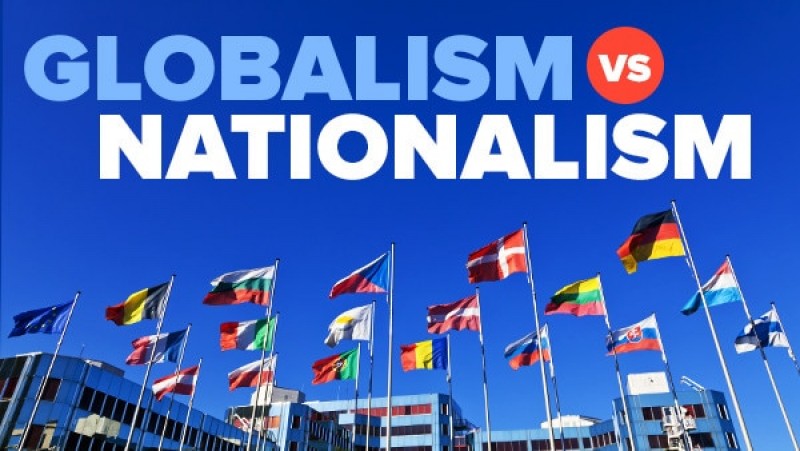

Good Nationalism and Bad Nationalism, Good Globalism and Bad Globalism

Leo Tolstoy wrote, at the start of Anna Karenina, that “Happy families are all alike; every unhappy family is unhappy in its own way”. Any occultist who understands that law of “as above, so below” also understands that this rule of Tolstoy’s also holds true for individuals – and for nations. Unhappiness expresses itself in a myriad of ways at all levels of reality.

The basis of empathy is the realisation that excessive self-regard leads to an increase in the suffering of other sentient beings. This excessive self-regard does harm on the level of the individual by, for example, inducing the individual to prioritise their own desires above other people’s needs. This leads to people going without and suffering heavily for the sake of a small amount of benefit to one other person.

However, there is also a good form of individualism. Happy individuals don’t feel the need to prioritise themselves over the rest of the world, because they don’t subscribe to a slave morality that tells them that the world owes them anything. But neither do they feel the need to prioritise the world at their own expense because of some masochism or deeply-imbedded guilt trip.

The good form of individualism acknowledges that, although every individual lives in a wider community and even wider communities, the individual themselves gets to decide over their own body and mind (see the Sevenfold Conception of inherent human rights) and not the community. As a result, they resist peer pressure and mob mentality for the sake of making the correct decisions.

So we can see that there is a good individualism and bad individualism. If we go the other way up the Great Fractal, past the family, we can find both nationalism and globalism. Despite the prevalence of the aggressive form of nationalism over much of the past 200 years, the idea that nationalism is automatically bad is globalist propaganda. Nationalism, per se, isn’t any worse than identifying at any other level of the Great Fractal.

As per the Tolstoy quote in the opening paragraph of this essay, we can see that healthy nationalisms are all alike, but unhealthy forms of nationalism are all different.

The good form of nationalism is the same as the good form of caring about one’s family and one’s community. In much the same way that solidarity with one’s family can induce one to have goodwill towards second cousins etc. who one is meeting for the first time, so can solidarity with one’s nation induce one to have goodwill towards countrymen who one meets for the first time.

The bad form of nationalism is the same as the bad form of individualism. It can be found wherever a person (or group of people) make decisions that grant minor benefits to one nation but at the major expense of others – or of the world system. The worst expression of this kind of nationalism could perhaps be found in the colonial actions of Belgium in the Congo during the 19th century, and most globalists claim to be fundamentally motivated by opposition to this kind of nationalism.

All globalists claim to be good globalists. They present themselves as enlightened types who have transcended petty nationalism, and as if they only make decisions with the entirety of all sentient beings in mind. Their attitude is that they are fit to serve as arbiters of planetary justice on account of the impartiality offered by their superior moral fibre. Therefore, they can be trusted to rule a global system.

This is true for some of them (more or less). After all, globalism is arguably nothing more than operating on a higher order of reality. It’s entirely possible to operate there, and there’s no reason to conclude that someone definitely does not belong there, just because they say they do.

However, there is also a bad globalism. In fact, there are two.

The obvious bad globalism is the kind that forces rules and regulations on people and places who do not want them. This is the same kind of tyranny as any other imperialism, in which a person in a distant land makes decisions that get imposed on the locals without their consent.

Cannabis prohibition was mostly a self-inflicted tragedy, but it wasn’t helped by the fact that the United Nations prohibited it with the Single Convention on Narcotic Drugs of 1961. This treaty obliged all signatories to keep cannabis perpetually illegal, regardless of the will of the people of the nations whose leaders had signed them up.

There remains a great risk of this form of globalism, particularly in the form of globohomo. This means the risk that all national cultures in the world will be erased and replaced with a manufactured kind of consumer fetishism that can be easily milked for cash using the same methods anywhere in the world.

There is a much more subtle and insidious form of bad globalism, however. This occurs when people promote globalist values to other people, while secretly maintaining nationalist or racist values for themselves. An example is fervently propagandising for other nations to open their borders while also propagandising for one’s own nation to remain an ethnostate.

This form of globalism is little different to any other kind of hate ideology in that it is supremacist and exploitative. It’s deceptive in the sense that it presents itself as something it isn’t, for the sake of lulling other people into a false sense of security. It plans to leave all nations except for one’s own in a state of chaos.

In summary, it is impossible to equate either nationalism or globalism with good or evil. In much the same way that there are happy and unhappy families and individuals, unhappy people who identify with the nation will tend to express an unhealthy form of nationalism, and unhappy people who identify with the globe will tend to express an unhealthy form of that.

*

If you enjoyed reading this essay, you can get a compilation of the Best VJMP Essays and Articles of 2018 from Amazon for Kindle or Amazon for CreateSpace (for international readers), or TradeMe (for Kiwis). A compilation of the Best VJMP Essays and Articles of 2017 is also available.

The Case For Cannabis: Amotivational Syndrome Is Not Reason To Prohibit Cannabis

One of the major harms of cannabis, we are told, is the dreaded amotivational syndrome. This raises the spectre of A students and gifted athletes who get the reefer madness and end up lying around on the couch all day watching television and playing with themselves. As with many arguments for cannabis prohibition, this one is based upon a sliver of truth, blown out of proportion.

According to this 2012 paper, the supposedly characteristic symptoms of amotivational syndrome are general passivity and apathy, loss of desire to work or to be productive, loss of energy, depression, moodiness, lack of stress tolerance and slovenliness.

If you think that this sounds like most mental illnesses, and that a person with these problems probably uses cannabis as a medicine to deal with them, you’d be right – for the most part.

However, there is such a thing as amotivational syndrome.

It’s worth noting here that this book is not about advocating for cannabis use per se. This book advocates for a reduction in human suffering by way of repealing cannabis prohibition. So there’s no problem in admitting that it’s entirely possible that cannabis smoking is a bad idea for a particular individual, and that there are many situations where many people shouldn’t use it.

The neurobiology of amotivational syndrome is not difficult to understand, because it’s essentially the same thing as burnout. Amotivational syndrome can arise when a person gets so high, for so long, that their brain circuitry gets used to that greater level of stimulation. This can lead to a situation where a person is no longer receptive to normal sources of stimulation.

Most people can relate to this feeling. After all, it’s little different to the same burnout a person gets after partying too long or being too long in combat or under high levels of stress. Some studies have shown decreased response sensitivity after periods of heavy cannabis use, but this is only part of the story.

As is the case with tobacco, decreased response sensitivity is often the reason why people use cannabis. For many people, the decreased sensitivity that comes with cannabis use is what is keeping them sane. These people use cannabis so that they are more relaxed and calm when they have to interact with others.

Thus, amotivational syndrome is far from a good reason to make cannabis illegal. In fact, it’s even more support in favour of legalisation.

Because some strains decrease sensitivity, while other strains appear to increase it, the best approach is to let people safely experiment with accurately and clearly labelled products purchased from a legal supplier, so that they can find the right proportion of cannabinoids for them. If amotivational syndrome is a problem, it can be best be avoided by avoiding those high-THC, low-CBD strains that tend to overload the mind.

Another point worth emphasising here is that one culture’s “amotivational syndrome” is another culture’s correct level of relaxation.

This was written about as far back as 1976, when a study pointed out that Jamaican culture had no concept of amotivational syndrome. That linked study refutes the idea of amotivational syndrome more generally, pointing out that the very idea of it is rooted in prejudice against cannabis users (as is the idea that cannabis causes psychosis).

It’s already clear that the rate at which our societies are consuming the natural resources of the Earth is not sustainable. The 8 billion people on this planet cannot sustainably consume more resources than does the average Western beneficiary, and these limits are not the result of political forces but hard natural ones. These inexorable forces pose immense problems for our culture in the West, which glorifies production and consumption.

It could be that, far from being destroyed by laziness and apathy, cannabis users have simply reduced their consumption to sustainable levels. The motivation to do this perhaps arose through a greater appreciation of the interdependence of all life on Earth, a common consequences of cannabis use.

Amotivational syndrome, then, could be said to only be a problem in the context of a modern society that demands maximum productivity from everyone. So the unwillingness to work and to be productive might really be a turn away from the consumption/production mania of the industrialised world and a return to the sanity that existed before it (when everyone used cannabis regularly).

In any case, the best way to deal with all this is to tell people the truth. If it’s true that high-THC strains of cannabis overload the brain’s reward pathways and make them insensitive to everyday stimuli, then this needs to be explained honestly to people. Conversely, if a person is happy using cannabis so that they become more relaxed and don’t consume the planet as voraciously, that also needs to be accepted.

If the Government and its departments told the truth about cannabis, then people would have confidence that their doctors were telling the truth when they tried to explain amotivational syndrome. This would make it far more likely that those who had proper cause to stop using cannabis would listen to people advising them to do so.

*

This article is an excerpt from The Case For Cannabis Law Reform, compiled by Vince McLeod and due for release by VJM Publishing in the summer of 2018/19.
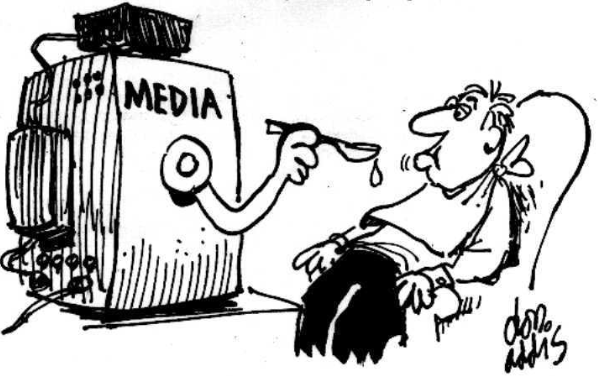
The Government And Mainstream Media Work Together to Control The Narrative

A recent Stuff article reported that mainstream media outlets are colluding to censor reporting of Branton Tarrant’s trial. Stuff, TVNZ, Mediaworks, NZME and RNZ have agreed to not mention Tarrant’s name, nor will they quote from his manifesto. As this article will show, this is far from the good news it’s being portrayed as.

Purportedly, their reason for doing so is to not allow “white supremacist or terrorist ideology to be championed”. The image they are painting of themselves is one of honourable restraint in the service of the public good. In reality, they are simply doing this to further the globalist agenda of their owners.

They have made a special effort not give airtime to Tarrant but, incredibly, they are happy to give plenty of airtime to Hillary Clinton, the Butcher of Libya. Clinton’s orchestration of the 2011 destruction of Libya may have led to 100,000 deaths in the ensuing chaos. The clip of her gloating about the murder of Gaddafi is one of the most grotesque displays of psychopathy ever captured on film.

How can it be that a man who kills fifty is too evil to mention and must be deplatformed to the maximum degree possible, whereas a person who kills a hundred thousand is not only given a regular platform but is spoken about as an innocent victim being oppressed by the Trump Presidency?

The answer is that Clinton’s actions please the international banking and finance interests that own the mainstream media, whereas Tarrant’s (like Trump’s) do not.

The Government of Muammar Gaddafi had completed a project called the Great Man-Made River, which had been achieved without any financing from foreign banking interests. This was of great concern to those interests, who see self-funded infrastructure as a threat to their profits, in much the same way that a slave escaping the plantation is a threat to the plantation owner’s profits.

Clinton’s destruction of Libya, therefore, taught everyone a lesson about building infrastructure without giving a cut to the banking mafia.

Branton Tarrant, on the other hand, raised racial tensions at a time when the globalists are trying to import as much cheap labour as they can in the guise of things like helping refugees. Now that society is based on the idea that consumers are assets and consumption the engine of economic activity, the desire of the ruling classes is to grow their population as high as possible, in the same way that cattle ranchers seek to grow the size of their herd.

The problem with this approach – although this is still denied – is that jamming together incompatible cultures from different parts of the world inevitably leads to some level of conflict. This is especially true when members of some cultures gang together to rape hundreds of local children, as occurred in Rotherham. The Rotherham rape gang was one of several Muslim rape gangs mentioned in Tarrant’s manifesto as an impetus for his action.

More globalism, while it means more profits for the international banking and finance interests that service the housing industry with mortgages, also means more ethnic tension and less social cohesion. Even though this damages the nation, it makes it possible to extract more wealth from the nation, and so there are several forces that work in hand to suppress the tensions that arise from globalism.

The Government is full of people who are bought and paid for by big business and finance interests, and so is the mainstream media. They are therefore directed to work in concert, and this they do obediently. The mainstream media supports the Government by propagandising for it, and by arguing for its policies, and the Government supports the mainstream media by giving them exclusive access to what politicians have to say.

The mainstream media has changed role. Where it was once a critic of the Government and the people’s voice holding that Government to account, now it’s an entity that works alongside the Government to manage public perceptions. John Key was portrayed as the financial genius that shielded the nation from the Global Financial Crisis, and Jacinda Ardern is portrayed as the angel that is shielding us from white supremacist terrorism – two personality cults deliberately created by propagandists.

The brutal reality is that the mainstream media and the Government are working side-by-side, as proven by the fact that the former was given a top secret list of the 100 or so people being surveilled by the Police in the wake of the Christchurch mosque shootings. This is also why the mainstream media refuses to mention the name of Vinny Eastwood in the hit pieces that target him, despite that Eastwood is responsible for the deaths of no-one.

Anyone who questions the agenda needs to be terrorised into submission and silence. Eastwood questions the narrative, and in doing so weakens its propaganda power, and therefore he’s a bad guy. The article above refers to him as a “conspiracy theorist” – a loaded term chosen to delegitimise. Leaking a list of surveillance targets to the media intensifies the pressure against those people and increases their sense of paranoia.

In accordance with this, the mainstream media will work to negate anything Tarrant might say that goes against the agenda. They will certainly not report on the fact that Tarrant was motivated to action by the various Muslim rape gangs in England and by the Drottninggatan truck attack, because they don’t want to legitimise anti-immigrant sentiment. They will say nothing that goes against the story that Tarrant was driven mad by his own moral failings.

Anti-immigrant sentiment is terrible for business because it both limits the importation of cheap labour, which means that wages go up, and lowers demand for housing stock, which means that rents and mortgages go down. It is because of these crude economic concerns and the marriage of convenience they create, and not because of Jews or any Marxist conspiracy, that the Government and the mainstream media are working so closely together.

The simple truth is that, being owned by the same international finance and banking interests, the New Zealand Government and the mainstream media work together to serve those interests. Individuals in both institutions must do so or they will be fired. This they do by passing laws and broadcasting propaganda intended to serve the globalist agenda of open borders and the destruction of national and regional cultures.

This is why they collude to prevent the spread of terrorist propaganda when it supports a nationalist narrative, but are happy to spread terrorist propaganda when it supports a globalist narrative. Perhaps the most awful example was the weapons of mass destruction lie promoted by Jacinda Ardern’s mentor, the Iraq War criminal Tony Blair, a lie which killed a million people and for which no-one was ever held to account.

*

If you enjoyed reading this essay, you can get a compilation of the Best VJMP Essays and Articles of 2018 from Amazon for Kindle or Amazon for CreateSpace (for international readers), or TradeMe (for Kiwis). A compilation of the Best VJMP Essays and Articles of 2017 is also available.