

The Truth May Incite Racial Hatred

Otago University professor James Flynn has had a book about free speech, In Defence of Free Speech, scheduled for and then pulled from publication by British publisher Emerald Press. A representative for Emerald Press wrote to Flynn and said the book “could be seen to incite racial hatred and stir up religious hatred under United Kingdom law.” This essay examines whether or not the truth itself incites racial hatred, and if so what we can do about it.

Professor Flynn is by no means a racist. There are many former students of his willing to attest to his sparkling intelligence and deeply thoughtful nature. He has never been accused of treating another person with disrespect on account of their race, and has never even been accused of making a racist remark. Measured in terms of hate for other races, Flynn is an entirely decent person.

Professor Flynn is, however, a scientist. This means that he is passionately committed to discovering the truth, and to helping the truth shine through from among all the misconceptions and lies. Being good at science means being able to tease out strands of truth from the tapestry of confusion that forms the background of our lives. A really good scientist will be able to do this even in the face of social pressure pushing them to lie.

Something known to all scientists is that there are no two identical things in Nature. There are no two identical mountains, no identical trees, no identical snowflakes. No two identical dogs, no identical cats, no identical people. This is true at all levels of nature, from stars down to ants, and is even true across the dimensions of space and time.

The fact that there are no two identical things in Nature is so deeply understood by real scientists that they even understand the laws that explain how this has come to pass. Gause’s Law, or the competitive exclusion principle, describes how no two identical things can exist in ecology because they would compete for the same niche and thereby destroy one another.

All of this means that the idea that all races must have the same IQ can be dismissed right off the bat. There is no reason to think that all races must have the same IQ any more than there is to think that all families or professions must have the same IQ. The way that intelligence is measured doesn’t matter in this regard.

This logic deeply upsets the many who passionately believe in racial equality. Those who cling tightly to the belief that all races are precisely equal in all non-physical characteristics tend to become enraged at the assertion of scientific evidence that suggests otherwise. Their position is known as equalitarianism, and the assertion that all races are the same in all intellectual and behavioural measures is known as the equalitarian dogma.

Social justice warriors have pushed for decades the idea that questioning the equalitarian dogma is the same thing as spreading racial hatred. This lazy, self-righteous line of thinking claims that the only reason a person would want to talk about racial differences is if they were a racist trying to sow discord between peoples, or to exclude or exterminate some disfavoured races. This tactic is, in reality, an example of the broader authoritarian strategy of silencing all opposition by whatever means necessary.

A 1994 article in the journal Intelligence by IQ researcher Philippe Rushton describes the same thing that happened to Flynn last month happening to Rushton 25 years ago – and to Hans Eysenck 20 years before that. Already in 1994 it was possible to state, of the documented difference in average racial IQ, that “Today the evidence has increased so much that it is almost certain that only evolutionary (and thereby genetic) theories can explain it.” But evidence does not appease the mob.

The abuse that Rushton documents in the linked article is eerily reminiscent of that facing scientists today. Eysenck was physically attacked in 1973 by activists marching under the slogan “Fascists Have No Right To Speak.” In 2019, Jordan Peterson comes in for similar treatment for similar reasons (a phenomenon this newspaper has previously described as Peterson Derangement Syndrome).

The Emerald Press decision might be ideosyncratic, but it also reflects the prevailing attitude among those who control the apparatus of propaganda. The world’s ruling class is implacably committed to the doctrine of globalism, for a variety of reasons. Globalism is a lot easier to accept if a person already assumes equalitarianism, because such an assumption implies that borders are arbitrary and people interchangeable. Therefore, assertions of other doctrines are suppressed.

The difficulty is that the science itself demolishes equalitarianism.

Books like IQ and Global Inequality, published in 2006, conclusively demonstrate that the average IQ of a population is the primary factor that determines that population’s standard of living. The fact that IQ predicts future wealth and earnings is one of the best documented phenomena in all of psychology, both at the individual and the group level. The higher the IQ, the wealthier is all but a law.

This suggests that allowing people from low-IQ countries to immigrate to the West is a recipe for lowering the standard of living that the West currently enjoys. Because intelligence is mostly hereditary, low-IQ immigrants will have low-IQ children, who will then grow up to make low-IQ decisions, thus impoverishing and lowering the living standards of those around them.

Unfortunately, this entirely reasonable position is equated, by the globalists who control the apparatus of propaganda, with the position that all races need to be segregated from one another, or worse. This deliberate conflation means that it’s all but impossible to discuss the science of race and intelligence without being accused of being a Nazi, supporting Nazis, furthering Nazism, or dogwhistling to Nazis.

All of this means that we are presented with a dilemma. We either speak honestly about the science of race and intelligence, which means that we expose ourselves to being attacked by hysterical mobs of virtue-signallers shrieking about Nazis, or we don’t speak honestly about the science of race and intelligence, which means that the superstitious fools who think with emotions and their authoritarian puppetmasters win the day.

Perhaps the best move, as has been discussed here previously, is to pull back to the secret societies who meet behind closed doors for the purposes of being able to discuss taboo subjects, safely away from hysterical moralisers. This is supposed to be what the universities are for, but now that the university culture has been corrupted by the mass entry of plebs it may be necessary to reform it under new conditions.

It’s either that or hope that the sands of public opinion shift to supporting free speech and free inquiry.

*

If you enjoyed reading this essay, you can get a compilation of the Best VJMP Essays and Articles of 2018 from Amazon for Kindle or Amazon for CreateSpace (for international readers), or TradeMe (for Kiwis). A compilation of the Best VJMP Essays and Articles of 2017 is also available.

If you would like to support our work in other ways, please consider subscribing to our SubscribeStar fund.
How to Cope With Climate Hysteria

A recent article on NewsHub offered some advice for coping with climate anxiety and despair. What is needed, however, is advice for coping with something far more dangerous than climate change: the mass hysteria around climate change. This essay gives some advice to those trying to find a way to cope with the Climate Chimpout.

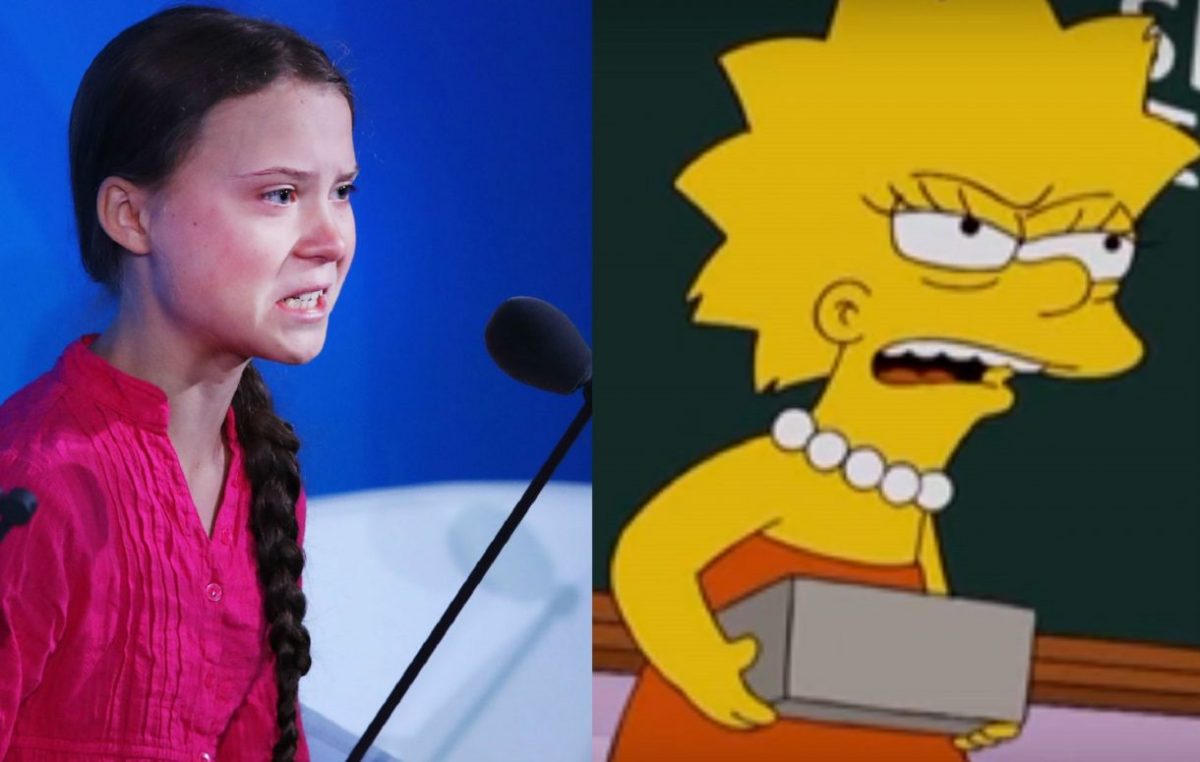
The Climate Chimpout is best personified by Swedish activist Greta Thunberg, who is jetting around the world to warn us of the consequences of excess consumption. In a voice quavering with rage, Thunberg admonishes us adults for our part in destroying the planet. Like Blade Runner‘s Roy Batty, Thunberg sees us as stealing her life potential.

Thunberg is far from unique. The human mind, having evolved over several hundred thousand years to solve short-term survival issues of finding food, water and shelter, is not at all suited to solving long-term global issues like climate change. The very thought of world-ending catastrophe just makes us chimp out. The more the media pushes the issue of climate change, the more hysteria our monkey brains will generate.

The first thing to keep in mind is that climate hysteria cannot be prevented.

Climate change itself may or may not be preventable, but the hysteria now has its own momentum. The people who own the mainstream media have an interest in keeping the consumer class in a state of anxiety, because anxiety keeps people consuming. The owners and manipulators of the apparatus of propaganda are skillful enough that they can produce virtually any result they desire – and they desire fear.

There are a limited number of things one can do about the hysteria, and they fall into two categories: things that are unhelpful and things that are helpful.

The most unhelpful thing that one can do is go along with the crowd and panic. Yes, it may well seem that scientific data is pointing towards major lifestyle changes being enforced upon us by resource scarcity. This is not a reason to panic and to add to the hysteria. Panicking will just lead to more shitty, short-term decisions being made.

These changes forced on us, no matter how major, will take place over many years and decades. Better to focus our energies on things like mindfulness and centering practices. A person could help things by calming their own frequency down to the point where they can think more clearly. This can inspire others around them to do the same.

Another unhelpful thing one can do is to fall into anarcho-nihilism. Global problems have the tendency to make individuals feel powerless. A paralysing condition known as learned helplessness can set in, making it impossible to motivate oneself to take any action. The result has been satirised with the Doomer meme, and described with the Black Pill meme, but is really just depression.

Much like panicking, falling into despair can also become contagious. The sight of another person in despair is sometimes enough to engender it in oneself, which is why the Greta Thunberg Show could be said to be a black magic ritual performed for the sake of seizing control. A moral imperative exists, therefore, to not despair, so that one might keep morale high.

Hedonism is a third option. This isn’t necessarily a failure, because there may be nothing more to life than the imperative to entertain the gods. Living to enjoy life as much as possible, while ultimately pointless, is at least meaningful in the immediate present. Acting to pursue pleasure, or at a minimum novel experiences, is at least a gameplan.

However, hedonism fails where the other two strategies fail: it does not significantly alleviate the suffering associated with human existence. The best it can do is distraction. As mentioned above, there may be no more to life than the patterns of behaviours we perform to distract ourselves from the suffering inherent to existence. But it is for those who feel there is more this essay is written.

At its most basic, the challenge brought about by climate change is an existential one.

One a deeper level, there is one brutal truth that can neither be escaped or denied. That is the fact that we were all going to die anyway, climate or otherwise, and therefore climate change doesn’t change the basic existential equation. In fact, most people today can expect to die before climate change causes them major survival challenges.

Most of us alive today will be dead within 60 years, as the natural metabolic processes of our bodies lead to them becoming worn out. Almost certainly, everyone currently alive will be dead within 120 years, and, even if we discovered some kind of process that allowed for extreme life extension, eventually the Sun will transform into a red giant and consume the Earth in cosmic hellfire.

Climate change, no matter how bad it gets, does not alter the essential truth that our great war is a spiritual war.

No matter how bad things appear to become in the material world, the fact remains that we are spiritual beings having a limited human experience. The solution, therefore, remains the same as it ever was. Make peace with God, then make peace with your neighbour. Enjoy the company of all the people you can, good and bad ones alike, for they are all cursed to die, just as you are.

It’s apparent that we cannot take any physical wealth with us into the next world, and it’s not clear that the social connections we have on this side will mean much either. It’s far from a sure thing that if we are intelligent, wise or strong-willed in this world we will be so in the next one. All of these qualities are merely contents of consciousness, and therefore as transitory and ephemeral as the others.

What is believable is that our frequency of consciousness continues beyond the death of the physical body. It is this that determines our fate when we stand, stripped of all illusion, before God. A high-frequency consciousness of kindness and understanding will reincarnate among like-minded. A low-frequency consciousness of narcissism and brutality will also reincarnate among like-minded.

Climate hysteria cannot affect a truly spiritual person, because they will understand that climate change doesn’t really change anything. The basic facts of life are still the same, and the most important thing is still coming to terms with them.

*

If you enjoyed reading this essay, you can get a compilation of the Best VJMP Essays and Articles of 2018 from Amazon for Kindle or Amazon for CreateSpace (for international readers), or TradeMe (for Kiwis). A compilation of the Best VJMP Essays and Articles of 2017 is also available.

If you would like to support our work in other ways, please consider subscribing to our SubscribeStar fund.
White Man Bad, Brown Man Good – A Guide to the New New Zealand History

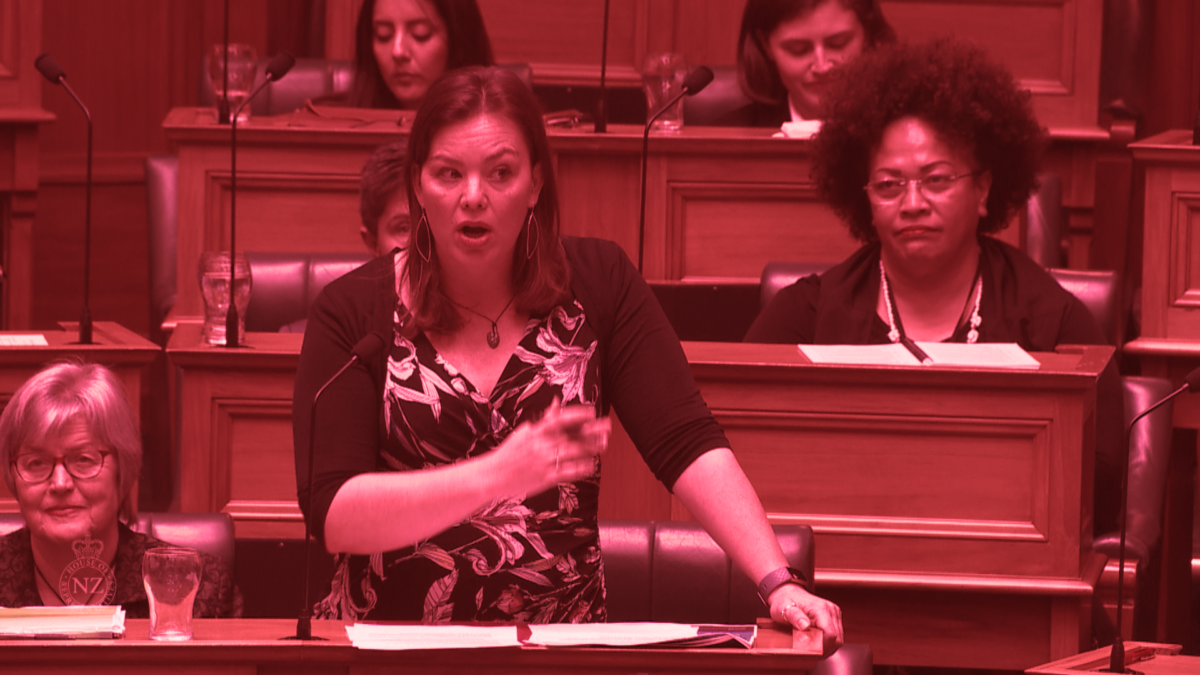
With news that the New Zealand Government will make the teaching of New Zealand history compulsory in schools from 2022, many are wondering what form this history will take. Napoleon said “History is a set of lies agreed upon,” and many Kiwis are skeptical that this new history will be accurate and fair. These concerns are warranted. This essay summarises the New New Zealand History in six words: White Man Bad, Brown Man Good.

The move by the Sixth Labour Government has been heavily criticised by commentators such as Anarkiwi, and for good reason. Government initiatives to “tell the real truth about history” always end up being indoctrination campaigns, launched to brainwash the population into supporting a particular agenda. The history that will be taught in New Zealand schools will be a set of lies agreed upon (although your input will not be sought).

Central to the New New Zealand history is the idea that there was no benefit to the Maori from colonisation, only losses. Maoris did not benefit from medicine, or a justice system, or from sanitation, or from infrastructure, or from technology. All of these things are either presumed to have no value, or it is assumed that Maoris would have developed them anyway without British help.

This New History will follow a Rousseauean conception of human nature, in which uncivilised man is a “noble savage”, morally superior to civilised man. The civilised man is, according to this conception, much like the stereotypical Jewish merchant. He schemes, he swindles, he extorts and steals, and he does so without shame or scruple. Uncivilised man, by contrast, lives in a state of perfect harmony with his environment.

In the New New Zealand History, civilisation descended on these isles like a black wave of corruption and evil. Technology, law and order are considered to be negative things that lured the Maori out of his state of innocence. This allowed for land to be swindled out of the Maori tribes much like candy from an innocent baby in the crib.

Part of this New New Zealand History will be the enshrinement of the special status of Maoris as those people who live here by right, whereas every other race has a conditional residency status contingent on “upholding the Treaty”. The idea is that the continued presence of non-Maoris in New Zealand is dependent on the permission of Maoris. This will see an increase in the use of vocabulary like ‘tangata whenua’ and ‘tauiwi’ (the latter being the Maori equivalent of ‘goyim’ or ‘kaffir’).

Anything that doesn’t fit the White Man Bad, Brown Man Good narrative will simply not be taught.

The Musket Wars, during which 40,000 Maoris were killed by intertribal wars launched by Ngapuhi chief Hongi Hika, will be glossed over, summarised or simply ignored. One can confidently predict that the New New Zealand History will begin in 1840, as if New Zealand had come to Earth already perfectly formed, a last-minute addition direct from the mind of God.

Another thing that won’t be taught is that some 150,000 Maoris have emigrated away from New Zealand to Australia, which offers the same wealth and prosperity that colonisation brought to New Zealand, only more so. Neither will it be taught that Maoris are, on average, five times wealthier than the average Tongan.

Tonga was never colonised, and the fact that Tongans willingly move to New Zealand in far, far greater numbers than Maoris willingly move to Tonga is solid evidence that Polynesian natives prefer the benefits of Western life to the sort of life that existed previously. Actions speak louder than words, after all, and Polynesians have clearly shown with their migration decisions that the Western life is better.

Neither will the ecological consequences of Polynesian settlement get a mention. We won’t hear a word about the extermination of pre-existing megafauna such as the moa and the Haast Eagle. Neither will we hear anything about the fact that Maori settlers in the South Island destroyed 40% of its forest cover within the first 200 years.

The Parihaka story (or at least the Green Party version of it), on the other hand, will play a central role. This story paints Maoris as Gandhi-like figures of peace, and the British as Genghis Khan-like murderers and rapists, and is therefore emblematic of the New New Zealand History. Doubtlessly we will see renewed calls for a Parihaka Day, which is to be another grievance day.

Genuine grievances will not be mentioned if that doesn’t fit the agenda. The destruction of Maori religious and spiritual traditions by Abrahamists suits the Government fine, as does the imposition of recreational alcohol culture on a people who had no genetic resistance to it (and the criminalisation of the recreational cannabis culture that they preferred). Both of those things serve the agenda of tightening control on the thoughts and behaviours of the people.

The actual purpose of the New New Zealand History is manyfold, but it achieves two major objectives from the point of view of those bringing it in.

First, it divides Maoris between those who are New Zealand nationalists and those who are Maori nationalists. The New Zealand nationalists tend to be assimilationists who would rather get on with things and declare old history to be water under the bridge. The Maori nationalists tend to be separatists who understand that their power comes from stoking grievance and dissatisfaction.

The New New Zealand History splits these two groups apart by teaching a grievance narrative that has white people and Maoris at each other’s throats. Those Maoris who are New Zealand nationalists are made to feel as if they are betraying “their own people” by remaining loyal to New Zealand. On the other side, white people with sympathies to Maoris will have them tested by a narrative that places Maoris in the role of accuser and prosecutor and white people in the role of defendant.

Second, it divides the rest of the population between those who tell the truth and those who are on board with the new fashion. Inevitably, those who maintain that Maoris benefitted from colonisation will be decried as old-fashioned and out of touch with the “new learning”. They will be pilloried as racists and bigots and we will hear that society would be better without them.

The New New Zealand History is, like most United Nations-driven novelties, a set of lies intended to further a globalist agenda. It’s closely related to the movement known as Brown Communism, which is a form of slave morality intended to divest white and Far East Asian people of their wealth. Like most sets of lies, the way to counter it is to remain steadfast to the truth, no matter how unfashionable that becomes.

*

If you enjoyed reading this essay, you can get a compilation of the Best VJMP Essays and Articles of 2018 from Amazon for Kindle or Amazon for CreateSpace (for international readers), or TradeMe (for Kiwis). A compilation of the Best VJMP Essays and Articles of 2017 is also available.

The Gender Wage Gap Is Bullshit

Periodic outrage arises at something called the “Gender Wage Gap.” We are constantly being told that men are paid a certain percentage more than women because of anti-female discrimination and prejudice within the workplace. The problem is that the idea of a gender wage gap is absolute bullshit. Demographer Dan McGlashan, author of Understanding New Zealand, explains.

There is, indeed, a correlation of 0.23 between net median income and being male (and commensurately a correlation of -0.23 between net median income and being female). This is not a very strong correlation, and in this study is only on the borderline of statistical significance.

This does mean that men control slightly more of the nation’s money supply than women do. Some people, particularly on the left, make the assumption that all human population groups are precisely the same, and therefore any difference must be the consequence of oppression. The existence of a positive correlation between personal income and being male is taken as proof that women are systematically underpaid.

However, a closer look at the data reveals the lie in this lazy assumption.

The correlation between being male and having a personal income above $150,000 was 0.03 – essentially nonexistent. The correlation between being male and having a person income between $100,000 and $150,000 was even less than this, at 0.01. This shows that the distribution of the highest-earning jobs is almost perfectly even between men and women.

Indeed, we can see from Understanding New Zealand that there is essentially no difference between men and women when it comes to higher education. The correlation between being male and having a Bachelor’s degree is not significant, at -0.04, and for the postgraduate degrees the correlation is weaker still. So the equal share of educational achievement leads naturally onto an equal share of the top professional jobs.

The best-paid jobs in New Zealand are appointed on the basis of education and not gender. Further proof for this comes from the fact that the correlations between working as a professional and having any degree are extremely strong – around 0.80 to 0.90. The correlation between being a professional and being a male, by contrast, is not significant, at -0.10.

Nearer the centre of the earnings scale we can see that the correlation with being male rises, to 0.22, for an income between $50,000 and $60,000. This correlation is borderline significant, but it is in the wage brackets between $40,000 and $70,000 where the bulk of the nation’s income is earned. All of these wage brackets have a positive correlation of at least 0.18 with being male.

Lower down the earnings scale, we can see that the correlation with being male is negative for all income brackets below $30,000. It is a borderline significant -0.19 for the prime beneficiary’s income bracket of $10,000 to $15,000. Indeed, we can see that the correlation between being male and being on the unemployment benefit is -0.39, so women are significantly more likely to be bringing in less than average.

So if women and men are paid the same at the top levels, why do men earn more in the middle levels?

As mentioned above, the reason that men make more money than women overall is because of the fact that there are more of them in the $40,000 to $70,000 range and fewer in the $30,000 and below range. But the reason for this is not prejudice.

Most of this difference can be explained by the correlation of 0.48 between being male and being in full-time work. There is also a correlation of -0.48 between being male and being unemployed. Simply put, this means that men work a lot more than women do. Further proof comes from the negative correlations between being male and being on the unemployment benefit (-0.39), being on the invalid’s benefit (-0.26) or being on the student allowance (-0.21).

What this means is that the plum jobs are shared out equally between men and women, but the lower one goes down the socio-economic scale, the more likely it is that women will become unemployed instead. This makes perfect sense, because the less one earns the more marginal working becomes in comparison to spending that time on one’s family, and women are much more likely to make such a calculation than men.

The gap in earnings between men and women can be best explained, therefore, not by sexism or any other form of prejudice, but by life history patterns. Men tend to work hard as young adults and then work hard as older adults. Women, by contrast, tend to work hard as young adults and then transition to part-time work as they get older, shifting the primary focus of their concern from their career to their family.

What the statistics show is a very reasonable pattern of women starting out as professionals if they can, otherwise starting at the bottom and transitioning into family care as they age. Men also start out as professionals if they can and also otherwise start at the bottom, but the difference is that they tend to transition into managerial positions as they age. This is evidenced by the correlation of 0.49 between being male and working as a manager.

The “gender wage gap”, therefore, is best explained as the result of different choices made by the average man compared to the average woman. It has nothing to do with prejudice or sexism, and anyone claiming that it does is either misguided or lying.

*

Understanding New Zealand, by Dan McGlashan and published by VJM Publishing, is the comprehensive guide to the demographics and voting patterns of the New Zealand people. It is available on TradeMe (for Kiwis) and on Amazon (for international readers).