

Why Were Winston Peters’s Comments About Indigeneity So Controversial?

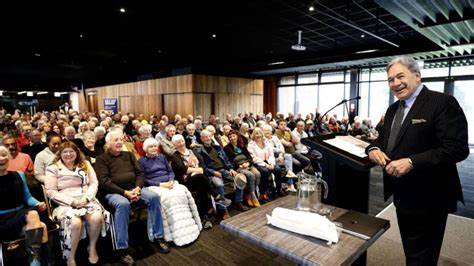
Winston Peters created a controversy this week in Nelson when he said that Maori people are not indigenous to New Zealand. The chimpout that followed saw Chris Hipkins, Chris Luxon and David Seymour all team up to criticise Peters. This caused some to ask: why are the left and the right teaming up against the centre?

The explanation: the left vs. right paradigm is no longer as relevant as the globalist vs. nationalist paradigm, if it ever was.

The globalist conception of indigeneity, which is essentially an anti-white conception, is that indigenous and non-indigenous are like victim and criminal. The presence of the non-indigenous in indigenous lands is a crime of some kind, and one that needs to be rectified, or at least compensated for. To be indigenous is to be innocent; to be non-indigenous is to be guilty.

This narrative – of irreconcilable opposition – is pushed by globalist interests in order to divide and conquer nations. It is in rejecting this narrative of division that Winston Peters has gained the ire of the globalists.

Peters correctly realises that a globalist conception of indigeneity is a threat to the New Zealand nation, because it sets the two primary components of the New Zealand nation (white Kiwis and Maori Kiwis) against each other in conflict. Through rejecting this conception, in favour of one where whites and Maoris work together as Kiwis, Peters has caused great seething.

Globalists are seething because they need to destroy nations, and to destroy national consciousness, in order to get those people to accept mass immigration. Mass immigration maximises rents and minimises wages, and therefore maximises profits, which is all that matters in our soulless capitalist hellscape.

There are few things more profitable than mass immigration for those who already own land, and the more land they own the more profitable mass immigration is.

The stumbling block for the globalists is that the people who already live in New Zealand will naturally oppose mass immigration, as it increases their cost of living and lowers their wages. So the globalists have to divide and conquer those people, by splitting them into an indigenous Maori bloc innocent of all wrongdoing, and a non-indigenous white (or Pakeha) block whose very presence in these isles is a crime.

This same scam is being pulled right now in Australia and North America as well. Even in Europe, white people are told that the Sami are the only indigeneous European people and that white people themselves don’t qualify (which leads to the absurd assertion that Icelanders, who have been in Iceland for 1,100 years, are not indigenous to Iceland, whereas Maoris, who have been in New Zealand for only 800 years, are indigenous to New Zealand).

The whole purpose of pushing indigeneity as a concept, when it comes down to it, is to disenfranchise white people. The concept creates the impression that only non-whites truly belong in New World countries. Whites don’t truly belong in New Zealand (or Australia, Canada, America, Argentina, Brazil, South Africa etc.). Therefore they need to gracefully let go of the levers of power.

If white people were encouraged to think of themselves as first-class citizens of New Zealand, as good as anyone else, those white people would be more inclined to defend the country against the globalist thieves in control of the mainstream propaganda organs. They would refuse to accept governments who sell the country out from under them, whether by asset sales or allowing mass immigration.

In other words, they would be less profitable.

The profit motive demands that the New Zealand nation be shattered among as many fracture lines as possible, and to that end Maoris and white Kiwis need to be set against each other. The time-honoured way of doing this is to manufacture a grievance narrative wherein everything white Kiwis have to their name is considered stolen from Maoris.

Winston Peters, like the author of this piece, has both Maori and white ancestry. Following naturally from this is a conception of nationalism that sees Maoriness and whiteness as equally legitimate expressions of Kiwiness, similar to how the Jomon and the Yayoi people both represent the modern Japanese.

Such a conception would heal the damage caused by globalist lies in recent decades – lies which have seen the New Zealand nation divided into Team Maori and Team White and then set against each other, to the ongoing detriment of both.

In summary, the very concept of indigeneity is globalist psychological warfare against those peoples who would live freely and determine their own fates. There’s no need for it other than to ascribe special privileges to the “indigenous” and to thereby stir resentment among the “non-indigenous”, weakening the nation against outside threats.

Peters’s comments were controversial because the globalists are in near-total control of the mainstream media, which means globalist values are normalised and nationalist values made to seem insane or evil. Thus, it’s expected that Peters would kowtow to globalist lies such as Maori people being indigeneous to New Zealand. In reality, it’s the fact that he told the truth – and not so much what he said – which is controversial.

As Orwell didn’t, but could have, written: in a time of universal deceit, telling the truth is a revolutionary act.

*

For more of VJM’s ideas, see his work on other platforms! https://linktr.ee/vjmpublishing
For even more of VJM’s ideas, buy one of his books! https://www.amazon.com/author/vincemcleod

*

If you enjoyed reading this essay/article, you can get a compilation of the Best VJMP Essays and Articles from 2021 from Amazon as a Kindle ebook or paperback. Compilations of the Best VJMP Essays and Articles of 2020, the Best VJMP Essays and Articles of 2019, the Best VJMP Essays and Articles of 2018 and the Best VJMP Essays and Articles of 2017 are also available.

*

If you would like to support our work in other ways, subscribe to our SubscribeStar fund, or make a donation to our Paypal! Even better, buy any one of our books!

Correlations With Voting New Conservative in 2020

VariableVoting New Conservative 2020
Own or part own house0.712
Currently partnered0.700
Married (not separated)0.689
Voting National 20200.682
Voting ACT 20200.680
Two children0.654
Aged 75-790.651
Receiving income from NZ Super or Veteran’s pension0.648
Aged 80-840.645
Aged 70-740.636
Aged 60-640.631
Not studying0.625
Three children0.612
Aged 65-690.607
Aged 55-590.594
Level 6 diploma0.548
Aged 85+0.544
Turnout rate0.524
Working as a technician or trades worker0.519
European0.499
Divorced/separated/widowed0.474
Working in other services0.468
Aged 50-540.458
Level 1 certificate0.402
Personal income $20,000-$30,0000.396
Receiving income from self-employment or owning one’s own business0.377
Voting Sustainable NZ 20200.369
Working in construction0.366
Level 5 diploma0.366
Working as a manager0.363
Median age0.360
Voting Social Credit 20200.355
Level 4 certificate0.354
Working in retail trade0.347
Working in agriculture, forestry or fishing0.345
Voting NZ Outdoors Party 20200.337
Own house in family trust0.335
Not in the labour force0.323
Mean age0.320
Personal income $30,000-$50,0000.320
Personal income $50,000-$70,0000.311
Aged 45-490.301
Receiving income from interest, dividends, rent, other investments0.289
Voting New Zealand First 20200.287
Four children0.258
Level 2 certificate0.250
Working in manufacturing0.243
No NZQA qualifications0.242
Following Christianity0.240
Receiving income from ACC or private work insurance0.221
Percentage of voting age population enrolled0.174
Employed part-time0.171
Working in mining0.169
Working in electricity, gas, water or waste services0.140
Voting Labour 20200.134
Voting Advance NZ 20200.118
Working in healthcare or social assistance0.109
Personal income $10,000-$20,0000.102
Percentage of males in electorate0.093
Percentage of electorate New Zealand-born0.071
Working as a labourer0.070
Working in rental, hiring or real estate services0.057
Voting Heartland NZ 20200.054
Working in wholesale trade0.051
Following no religion0.043
Voting ONE Party 20200.034
Working as a machinery operator or driver0.025
Aged 40-440.013
Following Spiritualism or a New Age religion0.012
Working as a clerical or administrative worker-0.006
Voting The Opportunities Party 2020-0.051
Five children-0.066
Percentage of electorate overseas-born-0.071
Working as a sales worker-0.086
Percentage of females in electorate-0.093
Voting TEA Party 2020-0.100
Enrolled in an urban electorate-0.104
Personal income $70,000+-0.108
Employed full-time-0.130
Object to answering how many children-0.150
Median personal income-0.190
Aged 35-39-0.201
Enrolled in a North Island electorate-0.206
Asian-0.208
Following Hinduism-0.209
Special voting Yes for euthanasia-0.212
One child-0.215
Receiving income from Supported Living Payment-0.216
Following Islam-0.217
Working in education or training-0.230
Six or more children-0.238
Following Buddhism-0.239
Working in public administration or safety-0.242
Working in transport, postal or warehousing-0.248
Pacific Islander-0.252
Doctorate-0.253
Honours degree-0.262
Mean personal income-0.273
Working in professional, scientific or technical services-0.294
Working as a community or personal services worker-0.307
Working in financial or insurance services-0.311
Voting ALCP 2020-0.312
Bachelor’s degree-0.312
Working in accommodation or food services-0.321
Working as a professional-0.328
Aged 30-34-0.332
Voting Greens 2020-0.352
Working in arts or recreation services-0.353
Master’s degree-0.354
Following Judaism-0.359
Receiving no source of income-0.364
Following a Maori religion-0.382
Voting Vision NZ Party 2020-0.420
Receiving income from Sole Parent Support-0.427
Receiving income from Jobseeker Support-0.435
Maori-0.443
Receiving wage or salary-0.449
Working in administrative or support services-0.456
Working in information media or telecommunications-0.460
Aged 25-29-0.471
Receiving income from Student Allowance-0.481
Personal income < $5,000-0.499
Aged 20-24-0.523
Personal income $5,000-$10,000-0.530
No children-0.536
Part-time study-0.552
Level 3 certificate-0.552
Voting Maori Party 2020-0.573
Enrolled in a Maori electorate-0.574
Unemployed-0.578
Full-time study-0.602
Special voting Yes for cannabis-0.660
Currently unpartnered-0.700
Neither ownership of house nor house in family trust-0.715
Never married-0.768

*

This table is an excerpt from the upcoming 3rd Edition of Understanding New Zealand, by Dan McGlashan and published by VJM Publishing. Understanding New Zealand is the comprehensive guide to the demographics and voting patterns of the New Zealand people.

Correlations With Voting New Zealand First in 2020

VariableVoting New Zealand First 2020
Voting Advance NZ 20200.706
Personal income $10,000-$20,0000.639
Divorced/separated/widowed0.638
Level 4 certificate0.623
Personal income $20,000-$30,0000.605
Four children0.598
Level 1 certificate0.593
Voting ONE Party 20200.584
Receiving income from ACC or private work insurance0.574
Three children0.549
Percentage of electorate New Zealand-born0.546
No NZQA qualifications0.513
Voting Social Credit 20200.503
Level 2 certificate0.491
Receiving income from NZ Super or Veteran’s pension0.469
Five children0.455
Aged 65-690.448
Not in the labour force0.442
Median age0.440
Aged 60-640.439
Aged 55-590.438
Working in agriculture, forestry or fishing0.437
Aged 70-740.427
Mean age0.417
Own or part own house0.390
Aged 75-790.388
Voting ALCP 20200.381
Object to answering how many children0.368
Level 5 diploma0.368
Following a Maori religion0.363
Working as a labourer0.360
Following Spiritualism or a New Age religion0.349
Working in healthcare or social assistance0.338
Receiving income from Jobseeker Support0.336
Working in electricity, gas, water or waste services0.326
Voting NZ Outdoors Party 20200.325
Maori0.319
Six or more children0.318
Aged 80-840.313
Working as a community or personal services worker0.311
Working in other services0.309
Working in construction0.290
Voting New Conservative 20200.287
Working as a technician or trades worker0.278
European0.274
Receiving income from Supported Living Payment0.246
Receiving income from Sole Parent Support0.238
Not studying0.237
Aged 85+0.194
Following no religion0.183
Voting ACT 20200.181
Employed part-time0.180
Working in mining0.179
Currently partnered0.178
Aged 50-540.176
Working as a machinery operator or driver0.167
Personal income $30,000-$50,0000.149
Unemployed0.144
Receiving income from self-employment or owning one’s own business0.143
Two children0.137
Enrolled in a North Island electorate0.105
Working as a manager0.105
Turnout rate0.101
Working in manufacturing0.091
Enrolled in a Maori electorate0.081
Voting National 20200.068
Working in retail trade0.068
Voting Maori Party 20200.066
Voting Labour 20200.059
Voting Heartland NZ 20200.054
Voting Vision NZ Party 20200.033
Married (not separated)0.021
Working in education or training0.019
Percentage of females in electorate0.001
Working in public administration or safety0.001
Level 6 diploma-0.001
Percentage of males in electorate-0.001
Own house in family trust-0.032
Working in transport, postal or warehousing-0.033
Percentage of voting age population enrolled-0.043
Following Christianity-0.092
Aged 45-49-0.095
Voting Sustainable NZ 2020-0.106
Level 3 certificate-0.128
Receiving income from interest, dividends, rent, other investments-0.129
Working in rental, hiring or real estate services-0.150
Working in arts or recreation services-0.151
Personal income $5,000-$10,000-0.151
Working in accommodation or food services-0.161
Voting The Opportunities Party 2020-0.168
Currently unpartnered-0.178
Pacific Islander-0.184
Special voting Yes for cannabis-0.207
Full-time study-0.216
Never married-0.233
Voting Greens 2020-0.244
Working in administrative or support services-0.248
Working as a clerical or administrative worker-0.275
Special voting Yes for euthanasia-0.275
Receiving income from Student Allowance-0.313
Neither ownership of house nor house in family trust-0.317
Working as a sales worker-0.320
Part-time study-0.324
Doctorate-0.337
One child-0.339
Personal income $50,000-$70,000-0.343
Receiving no source of income-0.356
Personal income < $5,000-0.362
Following Judaism-0.366
Mean personal income-0.381
Working in wholesale trade-0.389
Aged 40-44-0.395
Personal income $70,000+-0.403
Following Hinduism-0.408
Working as a professional-0.414
Voting TEA Party 2020-0.416
Enrolled in an urban electorate-0.431
Following Islam-0.433
Aged 20-24-0.436
Median personal income-0.444
Working in information media or telecommunications-0.454
Honours degree-0.463
Aged 25-29-0.469
Working in professional, scientific or technical services-0.498
Working in financial or insurance services-0.498
Aged 30-34-0.500
Master’s degree-0.502
Employed full-time-0.505
No children-0.518
Percentage of electorate overseas-born-0.546
Following Buddhism-0.549
Asian-0.552
Bachelor’s degree-0.554
Aged 35-39-0.572
Receiving wage or salary-0.612

*

This table is an excerpt from the upcoming 3rd Edition of Understanding New Zealand, by Dan McGlashan and published by VJM Publishing. Understanding New Zealand is the comprehensive guide to the demographics and voting patterns of the New Zealand people.
Correlations With Voting ACT 2020

VariableVoting ACT 2020
Voting National 20200.922
Receiving income from self-employment or owning one’s own business0.833
Working as a manager0.815
Own house in family trust0.810
Turnout rate0.807
Currently partnered0.807
Aged 60-640.793
Level 6 diploma0.788
Aged 55-590.782
Aged 65-690.767
Aged 70-740.759
Two children0.758
Receiving income from interest, dividends, rent, other investments0.751
Aged 75-790.745
Married (not separated)0.742
European0.738
Aged 50-540.733
Receiving income from NZ Super or Veteran’s pension0.724
Voting New Conservative 20200.680
Aged 80-840.679
Not studying0.672
Own or part own house0.665
Aged 85+0.626
Aged 45-490.575
Three children0.561
Median age0.542
Voting Sustainable NZ 20200.536
Mean age0.529
Employed part-time0.497
Working in rental, hiring or real estate services0.470
Working in agriculture, forestry or fishing0.429
Voting NZ Outdoors Party 20200.386
Following no religion0.365
Divorced/separated/widowed0.355
Personal income $70,000+0.343
Voting Social Credit 20200.305
Percentage of voting age population enrolled0.285
Personal income $50,000-$70,0000.278
Mean personal income0.227
Personal income $20,000-$30,0000.222
Level 1 certificate0.205
Median personal income0.199
Working in mining0.196
Voting The Opportunities Party 20200.184
Voting New Zealand First 20200.181
Special voting Yes for euthanasia0.174
Honours degree0.156
Aged 40-440.154
Following Judaism0.144
Not in the labour force0.140
Voting Heartland NZ 20200.119
Working in construction0.111
Doctorate0.105
Working in other services0.096
Level 4 certificate0.090
Working as a technician or trades worker0.078
Percentage of males in electorate0.066
Working in professional, scientific or technical services0.063
Following Spiritualism or a New Age religion0.055
Level 2 certificate0.051
Working in retail trade0.032
Bachelor’s degree0.031
Master’s degree0.027
Level 5 diploma0.021
Voting Advance NZ 20200.018
Receiving income from ACC or private work insurance0.014
Employed full-time0.012
Percentage of electorate overseas-born0.010
Working in arts or recreation services0.009
Working as a professional0.001
Four children-0.009
Percentage of electorate New Zealand-born-0.010
Following Christianity-0.026
Working in financial or insurance services-0.036
Working in wholesale trade-0.054
Percentage of females in electorate-0.066
Personal income $30,000-$50,000-0.073
Working in healthcare or social assistance-0.075
Voting Greens 2020-0.076
Working in accommodation or food services-0.080
Voting TEA Party 2020-0.082
Voting ONE Party 2020-0.097
Working in electricity, gas, water or waste services-0.097
No NZQA qualifications-0.117
Voting Labour 2020-0.120
Following Buddhism-0.124
Working as a labourer-0.142
Working in education or training-0.147
Working in manufacturing-0.154
Personal income $10,000-$20,000-0.169
Asian-0.197
Working in information media or telecommunications-0.213
Aged 35-39-0.216
Working in public administration or safety-0.221
Working as a clerical or administrative worker-0.229
Enrolled in an urban electorate-0.231
Enrolled in a North Island electorate-0.235
One child-0.340
No children-0.341
Aged 30-34-0.341
Following Hinduism-0.356
Working as a sales worker-0.379
Following Islam-0.387
Five children-0.399
Working as a machinery operator or driver-0.426
Special voting Yes for cannabis-0.430
Aged 25-29-0.437
Working as a community or personal services worker-0.458
Receiving wage or salary-0.459
Part-time study-0.463
Voting ALCP 2020-0.476
Following a Maori religion-0.495
Receiving income from Student Allowance-0.498
Object to answering how many children-0.503
Aged 20-24-0.512
Receiving no source of income-0.542
Personal income $5,000-$10,000-0.565
Pacific Islander-0.575
Working in transport, postal or warehousing-0.577
Six or more children-0.577
Maori-0.580
Receiving income from Supported Living Payment-0.591
Voting Vision NZ Party 2020-0.600
Enrolled in a Maori electorate-0.630
Personal income < $5,000-0.640
Voting Maori Party 2020-0.641
Working in administrative or support services-0.645
Full-time study-0.661
Level 3 certificate-0.661
Receiving income from Jobseeker Support-0.716
Receiving income from Sole Parent Support-0.726
Never married-0.775
Currently unpartnered-0.807
Neither ownership of house nor house in family trust-0.838
Unemployed-0.840

*

This table is an excerpt from the upcoming 3rd Edition of Understanding New Zealand, by Dan McGlashan and published by VJM Publishing. Understanding New Zealand is the comprehensive guide to the demographics and voting patterns of the New Zealand people.