

Paper Citizens And Roots Citizens

Because of mass immigration, and the propaganda to manufacture consent for mass immigration, there is now mass confusion when it comes to citizenship and nationality. Many people now don’t believe the words ‘citizenship’ or ‘nationality’ even mean anything. This essay clarifies the various misconceptions.

The mainstream conception is that citizenship confers membership of a nation-state.

In this mainstream conception, there are three ways to acquire citizenship. The first is ‘jus sanguinis’, which means ‘right of blood’ and refers to those who are born as children of existing citizens. The second is ‘jus soli’ which means ‘right of soil’ and refers to those who are born within a certain legal territory. The third is naturalisation and refers primarily to immigrants.

The problem with this conception is that nation-states are now so diverse that members of them often have little in common with each other. Thus the citizenship itself, regardless of how it was acquired, no longer means anything.

One sunny day in Spring many years ago, when returning home from working in Europe, I was waiting in line at the arrivals terminal at Auckland International Airport. In front of me was a woman in a burka. I couldn’t see her eyes or any part of her body except for – sticking out from under the black folds – one greasy hand clutching a New Zealand passport. In that moment, I realised that New Zealand citizenship was a meaningless concept. If people like this, who had nothing in common with me at all, also belonged to the category, then the category was meaningless.

The argument of this essay is that our existing citizenship system is an ad hoc mishmash of various ideas that needs to be redesigned, rationally, from the ground up.

When I immigrated to Sweden, it was made clear to me by everyone that, no matter my official citizenship status, I would only ever be a “paper Swede”. A paper citizen is someone who is not a member of the biological nation, but who has nevertheless been granted citizenship by the ruling class. In other words, their claim to be part of the nation only exists on a bit of paper.

A roots citizen, by contrast, is someone who did not need to be naturalised on account of that they already had roots in the soil of the country. In this sense, they are inseparable from the country itself.

Paper citizenship can be granted and taken away with the stroke of a pen. Roots citizenship, by contrast, is a biological fact. ‘Naturalisation’ is therefore, correctly understood, a nonsense term: there’s nothing less natural than a bureaucrat in a capital city deciding who is a member of the ingroup and who isn’t. A natural member is someone who is born into it.

If someone would ask me how to clean up the citizenship mess that has been made by decades of globalist immigration policy, here would be my suggestions.

All existing New Zealand citizenship would firstly be converted to paper citizenship. This paper citizenship would primarily confer residency rights and rights to vote in local body elections.

Then, the citizenship of anyone who has ancestors in New Zealand before September 1939 (i.e. before the globalists launched their war of domination that would lead to mass immigration) would be converted to roots citizenship. The logic is that these people are the descendants of those who built the country, and therefore constitute the New Zealand nation proper. It was for these people that the country was built in the first place, and so these people must remain the beneficiaries of it and in charge of it.

Roots citizenship would confer greater privileges than paper citizenship, in particular welfare and voting privileges. Roots citizens would be entitled to a universal basic income and to the right to vote for representatives of the New Zealand nation in the New Zealand Parliament. They would also be able to take on paper citizenships of other countries without losing roots citizenship of New Zealand.

From there, one of two options would be taken depending on national preference expressed at referendum. Either paper citizens would be converted to roots citizens after they could prove a hundred years of ancestry in New Zealand, or they wouldn’t. The logic of not converting them is that the descendants of paper citizens will eventually marry in to the nation of roots citizens anyway, therefore there is no need to naturalise them. And if they are unwilling to marry in to the New Zealand nation, they are obviously not our friends and therefore shouldn’t have citizenship.

This conception of roots citizenship would include 100% of Maoris but would exclude white immigrants, thus is in no way whatsoever a white supremacist policy. Foreigners would still be free to immigrate to New Zealand under the usual visa to residency to citizenship pathway, but only paper citizenship would ever be available (an exception could be made for foreign parents of roots citizens, i.e. those who have had children with a roots citizen, as such parents are committed to the success of the New Zealand nation through their offspring).

The main advantage of this policy is that it would realign the concepts of citizenship and nationality, bringing them back from the globalist free-for-all they have been since World War II. This would strengthen Kiwi identity, as we would once again know who we were: not the whole globe in microcosm, but those with roots in the New Zealand land.

Such a change would make an immediate improvement. If paper citizens did not have voting rights, the 2020 cannabis referendum would have passed, and freedom would have prevailed. New Zealand would be a better country if it was run by roots citizens for the benefit of all who live here.

*

For more of VJM’s ideas, see his work on other platforms!
For even more of VJM’s ideas, buy one of his books!

*

If you enjoyed reading this piece, buy a compilation of our best pieces from previous years!

Best VJMP Essays and Articles of 2024-25
Best VJMP Essays and Articles of 2023
Best VJMP Essays and Articles of 2022
Best VJMP Essays and Articles of 2021
Best VJMP Essays and Articles of 2020
Best VJMP Essays and Articles of 2019
Best VJMP Essays and Articles of 2018
Best VJMP Essays and Articles of 2017

*

If you would like to support our work in other ways, make a donation to our Paypal! Even better, buy any one of our books!
The Fifth Acceptance Of Alternative Centrism

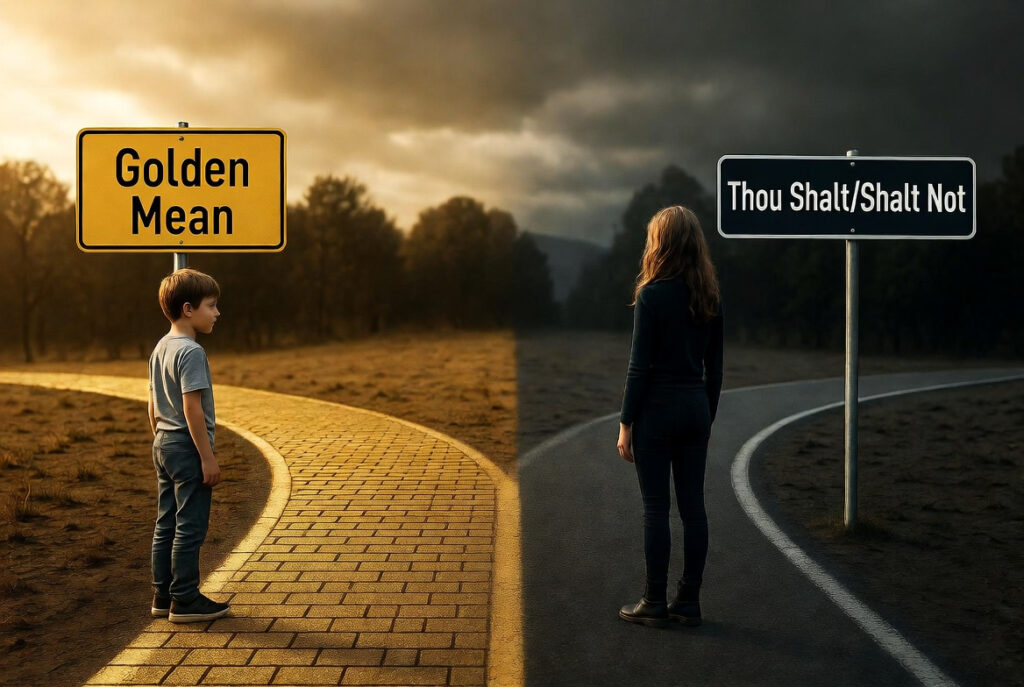
The Fifth Acceptance of alternative centrism is the acceptance that the Alternative Left is correct when they speak of the importance of justice.

Aristotle considered justice, and the application of justice, the basis of civilisation. “Justice is the ordering of the political association,” he wrote in Politics I.2. His reasoning was that society comes together for the sake of securing and achieving justice. It’s with this aim that individuals form family households, families form village associations and villages become city-states. It’s in the bonds of justice that civilisation can develop.

The Alternative Leftist will claim that justice is the most important feature of society. Without it, no order, freedom, peace or truth is possible.

Injustice is the basis of all political dissent. Most other forms of suffering can be endured with little resentment, but the suffering of injustice tends to bring with it a particular form of humiliation that leads rapidly to political action. The Alternative Leftist would argue – and the Alternative Centrist would agree – that great levels of injustice are why the Western World is in so much chaos at the moment.

The logic of the Alternative Left, and the logic of the Fifth Acceptance, is that all of the previous four positions are unjust in their own way. Therefore, they are all insufficient in their own way.

Without justice, no order can be possible because people will fight incessantly. The Alternative Left argues that the Establishment Right errs on the side of excessive order when it refuses, stubbornly, to countenance the redistribution of property on the grounds that it would be destabilising. Aristotle’s concept of distributive justice suggests that injustice occurs when the wealthy end up with all of the resources, and the lower classes with nothing.

If one looks back at the times of extreme disorder in history, whether global or local, they were usually preceded by times of extreme injustice. Even if the winners of the wars arising from the disorder decide, post facto, that the losers had no legitimate grievance, the perception of one is enough to start a war over it. As David Icke would remind us, perception is reality. As long as the perception of injustice exists, there will be disorder.

Neither will there be any freedom without justice. Most obviously, this is because the unjust will take it away. Examples abound in the countless free speech abuses committed by various totalitarian governments. The injustice of the War on Drugs is a further example. If the unjust are allowed into power, they will inevitably strip freedoms from anyone they don’t like.

The absence of justice has a suppressive effect on freedom even without legislating it away. Just knowing that injustice is rife in a society is enough to make its members watch their backs, speak in hushed tones, stop trusting their neighbours and to withdraw from life. Injustice leads directly to hate and fear, which both restrict freedoms in the search for control.

Without justice, there is no peace for the same reason as there is no order. Injustice leads to resentments which lead to violence. The victims of injustice sometimes choose to not let their oppressors rest. The greater and more widespread the injustices, the more powerful this sentiment. If it gets powerful enough, revolutions or civil wars break out.

Finally, without justice there can be no truth. It might seem that the usual problem is a lack of truth leading to a lack of justice, but it can also be the other way around. As Basil Liddell-Hart wrote in ‘Why Don’t We Learn From History’, unjust people keep telling lies to gain unjust advantage over others. So wherever you have injustice you also have falsehood. Only just people can be relied upon to tell the truth.

As anyone who has studied psychology knows, finding the truth is often hard not because of the intelligence requirement, but because of the honesty one. As soon as people have political or religious loyalties, they also have an interest in telling lies. Invariably, one’s political or religious in-group will eventually commit some immoral deed, and then loyalty to that in-group will make one tell lies to save face. Injustice, then, directly destroys truth even more than it destroys order, freedom or peace.

Thus it can be seen that, from the perspective of the Alternative Leftist, justice is the ultimate value, and that, without the Fifth Acceptance, none of the others can be realised. The Fifth Acceptance accepts that holistic perspectives are sometimes necessary, particularly because they are broad enough to encompass everyone’s needs.

There is a lot of injustice in today’s world, for many reasons. Inherited privilege is one of those reasons. This inherited privilege, over generations, tends to replicate a feudal system, as the inheritors of property can charge rent on it, and then use the rent money to buy more property and so on. Unless there is a major readjustment, in the form of wealth redistribution or revolution, everyone else gets reduced to serfdom. This is why the Alternative Left pushes the idea of universal basic income so hard.

This motivation to push a universal basic income follows the observation that the Establishment Left have abandoned the poor. This abandonment is the essential aspect of the Establishment Left, and how they got to be part of the Establishment in the first place. But it vacated an empty space on the Left for an alternative movement. The Fifth Acceptance acknowledges that the Establishment Left have betrayed the truly disadvantaged, and that the Alternative Left are rightfully filling that empty niche.

The Alternative Left are, in the minds of many, synonymous with Social Justice Warriors. In this sense, they are the new moral puritans, challenging the Establishment Right for most disdain for sex and alcohol. This is one manner in which they are different to the Establishment Left, who have degenerated to the point where they care about freedom more than propriety. The wowserism of the Alternative Left, exemplified by their prudishness around age gaps in dating, reveals clearly that Communism is a religion.

One of the major social trends powering the Alternative Left (as with the other alternative positions) is the rapidly changing nature of information. However, awareness of this has yet to reach the people in power. The heavily-mocked conception of the Internet as “a series of tubes” has hardly been updated since first uttered in 2006; old people still don’t get the Internet or Internet culture. Hence the need for alternative conceptions of justice, fit for the Internet Age.

The Fifth Acceptance agrees that new thinking about justice is required. In some ways, this will require going back to Aristotle; in some ways, this will require a 21st Century perspective.

The obsession with justice goes too far when it becomes an obsession with equality. It’s obvious that people are different, whether individuals or groups. Even if it were true that, on some ultimate metaphysical level, all people have precisely the same spiritual value, this would not manifest as perfect equality by every material measure. To deny this is simply stupid.

Alexander Solzhenitsyn wrote “Human beings are born with different capacities. If they are free, they are not equal. And if they are equal, they are not free.” Hence the Alternative Centrist believes that justice, just like order, freedom, peace and truth, also needs to be moderated, else it begins to destroy the other qualities.

This stupidity of insisting that justice must mean equality by every possible measure is what gives rise to the Fifth Rejection.

*

This chapter is from The Alternative Centrist Manifesto, the upcoming work of political philosophy that offers the answers to the political problems of the West.

*

For more of VJM’s ideas, see his work on other platforms!
For even more of VJM’s ideas, buy one of his books!

*

If you would like to support our work in other ways, make a donation to our Paypal! Even better, buy any one of our books!
Why It’s Imperative That Hate Speech Laws Are Opposed

The left and right factions of the Australian Establishment came together this week to strip freedom of speech from the Australian nation. This happened in the form of the Labor and Liberal parties joining forces across the aisle to pass new hate speech legislation. This will be the most aggressive hate speech legislation ever passed in Australia. The Australian Greens have suggested the bill is so restrictive that it will become illegal to criticise Benjamin Netanyahu.

Under the new bill, the head of the secret intelligence service will be given the powers to ban any political group the Australian political establishment doesn’t like. This extreme measure, reminiscent of NKVD or Gestapo control systems, will mean that anyone organising to challenge the Australian political establishment will risk simply getting banned before any real challenge can be made.

The differences between this system and a one-party totalitarian state are minor.

One common, but naive, argument made about hate speech laws is that they protect people from being degraded or abused. Well-meaning people then get suckered into supporting them in the belief they will only impact white supremacists and terrorists. This is wrong, but an easy trap to fall into.

The primary danger with hate speech laws is that literally anything can be defined as hateful. Even the most innocuous-sounding statement can be declared to be “associated” with some hate group or ideology. So, in practice, whether or not a person gets prosecuted for hate speech depends on the whims of whoever is in power, not on any objective moral or legal standard.

VJM Publishing first came to national attention in New Zealand in 2019, when we were attacked in the mainstream media by the Human Rights Commission for selling ‘It’s Okay To Be White’ t-shirts on TradeMe. The media beat-up took every possible opportunity to link the sale of the shirts to white supremacy and to Brenton Tarrant, declaring that I was racist, hateful, divisive etc. Presstitutes like Kanoa Lloyd told the country, without any evidence at all, that the t-shirts “were intended to ‘shock and hurt’.”

Shortly after the media beat-up, the Police came to my house to harass me about it.

If the Human Rights Commissioner takes to the mainstream media to call you hateful and racist for saying something, you can best your last dollar that you’d also get prosecuted for a hate crime for saying that thing if hate speech laws were in effect. Therefore, it’s logical to assume that saying “It’s Okay To Be White” will be considered hate speech under the new laws. Saying that it’s okay to be you will be a crime, if the political establishment doesn’t like you and hate speech laws are in effect.

It might be argued that people will resist these laws. The ‘It’s Okay To Be White’ incident proved otherwise. TradeMe head of Safety George Hiotakis initially stated, perfectly accurately, that t-shirts saying ‘It’s Okay To Be White’ do not violate any rules about racist slogans. “Items which marginalise individuals or promote one race at the cost of another cannot be sold onsite,” Hiotakis said [quoted from The Independent link above]. ‘It’s Okay To Be White’ clearly does neither.

Paul Hunt wasn’t giving in that easily, though. Using his full influence as Human Rights Commissioner, Hunt persuaded masses of people to contact TradeMe to lay a complaint. Hiotakis eventually caved to this frothing mob, cancelling the listing and banning the shirts from sale.

This proved an important point, of extreme relevance to the hate speech discussion: whether something is considered hate speech depends on whether a mob has been whipped up about it. If there’s a mass of people mad about some statement, no matter how innocuous, then it’s hate speech. If no-one, or only a few people, are mad about it, then it’s legitimate speech.

Rule by law goes out the window once hate speech laws are brought in. Because hate cannot be defined accurately – as proven by the ‘It’s Okay To Be White’ debacle – hate speech laws represent rule by mob, not law.

However, this perfectly suits those with power and influence. Because Paul Hunt has the power and influence to stir up a mob and have me cancelled, and I don’t have the power to impact him, such laws give the ruling class the power to strike down any wrongthinker they please, with no risk. All that needs to happen is for Hunt or some other powerful Government figure to take to the mainstream media denouncing the wrongthinkers, and the herd falls in line.

It’s impossible to think of a single example of anything that could not be considered hate speech if the definition of hate was broad enough. The ‘It’s Okay To Be White’ example is proof of this. Saying it’s okay to be white is the exact opposite of hatred: it’s affirming the moral okayness of white people in the face of constant media demonisation. But the ruling class can nevertheless declare it hate speech and destroy the people saying it, and get the consent of the masses to do so, on account of their overwhelming narrative control.

Once hate speech laws are brought in, the people who brought in those laws will then decide what other people are allowed to say. This is because the people who brought in the laws can arbitrarily define absolutely anything they don’t like as hate. Hate speech laws in New Zealand will be used for one purpose: to crack down on everyday Kiwis criticising the political establishment. It’s imperative that free and decent people resist them to the maximum extent possible.

*

For more of VJM’s ideas, see his work on other platforms!
For even more of VJM’s ideas, buy one of his books!

*

If you enjoyed reading this piece, buy a compilation of our best pieces from previous years!

Best VJMP Essays and Articles of 2023
Best VJMP Essays and Articles of 2022
Best VJMP Essays and Articles of 2021
Best VJMP Essays and Articles of 2020
Best VJMP Essays and Articles of 2019
Best VJMP Essays and Articles of 2018
Best VJMP Essays and Articles of 2017

*

If you would like to support our work in other ways, make a donation to our Paypal! Even better, buy any one of our books!

Best Of VJMP 8

Best Of VJMP 8 is for sale on Amazon as a paperback for USD 16.66!

Best Of VJMP 8 is for sale on Amazon Kindle for USD 6.66!

Best Of VJMP 8 is for sale on Amazon as a paperback for USD 16.66!

Best Of VJMP 8 is for sale on Amazon Kindle for USD 6.66

Best of VJMP 8 is the eighth compilation of the best material from the VJM Publishing company page at www.vjmpublishing.nz. This compilation covers essays and articles from 2024 and 2025. They continue the VJM Publishing tradition of irreverent and controversial short-form literature.

The focus, as ever, is on psychology, philosophy, politics and spirituality, from an alternative centrist perspective.

This collection includes:

64. VJM – New Zealand’s Most Suppressed Author And Thinker!
63. The Game Theory Of Immigration
62. Good Riddance Jim Bolger, You Evil Bastard
61. The Insanity At The Heart Of Western Culture In 2024
60. Why Oliver Jull Was Censored By New Plymouth Boys’ High School
59. What A Sensible Drug Policy For 2026 And Beyond Might Look Like
58. Growing Roots Within
57. Understanding The Psychology Of Gang Members
56. The Cheap Labour Spectrum
55. How Kieran McAnulty Could Become Prime Minister In 2026
54. Why All The Rapists Can’t “Just Be Deported”
53. Why The Establishment Smashed The Vaccine Mandate Protesters But Supported The Hikoi Protesters
52. Malinformation, Or How Facts Can Be Racist
51. All My Life Interactions With The Police, Rated Out Of 10
50. The Inevitability Of The Maori Party, And Of Race Politics
49. The Five Types Of Power
48. The Collapse Of The Electoral Cycle And Its Consequences
47. Coping With The Transition To A Low-Trust Society
46. The Three Castes Of Woke New Zealand
45. North Island Narratives
44. What Lee Kwan Yew Might Have Said To Bronze Age Pervert (And To Us)
43. The NZ Loyal Party in the 2023 New Zealand General Election: An Analysis of Voting Correlations and Political Context
42. Why People Aren’t Willing To Fight
41. Undiagnosed Schizophrenia
40. Why Mainstream Conservatives Support Homosexuality But Not Cannabis Law Reform
39. 21st Century Signs Of A Slave Mindset
38. Workamania
37. Understanding White People For Non-Whites
36. The Case For Rejecting The Consensus
35. Free Range Slavery
34. What El Salvador Could Teach New Zealand About Solving The Gang Problem
33. ‘California Sober’: Could It Catch On In New Zealand?
32. Investigating Claims Of Superior Ashkenazi IQ
31. 10 Months Of Taking Cannabis Tea For C-PTSD: A Review
30. What Orwell Meant By “War Is Peace” And Why It’s So Relevant
29. Some Very Basic Advice For The Mentally Ill, From A Veteran Of The Mental Health System!
28. The Deep Implications Of The Recent Thuringen Election
27. Why Books Are Now The Best Indicator Of Class
26. Clinical Narcissism: Think Lightly Of Yourself And Deeply Of The World
25. VJMP Anzac Day Address 2024: The Common Enemies Of The Anzac Nation
24. VJMP Anzac Day Address 2025: The Anzac Nation Will Rise From The Ashes Of The Boomers
23. The Drop Of The Penny
22. The Harvester Judgement And How Much Has Been Stolen From Us
21. The Rise Of Leftist Nationalism In The 21st Century
20. Enclownification
19. Ending The War On Drugs Would Get People Socialising Again
18. Acclimating to Not Knowing
17. Trickle-Up Economics
16. The Maths On The UBI Argument
15. Natural And Unnatural Religions
14. VJMP Predicts 2025!
13. How A Skilled Alchemist Would Use Cannabis
12. Clown World And Where It’s Headed
11. The Working-Class White Question
10. Is Professor Jiang At Risk Of Assassination?
9. An Elementalist Interpretation Of Marilyn Manson’s ‘Wormboy’
8. The Cruelty Is The Point
7. An Open Letter To The Minister Of Justice Regarding Psychedelic Use For Spiritual Purposes
6. The Mithraic Ladder Of Drugs
5. The Secret To Attaining Enduring Pleasure Is Seeking The Subtlest Forms Of It
4. Who Is My Guru?
3. Mentally Ill? You May Actually Be Physiologically Ill
2. The Long Walk Out Of The Desert
1. Thoughts On Suicide From Someone Who Hasn’t Done It Yet