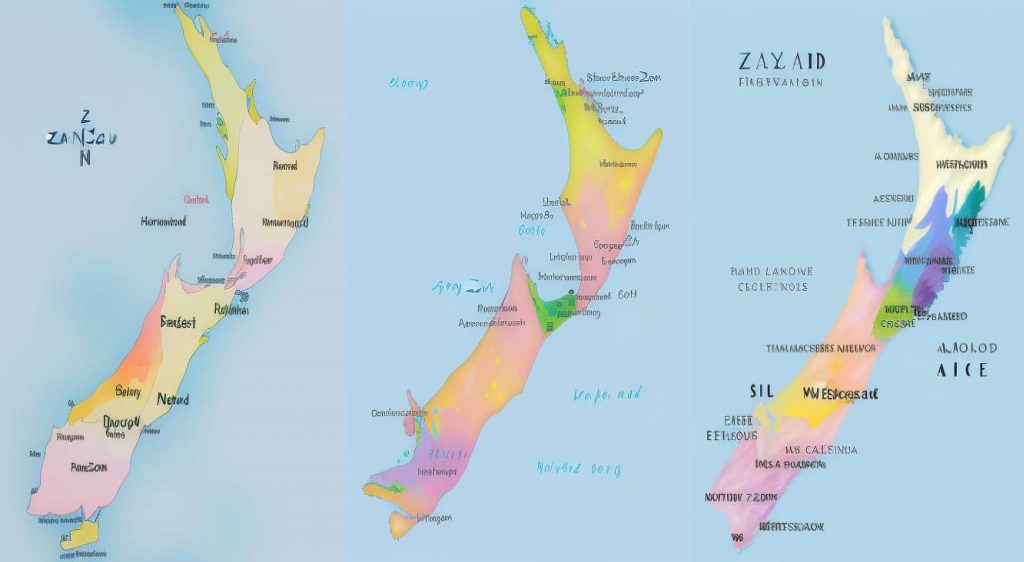
This essay outlines a suggestion not heard for many years: that the political needs and wants of the New Zealand nation could best be met by devolving political power to provincial governments.
Recent demographic work, such as Dan McGlashan’s Understanding New Zealand 3rd Edition, has revealed the full extent of New Zealand’s demographic diversity. New Zealand is actually a fairly large country, measured by land area: it’s larger than the United Kingdom, twice as large as Bangladesh and close to three times the size of South Korea. This is spacious enough for more diversity than one might predict from a small population.
Already it’s hard enough for the entire nation to agree on anything. The country is almost evenly split when it comes to support of the left-wing bloc vs. the right-wing bloc. No matter who wins the election this October, close to half of the country will be disappointed with the result. For all of the 35 years I have followed politics, whoever was not in power was always whinging about that fact.
On many other issues we are far from unified. The cannabis referendum was also an almost even split, with 48.4% of the population losing the potential freedom to use cannabis. When it was found that wage-earners voted in favour of the measure and pensioners did not, and that people were more likely to vote for change the better educated they were, the result was a bitter pill for many.
The discontent created by such outcomes recalls a 19th Century solution that might once again be of use to us: breaking New Zealand up into provinces. That way, each individual province could pass the laws that best fit the wishes of their respective populations.
New Zealand had a provincial government up until 1875, when it was abolished by Julius Vogel, perhaps out of globalist considerations. Ever since then, New Zealand has suffered under one of the most centralised power structures outside of actual dictatorships. Re-establishing the provincial government, and decentralising power back to the regions, could reduce discontent and resentment by giving Kiwis more say in their everyday affairs.
Auckland could become a city-state province with very few trade restrictions, befitting its position as New Zealand’s major trading centre. They might also like to have a Dubai/Qatar/Singapore-style slave army of cheap labour imported from South Asia, which would not be tolerated in many of the other provinces.
Wellington could become a federal capital like the ACT in Australia, or Washington DC in America, in which representatives of the provinces would meet to pass federal laws. It may or may not also have a government just for Wellington Province. This would ensure there was a minimum of disruption for Wellington and for the remaining central government in the transition to decentralisation.
Tuhoe, who have always claimed independence on the grounds that they did not sign the Treaty of Waitangi, could become a self-governing province. They would only be subject to federal law, and would otherwise have the freedom to set their own cultural agenda.
Nelson and Westland provinces could legalise cannabis and grow it on a wide scale, as well as legalise cannabis cafes that serviced both the local and the tourist markets. There’s no reason why these provinces need to have cannabis prohibition just because Pacific Island and Chinese immigrants in Auckland voted for it.
The South Island provinces could collectively reject the grievance industry around Maori land which has engulfed North Island politics, and national politics by extension. Since all the confiscations were made in the North Island, the South Island provinces could reject the “stolen land” narrative and, like Tuhoe, set their own cultural agenda.
When it came to issues like vaccine mandates, individual provinces might wish to have their own policies. The young and healthy population of Auckland Central (Auckland itself might break down into several provinces) might argue that they don’t need compulsory vaccination, whereas the elderly populations of Canterbury and Hawke’s Bay might decide otherwise.
There would still be a central government whose jurisdiction was defence, diplomacy, trade, immigration etc. This would still be known as ‘The New Zealand Government’. It follows that there would still be an All Blacks, a New Zealand Symphony Orchestra etc. but more focus and funding would be directed to the next level down.
With this model, if a person found the laws of their province intolerable, they would be free to move to another province that suited them better. If the high taxes of Canterbury and Otago didn’t suit, a person would be free to move to Auckland. Likewise, if the low-social investment, high-crime model of Auckland didn’t suit, a person would be free to move to Canterbury and Otago.
All moral issues would be decided by provincial governments: abortion, gambling, prostitution, drugs etc. This would minimise the extent to which New Zealanders had someone else’s morality forced on them (of course, for some people, forcing their morality on others is the whole point. The influence of these control freaks would be minimised under a provincialised system).
This would also mean that any one province that developed a superior political system to another would be rewarded with greater internal migration and investment. Thus, the politicians of the country would be set to competition with each other, unlike today’s arrangement, in which the politicians set New Zealand workers to competition with foreign imports.
Psychologist Erik Erikson is best known for his theory on psychosocial development, which outlines the various stages of development and highlights their key characteristics and associated conflicts. However, another area that Erikson extensively researched was early childhood trauma and its effects on healthy psychological development.
Early childhood trauma refers to any adverse event or experience that a child experiences before the age of six. This can include various forms of abuse, neglect, loss of a loved one, violence and other experiences that can negatively impact a child’s healthy psychological development. Erikson was keen to address the effects of such trauma on child development, noting how they can affect an individual’s psychological makeup well into adulthood.
One of the key areas of early childhood development that Erikson focused on was the development of trust versus mistrust. According to Erikson, children pass through this stage within the first 18 months of their life, and its central conflict is between trust and mistrust. In this stage, children require consistent care and affection from their primary caregivers to develop a sense of trust in the world around them. Parents and caretakers play a crucial role in shaping the child’s perception of the world through their daily interactions and responses to the child’s needs. If these needs are not met due to early childhood trauma, mistrust may develop, leading to further psychological problems later on in life.
Erikson also emphasized the importance of a child’s autonomy during the second stage of psychosocial development, which occurs between the ages of two to three years. This stage is marked by toddlers’ assertion of their autonomy as they seek to assert control over their immediate environment. Children who experience early childhood trauma may find it challenging to develop a sense of self-trust and autonomy, leading to lower self-esteem, anxiety and feelings of inadequacy that can be long-lasting.
Early childhood trauma can also have profound effects on a child’s social and emotional development, affecting their ability to form secure relationships and attach healthily to others. Erikson posited that children pass through the stage of intimacy versus isolation during young adulthood, where they seek to develop genuine connectedness with others. However, individuals who lack a sense of trust and self-autonomy may find it difficult to establish such connections, leading to social isolation and feelings of disconnect.
Erikson was also concerned about the effects of early childhood trauma on academic achievement, given its critical role in shaping later-life outcomes. He argued that children exposed to traumatic experiences may develop cognitive and behavioural difficulties that can hinder their academic progress. Such difficulties can have long-lasting effects on their future career prospects, social mobility and overall well-being.
One of the most severe consequences of early childhood trauma is the risk of developing mental health issues such as anxiety or depression. This is because such experiences can leave a lasting impression on a child’s psyche, leading to unresolved emotional conflicts and feelings of vulnerability. The effects of childhood trauma can manifest in adulthood, leading to the development of low self-esteem, trust issues, difficulty forming relationships, and a host of other psychological difficulties.
Erikson was keen to emphasise the role of caregivers and parents in providing support and guidance to children exposed to early childhood trauma. Through supportive care, counseling and therapy, individuals can better work through such traumas and minimise their impact on their psychological development.
In conclusion, Erikson extensively researched the effects of early childhood trauma on healthy psychological development, noting how it can negatively impact a child’s perception of the world and their place in it. From issues of trust versus mistrust, autonomy, academic achievement, and social-emotional development, early childhood experiences profoundly shape later life outcomes.
Caregivers and parents play a crucial role in providing support and guidance to children experiencing traumatic events, which can minimise the impact of such events on their psychological well-being. Erikson’s work reminds us of the importance of a supportive and nurturing environment for children to develop healthy psychological development and highlights the long-lasting consequences of early childhood trauma.
This article is about how to engage pain appearing at a physical or emotional level. Fortunately, the process is much the same. I will maintain a focus on the inside view of pain, and what we can do about it. I would ask that the reader at least temporarily suspend their beliefs and views about anything theoretical regarding what pain is or where it comes from. It can be easy to rationalise or intellectualise our suffering, and in so doing, we can miss the opportunity to simply meet it on its own terms.
I have had a lot of experience with pain, mostly the emotional variety. I have never broken bones, but I have been through overwhelming grief and trauma. I have found this to be one of the most oppressive forms of pain. Since physical pain can often have a sense of being implacable once we see it is not moving anywhere, we can come to accept it to a certain degree.
Mental or emotional pain is different in that it can be very difficult to accept. We often feel very strongly that it simply shouldn’t be there, or that if we could only just think the right thought or occupy the right philosophical perspective then it could be cast out like a phantom, banished with a perfectly recited magic spell.
I have found that this kind of ongoing vacillation in non-physical suffering is precisely what keeps me tethered to it. It is not only the view that perhaps it should not be happening, that things ought to have developed differently in my life, but also the desperate hope that there may be some kind of salvation by way of a previously unconsidered solution.
We do everything we can think of to try to manage or subdue mental and emotional pain. One person’s meditation practice may be used in the same way that another person uses alcohol. In this case, are the means of escape necessarily better or worse, from an inner perspective? In frustration, we beg to be relieved or numbed in any way possible. I have watched myself go through these cycles of torment many thousands of times, frequently tempting me to at least consider taking the most extreme of measures.
However, I continue to have faith in the value – not of pain, not even of endurance or stoicism – but of our innate capacity to simply wakefully meet what is actually here. I don’t just mean here with me, but also the ‘here’ which you are assigned to experience indefinitely. I would contend that nothing is as important as where you are, here and now. This moment offers every tool for meeting that which it contains. Allow me to unpack this a little further.
We have a bevy of helpful perspectives, and many of them may be quite true, such as ‘pain is temporary’, or ‘we are more than just this form or our experiences’. Relatively true though these things may be, we must examine what the immediate value of such a position is relative to our immediate experience of pain.
Are we employing our confidence in the truth these things point to in order to make what appears here and now seem more bearable, for hopes of a brighter future?
As a seasoned sufferer, I have discovered that the most meaningful invitation in all of this is the invitation to simply stop and stand back. This includes weighing up whether you are a victim, whether there is justice in your suffering, and whether anything will ever get better or worse. I would like people to really take a look for themselves at how all of the psychological methods we have at our disposal for negotiating with this pain are actually ingeniously devised to draw our attention away from experiencing what is present to us emotionally here and now.
This can be a sobering discovery. I have watched myself and others suffer for a very long time, with an intensely keen interest in how and why we experience such pain. I had not learned a single thing of value until I stopped running from this pain it and met it where it sat within me, on its own terms. Easier said than done, to be sure, but here is what I have learned about the process this far.
Every instance of pain has an inside and an outside, and at least a potential narrative attached to it. If it doesn’t have one, the mind is extremely quick in manufacturing one. So, we have a story attached, often an angry story, or maybe a melancholic ‘woe is me’ tale. I don’t want to talk about whether the story is true, but what I do want to address is the simple fact that the application of the story is significant. This application is dysfunctional whether the story being told has a basis in fact or not – it is false in its foundational assumption.
The effect of this is to upgrade pain to what we call suffering. This is sustained pain in its unexamined and therefore potentiated form. The story allows it to breath like a fire, drawing in more oxygen making itself larger and more powerful.
All life must involve some degree of pain, but we have a massive influence over the degree to which pain becomes suffering. If you allow the pain to filter through your mind, it seems as if your entire field, your ‘am-ness’, your Self, is flooded with pain. Everything in the value of being in this moment is then hidden from view, occluded like a total lunar eclipse.
So, you do not allow it to filter through the mind. Instead, you occupy the witness state.
The story isn’t always easy to drop. What I would recommend you focus upon, again, based on my own experience, is not trying to drop the story. This effort can result in very little headway, and tends to also accompany frustration and self-punitive thoughts. Rather, direct your effort of attention to understanding the story.
By understanding, I also mean seeing through the story. To understand it means to step back and see where your pain fits in. Illusion is always transparent from some angle; it is usually just a case of rotating the object of our attention enough to get a clear view of its insubstantial nature. Why is this human pain there, what are the conditions of it? Do other people also have it? For what reasons? What was misunderstood?
So, I put it that it is critical to understand, not to renounce or revoke. You will not progress by renouncing or avoiding your feelings, no matter how upset you are, and no matter how justified or unjustified you think those feelings are. We are so used to meeting things we don’t want in the world with push-back – what happens inside us has a totally different dynamic that you will begin to see after a while if you spend enough time in there. Resistance will trap you, but acceptance and understanding will free you.
I will give an example of how a story can be sustained by ignorance and then challenged through inquiry. Remember that this story, being a narrative as accompanying the pain, while not necessarily causing the entirety of the pain, is what nonetheless promotes and sustains it, thereby elevating the pain to the status of suffering.
Here is an important inquiry rule which i have found indispensable. If there is suffering within you, then there is always something false that has been invested with your belief. In my thousands of hours of self-inquiry, this rule has proven true. I invite you to test this for yourself. The discovery, if you happen upon it, will possibly spark an inner revolution, but this cannot have value as a second-hand insight, you really need to see it for yourself in order for it to yield any effect. This gives you an important method for distinguishing pain from suffering and truth from falsehood.
I will provide some examples.
Say you value a relationship, and that relationship ends for whatever reason. There will in most instances be some form of pain, to a greater or lesser degree. Suffering may take root in a pronounced way when stories about this break-up begin to play in repeat. Common examples of the kinds of thoughts you may find yourself investing and believing in: I was not good enough to love. I was not worthy. No one will ever love me. I am a failure. I am not worthy of love from anyone else. I am ugly.
These can go on as far as the imagination will allow.
This tendency to problematise our pain must be present very early on. I remember being a child and doing this myself from as soon as I was capable of thought. I remember having arguments with my parents and wanting the pain to escalate into bittersweet suffering. Although it was completely uncalled for and totally unnecessary, I would take simple situations of not being permitted to do something, and then berating my mother with accusations such as “You wish you had an abortion”, “You wish you never had me”, and “You wish you gave me away for adoption”.
It is relatively easy to see as an adult how immature and baseless these reactive forms of lashing out are. It is a far more demanding task to see how the very same energies behind those immature reactions have insinuated themselves into our long-term thoughts and behaviours. The same energy feeds various manifestations of spite, resentment and acts of microaggression. In my adult life, I found that same energy translated into throttling my emotional availability to people based on whether I was in a good mood, or whether they were acceptable to me based on their looks, their behaviour, attitude towards me or what they could do for me. This is no way to live.
I didn’t know it at the time of childhood, because it was shrouded in darkness, but what I was really doing in this exercise was worshipping pain in order to allow it to become suffering, like someone thirsty for destruction throwing petrol onto a fire. It was of course completely unnecessary, because if I had known the fundamentals of experiencing human energy, I could have simply dealt with the pain of having my wants and desires thwarted without complicating the process and creating further turmoil for my family.
Where it becomes suffering, at least psychologically, I have discovered that it always relates to what is illusory, that which is false. What is false can always be subjected to the scrutiny of self-inquiry. In my childhood, I didn’t need to go to war with my ignorance and my false belief. If anything, I needed to see through the falsity of my claims, to make the falsehood transparent before my psyche. That would have resulted in understanding, and therefore relief of suffering.
I had no discipline at this stage of life, of course, but even so, occasionally there would be merciful spontaneous insights that resulted in the occasional relief of suffering. The availability of the promise of wisdom was never far away, even when all seemed encompassed in a pall of darkness.
These lessons of childhood are repeated for us in many similar ways in our adult lives with all of our relationships. I expected to grow into an adult one day and magically become a functional human being, but this isn’t how it works, as anyone with an interior life will have discovered for themselves. It usually takes a will, directed attention and a desire to understand our encounters that leads to wisdom.
It is possible to face the same situations over and over and react in precisely the same dysfunctional way indefinitely. This would lead to misery, because the failure to embrace understanding and wisdom is therefore, by the same movement, the welcoming of illusion and falsehood and therefore suffering.
As a child, in my situation, ideally, I could have applied a simple measure of self-inquiry in the following manner: why is it so important that I always get what I think I want? Does that rest on some universal truth, or is it something about my mind that is making demands of the world? Who else should be in pain because I do not get what I want? These are always relevant questions.
If we look again at the situation in which a person may have experienced grief from a relationship break up, the very same sobering questions can lead to understanding, even if it is only seeing how were stuck in the same patterns that repeat over and over. Remember, it is always falsehood that leads us to believe anything that causes us undue psychological torment. You will see this is if you look close enough. Bringing the power of this inquiry to bear is then like a healing balm to our pain.
For example, instead of berating myself for how dysfunctional or ugly or unworthy I am that may have led me to being abandoned by a partner, I could ask the following questions honestly of myself: under what conditions would I leave a partner? Does that mean that this other person is never capable of change? Does it mean that just because I have my own reasons for leaving them that they are inherently unlovable, unworthy, or permanently incapable of change? What is the part of me that needs to be loved or approved of by another in order to feel loved and worthy? If I really messed things up and I am indeed personally responsible, is there any universal law that forbids me from not only learning from my mistakes, but forgiving myself for the pain I caused myself and others? Was my love for that person the one thing that gave them value, or is there something else of value in them? So what about me?
There are many other forms of inquiry possible, but these are simply a few that strike at the heart of how and why suffering may be experienced, and introducing a sense of calm, honest objectivity to what can very often be emotionally reactive, volatile and subjective. This is impossible without your will. As we know, you can lead a horse to water, but you cannot make him drink. The wisest teachers in all of history can do nothing for a person who does not have the will to look for themselves.
When you are experiencing pain, as we all do, it is important to remember that we do not need to banish the pain. We do not need to get rid of our feelings, however painful they happen to be in the moment. What does benefit us is the wisdom inquiry brings. The expectation that our spiritual practice will banish our pain I have found to not be a reasonable or mature expectation. Oddly enough, we don’t even need to arrive at answers most of the time. Often simply asking the pertinent questions can be enough to bring a sober sense of wakefulness to a pattern of reactivity or entrenched self-involvement.
*
Simon P Murphy is a Nelson-based esotericist and philosopher, and author of His Master’s Wretched Organ, an astonishing and surreal collection of weird fiction stories.