When George Orwell wrote that “He who controls the past controls the future,” he meant that whoever controls the historical narrative gets to control the direction the entire culture takes. The historical narrative gives us our common ideas of right and wrong, and suggests the direction in which we’re all headed. So whoever controls our culture’s understanding of history also holds the steering wheel of Western civilisation.
When he wrote “He who controls the present controls the past,” Orwell meant that whoever is able to seize power in the present moment gets to dictate what the popular history will be. They will not only control the historians, and decide which of them gets published and which promoted, but they will also control the education system and the history it teaches. One of the main spoils for anyone who seizes power is the ability to dictate what official history is.
The telling of history in Clown World has been twisted to meet the objectives of the current ruling class.
Clown World is under the control of the Globohomo Gayplex. Their control of the present allows them to set the historical narrative. The narrative we’re given is that nationalism led to constant warfare, and so only by uniting under one global system can the world ever know peace. Therefore, all national assemblies must subordinate themselves to foreign decisionmakers, such as the United Nations.
Furthermore, all warfare in the history of the world has been triggered by intolerance, so we have to be maximally tolerant towards everything, even the mass rape of children by foreign grooming gangs. Any discontent with the way things are is a threat to other people’s safety. Just lie back and think of world peace.
This globalist historical narrative is pushed by the globalists’ footsoldiers in the education, entertainment and information systems.
The shock troops of the globalists are the SJWs who now infest teachers’ colleges everywhere. Although history as a discipline has traditionally been resistant to pozzing on account of that it was inherently interested in classical values, the degenerative effect of Clown World is overwhelming. Many history teachers are now SJWs who think it virtuous to push a neoliberal narrative.
The heavy artillery of the globalists are the capital interests who push their version of the historical narrative through the mass media and popular culture, instead of through education. The basics of the narrative are, however, the same. Before neoliberal globalist capitalism, we are told, there was misery. After neoliberal globalist capitalism, there was joy.
The capitalist influence on Clown World history has led to a complete denial of the effectiveness of non-capitalist systems. The Soviet Union did not transform from a quasi-medieval economy to one that put the first man in space in 50 years, and neither did China transform from Africa-level poverty to Argentinan-level personal wealth in 40 years. And the less said about Nazi Germany the better.
The capitalist influence on the historical narrative prevents anyone from asking why it is that no-one can afford a house on a single wage today when that was common a century ago, or how a system that prevents students from graduating because they owe money to the school canteen is anything other than an egregious failure. One might think that the SJWs would criticise this system, but they are more concerned with virtue signalling about the latest trendy issue.
None of this would be so bad if it were easily possible to find honest historians, because then we could simply listen to them.
Unfortunately, the prevalence of honest historians in Clown World is about the same as that of honest people in general: extremely rare. Very few can resist the temptation, when recounting history, to spin the account to suit their own personal moral or political values. Even before Clown World this was the case. But in Clown World, every last aspect of the popular history has been warped.
The most warped takes on history come from the New World. Clown World history has it that the inhabitants of the New World lived in perfect harmony with Nature before the white man turned up. There was never any war or hunger. Not until the white man’s technology disrupted the local power balance was there any disharmony at all. This has been described as the ‘White Man Bad, Brown/Black Man Good’ school of history.
Pretending that everything was great before white people showed up is an example of “white erasure“. The intent is to delegitimise the existing white populations of New World countries, to make them feel guilty for the supposed historical crimes of their ancestors and to make them feel obliged to humble themselves and repent. In New World countries, it also serves to weaken local resistance to globalism.
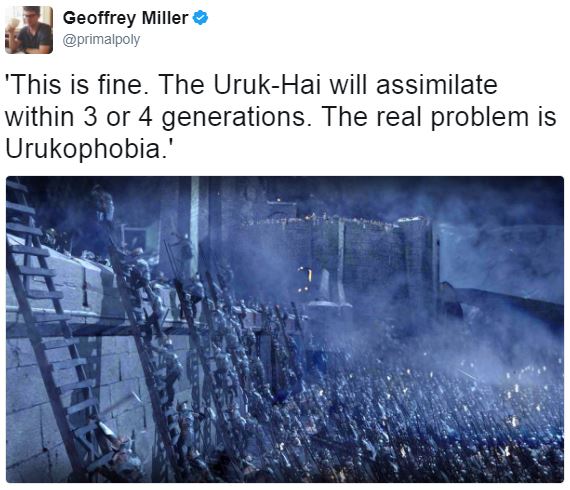
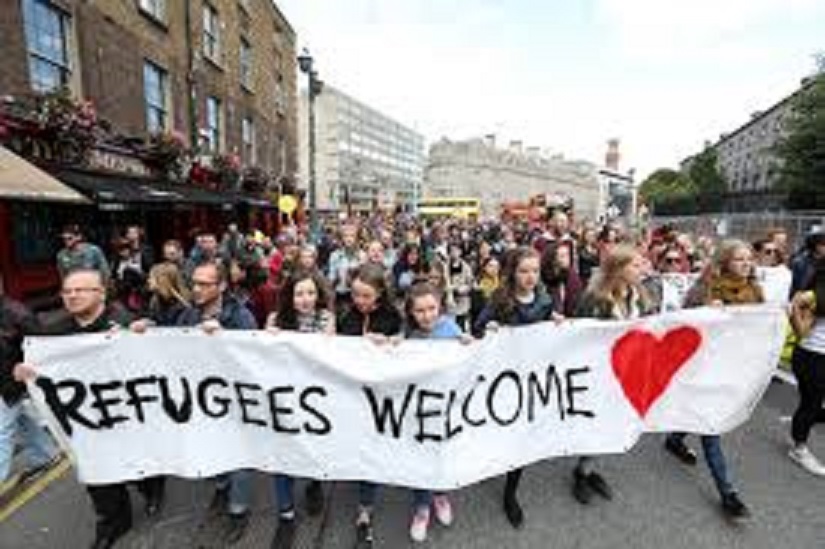
The emphasis on historical crimes also serves a more nefarious purpose: it conditions people to accept use of the favourite weapon of the globalist – mass immigration. The logic is that, if white people stole the land they’re living on, they can’t rightly object to other people showing up and demanding to share it with them. So there’s no legitimate reason for a white person living in the New World to oppose mass immigration. “Given the historical context”, any such opposition is racist.
The situation is similar, if not quite as acute, in the Old World. In the Old World, there’s no wider narrative of land theft and colonisation, but the masses are still taught that their ancestors were evil and their history shameful. Everyone in the Old World, even if they fought the Nazis, is guilty of the Holocaust, and so none may express any desire for national self-determination. The nation state, they are taught, is to blame for Europe’s bloody history.
If the demands of the ruling class call for it, it’s possible to entirely ignore any piece of history that is inconvenient. In the wake of the Christchurch mosque shootings and the drive to ban firearms, some said that the shootings were “New Zealand’s darkest day“.
Fifty-one foreigners getting shot on New Zealand soil is a tragedy, true, but it is nowhere close to the magnitude of the first day of the Battle of Passchendaele, in which over 800 genuine members of the New Zealand nation were killed, and almost 2,000 more wounded. It’s really an insult to the New Zealand nation to compare the Christchurch mosque shootings to the first day of Passchendaele, but Clown World history is modular – any part can be removed and substituted with any other.
These prevailing historical narratives are not entirely fabricated, but they are grossly inaccurate on account of that they make a number of false assumptions about human nature. The behaviour of the human animal might be highly malleable, but we do not come into the world as blank slates; we are more like possibility trees. Moreover, it is not a historical fact that the modern world has “outgrown” spirituality. These false assumptions lead us to fundamentally misunderstand what history has to teach us.
Solving the problem of bad history in Clown World requires two things: proper education and lack of ego. The first is important because it will enable people to accurately analyse the historical information they are presented with and to determine what’s true and what’s a lie. The second is important because, without it, there is no objectivity, just angry primates asserting tribal interests.
*
This article is an excerpt from Clown World Chronicles, a book about the insanity of life in the post-Industrial West. This is being compiled by Vince McLeod for an expected release in the middle of 2020.
This is the index page for the 3rd Edition of Dan McGlashan’s Understanding New Zealand, updated to account for data from the 2018 Census and the 2020 General Election and referendums.
Dan McGlashan’s Understanding New Zealand 3rd Edition is the complete demographic analysis of New Zealand voters, updated in anticipation of the General Election on the 14th October 2023.
This book contains an investigation into which demographics voted for each party in the 2020 New Zealand General Election. Correlations between party vote and age, gender, education, race, income, occupation, industry, homeownership status and other variables are discussed.
There is also an analysis of which demographics voted for change in the euthanasia and cannabis referendums of 2020, as well as an analysis of which demographics turned out to vote and which stayed at home.
To read this book is to understand the New Zealand electorate: not just the surface features, but also the deep undercurrents visible only to statistics and which might determine the 2023 General Election.
Note that parties with fewer than 10,000 votes are not included in this analysis, because of the difficulty in calculating accurate correlations when the sample size is so small.
Calculating the correlations between demographic variables and referendum choice was made difficult by the Electoral Commission’s decision to put the ballots from different electorates into the same box on Election Day. At every polling booth, the referendum ballots for both General and Maori Electorates were put in the same box, and as such we can’t accurately account for how many people in each electorate voted in favour.
The special referendum votes were broken down by electorate, but the total number of such votes was less than 20% of the number of ordinary referendum votes, and so they are not particularly representative of the New Zealand population as a whole. They also don’t overcome the problem that the Maori population is split between the General Roll and the Maori Roll, and so no meaningful correlations between referendum choice and ethnicity can be calculated.
Despite these limitations, we can see the data accurately enough to notice some clear patterns. Five significant trends are apparent.
In short, the major opposition to cannabis law reform in New Zealand is the same people who oppose it everywhere else: old, poorly-educated, religious, antisocial conservatives, i.e. those who fall for fear-based propaganda the hardest and who act to harm other people the most readily.
Variable
Voting Yes in cannabis referendum
Special voting Yes in cannabis referendum
Aged 20-24
0.51
0.66
Aged 25-29
0.46
0.62
Aged 30-34
0.33
0.44
Aged 35-39
0.09
0.18
Aged 40-44
0.02
-0.02
Aged 45-49
-0.17
-0.24
Aged 50-54
-0.23
-0.40
Aged 55-59
-0.16
-0.52
Aged 60-64
-0.21
-0.57
Aged 65-69
-0.18
-0.53
Aged 70-74
-0.19
-0.52
Aged 75-79
-0.24
-0.56
Aged 80-84
-0.24
-0.58
Aged 85+
-0.16
-0.50
All of the age groups 34 years old or younger were significantly positively correlated with a will to reform the cannabis laws. This was true both for the ordinary referendum votes and the special ones. The correlation between being aged 20-24 and casting a special vote for Yes in the cannabis referendum was 0.66. Many of these voters would have been young people who enrolled to vote on Election Day.
All of the age groups 45 years old or above were negatively correlated with a will to reform the cannabis laws. As above, this was true both for the ordinary referendum votes and the special ones, although the correlations were only significant in the case of special votes. With the special votes, every age group 45 years old or above was significantly negatively correlated with voting Yes in the cannabis referendum.
Most strikingly, all of the age groups 55 years old or older had negative correlations stronger than -0.50 with casting a special vote for Yes in the cannabis referendum.
The pattern is unmistakable, and easy to explain. Old people who have been brainwashed for decades with Reefer Madness-style anti-cannabis propaganda are generally against it. Young people who have real-world experience with cannabis and who have observed its effects in their friends and/or parents are generally in favour of it.
Variable
Voting Yes in cannabis referendum
Special voting Yes in cannabis referendum
No NZQA qualifications
-0.36
-0.45
Level 1 certificate
-0.33
-0.46
Level 2 certificate
-0.31
-0.33
Level 3 certificate
0.41
0.54
Level 4 certificate
-0.30
-0.42
Level 5 diploma
-0.50
-0.46
Level 6 diploma
-0.22
-0.35
Bachelor’s degree
0.34
0.44
Honours degree
0.53
0.48
Master’s degree
0.48
0.53
Doctorate
0.56
0.45
Another trend is immediately apparent when we look at the correlations between voting Yes in the cannabis referendum and maximum educational achievement. The better educated a person is, the more likely they are to support cannabis law reform.
Belonging to any one of three most poorly-educated groups of people in the country was significantly negatively correlated with voting Yes in the cannabis referendum. By contrast, having any university degree was significantly positively correlated with voting Yes. The strongest correlation was between doctorate degree holders and casting an ordinary vote for Yes – this was 0.56.
The one anomaly in the data – the significant positive correlation between having level 3 NZQA as a highest qualification and voting Yes in the cannabis referendum – can be easily explained. These people are mostly intelligent young people who are at university but are yet to get a degree. So they’re mostly intelligent enough to understand the science of cannabis, but not old enough to have a degree yet.
The reason for the strong correlation between education and pro-cannabis sentiments is fairly obvious. Understanding the effects of cannabis is essentially a scientific enterprise. Those educated enough to understand science understand that cannabis is medicinal. Those not educated enough to understand science have to rely on what they’re told, which is usually by people not educated enough to understand the science.
Education is, at the end of the day, little more than a mental toolbox for determining truth from bullshit. An educated person will be equipped to appraise data and to decide for themselves what is true and what isn’t.
Those unequipped to make such determinations are forced to rely on dictates from authority figures, such as the television or the local priest. Doing so is extremely inaccurate, and is often completely misleading. Those who put themselves forwards as authority figures, and those who are presented as authority figures by the media, are often people with a vested interest in telling lies.
Unfortunately, the cannabis referendum was a national IQ test, and we failed it.
Variable
Voting Yes in cannabis referendum
Special voting Yes in cannabis referendum
Following no religion
0.39
0.22
Following Buddhism
-0.05
0.14
Following Christianity
-0.53
-0.48
Following Hinduism
-0.06
0.11
Following Islam
-0.06
0.09
Following Judaism
0.33
0.44
Following a Maori religion
-0.02
0.20
Following Spiritualism or New Age religion
0.58
0.25
Many people fail to appreciate the extent to which hating cannabis users is a religious, particularly an Abrahamic, attitude. It was largely Christians who enforced cannabis prohibition in the first place, and it’s largely Christians who argue to continue enforcing it. As such, a significant majority of people who voted No in the cannabis referendum were Christian.
The truth is that cannabis is a spiritual sacrament, and has been used as such for thousands of years. Throughout all time and space, Christians have always sought to destroy all other religious and spiritual traditions, and they have destroyed spiritual practices based around cannabis use in the same way they destroyed spiritual practices based around psilocybin mushroom use.
Christians can’t burn spiritual freethinkers at the stake anymore, but they can still vote for them to be persecuted. And they do, in great numbers. The fact that Christianity is an ideology of hatred is seldom more evident than in the strong negative correlations between being Christian and voting Yes in the cannabis referendum. A correlation of -0.53 between being Christian and casting an ordinary vote for Yes in the cannabis referendum lays bare what many already knew: Christians hate cannabis users.
Buddhists, Hindus and Muslims were generally indifferent to the question of cannabis law reform. This reflects the fact that there are two opposing forces at play in these cultures: the conservative, control-based mentality and the liberal, experience-based mentality. Many voters in these groups, being relatively recent immigrants, are caught between two worlds, unsure of what to accept and what to reject.
Spiritualists and New Agers were the big losers from the referendum result. New Age religion is very fond of cannabis on account of that it facilitates meditation. Spiritualists also like cannabis for the same reason that Rastafarians do: they believe that it enables them to reconnect with God. This explains the strong positive correlation of 0.58 between following Spiritualism or New Age religions and casting an ordinary vote for Yes in the cannabis referendum.
The significant positive correlations between being Jewish and voting Yes in the cannabis referendum are no doubt because of the higher educational attainment of Jews, i.e. most of them voted Yes because they understand the science behind cannabis.
Variable
Voting Yes in cannabis referendum
Special voting Yes in cannabis referendum
Working as manager
-0.20
-0.20
Working as professional
0.51
0.52
Working as technican or trades worker
-0.33
-0.48
Working as community or personal service worker
0.35
0.22
Working as clerical or administrative worker
-0.20
0.02
Working as sales worker
-0.20
0.03
Working as machinery operator or driver
-0.42
-0.28
Working as labourer
-0.20
-0.31
The fourth apparent trend in the data is that occupations and industries with a lot of human contact tended to vote Yes in the cannabis referendum, while occupations and industries without much human contact tended to vote No.
This mostly reflects differences in empathy. People in social occupations tend to be more open, more closely attuned to other people’s suffering and more sympathetic towards the measures those people take to reduce it. They are also much more likely to support recreational drug use in general, and much less likely to support government measures to interfere in other people’s lives.
There were significant positive correlations between voting Yes in the cannabis referendum and being a professional (0.51) or being a community and personal service worker (0.35). This reflects the fact that people in these occupations are intelligent and empathetic. In the case of professionals, it also reflects a superior reasoning ability.
There were significant negative correlations between voting Yes in the cannabis referendum and being a machinery operator or driver (-0.42) or being a technician or trades worker (-0.33). This might reveal a working-class social conservatism, but more likely follows from the fact that these occupations cannot be performed safely while stoned, and so people in them are concerned about the person next to them being under the influence of cannabis while working.
Variable
Voting Yes in cannabis referendum
Special voting Yes in cannabis referendum
Working in agriculture, forestry or fishing
-0.16
-0.40
Working in mining
0.00
-0.16
Working in manufacturing
-0.58
-0.52
Working in electricity, gas, water and waste services
-0.12
-0.10
Working in construction
-0.38
-0.22
Working in wholesale trade
-0.56
-0.17
Working in retail trade
-0.25
-0.35
Working in accommodation or food services
0.47
0.40
Working in transport, postal or warehousing
-0.42
-0.06
Working in information media or telecommunications
0.47
0.57
Working in financial or insurance services
0.19
0.37
Working in rental, hiring or real estate services
-0.19
0.10
Working in professional, scientific or technical services
0.37
0.51
Working in administrative or support services
0.05
0.33
Working in public administration or safety
0.46
0.33
Working in education or training
0.29
0.19
Working in healthcare or social assistance
0.18
-0.13
Working in arts or recreation services
0.60
0.58
These correlations, between choice of unsocial occupations and voting No in the cannabis referendum, were replicated with choice of industry.
People in social industries heavily supported cannabis law reform, and this was also true of people in creative industries.
There was a significant positive correlation between casting an ordinary vote for Yes in the cannabis referendum and working in Arts and Recreation Services (0.60), Accommodation and Food Services (0.47), Information Media and Telecommunications (0.47), Public Administration and Safety (0.46), Professional, Scientific and Technical Services (0.37) or Education and Training (0.29).
People in industries that are (generally speaking) neither social nor creative heavily opposed cannabis law reform.
There were significant negative correlations between casting an ordinary vote for Yes in the cannabis referendum and working in Manufacturing (-0.58), Wholesale Trade (-0.56), Transport, Postal and Warehousing (-0.42), Construction (-0.38) or Retail Trade (-0.25).
The major distinction here is not obvious, but it is striking, and perhaps summarises the entire cannabis law reform debate: voters working in industries that are focused on people supported cannabis law reform, while voters working in industries that are focused on things generally opposed cannabis law reform.
Variable
Voting Yes in cannabis referendum
Special voting Yes in cannabis referendum
Voting Labour 2020
0.36
-0.11
Voting National 2020
-0.50
-0.49
Voting Greens 2020
0.85
0.68
Voting ACT 2020
-0.25
-0.43
Voting New Zealand First 2020
0.03
-0.21
Voting New Conservative 2020
-0.46
-0.66
Voting The Opportunities Party 2020
0.74
0.42
Voting Maori Party 2020
0.34
0.39
Voting Advance NZ 2020
-0.06
-0.06
Voting Sustainable NZ 2020
0.12
0.05
Voting ALCP 2020
0.08
0.23
Voting TEA Party 2020
-0.36
-0.08
Voting Heartland NZ 2020
-0.10
-0.09
Voting Social Credit 2020
0.14
-0.30
Voting NZ Outdoors Party 2020
-0.04
-0.26
Voting ONE Party 2020
0.05
-0.14
Voting Vision NZ Party 2020
-0.17
0.26
The fifth apparent trend in the data involves the strong positive correlations between voting for progressive parties and voting Yes in the cannabis referendum, and the strong negative correlations between voting for conservative parties and voting Yes.
Unsurprisingly, voting for any of the parties that campaigned specifically for cannabis law reform had the strongest correlations with voting Yes on the cannabis referendum. Casting an ordinary vote for Yes in the cannabis referendum had a correlation of 0.85 with voting for the Greens in 2020, and 0.74 with voting for The Opportunities Party in 2020. The correlations with casting a special vote for Yes and voting for these parties were only slightly weaker.
Cannabis law reform supporters will be invigorated by the fact that the correlation between voting Labour in 2020 and casting an ordinary vote for Yes in the cannabis referendum was significantly positive, at 0.36. This suggests that a significant majority of Labour supporters want legal cannabis and so Labour, if they take the will of those supporters into account, should change the law.
National and the New Conservative Party, who explicitly campaigned against cannabis law reform, had the least cannabis-friendly voters. The correlation between voting Yes in the cannabis referendum and voting National in 2020 was -0.50, and with voting New Conservative in 2020 it was -0.46. To a large extent, this reflects the fact that those voters are old, and in the case of New Conservative voters it also reflects a lack of education.
Many will be surprised by the significant negative correlations between voting ACT in 2020 and voting Yes in the cannabis referendum. David Seymour wrote about his support for cannabis law reform in Own Your Future, and openly stated before the referendum that he was voting Yes. ACT is also associated with libertarian urban types who are generally favourable towards drug use of all kinds. So understanding why their voters oppose cannabis law reform is not straightforward.
The reason is that many of the people who voted ACT in 2020 voted National in 2017, and are still conservatives at heart. They voted ACT in 2020 mostly to protest the National Party leadership of the time, and are not really libertarians. This is supported by the fact that ACT voters were much, much older in 2020 than they were in 2017.
The weak correlations between voting for the Aotearoa Legalise Cannabis Party and voting Yes in the cannabis referendum will also surprise many.
First it has to be understood here that ALCP voters are very few in number, and represent the top 1% most fanatical about cannabis in the entire country. Second, many of these cannabis fanatics were unhappy with the Cannabis Legalisation and Control Bill because they either felt that it didn’t go far enough, or because they didn’t want the cannabis industry to become commercialised. So many of them cast No votes despite supporting cannabis law reform in general.
Their reasons might sound paradoxical, but nothing about the cannabis debate has been rational from the beginning.
*
This article is an excerpt from the upcoming 3rd Edition of Understanding New Zealand, by Dan McGlashan and published by VJM Publishing. Understanding New Zealand is the comprehensive guide to the demographics and voting patterns of the New Zealand people.
Dave Chapelle once lamented that “men and women don’t get along anymore“. The sad reality is that men and women in Clown World are seldom complimentary, as are yin and yang. In Clown World, men and women are locked in a struggle for supremacy that has had dire consequences for our collective happiness.
The division between male and female is the most fundamental division in the human species. Not even the division between good and evil is as great, because that is a matter of degree and a function of environmental pressure, whereas the division between male and female is categorical and innate.
Although it’s denied by the SJWs and the baizuos, there is a male way of thinking and a female way of thinking. The male way of thinking evolved to hunt and protect and later developed into warfare; the female way of thinking evolved to gather and nurture and later developed into civilisation. Although we are all humans, these different gender-based ways of thinking create challenges for those who want peace and order.
When gender relations are good and tensions are dissolved with humour and good cheer, you have a golden age. This is what existed in ancient Greece when it was possible for playwrights such as Aristophanes to write Lysistrata. In such a time, it’s possible to gently make fun of the foibles of the other gender while still acknowledging their value and the ultimate importance of co-operating.
When gender relations are marked by the perceived need to get revenge for centuries of oppression, you have Clown World. Like much of Clown World, gender relations today are the way they are because of a massive overreaction to a lengthy period of Abrahamic shitness.
Abrahamic culture is male supremacist, and women’s awareness of their historical oppression at the hands of Abrahamists has created deep resentment. This deep resentment has led to support for measures benefitting women at the expense of men, on account of the belief that they settle some historical scorecard.
Measures such as restricting scholarships to female students are readily accepted by the middle-class women who are the primary beneficiaries. The working-class men who have to watch those middle-class women get exclusive advantages on account of some supposed greater need, however, become extremely resentful.
This resentment is typical of gender relations in Clown World.
The discord between men and women is the primary reason why Clown World is so fucked up. Because healthy gender relations are fundamental to a healthy society, the dysfunction here has led to dysfunction at every scale. It has led to family discord, which has led to community discord, which has led to national discord.
On a family level, more children than ever are growing up to see fighting and arguing between their parents. This has led to an increased perception that violence and aggression are normal, acceptable ways of conducting human relations. These children then grow up and bring their unhealthy attitudes to their wider community, making those communities hostile, suspicious and violent.
For a nation to have a healthy national sentiment it needs healthy communities, which requires healthy families, which requires healthy gender relations. So deteriorating gender relations serve the nefarious interests of globohomo. The more disharmony there is between men and women, the easier the entire population can be reduced to consumerist NPCs. This is why the mainstream media is always pushing a “gender wars” narrative.
Gender relations have now become so bad that it’s possible to speak of an “incel epidemic“. The proportion of American adults that don’t have sex at all has doubled since 2008, and has tripled for men under 30. This means that there are a lot of lonely people out there who have never experienced affection from the opposite gender.
This has happened for a number of reasons, but two are foremost. First, the advent of dating apps such as Tinder has made it easier than ever before for mediocre women to reject all suitors besides the most attractive Chads. Second, the perception that women are now more promiscuous than ever (see: roastie) had led to a number of men avoiding women out of disgust.
Unfortunately, the male mind does not respond well to lengthy periods of involuntary celibacy. The tendency in such cases is for it to become sadistic. Lengthy periods of involuntary celibacy can lead to a particularly bilious form of resentment that soon becomes the blackest of hates, a hate so powerful that it revels in the suffering of others.
The increase in sadism brought about by a widespread lack of sexual satisfaction has society-wide ramifications. It has made a large proportion of men unwilling to work towards the greater good, in any sense. Some men are so bitter about not being able to get laid that they have become happy to see people suffer, in any context. Incelibacy leads to men who just want the world to burn.
There’s little doubt that many of the men involved in the rioting of recent years are incels. But so far their actions have had little influence. The real danger is that the incel community, if they became numerous enough, could forcibly subjugate women again. This could easily be achieved by political violence, given the readiness and the ability of incels to use it.
The current social climate exacerbates this threat. Thanks to the MeToo movement and the feminist weaponisation of cancel culture, some men have become afraid to hit on women at all. Although this is not necessarily a bad thing, it has had consequences: it has added to the number of men who have become afraid to talk to women, as well as to those who have resigned themselves to a life of inceldom.
Complicating matters even further is the rise of transgenderism. The presence of trans people has blurred the boundaries between men and women, adding yet another reason to hesitate before interacting. The fear of ending up with a penis-wielding “woman” has led some men to give up on dating in general. Others are so horrified by the trans phenomenon that they become reclusive, doing their best to shut Clown World out of their minds.
Gender relations will stay bad in Clown World until a new foundational philosophy arises. This philosophy will have to root out the last vestiges of Abrahamic male supremacism and replace it with a more Taoist sense of masculine and feminine as complementary. Not until then will males and females be able to work together in harmony.
*
This article is an excerpt from Clown World Chronicles, a book about the insanity of life in the post-Industrial West. This is being compiled by Vince McLeod for an expected release in the middle of 2020.