
You Will Never Be Allowed Any Alternative to Neoliberalism

Workers and labourers were disappointed on Wednesday by the news that the Sixth Labour Government had ruled out a capital gains tax. Many working Kiwis felt it unfair that their labour continues to be taxed at such a high rate while unearned income remains untaxed, and felt that the Labour Party had betrayed them. As this essay will argue, they better get used to it, because New Zealanders will never be allowed an alternative to neoliberalism.

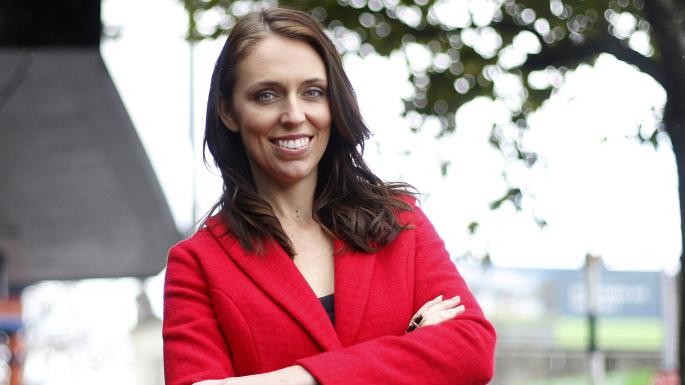
Jacinda Ardern had come to power with a promise that “neoliberalism had failed“, and gave every impression that the Labour Party would offer a new approach. The 35-year experiment of putting money above people had only delivered misery, and Ardern and her Labour Party had caused many to believe that their ascent to power would mark a change in attitude.

Like most utterances from politicians, this was total shit.

The reality is that Ardern and her Labour Party are just as much puppets of globalist industrial and finance interests as their National predecessors, and this is obvious if one looks at their actions in the 18 months they have been in power.

One of the first things Labour did was to double the refugee quota, increasing the flow of cheap labour into the country at the expense of New Zealand wage earners. As this newspaper has mentioned elsewhere, neoliberals love refugees, because they work for cheap and because they destroy the solidarity of the native working classes, thereby weakening their negotiating position.

Labour has also ignored cannabis law reform their whole time in power. While Andrew Little enthusiastically fast-tracks all kinds of laws to take Kiwi freedoms away, he lacks the courage even to say that cannabis is a medicine. Neoliberals are almost always materialists, and they fear cannabis because they fear that it will turn people away from the acquisitive greed that our economies are propped up by.

Perhaps the worst slap in the face, though, was when Labour ruled out a capital gains tax. Their refusal to tax the unearned income of property speculators meant that the burden of funding the government had to come from wage earners instead. Effectively, Jacinda Ardern chose to subsidise the unearned income of the rich with the labour of the poor.

The reality for New Zealand voters, who had cast the Fifth National Government out of power after nine years of neglect, is stark. There is no alternative to neoliberalism. It doesn’t matter how much suffering the Kiwi people have to endure; it doesn’t matter if you can never own a house on the average wage. We will never be allowed, within our current political system, to put our own people above money.

A reader might object here that voters could vote for a third party if they didn’t want neoliberalism, but the system is rigged so that only Labour and National can hold power.

Not only is there an electoral threshold of 5%, which has the effect of preventing any alternative to neoliberalism from getting a foothold in Parliament, but funding for electoral broadcasts is apportioned according to party size. Labour and National together get over half of all allocated electoral broadcast funding, which entrenches both these parties and the neoliberalism they represent.

There is no alternative, within our existing system, to neoliberalism. Everything Labour and National do benefits the wealthy at the expense of the poor, and especially the wealthy with no ties to the nation. Nothing they do will benefit the Kiwi worker whose hands build our roads, tend our crops and care for our sick.

Therefore, there is no alternative to skyrocketing rents, falling wages and the mass importation of cheap labour in the form of refugees. The only way that the Kiwi nation can ever get respite from this is revolution.

*

If you enjoyed reading this essay, you can get a compilation of the Best VJMP Essays and Articles of 2018 from Amazon for Kindle or Amazon for CreateSpace (for international readers), or TradeMe (for Kiwis). A compilation of the Best VJMP Essays and Articles of 2017 is also available.
Could Labour Win An Absolute Majority in 2020?

A new Reid Research poll has put the Labour Party on 49.6% support, with the National Party languishing well back on 41.3%. Although this no doubt reflects a polling boost from the Christchurch mosque attacks, it raises an interesting question: could Labour govern alone after 2020? Dan McGlashan, author of Understanding New Zealand, examines.

No party has won an absolute majority since the introduction of MMP in 1996. The closest any one party has come was the 59 seats won by John Key’s National in 2011. But yesterday’s Reid Research poll suggests that there’s a very good chance that Labour could win one after the 2020 General Election.

We can see a clear pattern over the last two electoral cycles. The Fifth Labour Government came into power in 1999 on a promise to repeal the cruel welfare reforms of Jim Bolger’s Fourth National Government, winning 38% of the vote. This they increased to 41% by the 2002 General Election, as people still remembered what it was like having Ruth Richardson and Jenny Shipley in charge. From there, it fell away until National defeated them in 2008.

The Fifth National Government, likewise, came into power in 2008 on a promise to repeal the excessive pandering and taxation of the Clark Government. They won 45% of the vote in 2008, which increased to 47% in 2011, as people still remembered the suffocating nanny state culture of Helengrad. From there, it fell away until Labour defeated them in 2017.

So there’s every reason to think that the Sixth Labour Government will get a boost of some kind in 2020, as people still remember the grinning indifference of their National Party predecessors. The swing of the electoral pendulum suggests that Labour should hit its peak support next year or shortly thereafter, before the public inevitably gets sick of them and National wins again in either 2023 or 2026.

All this might mean that they can stay up in the high 40s (in terms of support), but there are other indicators that suggest they could govern alone after the 2020 General Election with as little as 45% of the vote.

Labour’s support parties, New Zealand First and the Greens, have fallen well below the 5% threshold, and there are good reasons to think that both will crash out of Parliament in 2020. The Greens are only polling at 3.9%, and New Zealand First are doing even worse, at 2.3%.

The New Zealand First Party might as well have pissed in the faces of their supporters, such is the contempt they have shown them since taking power after 2017. Every New Zealand First MP voted against Chloe Swarbrick’s medicinal cannabis bill, despite the passionate support for it among their heavily Maori voting base. Then they signed the country up to the TPPA, despite campaigning against it when in opposition.

The Green Party are not doing much better. Far from presenting an educated, intelligent, left-wing alternative, the face of their party is now anti-white racists like Marama Davidson and Golriz Ghahraman. The Greens lost ground in 2017 among people of European descent, and the sharp increase in authoritarian and anti-white rhetoric appears to have driven the centrist Greens back to Labour.

The Greens also have the double problem of defending their educated urban elite votes against The Opportunities Party, which looks set to run again, and Vernon Tava’s potential blue-green movement. Both of these latter vehicles will try to appeal to the same educated, urban 20-39 year old demographic as the Greens, meaning that competition will be extreme.

If both the New Zealand First and Green parties fail to get over 5% of the vote, then the composition of the next Parliament might be simply Labour, National and David Seymour. If this is the case, then 49% of the total electorate vote would likely entitle Labour to 65 seats or so, out of a 120-member Parliament.

Of course, the curious thing here is that if the Greens and New Zealand First do fall under the 5% threshold, and no other new party manages to get over it, one of either Labour or National is all but guaranteed to end up with an absolute majority. The only way it could not happen would be for David Seymour’s ACT, currently languishing at below one percent in the polls, to act as the tiebreaker.

This will be good news to some, and terrible news to others. As we have been reminded in recent years, we Kiwis have no absolute human rights, and Parliament is sovereign. Therefore, a party with an absolute Parliamentary majority can do absolutely whatever it wants to the New Zealand people, with no oversight. The only recourse the New Zealand people will have is the chance to vote them out again in 2023.

Considering that the Labour Government has already been very weak on protecting our rights to own firearms and our rights to free speech, there is good reason to be afraid of an absolute Labour majority. Andrew Little has already used the Christchurch mosque shootings to “fast-track” every piece of legislation he can think of, so who knows how far a Labour Party with an absolute majority in Parliament could go to reshape the world in their image?

*

Understanding New Zealand, by Dan McGlashan and published by VJM Publishing, is the comprehensive guide to the demographics and voting patterns of the New Zealand people. It is available on TradeMe (for Kiwis) and on Amazon (for international readers).

Selectionism: The Prejudice That The World May Not Be Ready For

People are always chimping out over all society’s prejudices: sexism, racism, homophobia etc. are all variously blamed for the world being an unpleasant place to live in. While all of these prejudices have certainly contributed to the miseries of the past and present, there’s one prejudice that few are aware of, and even fewer have spoken of. This prejudice is selectionism.

Sexually reproducing species fall along a continuum that has two poles referring to the two extreme reproductive strategies described by Robert MacArthur and Edward O. Wilson. These are known as the K strategy and the r strategy. The existence of this dichotomy has given rise to the existence of a prejudice that the world is yet to formally understand.

Among K-selected groups, the population is determined by the carrying capacity of the environment. Breeding rates are relatively low, which allows for high rates of parental investment. Consequently, the young take longer to mature. They also have longer lifespans on average and are larger. Examples are large mammals, especially humans and primates, as well as birds.

Among r-selected groups, the population is determined by the biotic potential of the individuals involved. In other words, the reproductive potential. Breeding rates are relatively high, and parental investment is low. The idea is to breed them and get them into adulthood as soon as possible. Examples are amphibians, insects and small mammals such as rodents.

It has long been noted that certain human groups are more K-selected than others. It’s apparent just by travelling around the world that some people have larger families than others, that some people mature more quickly than others and so that some people reach adulthood with greater levels of parental investment than others.

Those who get to adulthood with greater levels of parental investment tend to be healthier, both mentally and physically, and they also tend to be better educated, and thus wealthier. So K-strategists tend to produce higher standards of living than r-strategists, whether one observes at the family or the national level.

Almost without exception, the person noting such things considers themselves to be more K-selected than average. After all, in order to be educated well enough in order to understand ethology, a person generally needs to be the recipient of a large amount of parental investment, and if a person receives that then it’s likely that they are descended from K-strategists.

Selectionism, then, is a prejudice against those groups who use, or are perceived to use, an r-selected reproductive strategy. It’s essentially a bias in favour of K-strategists. A selectionist, therefore, would have a very strong in-group preference towards others they perceived to be K-selected. They would consider other K-selected groups to be superior.

Of course, there is a very real sense in which the K-selected are morally superior: their greater level of parental investment tends to lead to a healthier and better educated offspring, which tends to lead to a wealthy and prosperous society. Almost everyone agrees that a father that stays around to raise his children is morally superior to one who abandons them, and this near-universal agreement is why selectionism has so much power.

The interesting thing about it is that it cuts across and through the ordinary conceptions of races and classes. A selectionist couldn’t care less about interracial marriages between different K-selected groups. Neither could they care about marriages between different classes, as long as the family stays together and the children are raised into functioning adults.

So selectionism is entirely different to racism. Whereas the racist German and the racist Korean don’t want their children marrying each other for fear of diluting their particular racial gene pool, the selectionist sees no inherent problem. As long as their children don’t marry r-selected people, who are liable to abandon or neglect the grandchildren, the selectionist is happy.

Selectionism already exists as a prejudice, although not many people are aware of K and r selection – it’s just hidden by way of being conflated with other things.

For example, when a person chooses to look down on another race, class, family or other group of people, it’s commonly the case that they perceive that other group to be more r-selected than their own. They consider that other group to breed faster and more recklessly, and to invest less time in raising their offspring, thereby lowering the average human capital of society. In other words, they consider that other group to be more like a pest animal.

This is the basis of all group prejudice. What this essay suggests is that the group prejudice against r-strategists may come to replace all current prejudices against other races, classes or traditions. Instead of seeing blacks as pests, or the working class as pests, or Muslims as pests, this essay suggests that, in the future, people’s prejudices will fall along selectionist lines instead.

Concepts such as racism will eventually stop making sense on account of widespread race mixing. There are two separate forms of racism: excessive in-group preference and excessive out-group aversion. There is no difference between the two in a selectionist context, because K and r-selection make up a binary and mutually exclusive spectrum. Consequently, stronger in-group preference must also be weaker out-group preference in the context of selectionism.

The frightening thing about selectionism is that people who follow it might have a point: if the r-selected breed at greater rates within the same environment as the K-selected, and begin breeding earlier on account of earlier maturity, then they will inevitably overwhelm the K-selected unless they are prevented or somehow discouraged from doing so.

Selectionism, therefore, reflects a fundamental political dilemma. If the K-selected are taxed to support the greater breeding rates of the r-selected, then society itself will become more r-selected, and so all the good things brought about by heavy parental investment in offspring will disappear. Many of the people who appear to be racist, classist or otherwise prejudiced are aware of this equation.

It can be seen, then, that the idea of selectionism already has a powerful appeal, and it’s an appeal that may grow in pace with the numbers of the r-selected. Selectionism may be the prejudice that the world is not yet ready for.

*

If you enjoyed reading this essay, you can get a compilation of the Best VJMP Essays and Articles of 2018 from Amazon for Kindle or Amazon for CreateSpace (for international readers), or TradeMe (for Kiwis). A compilation of the Best VJMP Essays and Articles of 2017 is also available.

Clown World Chronicles: Understanding the Honk Meme

There’s a new meme making waves in cyberspace. Based on the original Pepe the green frog meme, this new form adds a multicoloured clown wig, a red clown nose, a novelty bow tie and a eerie, distant smile. The meme is normally presented with the word ‘Honk’ or similar. This essay explains the honk meme.

The original Pepe meme is how an entire subculture has found a manner of expression. This bland-looking rubber-lipped frog has come to stand for an entire generation of everymen, his various expressions of rage, fear, anger and bliss the way that generation signals emotions in Internet groups. Many threads on Internet message boards start with a picture of Pepe, and these images portray an incredibly broad range of sentiments.

Pepe represents the travails of a generation that finds itself doing much worse than its parents did. The Millennials are discovering that their standard of living is lower than the generation before it, and much lower than that of the Boomers. Studies show that wage workers in Western countries have lost most of their house-buying power over the last few decades, and it looks set to get worse.

So Pepe’s new appearance, in the form of the Honkster, signals a dark turn in the collective mindset of the young.

Essentially, the idea is that we now live in Clown World, where nothing makes any sense any more. Our society is no longer a real society, where people care for each other on account of belonging to a wider kin group, but a parody of one, in which the old have all the wealth and power and aspire to suck as much life out of the younger generations as possible. We’ve strayed so far from our founding principles that we’ve lost our moral compass.

The sheer ridiculousness of so much of everyday life, it is reasoned, can only be explained with the idea that the normal timeline of Planet Earth deviated from its previous course at some unknown point in the recent past, and entered this place called Clown World. According to this theory, the Planet Earth is now in a different dimension of reality to the one it was in up until a few years ago. Therefore, the ordinary laws of psychology, sociology and political science no longer apply.

In Clown World, the clowns are in charge. This is nowhere more easily understood than by observing the total absence of qualifications among our ruling classes. Donald Trump in America, Theresa May in Britain, Justin Trudeau in Canada and Jacinda Ardern in New Zealand all appear uniquely hopeless. They blunder clumsily from one slapstick mishap to the next, and they appear intent on making the world into as big a circus as possible.

In Clown World, there is no longer cause to feel any hope. The world has failed. Not only has it failed, but it’s failed so badly that it seems like it was really just a joke the whole time. Nothing this absurd could possibly have been taken seriously by so many people, and therefore the only rational thing to do is to throw one’s head back in laughter as the clowns make honking noises.

The slack smile of the Honkster is not the smile of joy. It’s not even the sardonic smile of a generation that knows their parents traded away their inheritance for a pittance. It is the drugged smile of oxycontin, anti-depressants and anti-psychotics, pharmaceuticals being the only way to cope the fact that our world is a brave new one, in which people’s suffering has been medicated away to reduce their propensity to rebellion.

In this context, it has been said by an anonymous wit that “The world ends not with a bang, and not with a whimper, but with a honk.”

The honk is the look on the face of the Green Party supporter when she is gang raped by the same refugees she voted to open the borders for.

The honk is the sound the key makes in the lock when it turns to jail a man for criticising Police inaction in the face of reports of Islamic rape gangs operating in their area.

The honk is the cry of helplessness of a hundred million young people all over the West, drawn out so long that it has taken on a different character entirely, morphing from despair into a demented humour.

Realistically, this honk ought to be a terrifying sound. The discordant honking is the fanfare of a generation that has not only lost hope, but which has also lost meaning. In Clown World, it makes no sense to hope for anything, because there is no relationship between hoping for things and getting them. One cannot set one’s will to a goal and achieve it here, because nothing makes sense. The whole world is against one.

As the economic situation worsens, the face of the Honkster might be replaced with something less humourous. The bitterness inherent in the Clown World meme, and the nihilism it reveals, suggests an unstable and unpredictable environment. The Honk meme might be a sign that the social fabric is starting to tear.

*

If you enjoyed reading this essay, you can get a compilation of the Best VJMP Essays and Articles of 2018 from Amazon for Kindle or Amazon for CreateSpace (for international readers), or TradeMe (for Kiwis). A compilation of the Best VJMP Essays and Articles of 2017 is also available.