The Three Main Forms of Virtue Signalling

The difference between virtue signalling and a genuine desire to help is that virtue signalling doesn’t demand any kind of sacrifice

Virtue signalling is when a person (usually male) makes an effort to signal to any prospective mating partners within earshot the quality of their reproductive virtue. Like a stag bellowing as loudly as it can during the roar, much of the communication made by the human male is intended specifically to let nearby females know about his reproductive capacity. This essay looks at the specific forms of it.

The female of every sexually reproducing species attracts the male through signalling her fertility, which is perceived by the male as beauty. The male counterpart is virtue signalling, in which he signals that any offspring produced by him would successfully be able to compete with those of other males. There are three basic virtues that a male can signal to attract a female: strength, intelligence and moral rectitude.

Strength relates alchemically to iron, and is mostly a function of height and weight. This is why men with a poor posture habitually straighten their backs up when they see an attractive woman walking in their direction. After all, a man is not very strong if he doesn’t even have the muscles to hold his body up straight.

What any given woman finds attractive along these lines is mostly a function of what physical qualities the men in her ancestry needed in order to survive. And so European women are attracted to strong arms, Asian women to a steady nerve, and African women to fast-twitch muscle fibers. All women, however, are attracted to a physical body that looks as if it can survive the rigours of life on Earth – one that metaphysically represents iron.

But strength is only part of the equation. It may be the most important factor for the majority of sexually reproducing species, because most of these species assert a right to exist primarily on the basis of their physical strength, but sheer physical strength is less frequently the prime determinant of success in humans (unless they are savages).

Intelligence relates alchemically to silver, and this could be considered the next level of virtue signalling. Many intelligent men have realised that, for the human animal, intelligence is a better predictor of future success than mere physical strength, and this has led many men to make displays of their mental health and strength instead of displays of physical health and strength.

Silver is softer than iron, and consequently the men who virtue signal their intelligence tend to be more subtle than those who virtue signal their physical strength. The usual way to go about it is to show off who knows the most about any given subject, or who has the greatest range and depth of general knowledge.

Another way to do it is by wearing glasses.

This form of virtue signalling often leads to petty arguments, in which the participants are unwilling to concede that their opponents have made any valid points because of a fear that this will be taken as a concession that those opponents are more intelligent or knowledgeable. Since the point of virtue signalling is to demonstrate to any observing females the reproductive quality of the signalling male, there is very rarely an incentive to concede a point to an opponent, because this will merely make them appear more attractive at your expense.

Humans are ultimately a social species, and no single individual is capable of dominating the collective. This means that an ability to get along with other humans and to behave correctly is the virtue that most strongly predicts reproductive success in our modern societies. The result of this is the importance of moral rectitude.

Moral rectitude relates alchemically to gold, because of its rarity, value and malleability. In this context, virtue signalling refers to when men act as if they are much kinder than they really are. Here a man might claim to have a will to perform a certain act in a certain situation, or to have a certain belief about the correct ordering of society, when the reality is very different.

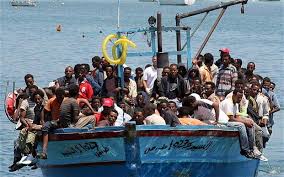
One of the most common examples of this moral virtue signalling in 2017 is the expression of a desire to let refugees into the country, to be taken care of by general taxation. Inevitably the intent of this is to signal to all observing females that the male is kind and decent and morally upstanding. In other words, that he is in possession of the gold of being able to understand the Will of God as expressed through morality.

The reason why this is virtue signalling is that the males in question almost never have a genuine desire to look after these people. Those who virtue signal the most about refugees almost never live in the kind of neighbourhood that refugees are dumped in, and they almost never work the sort of jobs that are impacted by a sudden increase in the supply of unskilled labour.

Other common examples are going on about having a black friend to signal that one is not racist, or pretending to support women’s sport to signal that one is not sexist.

The whole point of all of this virtue signalling is to demonstrate reproductive fitness, which is why men will often end up fighting and arguing over who is the strongest, the smartest or the most good. Essentially there’s no real difference between a couple of rams butting heads in rutting season and two men trying to demonstrate that each is the most virtuous by claiming to support various political causes.
The Best Argument For Taking Thousands Of “Refugees”

If we let in a hundred of these a year, we’d soon forget about our petty differences

Ronald Reagan gave a very strange speech at the United Nations once. He spoke about how the nations of the world would settle their differences and come together if faced with an extraterrestrial threat. This is actually a reference to a law of human psychology, and this same law provides the best argument for increasing our refugee quota.

There no denying that social solidarity has steeply declined in New Zealand over the past 25 years. Ever since the Mother of all Budgets, as a consequence of which the rich and the poor learned to truly hate each other, we have seen a Labour Government open the borders to Pacific Island immigration, and then a National Government open the borders to Asian immigration.

After all this, New Zealand citizenship has been devalued so much that hardly anyone really feels like a Kiwi anymore, apart from in the most superficial ways.

There’s no longer any cultural value that defines us as unique among the cultures of the world. Some say we are “multicultural” but that’s just another way of saying that we have nothing in common with each other. Some say we have the All Blacks but for the majority of immigrants, who could just as happily have ended up in Australia, this is little more than a flag of convenience.

Seeing what’s happened in Europe in recent decades, however, gives us a clue as to how we can strengthen our national bonds.

For the vast majority of its history, the kings and tyrants who wished to unite Europe faced a particular problem. Europe is an extremely culturally diverse continent, and the vast majority of Europeans hate basically everyone else. So they have never been inclined to unite under the banner of “European” because they identify with their village above all and then their shire and maybe at a stretch with the idea of a nation.

The idea of a “European race” is really a New World idea, applied retrospectively by American, South American and British Empire thinkers to the old continent, to describe how it appeared in contrast to their own racially heterogenous societies. Europeans aren’t fond of it.

However, the rulers of the European Union know one thing about the fundamental laws of human psychology: nothing brings a disparate group of people together faster than a common enemy. To that end, the last twenty years of mass Muslim immigration has been a godsend.

It’s inevitable, given the tenets of the faith that they follow, that if large numbers of Muslims immigrate to a particular locale, they will end up clashing with the incumbents. There’s simply no way that an ideology that commands its followers to seek out non-believers and kill them can co-exist with its neighbours, any more peacefully than Nazism could.

So now, a curious phenomenon has arisen in Europe. Any two Europeans (or Western Europeans at least) can meet and share a common story of how much they hate Muslims. Every European now has a story about being robbed or beaten, or their car set on fire, or their girlfriends sexually harassed, by a Muslim.

This has led to bonds of intra-European solidarity first starting to appear all across the continent, and now – as more stories are shared – starting to strengthen. An astute observer of history can see the battle-lines being drawn already.

If New Zealand lets in a large number of Muslim refugees, such as the 5,000 per year that the Greens and The Opportunities Party are proposing, then it’s only a matter of time until the first Truck of Peace attack kills a significant number of Kiwis. The terrorists, when they make their move, will not discriminate between types of Kiwi: we will all be infidel.

It is then that we all – Maori, Pakeha, Islander and Asian alike – will have, for the first time since World War Two, a mutual enemy. Therefore, it may be that the country needs mass Muslim immigration so that Kiwis – as the Europeans have been forced to do – can come together in mutual rejection of the hate ideology of Islam, as we once did against the hate ideology of Nazism.

However, this is also very close to the worst argument for taking in thousands of refugees.

Over a century ago, it was prophecised by high-ranking Freemason Albert Pike that World War Three would involve the mutual annihilation of Israel and the Muslim world, leaving the Christians in charge of the planet.

If one looks at the mass Muslim immigration that Western political leaders have pushed on us over the last twenty years, it’s possible that the West is being conditioned to hate Muslims with the intent of making Westerners psychologically ready to wipe them out if they should annihilate Israel. If this is the case, it might not matter what we do.

However, taking in a large number of Muslims may, in the short term, bring Kiwis of all races together in mutual rejection of infant genital mutilation, abuse of women, abuse of homosexuals, hatred of Jews and hatred of outsiders. We should keep in mind, however, that doing so is truly to play with fire.

The Four Feminine and the Four Masculine Elements

Most readers are familiar with the concept of there being four classical elements, and that those classical elements are fire, air, water and earth. Those four elements do indeed form a complete quadripartite system, but this system is itself a feminine perspective on the ideal of a quadripartite system. This essay looks at its masculine counterpart as well.

The difference is that both sets of four flow from only one of from what can be described as The Fundamental Masculine Orientation and The Fundamental Feminine Orientation. Fundamentally, a masculine orientation will see the world in terms of differences, and a feminine orientation will see the world in terms of similarities.

This is because the masculine tends to measure itself against other men in a hierarchy, and to struggle to become greater than other men, whereas the feminine tends to smooth differences over for the sake of group solidarity, and in doing so implicitly asserts that no-one is any greater than anyone else.

The four feminine elements are known as the four classical elements of fire, air, water and earth. These are feminine elements because they all have equal value – the world and life could not exist without any of the four.

They are also known as feminine elements because they directly correspond to the natural, physical world, which is feminine in contrast to the masculine world of ideals. The earth refers to the clay underneath us, the water refers to the rain, the oceans and the rivers, the air refers to that which we breathe and move around in and the fire refers to the light of the Sun and the stars.

More precisely, it can be said, as Aristotle did, that fire represents that which is hot and dry, air that which is hot and wet, water that which is cold and wet and earth that which is cold and dry.

The four masculine elements have been known for as long as the four feminine elements – but this fact is not understood by all. They are even more esoteric and secret than the four feminine elements because they refer to the spiritual world that modern people have become blind to, whereas the feminine elements refer to the material.

They can be described as clay, iron, silver and gold. These are masculine elements because they refer to an explicit hierarchy in which the latter three elements are the result of a refinement process performed on the element previous.

Firstly, one has a state of clay. This could be considered analogous to the natural proportions of fire, air, water and earth in the material world, i.e. those that were present without any conscious effort to refine them.

What naturally happens after then is a hardening of some part of the clay, into iron. In the natural world this has taken the form of the development of bones, muscles, horns, spikes and fangs. These developments were a masculinisation in that they made the extant chaotic and potential-rich element of clay into something of defined shape and application, like a tool.

The correct balance of clay and iron represents a further refinement of the natural world, this time into silver. This has a greater value than both iron and clay because of its optimal balance of both. Silver is harder than clay but softer than iron, and because of this more intelligent utility it shines with higher value.

The highest refinement is that of gold, which is the correct balance of clay, iron and silver. This is considerably more complicated than just balancing masculine and feminine, and as a result gold is the rarest of all of the masculine elements.

Note that the four masculine elements are abstractions, and as such they do not directly correspond to anything in the material world. Thus, what counts as gold and silver is often a matter of opinion (value, like beauty, is in the eye of the beholder).

Thus we can see that the four masculine elements relate to a kind of alchemy, in that they describe in metaphor a willful attempt to raise one’s level of consciousness (where clay = completely unrefined, iron = partially refined, silver = mostly refined and gold = completely refined) whereas the four feminine elements relate to materialist science in that they are a description of the natural world (for example, fire = plasma, air = gas, water = water and earth = solid).

Essentially, the masculine is concerned with up and down, and the feminine is concerned with in and out. This is the ultimate difference between the two fundamental orientations.

If Speculative Fiction Genres Were Psychoactive Drugs

Every genre of speculative fiction has its own signature atmosphere: often a combination of fantastic, awesome, terrifying and bizarre. So do psychoactive drugs – and the two match up. This article looks at which drugs give a vibe that best matches the vibe from a genre of speculative fiction.

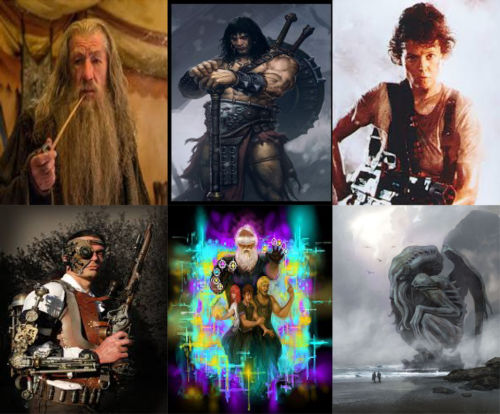
High fantasy fiction matches up to cannabis. Lord of the Rings contains a couple of sly allusions to cannabis use, most notably when Saruman admonishes Gandalf for his “love of the halfling’s weed” while explaining how Gandalf missed a clue that he should have noticed. The scene in the film Fellowship of the Ring where Gandalf and Frodo sit above the drunken revellers and smoke some magical substance from a pipe is one familiar to most stoners.

Some of the experiences that Elric has in the Stormbringer series of novels by Michael Moorcock were also very likely to have been cannabis-inspired. There’s something about Elric’s experience of having an extremely powerful ally that couldn’t really be trusted that speaks to the paranoia that sometimes comes with the cannabis experience.

The sword and sorcery style of low fantasy matches up with psilocybin mushrooms. It’s unlikely that Robert E Howard took any magic mushrooms before writing any of the Conan the Cimmerian stories, but the protagonist’s many adventures in dark, subterranean caves and inside fantastic towers and castles are reminiscent of the depth and range of sometimes terrifying personal insight that often comes with mushrooms.

The Forgotten Realms universe of Dungeons and Dragons adventures, with their massive, dark forests full of elves and goblins also relates closely to the vibe of the psilocybin mushrooms experience. The reason why magic mushrooms enthusiasts are encouraged to try taking five grams in silent darkness is because it leads to exploration of a fantastical inner world, and going down into the subterranean to arise wealthier at some later point is a regular theme.

Most of what sells as science fiction could have been inspired by LSD. Stories like The Demolished Man, with a very strong psychological content, harken to the disintegrative effect that psychedelics can have on the personality. The main character of The Demolished Man, somehow between protagonist and antagonist, ends up having his personality completely demolished (and then rebuilt) as punishment for his crimes, reminiscent of how the psychedelic experience can destroy a person and then build them back as something stronger than before.

This sense of twisted psychology comes through also in the writings of Philip K Dick, who had himself tried LSD. Psychedelics might have inspired the plot of Ubik, in which the character Glen Runciter experiences a believable but bizarre reality while his physical body is “on ice” in a cryogenic chamber. Wondering if you’re really dead or alive is the kind of thing that LSD can make happen to you.

The almost schizophrenic belief in a hidden real world outside of this merely simulated one is a mainstay of cyberpunk literature, and is similar to the impressions one gets on DMT or salvia divinorum. For thousands of years, human shamans have been having experiences of dying to the physical world and being reborn to the real one, like Neo did in The Matrix. In that regard, The Matrix is really a retelling of the ancient mystery school teaching of death and resurrection, reclothed in 21st-century technology.

A description of what might be the spirit of the DMT experience is given in the ANZAC cyberpunk novel The Verity Key. In the chapter Mindknife, the protagonist Jonty Gillespie has his perception altered by ingestion of a drug called Cinque Nuevo, which briefly blasts his consciousness out of his physical body and into an entirely external dimension that is occupied by beings that take the form of balls of light, while mechanical constructs that might be metaphors churn around him.

The datura experience is pretty similar to what befell many of the unfortunate researchers in the Cthulhu mythos of H. P. Lovecraft. A disquieting sense of things not being quite as they should be grows into an intense paranoia that leaps at every shadow and from there to total psychological collapse at the raw horror of reality itself. Alien beings that seem to have come to Earth just to torment you is the kind of thing you’re dealing with in either case.

Datura is also the kind of drug that fits the background of weird horror stories such as those in His Master’s Wretched Organ. Talking to grotesquely deformed entities like Mr. Creamfeather and eating tobacco cakes are the sort of horror that, once experienced, leaves a person never quite the same again. The concept of ordeal rituals that leave you wiser for having suffered come to mind here.

Others are arguable. The steampunk of The Rocketeer might suit opium, the boo-yah aggression of Starship Troopers might suit mescaline, and the gritty military noir of the Altered Carbon series might be the old classics of caffeine, nicotine and alcohol.

It might be hard to read any speculative fiction on most of these drugs, because a person on them is more likely to be occupied with the inner theatre of the thoughts in their head than a book in the external world. However, it might be possible to have a richer experience of reading speculative fiction after having tried some of them, because they could open your awareness to realms of thought previously unimagined.