How Kieran McAnulty Could Become Prime Minister In 2026

The 2026 New Zealand General Election looks like it’s anyone’s game. Recent polling has suggested that Labour is only a few points behind National now, with the second-tier parties winning 35%+ of the vote collectively. A number of interests could potentially seize power after 2026. But some of them would need to make a move soon.

It’s very hard for a previously deposed Prime Minister to become the Prime Minister again. A previously deposed Prime Minister has the taint of failure about them – people are afraid to back them openly incase of another failure. Therefore, current Labour Leader Chris Hipkins is a losing proposition. This is over and above the fact that Hipkins is about as personally appealing as leftover fish and chips.

The question is not who might replace him. That’s obviously Kieran McAnulty. Kiwis don’t want nice anymore, because we had that with Jacinda Ardern and we all saw how utterly ineffective it was. Smiles don’t build houses. We want a strongman who will get something done.

McAnulty has enjoyed a lot of publicity recently, and the public seem to appreciate his no-nonsense aggression. The stars seems to be aligning for him to take over from the ineffective Hipkins, sooner rather than later. The question is under which platform McAnulty would run under in the 2026 election if he is to beat Chris Luxon (who will presumably run for National as incumbent).

This article makes a few suggestions.

If we look at overseas trends, we can see what’s coming New Zealand’s way in 5-10 years’ time. This has long been the case technologically and culturally, and it’s true politically as well. In other Western countries, two major trends are obvious.

The first is the increase of anti-immigration sentiments. Morgoth wrote on Substack this month that “There’s been a noticeable hardening in rhetoric regarding mass immigration in Britain recently.” This was proven to be a Europe-wide phenomenon in the European Parliament elections a few days later, when nationalist parties surged ahead in comparison to the previous election.

It’s becoming obvious to all Westerners now that the story our rulers sold us – of the cheap labour imports being people just like us who would turn out the same if we spent money on their education and welfare – was a total lie. Although some immigrants make a positive contribition, the vast majority of them are lower IQ than the average white person, and thereby cause similar levels of social carnage as low-IQ whites.

Because New Zealand has run a relatively intelligent points-based immigration system, instead of a brainless refugee resettlement-based one, New Zealanders don’t have the same disdain for immigration that Europeans do – yet. But it’s coming. The Sixth Labour Government doubled the refugee quota, bringing in twice as many Muslims and Africans as before. These Muslims and Africans have, predictably, set about committing the enormous numbers of violent, sexual, and property crimes that they’re infamous for everywhere else. As such, anti-immigration sentiments are rising sharply in New Zealand.

British nationalist Nigel Farage has declared the upcoming British general election an “immigration election”. Farage’s Reform UK party has polled as high as 17% in recent days. If McAnulty was willing to tap into similar nationalist sentiments in New Zealand, he could position himself and Labour to benefit from the coming surge.

The second obvious trend is cannabis law reform. In America by 2022, the number of people who used cannabis daily had increased 15 times since 1992. Now more Americans use cannabis daily or near-daily than use alcohol. This is a cultural change like the transition from newspapers to the Internet. It is seismic.

It’s not just cannabis use that is rising, but also support for cannabis use. Germany legalised cannabis this year, as did Luxembourg the year previous. Slovenia just voted for legal cannabis in a referendum a few days ago. Some 70% of American adults now support legal cannabis, with elderly Christians the last major holdouts. The War on Cannabis is being won by cannabis.

Some argue that Labour cannot run on this because of the failed cannabis referendum in 2020. But Arizona had a cannabis referendum in 2016 that failed with only 48.7% of the vote, and that was followed by another referendum in 2020 that passed with around 60%. Sentiments are shifting so fast in favour of cannabis that, if there was another cannabis referendum in New Zealand today, it might pass with 60% as well.

The statistics from 2020 showed that the majority of pro-cannabis supporters were young and well-educated – precisely the sort of person that New Zealand needs to appeal to in order to maintain economic viability into the future. Cannabis law reform is an open goal. If McAnulty wants to kick it into the net, he needs to campaign in 2026 to legalise cannabis.

If McAnulty would lead Labour into the 2026 General Election on a nationalistic, pro-cannabis ticket – along with all of the usual concerns that Labour stands for – he would ride two extremely powerful waves of popular support currently sweeping the West. This would be Labour’s best chance of making the Sixth National Government a one-term affair.

*

For more of VJM’s ideas, see his work on other platforms!
For even more of VJM’s ideas, buy one of his books!

*

If you enjoyed reading this piece, buy a compilation of our best pieces from previous years!

Best VJMP Essays and Articles of 2023
Best VJMP Essays and Articles of 2022
Best VJMP Essays and Articles of 2021
Best VJMP Essays and Articles of 2020
Best VJMP Essays and Articles of 2019
Best VJMP Essays and Articles of 2018
Best VJMP Essays and Articles of 2017

*

If you would like to support our work in other ways, make a donation to our Paypal! Even better, buy any one of our books!

The Transmutation Of Gold Into Mercury

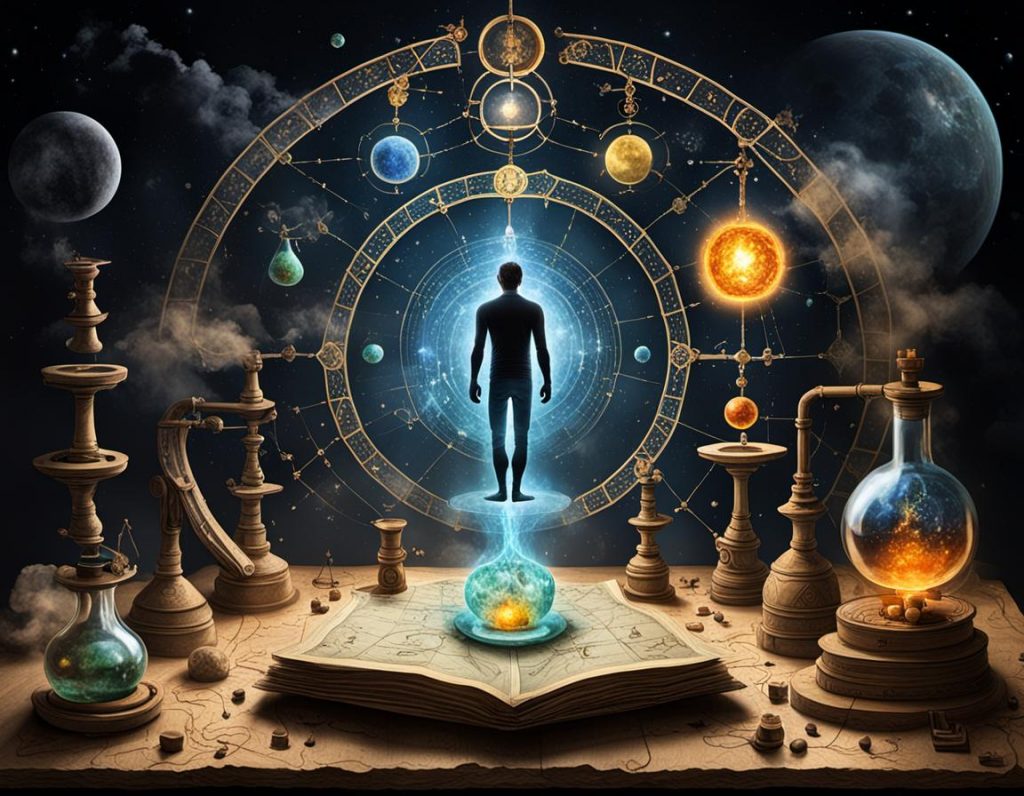
The first step of the Katabasis is the transmutation of gold into mercury. This involves imperfection, as the substance of the highest stage of the Mithraic Ladder must descend into the material world, and the world of petty human concerns. Thus it becomes human. This transmutation is therefore that of divinity into corporeal form.

Understanding the nature of this transformation is very difficult. As with the reverse transmutation, from mercury into gold, extremely subtle energies are involved. These energies are so subtle that the vast majority of people, in their ordinary lives, will never experience them. Thus, the nature of this process is difficult to write about.

The primary motive for becoming imperfect is boredom. This boredom is chiefly driven by the loneliness of divinity.

Most people don’t understand that living for eternity in perfect bliss eventually becomes agonisingly boring. Infinitely boring. So much so that consciousness is literally willing to dream up every conceivable type of suffering in order to avoid that boredom. No suffering is so great that it weighs heavier than boredom for eternity. Thus, the entire Great Fractal is created.

What an eternal, infinite, all-powerful and all-knowing consciousness would dream up for the sake of entertainment would be limitation – or at least the illusion of it (infinite consciousness could never really be limited). An example of that limitation would be incarnating as a human being on this planet.

Thus, consciousness would split itself up into an infinitude of fragments, each of which lived a different life (i.e. set of limitations) at any one time. Taken individually, each one of these lives represents an extreme limitation: from the all-knowingness of divine consciousness to being restricted to the sensations and perceptions of one body only.

One way to conceptualise this would be to imagine a white light and perfect bliss. After enough time, when such perfect bliss became boring enough, one might imagine that consciousness chose to temporarily forget its ultimately blissful nature about half of the time, such that the white light seemed to blink in and out of existence. Now there was an oscilliation between white and black – much more interesting than just white.

Imagine then that half of the white light darkened, but only slightly, and that half of the black light lightened, but only slightly, such that there were now four different shades, each blinking in and then out of existence in turn.

Then imagine that each of these four shades were split into a good half and an evil half, which wasn’t immediately obvious from just looking at them but which was felt after experiencing each of them for long enough. Thus these three divisions created both a good and an evil version of each of white, light grey, dark grey and black light.

These eight different energies could be themselves tell an interesting story, if they were rotated through in the right order. Imagine that when the stories of those eight energies get boring, they’re split up again into sixteen, and then again, and again and again, until consciousness has dreamed up everything that it’s possible to perceive, conceive, imagine or sense. All possible lives that can be lived, in all possible worlds, in all possible historical eras.

All of these lives are imperfections in the sense that their boundaries are defined by the limitation of divine perfection. Thus, in willing to incarnate in a physical form in the Great Fractal, consciousness experiences an impulse towards imperfection. This impulse is the basis of the Katabasis, and is similar to the Undergoing Will in Elementalism.

The transmutation from gold to mercury will be complete when the character develops an ego. This spiritual imperfection makes them a mere human again. The development of the ego is essentially the story of the Katabasis, as the most egotistical and narcissistic characters will usually find themselves among the lower rungs of the Mithraic Ladder.

The development of the ego will bring with it ambition, which is characteristic of the level of mercury. To fall to this level, divinity must decide that there is something it wishes to experience while incarnated in human form. In all cases, this experience is a subdivine one – and often immoral. Only a consciousness that had become bored of perfect bliss could wish for such.

The first actions towards the end of imperfection come when a character is tempted to behave without rectitude. This can involve almost anything immoral. A typical example is a desire that cannot be fulfilled without causing suffering.

Stylistically, the transmutation from gold into mercury corresponds to the dimming of the Sun. Any time when light falls into shadow reflects the nature of the Katabasis. This transmutation can also be represented by any sudden downgoing, such as a fall down some stairs, or a journey over the edge of a waterfall.

Physically, this stage is marked by the profoundest possible change: that of incarnation. A character will transmute from a potentiality within consciousness to a physical form. It is the overall nature of this incarnation that characterises this transmutation, not the specific form of the incarnation itself. So the specific details are not important here.

Mentally, this transmutation is marked by the shift from desirelessness to desire. In nirvana, the total absence of desire correlates with bliss. But when the desire for something else than eternal bliss arises – i.e., when boredom arises – the transmutation from spiritual gold to spiritual mercury begins (of course, mercury need not be the final stage of the descent).

Mathematically, the transmutation from gold to mercury is equivalent from unity to division. Singularity to multiplicity.

It has also been observed that a vial of mercury will divide into a multitude of smaller blobs if poured out onto a surface. This is analogous to how the gold of Brahman divides into the mercury of every individual Atman. The transmutation from gold to mercury can therefore be understood as a matter of manifesting ego.

This first stage of the Katabasis is probably the least interesting out of all twelve of the transformations in the Heroic Journey. Characters of both gold and mercury can be hard to identify with, given that both levels are far above the frequencies of ordinary people.

However, the nature of the transmutation of gold into mercury is emblematic of all of the stages of the Katabasis. As above, so below: the decay of gold into mercury is, in microcosm, what all of the other decays are in macrocosm. The boredom-induced temptation to place some sensation or perception above the demands of rectitude is behind every step in the descent from spiritual gold to spiritual lead.

Therefore, the transmutation of gold into mercury can serve a powerful metaphorical role.

*

This is an excerpt from Vince McLeod’s The Alchemy of Character Development, the sixth book in VJM Publishing’s Writing With Psychology series. This book will show you how to use alchemy to create deep, realistic and engaging characters for your creative fiction.

If you enjoyed reading this piece, buy a compilation of our best pieces from previous years!

Best VJMP Essays and Articles of 2023
Best VJMP Essays and Articles of 2022
Best VJMP Essays and Articles of 2021
Best VJMP Essays and Articles of 2020
Best VJMP Essays and Articles of 2019
Best VJMP Essays and Articles of 2018
Best VJMP Essays and Articles of 2017

*

If you would like to support our work in other ways, make a donation to our Paypal! Even better, buy any one of our books!

10 Months Of Taking Cannabis Tea For C-PTSD: A Review

I began taking medicinal cannabis in the form of tea about ten months ago, to deal with complications resulting from C-PTSD. This medicinal cannabis I received in the form of 35g bags of Shishkaberry buds, after getting a prescription from a cannabis clinic with an office in my city. I was prescribed this Shishkaberry to use in the form of medicinal tea. I found instructions for its preparation on WikiHow.

In my case of C-PTSD, hyperarousal is the primary symptom. This manifests in four major ways: as insomnia, nausea, anxiety and depression. Of these manifestations, the first two are mostly somatic and the last two are mostly psychological.

Because of these complications, sleep is the foremost problem. It doesn’t take much stress before the hyperarousal gets to the point where sleep duration and/or quality are affected. On account of the C-PTSD itself, relatively minor levels of sleep deprivation can have major effects in terms of emotional dysregulation, as well as suicidal and homicidal ideation. The distress of intense suicidal and homicidal ideation is sufficient that ordinary life is impossible. Therefore, getting enough restful sleep is a significant part of the battle.

Up until recently, I had managed this condition with a combination of pharmaceuticals (which I didn’t want more of) and cannabis (which I did want more of). This combination, in conjunction with a conscious choice to live a low-stress lifestyle, has generally succeeded in keeping the hyperarousal under control.

The pharmaceuticals consisted of anti-depressants and anti-psychotics. I have been prescribed five different types of each over the course of my 29 years as a psychiatric patient. Some pharmaceuticals became ineffective after years of use. Others had side-effects that were intolerable.

Pharmaceutical side-effects have included lethargy, sedation, mental fogginess, drowsiness, impotence, weight gain and digestive problems. The side-effects of the anti-psychotics are generally much worse than those of the anti-depressants. If the total effect of the C-PTSD is to make a normal life impossible, the total effect of the pharmaceuticals is not to make a normal life possible but to make the abnormal life tolerable. They do help with the hyperarousal, and therefore prevent the likely consequences of the hyperarousal getting out of control (i.e. suicide/homicide). But the side-effects are abominable.

Because of the severity of the pharmaceutical side-effects, I have often stopped taking prescribed medication. This is the reason for having tried five different anti-depressants and five different anti-psychotics over 29 years. Unfortunately, the problems with C-PTSD have proven extremely stubborn, such that life was impossible without the pills. Thus, it hasn’t been possible to escape the pharmaceuticals and their side-effects.

For these reasons, I have been excited about the possibility of being able to access medicinal cannabis, which seemed to have promise in treating hyperarousal without excruciating side-effects. Securing this access has been a 15-year battle from hell, but one that was won ten months ago. Since then I have been taking cannabis tea every night, starting with about 0.2 grams of ground cannabis buds in a tea strainer and working up to 0.45 grams.

The primary advantage to cannabis in tea form is that it provides most of the same benefits as taking it in joint form, but does not have the same side effects. Most of my medicinal cannabis consumption over the past 15 years has been in joint form. This has been great fun, but is far from ideal from a medicinal point of view.

The typical pattern when smoking a joint is to firstly experience a 30 minutes or so high of intense positive emotion, followed by a low lasting several hours, unless another joint is smoked, whereupon another high begins. Even while experiencing a low, being affected by cannabis is still good because it alleviates the nausea, headaches, suicidal ideation and homicidal ideation that is otherwise endemic to my C-PTSD experience. Thus, smoking joints, although far from ideal, is still much nicer than only having pharmaceuticals.

The great advantage that I have found with the Shishkaberry tea is that it alleviates the hyperarousal of C-PTSD without either the side-effects of pharmaceuticals or of smoked cannabis.

Drinking cannabis tea is a much smoother experience than smoking joints. The tea takes away the nausea and the psychosomatic pain, without the powerful psychoactive effects of inhalation (as fun as those are, they make it harder to get things done). As a result, when I am on the tea I don’t feel a strong desire to smoke cannabis.

Because the cannabis tea has alleviated the hyperarousal to some extent, it has been possible to halve the dose of the currently prescribed anti-depressant. This has led to benefits resulting from fewer pharmaceutical side-effects, such as some of my ordinary concentration ability returning, and some weight loss.

Currently I am enjoying the best sleep of my life thanks to the Shishkaberry tea. I therefore intend to keep taking it for the medium-long term future. The next step is to taper off the anti-depressants completely, which is made more realistic by the cannabis tea. If this is achievable then the cannabis tea would have had a massively positive impact on my life. So I recommend it to all with hyperarousal from a traumatic stress disorder.

*

For more of VJM’s ideas, see his work on other platforms!
For even more of VJM’s ideas, buy one of his books!

*

If you enjoyed reading this piece, buy a compilation of our best pieces from previous years!

Best VJMP Essays and Articles of 2023
Best VJMP Essays and Articles of 2022
Best VJMP Essays and Articles of 2021
Best VJMP Essays and Articles of 2020
Best VJMP Essays and Articles of 2019
Best VJMP Essays and Articles of 2018
Best VJMP Essays and Articles of 2017

*

If you would like to support our work in other ways, make a donation to our Paypal! Even better, buy any one of our books!

The Transmutation Of Mercury Into Gold

In becoming gold, mercury becomes perfected. This sixth stage of the ascension completes the spiritualisation that was begun in the fifth stage. In becoming gold, a character becomes perfect, meaning that their every thought and action is in accordance with the will of the divine. The transmutation process of this final step is extremely subtle.

The major difference between mercury and gold is that the latter is egoless. Characters of mercury might be truly great and good people who alleviate the suffering of those around them – but they usually have egos to match their position. The transmutation to gold, therefore, entails an elimination of the grandiosity that characterises the realm of mercury.

When the mercurial is so triumphant, so awe-inspiring, that it might weep for there are no more worlds to conquer, the gold is perfectly satisfied with its life journey. Characters of gold have learned a humility such that there is no longer any need for self-aggrandisement. Learning such humility is crucial to perfecting one’s consciousness. But this is not the beaten-down, resentful humility of the characters of lead and tin. The humility of the character of gold is something divine.

If the stage of mercury represents the solve of the spiritual phase of the alchemical journey, the stage of gold represents the coagula. So the breaking apart of the spirit involved in the stage of mercury is followed by the resetting together of that spirit in the stage of gold. This resetting together implies the perfection of that spirit, in that the spirit has been reconstructed according to eternal truths.

The great challenge of this stage is that the more energy one has in the realm of mercury, the more difficult it can be to transform any of that energy into the realm of gold. A character with a natural mercurial frequency might rise quickly through the lower levels of the Mithraic Ladder, being impelled upward by a powerful force at the sixth level. But upon attaining that sixth level, a powerful mercurial frequency will not help attain the seventh level. It often hinders.

Physically, what is striking about the character of gold is that they are at peace. Thus, the awesome impulses that lead a character to the heights of the realm of mercury finally become sated. The visage of such a character will transform from terrifying to peaceful. They will smile a lot – not the intoxicated grinning of the character of tin, but a smile of contentment.

It is possible, but for from essential, for a character of gold to be elderly. This is for the simple reason that many people don’t learn any real humility until they become physically vulnerable, which often doesn’t occur until senescence. Such a late transmutation might not be particularly interesting for the reader. It can be more interesting to read about those who achieve great things while still young.

In terms of body language, the transmutation to gold brings with it a serene bearing. Whereas the character of mercury carries themselves as if something dramatic could happen at any moment, the character of gold is perfectly relaxed, content with any outcome. Knowing that the will of the divine will out eventually, no matter what obstacles may have been dreamed up for the sake of overcoming the boredom of eternity, the character of gold expresses physical, intellectual and spiritual tranquility. This differs greatly, but subtly, from the gravitas expressed by the characters of mercury.

Emotionally, the transmutation from mercury to gold reflects the achievement of inner peace. The character of gold feels ataraxia. Again this is greatly, but subtly, different to the supercharged emotions of the character of mercury. Thus, the internal world becomes very quiet, desireless, allowing divinity to shine through.

None of this means that characters of gold are passive or weak. It’s true that gold is the softest of metals – but it is still a metal. A character of gold is still capable of kicking arse – one who is too old to do that has degraded to a character of lead (see Part Three). They just never kick someone’s arse unless doing so truly accords with the divine. Unlike a character of mercury, a character of gold won’t be seen leading a conquering army. But they can still fight, if necessary, to defend that which they love.

Socially, characters of gold can play the role of characters of mercury in retirement. When a character of mercury loses interest in worldly concerns, pleasures and attainments, and starts thinking more about what frequency they will take with them into the afterlife, they transition into gold.

A character of mercury, then, might transition to gold by escaping society and its strictures, and retiring into the mountains to become a wise person. By climbing into a cave far from civilisation they might find the serenity necessary to perfect their consciousness.

However, the transition to gold does not imply indifference to material suffering. A character of gold is not merely religious, or concerned with religion: they truly live so that their every action is in accordance with the will of the divine. Thus, they do not neglect their family and friends. Rather, they seek to guide those family and friends through wisdom, as opposed to the direct leadership of the realms of mercury, silver, copper and iron.

In a sense, gold is the realm of the divine and of heroes, and not ordinarily attainable by mere humans. Thus it’s possible to transmute mercury into gold by means of an exceptionally glorious death. A character might not be able to express being of a frequency of gold if they’re dead, but other characters will still be able to honour them as if they did.

Thus, it can be possible to transmute into gold through one single glorious act of perfection. Confucius once said that “If for a full day you can overcome selfishness and keep to propriety, everyone in the world will return to humaneness.” An act of sublime selflessness could transform the entire world for centuries to come. If it is characteristic of the lower stages that transmutation is achieved through a great number of repetitions of small acts, it is the opposite at the higher stages. So one single great act can be what’s necessary to effect the change from mercury to gold. This could involve martyrdom, or giving all one’s property away.

Unlike characters of mercury, who usually play important roles in society, characters of gold have no desire to be the centre of attention. They are perfectly content with not being high in the social hierarchy. A character of gold could even be a homeless person living under a bridge. Emblematic of gold is that it is rare and hard to find. Thus a character, in transmuting to gold, might make themselves scarce.

Alchemically, mercury bonds closely to gold to form gold amalgam. To the outside observer, it can almost seem as if the mercury devours the gold in doing so. This is analogous to how a sense of grandiosity, typical of characters of mercury, can devour those characters’ chances of attaining the level of gold. Pride is the last obstacle to be overcome in the perfection of the consciousness.

For this reason, the transmutation to gold is something that is generally achieved in isolation. The archetypal literary example is Nietzsche’s Zarathustra, from Thus Spake Zarathustra. This Zarathustra was a prophet who brought tidings of the Overman; an Overman who would institute a new set of moral values in the wake of the death of the god of Abraham. A character of mercury could transmute to gold through prophecising a new era of humanity to come.

*

This is an excerpt from Vince McLeod’s The Alchemy of Character Development, the sixth book in VJM Publishing’s Writing With Psychology series. This book will show you how to use alchemy to create deep, realistic and engaging characters for your creative fiction.

*

If you enjoyed reading this piece, buy a compilation of our best pieces from previous years!

Best VJMP Essays and Articles of 2023
Best VJMP Essays and Articles of 2022
Best VJMP Essays and Articles of 2021
Best VJMP Essays and Articles of 2020
Best VJMP Essays and Articles of 2019
Best VJMP Essays and Articles of 2018
Best VJMP Essays and Articles of 2017

*

If you would like to support our work in other ways, make a donation to our Paypal! Even better, buy any one of our books!