Things The Coronavirus Has Already Proven

The Great Coronavirus Pandemic of 2020 is only just beginning. Although it is already dominating the headlines, most of the suffering is still to come. Exactly how much suffering there will be – and who will suffer it – is still unknown, as are most outcomes of this rapidly-unfolding drama. However, there are some things that this pandemic, and the response to it, have already proven. This essay explains.

Many people, mostly for egotistical reasons, believe that human beings are categorically superior to other animals. The usual belief is that our high brain volume to body volume ratio has granted us an unmatched degree of intelligence, if not spiritual insight. Therefore, we’re above “animal behaviour”.

The ongoing panic buying that has seen supermarkets in the West stripped bare is stark evidence against this. Human beings are another kind of primate, only narrowly less impulsive and aggressive than the others. The “monkey see, monkey do” logic that causes juvenile primates to imitate their peers is on vivid display in the now numerous videos of people fighting over water and toilet paper.

In reality, humans are just as prone to panic-fuelled acts of selfish aggression as any “lower” animal. All we need is enough fear to cause a limbic hijack and we’re operating on raw animal instinct again. The ongoing coronavirus pandemic has proven that we’re as susceptible to that panicky fear as any flock of sheep.

A second thing that the COVID-19 pandemic has proven is that borders are good. Because the West has been so wealthy for so long, we have developed a kind of tameness. We forgot that the world is dangerous, and that much of that danger comes in human form. We started to believe the fatal delusion that all human groups are the same.

The pandemic caused us to remember that borders are there for a reason – the same reason why you have a fence around your property and skin around your body. It’s to keep bad things out. Esoterically speaking, a border is just a hard masculine line that protects a softer, feminine core, like a skull, a ribcage, a door or a fence.

We have now remembered that borders are good because they keep bad things out. Whether people infected with viruses or people infected with hate-filled ideologies, borders serve to keep us safe from danger. The COVID-19 pandemic has proven that having open borders makes as much sense as leaving your front door open at night.

A corollary to this is that the pandemic has proven that the Government can stop mass immigration if they want to.

For the past few decades, neoliberals have screamed that everything would collapse if we stopped the mass importation of cheap labour – our fruit and vegetables would go unpicked, our garbage would go uncollected and our elderly would go without care. Western Governments have closed the borders anyway, reasoning that, absent cheap labour imports, wages will rise to the point where these jobs can be filled by natives.

More worryingly, the COVID-19 pandemic has proven that our dependence on offshore supply chains for some basic goods and medicines has made us not only economically vulnerable, but also strategically vulnerable.

Many industries are running into procurement difficulties, because China shut down so many of its factories and docks that the flow of exports has been throttled. Many Western manufacturers are just learning that, because so much has been outsourced there, when China shuts down the world shuts down. It has become common to hear a person exclaim their recent realisation that X% of a vital industrial widget is produced in China and so, without Chinese production, no-one can get hold of it.

Our exposure to medical shortages threatens to be much worse than our exposure to industrial shortages.

Two weeks ago, India, the world’s leading producer of generic drugs, instituted export restrictions on 26 of them. Because the coronavirus pandemic has impacted pharmaceutical factories in China, many Indian drug manufacturers can no longer acquire precursor ingredients. The panic buying has already shown how close we are to chimpout – once people start being told that the pharmacies can’t supply their psychiatric medicines there could be riots.

Perhaps more fundamental than any of these things is that COVID-19 has proven that the Government doesn’t know what the fuck it’s doing. This was already widely understood by most intelligent people, but by now most poeple have had the nauseating realisation that the Government is made up of people who are good at winning elections and not people who are good at governing. All around the world, they are panicking.

One of the main things that Western authorities now have to concern themselves with is civil unrest. It’s slowly dawning on people that this pandemic has the potential to disrupt life as we know it for a significant length of time. As this realisation spreads, all kinds of negative sentiments will grow. Anger, fear, vengeance and short-term thinking will all increase – and they won’t be rational.

The COVID-19 pandemic has proven that our society is on much shakier foundations than it used to be, and shakier foundations than many had realised. The bonds of solidarity that comprise every community are much fewer and much weaker. The potential for chimpouts at any time have never been greater.

*

If you enjoyed reading this essay, you can get a compilation of the Best VJMP Essays and Articles of 2019 from Amazon for Kindle or Amazon for CreateSpace (for international readers), or TradeMe (for Kiwis). A compilation of the Best VJMP Essays and Articles of 2018 and the Best VJMP Essays and Articles of 2017 are also available.

*

If you would like to support our work in other ways, please consider subscribing to our SubscribeStar fund. Even better, buy any one of our books!


Diversity Is A Strength In Times Of Plenty, And A Weakness In Times Of Shortage

The Establishment and the mainstream media like to say that diversity is a strength. This opinion is aggressively rejected by most of the working class, who consider it a great weakness. The reality, as this essay will discuss, is that both sides are right – but only in the appropriate context.

Since the end of World War II, the West has enjoyed great prosperity. Our stockmarkets, factories, airports and seaports have all boomed from the ever-increasing demand. Most people felt like they were getting a good deal, or that, if they weren’t, they soon would. During this great age of plenty, diversity has generally caused more pleasure than pain.

In times of plenty, diversity is a strength. When the economy is growing, and no-one has to worry about competing with each other, then diversity means an enrichment of the everyday experience of life. It means new foods, new cultural displays, new ideas. It means an exciting, vibrant increase in novelty.

In times of shortage, however, diversity means something else.

Every community is divided along fracture lines – lines of race, gender, religion, age, education and cultural affinity. In good times, these fracture lines are papered over by wealth – people don’t need to fight if everyone has enough to meet their own needs. In bad times, these fracture lines are exposed and aggravated.

When times are tough, the community needs to pull together. A given community’s ability to pull together depends mostly on its level of solidarity, and that in turn depends mostly on the number and degree of commonalities that members of the community have with each other. After all, ‘commonality’ and ‘community’ have a similar etymology.

The presence of commonality means co-operation. Where commonalities exist, people are happy to help each other, because they know that this help will benefit a person like them. This knowledge assures them that the help will be reciprocated, and not just taken. They can count on getting helped in the future, and so feel like part of a society, a wider kinship group.

A lack of commonality means exploitation. The rule is that people are willing to exploit others to the degree that those others are different from them. The greater the number of fracture lines in a community or society, the greater the degree of exploitation that exists. As mentioned above, this is no big deal when the economy is expanding, because this means new niches open up for people to move into.

In times of shortage, however, diversity means that helping other people is helping people who aren’t your kin. The natural inclination, then, is to keep for yourself, to not share. The problem here is that people get desperate in times of shortage. When people are desperate, a refusal to share with them often leads to violence.

Diversity makes it much harder to settle the tensions that arise from shortages. Two people of the same culture can use their shared moral values to come to a mutual agreement. If they have a common language, they can talk their way to a mutual understanding. Absent these things, misunderstandings lead to flaring tempers.

Arriving at a mutual agreement in times of scarcity is much easier between two natives than between a native and an immigrant. Between two immigrants, as we see in the Woolworths toilet paper fight video linked above, there is a minimum of commonality, and this regularly ends in actions that are not made from a place of empathy.

If the COVID-19 pandemic does have a severe enough economic impact to cause widespread shortages, some people are going to be forced into making some terrible decisions – and much more terrible than what brand of toilet paper to buy because their preferred one is sold out.

Faced with two patients who can’t breathe, and only one ventilator, the medical staff dealing with the pandemic are going to be forced to make decisions as to who lives and who dies. There are already reports that Italian doctors have been forced to leave old people to die on account of that there aren’t enough beds in intensive care units. Increasing diversity means that some Italian doctors will have to decide whether an elderly native Italian or a younger immigrant gets the ICU bed.

More relevant to the average person are the hundreds of small decisions that they will have to make about questions that test their loyalties. Some people have been stockpiling hand sanitiser on account of that the sudden shortage of it has spiked the price. These price gouging actions have been heavily criticised, on the grounds that not only are they shamelessly opportunistic but they also prevent needy people from getting supplies.

But in a highly diverse society, the balance of rewards is different to what it would be in a more homogenous one. The more diverse society is, the less likely such actions are to harm a person who has something in common with you. All the profit from such actions, however, you keep for yourself. So why not use a pandemic as an opportunity to price gouge? If no-one from your kin group loses out, you might as well take advantage.

Proof for these suppositions come from the fact that neither supermarket fighting nor price-gouging is happening in nations with low levels of diversity. There are no videos of people fighting over toilet paper in places like South Korea, Taiwan or Japan – and there may never be. The absence of diversity in these places means they have enough in common for people to work together instead of chimping out.

All of these problems are just part of the regular course of empires. Empires burgeon, rise, stagnate, decay and fall. The increase in diversity usually comes after the stagnation phase, as the ruling class tries to squeeze out the maximum possible expansion by opening the borders. The current iteration of the West is somewhere between the decay and the fall stages. The nations to successfully respond to the COVID-19 pandemic, like South Korea and Japan, will be the leading nations of this century.

*

If you enjoyed reading this essay, you can get a compilation of the Best VJMP Essays and Articles of 2019 from Amazon for Kindle or Amazon for CreateSpace (for international readers), or TradeMe (for Kiwis). A compilation of the Best VJMP Essays and Articles of 2018 and the Best VJMP Essays and Articles of 2017 are also available.

*

If you would like to support our work in other ways, please consider subscribing to our SubscribeStar fund. Even better, buy any one of our books!
How A Coronavirus Pandemic Could Win Jacinda Ardern The Election

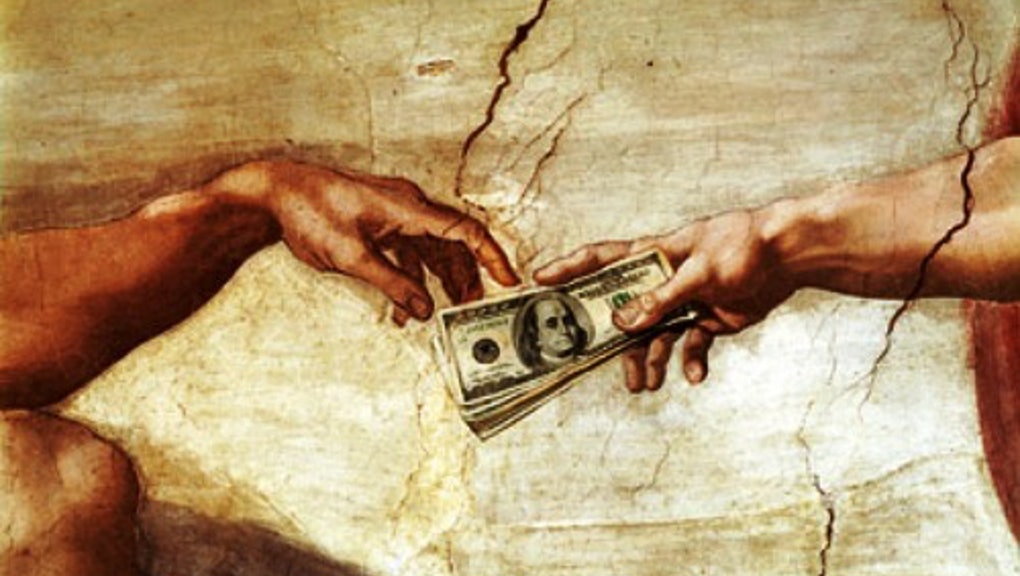
This September’s election promises to be very close. Opinion polls suggest that either of a National-ACT or Labour-New Zealand First-Greens coalition could easily take power in the aftermath. The actual winner will be determined by a number of factors. One of those factors, as this essay will discuss, is the effect of COVID-19 on the demographic makeup of the nation.

One striking feature of this particular form of coronavirus is its death rate among old people. The death rate for people aged 80 and over who contract it is believed to be over 14%. For people aged between 70 and 79 it appears to be 8.0%, and 3.6% for people aged between 60 and 69. Corona-Chan is the Scourge of the Aged.

The death rate among young people, by contrast, is extremely low. No-one aged under 10 is known to have died of COVID-19 yet, and the death rate for those under 40 appears to be no more than 0.2%, i.e. barely different to regular bouts of influenza. Corona-Chan is merciful upon the young.

This great differential in danger across age brackets may have electoral consequences.

As Dan McGlashan showed in Understanding New Zealand, there are very strong correlations between being old and voting Conservative or National. In 2017, the correlation between being aged 65+ and voting Conservative was 0.39, and between being aged 65+ and voting National it was 0.62. At the other end of the scale, the correlation between being aged 20-29 and voting Labour in 2017 was 0.34, and with voting Greens it was 0.60.

0.62 is a strong enough correlation to suggest that the vast majority of people over 65 will vote National, and much of the remainder will vote Conservative. Meanwhile, the correlation of -0.35 between being aged 20-29 and voting National in 2017 tells us that few young people will vote for them in September.

Put these two things together, and it becomes apparent that COVID-19 is likely to kill off a significant proportion of National and Conservative voters.

There were over 711,000 people in New Zealand aged 65 or over at the end of 2016. It might be closer to 800,000 by now. If COVID-19 kills off 10% of people over 65 before September 19, that will approach 80,000 deaths, and if 75% of those people were National or Conservative voters, that suggests that they could well lose 60,000 voters – 20,000 more than Labour, Greens or New Zealand First would lose.

At the 2017 General Election, National, ACT and Conservatives got 1,171,403 votes between them out of a total of 2,591,896, a proportion of 45.2%. If they would lose 60,000 voters from coronavirus deaths, as per the scenario outlined in the above paragraph, they would end up with 1,111,403 votes out of a total of 2,511,896 – a proportion of 44.2%.

A loss of one percent might not sound like much, but the effect of COVID-19 in suppressing right-wing voters is not limited to deaths.

If there are 60,000 deaths among National and Conservative voters, there will be at least this many incapacitated by the illness. The overseas experience has shows that COVID-19 often means a few weeks confined to an artificial respirator. If the pandemic is at or near its peak in New Zealand at the time of the election, there could be a large number of old people unable to vote because coronavirus has left them physically incapable of doing so.

A further factor is that some old people might decide to stay away from polling booths on Election Day out of the fear of contracting coronavirus. As COVID-19’s greater threat to the elderly is widely known by now, a significant number of those elderly might be persuaded to stay away from the polling booths altogether. A majority of the population will pass through the nation’s polling booths on September 19, so standing in line at one for half an hour is asking for trouble.

Adding together deaths, incapacitations and discouragements, the right wing appears likely to lose several tens of thousands of voters before September 19.

All of this is moot if Jacinda Ardern suspends the election. There is presently no hard indication that she is prepared to do this, but mayoral elections due for May have already been suspended for 12 months in London, and Ardern must have felt the temptation. New Zealand has already been in chimpout mode for the past year and this coronavirus pandemic has made it three times worse.

Assuming the election goes ahead as planned though, there is a small but realistic chance that what would have been a National-ACT victory is transformed into a loss by the effects of COVID-19. The balance is so fine that a nudge the size of a coronavirus pandemic could tip it over.

*

If you enjoyed reading this essay, you can get a compilation of the Best VJMP Essays and Articles of 2019 from Amazon for Kindle or Amazon for CreateSpace (for international readers), or TradeMe (for Kiwis). A compilation of the Best VJMP Essays and Articles of 2018 and the Best VJMP Essays and Articles of 2017 are also available.

*

If you would like to support our work in other ways, please consider subscribing to our SubscribeStar fund. Even better, buy any one of our books!

Clown World Chronicles: What Is A ‘Roastie’?

In Clown World, relations between all groups have broken down as the general social order regresses towards savagery. As discussed at length in another chapter, this is particularly true of relations between the sexes. Part of the breaking down of relations between the sexes has been a rise in derogatory terms such as ‘roastie’. This essay explains.

In a state of Nature, the female of the species controls access to sexual reproduction on account of that only she can reproduce. This grants her a tremendous amount of power. It means that the social order of every sexually reproducing species is arranged around her and her needs. This is why peacocks dance to impress the females and not the other way around, and why those manning the lifeboats on sinking ships cry out “Women and children first!”.

The female-first approach taken by Nature led to a variety of goddess-worshipping cults and a matriarchal social order in the primitive human. As the social structure became more sophisticated, the matriarchal model started to get outcompeted by more patriarchal models with distinguished hierarchies. This process, leading to civilisation, developed a number of methods to even out the natural gender imbalance.

The Abrahamic solution was to declare women to be subhuman. Bible verses such as Timothy 2:12 state that women are to be subservient to men. Islamic culture openly considers women inferior, sometimes going as far as mutilating the genitals of infant girls with the intent that the decreased capacity for sexual pleasure is more likely to keep them faithful.

For many centuries after the fall of the Western Roman Empire, the West operated on the Abrahamic model. Women were subjected to horrific abuse intended to cause them to submit to men. Ever since Hypatia was murdered by Christians in 415 A.D., women who demonstrated too much intellectual independence were simply killed. This state of affairs lasted for over a thousand years.

When the deathgrip that Abrahamism had over Western morality started to weaken with the Minor Renaissance, men started wondering if the mass enslavement of women was really in accordance with the Western soul. This led to the emancipation of women, a phenomenon that didn’t reach its full expression of power until the contraceptive pill was invented.

With women’s liberation, the power that Nature had once afforded them came back.

This worked out well in cases of high-IQ, good-natured women, who were able to break free from tyrannical masculinist strictures that were crushing their potential. In cases of low-IQ or poorly-natured women, the consequences were abysmal – falling for the first alpha male to show them attention, they were regularly inseminated and then abandoned to raise a semi-feral generation of children.

This cohort of semi-feral children is one of the reasons why Clown World is the way it is. We have regressed into a more primitive level of civilisation, and one consequence is women starting to exhibit pre-civilisational mating patterns. Part of this is a return of hypergamy (discussed at length in another chapter), a biological phenomenon in which the majority of women are attracted to a minority of men, meaning that some proportion of young men are left out.

Many young men feel a deep sense of resentment at all this, not least the ones unfavoured by women. Some of them can even become virulent incels like Elliot Rodgers. There are enough of these men to have created an entire anti-woman subculture – one that hates women, hypergamy and especially feminism. The men in this subculture are the ones who use terms such as ‘roastie’.

‘Roastie’ comes from roast beef, which is a reference to the belief (held by many young men in Clown World) that the average woman has taken so many cocks that her labia has become deformed, such that it now appears much like a roast beef sandwich. Leaving aside whether this is anatomically possible, the fact that this belief is widespread speaks to a fundamental corruption of romantic values. Women are seen with disgust instead of wonder.

An often accompanying belief is that society has decayed so far that all women are now whores, whether naturally or whether influenced to be so by mass media and culture. In Clown World, women have no interest in forming healthy romantic relationships – they simply flit from one ego-fuelled act of rutting to the next.

As could be guessed, the sort of man who thinks like this doesn’t have a lot of experience with women. They don’t realise that the sort of woman who sleeps with 300 guys is usually mentally damaged and her lust for Chads who treat her poorly is an expression of low self-esteem. Mentally healthy women might be serial monogamists who bounce from one relationship to another, but few have taken so many cocks that their pair bonding mechanism is damaged.

In any case, young women yearn for an end to Clown World at least as much as young men do.

Most young women would very much like to find a young man worth settling down with – but there aren’t many. One reason why these young women cast their nets wide is because the quality of the average man has declined, meaning that finding a man of the desired level is harder. That isn’t the fault of young women any more than any other Clown World phenomenon – it’s just the hand we were all dealt.

The solution to the roastie problem is not returning women to second class status, but restoring men to first class status. As Confucius told us over 2,500 years ago, the prevailing attribute of the feminine is devotion – but she has to have something worth being devoted to. Clown World won’t end until men are once again masculine enough to inspire devotion through their ability to impose order upon the natural chaos of the world – and when that day comes, the roastie problem will solve itself.

*

This article is an excerpt from Clown World Chronicles, a book about the insanity of life in the post-Industrial West. This is being compiled by Vince McLeod for an expected release in the middle of 2020.

*

If you would like to support our work in other ways, please consider subscribing to our SubscribeStar fund. Even better, buy any one of our books!