VJMP Reads: The Interregnum: Rethinking New Zealand II

This reading carries on from here.

The second essay in The Interregnum is called ‘Speech and Silence in the Public Sphere’ by Andrew Dean. It recounts the story of the abuse copped by Eleanor Catton in the wake of her criticism of the direction the county was taking in 2015, and how this is indicative of deteriorating levels of public discourse.

Although most of the essay is devoted to quoting Philip Catton, which makes one wonder why Professor Catton didn’t write the essay himself, it aptly summarises the state of the cultural wars in New Zealand and in the West. The narrative of neoliberalism is triumphant; its victims are marginalised because their suffering goes against this narrative.

I was in Philip Catton’s History of Science class at the University of Canterbury in the year 2000. It’s curious to think about what the professor teaching that class 100 years from now will say about our time, and about the quality of our public discourse. Dean is right: our public discourse has degenerated to a shameful level, even as the Internet has theoretically made it easier than ever to share science, knowledge and truth.

Catton and Dean both have a point when they say that inequality has made the level of discourse more degenerate. The greater the inequality in a society, the more criticism of it is dismissed as “whinging” by those at the top and their lackeys in the mainstream media. Furthermore, the greater the inequality the more society becomes stratified into subgroups that speak their own dialect, so that it becomes difficult to communicate between different positions on the hierarchy.

The worse any one group of people is doing, the less their voices fit the neoliberal narrative that “Everything is better than ever, so spend spend spend!” And so, the more their voices are silenced by a mainstream media that is beholden to the same capitalist interests who support neoliberalism.

Dean refers to the same pattern that Dan McGlashan calls the “general disenfranchisement rule” in the demographic analysis Understanding New Zealand. It’s a feedback loop in which increasing inequality causes the people in the lower socioeconomic demographics to lose faith in the belief that the system represents them at all, which leads to a decreased turnout rate in elections, which leads to a system that represents them even less, leading to a further decreased rate and so on.

He also mentions the effect that neoliberalism had has on the discourse at our universities. Instead of acting as the conscience of the nation, our universities have to compete for students in order to get funding, which means that they have to present a certain image. In the case of New Zealand universities, which get a lot of international students from Asia, it is almost impossible to have a public discussion about the need for cannabis law reform.

All in all, this essay is pleasingly accurate and concise, and ends by pointing out that not only it is necessary to point out the failings of neoliberalism it is also getting harder to do because of the silencing of dissenting voices to the mainstream narrative.

VJMP Reads: The Interregnum: Rethinking New Zealand I

The Interregnum: Rethinking New Zealand is a small book of essays that is for sale at the Volume bookstore in Nelson, by Bridget Williams Books. The blurb on the back asks the question of whether New Zealand’s political settlement is beginning to fray, and purports to “interrogate” the future from a youth perspective.

The first essay, by editor Morgan Godfery, is called “The Voices of A New Generation” and opens by relating an anti-TPPA demonstration in Auckland. It breathlessly describes the excitement of thousands of diverse people coming together to oppose the signing of the multilateral trade agreement.

Reading this piece, something about it speaks to the lack of purpose that the young generation now has. The fight against apartheid seemed meaningful at the time; it seemed a great evil was being fought. A law that says that a large section of the population are second-class humans, for no other reason than skin colour, seems like the sort of arbitrary and cruel treatment that everyone should be against.

But can the same be said of international trade? Who really understands it well enough to decide? And so what if “trade agreements are signed”?

By the fourth page of this essay there is already a Marx quote, which bodes poorly. The reader gets the sentiment that the new voice here is going to be an echo of the same social justice warriors seen overseas. If not, why oppose something as vague and nebulous as the TPPA, instead of protesting about poor wages, poor housing, poor mental health outcomes?

The essay finds its feet when it hones in on the real enemy: neoliberalism. Godfery mentions the damage done to the national psyche by the Mother of All Budgets, and it feels like he speaks for many when he says that the children condemned to poverty by Richardson’s Budget are now adults, some of us with our own children.

But again, this speaks to the confusion in the New Zealand Left. What to make of the fact that the signing of the TPPA was protested under a National Government, with many prominent Labour supporters in attendance, and then the Labour Government went and signed it anyway? No-one knows yet if Labour will get criticised for their evident support of neoliberalism, or whether people will let it pass.

This introductory essay declares that the book is for those who have “a fierce desire to radically reshape politics.” It proposes that instead of focusing on “returns on investment”, that we return to a politics of “higher principles and values”.

This is all very well, but the question that strikes one is: whose higher principles and values? Because usually when the working class votes for people promising to govern by higher principles, it turns out that those principles only apply to a chosen few groups, and if you’re not one of them then you’re “privileged” (“privileged” means “untermensch” in social justice speak”.

We can see this now with Jacinda Ardern’s decision to give Manus Island “refugees” her highest priority, while saying nothing about the Kiwis suffering from the illegal status of medicinal cannabis. Unfortunately for medicinal cannabis users, official victim status has so far eluded them, and so they continue to be ignored.

Concluding with half a dozen mentions of the word “love”, this essay promises that the book will make for interesting reading for the sake of political philosophy. However, it’s not possible to believe that a book that opens by quoting several Marxists could be entirely trustworthy or honest, even if it is earnest.

It remains to see what these higher principles are.

Why New Zealand Should Make Cricket Our National Sport

Kane Williamson is ten times more famous on the world stage than any All Black realistically ever could be – and a hundred times less at risk for head injury

It’s over. The Scots have beaten us for the first time in rugby history. It didn’t turn out quite like that, of course, as Beauden Barrett’s covering tackle forced a knock on from the Scottish fullback, but when Stuart Hogg broke the line and then defeated TJ Perenara’s ankletap, it looked like the Scots were going to score, making it 22-22 with a kick to come.

If Finn Russell had slotted that, Scotland would have beaten the All Blacks for the first time in over a century of trying. It would be a dark day for New Zealand rugby, especially having conceded a first-ever loss to Ireland only a few years beforehand.

Considering that the Kiwis were bundled out of the RLWC at the quarterfinal stage, it would be an incredible dual blow to the country’s self image within 24 hours. Our aura of rugby invincibility would be shattered. It would be emasculating. Kiwi men wouldn’t be able to look their wives in the eye for weeks.

Hell, it was bad enough for the Kiwis to lose to Fiji and for Scotland to not get thrashed. We might do well to see the writing on the wall now and realise that our historical advantages have been eroded, and that there is every chance of us being just one of the pack from now on.

All these are just superficial reasons for questioning the primacy of rugby as the national sport, though. They are fashions, that come and go.

What will mark a permanent change is our ever-increasing awareness of the severity of brain trauma endured by constant heavy collisions. Fifty years from now, it’s possible that no-one will be playing rugby at all, whether league or union, for the same reasons that other extremely violent things don’t happen anymore. We became aware of the actual consequences.

Rugby is fun as all hell to play. Maybe it’s because of the danger inherent in the game. Tackling is dangerous, because if you go too low you can take a knee to the head, and if you go too high you can talk an elbow to the head, and the ruck is dangerous because someone might drop a knee or elbow on your head, and the high ball is dangerous because you might land on your head, and so on.

It’s hard to avoid playing rugby without head injuries. Richie McCaw said, shortly after his retirement, that “I don’t miss getting smashed,” and Kieran Read is on record as saying that he will raise his son to play cricket instead of rugby because of the risk of head injury makes rugby a poor choice.

This latter point regarding Read is something to think about. If a man as brave and mean and big and athletic as Kieran Read is going to steer his sons away from rugby because of the risk of head injury, what hope do the rest of us have?

The lifelong effects of repetitive brain trauma on NFL players are increasingly becoming known. Mounting evidence suggests that the brain trauma from tackling and being tackled is strongly correlated with future neural disorders, early dementia, strokes etc. There must be tens of thousands of young mothers who are now aware of this risk from playing collision sports and we shouldn’t be surprised if rugby went the way of bullrush and got banned in all schools on account of the risk to developing brains.

Already the international game is being affected by the head to send players off for head injury assessments, and the more this happens the more people realise that head injury is really an ever-present risk for rugby players.

From a cultural perspective, the risk here is that these mothers steer their children away from rugby and into a shit sport like soccer, thereby exposing them to moral and physical degeneration and teaching them to glorify cheating and disrespecting the referee.

For this reason, it’s imperative that cricket steps into the gap left by the impending withdrawal of children from the rugby paddocks and fills a national need for a sport that allows for competition in a high-trust environment. Furthermore, cricket will soon become a much more realistic career path than rugby for talented Kiwi athletes on account of the IPL and other international T20 cricket leagues.

A switch to cricket as our national sport might be a wise move now, because it may be forced on us in the future by an increasing appreciation of the risk of brain damage.

Te Reo With Mnemonics: Garden Words

Flower – putiputi

Valerie Adams throws a shotput, only instead of the shot it’s a bouquet of flowers. She throws a bouquet twice, so put-put.

Snail – ngata

A day slowly turns to night and, when it does, a whole lot of snails come out.

Shovel – kāheru

A man sees another man walking along with a shovel over his shoulder, and calls out “Come here, you!”

Tree – rākau

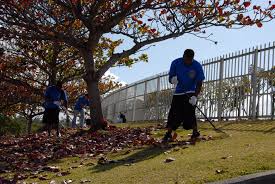
A crazy old man uses a rake to clear the leaves from a tree that’s still standing and healthy.

Rake – purau

A woman takes a rake and purees it in a blender by pushing it in shaft first.

Grass – pātītī

A woman lies sunbathing in the grass. Instead of a bikini, her breasts are covered with pies. She has a pie-titty.

The Maori word for tree – rākau – sounds like the English word ‘Rake’

Leaf – rau

A boy nails a bunch of leaves to a wall in a row.

Bone – kōiwi

Bones are arranged on the ground in the shape of a kiwi.

Path – ara

A bunch of Mongrel Mob members walk down a garden path, chanting “Araaa!”

Bee – pī

A man is taking a pee at the edge of his garden, and he gets stung on the penis by a bee.

Wall – tara

A small girl walks up to an imposing brick wall and tears it down because it is only made of crepe paper.

Lawnmower – pōtarotaro

A lawnmover runs over a bunch of potatoes on the lawn.

*

The above is an excerpt from the upcoming Learn Maori Vocabulary With Mnemonics, by Jeff Ngatai, due to be published by VJM Publishing in the summer of 2017/18.