The New Zealand Government Has Been Separating Children From Their Cannabis-Growing Parents for Decades

This is no worse than what our own Government is doing to us

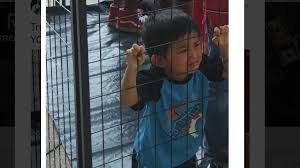
Today’s mass media assault on consciousness involved emotional images from America of Mexican children in cages. The ensuing outrage was based around the fact that when a Mexican family is apprehended crossing the American border illegally, the children are temporarily separated from their parents. Although this is regrettable, what the media is ignoring is that the New Zealand Government has been doing the same thing to its own citizens for decades.

For one thing, it’s standard practice for the New Zealand Government to separate children from their parents if those parents are going into custody for breaking the law. In this regard, the New Zealand Government’s normal actions are no better than what the American Government is doing. Even worse than this is the fact that many of those parents are going to jail for offences that don’t harm anyone, unlike (arguably) illegal immigration.

The fact that cannabis is a medicine is a fact near enough to universally acknowledged by the young people of the world, even if Baby Boomer politicians have been slow to understand it. However, cultivation of it remains a crime punishable by up to seven years imprisonment in New Zealand, despite that the plant has a wide range of medicinal effects and is used all over the country to alleviate needless suffering.

Because cannabis is so good for alleviating suffering – taking away pain, nausea, insomnia among other maladies – people continue to grow it, despite the law. But because of the law, a significant number of these people end up being apprehended by Police and sentenced to prison.

Many of the medicinal cannabis growers who have been put in prison over the past 40 years have had children. Those children were forcibly separated from their parents by the New Zealand Government for the sake of enforcing a law that should never have been a law.

So all the perfectly natural dismay that Kiwis have been induced to feel at what the Mexican children at the American border are forced to endure – a traumatic forced separation from their parents as a consequence of an arbitrary law enforced by armed men – could just as well arise as a result of thinking about what Kiwi children have to go through as a result of cannabis prohibition.

In fact, our own children have it worse, because they will often not get to see their parents again for a long time.

So if people in New Zealand are going to get upset because of an outrage that the global corporate media manufactured in order to target a conservative American President, let’s get equally upset about similar and equally evil actions in New Zealand.

Every time a New Zealander gets put in prison for a cannabis offence that has harmed no-one, leaving a child on the outside who is now missing a parent, we ought to react with the same outrage towards our own Government as we had today for the Trump Administration. If we’re going to expend energy on outrage let’s at least direct it somewhere where it can do some good.

*

If you enjoyed reading this essay, you can get a compilation of the Best VJMP Essays and Articles of 2017 from Amazon for Kindle or Amazon for CreateSpace (for international readers), or TradeMe (for Kiwis).

VJMP Reads: David Seymour’s Own Your Future IV

A Liberal Vision for New Zealand in 2017

This reading carries on from here.

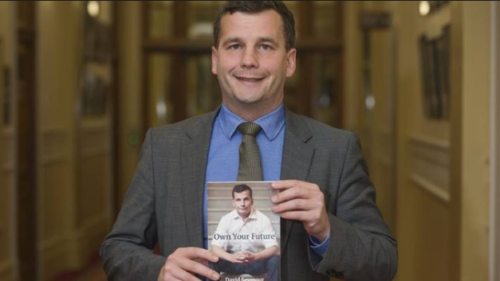
The third chapter in Own Your Future is ‘Superannuation and the Gold Card’. This essay starts with a dig at Winston Peters, who was once investigated by the Serious Fraud Office. Seymour doesn’t like the wasteful spending he sees in the Gold Card, especially as many of the recipients of the largesse of it are already millionaires.

Universal super is set to cost us around $20,000,000,000 per year by 2031, Seymour informs us. Here he makes a play for younger voters by having a go at the Baby Boomers. He references the suspicion of the younger generations that they aren’t going to get the same sweet pension deal that their parents got – after all, we didn’t get the same free tertiary education that they got.

He raises the spectre of a Greece-style economic apocalypse happening as a result of a debt spiral triggered by having to pay these lavish pension funds up to and past 2060. It’s hard to deny Seymour’s maths, as it appears to be true that we will soon reach a point where there are only two workers for every pensioner (as opposed to today’s four).

The options, as he sees it, are: raising taxes by about a quarter or raising the retirement age, neither likely to happen because young people don’t vote. Seymour here criticises both John Key and Bill English for lacking the courage to deal with the issue, and makes an entreaty to the young to not become disengaged from politics.

This seems baldly hypocritical, considering that ACT spent all of the last nine years voting alongside the National Party, who are the party that represents all the Baby Boomers. As Dan McGlashan showed in Understanding New Zealand, the vast majority of Baby Boomers vote for National, whose efforts to fuck over the young were eagerly supported, for nine years straight, by all ACT MPs including David Seymour.

National closed down rape crisis centres and gutted mental health funding, leading to New Zealand having the developed world’s highest youth suicide rate, and Seymour supported them all the way, despite that many young people voted ACT in 2014. He does not acknowledge that this may have contributed to the low turnout rate among the young.

True to neoliberal form, Seymour’s solution to this looming pension crisis is to squeeze some extra labour out of the working class, by raising the age of retirement to 67, and soon. No means testing, despite that 25% of people claiming the pension are also either claiming a salary or run their own business (as admitted by Seymour himself) and at that point the chapter abruptly ends.

One realises here that Seymour is primarily trying to win votes from people too young to know anything other than neoliberalism. Old people are too conservative to vote anything other than National or sometimes New Zealand first, and it’s the young and well-heeled (who don’t expect to be reliant on a public pension in old age) who are the most amenable to Seymour’s suggestions here.

*

If you enjoyed reading this essay, you can get a compilation of the Best VJMP Essays and Articles of 2017 from Amazon for Kindle or Amazon for CreateSpace (for international readers), or TradeMe (for Kiwis).
Te Reo With Mnemonics: Caring And Sharing Words

help – āwhina

A child cries: “I lost my letter R!” A man says “My dog will help you – he’s an r-finder!” His dog goes into the bushes and comes back with a letter R.

give – takoha

A family is sitting around eating Mexican food when a baby stretches out a hand and says “Give. Give. Taco here.”

share – toha

A lady at a party produces a bowl full of toes. She goes around sharing them, saying “Get a toe here.”

care – kumanu

A man cares lovingly for a cow, who shits into a wheelbarrow that the man wheels over to a gigantic pile of shit with a sign that says “Cow Manure”.

neglect – whakahapa

A child sits outside, neglected. Its parents neglect it by sitting inside partying. The child picks up some binoculars and sees a person playing a harp on a distant hill. It can see the far car harper.

contribute/provide – homai

A donations collector approaches a bunch of gangsters. One of the gangsters says “Okay homies,” and they all contribute some money.

The Māori word for neglect – whakahapa – shares a “f-k-h-p” construction with the English phrase ‘far car harper’.

kind/to show kindness to – atawhai

A really tough-looking man jumps when a nurse kindly wraps a bandage around a sore finger. She says “So you’re not such a toughie!”

nasty – whakawiri

A soldier says “I’m worried.” With a nasty expression, his sergeant says nastily “Fuck worry!”

support – taituarā

A tuatara, supported on the shoulders of two other tuataras, reaches up and pulls down a piece of fruit.

take – tango

A man holds out a twenty dollar note, and a couple tangoes up to him to take it.

thank/acknowledge – mihi

A man shakes hands with a doctor. The man says “I’d like to thank you for fixing my head.”

consider – whaiwhakaaro

A car drives around with three bagpipers leaning out the windows playing their pipes. A man looks at the piper car and says “They should consider those trying to sleep.”

*

The above is an excerpt from the upcoming Learn Maori Vocabulary With Mnemonics, by Jeff Ngatai, due to be published by VJM Publishing in the summer of 2018/19.