The Case For Four Specialist Seamers in the Black Caps

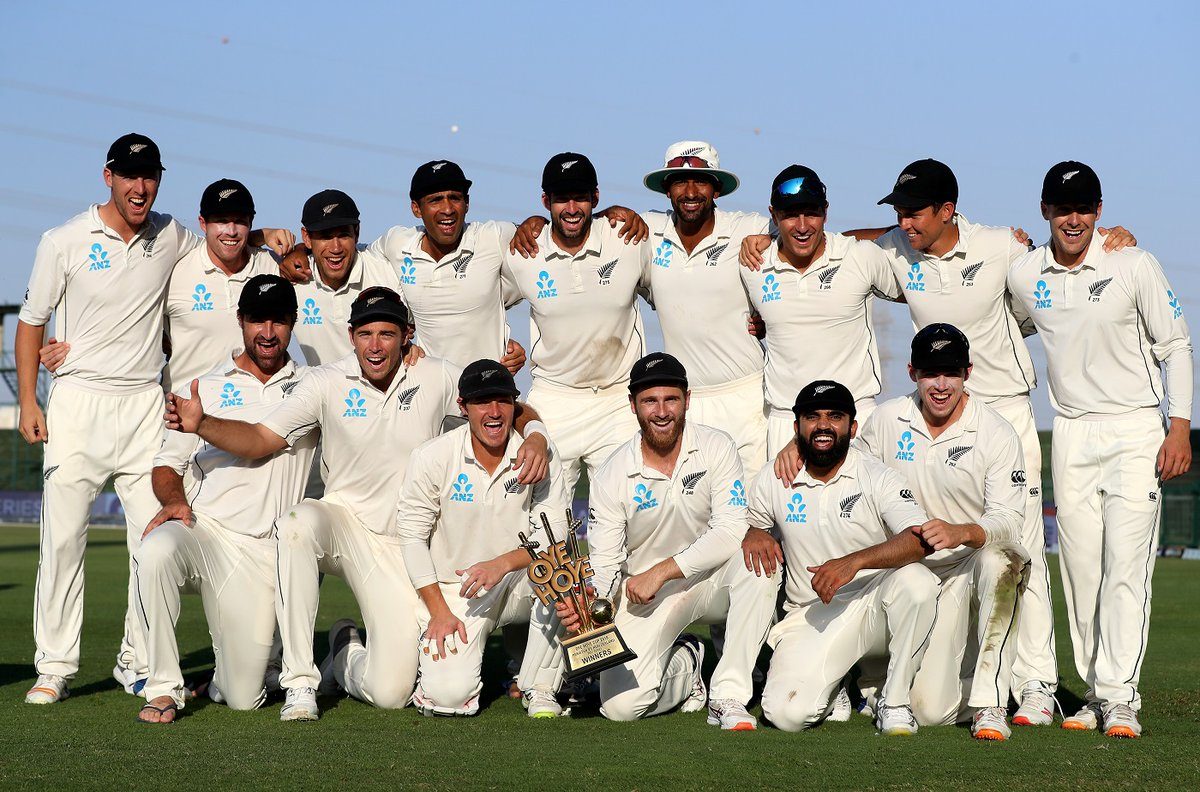
A recent article argued that this is the best ever Black Caps Test side. Even so, there’s scope for the Black Caps to get even better. There is plenty of talent on the sideline as well, and finding a way to find some of it in the run-on XI might make the team stronger – as this article will examine.

The Black Caps have never had a batting foursome as good as Williamson-Taylor-Nicholls-Watling. The first two stand alongside Martin Crowe as the best the country has ever produced. Watling has been world-class as a wicketkeeper-bat and Nicholls has already broken into the top 10 Test batting rankings. Moreover, our two openers in Latham and Raval are as good as any since John Wright and Bruce Edgar.

The Black Caps aren’t lacking the ability to build big innings, and they already have Nicholls and Watling as batsmen capable enough to rebuild after a top order failure. There is therefore no need for an insurance batsman at 7, especially if this means that a good chunk of overs have to be bowled by a non-specialist.

With batting that good, we can afford to lose a bit of extra batting at 7 for the sake of strengthening the bowling. In other words, we could consider not playing an all-rounder in that role, but rather a bowling all-rounder like Mitchell Santner or Matt Henry.

The Black Caps could field a team of:

1. Raval
2. Latham
3. Williamson
4. Taylor
5. Nicholls
6. Watling
7. Santner
8. Henry
9. Southee
10. Wagner
11. Boult

This would allow us to field an outstanding pace battery without having a weak batting unit. Probably we would open with Boult and Henry in such a situation, with Wagner playing his usual role as third seamer. Southee’s bowling would be much more dangerous than the alternatives for fourth seamer.

Such a composition would make for an exceptionally pure Black Caps side. There would be five specialist batsmen, one wicketkeeper, and five specialist bowlers.

A critic might argue that choosing such a side will increase the chances of being bowled out cheaply. The counter argument to that is to say that a pace battery of Boult, Henry, Wagner and Southee would wreck opposition teams so regularly that we would get away with a tiny extra chance of a batting collapse if it meant more overs from a truly dangerous bowler.

In any case, all four of them can bat a bit. Henry (19), Southee (17), Boult (14) and Wagner (12) all average in the double figures. A tail with Mitchell Santner at 7, who averages 25 and has the promise to average 30, would be just as good batting-wise as one with an all-rounder at 7, Santner at 8 and one fewer specialist seamer. Bowling-wise, four seamers would be superpowered.

*

Dan McGlashan is the man with his finger on the statistical pulse of New Zealand. His magnum opus, Understanding New Zealand, is the complete demographic analysis of the Kiwi people.

The Case For Cannabis: The Criminal Justice System is Not A Treatment Pathway

Of all the terrible arguments made in favour of cannabis prohibition – and there are many – one of the worst is the argument that contends that cannabis prohibition is a good thing because some of the people that get involved in the criminal justice system are incentivised to stop using cannabis. This article will examine the flaws in this logic.

One of the saddest peasant attitudes remaining in our society is the idea that certain people just need a “good kick up the arse” to encourage them to function properly again. The idea seems to be that a “short, sharp shock” of physical abuse can be beneficial to drive dullness from a person’s mind. It’s an abusive attitude that is a remnant of a less enlightened time and, fortunately for the rest of us, it’s dying off.

This attitude finds expression in the idea that getting arrested on account of a cannabis offence could be a good thing, if that led to a person suddenly appreciating the consequences of cannabis use and changing their habits for the better.

There is an element of logic to this line of reasoning. After all, it’s common for young petty criminals to become afraid the first time they encounter some genuine heat from the Police, or the first time they do a custodial sentence and realise that prison isn’t a great deal of fun after all. This fear can, indeed, change behaviour.

But what this approach leaves out is two things.

The first is that many people simply don’t want to stop smoking cannabis, any more than they want to stop playing rugby or buying magazines with Harry and Meghan on the cover. You could instruct the Police to arrest people for playing rugby in the park, on the grounds that their behaviour was recklessly dangerous, but it wouldn’t make it the right thing to do or a good idea. Neither would it stop people from doing it.

Psychologically speaking, it’s hard to declare that you know how another adult should live their lives, and so much better than them, that you can fairly justify setting the Police on them if they don’t do what you say they should do. In another time and place, that degree of coercion would be recognised as slavery, and it’s no wonder that people naturally disobey the cannabis laws today.

So this means that deploying the Police to force people into getting medical treatment for using cannabis (as if that even made sense) will not be effective in the long term. People feel like they have the right to use cannabis, and they will continue to feel as if they have the right, because it’s natural to think it ridiculous that a medicinal plant could be illegal.

It’s possible that Police involvement in a person’s life might reduce their level of cannabis use, but so what? Punching someone in the face for eating a Big Mac might also inspire them to make healthier lifestyle decisions, but that doesn’t mean that the overall benefit of the action outweighs the overall harm.

The second is that there are cases of legitimate medicinal need, and encounters with the criminal justice system are not helpful in cases of medicinal need. Police officers are not qualified doctors and neither can they be. Having them as the first line of dealing with cannabis users makes as much sense as making the Army responsible for it.

The argument refuted in this article is usually made by people who are entirely unaware of the medicinal properties of cannabis. When they become aware of the medicinal properties of cannabis they tend to stop making it. Of course, if a substance really is medicinal then it ought to be something supplied by doctors and pharmacies; the Police should not be needed at any stage.

There may, indeed, be cases where there is a cannabis user who needs psychiatric intervention. After all, there are many instances in which certain strains of cannabis will not be helpful. A person who is acutely psychotic from sleep deprivation doesn’t need a honking high-THC strain that will wire them even tighter.

But even in cases like this, it’s not Police intervention that would be helpful, unless it comes as part of the Mental Health Act or similar and not as part of enforcing the law against the “crime” of cannabis. A person who has mentally disintegrated so far that they need psychiatric intervention is already in a kind of hell. The last thing they need is to encounter law enforcement.

The argument that cannabis users can be persuaded to get treatment for “cannabis abuse” by getting arrested, and then threatened with further attacks from the Justice system, is neither fair for rational. It would be better for cannabis to be made legal and destigmatised, so that people who did need treatment would be more likely to get it. Police involvement is unnecessary.

*

This article is an excerpt from The Case For Cannabis Law Reform, compiled by Vince McLeod and due for release by VJM Publishing in the summer of 2018/19.

Is This New Zealand’s Best Ever Test Cricket Side?

If the Black Caps win the upcoming Test series against Sri Lanka 2-0 – and they should – they will go to No. 2 on the ICC team rankings. The rankings go back to 2003 and New Zealand has never been higher than 3rd before. This article asks the obvious question: is this the best Test cricket side that New Zealand has ever produced?

It seems sure that this is the best Black Caps Test side since Sir Richard Hadlee was in his prime. So this article will compare the current first choice Test team (in New Zealand conditions and assuming no injuries) to the team that beat Australia 2-1 in Australia way back in 1985. The way we will do this is by comparing all 11 players as if it was a boxing scorecard.

The prime difficulty with making a comparison is that the careers of the 1985 team are completed, and so their legends are established. Some of the 2018 team are yet to play many games. This means that their total level of greatness has to be extrapolated out from what they have achieved thus far. By the same token, the 1985 players are rated according to how good they were at the time, not according to how good they may have been earlier or later.

First opener: John Wright vs. Tom Latham

The dour John Wright was the first New Zealand batsman to 4,000 runs. At the time of the 1985 Tour of Australia he had played 41 Test matches and averaged 30.91. Wright had 2,000 runs after 39 matches, whereas Latham has already scored 2,503 runs in that time, so it seems like Latham will go past him.

Tom Latham has already scored six centuries in only 39 matches, at an average of 36.27. This is similar to Wright’s career average, despite that Latham has still been learning the game. Wright was 32 years old by the time he scored his sixth Test ton, whereas Latham did so by age 26. This suggests that Latham will have a better career than Wright.

1985 Black Caps 9; 2018 Black Caps 10

Second opener: Bruce Edgar vs. Jeet Raval

Bruce Edgar had a first-class average of 40, but was in and out of the Black Caps over the course of his 39-Test career. He averaged 30.59, with three hundreds, and a highest-ever batting ranking of 8th, achieved in August 1983. He was ranked around 30th at the time of the 1985 Tour to Australia, making him a solid backup to John Wright.

Jeet Raval is new on the scene, having received a chance at opener only after several others had been tried, but has been dependable in his limited opportunities. He is yet to score a century in his 14 Tests, but has six half-centuries already, at an average of 33.86. His first-class average is slightly lower than Edgar’s. A world ranking of 8th seems unlikely, so this one will have to go to Edgar.

1985 Black Caps 10; 2018 Black Caps 9

First drop: John F Reid vs. Kane Williamson

John Fulton Reid was an excellent player whose finest moment was a not out 158 in Auckland in 1985, leading the Black Caps to an innings victory against a Pakistani side containing Wasim Akram and Abdul Qadir. He averaged 46 from 19 Tests, and was ranked 10th at the time of the tour of Australia, having been as high as 3rd earlier that year.

Captain Kane Williamson is currently ranked 2nd in the ICC Test batting rankings, on 913 points, behind only Virat Kohli. It is the first time any Kiwi batsman has passed 900 on that scale, and reflects the fact that Williamson averages 65 over the past five years. At age 28, and with Williamson still refining his game, it seems like the best is still to come.

1985 Black Caps 9; 2018 Black Caps 10

No. 4: Martin Crowe vs. Ross Taylor

Martin Crowe was widely regarded as New Zealand’s greatest ever batsman, until this was challenged in recent years by not only Williamson but also Taylor. Like Reid, Crowe achieved a highest world ranking of 3rd, but Crowe was only ranked 32nd in the world at the time of the 1985 Tour to Australia – although he was good, he was yet to peak for another two years.

Ross Taylor also achieved a highest world ranking of 3rd, at least so far. He is currently ranked 16th and established as the Black Caps’ senior pro, holding several records, one of which is the highest Test score by a visiting batsman to Australia: 290. Much like their careers as a whole, comparing Crowe and Taylor at these particular points in time is too close to call.

1985 Black Caps 10; 2018 Black Caps 10

No. 5: Jeff Crowe vs. Henry Nicholls

Jeff Crowe was ranked 31st with the bat at the time of the 1985 tour, one higher than his younger brother Martin. Unlike Martin, this was as high as Jeff ever got. Henry Nicholls has climbed up to No. 9 in the world Test batting rankings, averaging 50+ over the past two calendar years, which means that he’s currently ranked higher than Ross Taylor.

Jeff Crowe managed three centuries and six half-centuries from his 39 Tests; Nicholls has three centuries and seven half-centuries from 21 Tests. At best it could be said that Crowe was a serviceable No. 5, whereas Nicholls shows every sign of becoming a genuine force there. This one handily goes to Nicholls.

1985 Black Caps 9; 2018 Black Caps 10

All-rounder: Jeremy Coney vs. Colin de Grandhomme

The stylish Jeremy Coney was a redoubtable batsman and a tidy medium pacer. He was ranked 13th in the world with the bat at the time of the 1985 Tour of Australia, which made him the second-highest ranked batsman in the side after Reid. He only scored three hundreds in his 52 Tests but he also scored 16 fifties, averaging 37.57.

Colin de Grandhomme is more of a 21st-century player, with incisive bowling and big hitting. It’s hard to see him averaging 37 with the bat, but he does average 35 at first-class level. Both players took 29 Test wickets, although de Grandhomme got his in a quarter of the matches. In the end, Coney’s batting is better than de Grandhomme’s batting by more than de Grandhome’s bowling is better than Coney’s bowling.

1985 Black Caps 10; 2018 Black Caps 9

Wicketkeeper: Ian Smith vs. BJ Watling

Ian Smith was a solid performer for the Black Caps for a long time. He played some great innings, most notably a 173 off 136 against India, but his Test average was only 25.56. At the time of the 1985 Tour of Australia, Smith was ranked 48th in the world with the bat, playing in a time when wicketkeepers were not expected to bat as much as they are now.

BJ Watling, however, has been world-class with both bat and gloves. He is currently ranked 22nd in the world with the bat, averaging 38.11 from 57 Tests. Although their glovework has been of a similar high standard, Watling is able to play proper innings: he has six hundreds to Smith’s two, and 16 fifties to Smith’s six, which puts him clearly ahead.

1985 Black Caps 9; 2018 Black Caps 10

First seamer: Sir Richard Hadlee vs. Trent Boult

Sir Richard Hadlee is comfortably ensconced as the greatest cricketer New Zealand has ever produced. Not only would he be the first name chosen for an All-Time Black Caps XI for his 431 wickets at 22.29, but he would be the only real chance of a Kiwi getting included in an All-Time World XI. He was ranked 2nd only behind Malcolm Marshall at the time of the Australian Tour, and would be around there for the remainder of his career.

Trent Boult is the current leader of the Black Caps attack, and has taken 222 wickets from 57 matches at an average of 28.14. Hadlee averaged 23.83 after 57 matches, which means that the gap between him and Boult was not tremendous. Boult’s highest Test bowling ranking is No. 2, which suggests that he could yet achieve greater things.

1985 Black Caps 10; 2018 Black Caps 9

Second seamer: Ewen Chatfield vs. Tim Southee

Ewen Chatfield was the dependable foil to Hadlee for about a decade. Ranked 13th in the world at the time of the Australia Tour, he had a career high of 4th in the world a few years later. Tim Southee is currently ranked 15th in the world with the ball, and has been ranked as high as 5th.

Those are similar rankings, and their career numbers are very similar as well. Chatfield took his career wickets at 32.17, Southee has taken his (so far) at 30.70. Curiously, Jimmy Anderson had an almost identical average to Southee after 61 Tests (Anderson was at 30.65), so Southee could become great yet, but if he gets to that level or not is anyone’s guess.

1985 Black Caps 10; 2018 Black Caps 10

Third seamer: Lance Cairns vs. Neil Wagner

Lance Cairns took 130 wickets at an average of 32.92, mostly at first change. He was ranked 10th in the world at the time of the 1985 tour, which was about as high as he ever got. A first-class average of 26.52 makes one suspect that he could have been a little better than his Test average suggests.

Neil Wagner has only played 38 Tests, but he has fashioned a world-class record at third seamer. He has taken 152 wickets at 28.49, which is a fair bit lower than what Cairns was striking at. He also averages 24.79 since the start of 2015, which was when he really nailed down a spot in the side. His highest ranking of 6th was achieved earlier this year, so he might soon do even better.

1985 Black Caps 9; 2018 Black Caps 10

Spinner: John Bracewell vs. Mitchell Santner

John Bracewell was an offspin bowler with the mentality of a fast bowler. He wasn’t greatly effective, taking 102 wickets in his Test career at an average of 35.81, however he did have over 500 first-class wickets at an average of under 27. He was ranked 40th in the world at the time of the Australia tour.

Left-arm orthodox Mitchell Santner is unproven at Test level, but has already shown a lot of promise. He has a slightly better strike rate with the ball than Bracewell, but a slightly higher average at this stage (17 Tests). Although they are similar with the ball, Santner is a step above Bracewell with the bat, and is likely still to improve sharply in all facets.

1985 Black Caps 9; 2018 Black Caps 10

Final verdict: 1985 Black Caps 104; 2018 Black Caps 107

The 2018 Black Caps are easily better when it comes to batting from 1-7. In Williamson, Taylor, Nicholls and Watling they have four players at the peak of their powers; the best batsman on the 1985 team was a Martin Crowe still a couple of years away from his best. Although the 1985 team also had John Wright and Jeremy Coney, they were significantly weaker with the bat overall.

It’s true that the 2018 team doesn’t have a bowler of the same class as the 1985 Sir Richard Hadlee, but their supporting bowlers are better than the team of 1985. Hadlee was a one-man show, as exhibited by the fact that he took 15 of the 20 Australian wickets to fall in the Brisbane Test of the 1985 tour. Boult, Southee and Wagner, by contrast, hunt as a pack, with able support from de Grandhomme.

*

Dan McGlashan is the man with his finger on the statistical pulse of New Zealand. His magnum opus, Understanding New Zealand, is the complete demographic analysis of the Kiwi people.

*

If you enjoyed reading this essay, you can get a compilation of the Best VJMP Essays and Articles of 2017 from Amazon for Kindle or Amazon for CreateSpace (for international readers), or TradeMe (for Kiwis).


Could Fuel Tax Riots Come to New Zealand?

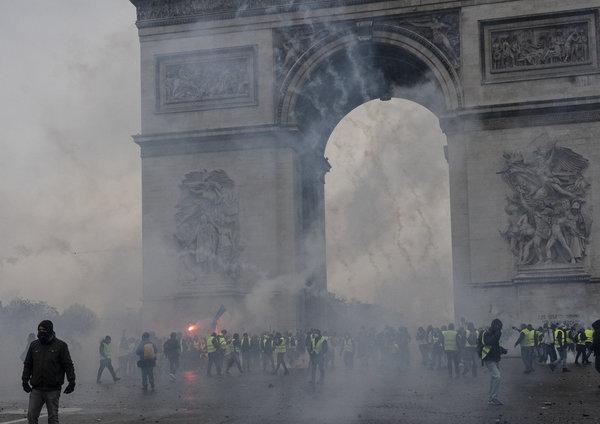
Europe is caught in its heaviest protests since 1968. Ostensibly as a result of fuel taxes, they have become so large that in France some are concerned they may lead to a nationalist revolution, and French President Emmanuel Macron is rumoured to have given orders to send in tanks to quell any unrest this coming weekend. However, there’s more to the story than this – and the reality suggests that these protests might come to New Zealand.

France is a heavily taxed nation – government spending is 56.6% of GDP, compared to 37.4% in America and 48% in New Zealand. This has long been accepted by the French people, because of their high levels of social trust and solidarity, but the whole system is dependent on the will of the average Frenchman to pay into it. The Frenchmen paying taxes were happy to do so because they believed that this tax money was going to help people like them, but this is no longer the case.

Fuel taxes are something that particularly affect working-class white French people, to the benefit of the middle class and the underclass who live in the big cities. People who live in big cities can take public transport or taxis, and in any case don’t have to drive far. Working-class people who have to commute to work often have to drive from small villages or towns to a city somewhere else, sometimes twice every day, and so become heavily affected by any rise in the fuel price.

A large proportion of the New Zealand population still lives rurally or semi-rurally. There is a commonly-cited statistic that suggests that New Zealand is one of the most urbanised countries in the world, but what this statistic ignores is that our cities are exceptionally sprawling by world standards. So even people who live in cities have to drive a lot as part of everyday life.

Dan McGlashan showed in Understanding New Zealand that this rural population is much more likely to own cars and to drive to work than to walk or to take public transport. Buses are not an option for the majority of New Zealand’s rural dwellers. There’s more to it than just this, however. These fuel taxes would come as another burden to what is an already heavily discontented working-class rural population, who already feel that the cities are benefitting from the current order at their expense.

If Jacinda Ardern and the Labour Party go through with their plans to raise the refugee quota at the same time as raising petrol taxes for the sake of fighting global climate change (or whatever the excuse is), they run the risk of fostering the same kind of discontent that has now erupted in Europe. Although they will deny the connection, the perception will rise among the rural working class that they are being taxed through fuel to pay for the importation of refugees that they didn’t want.

For a working-class white person who already has to see middle-class brown people promoted ahead of him on account of their skin colour, or winning scholarships that he cannot apply for on account of his skin colour, things like fuel taxes are an extra kick in the guts. Despite the attempts of the mainstream media to spin the French protesters as insane anarchists, hooligans and neo-Nazis, the fact is that they belong to the same group of normal, everyday people who have lost out from neoliberalism all over the West.

We already saw some small protests in New Zealand two months ago when the petrol price crept up to $2.40 per litre. As the article linked to in the previous sentence suggests, the Government plans to raise the excise tax on petrol by another 7c over the next two years, primarily to pay for infrastructure projects in Auckland.

This means that the neoliberal Government of Jacinda Ardern is potentially making the same mistakes as the neoliberal Government of Emmanuel Macron.

The Sixth Labour Government certainly seems like it’s willing to raise petrol taxes on the New Zealand rural poor to pay for things like doubling the refugee quota, and for Auckland infrastructure projects that most New Zealanders will see no benefit from. Should this cause the petrol price to get up to $2.40 again – or even higher – then the stage is set for fuel price riots to come to New Zealand as well.

*

If you enjoyed reading this essay, you can get a compilation of the Best VJMP Essays and Articles of 2017 from Amazon for Kindle or Amazon for CreateSpace (for international readers), or TradeMe (for Kiwis).