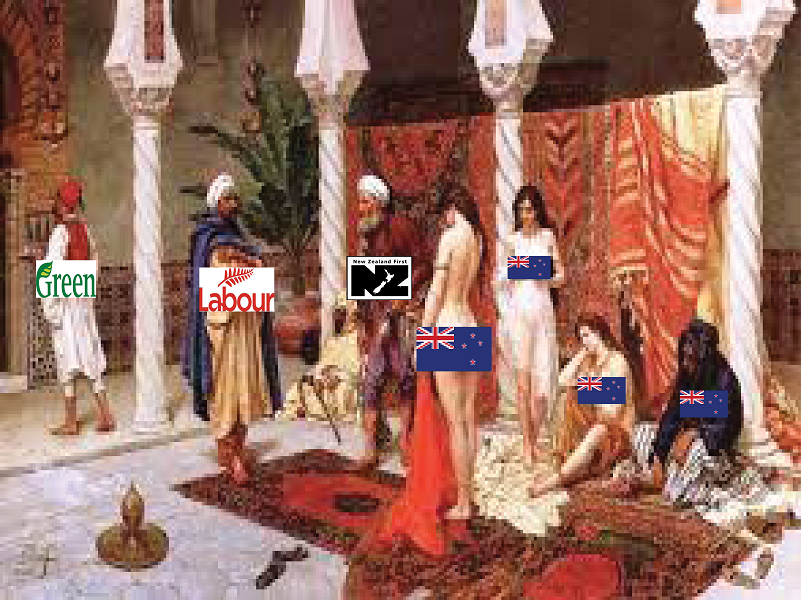
Who Wins From Having The Cannabis Referendum at The Same Time as The 2020 General Election?

The process about the cannabis referendum next year is starting to take more concrete shape. Not only are we starting to get some kind of idea of what question is going to be asked, but we have had confirmation that the referendum will take place at the same time as the 2020 General Election. In this article, Dan McGlashan, author of Understanding New Zealand, explains the likely electoral ramifications.

In the 2004 American Presidential Elections, George W Bush’s adviser Karl Rove had the genius idea of scheduling a number of referendums to take place at the same time. These referendums all related to state constitutional amendments prohibiting same-sex marriage. Because this issue aroused strong conservative sentiment in the electorate in 2004, it brought conservatives to the polls, where they also voted for George W Bush.

The scheduling of the cannabis referendum at the same time as the 2020 General Election ought to have a similar effect. The sort of person who turns out to vote in this referendum will be those who would normally vote in a General Election, plus some otherwise disenfranchised demographics who didn’t previously feel an incentive to vote at all.

It’s worth looking at who those otherwise disenfranchised demographics are, because if they turn out vote in the referendum, and if they cast a vote for a party in the General Election at the same time, there might be enough of them to tip the balance of the election towards one or the other side.

The cannabis referendum will not bring out a meaningful number of extra conservatives, for two major reasons.

The first is that conservatives don’t really care about cannabis. Conservatism isn’t about being stupid, or being backwards. The average conservative is intelligent enough to have observed that many places overseas have now legal cannabis, and these places are no longer spending tax payers money on enforcing prohibition. Apart from morons like Bob McCoskrie, there’s no real appetite for continuing cannabis prohibition on the right.

The second is that conservatives already vote. As I showed in Understanding New Zealand, the correlation between voting for the National Party in 2017 and turnout rate was 0.68, which is very strong. Because there are no firm boundaries between party lines, this is unlikely to get any stronger from a referendum unless the conservatives really cared about it. And they don’t.

Who the cannabis referendum will bring out are the currently disenfranchised who have lost faith in the democratic system because of (among other reasons) its inability to deliver anything close to the public will on the issue of cannabis law. These people will come from the demographics that did not vote in the 2017 General Election.

The most obvious will be the remainder of the Aotearoa Legalise Cannabis Party’s demographic. The ALCP got 8.075 votes in 2017, and the correlation between voting ALCP in 2017 and turnout rate in 2017 was -0.63. This suggests that at least another 10,000 potential ALCP votes were lost to disenfranchisement.

Whether they would vote for the ALCP is anyone’s guess, although most will realise that, if cannabis is legal, there is no reason for the ALCP to exist, and therefore they might as well vote for someone else.

Many have made the assumption that the largest beneficiaries of a cannabis law reform referendum will be the Green Party. After all, it is the Green Party who has pushed for it, and it seems reasonable that this might lead to some otherwise non-voting cannabis users turning up to the polling booth for the referendum and throwing a vote the Greens’ way.

This simple assumption is likely to be mistaken, also for two reasons.

Simply put, Green voters tend to already vote. The correlation between turnout rate in 2017 and voting Green in 2017 was 0.27 – not very strong on the face of it, but strong if one considers that Green voters come from young demographics, and the turnout rate among those demographics is very low. Green voters and supporters are not disenfranchised.

The other reason is that the demographics that truly support cannabis law reform, the ones who are adversely impacted by the current law, are not the same demographics as Green Party voters.

There is a correlation of 0.73 between being New Zealand-born and voting ALCP in 2017. The reason for this because cannabis law reform is of little interest to those who aren’t either white or Maori. Cannabis is an integral part of true Kiwi culture, and many of those who come out to vote will be nationalists. They will not have much interest in supporting Green Party policies, aside from cannabis, which they can now support without voting Green.

This strong correlation relates to the correlation of 0.91 between being Maori and voting ALCP in 2017. This suggests that a very large number of the people who vote in the General Election because of the referendum will be Maori. Maoris seem to have an aversion to the Green Party, and this probably exists because they distrust globalists – the correlation between being Maori and voting Green in 2017 was -0.14.

Policies like increasing the refugee quota will prove devastating for the cohesion of Maori neighbourhoods and communities, and this is widely understood. The sort of person who is most heavily affected by this kind of thing is precisely the disenfranchised voter who is likely to turn out for the cannabis referendum.

The extra voters will undoubtedly be much younger than average, because the correlation between voting ALCP in 2017 and median age was -0.57. This makes them much younger than both Greens and New Zealand First voters, and only a little older than Labour voters. The young are much more passionate about cannabis law reform because they do not have the generational brainwashing that the older generations endured.

Finally, the extra voters are likely to come from the least educated demographics. The correlation between voting ALCP in 2017 and having no formal education qualifications was 0.68, the highest for any party. New Zealand First was not far behind, on 0.67, but the Green Party were at the other end of the scale, at -0.56. These extra voters are not likely to be impressed by the aloof superiority of the Greens.

Paradoxically, then, it’s most likely that the timing of the cannabis referendum to coincide with the 2020 General Election won’t benefit the party that most strongly pushed for it. Gratitude is not an emotion that can be counted on. It’s much more likely that the young, disenfranchised, Kiwi-born and Maori people who come to the polling booth for the referendum will vote Labour and, perhaps unfairly, New Zealand First.

*

Understanding New Zealand, by Dan McGlashan and published by VJM Publishing, is the comprehensive guide to the demographics and voting patterns of the New Zealand people. It is available on TradeMe (for Kiwis) and on Amazon (for international readers).

The Empire vs. The Nations

All throughout history, there has been a neverending struggle between two implacably opposed forces. Much like good and evil themselves, human history has been characterised by an eternal struggle between an Empire that sought to conquer the world and the Nations that sought to resist. This essay elucidates.

Much as the Sun beats down from above, its rays bringing order to the Earth that receives them, so too does the Empire impose itself from above, onto the Nations that form from below.

On the world stage, the Empire is the force that seeks to subjugate all the nations. It is based around the idea of central rule, where a single leader imposes a code of laws on its subjects. The Nations are those who rise up from the soil and who self-organise based on natural similarities between members of a wider kin group.

On one level, the words democracy and republic means the same thing. But they reflect different perceptions. Democracy means rule of the masses, deriving from demos, which means people, and -cracy, which means form of rule. Republic also means rule of the masses. The difference is that democracy is a national concept, whereas republicanism is an imperial one.

The concept of democracy, in a Greek sense, is easy to understand if one if familiar with Aristotle’s Politics. In the same way that the head of a family makes decisions of behalf of their family, who gives them power, so does a chieftain make decisions on behalf of their village, a baron on behalf of his county, and a king on behalf of his nation. This is all good and well, but the bottom-up structure of every nation clashes with the top-down system imposed by the Empire.

This conflict between top-down and bottom-up systems can be seen all throughout history. In a sense, it doesn’t really matter what or where the Empire is, or whether it’s Roman, Mongol, British or American. At the centre of the Empire is the one who wields the Spear of Destiny, for they are the one who directs the course of this Empire, and the course of Empire reflects them and their will.

The two are fated to clash because the morals of the two systems are entirely different.

The moral virtues of the Empire are all about expedience. The Empire cares about control and profit. Its basic inclination is to expand. Enjoyment of life comes from glory and domination. The Empire believes that it has a moral blueprint that can serve for all human life, and therefore they’re doing the Nations (i.e. the barbarians) a favour by subjugating them. The Empire has no problem with the Big Lie.

By contrast, the moral virtues of the Nations are the same moral virtues that allow one to thrive in a state of Nature. The Nations care about the physical and mental health and strength of their peoples. Their basic inclination is to remain the same, and to enjoy life, which comes from interaction with people and places that they love, and from being at peace with God.

Alchemically speaking, it could be said that the Empire was of iron and silver while the Nations were of clay and gold. The Empire values cheap labour, willing mercenaries and the kind of science that builds artillery, battleships and railroads. The Nations value good sex, good food, being healthy and a direct spiritual connection to God and the Great Fractal.

In most cases, the desires of the Empire and the Nations are the same. Both want peace. Both want order. In most cases, they also agree on how to achieve this. Both the Empire and the Nations strive to keep their citizens fed and entertained. Their approach is, however, entirely different.

The Empire believes the state of Nature to be a state of war, and consequently declares it a good thing that the Empire imposes order. The greatest motivation of the Nations is to resist the impositions of Empire and to live a life in accordance with Nature, which they believe to be a state of peace until disturbed by Empire.

Because of this difference in approach, certain political issues cause great tensions.

Open borders seems like a great idea for the Empire, because it allows them to import cheap labour en masse to any territory they desire. If a Caribbean island starts a sugar plantation, the Empire can’t wait to import 10,000 Africans to work it. The Nations, however, hate open borders, because open borders means the destruction of all national, regional and local solidarity and culture.

The question of open borders has divided our societies into imperialists who want to import capital and workers as fast as possible, and who are pro-immigration, and nationalists who want to emphasise bonds of solidarity between kin and neighbours, and who are anti-immigration. Both sides declare the other evil, accusing one of being soulless money-worshippers and the other of being narrow-minded bigots.

The matter of religion and spirituality also causes great conflict. The desire of the Empire is to have a “Holy Land” that all of its children look to, and a single religious template into which all spiritual inquiry must be forced. The Nations, however, tend to resist this centralisation. The spirituality of the Nations tends to revolve around great local men who have achieved gnosis by discovering or developing a particular methodology.

The religion of the Empire is that which inspires them to conquer and to impose their order; the spirituality of the Nations is what which inspires them to resist and to tell the truth in the face of expedient lies. In our iteration of the world, societies are split between imperialists who usually support some form of Abrahamism, and nationalists who are more interested in direct gnosis and local traditions.

In many of the great issues of today, it’s possible to see that, fundamentally, these issues have arisen because of the conflict between the Empire and the Nations. Where it really gets tricky is that this conflict, much as the conflict between good and evil, runs through every human heart.

There are two types of people, therefore: children of the Empire, and children of the Nations. If you are a child of the Empire you probably speak English as a native language. You probably feel most at home in universities and airports. If you are a child of the Nations you might speak anything as a native language. You don’t feel home in places but in one particular place.

New Zealanders, like all children of the Empire, have a unique dilemma. The vast majority of us are raised speaking English, the Empire’s language. As such, we have a very weak national identity. Many New Zealanders are perfectly happy moving to Sydney or London and working there. There is almost no culture shock when one moves from one part of the Empire to another, but the economic opportunities may be many times greater, and so the pull is extremely strong.

Over the past century, however, a nationalist sentiment has slowly risen. This was first inspired as a reaction to the indifference with which Empire administrators treated the well-being of our soldiers in World War One. After Gallipoli and Passchendaele we came to understand that being children of the Empire was to be so much cannon fodder. Self-rule was the only way to have the requisite dignity.

Therefore, many of us suffer from divided loyalties. A line runs through the hearts of many New Zealanders: do they choose the Empire side, and emphasise the great wealth and economic opportunity that comes with being a native English speaker with an Anglosphere passport, or do they choose the Kiwi side, and emphasise loyalty with their neighbours and region?

*

If you enjoyed reading this essay, you can get a compilation of the Best VJMP Essays and Articles of 2018 from Amazon for Kindle or Amazon for CreateSpace (for international readers), or TradeMe (for Kiwis). A compilation of the Best VJMP Essays and Articles of 2017 is also available.

The Government And Mainstream Media Work Together to Control The Narrative

A recent Stuff article reported that mainstream media outlets are colluding to censor reporting of Branton Tarrant’s trial. Stuff, TVNZ, Mediaworks, NZME and RNZ have agreed to not mention Tarrant’s name, nor will they quote from his manifesto. As this article will show, this is far from the good news it’s being portrayed as.

Purportedly, their reason for doing so is to not allow “white supremacist or terrorist ideology to be championed”. The image they are painting of themselves is one of honourable restraint in the service of the public good. In reality, they are simply doing this to further the globalist agenda of their owners.

They have made a special effort not give airtime to Tarrant but, incredibly, they are happy to give plenty of airtime to Hillary Clinton, the Butcher of Libya. Clinton’s orchestration of the 2011 destruction of Libya may have led to 100,000 deaths in the ensuing chaos. The clip of her gloating about the murder of Gaddafi is one of the most grotesque displays of psychopathy ever captured on film.

How can it be that a man who kills fifty is too evil to mention and must be deplatformed to the maximum degree possible, whereas a person who kills a hundred thousand is not only given a regular platform but is spoken about as an innocent victim being oppressed by the Trump Presidency?

The answer is that Clinton’s actions please the international banking and finance interests that own the mainstream media, whereas Tarrant’s (like Trump’s) do not.

The Government of Muammar Gaddafi had completed a project called the Great Man-Made River, which had been achieved without any financing from foreign banking interests. This was of great concern to those interests, who see self-funded infrastructure as a threat to their profits, in much the same way that a slave escaping the plantation is a threat to the plantation owner’s profits.

Clinton’s destruction of Libya, therefore, taught everyone a lesson about building infrastructure without giving a cut to the banking mafia.

Branton Tarrant, on the other hand, raised racial tensions at a time when the globalists are trying to import as much cheap labour as they can in the guise of things like helping refugees. Now that society is based on the idea that consumers are assets and consumption the engine of economic activity, the desire of the ruling classes is to grow their population as high as possible, in the same way that cattle ranchers seek to grow the size of their herd.

The problem with this approach – although this is still denied – is that jamming together incompatible cultures from different parts of the world inevitably leads to some level of conflict. This is especially true when members of some cultures gang together to rape hundreds of local children, as occurred in Rotherham. The Rotherham rape gang was one of several Muslim rape gangs mentioned in Tarrant’s manifesto as an impetus for his action.

More globalism, while it means more profits for the international banking and finance interests that service the housing industry with mortgages, also means more ethnic tension and less social cohesion. Even though this damages the nation, it makes it possible to extract more wealth from the nation, and so there are several forces that work in hand to suppress the tensions that arise from globalism.

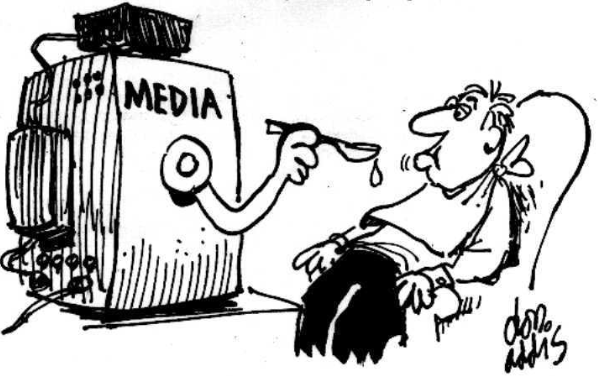
The Government is full of people who are bought and paid for by big business and finance interests, and so is the mainstream media. They are therefore directed to work in concert, and this they do obediently. The mainstream media supports the Government by propagandising for it, and by arguing for its policies, and the Government supports the mainstream media by giving them exclusive access to what politicians have to say.

The mainstream media has changed role. Where it was once a critic of the Government and the people’s voice holding that Government to account, now it’s an entity that works alongside the Government to manage public perceptions. John Key was portrayed as the financial genius that shielded the nation from the Global Financial Crisis, and Jacinda Ardern is portrayed as the angel that is shielding us from white supremacist terrorism – two personality cults deliberately created by propagandists.

The brutal reality is that the mainstream media and the Government are working side-by-side, as proven by the fact that the former was given a top secret list of the 100 or so people being surveilled by the Police in the wake of the Christchurch mosque shootings. This is also why the mainstream media refuses to mention the name of Vinny Eastwood in the hit pieces that target him, despite that Eastwood is responsible for the deaths of no-one.

Anyone who questions the agenda needs to be terrorised into submission and silence. Eastwood questions the narrative, and in doing so weakens its propaganda power, and therefore he’s a bad guy. The article above refers to him as a “conspiracy theorist” – a loaded term chosen to delegitimise. Leaking a list of surveillance targets to the media intensifies the pressure against those people and increases their sense of paranoia.

In accordance with this, the mainstream media will work to negate anything Tarrant might say that goes against the agenda. They will certainly not report on the fact that Tarrant was motivated to action by the various Muslim rape gangs in England and by the Drottninggatan truck attack, because they don’t want to legitimise anti-immigrant sentiment. They will say nothing that goes against the story that Tarrant was driven mad by his own moral failings.

Anti-immigrant sentiment is terrible for business because it both limits the importation of cheap labour, which means that wages go up, and lowers demand for housing stock, which means that rents and mortgages go down. It is because of these crude economic concerns and the marriage of convenience they create, and not because of Jews or any Marxist conspiracy, that the Government and the mainstream media are working so closely together.

The simple truth is that, being owned by the same international finance and banking interests, the New Zealand Government and the mainstream media work together to serve those interests. Individuals in both institutions must do so or they will be fired. This they do by passing laws and broadcasting propaganda intended to serve the globalist agenda of open borders and the destruction of national and regional cultures.

This is why they collude to prevent the spread of terrorist propaganda when it supports a nationalist narrative, but are happy to spread terrorist propaganda when it supports a globalist narrative. Perhaps the most awful example was the weapons of mass destruction lie promoted by Jacinda Ardern’s mentor, the Iraq War criminal Tony Blair, a lie which killed a million people and for which no-one was ever held to account.

*

If you enjoyed reading this essay, you can get a compilation of the Best VJMP Essays and Articles of 2018 from Amazon for Kindle or Amazon for CreateSpace (for international readers), or TradeMe (for Kiwis). A compilation of the Best VJMP Essays and Articles of 2017 is also available.

New Zealand Still Runs on A Spoils System

There are many different kinds of corruption in the world’s various political systems. One of the most blatant is the type known as a spoils system. Although this is commonly believed to be a corrupt form of government that we have now moved past, New Zealand still runs on a spoils system, as this essay will examine.

A spoils system is when the victorious party gets to dish out government posts and gifts from the treasury as if they were the spoils of war. Like a conquering Roman legion, all the treasure and booty are piled in a big heap, and then apportioned out by the leaders to their lackeys.

When the spoils system was blatantly in play, an incoming Government would remove many of the previous Government’s supporters from any influential positions so as to install their own. Back then, there wasn’t a public taxation fund to pillage, so the spoils of victory mostly involved jobs in central Government. The position of regional postmaster was a particular favourite.

Although the New Zealand Government would like to give the impression that it fills its positions based on merit and that this merit has been determined after great thought and dutiful application of philosophy, it also runs on a spoils system.

Transport Minister Julie Anne Genter is married to a man named Peter Nunns, who is a principal economist of a transport consultancy firm named MR Cagney. Since taking power in 2017, Government spending on hiring this particular firm has leapt from around $50,000 a year to $246,000 a year, with this money coming from 18 different contracts.

Incredibly, none of these contracts were even put up for tender. The linked article lists a range of excuses for this supposed coincidence, but all of them are just red herrings. The simple fact is that MR Cagney had money being piped into it from the central government, and that the victorious Green Party increased the flow of money fivefold as soon as they were able.

Shane Jones’s $3,000,000,000 Regional Development Fund is another example of the spoils system at play. Jones found himself in charge of the treasury, helped himself to a few billions, and now he’s doling it out in exchange for future favours. Like a jolly brown Santa, he descends from the skies to bring gifts to those who have behaved correctly.

The reason why it’s purely a regional development fund is because that will best reward New Zealand First voters. According to Dan McGlashan’s Understanding New Zealand, there is a correlation of 0.60 between voting New Zealand First in 2017 and living in a rural electorate.

The only other party to come close to this is the Aotearoa Legalise Cannabis Party, at 0.40. New Zealand First is, therefore, very much the party of the countryside, and this $3 billion fund is little more than payback for the support of the countryside at the last election.

Treating New Zealand as the spoils of war is far from something the Sixth Labour Government invented to keep coalition allies onside. It didn’t matter to John Key and Bill English that over two-thirds of the country explicitly said ‘no’ to asset sales, because the majority of National voters fell into the one third who said ‘yes’. The Labour, New Zealand First and Greens voters that made up the two thirds didn’t support National, therefore didn’t get any of the spoils of the National victory.

In a sense, democracy can’t avoid being a spoils system because if the winning party doesn’t reward its voters, it may not get voted in again. The Labour Party rewards Maoris, not because they are communists, but because Maoris vote for them in great numbers: Dan McGlashan found a correlation of 0.58 between being Maori and voting for the Labour Party in 2017.

If voting for the Labour Party didn’t have some kind of payoff, perhaps people wouldn’t do so again. This is more important the more marginalised your voters are, because these are the most likely to abstain from voting. Therefore, whichever party wins the election is all but obliged to dish out the spoils to those who voted for them, because if they don’t then the other side will, and then the other side will stay in power for longer.

There are several problems with this, however. One of the most obvious is that, once it’s apparent that it’s a spoils system contested by Team Rich and Team Poor, there arises a great incentive to disenfranchise Team Poor.

There will always be more poor people than wealthy ones, and so the obvious move for the wealthy, from a game theory perspective, is to demoralise the poor so that they don’t bother to vote. Widespread use of this strategy can have a devastating effect on social cohesion, as America has demonstrated. It could be argued that it was this phenomenon that led to the rise of Hitler during the Weimar Republic.

The only way to get around this is to increase the solidarity of the nation, and the strength of the bonds between each person. This cannot be achieved until the rotten, half-collapsed structures of the previous age are finally razed to the ground. From the ashes, a true spirituality can arise, and this will inspire us to make the right moves elsewhere.

*

If you enjoyed reading this essay, you can get a compilation of the Best VJMP Essays and Articles of 2018 from Amazon for Kindle or Amazon for CreateSpace (for international readers), or TradeMe (for Kiwis). A compilation of the Best VJMP Essays and Articles of 2017 is also available.