
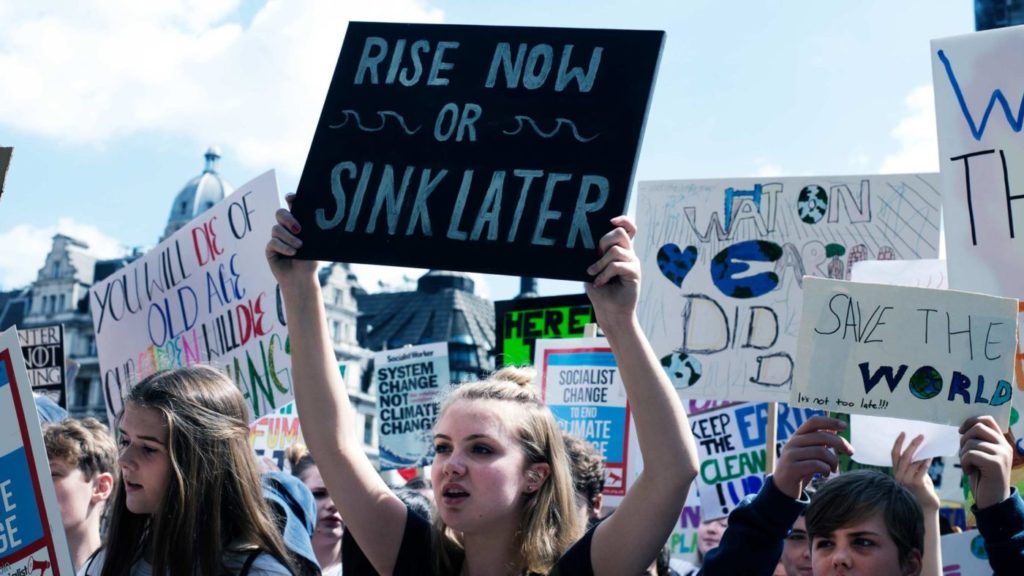
Why I Don’t Believe In Climate Change Alarmism

I don’t have a qualification in Climatology, and am therefore not an expert on the subject. I do, however, have a couple of Psychology degrees, and so have a claim to expertise there. When it comes to understanding issues like climate change, I can’t use Climatology knowledge; I have to use Psychology knowledge. This is how I do it.

Like anyone else who understands general science, I can try to understand the basics of climate change. I can go to Google Scholar, type in “climate change predictions” and then limit the search to papers from 2019 onwards, as I did here. This would give me a general overview of the current state of the science. There’s one minor problem – such a search query returns over 20,000 hits.

Realistically, becoming an expert on climate change would require reading at least a hundred of these papers, as well as at least a hundred published before 2019. This would total several years of study – a time investment that I’m neither able nor willing to make. Therefore, like any other layman, I’m reduced to making a judgment based on whether I believe the people taking about climate change are credible.

If the people talking about it seem trustworthy, then I will be inclined to believe what they say. If they seem untrustworthy, then I will be disinclined to believe what they say. This is how it works with every other political issue, from cannabis law reform to immigration to abortion to euthanasia to taxes. Once the subject of discussion moves out of Psychology, I’m operating on trust and not my own expertise.

As it turns out, the people pushing climate change strike me as grossly untrustworthy, for three major reasons: they seem insincere, irrational and dishonest.

If the politicians pushing climate change alarmism were sincere, they would not also be buying beachfront properties. Yet Barack Obama, one of the world’s foremost harbingers of climate doom, recently bought 29 acres of it. Why would Obama, privy to the world’s most advanced scientific research when American President, buy beachfront property, unless he expects the sea level to remain the same?

The market shows that seaside property is still highly valued. Waterfront property in Sydney, extremely vulnerable to rising oceans, still sells for eight-figure sums. How could a property doomed to be wiped out by rising sea levels sell for over ten million dollars? The only answer is that no-one cares about rising sea levels. The claims of those like Obama cannot be sincere.

On top of this, the people pushing climate alarmism seem irrational. On the one hand, they claim that CO2 emissions are making a major contribution to global warming, such that every one of us has the moral imperative to minimise our CO2 emissions insofar as we are able. But then these same people turn around and argue for an increase in the refugee quota, in some cases tripling it or even more.

New Zealanders consume resources at many times the rate of the average Third World resident. Where is the sense in taking 5,000 people every year (as the Greens propose) from low-emissions parts of the world, and flying them at great expense to a high-emissions part of the world, where they and their numerous descendants will consume future resources at many times the rate they would have done otherwise?

The only logical explanation for the Greens’ refugee policy is that the entire concept of CO2 emissions being bad is horseshit. Either the Greens are lying about the imperative to minimise CO2 emissions, or they don’t understand the relevant science (a closer look shows that not a single one of New Zealand’s current Green MPs has a tertiary science qualification – the closest is James Shaw with an M.Sc from a business school).

If the Greens would say that CO2 emissions were bad and, therefore, we will close the borders to immigration from low-emission areas, then the threat of climate change would appear to make rational sense. But they do the exact opposite of that. Therefore, I can conclude that those promoting climate change are irrational, and so the truth value of their pronouncements can be discounted.

The real showstopper for me though, as a psychologist, is that one of the people fronting the climate charge alarmist movement in New Zealand is a convicted fraudster. This is no less a dignitary than the Maori Climate Commissioner herself, Donna Awatere Huata.

In 2005, Huata was found guilty of fraud and of attempting to pervert the course of justice. The money that she defrauded from a foundation set up to help underprivileged kids learn to read was used on a stomach stapling operation. What sort of malignant narcissist would steal money from children to fund cosmetic surgery for herself? A Climate Commissioner, that’s who.

In the same way that I wouldn’t buy a used car off convicted ponzi schemer David Ross, I wouldn’t buy one off Donna Awatere Huata either. So why on Earth would I listen to her pronouncements about climate change? The smart thing to do would be to believe the exact opposite of whatever Huata says.

In summary, I don’t believe in climate change alarmism because the people pushing it are crooked, insane and unqualified to make scientific pronouncements. These people seem every bit the shameless grifters that have pushed every other kind of alarmism to make a quick buck out of the ensuing hysteria.

I’m willing to be corrected, but do note that you will have to have a qualification in a relevant science from a proper university, and you will have to cite peer-reviewed journal articles in relevant disciplines, for me to take you seriously on this matter.

*

If you enjoyed reading this essay, you can get a compilation of the Best VJMP Essays and Articles of 2019 from Amazon for Kindle or Amazon for CreateSpace (for international readers), or TradeMe (for Kiwis). A compilation of the Best VJMP Essays and Articles of 2018 and the Best VJMP Essays and Articles of 2017 are also available.

*

If you would like to support our work in other ways, please consider subscribing to our SubscribeStar fund. Even better, buy any one of our books!
Understanding The “Justice” System

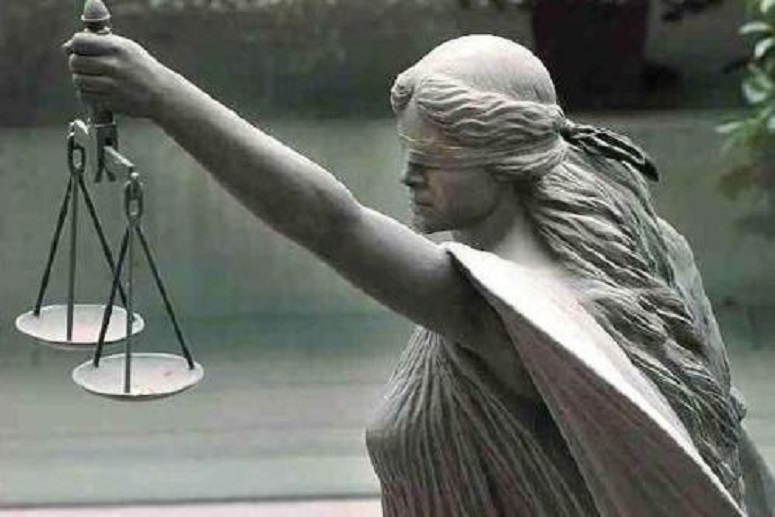
Judicial verdicts frequently provoke confusion among observers. In some cases it’s extremely difficult to understand why judgments are handed down, as punishment seems so random and arbitrary. As this essay will explain, understanding our “Justice” System is literally as simple as ABC.

In this context, ‘ABC’ refers to an algebraic formula that could also be expressed a*b*c = x, where x is the severity of the punishment.

a is the degree of inconvenience caused by the offence. The greater the inconvenience, the greater the punishment.

Murder causes a great deal of inconvenience, not least to the person killed. The family and friends of murder victims are also greatly impacted. It is for this reason that murder is also referred to as “the ultimate crime”. Other crimes like manslaughter, rape and kidnapping also cause great inconvenience, and these also carry heavy punishment.

Lesser crimes are things like theft and assault. Neither of these crimes kill anyone, and neither do they regularly cause long-standing psychological damage. Consequently, such crimes carry light punishments. Note that a equals the amount of inconvenience caused, not the amount of suffering caused, because an offence does not have to cause suffering in order to attract judicial punishment (growing medicinal cannabis is one such example).

All this seems very straightforward, and it would be, if the formula didn’t have b and c. The sad reality is that the amount of suffering caused by an offender is not the only factor that the “Justice” System takes into account. Far from it.

b is the social status of the person impacted by the offence. The higher the social status, the greater the punishment.

The highest social status is that of the Crown (or the Government). Therefore, offences that impact the Crown are punished the most severely. This is why offences that cause a minimum of suffering, but which inconvenience the Government, are punished heavily. Julian Assange is the foremost example of this today, as are the aforementioned cannabis users.

If the person impacted by the offence is of a low social status, the punishment will be low. It might be difficult to secure a conviction, because a complainant with low social status might not be considered a trustworthy witness in court. The case might not even go that far. It’s common for the Police to refuse to hear complaints from working-class people, giving them an excuse such as that they don’t have enough evidence to pursue a complaint.

Despite the bleating of social justice warriors, social status is a far more important factor than race. A case in New Zealand last year saw a man sentenced to a mere eight months’ home detention for killing a white man – a verdict easily understood once it’s realised that the victim was homeless. It can be guaranteed that if a Member of Parliament had been beaten to death in similar circumstances, the punishment would have been life imprisonment.

c is the social status of the person who committed the offence. The higher the social status, the lower the punishment.

If the person committing the offence is of a high enough social status, they simply won’t be charged for it. Jimmy Savile is the best example of this. If you can get to a high enough social status, you can rape hundreds of children and the “Justice” System simply won’t charge you. Likewise, Mike Sabin in New Zealand got off scot-free with what he did.

As David Icke has extensively written, the Western Establishment is full of pedophiles – and their high social status prevents the Police from charging or investigating them. Lesser members of the Establishment might not be able to avoid being charged or convicted, but they will nevertheless get a much lighter punishment than a working-class person would for the same offence.

Further examples are the high-profile sportsmen who are given name suppression and who avoid criminal convictions because of “promising rugby careers” or similar. The New Zealand Herald even managed to compile a playing XV of rugby players who had escaped conviction after committing a criminal offence. One player even did so despite breaking another man’s jaw.

A person of a low social status, by contrast, will get smashed for even the most minor infringement. If you’re working-class, you can expect to get a year in prison for stealing a few dozen trout. Middle-class people, like Phil Goff’s daughter, can get away with being found in possession of ecstasy, while working-class people get nailed to the wall for sharing videos, provided it inconveniences the Government enough.

The basic formula, then, for determining the severity of a judicial punishment is as follows: take the total inconvenience caused by the offence, multiply it by the social status of the person inconvenienced, and multiply this by the inverse of the social status of the person committing the offence.

The maximum theoretical punishment would come, according to this formula, from a common working-class man killing the Queen, President or Prime Minister of their political system. Whether legal or not, such an act is almost bound to result in the death penalty, and will at the least incur life imprisonment.

The minimum theoretical punishment would come from an act taken by the Government to inconvenience a common citizen. It is all but certain that no member of the Establishment will ever have to pay for the crime of conducting a War on Drugs against their own people, even though the people did not consent to it. Likewise, an immigration official allowing a murderer into the country who then murders someone will not be punished.

What best explains all of this is the fact that the ruling class ultimately invented the Justice System to protect their position. Therefore, the point of it is to smash down challengers to the ruling class and to their interests. That’s why the Justice System hardly cares at all when the Government commits crimes against its own people, or when members of the working class harm each other.

*

If you enjoyed reading this essay, you can get a compilation of the Best VJMP Essays and Articles of 2019 from Amazon for Kindle or Amazon for CreateSpace (for international readers), or TradeMe (for Kiwis). A compilation of the Best VJMP Essays and Articles of 2018 and the Best VJMP Essays and Articles of 2017 are also available.

*

If you would like to support our work in other ways, please consider subscribing to our SubscribeStar fund. Even better, buy any one of our books!
The Fall Of Joe Biden Shows That Opposing Cannabis Is No Longer Tenable

Former American Vice President Joe Biden began as the favourite in the ongoing campaign to win the Democratic nomination for this year’s Presidential election. As the contest has progressed, however, he has lost more and more ground, and now Bernie Sanders has supplanted him as the frontrunner. As this essay will show, this fall can best be explained by one massive strategic error on Biden’s part.

It’s common for old people to fail to understand that the younger generations consider cannabis law reform a major moral issue. For the older generation, the anti-cannabis brainwashing was so ruthlessly intense that prohibition was taken for granted. People were so naive back then that anything said by an authority figure was taken as the Word of God.

Joe Biden has certainly failed to understand this. Referring to the contest for the Democratic nomination this year, Rolling Stone described him as “the worst candidate in the race” for cannabis users. He has consistently refused to concede any argument for cannabis law reform, stating repeatedly that he is against legalising cannabis at the federal level.

Even worse, Biden has warmly embraced the War on Drugs. Some could even say he was one of the architects of it. Biden has willingly promoted lies about cannabis, such as that it is a gateway drug, and that more evidence is needed before we can determine whether it should be legal. While Vice President to Barack Obama, he was part of an Administration that happily continued to force prohibition on the American people.

Part of this can be explained by the fact that Biden is old – so old that he’s not even a Baby Boomer. Back in the day, you almost had to expect that your left-wing candidate was going to be lukewarm about cannabis, because the still-brainwashed masses were too numerous, and politicians were forced to placate them. Biden has failed to realise that things have changed.

As is the case in New Zealand, voters for the left-sympathetic Democratic Party tend to be younger than voters with right-wing sympathies. As is also the case in New Zealand, young people are much more pro-cannabis (Dan McGlashan’s Understanding New Zealand has all the details on such matters). This means that Biden has completely missed a trick. Very few Democrats oppose cannabis law reform today.

This refusal to acknowledge the reality of young people’s lives is why the Biden campaign is now failing. He was paying only $3.30 to win the Democratic nomination on BetFair a few months ago – by today that has blown out to $18.00. In other words, the market considers him to have a less than 6% chance of winning the nomination today, compared to a 20% chance only recently.

By refusing to acknowledge the need for cannabis law reform, Biden has shown himself to not be up to the task of understanding the reality facing his constituents. This has left him extremely vulnerable to being out-flanked on the cannabis law reform front by candidates such as Bernie Sanders.

Sanders, by contrast, has made a point of ending the War on Drugs. His official campaign website states his desire to “end the War on Drugs by legalizing marijuana and expunging past convictions.” This clear and principled stand contrasts sharply with Biden’s timid dithering. It’s a message that has resonated with many of the young people who are tempted to not vote on account of that they feel all the candidates are shit.

This had led to Sanders’s support coming in – he is now paying a mere $1.91 to win the Democratic nomination on BetFair. Despite spending most of his political career written off as a kook, he is now odds-on to win the Democratic nomination, and (according to some), if he wins that he will be odds-on to beat Donald Trump in November. We could estimate that he already has a 30% chance of becoming the President at this stage.

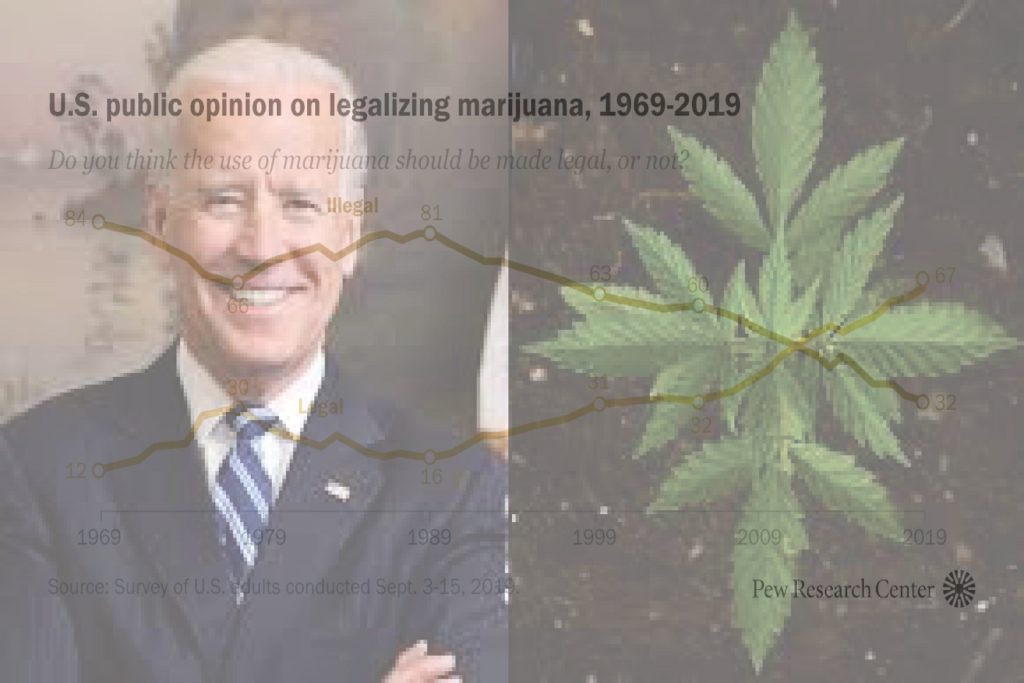
New Zealand is at least a decade behind America when it comes to understanding the reality about cannabis. As shown in the graph at the top of this page, America was about evenly split on cannabis about a decade ago. Since then, the truth has won out, and the majority of people now understand that prohibition causes more suffering than it alleviates.

The pitiful reality is that a great number of people have gone along with cannabis prohibition simply because they had been given the impression that it was the right thing to do. The fact that the rest of their generation followed sheep-like into supporting the destruction of several of their number just seemed natural. It’s not until now that enough public attention has been devoted to the cannabis issue to make people question their assumptions about it.

It has been discovered in New Zealand that, of those undecided about cannabis law reform, the majority of them break in favour of reform once they are presented with accurate facts. Those who don’t question the brainwashing and stand against cannabis have been the majority for 80 years, but the more educated people become, the less likely they are to do so.

All politicians end up falling out of favour if they support a policy long after it becomes unfashionable. There are now very few mainstream Western politicians who openly state support for the criminalisation of homosexuality. The fall of Joe Biden shows that the time is coming when it will no longer be possible to publicly express a belief in imprisoning cannabis users.

*

Vince McLeod is the author of The Case For Cannabis Law Reform, the comprehensive collection of arguments for ending cannabis prohibition.

*

If you would like to support our work in other ways, please consider subscribing to our SubscribeStar fund. Even better, buy any one of our books!

How To Get Rid Of The 5% Threshold Without Empowering Extremists

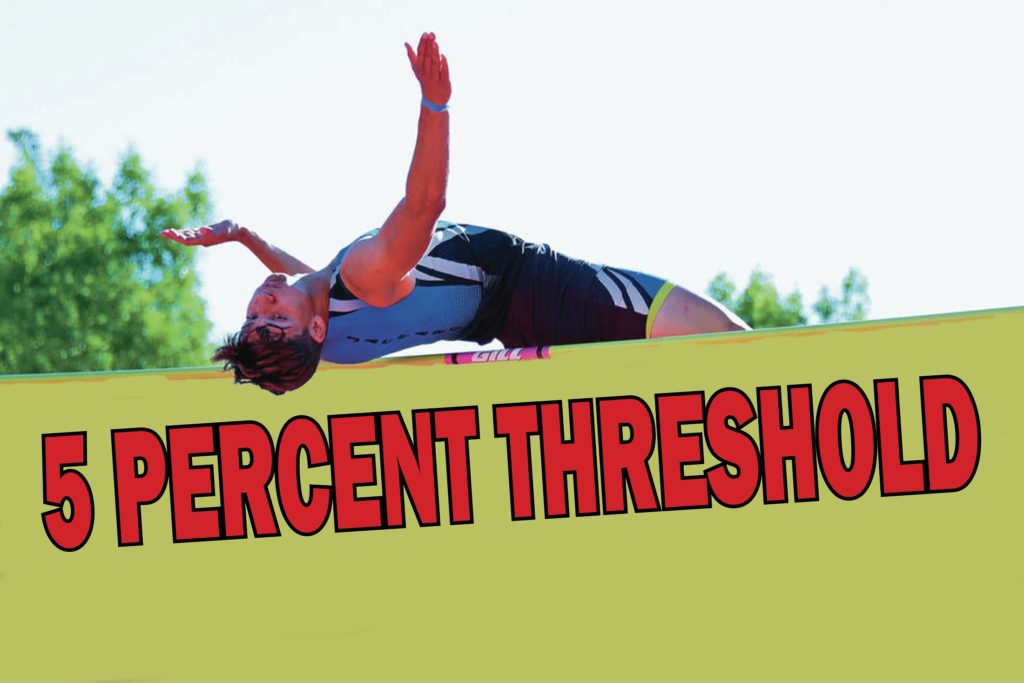
New Zealand runs elections under a Mixed Member Proportional system, meaning that parties contesting the election win a number of seats in Parliament proportional to how many votes they receive. This system has advantages and disadvantages, one of the latter being that it facilitates extremists coming to Parliament. Various methods have been adopted to counter this, such as a 5% threshold – this essay suggests a more elegant solution.

As John F Kennedy warned us, “Those who make peaceful revolution impossible make violent revolution inevitable.” Although it’s never admitted, the purpose of the democratic system is to pre-empt the violence that inevitably follows when people are not given a say in their own destiny. The problem with totalitarianism is that people resent it, and if they resent it enough they end up killing their rulers.

Democracy is a charade in which the ruling class pretends to take the opinion of the working classes seriously, in exchange for a dampening of revolutionary sentiments among those working classes. If the ruling class can successfully placate the workers, then they can continue to do as they please. If they cannot, then resentment will arise, and this will eventually lead to radical extremism.

Kennedy might have warned us that a 5% threshold to get into the New Zealand Parliament creates a number of problems.

It is set so high that no new party has ever crossed it. In 24 years of MMP elections, the only parties to achieve representation apart from National and Labour were parties that broke away from them (New Zealand First and United Future from National, ACT from Labour, the Greens from the Alliance that itself broke from Labour).

The ruling class considers this a win, but the people consider it a great loss. It has meant that no opinion, other than the mainstream ones, can find expression in Parliament. Only those opinions that have been so thoroughly vetted and curated by the Establishment that they pose no threat are allowed into the House of Representatives. This does little to soothe the people’s feelings of frustration.

It could be argued that having a 5% threshold leads directly to outcomes like the Christchurch mosque shootings. The mass immigration of the last half a century has caused immense resentment among the many who have lost out from it, but their voices are silenced by a system that profits heavily from the cheap labour. Sentiments like these are liable to boil over into xenophobic violence on occasion – a pattern that has been seen all around the world.

There is a possible solution to these tensions – one that has never previously been tried. This is to firstly scrap the 5% threshold, and secondly for each voter to have three votes instead of one. Two of the votes can be cast for any candidate or party, much like the current system, but one vote can only be cast against a candidate or party. This anti-vote cancels out one of someone else’s votes for that candidate or party.

Having two positive votes, one negative vote and no threshold means that (in theory) small parties who do not engender hatred can still achieve representation in Parliament, while the extremists who do engender hatred get eliminated by the negative votes.

Parties like the Aotearoa Legalise Cannabis Party, Social Credit, or The Opportunities Party, who have unfashionable ideas but who are not malevolent or extremist, ought to be able to take some seats in Parliament. The ideas that these parties represent are long overdue for serious consideration, but the 5% threshold has prevented them from ever being represented.

Other parties like the New Conservatives, who combine popular ideas like ending mass immigration with horrendous human rights abuses like increasing penalties for cannabis use, are the reason for the 5% threshold in the first place. It was precisely to keep aggressive, narcissistic, Bible-thumping morons like them away from power that it was invented.

In practice, we could expect that parties like the New Conservatives would attract a high number of negative votes. If the total number of negative votes for a given party was greater than the total number of positive votes, they would receive no seats in Parliament. Therefore, the ability to cast a negative vote would mean that human rights abusers could be kept out of Parliament, but not at the expense of other small parties who have ideas the country needs to hear.

Then again, Germany has a 5% threshold (our version of MMP was modelled on theirs) and they have six parties currently polling well over that. So it could be argued that the New Zealand political class severely lacks imagination, which is the reason why no party other than Labour, National, Greens or New Zealand First has ever presented a compelling enough case to get over the threshold.

The positive/negative vote model would allow our electoral system to not only measure and weigh the sympathy of the public for the various political platforms, but also to measure and weigh their antipathy for those platforms. The biggest advantage with this suggestion is that platforms that inspired disgust, hatred and contempt would now find themselves judged for that, instead of getting away with it.

*

If you enjoyed reading this essay, you can get a compilation of the Best VJMP Essays and Articles of 2019 from Amazon for Kindle or Amazon for CreateSpace (for international readers), or TradeMe (for Kiwis). A compilation of the Best VJMP Essays and Articles of 2018 and the Best VJMP Essays and Articles of 2017 are also available.

*

If you would like to support our work in other ways, please consider subscribing to our SubscribeStar fund. Even better, buy any one of our books!