
All The Rights We’ve Lost Thanks To Immigration

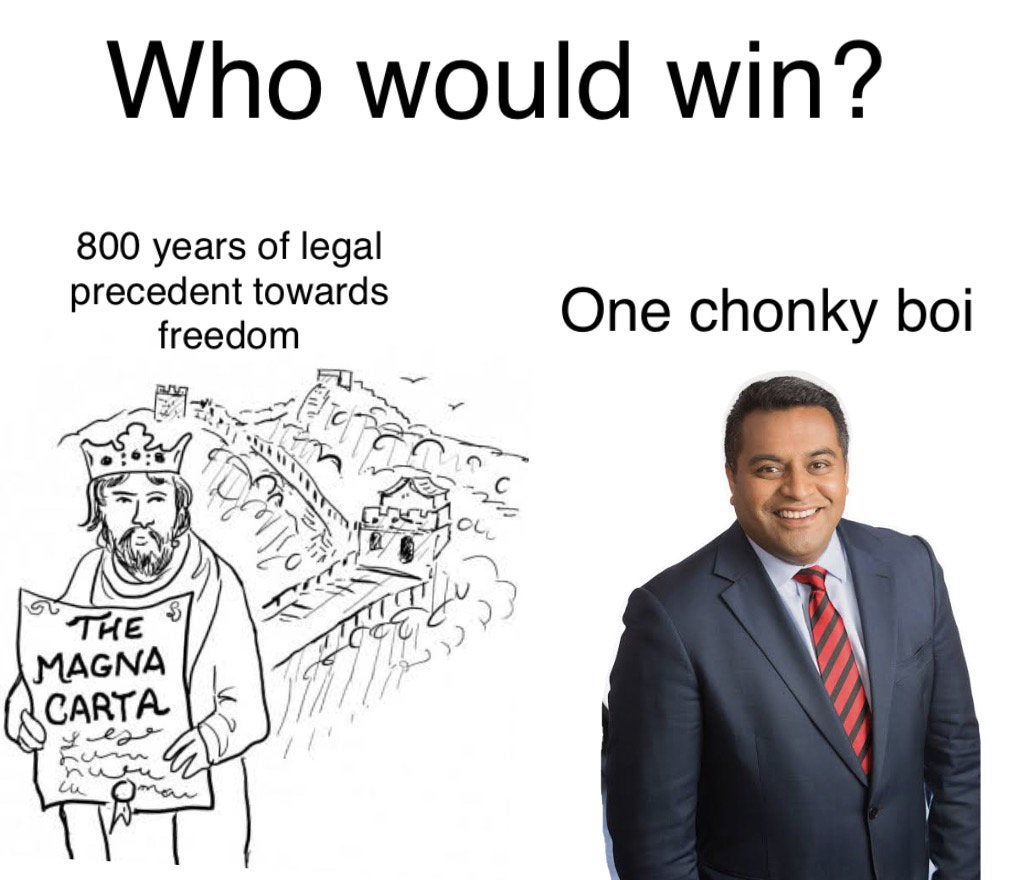
Kiwis were disappointed last month to hear that the Sixth Labour Government is taking away our rights to free speech. Any speech that the Government hates will now be “hate speech” and subject to criminal sanction. As is the case in Scotland, an immigrant Justice Minister, from a culture that doesn’t value free speech, has stripped those rights away from a population that has cherished them for centuries. But, as this essay will show, free speech is just one of the many rights we’ve lost thanks to mass immigration.

Free speech is the fundamental value of Western civilisation. Without it, society cannot self-correct. So without free speech, small problems snowball into catastrophes. Legal recognition of the importance of free speech is one of the main reasons why Western countries are so stable in comparison to others.

But the value of freedom is generally only understood by Westerners.

The reason why men like Kris Faafoi and Scotland’s Humza Yousaf can so glibly annihilate one of the most important aspects of Western culture is that they weren’t raised to respect it. Their cultures do not have a history of struggling to assert freedom at all, and so they were not raised to value free speech. It was inevitable that making these men Justice Ministers would lead to a loss of those freedoms.

Import the Third World, become the Third World – and the Third World does not have a culture of free speech. If the Justice Minister of New Zealand had been a proper Kiwi, raised in Kiwi culture to appreciate the Greco-Roman-Anglo heritage that made New Zealand worth living in, we would still have our rights to free speech today. But that’s only the beginning.

Our right to use cannabis was also lost because of immigration.

In the 2020 cannabis referendum, the No side of the vote got 1,474,635 votes, and the Yes side got 1,406,973. This equals a difference of 67,662 votes. This narrow margin was enough for the Sixth Labour Government to declare that Kiwis wanted to keep locking themselves up for growing medicinal plants. But that margin would have been in favour of Yes if it wasn’t for immigrant voters.

An article in the South China Morning Post referenced a survey that found 80% of ethnic Chinese voters intended to vote No in the cannabis referendum. Some simple maths is enough to show that these Chinese voters alone tipped the overall outcome from a Yes to a No.

There are some 231,000 ethnic Chinese people in New Zealand. If we assume that 80% of them are eligible to vote, and that 80% of those actually did vote, that suggests some 147,840 ethnic Chinese voters voted in the cannabis referendum. If 80% of those voted No, that means 118,272 ethnic Chinese voted No and 29,568 ethnic Chinese voted Yes, for a balance of 88,704 more No voters than Yes voters.

The maths tells us that non-Chinese Kiwis voted Yes in the cannabis referendum, by a margin of some 21,000 votes. But these votes were cancelled out, and more, by the heavy Chinese opposition to cognitive liberty. And the Chinese weren’t the only immigrant group to vote to imprison cannabis-using Kiwis.

Pacific Islanders also voted against cannabis freedom, mostly out of religious sentiments.

The three electorates with the most Pacific Islanders in 2020 were Mangere at 59%, Panmure-Otahuhu at 46% and Manurewa at 39%. These were also among the electorates with the lowest Yes vote in the cannabis referendum: Mangere 38.7%, Panmure-Otahuhu 41% and Manurewa 39.5%. Many of the Pacific Islanders who voted against cannabis freedom were mindlessly following the orders of their pastors.

Religion also inspired Muslim immigrants to vote our rights away. The New Zealand Muslim Association came out in favour of Kiwis getting locked in cages for using cannabis, and the Federation of Islamic Associations of NZ proudly allowed their logo to be displayed on the Say Nope to Dope supporters page. For them, tolerance and respect is an entirely one-way street: Kiwis are obliged to tolerate and respect Islam, but Islam is in no way obliged to tolerate and respect cannabis-using Kiwis.

If the cannabis referendum had been left up to white people and Maoris, it would have passed with around 60% in favour. But the mass importation of cheap labour from backwards cultures ultimately tilted the balance in favour of a No vote.

Our rights to use other spiritual sacraments are likewise gone. As a recent article in the Australian and New Zealand Journal of Psychiatry noted, there is now ample evidence that sacraments such as psilocybin have immense therapeutic potential, “However, Australia and New Zealand are currently failing to acknowledge such evidence and, as a result, are falling behind in this crucial time of biomedical research and innovation.”

As noted in the article, the refusal to acknowledge the evidence for psychedelic therapy is political. Sadly, because conservative Third World immigrants now make up a significant proportion of our voters, we can kiss all research into psychedelic therapy goodbye. The Islanders don’t want it because of Jesus, the Muslims don’t want it because of Allah and the Asians don’t want it because drugs are bad.

Immigration also cost us our rights to free assembly, as was observed when Lauren Southern and Stefan Molyneux tried speaking about the consequences of mass immigration in Auckland.

Even though the NZ Bill of Rights Act explicitly states that Kiwis have both the rights to receive information and to free assembly, we were banned from assembling to listen to the Canadian duo at Auckland Council venues because Phil Goff, the Auckland mayor, was afraid of losing support from Muslim voters. Thanks to the mass immigration of conservative cheap labour, we’re no longer free to gather to discuss certain topics in public.

Most of our firearms rights were stripped from us after an Australian immigrant shot up a mosque full of Muslim immigrants on March 15, 2019. Even though no Kiwis were involved until Brenton Tarrant was arrested, the incident was used as an excuse to confiscate semi-automatic rifles all across the country.

Had we not opened the borders to the same cult of hate responsible for the Rotherham rape gangs and for the Drottninggatan truck attack, and had we not sat impotently while the Al Noor Mosque produced multiple terrorists, we would never had suffered such an atrocity on our shores. But, as many other Western nations had already learned, mass immigration from violent, supremacist cultures inevitably leads to violence.

The worst loss of freedom from mass immigration, however, was the loss of our right to own a home and raise a family.

In 1992, the average New Zealand house cost around $105,000, and the average wage was close to $15, which meant that a person had to save about 7,000 hours of labour at the average wage to own the average house. After three decades of mass immigration, the average house now costs $820,000, while the average wage has only risen to $35. This means a person now has to save over 23,000 hours of labour at the average wage to own the average house.

Mass immigration means more people competing to bid up the price of housing, as well as more people competing to bid down the price of wages. Anyone with a high school economics education could have told you that mass immigration would lead to higher house prices and lower wages. The combined effect of these two phenomena is that it’s now impossible for the average Kiwi worker to buy a house and to support a family with their own wage.

The loss of the freedom to buy a home and to support a family with one’s wage is the worst loss of all, because it effectively makes us the slaves of the bankers who hold our mortgages, and of the employers whose $20/hour we need to pay those mortgages off. Yet this loss is the inevitable consequence of mass immigration, the last thirty years of which has reduced us to this wretched condition.

We were told that mass immigration wouldn’t cause the loss of any freedoms because the immigrants would become like us – appreciative of the freedoms of Western culture and willing to defend them. However, we were lied to. The immigrants we let in never had any intention of respecting our culture and our values. In reality, we lost everything. We lost all our rights, all our freedoms, we lost our entire culture.

*

If you enjoyed reading this essay/article, you can get a compilation of the Best VJMP Essays and Articles of 2020 from Amazon for Kindle or Amazon for CreateSpace (for international readers), or TradeMe (for Kiwis). A compilation of the Best VJMP Essays and Articles of 2019, the Best VJMP Essays and Articles of 2018 and the Best VJMP Essays and Articles of 2017 are also available.

*

If you would like to support our work in other ways, please consider subscribing to our SubscribeStar fund. Even better, buy any one of our books!
Generation Ruthanasia

Many Kiwis were shocked by a video circulating this week depicting a mass brawl at Te Aro Park in Wellington. The scene made it appear like public violence is now just part of everyday life in New Zealand. The nihilism reflects the rotten state of our economy – a rot that began with the Fourth Labour Government’s introduction of neoliberalism.

Neoliberalism came to New Zealand under the friendly name ‘Rogernomics‘. The Fourth Labour Government, following the trends established by Ronald Reagan and Margaret Thatcher overseas, adopted a number of neoliberal measures that would supposedly increase New Zealand’s economic performance. To some extent, they did. The real suffering didn’t begin until after Labour’s 1990 election defeat.

The Finance Minister of the Fourth National Government, Ruth Richardson, took the scythe to New Zealand’s poor with the 1991 Budget. The combination of the $14/week cut to the unemployment benefit, the $27/week cut to the sickness benefit, the $25 to $27/week cut to the families benefit and the abolition of universal payments for family benefits was a kick in the guts to those already at the bottom of society.

The act was dubbed ‘Ruthanasia’. In the same way that a useless old person is put to death with euthanasia, the useless lower classes were put to death with Ruthanasia. The narrative from the media was that beneficiaries were lazy, thieving scum anyway, and cutting their benefits should motivate them to get off their arses and into work. If not, they could die, it would be just as good.

The measures were particularly brutal to solo mothers, who found themselves $40/week or more worse off. The idea was that solo mothers were society’s filth, and in breeding outside of a stable marriage they were responsible for all of society’s ills, and needed to be punished for it. Their children were surplus to economic requirements, and therefore should be made to understand that they were not needed or wanted.

To a major extent, this strategy succeeded. Today, New Zealand’s youth suicide rates are the second-highest in the developed world. Every year, 14.9 out of every 100,000 Kiwi adolescents decide permanently that their life isn’t worth living. The vast majority of those are from the poorer classes. This is a direct consequence of the fact that the abuse and neglect of New Zealand’s poor was normalised by Ruthanasia.

However, the children that Ruth Richardson threw to the wolves in 1991 mostly survived.

Some are now the ironhearted gang leaders who hold the loyalties of other violent young men. Winning the favour of such hard men may have been the reason for the fight in the video link in the first paragraph. Such mindless aggression might sound barbaric, but that’s the reality for young men in Clown World.

The children born into beneficiary families between 1980 and 1995 are now Generation Ruthanasia. Many of these children killed themselves as adolescents. Many more turned their hatred outwards and mutilated others. Too many of them are missing some of the part of the mind that allows humans to feel empathy with other living beings.

This absence of empathy is an inevitable consequence of the way they themselves were treated – as before, so after. Yet therein lies a great danger for New Zealand society over the next couple of decades.

Generation Ruthanasia might be outnumbered by people who were raised well, but they are still numerous enough to have a significant influence upon the nature of our society and upon the minds and the values of the following generations. It is their nihilistic cynicism that one sees expressed in the gang brawls at Te Aro Park this week, and in other places.

The now-adult men of Generation Ruthanasia don’t know how to love, neither themselves nor others. The loving parts of the mind and heart have long since been closed off for only bringing sorrow. But these men are already old enough so that the next generation looks up to them. As such, there’s a risk that their absence of empathy becomes normalised.

The natural, logical realisation that went through the minds of Generation Ruthanasia as children is that human life is without value. If children are worth so little that it’s fair to withhold money from their parents so that those children can’t eat, then what does have value? Certainly not this society. This logic is why the savagery of the gang lifestyle is no longer enough to scare everyone away.

This way of thinking is not dissimilar from that of the generations raised in places like inner-city America and Brazil – and that’s what New Zealand is now on track to become like, if the process of social decay is not arrested. But solving the problems posed by this cohort of severely mentally and spiritually damaged people will take decades.

The least part of any effective solution will be a massive financial investment – one large enough to reset the mental health situation. A universal basic income, to give people time to mentally recover, might be necessary here. Any government refusing to consider such measures would do well to bear in mind Machiavelli’s maxim that “If an injury has to be done to a man it should be so severe that his vengeance need not be feared.”

*

If you enjoyed reading this essay/article, you can get a compilation of the Best VJMP Essays and Articles of 2020 from Amazon for Kindle or Amazon for CreateSpace (for international readers), or TradeMe (for Kiwis). A compilation of the Best VJMP Essays and Articles of 2019, the Best VJMP Essays and Articles of 2018 and the Best VJMP Essays and Articles of 2017 are also available.

*

If you would like to support our work in other ways, please consider subscribing to our SubscribeStar fund. Even better, buy any one of our books!

Reflections On 30 Years As A Black Caps Supporter

I’ve been supporting the Black Caps since they were known as the Young Guns. My first memory was being told to watch an ODI against Australia in Adelaide, as the tour was expected to be the swansong of our greatest ever cricketer, Sir Richard Hadlee. But watching cricket didn’t interest me until I learned to play it at school, and understood what it was about.

The first match I ever really followed was by fluke: the ODI against Australia in Hobart, 1990. I happened to be alone in a room with a television and that was the most interesting show on the three channels. The drama of the match captivated me. I realised that Chris Pringle was like me, only greater. Like many who saw that match, I started wearing zinc sunblock.

The first series I really enjoyed was the England tour to here in 1990/91. The second ODI taught me to enjoy cricket from a moral angle. England were chasing, and seven wickets down but looking good for a win, when their No. 9 – Martin Bicknell – was run out by a metre but not given. In the age before television umpires, such outrages were common. That New Zealand went on to win seemed righteous, as if the cricketing gods understood justice.

The 1992 World Cup got me hooked. The opening match, against the defending champion Australian team, was fascinating. The hurry to beat Zimbabwe before rain stopped play, Mark Greatbatch slamming Curtly Ambrose over cover for six and the easy win over nemesis England were also highlights. It seemed then that our time would soon come, and we would soon be world champions somehow.

It was tough to be a Black Caps supporter in the years after that. The Centennial Season of 1995 was launched with much fanfare, but the results on the field were brutal. Getting bowled out for 146 in a home ODI against the West Indies, then losing by nine wickets, seemed like a low point at the time. Worse followed a few weeks later – losing by an innings and 322 runs, again at home to the West Indies.

The kids joking at school were just as brutal. Murphy Su’a took 0-179 in the Test loss – the joke was that “Su’a bowled like a sewer: he sprayed shit everywhere”. Sometimes it felt that I personally could have improved the side. These feelings were especially strong after I stopped trying to bowl like Wasim Akram and started trying to bowl like Glenn McGrath.

At high school I was told that Test match cricket was always going to be a bridge too far for New Zealand. Unlike ODI cricket, Test cricket required specialists, which required depth, which required a big population. Aussie managed it by having a population five times ours for who cricket was the No. 1 sport. New Zealand cricket, I was told, would always be populated by athletes who couldn’t cut it in rugby. As such, we would get the odd ODI win against the bigger teams but would never be a legitimate Test cricket force.

By the turn of the century I had observed that the team was making a transition from talented amateurs to actual professionals. This had begun under Australian coach Steve Rixon. He had inherited a team considered by many to be “the laughing stock of New Zealand sport“. His efforts to bring the Black Caps into the modern day resulted in a good showing at the 1999 World Cup, as well as beating England in a Test series in England.

Shane Bond gave us an idea of what a fully professional side might look like. On several occasions, he more or less won the game by himself, such as the ten-wicket ODI win against Australia in 2007. Bond wasn’t just some jock who happened to be good at cricket – he had a fully professional mind that he happened to apply to fast bowling. He had a plan for every batsman and executed it with extreme speed and precision.

Apart from Bond and a few others, the Black Caps remained frustratingly mediocre through the first decade of the 2000s. Rixon may have professionalised the national coaching setup, but the players coming through were still mostly the products of an amateur mindset.

The arrival of Ross Taylor changed a lot. Taylor was the first player to be professional right down to the soul. More than anyone else before him, it seemed like Taylor really cared about the team as a team. Losses were borne with more sorrow than before; wins were savoured with more appreciation than before. This emotional investment resulted in a change of attitude.

The 2011 World Cup semifinal win reflected this spiritual change, in particular the freak occurence of Hashim Amla being dismissed after chopping a cut onto his own boot, which then popped up and was caught. The Black Caps went on to do what they often did in those years: post a low total, yet manage to strangle the opposition out for less. It felt like this heralded the beginning of true self-belief.

People talk about the 45 all out in Cape Town in 2013 as if it was merely another milestone in an established tradition of crapness. From my perspective, it was an aberration in an established trend of improvement. McCullum’s captaincy had brought with it a change of mindset, seen already in the drawn Sri Lanka series. The Cape Town debacle was just a roadbump.

The tour of the United Arab Emirates in 2014 (to play Pakistan) was the first series, in my estimation, to hint at what a fully professional side might look like. The difference could be seen in the pressure exerted. Opposition batsmen were no longer able to simply wait for the bad ball. It was during this tour that I became a Matt Henry fan, which paid handsome returns in coming years.

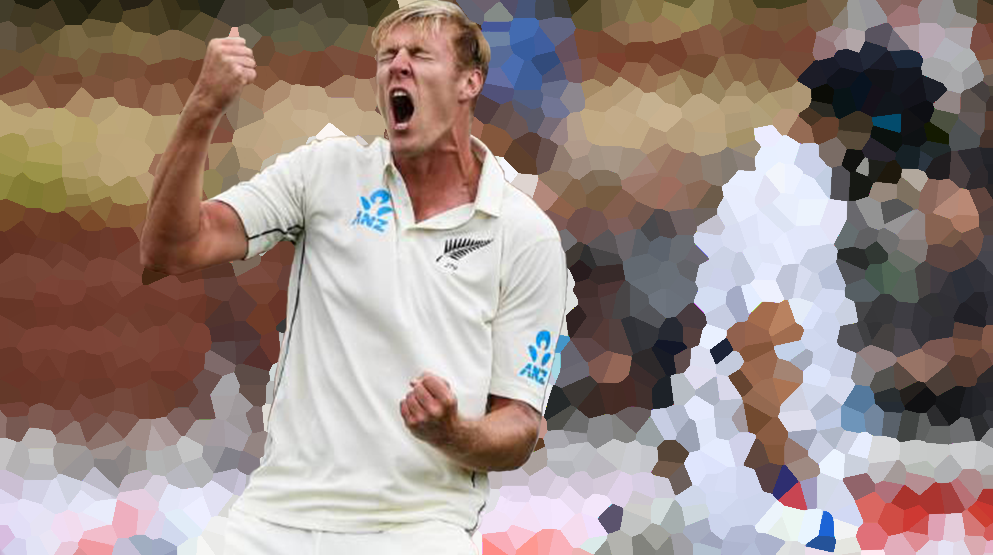
Henry’s example was a microcosm of wider systemic changes. For the first time, Black Caps bowlers were good from when they joined the team. Lockie Ferguson and Kyle Jamieson were further examples of this phenomenon.

From 2015 onwards it has been a great time to be a Black Caps fan. We seem to get the best out of all players. Even when Henry Nicholls was playing scratchy innings at No. 5, I knew he would come good, as I wrote about here. Nicholls has gone on to average 50 with the bat in Tests since the start of March 2018, when that article was written.

Faith in the Black Caps rarely paid off in the mid-90s, but pays off readily now. The Black Caps under Williamson are about as good as the All Blacks under Richie McCaw when it comes to turning losing positions into winning ones. Even when they lose, it seldom feels like they played poorly.

The 2019 World Cup failure brought back those nagging doubts about New Zealand being too small to ever produce a champion team. It wasn’t that the team wasn’t currently good enough – I knew they were – it was that the coincidence of so many good players seemed like our golden generation, something that may never be replicated.

The World Test Championship final was, therefore, the highlight of my 30 years as a Black Caps fan. I watched almost every ball, drinking so much coffee to stay awake on the final day that I was sick the next. Never in 30 years has a Black Caps Test side displayed such sustained and excellent bowling. The batting was almost as good.

I expect this current golden age to last as long as Kane Williamson is the captain. The hope will be that this Black Caps generation compares well historically, but not to other Black Caps sides, for those have all long since been surpassed. The comparison will be to Clive Lloyd’s West Indies and Ricky Ponting’s Australia as one of the greatest Test sides ever.

*

If you enjoyed reading this essay/article, you can get a compilation of the Best VJMP Essays and Articles of 2020 from Amazon for Kindle or Amazon for CreateSpace (for international readers), or TradeMe (for Kiwis). A compilation of the Best VJMP Essays and Articles of 2019, the Best VJMP Essays and Articles of 2018 and the Best VJMP Essays and Articles of 2017 are also available.

*

If you would like to support our work in other ways, please consider subscribing to our SubscribeStar fund. Even better, buy any one of our books!

The Most Terrifying Statistics You’ve Ever Seen About New Zealand

As a previous essay here has discussed, demography is destiny. The future belongs to those who show up for it. Unfortunately for us, it looks like the future will belong to the stupid. Dan McGlashan, demographer and author of Understanding New Zealand 3, explains the grim details.

The terrifying reality revealed within the correlation matrix above is that dumb people are massively outbreeding smart ones.

There is a very strong positive correlation between having any of the university degrees and having no children – at least 0.69. This means that the best-educated segment of the population and the childless segment of the population overlap to a major extent.

By contrast, the correlation between being in any of the three least-educated groups and having no children was -0.72 or even more strongly negative. This means that it’s very rare for someone with little education to abstain from reproduction. And when people with little education breed, they tend to do so without restraint.

Having no qualifications at all is significantly positively correlated with having three or more children. The strongest correlation in this table is between having no qualifications and having four children – this was a whopping 0.94. The correlations between having no qualifications and having five children (0.87) and between having no qualifications and having six children (0.72) were also very strong.

Having university qualifications is significantly negatively correlated with having three or more children. The strongest correlation in this regard was the -0.92 between having a Bachelor’s degree and having four children. The correlations between having an Honours or a Master’s degree and having four children were almost as strongly negative. Smart people simply aren’t breeding in New Zealand today.

Over the course of two or three generations, these trends will lead to significantly fewer people capable of completing higher education, and significantly more people incapable of doing so. On current demographic trends, therefore, it looks like New Zealand will become dumber and dumber. As it does, it will become poorer and poorer, and consequently more shitty and violent in most aspects.

The reasons why this is happening can be understood if one considers the schedule of social incentives that exist in the various classes.

In upper-class families, females are considered children until they are old enough to handle small responsibilities, at which point they’re given increasingly adult responsibilities, until such a point when they’re responsible enough to parent. Someone raised to think like this will have fewer children and will invest heavily into each one.

Females in lower-class families are considered children until they themselves have children, at which point they are accorded the respect due to an adult. It doesn’t matter if a female is 25 years old with a degree and a full-time job – they are children until they breed. Females without children get no respect, because they don’t know anything about anything important.

Mothers, on the other hand, are part of the inner circle. As soon as you’ve given birth, you’re on equal terms with every other woman who has. This encourages women to aspire to becoming mothers, and very little else. Someone raised to think like this will have more children, and sooner, and will invest less heavily into each one.

This distinction reflects the great division in the human species: between groups whose breeding strategy is to prepare the environment for the success of their offspring before reproducing, and groups whose breeding strategy is to shit out as many offspring as they can as quickly as possible and worry about the details later. These two strategies are known as the K-selected strategy and the r-selected strategy, respectively.

In a natural environment, the greater trust and solidarity of the K-selected allows their families and communities to survive and thrive. The co-operative networks that farsighted people build are more resilient than the “every man for himself” communities of the r-selected. As such, in a state of Nature, the populations of the K-selected tend to increase over time.

Unfortunately for the K-selected, today’s industrial society is one where farsighted hard workers are taxed into the ground to buy off the r-selected before they turn to crime. Anyone with the industriousness to become properly educated will then get taxed so heavily that they only have enough spare resources for a few children.

Meanwhile, the parents who don’t care about the poverty their children are forced to endure just keep shitting them out, knowing that the productive will pay for their survival.

A society with these demographic trends cannot escape going down the toilet. The inevitable long-term consequence of dumb people outbreeding smart ones is a reduction in overall intelligence. The inevitable consequence of that is more stupidity, violence, recklessness and crime.

Society has gone through times like these before. There is a point in every economic cycle when the productive are taxed to the maximum in order to provide bread and circuses for the hordes of unproductive. These productive are much like the character Boxer the horse in Animal Farm. Once they collapse from exhaustion from providing the labour needed to keep the whole system running, that system begins to fall apart.

The next step is for the K-selected to withdraw to easily-defendable fortresses, such as gated communities or island nations. From there it will be easier to weather the storm caused by the collapse of r-selected society, which will be a deluge of chaos that heralds a new age of the world.

All this might sound drastic, but it’s inevitable given the demographic trends outlined in this article.

*

If you enjoyed reading this essay/article, you can get a compilation of the Best VJMP Essays and Articles of 2020 from Amazon for Kindle or Amazon for CreateSpace (for international readers), or TradeMe (for Kiwis). A compilation of the Best VJMP Essays and Articles of 2019, the Best VJMP Essays and Articles of 2018 and the Best VJMP Essays and Articles of 2017 are also available.

*

If you would like to support our work in other ways, please consider subscribing to our SubscribeStar fund. Even better, buy any one of our books!