
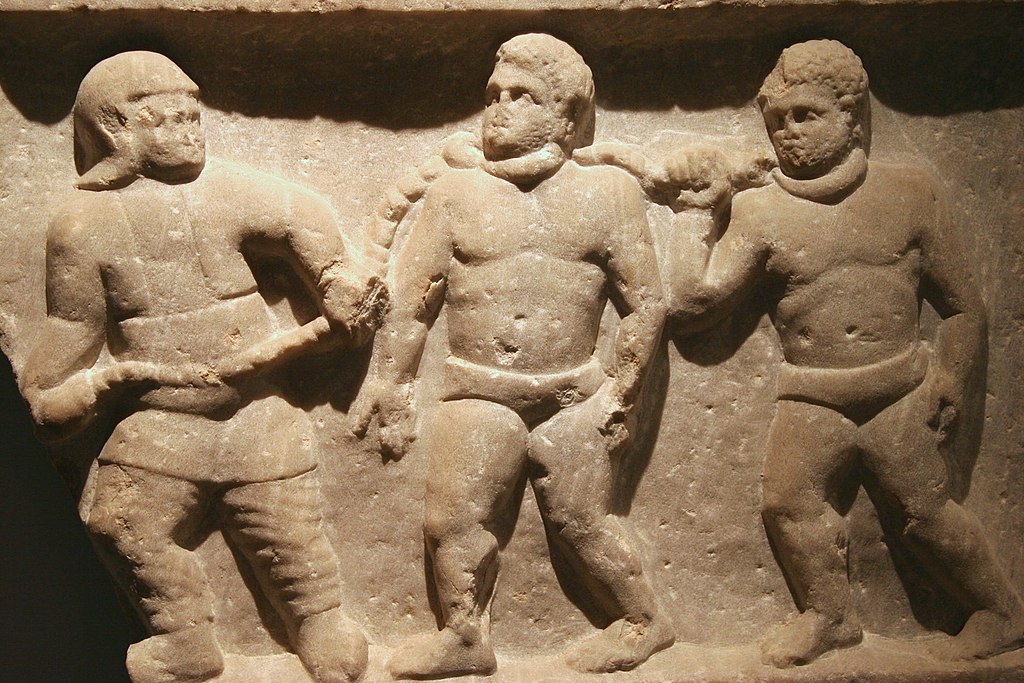
Most Westerners Are Now Slaves

New Zealand was appalled yesterday by the news that a Samoan chief named Joseph Matamata had been convicted of enslaving 13 of his fellow Samoans. Matamata had brought the slaves to New Zealand as cheap labour to work in vineyards and orchards, and had kept for himself the vast bulk of their wages. New Zealand may have been appalled, but the average Western worker is a slave anyway.

A slave is defined as a person “who is someone forbidden to quit their service for an enslaver, and who is treated by the enslaver as their property. Slavery typically involves the enslaved person being made to perform some form of work while also having their location dictated by the enslaver. Historically, when people were enslaved, it was often because they were indebted, broke the law, or suffered a military defeat.”

The position of the average worker in the current economic and political paradigm of the West fits this definition. We currently live in a system where the average worker can labour all week long and have all of their productivity taken off them so that they are left with nothing at the end of it all. They might, in theory, be able to choose their location, but in practice they either don’t have enough money to change location or the remuneration is no better anywhere else.

The chattel slavery of the American South before the Civil War is held up as one of history’s worst human rights abuses. We are told that slaves in America were treated so poorly that they had every moral right to kill their enslavers. This is a belief with potentially serious implications, given that chattel slaves weren’t treated significantly worse than the average Western worker, who also labours all week to be left with nothing.

Profits, taxes and rents are so high in New Zealand that even those earning above the median wage are left with almost nothing that they can put towards owning their own house one day. Not only is the average house price now close to a million dollars, and not only is saving any real money restricted to the very wealthiest of income-earners, but what little savings one can accrue is getting rapidly eaten up by interest.

According to the New Zealand Government’s own cost of living calculator, a general practitioner living in Auckland with a partner and two children and making $133,000 per year will run a $317 deficit every week if they want an average standard of living. So not even a qualified doctor can afford to save anything towards a house now.

If a qualified doctor, in the top 1% of the population by education, can’t afford a house, that effectively means that no worker can. The only people who can afford houses now are those who already have money and those who manage the workers on their behalf, and the rest of us are just slaves, doomed to labour our entire lives for a standard of living lower than that our ancestors enjoyed 100 years ago.

Some might argue that the situation of the New Zealand worker is different today because, although the New Zealand worker is left with nothing after their workweek, at least they don’t have to endure the physical abuse that chattel slaves did.

But physical abuse has simply been replaced with psychological abuse. The New Zealand worker isn’t hit with whips, but they are told every day in the media that they are racist, sexist, hate speakers, wrongthinkers and generally a river of filth. This psychological abuse has a similar end effect to physical abuse: it depresses the spirit into a state of abject submission.

Moreover, at least a slave in the American South could rely on the solidarity of his fellow slaves. The New Zealand worker can’t even rely on that. Should the New Zealand worker complain of their poor situation, they’ll be told to “suck it up” or “just work harder”. As if how hard one works means anything when all one’s productivity is taken away!

Although workers have an easier time of it in other Western countries (Europe, North America and Australia), these countries are all also trapped in the low wage/high house prices and inflation death spiral.

Goethe once said that “None are more hopelessly enslaved than those who falsely believe they are free.” Workers of the West don’t have physical shackles around their ankles, but they have psychological shackles around their minds. These shackles have made them submit to a system where the vast majority of workers are left with no surplus for even the most physically or psychologically challenging work.

*

If you enjoyed reading this essay/article, you can get a compilation of the Best VJMP Essays and Articles from 2021 from Amazon for Kindle or Amazon for CreateSpace (for international readers), or TradeMe (for Kiwis). A compilation of the Best VJMP Essays and Articles of 2020, the Best VJMP Essays and Articles of 2019, the Best VJMP Essays and Articles of 2018 and the Best VJMP Essays and Articles of 2017 are also available.

*

If you would like to support our work in other ways, subscribe to our SubscribeStar fund, or make a donation to our Paypal! Even better, buy any one of our books!

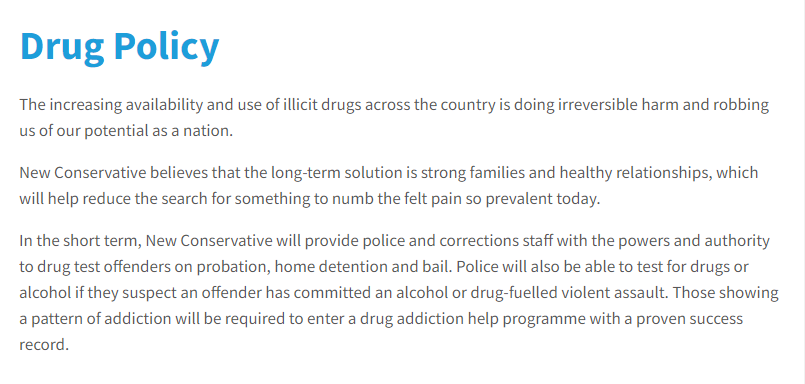
A System That We Can All Be Proud Of

In a fiery exchange between a mainstream media lackey and CounterSpin Media host Kelvyn Alp, Alp summarised the desire of the Wellington protesters and the freedom movement more generally: a system that we can all be proud of. In the absence of any better suggestion, this essay outlines what such a system might look like.

There is one big problem with the current New Zealand system: the vast majority of the benefits from all the work performed go to a very small number of people. Under our current economic arrangement, the benefits of labour don’t go to the labourer but to the owner of the land upon which the labour was performed. This is called capitalism, and if you don’t like it you’re responsible for tens of millions of deaths by starvation in Russia and China.

It’s an ugly system. It’s not much different to medieval feudalism, in which the vast majority of people were serfs beholden to a lord. The serfs worked all day, and then the lord came in and took their productivity away for his own purposes, leaving the serfs with barely enough to get through to the next tax day (if they were lucky).

Being a New Zealander is a constant humiliation.

Not only must one deal with the fact that one’s wages hardly go anywhere, but one must also deal with the pettiness of average New Zealanders. This pettiness follows from being a small, isolated country infested with the slave morality of Christianity. There’s nothing we love more than ripping our neighbours down once they make something of themselves. Anyone with any self-esteem has to be destroyed.

Nothing about the way our system is run engenders pride. We have to aim higher.

A system that we can all be proud of would entail change from the ground up. It would require a total paradigm shift from a mentality of profit before all, to a mentality of alleviating the suffering of the New Zealand nation. It would require raising solidarity between the various communities of New Zealand, rather than setting them against each other.

The first step in bringing this about is to restore basic dignity to the average worker by making it possible for them to get ahead.

As of right now, the average New Zealand worker has no chance of ever owning their own home. Wages are so low in comparison to house prices and rents that the average house now costs over 25,000 hours of labour at the average wage. This contrasts rudely with the average house price in 1992: 7,000 hours of labour at the average wage. Not only does the average worker have trouble buying a house, they have trouble saving at all.

It’s impossible for the average worker to be proud of a system that exploits them to such an extent. It’s like asking a plantation slave to be proud of the plantation system. Our economy must be completely redesigned, so that it once again becomes possible for the average worker to buy a house and raise a family on their wage.

To this end, the Reserve Bank of New Zealand ought to be given an entirely new remit: to alleviate the suffering of the New Zealand people. This new remit would replace the existing focus on inflation and unemployment. The problem with this existing focus is that it inclines the Reserve Bank to drop interest rates to the floor for the sake of encouraging borrowing (and thereby spending), but these low interest rates just lead to ballooning house prices.

Also to this end, the mass importation of cheap labour must stop immediately. There is nothing that has lowered the standard of living of the average Kiwi worker more than having been forced to compete with imported cheap labour. Increasing the supply of cheap labour inevitably lowers the price of that labour, and New Zealand’s historical addiction to it is one of the prime reasons why our wages are in the toilet. We have to go clean.

A final step is that tax incentives must be used to attract investment in productive capital. A land tax must be introduced to shift investment from land banking to business. New Zealand’s productivity is infamously low, the result of many things, but foremost among them is the lack of capital investment. Because New Zealand employers have historically always been able to import cheap labour, they have not been incentivised to invest in productive capital.

None of these suggestions require jingoism, supremacy or xenophobia. New Zealand doesn’t need to denigrate other nations in order to create a system that we can all be proud of. But we have to give our own people a fair deal. And this starts with giving the everyday Kiwi a fair standard of living for full-time work. That a full-time worker can afford a decent house that they can raise a family in could be the basis of a system that we could all be proud of.

*

If you enjoyed reading this essay/article, you can get a compilation of the Best VJMP Essays and Articles from 2021 from Amazon for Kindle or Amazon for CreateSpace (for international readers), or TradeMe (for Kiwis). A compilation of the Best VJMP Essays and Articles of 2020, the Best VJMP Essays and Articles of 2019, the Best VJMP Essays and Articles of 2018 and the Best VJMP Essays and Articles of 2017 are also available.

*

If you would like to support our work in other ways, subscribe to our SubscribeStar fund, or make a donation to our Paypal! Even better, buy any one of our books!
New Conservatives Forced Into Humiliating Climbdown On Cannabis Policy

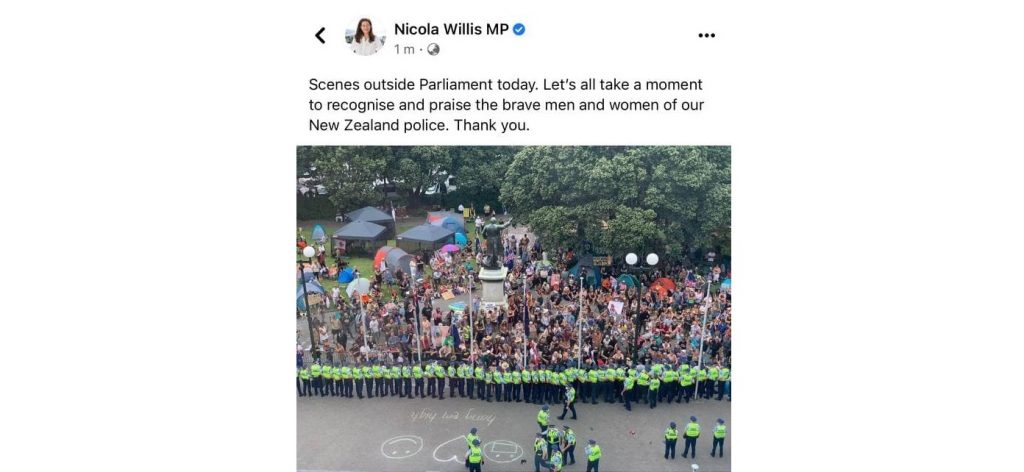
The New Conservative Party recently changed their drug policy to remove the reference to increasing the legal penalties for cannabis use. This climbdown went unannounced, and was not noticed by other media concerns. But VJM Publishing noticed it, as we have been criticising the old New Conservative drug policy for years.

As captured in this screenshot from the Wayback Machine, the New Conservative drug policy used to state they wanted to increase penalties for cannabis use. This was consistent with the principles of the Christianity practiced by the New Conservatives, which seeks to destroy all genuine spiritual practice, leaving the Christian cult the sole purveyor of spiritual goods. Cannabis, which has been used as a spiritual sacrament by Indo-European people for thousands of years, is seen as evil by Abrahamists.

The problem is that such a policy is inconsistent with the principles of freedom, and New Conservatives have always presented themselves as a freedom party. Much of Elliot Ikilei’s campaign material from the 2020 General Election prominently featured the word “FREEDOM”, and freedom from the tyrannical Sixth Labour Government was one of the main selling points of the New Conservative movement.

However, claiming to stand for freedom at the same time as standing for the oppression of cannabis users is a blatant contradiction. VJM Publishing has been resolute in pointing out this contradiction. Every time someone preached to us the imperative of voting New Conservatives for the sake of freedom, we pointed out that the New Conservatives themselves opposed freedom for cannabis users.

Christians ripped into us for this stance. “Who cares about cannabis users?” they cried. Cannabis users are degenerates, their filthy habit should not be tolerated. Cannabis use causes violence and crime, they bleated (unlike our holy scripture that says followers of other religions should be killed). Only the freedoms that we want are actual freedoms – anyone wanting other freedoms can get stuffed.

But what goes around, comes around.

So when former New Conservative leader Leighton Baker was arrested in Wellington, he didn’t get much sympathy from these quarters. I couldn’t refrain from remarking that the Police did to Baker exactly what Baker wanted done to cannabis users. As such, it was fitting that he got a taste of his own medicine. This opinion proved immensely unpopular in some quarters (I was banned from several TeleGram groups for uttering it), but I stand by it.

All laws are enforced by Police violence. Every single one. If a person performs an action which is morally right, but which is legally wrong, a Police officer might arrest that person. If that person should resist the arrest on the grounds that their action was morally right, the Police officer will physically smash that person into submission in order to make the arrest possible.

Therefore, those who support cannabis prohibition also support violence done towards cannabis users by the law enforcement authorities. Although many supporters of cannabis prohibition deny this, it’s a fact made evident by simple logic. This is why cannabis users have understandable cause to resent those who support cannabis prohibition. It’s a similar level of brain-dead prejudice to wanting someone locked up for having sex with another consenting adult.

VJM Publishing made all of these arguments in the wake of Baker’s arrest. It seems that the irrationality of New Conservatives’ drug policy became apparent to them at some point shortly after, because they updated it to remove the policy of increasing penalties for cannabis use.

The basic inhumanity of cannabis prohibition is now evident to even the most morally depraved section of society, the Christian conservative. It’s surely just a matter of time before the law is significantly changed.

*

If you enjoyed reading this essay/article, you can get a compilation of the Best VJMP Essays and Articles from 2021 from Amazon for Kindle or Amazon for CreateSpace (for international readers), or TradeMe (for Kiwis). A compilation of the Best VJMP Essays and Articles of 2020, the Best VJMP Essays and Articles of 2019, the Best VJMP Essays and Articles of 2018 and the Best VJMP Essays and Articles of 2017 are also available.

*

If you would like to support our work in other ways, subscribe to our SubscribeStar fund, or make a donation to our Paypal! Even better, buy any one of our books!

Learnings From The Truckers’ Convoy And Parliament Lawn Protests

Now that the Police have broken up the freedom protest in Wellington, it’s time to look back on the past month and determine what can be learned from the experience. In the opinion of this author, four important lessons are immediately evident.

1. Establish a clear leadership structure.

The freedom movement needs to have established leaders who can be relied upon to give accurate information to supporters about the state of affairs. The February convoys were beset by misinformation and rumour-mongering, some of it deliberately stirred up by Establishment lackeys, mainstream media hacks and other tools of authoritarianism.

Some detachments of the convoys were sent down wrong routes by trolls pretending to be organisers, and a grifter pretending to be part of the movement was able to trick people into making donations into his personal bank account. A clear leadership structure needs to be established to avoid these dangers. The masses must be told who these leaders are so that they know not to trust rumours being spread by others.

These national leaders must be unifying figures who have broad support among alternative thinkers. This means no Brian Tamakis or Derek Taits. A person like Outdoors Party Leader Sue Grey would be ideal. This person would have to be responsible for delegating responsibilities to other members of the leadership structure, and would therefore have to be available full time.

A goal might be to find a trusted representative from each leg of the route to stay in touch with the national leadership, as well as the Logistics Committee and Media and Public Relations Committee (see below). The ultimate goal would be a structure that protected the movement from false rumours, outside agitators, mainstream media lies and the machinations of Establishment politicians.

2. Establish a Logistics Committee.

At one point, rumour had it that the viability of the Parliament lawn campsite hinged on whether the protest organisers could arrange Portaloos for the protesters. This is an example of the logistical considerations that protest organisers need to consider. Next time, a Logistics Committee needs to take care of any issues relating to providing the basic needs of thousands of people.

As Kelvyn Alp mentioned on Counterspin the other night, the convoy participants were met along the way by people handing out bread and other food. A large number of people suddenly descending on a city will inevitably require large amounts of food and drink. A Logistics Committee is needed to help deal to this suddenly increased demand for basic needs. Arranging shelter is also vital work.

Logistics also includes the provision of a public address system. The PA system for the speakers outside Parliament was provided by a church group, which soon refused to let anyone else speak except for preachers. The freedom movement must try to supply everything needed for its purposes without relying on outsiders who may have other motives.

3. Establish a Media and Public Relations Committee.

The mainstream media’s coverage of the protests was little more than an effort to smear the protesters as white supremacists. All throughout, the mainsteam media spread rumours of neo-Nazi involvement, sexual assaults in the camp and violence against bystanders. The mainstream media is an arm of the control system and the enemy of the New Zealand people, and they need to be considered as such. Therefore, they must be dealt with intelligently.

To this end, the freedom movement needs a Media and Public Relations Committee to deal with media interactions.

One important part of this is to provide press releases to scoop.co.nz and to other journalistic sources. This will get the true message out about the motivations, intentions and aspirations of the movement and will pre-empt the authorities and the mainstream media from smearing us as racists and white supremacists. We must speak for ourselves so that our enemies are prevented from doing so.

These press releases must serve the imperative to win the propaganda war. Winning this war also involves getting the message out through channels other than the mainstream media, who will twist and spin things to serve their masters in the Establishment. Close liasons with alternative media must be maintained. Freedom movement leaders must get themselves interviewed by, and get their opinion pieces published by, the alternative media.

4. Keep the Christians and other fanatics out.

VJM Publishing has long made the argument that the freedom movement cannot include Christians for the simple reason that Christians do not support freedom, as evidenced by Christian opposition to cannabis law reform, prostitution law reform and homosexual law reform, and Christian support for the legal right to hit one’s children and to rape one’s wife.

These five strikes do not mean that Christians should be made to feel excluded, but it means that Christians cannot be allowed into influential positions within the movement. They will sabotage the movement to the benefit of their cult if any opportunity arises, and will always cause infighting as they inevitably seek to impose themselves upon and exclude non-Christians.

To this end, Destiny Church and Brian Tamaki have to be completely excluded. Destiny and Tamaki claim to be freedom fighters, but they recently campaigned for the New Zealand Government to destroy cannabis users in the 2020 cannabis referendum. Therefore, they do not understand freedom. They are simply grifters using the freedom movement to promote their cult, and need to be utterly shunned.

Any religious fundamentalist who has previously campaigned to take freedoms away from the New Zealand people must be excluded from the freedom movement. This means anti-cannabis fanatics like Tamaki, Elliot Ikilei and Leighton Baker. The freedom movement has to be smart enough to tell the difference between people who truly stand up for freedom and people who just say that they do.

This goes for all other fanatics. No Communists, no Nazis, no “you should be allowed to buy children on the free market” libertarians. Anyone who thinks they can decide for other people what’s right for them has to be excluded. They will only cause infighting.

*

If you enjoyed reading this essay/article, you can get a compilation of the Best VJMP Essays and Articles from 2021 from Amazon for Kindle or Amazon for CreateSpace (for international readers), or TradeMe (for Kiwis). A compilation of the Best VJMP Essays and Articles of 2020, the Best VJMP Essays and Articles of 2019, the Best VJMP Essays and Articles of 2018 and the Best VJMP Essays and Articles of 2017 are also available.

*

If you would like to support our work in other ways, subscribe to our SubscribeStar fund, or make a donation to our Paypal! Even better, buy any one of our books!