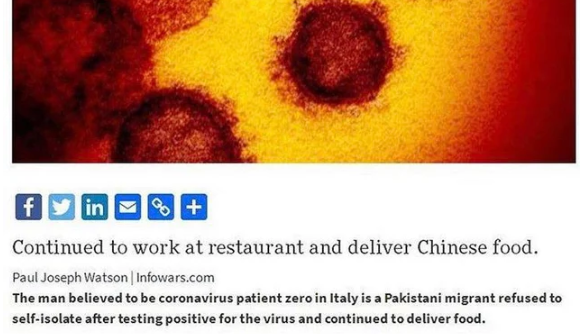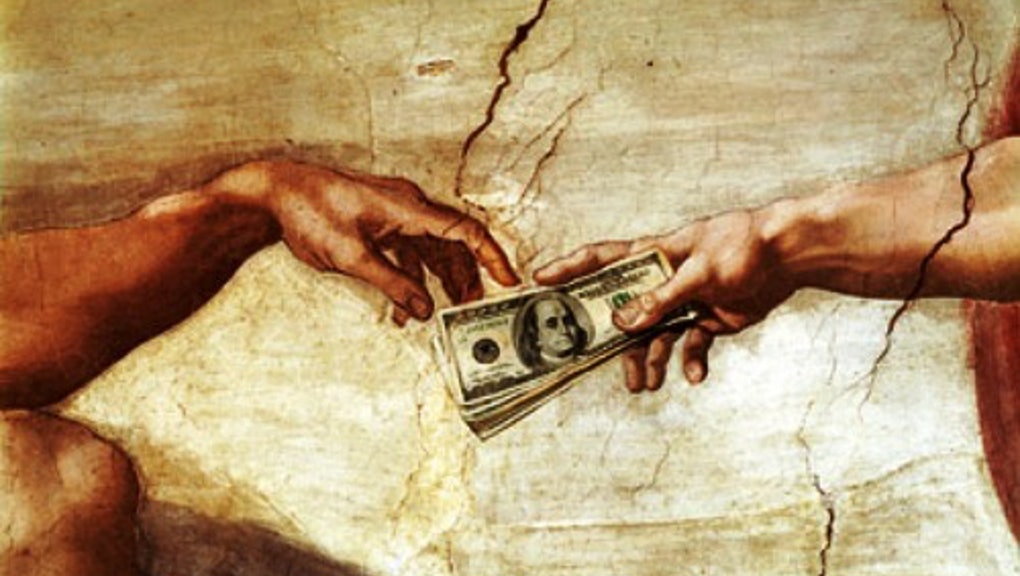
Diversity Is A Strength In Times Of Plenty, And A Weakness In Times Of Shortage

The Establishment and the mainstream media like to say that diversity is a strength. This opinion is aggressively rejected by most of the working class, who consider it a great weakness. The reality, as this essay will discuss, is that both sides are right – but only in the appropriate context.

Since the end of World War II, the West has enjoyed great prosperity. Our stockmarkets, factories, airports and seaports have all boomed from the ever-increasing demand. Most people felt like they were getting a good deal, or that, if they weren’t, they soon would. During this great age of plenty, diversity has generally caused more pleasure than pain.

In times of plenty, diversity is a strength. When the economy is growing, and no-one has to worry about competing with each other, then diversity means an enrichment of the everyday experience of life. It means new foods, new cultural displays, new ideas. It means an exciting, vibrant increase in novelty.

In times of shortage, however, diversity means something else.

Every community is divided along fracture lines – lines of race, gender, religion, age, education and cultural affinity. In good times, these fracture lines are papered over by wealth – people don’t need to fight if everyone has enough to meet their own needs. In bad times, these fracture lines are exposed and aggravated.

When times are tough, the community needs to pull together. A given community’s ability to pull together depends mostly on its level of solidarity, and that in turn depends mostly on the number and degree of commonalities that members of the community have with each other. After all, ‘commonality’ and ‘community’ have a similar etymology.

The presence of commonality means co-operation. Where commonalities exist, people are happy to help each other, because they know that this help will benefit a person like them. This knowledge assures them that the help will be reciprocated, and not just taken. They can count on getting helped in the future, and so feel like part of a society, a wider kinship group.

A lack of commonality means exploitation. The rule is that people are willing to exploit others to the degree that those others are different from them. The greater the number of fracture lines in a community or society, the greater the degree of exploitation that exists. As mentioned above, this is no big deal when the economy is expanding, because this means new niches open up for people to move into.

In times of shortage, however, diversity means that helping other people is helping people who aren’t your kin. The natural inclination, then, is to keep for yourself, to not share. The problem here is that people get desperate in times of shortage. When people are desperate, a refusal to share with them often leads to violence.

Diversity makes it much harder to settle the tensions that arise from shortages. Two people of the same culture can use their shared moral values to come to a mutual agreement. If they have a common language, they can talk their way to a mutual understanding. Absent these things, misunderstandings lead to flaring tempers.

Arriving at a mutual agreement in times of scarcity is much easier between two natives than between a native and an immigrant. Between two immigrants, as we see in the Woolworths toilet paper fight video linked above, there is a minimum of commonality, and this regularly ends in actions that are not made from a place of empathy.

If the COVID-19 pandemic does have a severe enough economic impact to cause widespread shortages, some people are going to be forced into making some terrible decisions – and much more terrible than what brand of toilet paper to buy because their preferred one is sold out.

Faced with two patients who can’t breathe, and only one ventilator, the medical staff dealing with the pandemic are going to be forced to make decisions as to who lives and who dies. There are already reports that Italian doctors have been forced to leave old people to die on account of that there aren’t enough beds in intensive care units. Increasing diversity means that some Italian doctors will have to decide whether an elderly native Italian or a younger immigrant gets the ICU bed.

More relevant to the average person are the hundreds of small decisions that they will have to make about questions that test their loyalties. Some people have been stockpiling hand sanitiser on account of that the sudden shortage of it has spiked the price. These price gouging actions have been heavily criticised, on the grounds that not only are they shamelessly opportunistic but they also prevent needy people from getting supplies.

But in a highly diverse society, the balance of rewards is different to what it would be in a more homogenous one. The more diverse society is, the less likely such actions are to harm a person who has something in common with you. All the profit from such actions, however, you keep for yourself. So why not use a pandemic as an opportunity to price gouge? If no-one from your kin group loses out, you might as well take advantage.

Proof for these suppositions come from the fact that neither supermarket fighting nor price-gouging is happening in nations with low levels of diversity. There are no videos of people fighting over toilet paper in places like South Korea, Taiwan or Japan – and there may never be. The absence of diversity in these places means they have enough in common for people to work together instead of chimping out.

All of these problems are just part of the regular course of empires. Empires burgeon, rise, stagnate, decay and fall. The increase in diversity usually comes after the stagnation phase, as the ruling class tries to squeeze out the maximum possible expansion by opening the borders. The current iteration of the West is somewhere between the decay and the fall stages. The nations to successfully respond to the COVID-19 pandemic, like South Korea and Japan, will be the leading nations of this century.

*

If you enjoyed reading this essay, you can get a compilation of the Best VJMP Essays and Articles of 2019 from Amazon for Kindle or Amazon for CreateSpace (for international readers), or TradeMe (for Kiwis). A compilation of the Best VJMP Essays and Articles of 2018 and the Best VJMP Essays and Articles of 2017 are also available.

*

If you would like to support our work in other ways, please consider subscribing to our SubscribeStar fund. Even better, buy any one of our books!

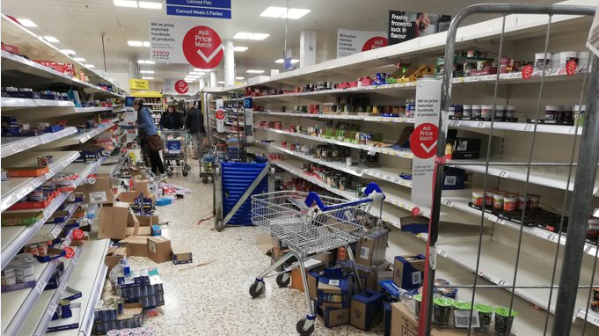
How The Lack Of A Universal Basic Income Leaves Us Vulnerable To Pandemics

With the COVID-19 pandemic taking hold around the world, many people now realise that the economic foundations of our society are much more fragile than they had seemed. The disruption to global supply chains from the Wuhan coronavirus is just beginning to have an effect. As this essay will show, much of the pain that we will suffer this year could have been avoided if we had had a universal basic income.

Nothing gives a person more power over another group of people than that group’s desperation. The more desperate people are, the less money they will be willing to work for, and the shittier the workplace conditions they will be willing to accept. The ruling class doesn’t want to give up the power that widespread desperation and poverty give them. so they promote more of it.

The major argument against a UBI is that people need a certain level of coercion before they are willing to work. Without the threat of starvation or being kicked out of their house for not making their rent payments, people won’t do the amount of work that their rulers consider acceptable. Treat ’em mean, keep ’em keen is the logic.

Modern events like the COVID-19 pandemic show that this way of thinking has made our society much weaker than it needed to be.

A forestry exporter in Gisborne recently complained that the pandemic had halved the income of his business. Because Chinese workers are being kept at home to prevent further spread of the virus, there is no-one to unload the boats in the docks. This means that forestry exporters can’t send any product to China, and so have to shut down a large part of their operation.

Without income, this forestry exporter has found themselves needing to lay off staff. Getting laid off is a highly stressful event at the best of times – when it comes at the same time as your entire industry is shutting down because of a coronavirus pandemic, then one also has to deal with the fear of not being able to find new work. Those who fail at that will be forced to go into WINZ and run the usual gauntlet of getting accused of being a bludging, malingering piece of shit. It promises to be a tough time for many.

A great amount of stress is needlessly created as the result of the way our economic system is structured, and this is amplified beyond breaking point when a pandemic like our current one strikes. If we are intelligent, we will take this opportunity to restructure this system so as to make ourselves more resilient to the next mass medical shock.

A recent Stuff article reported that Jacinda Ardern and other high-ranking Labour ministers had generously agreed “in principle” to remove the one week standdown period for anyone losing their jobs as a result of the coronavirus. No-one really knows why beneficiaries are made to starve for a week before being granted money, but the fact that they are creates much unnecessary misery, sometimes leading to suicide.

Removing this standdown week is a good move, but it’s a tiny measure compared to the introduction of a UBI. That would remove an enormous amount of stress from the people whose jobs were vulnerable to pandemics that impacted China – a group that will always be sizable in New Zealand. Greatly reduced stress means, in cases of sudden employment shocks, a greatly reduced number of deaths from despair.

Some are expecting that COVID-19 will be particularly virulent in America, for reasons relating to their economy. The best way to combat the pandemic is to quarantine entire areas, as China has done. America is unwilling to do this, which means that they have relied on asking people who think that they might be infected to get themselves tested and then to self-isolate – a process that might take up to three weeks.

The problem is that most American workers can’t simply leave work for three weeks. For them, three weeks with no income means getting kicked out of their houses for not making rent payments. It means getting the car repossessed, it means going hungry, it means needing to beg for an overdraft extension or miss out on healthcare. It means an immense level of stress.

A UBI would take the majority of this stress away. The knowledge that losing one’s job would not result in starvation and destitution, but merely a temporary reduction to a Spartan lifestyle, would make the necessary adaptations much easier to make. Losing one’s job would no longer mean crisis time but merely scaling back operations for a while.

A UBI would also incentivise people to not spread diseases like coronavirus to others.

Workers who are in precarious financial situations will feel compelled to go to work even when they suspect themselves to have coronavirus, on account of that they need the money. This will inevitably lead to them infecting far more people than if they had self-isolated. So not only does the lack of a UBI mean an increase in stress, it makes epidemics like COVID-19 more likely to develop into pandemics.

If New Zealand had a UBI, people who suspected themselves to be infected in a pandemic could easily arrange with their employers to be off work for a few weeks, without getting fucked by cashflow problems. These cashflow problems currently make it all but impossible to follow medical advice to self-quarantine, which exposes the entire economy to a systemic danger.

COVID-19 might not be the world-ending pandemic that many had feared. But even if it isn’t, we are still vulnerable to such a thing in the future. The introduction of a universal basic income would, above its numerous other benefits, make the national economy much more resilient to a pandemic. As it is, the ability to self-isolate is almost a luxury – perfect conditions for disaster.

*

If you enjoyed reading this essay, you can get a compilation of the Best VJMP Essays and Articles of 2019 from Amazon for Kindle or Amazon for CreateSpace (for international readers), or TradeMe (for Kiwis). A compilation of the Best VJMP Essays and Articles of 2018 and the Best VJMP Essays and Articles of 2017 are also available.

*

If you would like to support our work in other ways, please consider subscribing to our SubscribeStar fund. Even better, buy any one of our books!