
Debunking The “Structural Racism” Conspiracy Theory

The most prevalent conspiracy theory of our time is so prevalent that it’s accepted as truth by most media entities. This theory has it that black and brown academic and economic underachievement can best be explained by structural racism and white supremacy. The truth is that, like most conspiracy theories, this theory goes directly against the relevant science, and can be disproven by it.

When 9/11 happened, a popular conspiracy theory said it was an inside job. One particular version claimed that, as the melting point of steel is higher than the burning point of jet fuel, the twin towers could not have collapsed on account of being struck by aeroplanes (the official explanation). They had to have been taken down by explosives placed within the structure of the buildings.

The way to refute this theory was to ask people qualified in the relevant science. You could say to a civil engineer or a physicist “Jet fuel can’t melt steel beams,” and they would tell you that it doesn’t have to melt the beams, it just has to heat them up enough so that they become too soft to support the weight of the building, at which point it will collapse. This is what happened in the case of the twin towers. Conspiracy theory debunked.

Anyone wanting to test other conspiracy theories can do likewise. If you want to know whether the Earth is flat you could ask an astronomer. If you wanted to know whether the Earth was 6,000 years old you could ask a geologist. If you wanted to know whether humans landed on the Moon you could ask an aeronautical engineer. And if you wanted to test whether the structural racism conspiracy theory was bullshit, you could ask a psychologist.

This is what a psychologist would tell you.

The science of IQ is the most robust and heavily supported of any social science. There is more evidence backing the validity of it than there is backing anything else. Most importantly, IQ also has more predictive power than any single other variable known to Psychology.

If you disagree about its predictive power, consider the following analogy.

You have two 13-year old boys. One is tested to have an IQ of 115, i.e. one standard deviation above average. The other is tested to have an IQ of 85, one standard deviation below average. The two boys are followed up ten years after the test. Without knowing which boy is which, you’re told that one has recently completed an accounting degree, whereas the other dropped out of school and drifted into petty crime.

Can you guess which is which?

Almost everyone would guess that the boy with an IQ of 115 became the accountant. And, in the vast majority of such cases, they’d be right. Accountancy is intellectually challenging: far more accountants have IQs closer to 115 than to 85. Likewise, far more petty criminals have IQs closer to 85 than to 115. Almost everyone knows this, and almost no-one questions it.

The fact is that IQ is so powerfully predictive that we can already get a rough idea of how a person’s life will turn out just from accurately measuring their IQ. The average person with an IQ of 85 will have much greater trouble learning and recalling information than the average person with an IQ of 100. Their impulse control, measured by ability to delay gratification, will be significantly inferior.

Because their intellectual ability and their discipline are poorer than than of the average person, they will be less able to meet the demands of the modern workplace. As such, they will be marginalised into unemployment and underemployment more often. Any population of people with an average IQ of 85 will be much poorer and much more criminal than any population with an IQ of 100 or higher.

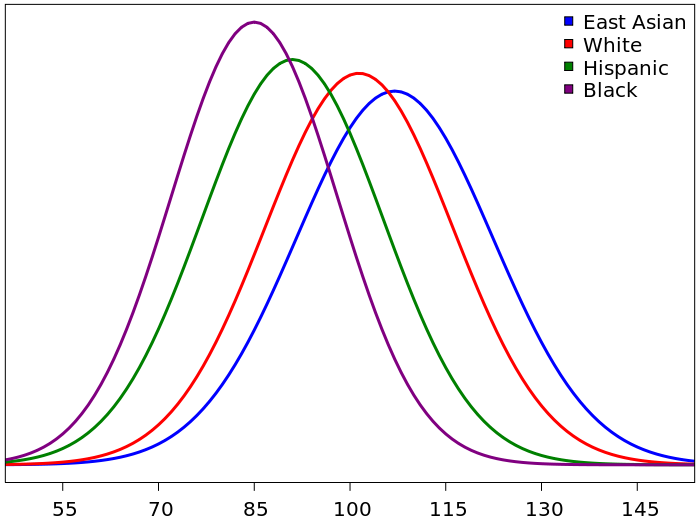
85 is also the average IQ of black Americans and Pacific Islanders, with Maoris being slightly higher (around 90). This we know from the research compiled by researchers like Richard Lynn in books like Race Differences in Intelligence.

Psychological science, therefore, can predict on the basis of IQ alone that black Americans and brown Kiwis will be poorer and will be more involved in the criminal justice system than white Americans and white Kiwis. This can be confidently predicted even in the total absence of structural racism or white supremacy.

At this point, a believer in the structural racism conspiracy theory will argue that structural racism not only makes blacks and browns poorer and more likely to be involved with the criminal justice system, but it also makes their IQs lower on account of things like teachers ignoring them more often during class or discouraging them from study. Therefore, even if they do have lower IQs, it’s still white people’s fault.

For one thing, we know that this contention can’t be true because intelligence is mostly genetic and not environmental. Although the environment can have a powerful effect on the intelligence of young people, the effect of environment on IQ is no more than 0.2 by adulthood – a phenomenon known as the Wilson Effect. Therefore, low adult IQ is primarily a genetic phenomenon.

For another thing, we can observe the experience and outcomes of other racial groups who have similar IQs to white people.

105 is the average IQ of Far East Asians. The structural racism conspiracy theory would predict that Far East Asians do worse than white people, on account of that white people deny them opportunities for advancement and discriminate against them in business and politics. After all, white supremacists don’t like Asians any more than they like blacks.

The psychological science theory would predict that Far East Asians do as well or better than white people, on account of that their high IQs lead to successful careers and less criminality. Being high IQ and having good impulse control, they should study hard and get decent jobs.

As it turns out, Asian Americans earn 7% more than whites at the median. They are also significantly less criminal, despite that more of them are from poor families and many are even refugees. This directly refutes the structural racism conspiracy theory and directly supports the psychological science theory.

Ultimately, the main reason why blacks do worse than whites in America, and the main reason why browns do worse than whites in New Zealand, is because of low IQ. This low IQ leads them to make more impulsive decisions, which leads to poverty. This isn’t at all controversial among those who have studied the relevant science.

The conspiracy theory that says blacks and browns do worse because of white racism is bullshit. This means that the poorer outcomes of blacks and browns cannot be explained by white racism, but by factors inherent to the blacks and browns themselves.

*

If you enjoyed reading this essay, you can get a compilation of the Best VJMP Essays and Articles of 2019 from Amazon for Kindle or Amazon for CreateSpace (for international readers), or TradeMe (for Kiwis). A compilation of the Best VJMP Essays and Articles of 2018 and the Best VJMP Essays and Articles of 2017 are also available.

*

If you would like to support our work in other ways, please consider subscribing to our SubscribeStar fund. Even better, buy any one of our books!
The Four Basic Political Subjects

Underneath all the talk about politics today lies a great confusion. People talk about what politics is supposed to achieve, but they have generally forgotten who it’s supposed to achieve it for. For our ancestors, the political subject was obvious, but for us it is not. This essay explains.

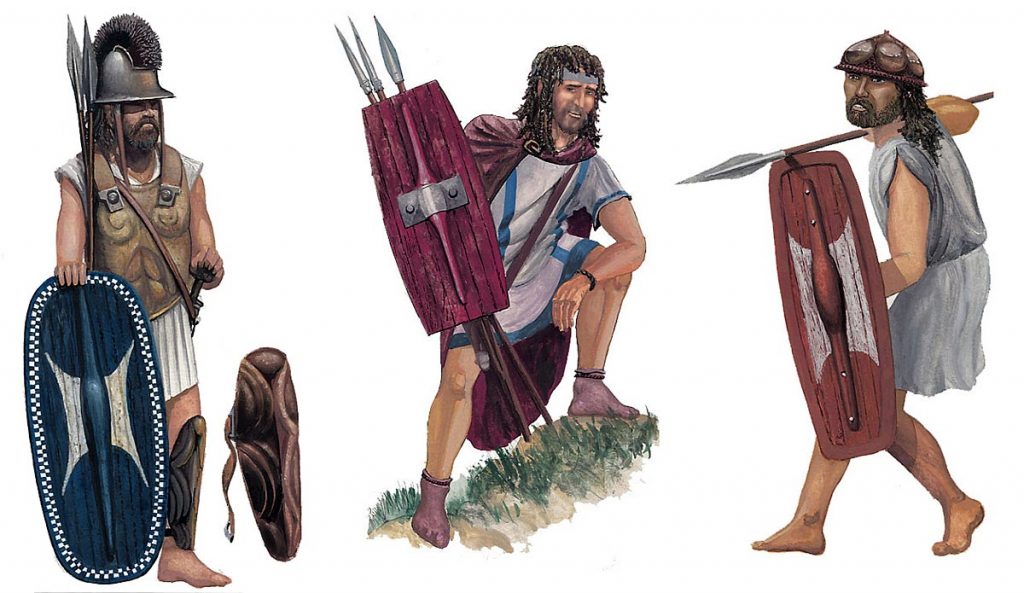
The first and original political subject was the tribe. In the biological past, humans had no conception of nations or kingdoms. One was born into a tribe of roughly 50-150 people, and these people were your blood kin. As such, their interests were your interests, in almost every case.

Every member of the tribe was in the ingroup, and everyone not in the tribe was in the outgroup. This made politics very simple. If you encountered a stranger, they were the enemy, and it was acceptable to do anything to that stranger if it furthered the interests of the tribe. This tribal mentality still exists today, only it has become much weaker than it used to be (in most cases).

The second political subject is the state. This came into being when civilisation did. With the advent of civilisation, it was possible to have two strangers share the same space without chimping out and attacking each other. This meant that it was possible to have towns and cities made up of people from different tribes, perhaps even competing ones.

With the advent of towns and cities, it was necessary to have an administrator class that dealt with any disagreements that arose. The bringing together of different tribes meant competing schedules of moral values. These administrators, employed to smooth over differences between tribes, became the state. Their different approaches for settling quarrels became ideologies.

One way of dealing with the tensions created by identification with the tribe was to identify with the state instead. In practice, this is much the same as identifying with an ideology. Thus, a judge who was from a particular tribe would not necessarily rule in favour of his own tribesman. This was a radical new way of thinking when compared to the tribal solidarity model. It required a new political subject.

Thinking in terms of the state provided this new subject. If people were able to abandon their previous allegiances to their tribes, they could band together and build a mighty state that challenged the world, such as Rome or America. The memetic hybrid vigour brought about by multiple tribes all agreeing to work together under a state banner proved to be immensely powerful.

Not every civilisation succeeded in making this transition, however. If a state was not capable of creating an egregore powerful enough to persuade people to abandon their tribal allegiances, the divided loyalties caused by those remaining allegiances would pull the state apart from the inside. Corruption reigns in every state where tribal allegiances continue to hold sway.

The third political subject is the individual. This political subject arose as a way of settling firstly the tensions between those who identified with the tribe and those who identified with the state, and secondly the tensions between those who identified with different states or ideologies. In the world of 2020, the individual is the default political subject.

The logic is that, by identifying with the individual ego, people would no longer be drawn into conflict on account of competing tribal or ideological loyalties. Only caring about oneself might seem selfish and egotistical, but it has the bonus effect of settling tensions between groups. If people only care about the next hit, they will not take collective action.

It is true that what Adam Curtis called the Century of the Self led to a great peace. In recent decades, Hitlers and Stalins have been impossible on account of that no-one would follow them. Collective efforts demand individual sacrifices, and people who identify with the individual ego will not make them. However, this identification brings its own problems.

The fourth political subject is the consciousness itself.

The limitations of identifying with the individual ego are now obvious. Although doing so was a logical move forwards from the horrors of state-worship, the human animal is still fundamentally a social one, and it has social needs. Identifying with the individual ego might make warfare between nations less likely, but it sharply increases the emotional and spiritual suffering of the people, who find that their lives no longer have any meaning.

Some philosophers, like Alexandr Dugin, have suggested a return to Dasein as the basic political subject (Dugin frequently refers to Heidegger’s Dasein in The Fourth Political Theory). This is much the same thing as having consciousness as the basic political subject. In either case, it solves most of the problems of the first three political subjects.

Identifying with the consciousness allows the best of all worlds. Not only can a person meet their social and spiritual needs through connection to other conscious beings, but they can also do so without necessarily getting set against them because of tribal or ideological loyalties. Identifying with consciousness means that one is automatically allied and opposed to every other person.

There’s one problem with this otherwise elegant solution: most people have never learned to distinguish between consciousness and the contents of consciousness. They don’t know the difference between the True Self and the False Self. As such, most people operate either on the level of crude instinct (and thus tend towards tribalism), the level of conditioned responses (and thus tend towards fetishising the state or an ideology) or on both levels at once (and thus tend towards soulless globohomo consumer whoring).

As is so often the case, it appears that our great challenge is primarily a spiritual challenge. Identification with the consciousness might prevent us from getting drawn into tribal or ideological conflicts, and it might prevent us from getting bogged down in mindless anomie. But it will only be an option for those with the spiritual acumen to meditate and perform self-inquiry.

*

If you enjoyed reading this essay, you can get a compilation of the Best VJMP Essays and Articles of 2019 from Amazon for Kindle or Amazon for CreateSpace (for international readers), or TradeMe (for Kiwis). A compilation of the Best VJMP Essays and Articles of 2018 and the Best VJMP Essays and Articles of 2017 are also available.

*

If you would like to support our work in other ways, please consider subscribing to our SubscribeStar fund. Even better, buy any one of our books!
Clown World Chronicles: What Is A ‘Chimpout’?

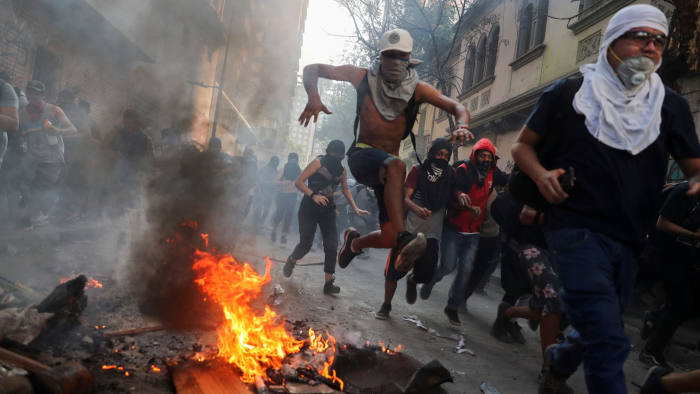
Some of the most graphic images of recent times have come from the rioting sparked by the killing of George Floyd. The sight of rocks and sticks smashing into human skulls evokes primal feelings of horror. These primal feelings are capable of evoking other primal feelings, and when there are enough of these, a total chimpout is possible.

Primatologists have long been aware of the propensity of chimpanzees and monkeys to become over-excited. Because primates are highly social animals, we are susceptible to emotional influence from others of our kind. When one of us feels an emotion, it’s common for others nearby to come to feel it as well. This is true of joy, of anxiety, of sociability – and of rage.

When enough mutual excitement goes through a group of primates, they can appear to lose their minds completely. Certain monkey troops, upon encountering human outsiders, will shriek loudly, retreat to the treetops, and begin to fling their feces at the intruders. Chimpanzee troops can also become extremely aggressive quickly when meeting others.

This mob mindset is biological. Primate troops that quickly became excited and aggressive when observing novel stimuli were better adapted to dealing with threats to their territory or safety. As such, they survived and reproduced more effectively. When in doubt, it’s much better to chimpout than to be caught passive and on the back foot.

It isn’t much different for us hairless primates.

Wise men love to point out that human civilisation is by no means a deeply-rooted institution. No-one can remember who said it first, but it’s often been stated that society is only nine meals away from a revolution. Machiavelli observed that human nature has never really changed from the beginning of history. It seems that, at the bottom of our hearts, few of us are fully convinced that civilisation is a good idea.

For one thing, the human animal is still a primate. Although human brain capacity has rapidly evolved since we split off from the other apes, the architecture of those brains is basically the same. As with the other primates, the human animal evolved to survive in a world where physical threats were common and often demanded immediate and extreme action.

Under enough stress, the brain circuitry that evolved to make us more effective pack fighters on the plains of Africa can spark to life again. Human history has been so violent that the old chimpout circuitry has never gone away. There has never been any real selective pressure against it, because those who could not chimp out kept getting killed by those who could.

Understanding this brain circuitry is the key to understanding when and why chimpouts happen.

The recipe for a chimpout begins with increased excitement on the part of an individual, perhaps because they have spotted or anticipate an enemy. If that individual’s increased excitement becomes contagious, and begins to heighten the excitement of the individuals around them, then it becomes a social phenomenon.

Should the excitement become so great that members of the group start to lose their composure, and then if no leader among them settles them down, a chimpout is underway.

The definition of a chimpout is when all pretence to civilisation is suddenly abandoned by a large group of people. In popular language, a chimpout is a term that describes the onset of mob mentality. It’s when a large number of people become a hooting, hollering horde, the higher functions of their brain having shut down.

Chimpouts tend to be destructive. The rioting that followed the George Floyd killing in May 2020 led to the destruction of dozens of American inner cities. The Parisian chimpouts of 2005 saw thousands of cars set on fire. That veneer of civilisation, thin though it may be, suppresses some very malicious impulses.

Implicit in the idea of chimping out is that one gives vent to one’s basest and most venal instincts. One takes the opportunity afforded by the cover of the crowd to indulge in temptations that one would otherwise resist. This involves actions like throwing bricks through windows, setting cars on fire, looting, robbing and beating people.

Psychologists consider chimping out to be an example of mass hysteria, or mass psychogenic illness. It’s a subset of what is known as herd mentality. Humans are not sheep, but much of the brain wiring that makes sheep behave the way they do is shared with other mammals. Most social animals are capable of chimping out in some sense, but in primates the potential for excitation is much greater.

The primal nature of the chimpout is evident from what triggers them. In Clown World, news of a pedophile gang that raped 1,000 young girls will not cause a chimpout, but if a white Police officer kills a black man in the process of making an arrest, then it’s time to park your car off the street.

The more depressed, desperate and nihilistic a population is, the more liable it is to chimp out. The simple rule is that the less a person has to lose, the more willing they will be to engage in mindless destruction. Young, disenfranchised males, especially low-IQ ones or ones with histories of childhood abuse and neglect, are the most prone to do so.

The nature of Clown World means that the threat of chimpout is ever-present. One lives in dread of the next act of Police brutality, because the social environment is tinder-dry and any spark could cause a flashfire. Worsening economic prospects raise the terrifying prospect of the Chimpout to End All Chimpouts.

*

This article is an excerpt from Clown World Chronicles, a book about the insanity of life in the post-Industrial West. This is being compiled by Vince McLeod for an expected release in the middle of 2020.

*

If you enjoyed reading this essay, you can get a compilation of the Best VJMP Essays and Articles of 2019 from Amazon for Kindle or Amazon for CreateSpace (for international readers), or TradeMe (for Kiwis). A compilation of the Best VJMP Essays and Articles of 2018 and the Best VJMP Essays and Articles of 2017 are also available.

*

If you would like to support our work in other ways, please consider subscribing to our SubscribeStar fund. Even better, buy any one of our books!

New Conspiracy Theories That The Coronavirus Pandemic Has Generated

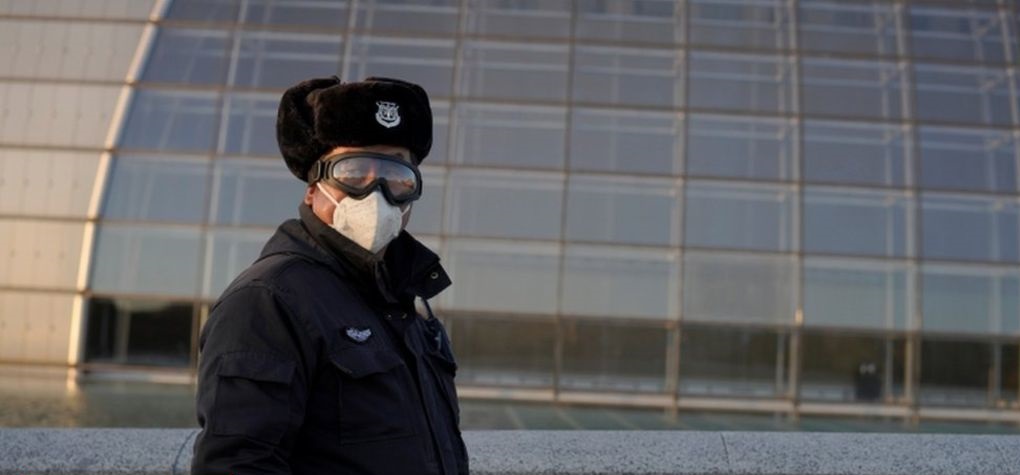
The COVID-19 pandemic, and the responses to it, have been the biggest thing to happen to the world since World War II. Like all major happenings, new conspiracy theories have abounded in its wake – some plausible, others absurd. This article provides an overview.

The first wave of conspiracy theories to achieve widespread acceptance suggested COVID-19 was a bioweapon.

When the initial outbreak happened in China three months ago, it was traced back to one particular wet market in Wuhan. This market happened to be close to the Wuhan Institute of Virology, a Biosafety Level 4 laboratory that studied extremely contagious and deadly viruses. That sparked rumours that the COVID-19 strain was a Chinese bioweapon that had escaped the lab.

Some people claimed to have proof that workers at the Institute had sold lab animals to local markets for meat, and that some of this meat had carried the virus that infected people. This assertion was demolished once it became understood that the virus had leaped to humans from eating undercooked bats, and not lab animals.

The next theory was that the strain was an American bioweapon, deliberately engineered to target Chinese people. Apparently the coronavirus targeted something in the lungs called ACE receptors, and apparently Far East Asians had seven times more of these receptors than other races. This theory was very popular when the pandemic was mostly affecting China, Japan and South Korea.

After the pandemic exploded in other countries, that theory became unpopular. It was replaced by a theory that claimed the strain really was a Chinese bioweapon after all, and that they deliberately infected themselves with it, knowing two things. One – the virus would spread to America and to the West anyway, and two – the Chinese model of government would allow them, unlike the West, to take the necessary measures to prevent it becoming a pandemic.

A second wave of conspiracy theories broke out when the world’s governments started to institute various lockdown and social control measures, ostensibly to stop the spread of the virus. One of the first of these held that the strain really was an American bioweapon after all, but it was not launched for military reasons. Rather, it was launched to stop climate change.

It has been observed that many climate experts had predicted an apocalyptic future for the human species, on account of that we appear to have cooked the planet. Some of them were saying that the world’s industrial output was such that, if we didn’t change course, our carbon emissions would raise the Earth’s temperature by five degrees Celcius by the end of the century, making human life impossible.

The first conspiracy theory of this second wave suggested that COVID-19 had been deliberately engineered to kill a large number of old people who would not be missed. This would caused world governments to shut their countries down to contain the spread, which would cause the world economy to collapse, which was the only thing that could have saved the world climate.

The next conspiracy theory claimed that COVID-19 was neither deliberately engineered nor even a truly big deal, but world governments had seized the pretext of a catastrophic pandemic as an excuse to carry out drastic social change. This theory developed out of the previous one, but suggested that the government was acting opportunistically rather than with forethought.

This theory stated that the world’s governments knew that a coronavirus pandemic was coming and that it would be reasonably bad, but that they co-operated in secret to overplay the severity of the threat, creating the impression that shutting down half of the economy was justified.

This conspiracy theory made extensive mention of something called UN Agenda 21, which apparently calls for much of the world’s urban and suburban area to be reclaimed by wilderness. This is given as one of the explanations for why the world’s governments want to cripple the global economy with lockdown measures. Forcing a shift to a cashless society is often a part of it.

A more sinister theory has it that the governments of the West will use these lockdowns to persecute critics.

In many places around the world, the ruling powers have given the police the power of warrantless entry to private property on the grounds that they need to look for gatherings of people indoors. It can be predicted, even without conspiracy theory, that the police will use this power to intimidate and harass dissidents.

With conspiracy theory, it’s easy to believe that it could go as far as kidnappings and extrajudicial murders. Right now, no-one could protest about police brutality as protests are banned while the lockdowns are in place. So the police could get away with disappearing a great number of government critics before any civil unrest could occur.

No doubt there will be more conspiracy theories as the COVID-19 pandemic worsens. The next wave of them may relate to which demographic categories are being left to die once the health system gets overwhelmed, or whether the police are able to see the entire population’s whereabouts in real time by using cellphone tracking. If a vaccine gets released, that will surely lead to another wave.

*

If you enjoyed reading this essay, you can get a compilation of the Best VJMP Essays and Articles of 2019 from Amazon for Kindle or Amazon for CreateSpace (for international readers), or TradeMe (for Kiwis). A compilation of the Best VJMP Essays and Articles of 2018 and the Best VJMP Essays and Articles of 2017 are also available.

*

If you would like to support our work in other ways, please consider subscribing to our SubscribeStar fund. Even better, buy any one of our books!