
The Three Dominance Hierarchies

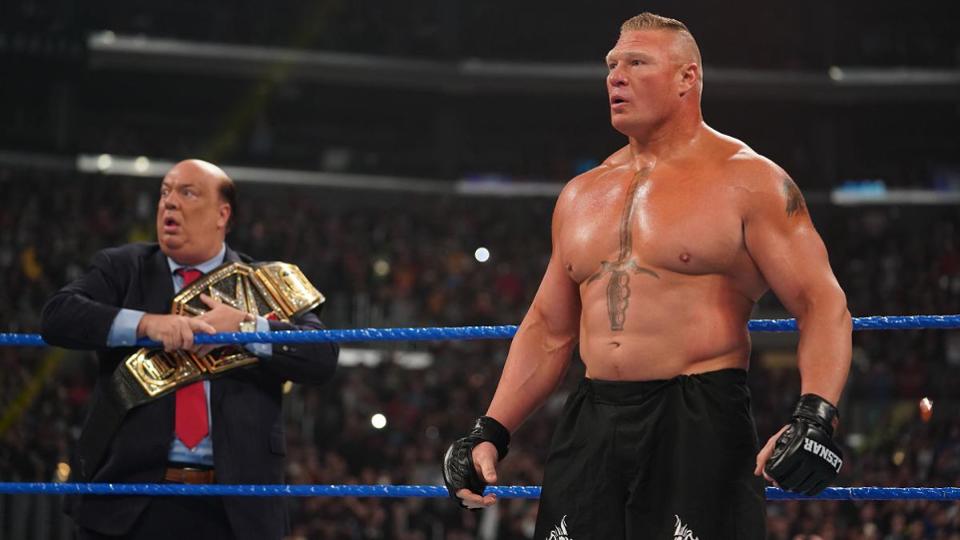
The hierarchy of iron is characterised by big muscles; the hierarchy of silver is characterised by flash suits

A lot of discussion in social psychology revolves around the idea of the dominance hierarchy. This refers to the fact that humans, as a form of primate, have social dominance hierarchies like other primates (and other mammals). There are actually three separate forms of dominance hierarchy, depending on the nature of the situation, as this essay will examine.

The elementary dominance hierarchy corresponds to the realm of iron. This is the same as the dominance hierarchy that exists in a state of Nature.

In principle, there’s little more to the elementary dominance hierarchy than who can beat up who. The dominance hierarchy relating to iron is similar to the dominance hierarchy that exists in prison. Authority is determined by a capacity and a will to use violence. The top of this hierarchy is held by mighty warriors, warlords and kings.

All the posturing one sees about who could beat up who is establishing a dominance hierarchy in the realm of iron. There is a whole art to posturing in this manner, and males will start learning it while they are still boys. The point of it is to establish who is better at fighting, but without actually fighting. The man who is believed to be the best fighter is at the top of this hierarchy and, if you disagree, he will bash you.

The dominance hierarchy that corresponds to the realm of silver is the same as the social hierarchy.

This hierarchy doesn’t reflect fighting ability but rather social status. In a civilised setting, where peace reigns, the person who generally makes the most intelligent long-term decisions will be at the top of the dominance hierarchy. Fighting in terms of social status means that the loser gets ostracised (or incarcerated) instead of killed.

The dominance hierarchy of silver is the same as the hierarchy of all the people who have agreed to play by civilised rules. The uncivilised can contest the dominance hierarchy of iron by bashing and stabbing each other, but in doing so they will fall down the hierarchy of silver, because civilised men will not respect them.

In practice, the hierarchy of silver often represents the hierarchy of wealth. When it comes down to it, this hierarchy is an extension of the hierarchy of iron because silver gives you the opportunity to hire men of iron to do your bidding. Wealth can buy loyalty, even if only temporarily. It can also buy land, weapons and propaganda.

However, social status can be afforded to people on the basis of their knowledge alone, which is why the hierarchy of silver can, on occasion, promote a knowledgeable man above a wealthy one. This is most obviously the case in the university system, where extremely knowledgeable people are afforded a high status.

The third form of dominance hierarchy is much more subtle, and consequently it corresponds to the realm of gold.

The spiritual hierarchy reflects those who are most closely attuned to the Will of God. Because every person has their own idea of what the Will of God is, it’s rare that people openly agree as to who is at the top of the spiritual hierarchy. Therefore, this hierarchy is subtle, sometimes even occluded.

At the top of the spiritual hierarchy is the person with the greatest knowledge of God. In most cases, this will not only be a person who believes in God, but will also be a person who maintains a practice that keeps them in connection with God. This means that they have explicitly repudiated the other two dominance hierarchies and no longer contest them.

These three hierarchies interplay with each other in many ways.

The hierarchies of iron and silver clash all the time in civilised society. The hierarchy of iron is almost always topped by a male aged between 20 and 40, because it’s in these years that men possess maximum physical strength. The person at the top of the hierarchy of silver, by contrast, will have achieved their position after decades of building social and financial capital, and so will be much older.

This means that the person at the top of the hierarchy of iron is almost never the same as the person at the top of the hierarchy of silver. This is all but inevitable if the population is larger than 50 or so. With two different people at the top of two different dominance hierarchies, conflict between them is possible. This is why some ancient tribes used to split leadership into a war chief (man of iron) and a peace chief (man of silver).

Likewise, the person at the top of the hierarchy of gold will not be the decision-maker all the time. This person will only be in charge as long as others put their egos down and seek wise counsel instead of trying to force their will on others. As long as people choose to fight, then they will fall behind the leadership of either the best physical fighter or the best social fighter, and neither will follow the man of gold.

Because of the Conceit of Silver, people of silver will regularly fancy themselves to be people of gold. This leads many people of silver to adopt the trappings of the people of gold and to start mimicking them. Therefore, one can never be sure that anyone claiming to be a believer in God really is one. This means that the hierarchy of gold cannot be measured.

The hierarchies of silver and gold naturally clash with each other, as those driven by egoic desires for self-aggrandisement clash with those driven to minimise the suffering of all sentient beings. The men of silver are generally happy to cause suffering to other sentient beings if it grants them more power, but in doing so they inevitably provoke the ire of the men of gold.

These three dominance hierarchies can be observed in virtually all human groups. The interplay between physical strength, social strength and moral strength all but ensures that ultimate decision-making power is never held in the same hands for long.

*

If you enjoyed reading this essay, you can get a compilation of the Best VJMP Essays and Articles of 2018 from Amazon for Kindle or Amazon for CreateSpace (for international readers), or TradeMe (for Kiwis). A compilation of the Best VJMP Essays and Articles of 2017 is also available.

*

If you would like to support our work in other ways, please consider subscribing to our SubscribeStar fund.
If The Nazis Had Won World War II

Trade is a human universal and, as such, is more fundamental than trivialities like who exterminated who

The common perception of World War II is that, had the Nazis won it, the world would now be a wasteland of rubble and burning wreckage. It’s true that the world would certainly be different in some major ways to the timeline we currently live in, but there are many things that would be recognisable. This essay asks the question: what would our societies look like today if the Nazis had won World War II?

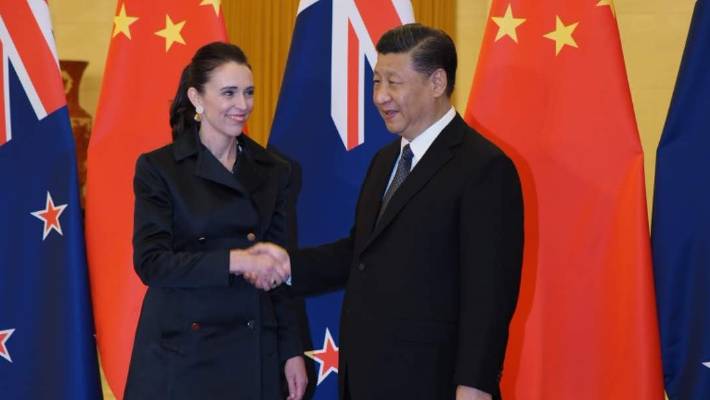
If the Nazis had won World War II, and united all of Europe under one Reich, our political leaders would have found an accommodation with it. If the Nazis had knocked out the Soviet Union and made peace with Britain, our political leaders would have shrugged, said “fair enough” and started to do business with the new bosses.

Some might doubt this, but an examination of history and human nature make it very clear. If the Nazis had won World War II, our political class would be lining up to whore themselves out to them.

If the Nazis had won World War II, and established a Lebensborn project to populate Poland with German settlers, and if this had led to an excess population such that many of these Germans sought to emigrate to other countries, our political system would tell us that this was a good thing. We would be told that we had to accept it otherwise we were evil.

Politicians all around the world would be clamouring to curry favour with the Nazi Empire by forming trade and diplomatic links with Nazi territories, or by agitating in favour of further immigration from Nazi territories or by attacking those who criticise Nazi actions. These politicians would dismiss anyone who accused them of siding with evil as conspiracy theorists, bigots and haters.

Politicians of German ancestry would be climbing onto social media saying that it’s hate speech to mention the Hungerplan, or that the Hungerplan didn’t really happen, or that the Poles deserved it because of genocidal attacks on Germans in Polish territory in the lead up to World War II. As with the Armenian genocide, a sufficiently strenuous denial would cause people to either doubt or to not care.

Many outside Europe would have ended up marrying Germans once the war tensions cooled off (as they have done in this timeline). They would say “Yes, the Nazis are evil, but Ulrike/Heike/Beate is against all that stuff.” Some of the fathers of these brides and grooms would be Nazi Party functionaries, and would have done some horrific things, but their sons and daughters-in-law would operate on a “Don’t ask, don’t tell” basis.

If the Nazis had won World War II, it would be an accepted fact that the Nazi Empire was too big to not trade with. People would say “Yeah I know that they starved a hundred million people to death but you can’t just not trade with an entity that comprises X% of the world’s GDP.” Even if they still had millions in concentration camps this would not matter.

No doubt the Nazi Empire would have established a competitive advantage in some economic manner, such as vehicle manufacture. It might be possible that the whole world would be driving German-made cars, or flying in German-made aircraft. In such a case, most people wouldn’t think anything of using such goods. Some might make jokes about the tens of millions who were exterminated to make it possible, but this wouldn’t prevent trade any more than the North American genocides prevent trade.

Had the Nazis won World War II, there would be politicians and pundits trying to curry favour with them by talking about Naziphobia. An excessive dislike of Nazis would be likened to a mental illness by politicians and by media enterprises chasing the Nazi advertising dollar. There would be mutterings that hate speech legislation ought to be introduced to prevent people from being too open about their dislike of Nazism.

If the Nazis still had people in camps, their plight would be ignored, save for the propagandising of a small number of social justice activists. These activists would widely be seen as obsessed or unhinged. In much the same way that the imprisonment of many Uighur people is dismissed as an outcome of the Uighurs’ religious fanaticism, so too would the imprisonment of the Jews be dismissed as an outcome of their predations.

If the Nazis had won World War II, our entire education system would be different. Naturally, we wouldn’t be taught that Germany started World War II by invading Poland. We would instead be taught about the German Revolution of 1918-19, and who was behind that revolution. We would be taught about the Holodomor, and how the Holodomor influenced anti-Communist attitudes in central Europe in the 1920s.

Nazism more general would be seen as an anti-Communist movement that arose in response to the horrors of Soviet rule. The role of the British and the French in forcing the Versailles Treaty on the Germans after World War I would be emphasised. The psychological effect of hyperinflation would be explained at length to all schoolchildren.

Perhaps it may even have been necessary, had the Nazis won World War II, to accept that many of the actions of the British and French Empires in colonising the world were effectively criminal. Perhaps conquering 40 million square kilometres of territory and then declaring war on Germany was a bit hypocritical. Winning the war meant we never had to face up to this charge, but losing it would have meant that we were forced to.

None of this is to say that the world would have been any better if the Nazis had won World War II. The fact is, however, that a Nazi victory in Europe would not have changed human nature in any way. Humans would still be opportunistic, acquisitive and dishonest. The winners would still write the history books, and they would still do so in a way that absolved them of all guilt.

*

If you enjoyed reading this essay, you can get a compilation of the Best VJMP Essays and Articles of 2018 from Amazon for Kindle or Amazon for CreateSpace (for international readers), or TradeMe (for Kiwis). A compilation of the Best VJMP Essays and Articles of 2017 is also available.

If you would like to support our work in other ways, please consider subscribing to our SubscribeStar fund.

The Implications Of Having Two Referendums At The Same Time As The General Election

At time of writing, there are two referendums scheduled to take place on the same day as the 2020 General Election. The referendum about cannabis law reform was scheduled long ago, but this week saw the news that there would also be a referendum about euthanasia at the same time. What will this mean for the election? Numbers man Dan McGlashan, author of Understanding New Zealand, looks at the statistics.

What these two referendums mean, in short, is that a number of people who wouldn’t otherwise have gone to the polling booths on Election Day will do so. While there, they are very likely to cast a vote for a party in the General Election. Those parties, therefore, will get boosted by the extra turnout caused by the referendums. This article looks at which parties are likely to be the beneficiaries of the fact there are two referendums at the same time as the Election.

Let’s deal with the cannabis referendum first.

The cannabis referendum will predictably bring out the sort of voter who votes for the Aotearoa Legalise Cannabis Party. Some people will make the lazy assumption that, because the Green Party has been the one most visibly championing the cannabis law reform issue, many of the people brought to the polls on Election Day will vote for the Greens. This assumption is likely false for at least one major reason.

The foremost reason is that the people who vote Green already vote in large numbers. There are strong correlations between both having a university degree and earning six figures and being a Green voter. There are also strong correlations between all of these things and turnout rate. Therefore, the sort of person who was likely to vote Green probably already did so in the previous election as well, and so a cannabis referendum won’t change much for them.

I refer to this principle as the General Disenfranchisement Rule. This states that the more a person is disenfranchised (by major measures of social status), the less likely they are to vote. Therefore, moves that enfranchise previously disenfranchised people (such as referendums) tend to bring out people from the lower social echelons. They don’t tend to bring out new National, ACT and Greens voters.

These people from lower social echelons are the sort of person who, as mentioned above, tend to support the Aotearoa Legalise Cannabis Party. In Understanding New Zealand I showed who these people are. As a general rule, ALCP voters are heavily Maori and are much more likely to be on the invalid’s benefit. They are doing it worse than supporters of any other party.

In other words, they are from categories that are hitherto heavily disenfranchised. For many of these people, deep resentment has built up regarding the cannabis issue, and if the referendum brings them to the polls they will not vote for Establishment movements. It follows, then, that there will be a considerable boost to the sort of party who already champions the underdog.

The ALCP, Labour, New Zealand First, TOP and the Greens will all split this vote (with the foremost named taking the most).

Regarding the euthanasia referendum, overseas research has shown that supporters of euthanasia tend to be young, left-wing and atheist. This means that this referendum will bring fewer otherwise disenfranchised people to the polling booths than the cannabis one.

The euthanasia idea deeply upsets elderly Christians, who, for whatever reason, feel that the terminally ill ought be forced to suffer as long as possible. However, the vast majority of these people would have come out to vote National or Conservative anyway. Therefore, holding a euthanasia referendum will not bring many extra voters to the ballot boxes on the conservative side.

On the other hand, many of the people who support a euthanasia referendum will be the sort of person who is appalled by Christian morality. These people tend to be young and educated, which means that they are on the margins of voting or not voting. They are less likely to vote Labour and ALCP, but will be more likely to vote Greens and for The Opportunities Party.

Many of these young people will be educated and, therefore, not as severely disenfranchised as the less educated voters who will come out for the cannabis referendum. This suggests that the overall electoral effect of the euthanasia referendum ought to be smaller than for the cannabis referendum.

The combined effect of these two referendums will be to bring a number of young, atheistic people in particular to the ballot boxes.

If the cannabis referendum induces young Maoris to vote and the euthanasia referendum induces young white people to vote, we can predict that this combined youth effect will see increased support for the Labour Party and the ALCP, with minor boosts to the Greens, The Opportunities Party and New Zealand First (who are falsely characterised as an old person’s party).

How large will this number be?

The correlation between turnout rate in the 2017 General Election and voting ALCP in 2017 was -0.63, which speaks to heavy disenfranchisement among cannabis users. Many of these people would not vote under ordinary circumstances. Because the cannabis referendum appeals directly to these heavily disenfranchised people, it could have a noticeable effect on turnout.

This suggests that the combined effect of the two referendums on otherwise disenfranchised voters will be enough to shift the electoral balance towards the centre-left by one to two percent, perhaps accounting for a couple of extra seats for the centre-left bloc. It’s not likely to be enough to decide the balance of power, but if the margins were otherwise thin enough it could be.

*

Understanding New Zealand, by Dan McGlashan and published by VJM Publishing, is the comprehensive guide to the demographics and voting patterns of the New Zealand people. It is available on TradeMe (for Kiwis) and on Amazon (for international readers).

If you would like to support our work in other ways, please consider subscribing to our SubscribeStar fund.

Is Being A Worker in 2019 Preferable To Chattel Slavery?

The school system and the mainstream media put a lot of effort into convincing us to be grateful for our lot. An entire apparatus of propaganda is devoted to pre-emptively quell rebellious impulses, so that our ruling classes can go about their business unaffected. As this essay will discuss, the overall quality of the lives of many of us today may be lower than that of chattel slaves in times past.

Although it is not acknowledged today, there are many advantages to being a chattel slave that are not enjoyed by modern workers.

The physical body of the slave is an expensive asset. The joke is that slaves are antique farm equipment, but there’s truth to it. In relative terms, spending on maintenance to keep the bodies of the slaves healthy is one of the largest expenses borne by a plantation owner.

One thing about the modern system of employment is that responsibility for the maintenance of the body of the worker is placed back on the worker. The worker is paid when the slave is not, and this single fact alone is supposed to entail perfect freedom. But this means that the worker themselves have to bear the cost of maintaining their body so that they can continue to work.

In today’s economy, there are many workers who are also homeless. This doesn’t happen under a system of chattel slavery, because under such a system the slaveowner is obliged to provide shelter to his valuable assets, lest they become sick and unproductive. This incentivises the slaveowner to build and provide adequate housing.

The modern employer has no such concerns. The worker themselves is responsible for their housing, and if they have to go homeless then tough shit. The employer doesn’t need to care because, if the homeless worker becomes sick or dies, they can just import some more cheap labour from overseas.

The modern worker is also responsible for their own food and medicine. One might argue that the range of food choices available to the modern worker greatly exceed that available to the slave. Against this, it has to be pointed out that the slave ended up eating more nutritious food on average – as evidenced by lower rates of obesity and diabetes. The slave may not have had a banquet every night, but their owner did have an interest in maintaining their body.

This interest in maintaining the body of the slave, on account of that it was a valuable asset, is why slaves were not beaten and whipped as much as is often supposed. The degree to which this happened would seldom have exceeded the point at which it cost the slaveowner money. A slaveowner isn’t going to beat a slave to death any more than a farmer is to set his own combine harvester on fire. It would just cost too much.

This disinclination to abuse underlings does not apply to the modern working environment. Although corporal punishment is illegal, in practice any amount of psychological abuse is legal. Bullying and threats are considered normal and acceptable ways to establish compliance.

So those who say that a slaveowner wasn’t punished for working a slave to death have to balance that with the fact that a modern employer isn’t punished for working an employee to suicide.

Some might make the argument that the modern worker is free to choose another workplace if they don’t like their arrangement at the current one. At least the modern worker is not bound to one physical area like the slave is.

The reality, however, is that all employers within a country collude to make sure that labour costs never rise above a certain point. This they primarily achieve by lobbying the government to allow, and by propagandising the population to accept, the mass importation of cheap labour. This has the effect of driving labour costs to the floor. Therefore, it doesn’t matter where the worker goes – he can only earn a pittance.

If the worker wants more than a pittance, then fuck him out the door and replace him with an immigrant who lives thirty to a house and who is (ironically) supporting a family in their homeland with their remittances. They will be happy to be earning minimum wage because they’re not trying to raise a family here.

Others might make the argument that the modern worker is free to upskill if they don’t want to take a position where they are treated poorly.

For one thing, this ignores the fact that many people are not capable of upskilling to the middle class on account of that middle-class jobs almost invariably require an IQ of 100 or higher – and only 50% of the population has that.

For another, it ignores the fact that mass immigration has been so intense in recent decades that even wages for skilled labour have been driven to the floor. Realistically, in our modern society, there are owners and the owned – and the owners feel they have the right to staff their properties with whoever they see fit.

A further advantage to being a chattel slave on a plantation is that it was possible for your work to get done. A cotton plantation only has a certain acreage, and the harvest only occurs at certain times. Outside of these times, if there’s no work to do then no work gets done. When it was time to work the days would have been long and arduous, but the shifts wouldn’t have been longer than those worked by oilmen or hospital staff today.

This contrasts with the modern workplace. In the modern workplace, the employer has their systems optimised to squeeze every last second of productivity out of their worker, who works to an industrial schedule. The average workplace is no longer supporting a local industry, but is now part of a globalised network of industries that pillages the local area for the profit of someone who lives on another continent.

Perhaps the foremost advantage to being a chattel slave, however, is that it was possible to have someone to hate. The slaveowner might expect that you will work a certain number of hours for no pay, but at least you could hate him and talk to the other slaves about how terrible and evil he was, and you could expect them to agree.

The modern workplace offers no such simple pleasure. Hating your employer will see you fired nine times out of ten, and even confessing such a hatred to a workmate is liable to see you sacked. You’re expected to absorb psychological abuse and remain grateful for the fact that you’r able to eat.

All in all, the modern industrial worker might have many reasons to feel envious of a chattel slave from bygone times. That kind of life would not have been easy, but at least the suffering inherent to it would be limited by what was technologically possible for the time. The advanced and sophisticated psychological cruelty of the industrial system would not have been a factor.

*

If you enjoyed reading this essay, you can get a compilation of the Best VJMP Essays and Articles of 2018 from Amazon for Kindle or Amazon for CreateSpace (for international readers), or TradeMe (for Kiwis). A compilation of the Best VJMP Essays and Articles of 2017 is also available.

If you would like to support our work in other ways, please consider subscribing to our SubscribeStar fund.