
Notes From The Second Intifada

I lived in Europe during the Second Intifada, which took place from 2000-2005. Although the Intifada did not take place in Europe it nonetheless had a major effect. This was partly because of the large numbers of Palestinian refugees in Sweden, where I lived. It was also because of the deep interest in foreign affairs that my then-acquaintances possessed.

Being a double outsider – someone who was not only outside the Israel-Palestine conflict but also outside Europe – I had an unusual vantage point. Few people in Sweden were familiar with New Zealanders, and so people were more open with me than they would have been with most other nationalities. This meant that people told me all sorts of things they would normally have kept secret.

Not having ever been to the Middle East, I didn’t have any direct knowledge of the conflict. Therefore, it was impossible for me to take a side in it. But I was able to glean direct knowledge of the psychology of the participants through meeting so many of them in Europe.

What Westerners usually don’t understand is that Muslims believe, with absolute certainty, that their religion is destined to rule over the entire world one day. They believe this like Westerners believe that the Sun will one day swallow the Earth, or in the Heat Death of the Universe, i.e. it’s essentially never questioned.

The difference is that Muslims also believe that this conquest is a moral imperative that outweighs all others. Any action taken to further the Islamic conquest of the world is morally acceptable. Any action taken to hinder the Islamic conquest of the world is morally unacceptable. All other moral beliefs are secondary.

Therefore, all Muslims supported all actions against the “Zionist entity”. Any amount of murder, rape or mutilation was acceptable as long as it was directed against that enemy. No act of cruelty against that enemy was even a crime. For the Muslims in Europe, news that some Israelis had been killed was like for a New Zealander to hear that the All Blacks had won. It represented a triumph in the great battle.

None of this is to say that the Israelis are any better.

The Israelis have entirely internalised Rabbi Yaacov Perrin’s notion that “A million Arab lives are not worth a Jewish fingernail.” For them, only other Jews have value. Everyone else is at best a tool, at worst an enemy. Understanding this extreme hostility to outsiders is necessary to understand the Palestine-Israel issue.

In 2001, when I first came to Europe, the Cave of the Patriarchs Massacre was still fresh in the minds of many. People knew how the massacre was celebrated in Israel. Thus, any talk of the Israelis being blameless was nonsense. In contrast to the Anglo world, where Jews are considered morally perfect, in Europe they’re generally considered imperialist invaders.

This extreme xenophobia on the part of the Jews means their behaviour is almost identical to that of their enemy, despite the Jews’ higher IQs. Just as with the Muslims, the Jews completely ignore any atrocities committed by their own side. The killing of any Palestinians is forgotten before the bodies are even cold. Also just as with the Muslims, the Jews expect you to take their side and will hate your guts if you don’t.

Jews believe they are the teachers of mankind. The concept of tikkun olam means that they consider humanity a wretched mass of brainless animals until perfected by Jewish domination. Again as with the Muslims, and their beliefs in their own superiority, this idea is never questioned. If you, as an outsider, disagree with it, you are either stupid or evil.

To not be a Jewish supremacist is to be a Nazi. In the Jewish mind there are only those two categories. Either you worship Jews as divine and perfect educators of the sinful human race, or you’re a Nazi that demands their total destruction. Yet again as with the Muslims, there is no middle ground. George W Bush’s dictum that “you’re either with us or with the terrorists” applies to both sides.

Having observed such attitudes, I knew by the end of 2003 that there is zero hope of any peaceful settlement between the two sides. One will eventually wipe the other out. Any talk of peace merely delays this inevitability.

Many Westerners have been surprised by all of the pro-Palestine/Hamas protests in recent weeks. Evidently there exists a widespread delusion that the Islamic refugees the West has let in over the past 20 years must feel an obligation to integrate, and to leave the petty squabbles of their homelands behind. In reality, they (like the Israelis) are doing everything they can to drag the entire rest of the world into the conflict. Both sides are masters of propaganda, and shamelessly pump it into the collective consciousness.

In summary, the Second Intifada taught me that the Israel-Palestine conflict is a problem that can never be peacefully solved. Both sides are full of hate to a degree that is incomprehensible to any normal Westerner. Neither side has enough basic humanity to even desire peace, let alone achieve it. And consequently they will kill each other until only one side is left.

*

For more of VJM’s ideas, see his work on other platforms!
For even more of VJM’s ideas, buy one of his books!

*

If you enjoyed reading this essay/article, you can get a compilation of the Best VJMP Essays and Articles from 2021 from Amazon as a Kindle ebook or paperback. Compilations of the Best VJMP Essays and Articles of 2020, the Best VJMP Essays and Articles of 2019, the Best VJMP Essays and Articles of 2018 and the Best VJMP Essays and Articles of 2017 are also available.

*

If you would like to support our work in other ways, subscribe to our SubscribeStar fund, or make a donation to our Paypal! Even better, buy any one of our books!

Where To Now For The Freedom Movement?

Another General Election has been held in New Zealand. The special votes are yet to be counted, but one thing is already clear: the political establishment won the election, and the freedom movement lost. While we wait to see exactly which form of the political establishment will rule over us for the next three years, there’s an opportunity to take stock of where we are and where we’re going.

Let’s recount the history of the actual freedom movement.

In a New Zealand context the freedom movement truly began with the opposition to World War One. New Zealand introduced conscription in 1916. This meant the Government forced Kiwis to fight overseas to kill the enemies of the international bankers who rule the Anglo world. Naturally, sane people opposed this, leading to them becoming labelled as “conscientious objectors“.

Conscription is a major freedom issue. There are few more egregious examples of totalitarianism than forcing men to kill people they don’t know for reasons they don’t understand. The conscientious objectors to conscription in World Wars One and Two were therefore the first real freedom fighters in New Zealand. Archibald Baxter was a household name for this reason.

The battle against globalist military adventurism continued with the battles against compulsory military training, which didn’t end in New Zealand until 1972. The basic principle remained: freedom fighters oppose the Government forcing people to do things that aren’t in their interest.

When forced militarism ended in the wake of the end of the Vietnam War, the globalist control freaks opened up a new front against the peoples of the world in the form of the Drug War. Locking people up in prison for using medicinal substances or spiritual sacraments might not be as brutal as conscripting them into battle, but the callous sadism of it was enough to spark resistance.

The names of the freedom fighters who resisted the War on Drugs are numerous. Timothy Leary, Ken Kesey, Terence McKenna, Jack Herer and many others fought for the freedom to explore our own minds free of government interference. Inspired by such people, the Aotearoa Legalise Cannabis Party was founded in 1996.

After the 20th Century ended we got 9/11 and the Patriot Act. The Patriot Act introduced restrictions on civil liberties that were previously considered unthinkable. First and foremost, it allowed for widespread spying on and surveillance of American citizens by the American Government. Incredible volumes of information were collected on everyone in an effort to predict the next terrorist attack.

These measures were soon copied by other Anglo nations, leading to the Search and Surveillance Act in New Zealand. The end result was a new wave of freedom fighters. Julian Assange and Edward Snowden are among the best known of those who resisted the new totalitarianism, this being more like Big Brother than even Orwell had predicted.

Recently we have seen the Covid pandemic excuse a new suite of totalitarian measures from the authorities. Vaccine mandates outraged a large number of people and led to the Parliament Lawn protests in 2022. These protests were one of the major achievements of the freedom movement in New Zealand, and created another new wave of people who understood the value of freedom for its own sake.

Looking back at all of these battles, some patterns are evident.

First, the freedom movement is primarily a movement against government coercion. It’s not terrorism to understand that governments often have different interests to their citizens. When those interests clash, governments often use their monopoly on violence to force the citizens to do the governments’ bidding.

The freedom movement isn’t primarily a moral crusade. It isn’t primarily a temperance, chastity or Puritanical movement. It might contain elements of those things on occasion, but the number one enemy is government forcing the citizens to do things against their own interests (as determined by the citizens). The freedom movement is certainly not about using the power of government to coerce others to behave morally.

Second, the freedom movement is against the freedom to cause harm to others. We must observe Zechariah Chafee’s maxim that “Your right to swing your arms ends just where the other man’s nose begins.” As such, no marital rapists, pedophiles, armed robbers, slavery advocates, hard drug traffickers, cheap labour importers or vaccine mandate supporters need be included.

These two points give us a much better idea of what we can agree freedom is, and therefore what the freedom movement is about.

Kelvyn Alp’s suggestion was to not worry about freedom so much, and to focus on truth instead. This means facts and evidence first and foremost. This makes sense as freedoms are usually downstream from perceptions of truth. Unfortunately there are many different ideas about what truth is, and many different ideas about how to determine truth from falsehood.

It seems that the freedom movement can’t make any progress until we develop a coherent fundamental philosophy. This will have to include the values and beliefs commonly agreed upon by those who genuinely desire freedom. Perhaps the model to follow is the American Constitutional Convention that took place after the American Revolution.

*

For more of VJM’s ideas, see his work on other platforms!
For even more of VJM’s ideas, buy one of his books!

*

If you enjoyed reading this essay/article, you can get a compilation of the Best VJMP Essays and Articles from 2021 from Amazon as a Kindle ebook or paperback. Compilations of the Best VJMP Essays and Articles of 2020, the Best VJMP Essays and Articles of 2019, the Best VJMP Essays and Articles of 2018 and the Best VJMP Essays and Articles of 2017 are also available.

*

If you would like to support our work in other ways, subscribe to our SubscribeStar fund, or make a donation to our Paypal! Even better, buy any one of our books!
Old Poverty vs. New Poverty

There is a popular distinction between Old Money and New Money.

Old Money is what everyone is familiar with. It’s what you have when you’re a prince or an aristocrat. It’s when you grow up learning how to manage an estate, rather than learning skills to trade for a wage. Old Money is when you have a pedigree. Most of your ancestors did well and most of your family are doing well. There are monuments/parks/buildings/roads named after your relations.

New Money is what you have when your parents escaped from the working class. Maybe one started a business and got rich, maybe one became a sports star, maybe one won the lottery. Maybe your parents are old enough that they could escape the working class by studying and working hard. Probably the rest of your family is poor, and you might have a lot of criminal cousins.

A behavioural difference is apparent. New Money is much flashier and ostentatious than Old Money. This is a function of New Money’s underlying insecurity – the inescapable suspicion that they achieved their position through luck, and that it won’t last. Being insecure, New Money is more likely to bully. It lacks grace, dignity, gravitas and the other qualities associated with good breeding.

Old Money is secure. Old Money knows that if it fucks up, some uncle or great-aunt will be there to provide a cushy job for a quick rebound. Even in cases where help from close relatives isn’t enough, it can usually rely on the reputation of the family name to seal a good deal. And if that doesn’t work, Old Money can always rely on the qualities of their breeding to see them through.

When the economy expands, the central struggle is Old Money vs. New Money. This occurs when the descending aristocracy, on the way down, meets the ascending merchantry. This is the same as what George Orwell called the High vs. the Middle. It’s a natural historical division that most people know about.

When the economy contracts, however, you have Old Poverty vs. New Poverty.

For example, I’m Old Poverty. I’m used to being poor. I was raised by a single mother on welfare, and although my grandparents were great people they were always broke. These grandparents brought me up on stories about the Great Depression, and how they learned to “make do”. Many of the stories began with “we didn’t have a…”

Old Poverty makes it easy to live on a Student Allowance or other benefit, as it usually isn’t much less money than you grew up on anyway. You naturally know how to make do when you’ve been raised by grandparents who were also poor. Poverty doesn’t cause as much anxiety when it’s the natural state, so is not resented as much. Actually having money, on the other hand, is seen as a bonus and is not taken for granted.

In coming years, we will see a lot more of a phenomenon that has hitherto been rare: New Poverty. This has never previously existed in any large number because the economy has kept expanding. But in coming decades, as we hit the limits of growth, we will have economic contractions.

New Poverty is when your parents were able to buy a house and raise a family on their wages – and you can’t. It’s when your parents keep asking you when you’re going to give them grandchildren, and you have to keep explaining that the maths doesn’t add up. It’s when you hit 40 and still haven’t paid off your student loan. It’s when you’re constantly asking yourself how things turned out so bad.

New Poverty is different to someone born into money who crashes out through their own bad decisions. New Poverty is when you do everything (or almost everything) right and still end up renting. You study hard, you don’t get a criminal record, you don’t do Class As, and you still find yourself making $60,000 a year and needing a $900,000 mortgage.

It remains to be seen how Western society deals with the phenomenon of widespread New Poverty.

One of the features of New Poverty is that it’s likely to lead to a massive increase in dissent. Not having expected to become poor, many of those falling from the middle class into New Poverty will become resentful about their miserable station. Already there is a widespread incel movement in the West comprised of men who demand the very best.

In the past, the coming of New Poverty portended revolution. Old Poverty can handle being poor, but New Poverty tends to become bitter. So in times when middle-class or upper-middle-class people are cast down into the working class, we can expect them to fight to get back to their original position. Here it’s worth recalling that many revolutionaries started out in the minor aristocracy.

If we don’t get revolution, we might get what Aldous Huxley predicted – a world where everyone is zombified by pharmaceuticals. Maybe the vast masses will be paralysed by a matrix of screen propaganda, prescription pills and long working hours, lacking the energy to revolt against the technologically-empowered ruling class.

*

For more of VJM’s ideas, see his work on other platforms!
For even more of VJM’s ideas, buy one of his books!

*

If you enjoyed reading this essay/article, you can get a compilation of the Best VJMP Essays and Articles from 2021 from Amazon as a Kindle ebook or paperback. Compilations of the Best VJMP Essays and Articles of 2020, the Best VJMP Essays and Articles of 2019, the Best VJMP Essays and Articles of 2018 and the Best VJMP Essays and Articles of 2017 are also available.

*

If you would like to support our work in other ways, subscribe to our SubscribeStar fund, or make a donation to our Paypal! Even better, buy any one of our books!
Why I’m Voting New Zealand Loyal This Saturday

I’m voting for New Zealand Loyal this Saturday. I make a point of never voting for the same party two elections in a row, because I don’t want to feel like I can ever trust one of the bastards. I voted ALCP in 2020, so can’t vote for them again this year, and don’t want to abstain again like I did in 2017.

The mainstream parties, however, don’t appeal. National and ACT seem like nasty money-worshippers. Labour and Greens hate me because I have white skin. All four are globalists who want more cheap labour imports, leading to lower wages and higher rents, the last thing my working-class family needs. I cannot, with good sense, vote for any of them.

New Zealand First is not really an alternative. They might be nationalist instead of globalist, which is a big plus. But they are still opportunist liars. Their refusal to support cannabis law reform demonstrated to me that they’re not really interested in freedom. As such, I could not support them with a clean conscience.

As existing followers of my work will know, I am an alternative centrist. This means that I oppose the political establishment (alternative), but consider the alternative left and the alternative right both dangerous extremists (centrist). I believe the American Revolutionaries came closer than anyone else to getting it right.

So when I went to see Liz Gunn and Peter Vaughan of New Zealand Loyal speak in Nelson on the 5th October, I went expecting to not vote in this year’s election. None of the other parties, I already knew, were alternative centrists. The closest was the Hamas-supporting Greens on the alternative left and the soulless ACT Party on the alternative right. Neither were good enough.

At the Nelson meeting, Gunn put forward what I felt to be a nationalist alternative centrist narrative, one that I have long argued for myself.

It was nationalist. Gunn’s refusal to work with globalists particularly appealed (the globalists are the ‘them’ of “Loyal to you. Not to them”). One of the messages that I endeavour to push is that globalists are the natural enemy of every single national group that wants to live in peace. Unfortunately, few New Zealand politicians accurately perceive the globalist menace (Peters is perhaps the only other).

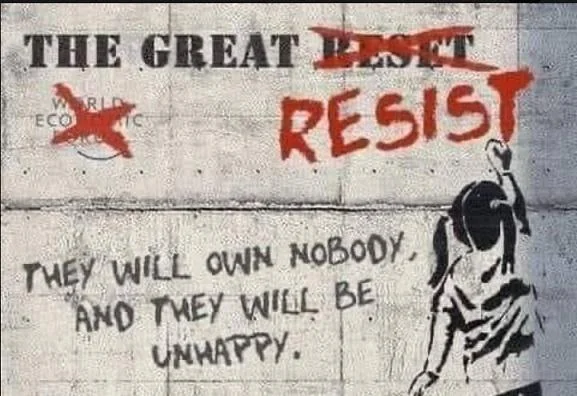
It was alternative. Gunn excoriated the political establishment and their various freedom-thieving schemes, and showed interest in a number of issues that the mainstream media would dismiss as “conspiracy theory”. Among these were water fluoridation, Marsden Point, the United Nations, the World Health Organisation and the World Economic Forum.

It was also centrist. To win the right-wing voters, there were the obligatory spiels about the 1% tax and the evils of Labour’s abortion law. But it wasn’t all right-wing. Gunn also expressed her support for the Portuguese model of ending the War on Drugs, and suggested that, if a NZ Loyal supporter didn’t have an NZ Loyal candidate in their electorate, they should vote for the ALCP one (which I will do, being in the Te Tai Tonga electorate).

I’m appalled by leftists. I hate it how they have completely abandoned the New Zealand working-class in favour of fashionable issues coming out of American universities. Workers can’t own homes but they expect me to care about trans rights? I hate it how I can’t talk to them about how working-class Kiwis would benefit from less immigration, lest they sneer at me and call me a racist.

I’m even more appalled by the right-wing attitude to life. The snivelling, moralising, cowardly forces that wanted to ban Mortal Kombat video games and ban Eminem CDs and ban cannabis and ban everything that anyone might enjoy in life, lest one displease some sadistic patriarch in the clouds, are not friends of mine either. To deny life is a slave’s mindset.

I’m most appalled by the New Zealand political establishment. It is sadistic to sit and support the status quo while so many Kiwis are suffering from homelessness, inaccessible mental healthcare, poverty wages and traumatic stress disorders. If the left wing and the right wing are misguided, the political establishment is cruel.

So I’m an alternative centrist. I was already convinced of New Zealand Loyal’s alternative credentials, thus the support for ending the Drug War sealed the deal for me.

The fact that many of the influencers in the so-called “freedom movement” take the authoritarian side when it comes to the Drug War had already ruled out that I would ever support them. Those who took the authoritarian side on vaccine mandates aren’t allowed to be prominent in the freedom movement, so why should those who take the authoritarian side on the War on Drugs?

Liz Gunn stands out to me, among all the others, as a genuine supporter of freedom.

That Liz Gunn and NZ Loyal take good ideas from both extremes of the alternative spectrum is why I am voting for them on Saturday. They might not get 5%, and, if they do, they might not be any good. But I will still support them on the grounds that they appear to be the closest there is to the nationalist alternative centre.

*

For more of VJM’s ideas, see his work on other platforms! https://linktr.ee/vjmpublishing
For even more of VJM’s ideas, buy one of his books! https://www.amazon.com/author/vincemcleod

*

If you enjoyed reading this essay/article, you can get a compilation of the Best VJMP Essays and Articles from 2021 from Amazon as a Kindle ebook or paperback. Compilations of the Best VJMP Essays and Articles of 2020, the Best VJMP Essays and Articles of 2019, the Best VJMP Essays and Articles of 2018 and the Best VJMP Essays and Articles of 2017 are also available.

*

If you would like to support our work in other ways, subscribe to our SubscribeStar fund, or make a donation to our Paypal! Even better, buy any one of our books!