
Category: politics
VJMP Reads: Edward Bernays’s Propaganda I

Fittingly, the Propaganda Ministry turns its attention to the granddaddy of all propaganda literature, Propaganda by Edward Bernays. This short book was written by Bernays, a nephew of Sigmund Freud, by way of explaining his own prodigious insight into the manipulation of mass consciousness in the America of 1928.
He opens in the first chapter, “Organising Chaos”, with a stark declaration that the “organised habits and opinions” of the masses are formed according to the will of men who effectively form an unseen government. These men mold our minds and our tastes, mostly without us knowing who they even are.
Bernays contends that this is necessary, owing to the confusion ordinarily created by the democratic process, with its hundreds of different candidates. People would become confused if they were expected to understand the inner workings of all the issues that politicians are faced with. Therefore, the media narrows things down to a range that can be grasped.
Likewise, Bernays claims that society consents to have its choices relating to commercial products narrowed down by way of media propaganda. Because of reasons like these, there is a constant battle going on to capture the minds of individual people.
Bernays mentions that it may have been better to have had committees of wise men, who made decisions about the best way to do things. But we elected for the opposite of this. We have free competition of ideas, and in order for this to not lead to chaos we have to allow for leadership and propaganda to direct attention. This can be misused, but it is necessary nevertheless.
The advent of mass media has changed the way that the world is organised. At the time of the writing of the American Constitution, the village was the basic unit of society. Thanks to the mass media, it has become possible to be organised alongside people who live thousands of miles away.
Our society, instead of being divided by coherent geographical units, is now cleaved by all manner of social, political, ethnic, religious, racial or moral divisions. It is along the lines of these divisions that propaganda is spread. One influential group leader in any of these domains can soon have all the others in that domain following an idea.
Bernays labours the point that these cleavages are nonetheless comprised of individuals who exist in several groups, and therefore these groups are all interlaced. This is, in Bernays’s view, what society is. It is how democracy has chosen to simplify its decision making.
He summarises the book in the final paragraph of the first chapter. It is to explain how the minds of people are molded in modern democratic society, and how the manipulators of it go about their work.
*
If you enjoyed reading this essay, you can get a compilation of the Best VJMP Essays and Articles of 2018 from Amazon for Kindle or Amazon for CreateSpace (for international readers), or TradeMe (for Kiwis). A compilation of the Best VJMP Essays and Articles of 2017 is also available.
The Case For Cannabis: The Market Needs to Be Regulated
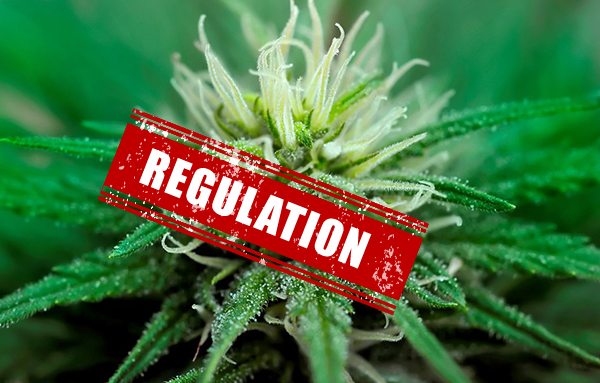
One of the strongest arguments for cannabis law reform is the appeal to regulate the market. The idea that a government can make cannabis illegal and then it just “goes away” is childish, and the historical example has borne this out. As this article will examine, legal cannabis is the only realistic way to regulate the market.
Many people envision that the world before cannabis prohibition was one of chaos. Shady dealers set up outside high schools to sell to pupils, pharmacists pushed untested and unresearched cannabis products on a naive public and criminal enterprises got fat with the income from cannabis bootlegging. The reality is closer to the reverse of this.
When a substance such as cannabis becomes illegal by act of law, what that means in practice is that the manufacture and supply of that good becomes completely unregulated. Making something illegal is not a way of regulating it – it’s a way of putting it into the “too hard” basket. It shifts control from the regulators to the black market.
The black market doesn’t attract nice people. It generally attracts people with no better options – desperados. Because there is currently no opportunity to legally profit from cannabis in New Zealand, the only people who deal with the subject matter are black marketeers. There is no guarantee that such individuals will adhere to what has been established overseas as professional industry standards for manufacture and supply of cannabis products.
Regarding the manufacture of goods on the black market, it’s apparent that there are little in the way of health and safety considerations. This is a relatively minor concern in the case of cannabis, but it’s still possible that any bud manufactured by a criminal enterprise has used unwanted chemicals in the growing process. They might have used chemical fertilisers that leave side-products that people don’t want in their bodies, or treated the bud with something to make it appear danker.
When it comes to supply, the situation is even worse. A normal business primarily competes with others through advertising, whether word-of-mouth or commercial. They don’t compete through intimidation. The manager of the local Countdown would never send an underling to take out Fresh Choice workers for selling on the wrong turf. Black marketeers selling illicit drugs happily take their competitors out such ways though.
The vast majority of the criminal activity associated with cannabis comes about because of prohibition. It’s isn’t natural to cannabis. With no regulatory oversight, there’s nothing stopping the black market selling to 13-year olds or wiping their competitors out in turf wars. Cannabis is already illegal, so it’s not like the victims could go to the Police. Black market actors have free rein until they are arrested.
Practically speaking, there is going to be a cannabis market whether we like it or not, so we might as well make sure that it’s on the level.
Regulation would solve the problem of tainted product, because growers will need to be able to account for their grow methodology and process. End consumers will be prevented from becoming ill because the possibility of dangerous chemicals being used at some point in the process will be minimised. If anyone does become sick, responsibility can be placed on the correct party and appropriate measures taken.
Moreover, a regulated cannabis supplier or dealer is much more likely to comply with public requests for decency than the black market is. Regulation will inevitably mean that cannabis dealers will need to become licensed, which means that they are strongly incentivised to adhere to laws regarding not supplying to minors, not supplying to intoxicated people etc. They also can’t shoot their competitors and expect that this will lead to a greater market share.
A final benefit is that regulation will mean that cannabis suppliers cannot deal with other products as well. As mentioned elsewhere, the gateway drug effect can only occur when people seeking cannabis are exposed to hard drugs. A professional cannabis retailer will not have an incentive to offer their customers methamphetamine, unlike a gang member. In practice, they are unlikely to even be allowed to sell alcohol or tobacco.
All this means that regulation will have the effect of almost taking cannabis away from the black market entirely. Those who are allowed to compete on the legal market for cannabis will have to meet quality standards that ensure that safety of the users (to such a degree that this is possible when people take psychoactive drugs). This will have the overall effect of reducing harm.
Cannabis should be legal because regulation of cannabis causes less suffering than criminalising it. We need to abandon the childish idea that making something illegal makes it go away, and employ a sophisticated and intelligent approach to dealing with the issues caused by cannabis. The only realistic way to do this is through regulation.
*
This article is an excerpt from The Case For Cannabis Law Reform, compiled by Vince McLeod and due for release by VJM Publishing in the summer of 2018/19.
Our Problem Isn’t Too Much Masculinity – It’s Too Little
Our culture is so fucked up that it has a number of things completely backwards. It’s easier to find a doctor willing to tell you about the benefits of male infant genital mutilation than it is to find one willing to tell you about the benefits of medicinal cannabis. As this essay will examine, one of the things we currently have backwards is blaming a lack of masculinity on an excess of it.
The phrase “toxic masculinity” is bandied about, ever more frequently nowadays, as if it described an established phenomenon in psychological science. Ostensibly, the term is limited to the description of particular behaviours, performed by men, that are toxic to others or to society at large. In reality, the term is only ever used in the attempt to belittle men – or masculinity in general.
People frequently use the term with the implication that the toxicity comes from an excess of masculinity. But we live in the least masculine age in the history of Planet Earth. In New Zealand at the time of the 2013 Census, around 14% of children were raised by single mothers. When they are at primary school, 88% of their teachers will be women.
This means that most of the adult influence on boys in their formative years is female. Some boys will get to school having never seen a positive male role model or perhaps any at all. If these children are growing up to cause problems because they don’t recognise other people’s physical boundaries, it’s not the sort of problem that more femininity will fix.
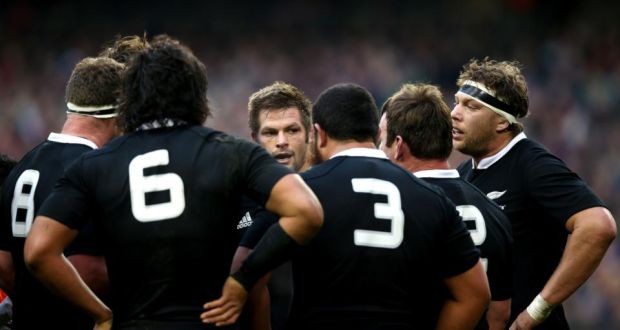
The phrase “toxic masculinity” is often used to attack participatory sports, especially under the guise that these sports teach men to be aggressive, domineering and invasive of other people’s personal space.
The reality is – as everyone who has played sport knows – the rules of every game force you to channel aggression into goal-directed activity that does not harm anyone without their consent. You can’t just punch someone on a sporting field, or you’ll be sent off and possibly kicked out of your team. In this regard, the older men (usually) act as models of composure for the younger ones to follow.
Moreover, participatory sports have done more than any government initiative to break down barriers between different race and class groups and encourage them to all meet on the level. On a cricket field, a three doesn’t become a four just because the batsman was brown or middle-class or for any other reason. Masculine energy can therefore be used as a leveller in the interests of horizontalisation just as much as feminine energy can.
Our time in history is so completely feminised, and so confused, that hardly anyone even knows what masculinity is any more. It’s little wonder that some people can call it toxic with a straight face, when they have such a confused conception of it.
We’re so confused nowadays, that we have to go right back. Way, way, way back before even Jesus and even Socrates and Plato, back to the real ancients, who told us: masculinity is the ability to impose order upon chaos. Fundamentally the world is made of a feminine yin-chaos and a masculine yang-order, and in much the same way that the feminine makes chaos out of order, so too does the masculine make order out of chaos.
There are several ways that a person can impose order upon chaos, but correct conduct means that you impose order upon yourself first. This is something that is understood by every actual man, and is not understood by boys or by boys masquerading as men. They go out to impose order upon the world first, and do not realise that the strongest influence is the most subtle.
Socrates, perhaps the foremost Western example of manhood, taught that happiness came from making peace with death. Esoterically, one might describe this as imposing order upon one’s own spirit. As a previous article here has discussed, a failure to impose order upon one’s own spirit by making peace with death is akin to labouring under chains of gold, such that one becomes the slave of anyone who can credibly promise absolution.
A person who has imposed order upon their own spirit is able to impose order upon their mind also. Not being afraid of death means to not be in a state of constant panic at the inevitability of it, which means that it becomes possible to use one’s time on low-intensity pursuits such as reading. They will also be much more able to behave appropriately, on account of having imposed order upon their emotions.
It can be seen here that the common modern conception of masculinity is completely arse about face.
A properly masculine man will not sexually harass women for the simple reason that he has imposed order upon his reproductive instincts and, as such, can discharge them when appropriate, as a matter of will. His animal instincts don’t lead him – that would be an example of chaos being in control.
Likewise, a properly masculine man doesn’t feel the need to dominate everyone, or to boss them around, or to avenge minor insults with violence. He has imposed order upon his own ego, and as such does not have the same insecurities that a less masculine man would have. A truly masculine man has imposed such order upon his emotions that others can not easily knock him off balance. He is in charge of himself.
As such, a properly masculine man attracts the feminine not through force and aggression, but through attracting its freely-willed devotion. Rapists and molesters are not examples of too much masculinity but too little. A real man will have imposed such order upon his life, his behaviour and his appearance, that women will naturally want to be devoted to him, and therefore he doesn’t feel impelled to move on them without their consent.
Men who act on their impulses without consideration for the well-being of others are not “toxic males” – they are shitheads. What our society needs is more masculinity, so that young men can see examples of the correct imposition of order upon chaos. If young males are shown older males being rewarded for correctly imposing order upon themselves, they will imitate it. Thus, what we need is more masculinity, not less.
*
If you enjoyed reading this essay, you can get a compilation of the Best VJMP Essays and Articles of 2018 from Amazon for Kindle or Amazon for CreateSpace (for international readers), or TradeMe (for Kiwis). A compilation of the Best VJMP Essays and Articles of 2017 is also available.