The Case For Cannabis: It Doesn’t Matter That People Have to Pay For Cannabis Users’ Healthcare

One argument that is often made by people in response to proposals for cannabis law reform is that they don’t want to pay for cannabis users’ healthcare. The logic goes that cannabis law reform is unfair on the general populace, because they have to fork out for the inevitable increased healthcare burden through general taxation. As this article will examine, such an attitude is mistaken.

Like many of the false arguments against cannabis law reform, this one relies on another bogeyman. In this case, it’s the supposedly heavy burden that the health system would suffer under if cannabis were to be made legal. This burden would have to be borne by everyone, and it isn’t fair to expect them to do so.

As with many examples of false logic, this argument depends on seeing the situation incorrectly.

For one thing, it’s possible that, if cannabis were to become legal, some of the adverse consequences of its use would become more widespread. But it’s foolish to think that, in such a case, cannabis use would go up while the rates of all other recreational drugs would stay the same.

In reality, recreational cannabis is a competing good to alcohol. A lot of people use it because they find the ritual of rolling up and smoking a joint as relaxing and enjoyable as drinking a beer, and at least as social. Everywhere that cannabis is legal, at least some of the population have decided that they prefer to socialise over some weed than over some booze.

So the supposed “extra” healthcare burden that would be caused by increased cannabis use is balanced, perhaps even several times over, by the savings that accrue from health problems that were prevented by the reduced use of other recreational drugs.

Alcohol abuse is believed to cost the country $4.9 billion per year. The total cost of cannabis use on our health system right now is, even if one uses the ultra-conservative Drug Harm Index, $431 million. This latter figure is not merely the cost of cannabis use to the healthcare system but also ancillary costs, so the true figure is much lower (this latter figure also includes $126 million of costs due to premature death caused by cannabis use and is therefore somewhat fantastical).

So even if legal cannabis doubled the total harm that the Drug Harm Index says that cannabis does to society, this would be more than compensated for if it reduced the total harm done by alcohol by 10% or more.

A second factor to consider is that the cost of cannabis damage is small compared to the cost of old people just clinging onto life for a few more years.

New Zealand’s total healthcare expenditure was $16.8 billion last year, and people aged over 65 used over 42% of that – and that percentage is increasing. So people over 65 use roughly $8 billion dollars’ worth of taxpayers’ money on health costs every year, much of which is wasted on futile attempts to delay a terminal illness.

Even if we ignore that cannabis use is not higher in jurisdictions where it is legal, and even if we ignore that legal cannabis would mean users could use much less harmful routes of administration, and even if we assume that the total healthcare damage would be double under legalisation than what it is now, it still wouldn’t be a great amount of money compared to what is already spent.

The third argument is, of course, that it simply doesn’t matter if cannabis users’ healthcare has to be paid for out of general taxation. As mentioned above, alcohol abuse costs the country almost five billion dollars a year, which amounts to close to $1,600 per taxpayer. If such a high bar is acceptable for alcohol, then its acceptable for cannabis as well.

Cannabis users are, or should be, part of our society the same way as anyone else is. So in the same way that we’re happy to pay for the healthcare costs of cigarette smokers, alcohol drinkers, Olanzapine takers (the side-effects of many psychiatric medicines are bad for the physical health), rugby players, horse riders and mountain climbers, so too should we be happy to pay for the healthcare costs of cannabis users.

Legal cannabis would make it easier to minimise healthcare costs anyway, because doctors would be able to encourage cannabis users to avoid joints and dabs in favour of edibles and vapourisers. So if healthcare costs really are a concern, legal cannabis is better for more than one reason.

In summary, it’s not fair to object to cannabis law reform on the basis that the general taxpayer would have to pay for a sudden massive healthcare burden. A repeal of cannabis prohibition would not lead to such a burden – in fact, a sober look at the experience suggests the overall healthcare cost of recreational drug use would fall if cannabis became legal.

*

This article is an excerpt from The Case For Cannabis Law Reform, compiled by Vince McLeod and due for release by VJM Publishing in the summer of 2018/19.

Peterson Derangement Syndrome

Many words have been written about Trump Derangement Syndrome, and Obama Derangement Syndrome, and Bush Derangement Syndrome. This refers to the ability to cause people, who are otherwise reasonable, to go insane at the mere mention of your name. It’s rare for anyone who is not an American President to achieve this power level, but recently one man has threatened to: Canadian Psychology Professor Jordan Peterson.

Peterson was a minor celebrity among YouTube psychology nerds for his insightful lectures into psychopathology and Nietzsche when he inadvertently decided to tell the world that the emperor had no clothes. This he did in the form of refusing to accede to compelled speech in the form of pronouns.

In particular, he spoke out about a Canadian bill called C-16, which – according to Peterson’s interpretation – would lead to people facing criminal charges for referring to a person with a pronoun other than the one they would prefer to be used. The collective consciousness was shocked, at first, but Peterson insisted that refusing to use a person’s preferred pronoun was a fair thing to do, in cases when that pronoun clearly wasn’t accurate.

It was then the shitstorm began.

Accusations of “literal fascism” began to fly as the social justice warriors demanded Peterson’s head for refusing to meet their demands to dance on command. In response, he threw more petrol on the fire. The psychologist was not content with merely saying that transgender pronouns were bollocks, but that an entire suite of leftist shibboleths were all garbage as well.

Communism was crap, the gender gap was false, most of the racial IQ difference is genetic and – worst of all – he refuted the tabula rasa theory.

Peterson Derangement Syndrome is when an individual is reduced to a hissing, demented rage merely at the mention of the name of Jordan Peterson. Much like the derangement syndromes named after American Presidents, a person with this condition is unable to concede that there might be anything good about Peterson, or that he might have any ideas worth listening to. The mention of his name seems to trigger a limbic hijack in those with the condition.

Unlike the majority of talking heads in the media, Peterson is a legitimate intellectual. Not only does Peterson actually have a Ph.D, but he has also worked for many years as a Psychology lecturer at both McGill and Harvard Universities. On top of that, he has over 10,000 academic citations.

So part of Peterson Derangement Syndrome is believing that a man with a Ph.D and over 10,000 academic citations is not a legitimate intellectual. Sufferers of it are happy to dismiss him as a charlatan and a fraud, someone who simply makes things up with no basis in reality at all. This is clearly absurd when the man in question has passed peer review with such accolades.

The anti-Peterson movement has taken on cult-like properties, in the sense that for people with Peterson Derangement Syndrome, the rest of the world is either with them or against them on the matter. Social media has induced them into believing that Peterson is a Hitler-like figure who campaigns tirelessly for the reintroduction of some kind of fascism. It can be seen from this, that part of Peterson Derangement Syndrome is simple mass hysteria.

Many Peterson haters deride his fans as a horde of incels, desperately looking for a father figure to help them replace their lost masculinity. In this, they have half of a point, but they also betray their own neurosis. Most Peterson haters also hate their own fathers, and usually because those fathers failed to provide a space of order in which those people could grow. This father-hate is then displaced onto the foremost father figure, which is Peterson.

Many of the people who become deranged at the mention of Peterson’s name are living out some unresolved conflict with an authority figure, from some point in their past. Usually this adversary is their father, but it could also be a teacher, guidance counsellor or even a Police officer. To these damaged souls, Peterson represents a force trying to suffocate their free spirit.

At the core of Peterson Derangement Syndrome is a hatred of masculinity, in particular a hatred of order.

Peterson is himself an exceptionally masculine figure, having succeeded in imposing major order upon his own life. It’s extremely difficult to become learned enough to get tenure as an academic professor, especially if you weren’t from a family that groomed you for such a role from youth. It takes incredible amounts of will and commitment, and many people see such a thing and feel self-hatred.

So some of what causes Peterson Derangement Syndrome is simple Tall Poppy Syndrome. The majority of his critics are bleating soyboys who would struggle to read a book, let alone lecture an academic discipline for many years and then write a book. Much of their opprobrium can be chalked up to the simple envy of a lesser towards their better.

At the core of it, though, is a depraved alliance of trans activists, Marxists, fedora-tippers, neo-Luddites, anti-science morons and, ironically enough, actual Nazis, all of who have generated so much collective outrage that encountering someone who likes Peterson is enough to tip them over the edge into derangement. Claiming to be a Peterson fan is to declare yourself the enemy.

Now that Peterson has been invited to speak at a Trilateral Commission meeting we can guess that his influence will be around for a very long time. This will mean that Peterson Derangement Syndrome will only become more intense, pushing up towards Donald Trump levels.

*

If you enjoyed reading this essay, you can get a compilation of the Best VJMP Essays and Articles of 2018 from Amazon for Kindle or Amazon for CreateSpace (for international readers), or TradeMe (for Kiwis). A compilation of the Best VJMP Essays and Articles of 2017 is also available.

The Case For Cannabis: Reform Would Not Send The Wrong Message to the Children

One of the usual reasons trotted out for opposing cannabis law reform is that it “wouldn’t send the right message to the kids”. This was the statement that John Key frequently made to the media when pressed on the subject. As this article will examine, however, this thought-terminating cliche also attitude is mistaken.

It might sound laughable, but there are many in the New Zealand Government who believe that their personal conduct sets an example for the rest of the country to follow. These deluded fools genuinely believe that the young people of the nation look to them as an example of integrity, honesty and correct conduct. So detached from the people are they, that they are entirely unaware of the contempt in which they are held.

Some of these egomaniacs are afraid that making any move on cannabis law reform would “send the wrong message to the kids”. By this, they think that liberalising the cannabis laws will lead to a spate of young people taking up cannabis use as a habit, on account of that their elders had sent them the message that it was okay.

Leaving aside the obvious retort that this would actually be a good thing if it stopped those young people from doing as much alcohol or synthetic drugs, there are a number of reasons to think that this reasoning is illogical.

For one thing, the message that the politicians appear to be sending by example of their conduct is one of alcohol, tobacco and sleaze. If they are the ones setting the standards for the young to follow, then we can look forward to many decades of boozing, bribery, infidelity, dishonesty, backstabbing and all manner of petty quibbling and bitching.

For another thing, we have to ask ourselves if prohibition itself is actually a good message to be sending out.

The message that the Government seems to be sending by enforcing cannabis prohibition is that the best way to deal with drug problems is by putting people in cages. If someone has a drug dependency of some kind, the way to help them is not by giving them medical care, but by physically forcing them into a cage full of rapists, murderers and thieves.

They seem to be telling people that empathy and compassion don’t factor into government decisions, and that they are more than happy to brutally force citizens to conform to arbitrary laws, even when those same citizens don’t consent to them. Your body is the property of the Government, and they can do what they want with it, including put it in a cage if you use a medicine they don’t approve of.

Worse, they’re also sending the message that science, logic and reason don’t factor into government decisions. The Government is happy to go along with foreign mass hysteria about reefer madness, and thinks it acceptable to force laws onto New Zealanders on the grounds that they have been introduced overseas, with no consideration given to the science or to the need for evidence.

Perhaps the worst message of all has been that sent by Parliamentarians who have ignored all the letters and emails they have received from their constituents about cannabis law reform. For decades, Kiwis have been entreating their Parliamentarians to do something about cannabis prohibition, knowing how much access to cannabis medicine would improve their life quality. And for decades, those Parliamentarians did nothing – the vast majority too cowardly to even raise a peep.

By ignoring the will of the people for cannabis reform, the Government is sending the message that it’s acceptable for the Government to impose whatever arbitrary laws it likes on the population, even without that population’s consent, and then to ignore them when they complain about the suffering caused. This is far more of a danger than the risk of Parliamentarians sending the message that it’s okay to use cannabis.

If the Government is truly concerned about the message that their conduct sends to the people, they ought to legalise cannabis today, and make an apology for all the suffering their actions caused by waging a War on Drugs against their own people. This would send a message of humility, integrity and contrition – much better than imprisoning people for using a substance that the New Zealand people think should be legal.

*

This article is an excerpt from The Case For Cannabis Law Reform, compiled by Vince McLeod and due for release by VJM Publishing in the summer of 2018/19.

Esoteric Aotearoanism

If the Spear of Destiny ever comes to New Zealand, we ought to be ready to receive it. To that end, we can act to attract it, by employing the Law of Attraction. We can do that by promoting a cultural movement that recognised the excellence of New Zealand and our future greatness. This essay describes a mystical tradition that could serve these ends: Esoteric Aotearoanism.

Elementary alchemy has it that if one combines masculine and feminine in the right manner, one achieves a combination that is greater than the mere sum of its parts. By combining the feminine clay and the masculine iron, it’s possible to get silver, an element neither feminine nor masculine but somehow both, and not just both but the correct proportion of both.

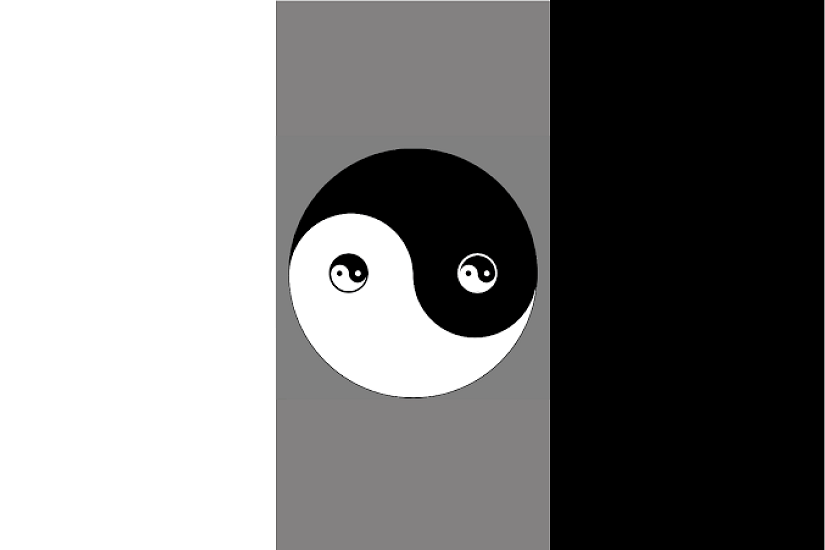
This is represented in Taoism by the Taijitu, which combines the white yang and the black yin to create a shape that has a life of its own, one that tells a story. The energy, light and life of the yang projects itself into the darkness of the yin, which in turn follows the yang in devotion. The result is a spiral that turns for eternity.

Esoteric Aotearoanism tells a similar story. This story is represented in the flag of Esoteric Aotearoanism, which consists of three vertical stripes: the leftmost white, the rightmost black, and the central one silver. It is crucial to note here that the central band is silver, and not grey, because the combination of the two parts has created something more valuable than their mere summation.

The opening degree of Esoteric Aotearoanism is that the Esoteric Aotearoan flag represents the nation of New Zealand in the Kiwi people. 

The white is yang, which represents the British. This is not just because the British are white, but also because they are orderly. The British came from the West and therefore the leftmost third of the flag is white. It is from there that the energy and organisation to create the institutions of New Zealand came.

The black is yin, which represents the Maoris. As with the British, this does not simply reflect skin colour, but rather a vital, invigorating passion. Because the Maoris come from the East, the black occupies the rightmost third of the flag. It is from there that the soul of the nation comes, and how we get direction to differentiate ourselves from the globohomo masses (and from Australia in particular).

The silver stripe represents New Zealand, the space where those two ingredients meet, and where they combine to become something more valuable than either. The yang is bright but unyielding; the yin is gentle but dull. Together they are colourful, and shine as silver. As silver is more valuable than either iron or clay, so too is the combination of British and Maori more valuable than either alone.

The silver stripe also represents those who have come together under the silver fern, because they have acted to create something that is greater than either the British or the Maori components. It signifies that what we have of greatest value is that which comes from the land here. It’s not what we imported from Britain or from Polynesia – it’s what we have created ourselves here, according to the direction of our own wills and of the spirit of the nation.

It’s also a reminder that our future lies in the unity of these two forces.

Sir Apirana Ngata hinted at Esoteric Aoteraroanism being the way forward when he said:

Ko to ringa ki ngā rakau a te Pākehā

Ko to ngakau ki nga taonga a o tipuna Māori

Ko tō wairua ki to Atua

In English this means “Your hands to the tools of the Pakeha, your heart to the treasures of your Maori ancestors, your spirit to God.” The sentiment behind this was that we ought to take the best of both worlds. Both the Maori and the European world brought things that were good and things that were bad. We can take the best of both, and leave the worst of both.

This leads naturally into the teaching of the second degree of Esoteric Aotearoanism, in which the various qualities contributed by the British and the Maori are mapped onto the four masculine elements.

The clay represents the Maori. This is because he is vital and passionate, but has a dark side of sometimes expressing unrestrained violence. He is soft and likes to share, but this can sometimes lead to a lack of discipline.

The iron represents the Briton. This is because he is hard and disciplined, but has a dark side of sometimes being cruel. He is orderly but can sometimes be hard-headed, unforgiving and pedantic.

The silver also represents the Briton (this conception of silver is related to, but separate from, the conception of silver in the first degree). This is because his scientific and technological prowess made it possible for New Zealand to become wealthy and prosperous, and for us to defend ourselves without need for submission.

The gold also represents the Maori. Like the clay, the Maori is soft, but he is also colourful. This represents spirituality and an understanding of the world beyond. The Briton is intelligent but he is spiritually ignorant. The realm of gold is where New Zealanders connect to God, and the Maoris, particularly those with an enthusiasm for cannabis or psilocybe wereroa, have a vital role to play here.

Esoteric Aotearoanism considers it a tragedy for a Kiwi to identify as either a white person or a Maori. This would be like denying one of your parents. It’s a small-minded and petty thing to do. That sort of solipsistic narcissism will lead to the nation tearing itself apart down the centre. To identify as one and repudiate the other is an idiocy that is promoted by the enemies of this nation.

In reality, Kiwis are already so intermixed that as many as a quarter of us are some kind of Northern European-Polynesian hybrid. It is this sort of person – not Maoris – that is unique to these isles, the true tangata whenua. There are Europeans in Europe and Polynesians in the Pacific, but only in New Zealand can those who are a mix of the two truly say that they have a home.

This leads onto the third degree of Esoteric Aotearoanism, which deals with the future of the two contributors to Aotearoa. The fact is that white people and Maoris are interbreeding at an extremely high rate, and therefore will eventually mix into one people, who are not separated by category but only by degree. Even then, it will not be a degree of value but simply a degree of proportion of yin or yang.

This people will be a true Kiwi people, and they will best be able to channel the best of the yang and the best of the yin to create something truly precious. Many of them will be among the most excellent individuals on Earth on account of hybrid vigour. There are already plenty of examples of this, such as Buck Shelford, Shane Bond, Michael Jones and (allegedly) Dan Carter.

In all, Esoteric Aotearoanism is a new narrative for a new century, one that repudiates the nation fighting against itself, and one that encourages the nation coming together to embellish the strengths and ameliorate the weaknesses of its constituent parts. This is a narrative that, if supported, can bring peace and prosperity to all Kiwis.

*

If you enjoyed reading this essay, you can get a compilation of the Best VJMP Essays and Articles of 2018 from Amazon for Kindle or Amazon for CreateSpace (for international readers), or TradeMe (for Kiwis). A compilation of the Best VJMP Essays and Articles of 2017 is also available.