Should We Sell New Zealand to China on A 99-Year Lease?

Many Kiwis are concerned about the amount of New Zealand land being sold into overseas hands. This concern has been heightened by last week’s sale of Westland Milk to China for $588 milllion. This essay asks an extremely controversial and unpalatable question: should we sell the country to the Chinese on a 99-year lease?

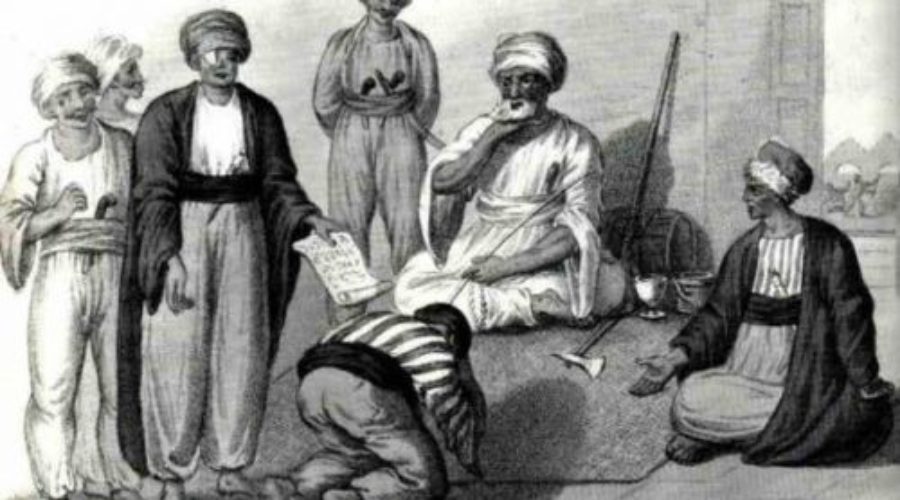
Thomas Porter of the Colonial Defence Force was a famously close ally of Ngati Porou war chief Ropata Wahawaha. When a captain, he served with the Ngati Porou contingent under Wahawaha that hunted down mass murderer Te Kooti in the Uruwera ranges. From the 1870s onwards, he was involved with work as a land purchase officer, a job made easier by his fluent command of Maori and his marriage to the daughter of a chief who had once paid for Wahawaha’s release from slavery.

Porter knew that the settler thirst for land was insatiable. The British Empire was possibly the most rapacious enterprise ever created by humans, and it had its eyes set on New Zealand. The Maoris would have to give up most of their land or be annihilated, as the Aborigines had been in Australia and the Native Americans before that on the other side of the Pacific.

However, Porter had a trick up his sleeve.

He was aware of the Highland Clearances, where the relentless desire for maximum profit had led to the evictions of tens of thousands of people from communal land in Northern Scotland from the middle of the 18th century. Some of the original landholders had survived the clearances by giving up their land on 99-year leases rather than selling it. By the time 99 years were up, the original pressure to sell had gone.

A great friend of the Ngati Porou, Porter did them a great favour. Instead of arranging for the land to be sold outright, he arranged for much of it to be sold on 99-year leases. This meant that the land was returned to Ngati Porou control in the years after World War II. Hindsight would prove this to be a stroke of genius.

A 99-year lease, Porter reasoned, would give the leaseholder all the security they wanted, as well as all the freedom they needed to use the land for whatever purpose. Consequently, there would no longer be any pressure on the Ngati Porou to sell it forever. So at the end of the 99 years, much of the original Ngati Porou holdings were still in their hands – and worth a packet.

This decision is part of the reason why the Ngati Porou are doing so well today compared to many other Maori tribes. Rather than accept a windfall that was inevitably squandered, the land was effectively put into a 99-year investment account. When that account matured, the whole tribe shared in the profits.

The Chinese demand for food products to feed their population of 1,400,000,000 is as difficult to meet as the Western demand for land once was. The Chinese population might not be growing any more, as birthrates have declined sharply since 1980, but Chinese wealth has been growing strongly since then, and their demand for food products has increased commensurately. The pressure to sell our land in the coming few decades will be immense.

This was a similar situation to what the Ngati Porou faced in 1870, and the factors that apply to us were considered by Captain Porter in his decision to arrange 99-year leases. We ought to ask ourselves if we should do the same. Would it not be better, instead of selling it for good bit-by-bit, to lease the whole country to the Chinese on a 99-year contract?

We wouldn’t be the first to have the idea. The Northern Territory Government has leased Darwin Port to the Chinese on a 99-year lease. This move has been criticised severely on account of its strategic implications, but the fact remains that Australia will get the port back after 99 years, the same way that the Chinese got Hong Kong back. So there is precedent, among other places faced with Chinese expansionism, to consider this option.

Some might not like the idea of selling the country into Chinese leaseholdership. They might reason that China is a human rights abuser, a corrupt, totalitarian dictatorship that strangles honest aspirations and which is incompatible with the Western desire for personal freedom.

However, these sentiments have to be balanced with the fact that the whole country is being sold into Chinese ownership anyway. Chinese nationals purchased $1,500,000,000 of New Zealand residential real estate in 2017 alone. Eight-figure sums are not uncommon for land purchases made by Chinese interests, many of which are owned in part by the Chinese Government.

Moreover, the old Western traditions of freedom are gone. Zimbabwe has legal medicinal cannabis, and Malaysia has announced that it will decriminalise it. New Zealanders are, therefore, less free than citizens of either Zimbabwe or Malaysia in important ways. Uruguay, South Africa, Chile, Mexico and even North Korea are further examples of countries with greater cannabis freedom than New Zealand. Our time as a human rights leader is long over.

Perhaps worst of all, New Zealanders are now going to prison for years for sharing videos, or getting harassed by the Police because they might like Donald Trump. There is ample evidence that we are no longer a free people, so there’s nothing to lose on that front.

Maybe it’s time to concede that it’s better to lease the whole country to China on a 99-year term today, get them to build some proper houses and infrastructure, and then to get it back in 2118, than to have it sold piece-by-piece into Chinese hands permanently. We would probably not suffer more under Chinese leadership than we already do under our own.

*

If you enjoyed reading this essay, you can get a compilation of the Best VJMP Essays and Articles of 2018 from Amazon for Kindle or Amazon for CreateSpace (for international readers), or TradeMe (for Kiwis). A compilation of the Best VJMP Essays and Articles of 2017 is also available.

Hate Speech Laws Will Lead New Zealand to Misery and Servitude

The Sixth Labour Government is in no hurry to change the cannabis laws, which has seen New Zealand fall behind Zimbabwe and South Africa in terms of personal freedom. This reluctant approach to liberty helps explain why Andrew Little is so enthused about bringing in hate speech laws. As this essay will show, hate speech laws will only increase the suffering of the New Zealand people – but that may be by design.

Last week, Danish politician Rasmus Paludan was sentenced to two weeks in prison for breaking the Danish hate speech laws. He received this conviction after speaking in a video where he said that the average IQ of South Africans was 70, and that this intelligence level was too low to properly run the country. The conviction was upheld on appeal.

The video of him saying this was available on the homepage of Paludan’s party, Stram Kurs, and someone who viewed it reported it to the Police (some readers will have already sensed a red flag here – yes, in Denmark you can rat other people out for racism, and they’ll go to prison if they’re found guilty of it).

What Paludan said about the IQ of South Africans is accurate, as shown in the table below, taken from Professor Richard Lynn’s latest book, The Intelligence of Nations. Accuracy and truth, however, will be no defence against a hate speech accusation. The case of Paludan shows that New Zealand risks losing basic freedoms to speak if we introduce hate speech laws.

The scientific facts suggest some unpalatable truths – now stating these truths is illegal in Denmark

If hate speech laws were introduced in New Zealand, we could expect to see headlines like “Don Brash/Brian Tamaki/David Seymour Convicted of Racism” as certain political statements became illegal. It might sound ridiculous, and the Government will deny it, but literal facts will become grounds to put people in prison. This is the inevitable consequence of bringing in hate speech laws.

As shown by Paludan’s example, it won’t matter if you can back up what you say with science. A bunch of politicians and their assorted arse-lickers, none of who have any background in the science of intelligence testing, will decide what you’re allowed to say and what you are not. The definition of hate will be entirely up to them, and they will choose the definition that best suits their interests.

In the judgment against Paludan, the judges decided that it was not illegal to say “neger” (c.f. ‘Negro’), as he does several times in the video. The fact that they considered the possibility, however, is telling. It exposes that such a prohibition is under consideration: there are many who would like to make it illegal to say certain words, or to state certain things.

Imagine a world where it’s a crime to say a word that your Government has forbidden you to say, or a crime to draw logical conclusions that your Government has forbidden you to draw. If you dare do either of these things, you have to go in a cage.

It sounds like the kind of law that might have been parodied by Monty Python or Comic Strip Presents as an example of cruel and unreasonable punishment. But it’s the world that we are heading towards if we let Andrew “The Ditherer” Little and his fellow short-sighted control freaks override our right to free speech.

Hate speech laws mark the death of free speech. Once they are introduced, eventually anything that goes against the Government’s agenda will be classified as “hate speech”. Saying things that are scientific facts, backed up by decades of research and by the experts in the field, will be classed as hate speech if they alert people to the failures of the Government.

The reason why the Government wants to make it a crime to point out facts – like the low IQ of Africans – is because they want to import cheap labour. They are in bed with the globalist corporations. They know that if we’re allowed to openly speak the truth about the effects of globalist immigration policy on the well-being of our nation, more and more people will come to resist that globalist policy.

Every globalist knows that a nation will sooner-or-later go down the toilet if it imports large numbers of people with an IQ of 70. But they don’t care about that. All they want is cheap labour so that they can extract a quick profit from New Zealand. Then they move on, and leave us to clean up the mess. This is parasite capitalism, and it’s the pre-eminent paradigm of our age.

Hate speech laws will lead to people getting sent to prison for pointing out scientific facts that the Government doesn’t want attention given to. They will also lead to a culture of snitching as the Government employs people to handle the complaints. The end result is an East Germany-style hell society plagued by snitches and secret police. We should resist the introduction of hate speech laws at any cost, on the grounds that they are a violation of our inherent human rights.

*

If you enjoyed reading this essay, you can get a compilation of the Best VJMP Essays and Articles of 2018 from Amazon for Kindle or Amazon for CreateSpace (for international readers), or TradeMe (for Kiwis). A compilation of the Best VJMP Essays and Articles of 2017 is also available.

Old Colonialism and New Colonialism

‘Colonialism’ is one of the dirtiest of dirty words nowadays, bringing to mind images of Belgian Congolese getting their hands chopped off for failing to meet the day’s rubber quota. The problem with this simple sentiment, as this essay will explore, is that colonialism is still going strong. We used to plunder the world for its natural capital – now we plunder the world for its human capital.

Back in the Age of Discovery, there were great riches to be had from despoiling the world of its reserves of gold and silver. There was the minor problem of the people who lived on top of these gold and silver reserves, but in most cases they could either be driven off the land or enslaved to help mine it.

This didn’t stop once we ran out of gold and silver – we simply switched to Africa and plundered them of diamonds, slaves, rubber, more gold, cocoa, coffee etc. By the end of World War II, and in the aftermath of this great slaughter, we had come to realise that this course of behaviour was wrong, and we were very sorry – or at least pretended to be.

Since about 1960, the economic equation of production had permanently changed. No longer were the fattest profits in raping developing countries of their natural resources. We had moved from manufacturing economies to service economies, and that meant the fattest profits were now in raping developing countries of their human resources. This we do through the immigration system, and it’s the new colonialism.

It costs a lot of money, time and effort to raise a small child to the point where they can make a meaningful economic contribution to society. From kindergarten to the end of a Bachelor’s degree is usually 16 years of education, and for a professional degree even more than this. Every year requires, at a minimum, teachers and school infrastructure. The total cost is inevitably in the hundreds of thousands of dollars.

With the new form of colonialism, we don’t send troops to developing countries and force the locals to build mines and collect rubber. As mentioned above, human capital is now more valuable than natural capital. Instead, we just let the developing countries stagnate – or cause them to – making it much harder for them to keep hold of the talented individuals who naturally arise among the population. Then the capital comes to us.

Proof that the new colonialism is no less nasty than the old comes from observing the actions that the West takes to cause those developing countries to stagnate. It’s common for Western countries to offer massive “loans” to developing countries, supposedly out of goodwill. Inevitably, the loan money gets stolen by local elites, and the country remains indebted with no way to pay the loans back. The Western countries who offered the loans then try to bargain this debt for influence.

In other words, developing countries are now enslaved by debts instead of by force of arms. Chains of iron have simply been replaced with chains of silver. One of the men who was employed to do this, a John Perkins, described his occupation as “Economic Hit Man“. This enslavement naturally leads to those with the greatest human capital trying to escape so as to get the best return.

When they do escape (usually to the West), they bring their human capital with them, depriving their home nations of the benefits of it. They also grant the West all the benefits of that human capital, despite that the West paid nothing to produce it.

Of course, it is spun as if we are generously granting rights to these unusually productive people. The propaganda tells a story of draconian immigration restrictions holding these people back from being able to make a real contribution to the world, and that we’re doing a great and moral thing by allowing them to emigrate and to work in the West.

The reality is that the nations of the West are impoverishing the developing world by sucking out its human capital. This means that the developing world now lacks the human capital that it needs to develop its own means of production and become wealthy themselves. This locks them in a vicious cycle of poverty.

Ironically, the West usually ends up getting a two-for-one deal from all this. Because we take in the most productive people from these countries, they are often left without the engineers, physicists and chemists that they need to develop their own natural resources. As a consequence, those resources often sit undeveloped until a Western company comes in to exploit them.

Desmond Morris makes an extremely insightful point in The Human Zoo. He writes that the moral values of any time and in any place are always dictated by the ruling classes to serve their own interests. In every time and place, the people tend to believe that their moral values are an expression of themselves, or the result of some process of moral development, but this is an illusion.

Many of today’s moral values have, likewise, been forced on us to suit the wishes of the ruling class, the new colonialists.

The reason why we are being encouraged to accept diversity is not because we realised that it’s the morally correct thing to do. It’s because accepting diversity makes divesting the developing world of its prime human capital a smoother process. There’s no need for blackbirding when you can induce the labour to voluntarily emigrate to the West instead.

Colonialism never went away – it simply changed form. In the same way that slavery still lives on in the private prison system and in people being paid less than they can live on for a full day’s work, so too does colonialism live on, in the rape of the human resources of the developing world. Much like colonialism was in the 19th century, this new colonialism is spun to us as being the morally correct thing to do. The lie is exposed by the fact that the new colonialists are the same people as the old ones.

*

If you enjoyed reading this essay, you can get a compilation of the Best VJMP Essays and Articles of 2018 from Amazon for Kindle or Amazon for CreateSpace (for international readers), or TradeMe (for Kiwis). A compilation of the Best VJMP Essays and Articles of 2017 is also available.

The Occult Background of The Magic: The Gathering Five-Colour System

The magical and mystical references and themes of Magic: the Gathering are a rich part of the background of the story world, and many play it for that reason. The reality is that Magic is not just occult in flavour and appearance but also in fundamental structure and gameplay. As this essay will describe, the layout of the five fundamental Magic colours maps out a space in occult philosophy.

Many people are familiar with the conception of four classical elements of earth, water, air and fire. These are said to represent various elemental forces, viz. being cold and dry in the case of earth, cold and wet in the case of water, warm and wet in the case of air and warm and dry in the case of fire. More precisely, these are what are known as the four feminine elements, because they all have equal value.

Being four elements of equal value, they can be distinguished on the basis of yin and yang. The yin elements are Earth and Water, because they are cold and passive. The yang elements are Air and Fire, because they are warm and active. Earth relates to inertia, Water relates to cohesion, Air to expansion and Fire to heat.

There are also such things as the four masculine elements, which all have differing value. These four elements collapse into a basic dichotomy between precious things that need to be guarded or defended and base things that do not. These precious things are usually characterised as white on account of the light nature of silver and gold, whereas base things are usually characterised as black on account of the dark nature of clay and iron.

This masculine dichotomy and feminine quadrichotomy combine to give us a system based around six separate points – a system that the reader may have previously seen diagrammed (as below) in various occult symbols and drawings. 

In this model, Air and Fire are the bottom corners of the white triangle, because they are warm and therefore rise upwards. Earth and Water are the top corners of the black triangle, because they are cold and therefore sink downwards. The uppermost point of the white triangle represents spirituality, which seeks to rise above matter, and the bottommost point of the black triangle represents materialism, which indulges in it.

The masculine axis is represented by the vertical line of the central ankh, and the feminine axis by the horizontal line. So in this diagram all of creation is represented: all of the physical, the metaphysical, the feminine, the masculine, the spiritual and the material worlds can be found therein.

Where it gets interesting is how this esoteric diagram maps to the five different colour types in M:tG.

Blue represents both Air Magic and Water Magic. In this it combines the intellectualism of Air with the flexibility of Water to create a magic that tricks, deceives, binds and maddens. It’s also a magic that can open up new intellectual possibilities and mental realms. Air and Water are the two wet elements, and so it’s fitting that blue is a slippery and ephemeral colour. 

Red represents Fire Magic. This is encapsulated not only in the obvious fire, lightning and volcano-related imagery but also in red magic’s use of chaos. Fire is the most chaotic form of matter, because solids, liquids and even gasses all behave in reasonably predictable ways. This is why red uses cards like ‘Wheel of Fortune’.

Green represents Earth Magic. This refers to the natural world and to the procreative qualities of the natural world. The classic Green Magic strategy is to overrun one’s opponent, to crush them by sheer mindless mass or weight of numbers. Trample is the quintessential ability of Green Magic, as are magics that represent damage done by natural phenomena such as hurricanes and poisons.

White represents spirituality, or White Magic. To this end, most of the healing magic is white in nature (in this sense, M:tG lifts many of their concepts from existing esoteric philosophy). The point of White Magic is to banish the darkness or suffering, hence their use of wards and salves. White also plays on the idea of God acting upon the world through cards such as ‘Wrath of God’ and ‘Armageddon’.

Black represents materialism, or Black Magic. Perhaps the characteristic card of this colour is ‘Greed’. Elegant practitioners of Black Magic will use other people’s materialistic desires to exploit them, or to manipulate them into furthering the magician’s wishes. Life imitates art in the sense that Black Magic is essentially the same in M:tG as in real life.

So the five colours of a Magic game represent five alchemical positions on two fundamental axes: masculine on the masculine axis (white), feminine on the masculine axis (black), masculine on the feminine axis (red), feminine on the feminine axis (green) and neutral on the feminine axis (blue).

A game of Magic can be thought of as an alchemical battle, with the player who is greatest able to project power through their mastery of the elements the winner. Curiously, there is no guarantee that the forces of “good” will win any given battle, which is what gives the game its dramatic potential. The side with the angels and God on it can still be defeated by competent Black Magic or by any other alliance.

*

If you enjoyed reading this essay, you can get a compilation of the Best VJMP Essays and Articles of 2018 from Amazon for Kindle or Amazon for CreateSpace (for international readers), or TradeMe (for Kiwis). A compilation of the Best VJMP Essays and Articles of 2017 is also available.