
Next Year’s Referendums Will Pit The Church Against The People Of New Zealand

At the time of next year’s General Election, there will be at least two referendums. One will relate to cannabis law reform, the other to euthanasia. Both of them are likely to be fairly divisive, pitting large sections of the New Zealand population against each other. One of these conflicts, as this essay will examine, will be the Church against the people of New Zealand.

The Church is commonly perceived to be conservative. This is a mistake. People make this mistake because the Church opposes all kinds of social reform. But they don’t oppose all social reform – the Church is happy to open the borders to masses of illiterate Third Worlders who cannot be integrated. They only oppose some social reform, and there is a pattern to it.

The common thread to all the Church’s actions is that they all increase the power of the Church by increasing the suffering of the New Zealand people.

Christianity has always preyed on desperation. The more desperate a person is, the more willing they will be to subject themselves to the predation of the local vicar or priest. The more pitiful and wretched the man, the more likely they are to find salvation in a book of fairy tales about a magical Jewish carpenter. And when they do, they tend to write the Church into their wills.

It has always been a maxim of Abrahamism that misery will cause people to turn to the God of Abraham out of desperation. Happy people don’t need the God of Abraham – ample evidence comes from the declining rates of Christianity among the wealthy nations of Europe over the past hundred years.

If you’re the Church, happiness is bad for business. Therefore, the more misery they can create, the more powerful they grow.

In the same way the Church opposed the anti-smacking law (because they know child abuse leads to suffering) and they opposed homosexual law reform (because they know persecution of homosexuals leads to suffering), so too will they oppose cannabis law reform and euthanasia law reform. Their desire is to force New Zealanders to suffer, in the hope that our suffering causes us to give up on the material world and turn to Jesus.

The Church has never liked cannabis, for multiple reasons. This is strange if one considers that the Christian Bible states that God put cannabis here for our benefit (see Genesis 1:29). It’s not strange, however, if one understands that the Church is really a political entity and not really a spiritual one. Their primary objective is to grow in Earthly power, not to alleviate the spiritual suffering of New Zealanders.

One reason the Church has always supported the persecution of cannabis users is because cannabis is a spiritual sacrament that connects people to God, and the Church can’t earn money if people are connected to God by their own actions. The Church can only earn money by acting as an intermediary, and to that end they foster the need for an intermediary. This is why they have made such an effort, historically, to destroy all genuine spiritual and magical traditions.

Another reason is because cannabis is a medicine. As mentioned above, the Church gains power from people’s suffering and misery. Opposing cannabis law reform is the same thing as promoting anxiety, depression, insomnia and stress. All of those things create the kind of desperation that drives people into the arms of the Church or a particular congregation.

It’s for these reasons that cannabis is opposed by the Church and by Christians such as Bob McCoskrie.

The Church has never liked euthanasia either, as evidenced by the upset shown by Christian fundamentalist Alfred Ngaro at New Zealand First’s unwillingness to block the referendum on the issue. They have always known that the immense suffering that usually precedes death makes the dying person vulnerable to all kinds of trickery – in particular, a person is most likely to change their will to bequeath something to the Church when dying.

From the Church’s perspective, then, it’s best for the suffering of dying people to be drawn out as long as possible.

Fundamentally, what the Church wants is control. They don’t want us to have control over our lives – they want themselves to have control over our lives. They want to decide what we’re allowed to call a spiritual sacrament and when we’re allowed to die, much like they used to decide who we were allowed to love and when we were allowed to drink alcohol.

To this end, they will oppose both referendums because both offer to return control back to the people of New Zealand.

It’s clear to every thinking New Zealander that there would be less suffering if we had legal cannabis and euthanasia. Therefore, the Church is promoting the misery of the New Zealand people. They’re not doing it out of conservatism, or backwardness – they’re doing it because the Abrahamic cults are predatory ideologies of hate that gorge themselves on human misery.

Make no mistake – the Church is the enemy of the New Zealand people. They consider our suffering to be to their benefit, knowing that it will turn some of us, in desperation, to their arms. Anyone who opposes the evil that is Abrahamic religion and the political interference that the Abrahamic cults make in our lives is all but obliged to stick it to them next year.

*

If you enjoyed reading this essay, you can get a compilation of the Best VJMP Essays and Articles of 2018 from Amazon for Kindle or Amazon for CreateSpace (for international readers), or TradeMe (for Kiwis). A compilation of the Best VJMP Essays and Articles of 2017 is also available.

*

If you would like to support our work in other ways, please consider subscribing to our SubscribeStar fund.

Clown World Chronicles: What Is A ‘MGTOW’?

In Clown World, relations between the genders are not as they should be. As everything in Clown World is a twisted, tragicomic imitation of how things would be in a normal world, so too is dating and romance. One of the phenomena that this has created is that of the MGTOW. This essay explains who these people are and what motivates them.

‘MGTOW’ stands for Men Going Their Own Way. The idea is that MGTOW is a rebellion against the expectations levied upon the average man by society. These expectations, MGTOWs contend, are that a man shall slave away for the vast majority of his life for the sake of providing for a wife and family, without any assurance that any of his work will pay itself off. It’s a raw deal, and so they reject it.

The average MGTOW has an extremely cynical attitude towards women. Their idea of the feminine is deceitful, manipulative, dishonest – women attract men like spiders attract flies. The attitude that women are evil underpins much of the MGTOW movement. After all, if it were true that women were evil, then it would make sense to avoid them.

MGTOWs speak of a time when the average man was afforded a lot more respect. During this time, marriages were stable and women were loyal. Men were not subject to “divorce rape” – in which a formerly happy wife betrays a man and then enlists a lawyer to take everything that man has in divorce proceedings. Cases like Jeff Bezos’s wife, who became a multi-billionaire through a divorce settlement, are emblematic.

The problem with today’s society, MGTOWs contend, is that women are no longer as they once were.

Women are no longer loyal – a combination of decreased social pressure towards loyalty, a legal environment unfavourable to males, and their own inner malice. Therefore, the old social contract, under which a man would labour throughout his productive years in exchange for a pleasant wife who would provide him a family, is no longer valid. Absent this, men are not obliged to be part of society. They can go their own way.

It’s true that the average Western man today has a much shittier situation facing them than the average Western man in the 1950s or 60s. Unlike his grandfathers, he has almost no chance of owning a home and raising a family on his wage alone. The average young New Zealander today has less than 40% of the house-buying power that his parents’ generation enjoyed. Being the breadwinner of a family is many times harder than it used to be.

It’s also true that the balance of power has shifted towards women in recent generations. Our grandfathers were able to literally beat their women into submission, knowing that both their neighbours and the Police would look the other way. Marital rape was legal in New Zealand until 1984. In the 21st century, however, women make up two-thirds of Bachelor’s degree recipients in New Zealand. It’s a woman’s world now.

Moreover, men today have to deal with the reality of hypergamy (all MGTOWs are familiar with this term). Hypergamy is the tendency of the female in sexually reproducing species to try to marry up by attracting the sexual partner with the highest possible social status. MGTOWs contend that the advent of online dating has exacerbated this tendency to such an extreme degree that, today, most women have no interest in the bottom 80% of men.

To many men, this makes the prospect of a fulfilling long-term relationship seem unlikely. MGTOWs will say “women are only as loyal as their options,” and because Tinder gives them effectively infinite options, women no longer have any reason to be loyal. Even worse, they don’t even need a man to raise children because the State will pay for it with welfare (there is great overlap between MGTOWs and the libertarian right when it comes to resenting welfare).

Because there is little reason to work hard and to hold down a job if one does not (or can not) have a family, a number of men have just said “fuck it” and dropped out of society in response to all this. They fill their time mostly with video games, Netflix and television. Others fill their time with pornography (see the Coomer meme). None of this is productive, but there’s no reason for a man who has abandoned (or been abandoned by) society to be productive.

There is a great overlap between those who identify with being MGTOW and incels. Both of them share a deep frustration about their failed attempts to get what they want out of women. The difference, in theory, is that MGTOWs are no longer trying to find ways to co-exist with women, whereas incels are still trying but are getting rejected. The incel to MGTOW pathway is obvious.

Curiously, there isn’t much overlap between those who identify with being MGTOW and volcels. In theory, there ought to be, because a man who is going his own way is a fitting description for a man who is voluntarily celibate. But a man who is voluntarily celibate is probably doing so for spiritual or mental health reasons – a MGTOW, by contrast, goes his own way out of bitterness and resentment.

One of the main drawbacks of the MGTOW strategy is that most men can’t achieve anything by themselves. Like it or not, individual humans are interdependent with other humans and cannot exist in isolation. Even the greatest of men can’t achieve much without a network of people who make that man’s greatness known to the wider world.

Inevitably, such a network will include women. Therefore, a man who hates or who wants to avoid women is unlikely to also to be supported by a large social network.

If the MGTOWs themselves are correct, then the phenomenon ought to become more prevalent as the economic and social balance of power shifts further in favour of women. This could have social repercussions. If a large proportion of the men in a society are unwilling to act to preserve it then it may well collapse. The prospect of this is something that many MGTOWs look forwards to with joy.

Being a sick and insane circus, Clown World is inherently unstable, and the MGTOW phenomenon may be one that heralds its demise.

*

This article is an excerpt from Clown World Chronicles, a book about the insanity of life in the post-Industrial West. This is being compiled by Vince McLeod for an expected release in the middle of 2020.

*

If you would like to support our work in other ways, please consider subscribing to our SubscribeStar fund.
The Three Dominance Hierarchies

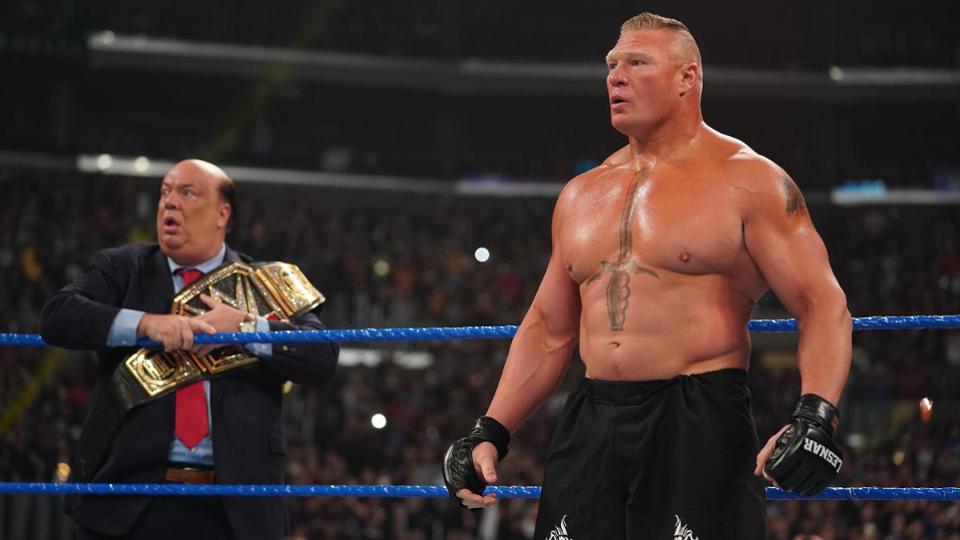
The hierarchy of iron is characterised by big muscles; the hierarchy of silver is characterised by flash suits

A lot of discussion in social psychology revolves around the idea of the dominance hierarchy. This refers to the fact that humans, as a form of primate, have social dominance hierarchies like other primates (and other mammals). There are actually three separate forms of dominance hierarchy, depending on the nature of the situation, as this essay will examine.

The elementary dominance hierarchy corresponds to the realm of iron. This is the same as the dominance hierarchy that exists in a state of Nature.

In principle, there’s little more to the elementary dominance hierarchy than who can beat up who. The dominance hierarchy relating to iron is similar to the dominance hierarchy that exists in prison. Authority is determined by a capacity and a will to use violence. The top of this hierarchy is held by mighty warriors, warlords and kings.

All the posturing one sees about who could beat up who is establishing a dominance hierarchy in the realm of iron. There is a whole art to posturing in this manner, and males will start learning it while they are still boys. The point of it is to establish who is better at fighting, but without actually fighting. The man who is believed to be the best fighter is at the top of this hierarchy and, if you disagree, he will bash you.

The dominance hierarchy that corresponds to the realm of silver is the same as the social hierarchy.

This hierarchy doesn’t reflect fighting ability but rather social status. In a civilised setting, where peace reigns, the person who generally makes the most intelligent long-term decisions will be at the top of the dominance hierarchy. Fighting in terms of social status means that the loser gets ostracised (or incarcerated) instead of killed.

The dominance hierarchy of silver is the same as the hierarchy of all the people who have agreed to play by civilised rules. The uncivilised can contest the dominance hierarchy of iron by bashing and stabbing each other, but in doing so they will fall down the hierarchy of silver, because civilised men will not respect them.

In practice, the hierarchy of silver often represents the hierarchy of wealth. When it comes down to it, this hierarchy is an extension of the hierarchy of iron because silver gives you the opportunity to hire men of iron to do your bidding. Wealth can buy loyalty, even if only temporarily. It can also buy land, weapons and propaganda.

However, social status can be afforded to people on the basis of their knowledge alone, which is why the hierarchy of silver can, on occasion, promote a knowledgeable man above a wealthy one. This is most obviously the case in the university system, where extremely knowledgeable people are afforded a high status.

The third form of dominance hierarchy is much more subtle, and consequently it corresponds to the realm of gold.

The spiritual hierarchy reflects those who are most closely attuned to the Will of God. Because every person has their own idea of what the Will of God is, it’s rare that people openly agree as to who is at the top of the spiritual hierarchy. Therefore, this hierarchy is subtle, sometimes even occluded.

At the top of the spiritual hierarchy is the person with the greatest knowledge of God. In most cases, this will not only be a person who believes in God, but will also be a person who maintains a practice that keeps them in connection with God. This means that they have explicitly repudiated the other two dominance hierarchies and no longer contest them.

These three hierarchies interplay with each other in many ways.

The hierarchies of iron and silver clash all the time in civilised society. The hierarchy of iron is almost always topped by a male aged between 20 and 40, because it’s in these years that men possess maximum physical strength. The person at the top of the hierarchy of silver, by contrast, will have achieved their position after decades of building social and financial capital, and so will be much older.

This means that the person at the top of the hierarchy of iron is almost never the same as the person at the top of the hierarchy of silver. This is all but inevitable if the population is larger than 50 or so. With two different people at the top of two different dominance hierarchies, conflict between them is possible. This is why some ancient tribes used to split leadership into a war chief (man of iron) and a peace chief (man of silver).

Likewise, the person at the top of the hierarchy of gold will not be the decision-maker all the time. This person will only be in charge as long as others put their egos down and seek wise counsel instead of trying to force their will on others. As long as people choose to fight, then they will fall behind the leadership of either the best physical fighter or the best social fighter, and neither will follow the man of gold.

Because of the Conceit of Silver, people of silver will regularly fancy themselves to be people of gold. This leads many people of silver to adopt the trappings of the people of gold and to start mimicking them. Therefore, one can never be sure that anyone claiming to be a believer in God really is one. This means that the hierarchy of gold cannot be measured.

The hierarchies of silver and gold naturally clash with each other, as those driven by egoic desires for self-aggrandisement clash with those driven to minimise the suffering of all sentient beings. The men of silver are generally happy to cause suffering to other sentient beings if it grants them more power, but in doing so they inevitably provoke the ire of the men of gold.

These three dominance hierarchies can be observed in virtually all human groups. The interplay between physical strength, social strength and moral strength all but ensures that ultimate decision-making power is never held in the same hands for long.

*

If you enjoyed reading this essay, you can get a compilation of the Best VJMP Essays and Articles of 2018 from Amazon for Kindle or Amazon for CreateSpace (for international readers), or TradeMe (for Kiwis). A compilation of the Best VJMP Essays and Articles of 2017 is also available.

*

If you would like to support our work in other ways, please consider subscribing to our SubscribeStar fund.

Orderworkers And Chaosworkers

There are many different ways of making an elementary magical division among the people of the world. Some say that there are black magicians and white magicians, others say there are lightworkers and shadow-workers. This essay divides the world’s magicians into two basic types on their relation to order: orderworkers and chaosworkers.

The essential distinction is that orderworkers cause change to the world by applying order to chaos, whereas chaosworkers cause change to the world by applying chaos to order. In theory, an orderworker will impose order upon a harmful chaos, whereas a chaosworker will impose chaos upon a harmful order, although this need not always be the case.

An example of an orderworker would be a doctor who prescribes a medicine that gets rid of a disease. Such a person would recognise that the physical body before them is in a state of disorder, and their diagnosis and prescription is an attempt to apply order to reduce the suffering that the disorder was causing the patient.

A cleaner is another example of an orderworker. They take something that has become disorderly on account of use, and apply order to to it to make reusable for other people. They apply order with mops and vacuums in much the same way that a surgeon does with a scalpel – perhaps with less precision, but the action is the same on a metaphysical level.

Another example would be a Police officer or security guard. Their remit is to keep the peace or to prevent things from being stolen, which means that they have to impose order upon the various criminal elements out there. They apply order in the form of preventing outside elements from disrupting the status quo.

It can be seen from this that being an orderworker does not imply any moral superiority to a chaosworker or even any higher social rank, as order and chaos are on an entirely separate axis to good and evil. It’s simply a descriptor of someone who applies order to achieving their goals.

Chaosworkers introduce chaos into order. This requires some elaboration because many people automatically assume that order is a good thing and that chaos is a bad thing, and that anyone fitting the label “chaosworker” must be a destructive and malevolent force. This is true to an extent, but there are major ways in which it is not true at all.

An excess of order can be suffocating. It’s easy to imagine order as a straight line – in this sense, an excess of order could be like a prison cell that confined a person to a limited space.

An excess of order can also be sterile. A fertile ground for growth requires a variety of components that can interact with each other as necessary. An excess of order will produce a desert; such an environment requires the addition of chaos in the form of water before it can become fertile.

A chaosworker, then, is someone who releases someone else from bonds that imprison them, or who provides a form of novelty that serves to fertilise the mind of those who encounter it.

The most common examples of chaosworkers are the bartenders and musicians that one would encounter in a city’s entertainment area. After a hard day of work, most people have built up an excess of order in their minds. They have become excessively conditioned, and as such risk becoming entrapped by their thoughts. These people have a need to unwind.

Such an excessively conditioned person is at risk of becoming aggressive if they cannot get a chaosworker to help them relax. Bartenders and musicians are here in the same category as cannabis dealers, sportsmen and comedians. In applying chaos to people’s minds, these people break down harmful order and help them find joy and contentment.

Prostitutes are also chaosworkers, because they take a powerful instinct and work to dissipate it into something harmless. This chaos work serves to prevent rapes, suicides and other expressions of sexual frustration. Soldiers are another kind of chaosworker, in that they work to blow things up and to kill people. They break down the harmful order that is the enemy command and control structure.

The orderworker/chaosworker distinction explains why there is a distinction between jobs such as Police (whose warrant is to keep the peace) and the Army (whose remit is to fuck things up). It’s a similar distinction to how non fiction exists to to inform, while fiction exists to remove ignorance.

Note that neither implies moral superiority. Although it’s certainly true that an orderworker will feel a kind of disgust at an excess of chaos, so too will a chaosworker feel disgust at an excess of order. As far as everyone else is concerned, the best of the two is whoever can best help with the current problem. A man with a broken arm needs an orderworker; a man with a neurotic obsession needs a chaosworker.

Orderworkers and chaosworkers are just as valuable as each other, because the transitory nature of all Earthly phenomena mean that sometimes it’s the yin that is ascendant, and sometimes the yang. This means that sometimes it’s chaos that is the greater problem (which requires an orderworker) and sometimes it’s order (which requires a chaosworker). The same person might even have to do both.

*

If you enjoyed reading this essay, you can get a compilation of the Best VJMP Essays and Articles of 2018 from Amazon for Kindle or Amazon for CreateSpace (for international readers), or TradeMe (for Kiwis). A compilation of the Best VJMP Essays and Articles of 2017 is also available.

If you would like to support our work in other ways, please consider subscribing to our SubscribeStar fund.