If You Thought Race-Baiting Was Bad In New Zealand Now, You’re Not Ready For What’s Coming

Many Kiwis have never seen serious race-baiting in the mainstream media, and so they have been appalled by the levels it has reached in recent weeks. Maori Party co-leader John Tamihere has been featured, claiming that all non-Maoris are racists. The sad and bitter truth is that race-baiting in the media is about to get worse over the next three months. A great deal worse.

If you thought to yourself, upon hearing Tamihere’s outburst, that there’s no way the mainstream media would platform a white person making a blanket insult about Maoris, you might be in for an inkling of what’s coming.

The example has been set by America, where any accusation of racism is held up by the mainstream media as if it were major news. In America, anyone can get 15 minutes of fame simply by making a big enough fuss about how something is racist. That thing doesn’t have to actually be racist – it’s only necessary to get some hysteria about it started and the mainstream media will throw itself in behind you.

America has fallen into such an advanced state of race neurosis that a mere accusation of racism is enough to cause paroxysms of guilt, fear and rage. These powerful emotional reactions prime a person to respond to advertising suggestions. So the profitability of race-baiting has led to a spate of it – and now it’s coming to New Zealand.

The race-baiting in America is more sophisticated than simply letting two sides throw excrement at each other. The 21st Century way to do it is to let one side throw excrement while excoriating the other side for defending itself. The old way had a tendency to lead to both sides becoming friends, in the manner of drunks after a fistfight. The new way guarantees lasting and bitter hatred.

New Zealand, as ever, is following America’s lead here. In America, it has been proven that shameless race-baiting is a successful method for getting media attention. If a talking head on the television says that the existence of some law, policy or monument is racist, then a shitfight will begin.

The Maori Party, noting the example set by American race-baiters, are going full steam ahead in imitation. John Tamihere seems eager to complete the negrification of the New Zealand Maori, adopting wholesale the slavery-and-struggle narrative of the American blacks. Not for him the narrative that white people and Maoris struggled together for over a century, from New Zealand to Northern Africa, and won a great peace for each other.

The Maori Party narrative is that Maoris and non-Maoris are enemies.

They have now abandoned any pretence of impartiality. “Upsetting the rednecks” is their now stated aim. The race-baiter’s narrative is that a state of war exists between Maoris and non-Maoris, and that any defeat for the latter is a win for the former. The angrier a given policy proposal makes non-Maoris, the better it is.

The claim that a state of war exists between two groups who share the same public space is obviously not a peaceful one. As can be seen from the state of affairs in America, adopting a racial conflict narrative will lead to a worse time for everyone, with more paranoia, hate and violence all round.

The problem is that the Maori Party’s main goal, of dividing the New Zealand people in order to claim a chunk for themselves, coincides perfectly with the mainstream media’s goal of dividing the New Zealand people so that they cannot resist the Establishment. As such, the media will be more than happy, over the next three months, to give attention to any and all race-baiting efforts made by the Maori Party.

Because the Maori Party is more than willing to supply the mainstream media with race-baiting content, the mainstream media never has a shortage of it. Consequently, we can expect a barrage of it between now and the General Election (and beyond). It will be wall-to-wall racial grievance mongering.

We can expect Tamihere and co-leader Debbie Ngarewa-Packer to come out and say all kinds of ridiculous shit over the next three months. Expect to hear calls for every city and street to be renamed, for every Government and council agency to make a grovelling apology and for Maori quotas in everything, from Parliament down to Parent Teacher Associations.

No matter how ridiculous, the maintream media will broadcast it all into the homes of every Kiwi, alongside the implication that anyone objecting to any of it is a filthy racist who effectively stands with Hitler a traitor to the nation.

It can be expected, also, that Tamihere and Ngarewa-Packer will avoid making an effort to solve real problems facing Maori people. They will avoid mentioning the benefits to Maori of cannabis law reform, just as the gutless Tamihere shied away from the issue while a Labour MP. This is despite the fact that the imposition of cannabis prohibition onto the Maori people was one of the greatest crimes the New Zealand Government ever committed.

Genuine issues don’t concern the race-baiters, because they win not by alleviating the suffering of their people but by stirring up racial animosity. This animosity gives them more attention and, so they hope, more votes. Over the next three months, it can confidently be predicted that the race-baiting in the media will increase, the quality of public discourse will decrease, the New Zealand people will lose, and our enemies and our exploiters will win.

*

If you enjoyed reading this essay, you can get a compilation of the Best VJMP Essays and Articles of 2019 from Amazon for Kindle or Amazon for CreateSpace (for international readers), or TradeMe (for Kiwis). A compilation of the Best VJMP Essays and Articles of 2018 and the Best VJMP Essays and Articles of 2017 are also available.

*

If you would like to support our work in other ways, please consider subscribing to our SubscribeStar fund. Even better, buy any one of our books!
Should The Mainstream Media Abandon Kayfabe?

‘Kayfabe’ is a professional wrestling term which means acting like what you are doing is real, although it isn’t. The professional wrestlers have since abandoned kayfabe, choosing now to present themselves as sports entertainment instead of as serious competitors. This essay asks: should our mainstream media follow suit?

In the early days of professional wrestling, people took things a lot more seriously than they do nowadays. Life was much more brutal a century ago, and people were far less given to flights of fancy. As such, the vast majority of people wanted to watch real wrestling matches between two fit, determined men out to triumph over the other. Although professional wrestling was fake, this couldn’t be admitted.

By the 1990s, when life had become easy, people had come to take things less seriously. It no longer seemed important to pretend that the matches were real and that the outcomes were not fixed. The definitive moment came in 1996 when superstars Kevin Nash, Scott Hall, Shaun Michaels and Triple H all embraced in the middle of the ring after a match, when, according to the WWF coverage, they all hated each other (see image above).

In professional wrestling, where the wrestlers are playing characters, the actual wrestlers are usually great friends. After all, they have to trust each other very closely in performing their dangerous physical stunts, and this combined with the inherent danger of the job leads to a strong sense of camaraderie. Their feuding and battling is just an act, one that is now admitted to. Kayfabe has now been abandoned.

A convincing argument can be made that it’s time for the mainstream media to follow suit, and to admit that what they say does not reflect reality. Should they come out and admit that the product they sell is not information, but dramatic entertainment portrayed as political conflict? Is it time for the mainstream media to abandon kayfabe?

In professional wrestling, it’s understood by all that Vince McMahon runs the company, and his primary interest is making money by producing a quality entertainment product. So no-one pretends the matches are real anymore, they just go along with it as if it were pantomime. The sporting media reports on it as if it were entertainment, and it’s understood as such.

When two politicians clash, however, the mainstream media portrays it as if they genuinely hated each other. Election debates are presented to the populace as if they were heavyweight title fights, with two sides going head-to-head for an accolade that only one of them can possess. The television journalists describe mere insults as if politicians were ripping into each other like pit fighting dogs.

The story we’re sold is that all sides are ready to beat each other’s brains out. In reality, every single politician has a mutual interest in keeping the gravy train going, and this sentiment is shared with the owners of the mainstream media. For the political class, it’s very much them against the people whose taxes keep them in luxury. They will choose to put each other first before the plebs, anywhere and always.

Evidence for this assertion comes from how closely members of the political class interact with each other when the cameras aren’t rolling. They populate think tanks together, they party with each other, they marry each other. Politicians might ostensibly represent interests that are implacably opposed to each other, but the reality is that almost all of them come from the ruling class, and represent the interests of that class above any other.

This is why New Zealand Prime Minister Jacinda Ardern, of the Labour Party, can have a cousin named Shane Ardern, who is a Member of Parliament for the National Party. It’s no contradiction that one family can produce MPs for both sides of the fence, because Parliament is a ruling class institution, and the Arderns are a ruling class family.

The average man in the street had figured out 20 years ago that professional wrestling was fake, but is only just figuring out today that the mainstream media is equally as fake. Yes, the mainstream media is just as scripted, dishonest and utterly unreal as any professional wrestling show. Now that this is widely recognised, it’s time to admit it.

It should be openly accepted by the mainstream media that they are the employees of their owners, the international finance and banking interests. As such, they are presenting a program that serves the interests of those owners. Their product is drama, in particular drama between different political actors and/or factions. They aren’t selling objective information, or an objective overview of what’s going on in the nation and in the world.

The WWF, its acronym redolent of the Olympic wrestling federations, rebranded as the WWE and started calling itself “sports entertainment”. It’s time for our mainstream media to do something similar – to stop pretending that their role is to inform or to hold power to account, and to start calling itself “journalistic entertainment”.

*

If you enjoyed reading this essay, you can get a compilation of the Best VJMP Essays and Articles of 2019 from Amazon for Kindle or Amazon for CreateSpace (for international readers), or TradeMe (for Kiwis). A compilation of the Best VJMP Essays and Articles of 2018 and the Best VJMP Essays and Articles of 2017 are also available.

*

If you would like to support our work in other ways, please consider subscribing to our SubscribeStar fund. Even better, buy any one of our books!
Understanding The New Definition Of “Crime”

Most of us are still getting our heads around the bizarre attempt to redefine racism as “prejudice plus power”. Well, hold on to your pants, because there’s about to be another effort to redefine a simple word to suit a political agenda. This essay has the details.

If you’re in Generation X, the definition of racism is simple enough. If you dislike someone because of their race, and not because of personal characteristics that are worthy of hate, then you are a racist. You have judged a person prematurely on account of your bigotry, which is prejudice. Prejudice is bad because it doesn’t give other people a fair deal.

We had just gotten our heads around how racism was a bad thing when the definition changed.

Now, or so we’re aggressively told, racism is defined as prejudice plus power. This new definition asserts that only structural and institutional racism counts as actual racism, and that racism that isn’t backed by institutional power is merely prejudice. In practice, this means that non-white people can’t be racist because their racism isn’t “backed by institutional power”.

This is clearly bullshit, but enough morons have fallen for it to make it possible for the next move to be made.

In recent months, keen observers have noticed another attempt at redefining language, this time relating to crime. Some criminal actions are made out to be horrific atrocities, whereas other criminal actions, much worse than in the first group, are made out to be perfectly and understandable courses of action that no reasonable person would complain about.

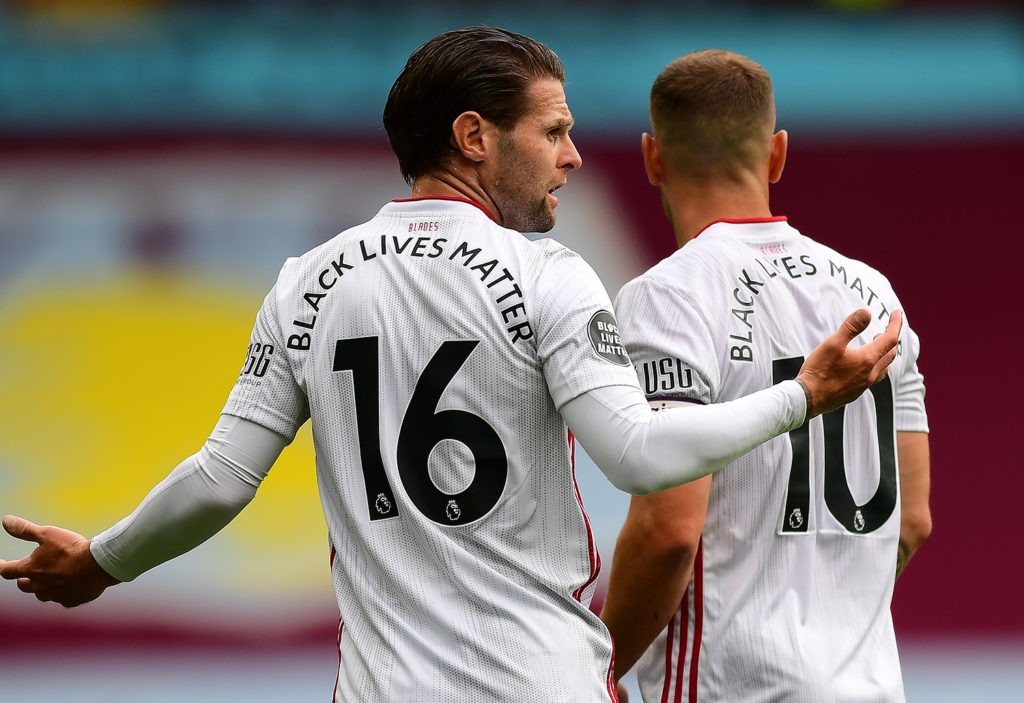
For instance, 472 people have been shot and killed by American Police officers in 2020 so far. At that rate, some 30 have been killed between the death of George Floyd and the writing of this article. The crucial difference between the death of Floyd and the hundreds of others is simple: Floyd was a black man killed by a white one. As such, the severity of the crime is much greater than if it had been different.

The new logic is that a criminal act isn’t really a criminal act unless it’s coming from a place of power. In the same way that racism isn’t real racism unless it’s committed by those deemed to have power, now crime isn’t really crime unless it’s committed by those deemed to have power.

This is why no-one cares about the fact that American blacks kill 4,000 other American blacks every year. These might be killings, but they’re not really murders because they’re not coming from a place of institutional power. As such, they’re not worthy of any outrage.

It’s also why no-one cares about children getting beaten to death. Children are almost always the same race as their parents, and consequently there is seldom a racial power differential between parent and child. Absent such a differential, crimes aren’t considered severe enough to warrant attention. No-one knows who Sofia Taueki-Jackson is, and no-one cares.

In the new paradigm, not having power means that you can basically do whatever the fuck you like for whatever reason. Someone else is always to blame. No matter how wretchedly unenlightened your conduct, someone else is always to blame. There will always be a chorus of slaves willing to make excuses.

The morality can be summed up thusly: to have power is to be immoral, to be powerless is to be moral.

This morality explains why the authorities of the Capital Hill Autonomous Zone have been filmed taking action to enforce the zone’s borders and immigration policy. The authorities of CHAZ are powerless, therefore they get to enforce immigration laws (in any case, if they are not weak then they represent those who are). This is why it’s moral for them to enforce borders but not moral for America to do it.

Enforcing immigration laws is only a bad thing if you have power. If you don’t have power, then it’s fair for you to violate other people’s boundaries. This is (of course) never explicitly stated, but it’s implied. Only the strong are obliged to hold to moral laws. The weak can do what they like, and all blame can be safely deflected onto the structure of society.

This logic is self-contradictory, because such a system does nothing to abolish hierarchies or power differentials – it merely grants ultimate authority to those who decide what power is. If power is defined as wealth, then the powerless are the poor. If power is defined as white privilege, then the powerless are the non-whites. If power is defined as social status, then the powerless are the degenerate and the outcast.

In reality, under such a system, all power lies in the hands of those who can most effectively claim to represent the powerless. And those people will be those who were powerful in the beginning, and who are powerful in all times and places: members of the ruling class who are able to persuade others to follow and obey them.

Understanding the new definition of crime requires the recognition that the Western World is now fully in the grips of slave mentality. We have given up on the concept of self-mastery entirely, and now indulge baser instincts in a manner little different from animals. This won’t change until the world goes through a revolution that reasserts master morality and an honour culture.

*

If you enjoyed reading this essay, you can get a compilation of the Best VJMP Essays and Articles of 2019 from Amazon for Kindle or Amazon for CreateSpace (for international readers), or TradeMe (for Kiwis). A compilation of the Best VJMP Essays and Articles of 2018 and the Best VJMP Essays and Articles of 2017 are also available.

*

If you would like to support our work in other ways, please consider subscribing to our SubscribeStar fund. Even better, buy any one of our books!
The Four Basic Political Subjects

Underneath all the talk about politics today lies a great confusion. People talk about what politics is supposed to achieve, but they have generally forgotten who it’s supposed to achieve it for. For our ancestors, the political subject was obvious, but for us it is not. This essay explains.

The first and original political subject was the tribe. In the biological past, humans had no conception of nations or kingdoms. One was born into a tribe of roughly 50-150 people, and these people were your blood kin. As such, their interests were your interests, in almost every case.

Every member of the tribe was in the ingroup, and everyone not in the tribe was in the outgroup. This made politics very simple. If you encountered a stranger, they were the enemy, and it was acceptable to do anything to that stranger if it furthered the interests of the tribe. This tribal mentality still exists today, only it has become much weaker than it used to be (in most cases).

The second political subject is the state. This came into being when civilisation did. With the advent of civilisation, it was possible to have two strangers share the same space without chimping out and attacking each other. This meant that it was possible to have towns and cities made up of people from different tribes, perhaps even competing ones.

With the advent of towns and cities, it was necessary to have an administrator class that dealt with any disagreements that arose. The bringing together of different tribes meant competing schedules of moral values. These administrators, employed to smooth over differences between tribes, became the state. Their different approaches for settling quarrels became ideologies.

One way of dealing with the tensions created by identification with the tribe was to identify with the state instead. In practice, this is much the same as identifying with an ideology. Thus, a judge who was from a particular tribe would not necessarily rule in favour of his own tribesman. This was a radical new way of thinking when compared to the tribal solidarity model. It required a new political subject.

Thinking in terms of the state provided this new subject. If people were able to abandon their previous allegiances to their tribes, they could band together and build a mighty state that challenged the world, such as Rome or America. The memetic hybrid vigour brought about by multiple tribes all agreeing to work together under a state banner proved to be immensely powerful.

Not every civilisation succeeded in making this transition, however. If a state was not capable of creating an egregore powerful enough to persuade people to abandon their tribal allegiances, the divided loyalties caused by those remaining allegiances would pull the state apart from the inside. Corruption reigns in every state where tribal allegiances continue to hold sway.

The third political subject is the individual. This political subject arose as a way of settling firstly the tensions between those who identified with the tribe and those who identified with the state, and secondly the tensions between those who identified with different states or ideologies. In the world of 2020, the individual is the default political subject.

The logic is that, by identifying with the individual ego, people would no longer be drawn into conflict on account of competing tribal or ideological loyalties. Only caring about oneself might seem selfish and egotistical, but it has the bonus effect of settling tensions between groups. If people only care about the next hit, they will not take collective action.

It is true that what Adam Curtis called the Century of the Self led to a great peace. In recent decades, Hitlers and Stalins have been impossible on account of that no-one would follow them. Collective efforts demand individual sacrifices, and people who identify with the individual ego will not make them. However, this identification brings its own problems.

The fourth political subject is the consciousness itself.

The limitations of identifying with the individual ego are now obvious. Although doing so was a logical move forwards from the horrors of state-worship, the human animal is still fundamentally a social one, and it has social needs. Identifying with the individual ego might make warfare between nations less likely, but it sharply increases the emotional and spiritual suffering of the people, who find that their lives no longer have any meaning.

Some philosophers, like Alexandr Dugin, have suggested a return to Dasein as the basic political subject (Dugin frequently refers to Heidegger’s Dasein in The Fourth Political Theory). This is much the same thing as having consciousness as the basic political subject. In either case, it solves most of the problems of the first three political subjects.

Identifying with the consciousness allows the best of all worlds. Not only can a person meet their social and spiritual needs through connection to other conscious beings, but they can also do so without necessarily getting set against them because of tribal or ideological loyalties. Identifying with consciousness means that one is automatically allied and opposed to every other person.

There’s one problem with this otherwise elegant solution: most people have never learned to distinguish between consciousness and the contents of consciousness. They don’t know the difference between the True Self and the False Self. As such, most people operate either on the level of crude instinct (and thus tend towards tribalism), the level of conditioned responses (and thus tend towards fetishising the state or an ideology) or on both levels at once (and thus tend towards soulless globohomo consumer whoring).

As is so often the case, it appears that our great challenge is primarily a spiritual challenge. Identification with the consciousness might prevent us from getting drawn into tribal or ideological conflicts, and it might prevent us from getting bogged down in mindless anomie. But it will only be an option for those with the spiritual acumen to meditate and perform self-inquiry.

*

If you enjoyed reading this essay, you can get a compilation of the Best VJMP Essays and Articles of 2019 from Amazon for Kindle or Amazon for CreateSpace (for international readers), or TradeMe (for Kiwis). A compilation of the Best VJMP Essays and Articles of 2018 and the Best VJMP Essays and Articles of 2017 are also available.

*

If you would like to support our work in other ways, please consider subscribing to our SubscribeStar fund. Even better, buy any one of our books!