
Everyone That Exists Is Descended From Someone Evil

Some people, we are told, are the beneficiaries of unearned privilege. Their ancestors performed evil acts in order to gain power and wealth, then they passed that power and wealth to their descendants. As a result, those descendants are obliged to share their wealth with those whose ancestors were not evil. The reality, as this essay will explain, is that everyone on Earth is descended from someone evil.

The nature of life on this Earth is kill or be killed. At every single level of life, one must kill in order to continue. Life feeds on life, and the only alternative is starvation.

Even if a creature doesn’t eat meat, but only eats plants, they still have to kill for mating opportunities or for territory.

Mating opportunities don’t necessarily come easily – males fight to the death over fertile females in a great number of species. Even if a female goes willingly with a male, there are other males ready to kill him and take his place. Killing a male and raping his female is, as far as Nature is concerned, a perfectly legitimate mating strategy. All Nature cares about is that the female carries to term.

Even if a creature doesn’t try to reproduce, their body’s metabolic demands require that they eat, and this requires that they control territory. This territory will invariably be contested by other creatures who also seek food. Those other creatures are happy to kill their opponents if resisted. So control of territory requires a willingness to kill those others who would control it.

The nature of human history is little different. Humans might be different to animals, but the major behavioural differences between us and them didn’t arise until recently. Before then, the vast majority of us were as vicious, callous and opportunistic as any animal.

Men have always fought over breeding partners. The emotion of jealousy evolved to help motivate us to kill our rivals for them. At times in the human biological past, this rivalry was so intense that a small minority of men controlled a majority of the women. The others usually died in the attempt to get laid.

Men have also always fought over territory (or at least for the resources in those territories). This was an established fact well before the Age of Colonisation began. The first recorded war was some 4,700 years ago, and the warring has never stopped. Any king or ruler who calculated that they could conquer their neighbouring territory usually did. The need to spill blood did not deter them.

Ruthless conflict for ultimately biological causes has been an inescapable feature of human history from the beginning. In truth, even World War II – portrayed as the ultimate struggle between good and evil – boiled down to the control of territory and the resources that came with it. The first man ever to kill a member of the neighbouring tribe probably did so for lebensraum – nothing has ever changed.

World War II was a slaughter for resources, World War I was a slaughter for resources, the Napoleonic Wars were slaughters for resources, the Crusades were slaughters for resources, Julius Caesar slaughtered for resources, Alexander slaughtered for resources. All of these endeavours may have been framed as other things, but fundamentally they were about one’s tribe winning access to land and women.

Everyone who succeeded in this struggle was a killer. This they had to be by virtue of the fact that their aspirations were violently opposed.

The idea that someone can be meek and still thrive is a delusion brought about by the influence of slave cults such as Christianity. Throughout the entirety of human history, the meek were simply cast aside. Those casting them aside won the women, the land and the reproductive opportunities. All who exist today are descended from them.

Today, one can argue that it’s truly possible to be civilised. Kindness is outperforming aggression in an increasing number of work environments, as proven by the fact that women are doing better in them. But this is an extremely recent phenomenon.

The long peace that we have enjoyed since World War II does not change the fact that each and every single one of us, without exception, are descended from grievous criminals. Murderers, rapists, land thieves: those are our ancestors. Had that not been the case, they would not have survived. They would have been killed by other people’s ancestors.

Consequently, it’s pointless to try to make another person feel guilty for supposedly inherited privilege. No matter what class a person occupies, they are descended from those who killed to gain wealth. The best thing would be to widely acknowledge this, and then work towards finding an end to the suffering of all sentient beings.

*

If you enjoyed reading this essay, you can get a compilation of the Best VJMP Essays and Articles of 2019 from Amazon for Kindle or Amazon for CreateSpace (for international readers), or TradeMe (for Kiwis). A compilation of the Best VJMP Essays and Articles of 2018 and the Best VJMP Essays and Articles of 2017 are also available.

*

If you would like to support our work in other ways, please consider subscribing to our SubscribeStar fund. Even better, buy any one of our books!
Hate Is Good When It Keeps You Safe

An enormous amount of effort is being made right now to “fight hate”. The logic is that a great deal of suffering in the world is caused by hate, and so there is no place for it. Although this might be a lovely sentiment, it’s a futile one, because hate is a natural and inescapable part of life. This essay explains.

All human emotions, without exception, evolved for a particular reason.

Love evolved to create pair bonds. If a man and a woman genuinely love each other, their mutual care will create a much better family environment than if they did not. A better family environment means that the offspring are much more likely to survive to adulthood in a state where they’re fit to reproduce. So over time, the offspring of those who were capable of love outcompeted the offspring of those who were not.

Fear evolved to keep us safe from danger. A person who feels an instinct to retreat at the sight of a dangerous animal will have a much better chance of surviving than one who does not. As such, the offspring of those who felt fear at the sight of danger outcompeted the offspring of those who did not.

Hate evolved for the same reasons as love and fear. Although the reasons for hate are not as obvious, the same general rule applies. Like all other emotions, hate evolved because it either helped people reproduce or it helped them survive. The role of hate in helping people reproduce is minimal, but its role in helping people survive is great.

Simply put, if someone wants to kill you or enslave you, then hating them will greatly increase your chances of survival. People who were able to hate those who wished them harm were more often able to destroy those enemies, instead of being destroyed by them. As such, they survived to reproductive age more often, and their offspring outcompeted those who were incapable of hate.

More specifically, hate motivates people to protect that which is valuable to them. If an intruder breaks into your house to rape your family and steal your possessions, it is hate that keeps you safe by providing the motivation to destroy that intruder. So hate, despite its bad rap, is simply an adaptation that keeps people safe in the face of danger. The main difference between hate and fear is that hate moves towards threats to neutralise them, whereas fear moves away from them.

It’s necessary here to distinguish between justified hate and unjustified hate.

Justified hate occurs when another person’s actions cause suffering to you or to someone you care about. If a person hates you, or if they have such contempt for you that they exclude you from due consideration, or if their indifference to you is such that their actions cause you harm, then hating them might be justified.

If someone is actively trying to harm you, then hate will motivate you to stop them. If you express hate at the person harming you, they might stop on account of that they didn’t realise their actions were harmful. If they knew but didn’t care, then hate might motivate them to stop on account of that they fear retaliation. And if they don’t stop harming you, hate might help you destroy them.

Unjustified hate is the kind of hate that is not beneficial. The classic example is disrespecting someone of a different group merely because you hate that group as a whole, or because you had a bad experience with one member of that group and generalised it, or because you were conditioned to hate that group from childhood.

If the group as a whole is truly odious (such as an ideology of hate like Communism, Nazism or Abrahamism), then hating them might be justified. But if they are a national or racial group – and therefore contain good as well as bad – then hate has to take a back seat. Otherwise, hating them is liable to get you involved in a blood feud of some kind, which will not benefit you.

Another example of unjustified hate is when an individual does something bad or harmful and regrets it, but is not duly forgiven. Many people cause harm not from deliberate malice but from making an honest mistake. On such occasions it’s common for them to regret it, and to feel sorry. A person who has caused harm, and is genuinely sorry, should be forgiven and not hated.

This logic sounds simple, but the problem with it is politics. Those who would rule over other human beings don’t want their subjects making free decisions, because that makes them harder to control. As such, they try to take authority away from those people. A common authoritarian tactic is to assume the authority to decide when hate is appropriate, through such means as “hate speech” laws, or through religious admonitions to love everyone until a priest tells you otherwise.

Ultimately, no-one can have the right to decide whether another person’s hate is justified, any more than they can have the right to decide whether another person’s love is justified. Every adult has the right to decide for themselves if their own actions are justified, and that includes deciding who their enemies are.

Therefore, “fighting hate” is as futile and authoritarian as trying to decide which consenting adults are allowed to sleep together. It’s impossible to decide on behalf of other people who their enemies are. Hate is a good thing when it keeps people safe, and only the individual can decide when this is the case.

*

If you enjoyed reading this essay, you can get a compilation of the Best VJMP Essays and Articles of 2019 from Amazon for Kindle or Amazon for CreateSpace (for international readers), or TradeMe (for Kiwis). A compilation of the Best VJMP Essays and Articles of 2018 and the Best VJMP Essays and Articles of 2017 are also available.

*

If you would like to support our work in other ways, please consider subscribing to our SubscribeStar fund. Even better, buy any one of our books!
Clown World Chronicles: What Is ‘Hypergamy’?

Perhaps the most salient feature of Clown World is the disintegration of relations between the sexes. Dave Chappelle said years ago that “men and women don’t get along anymore”, and things have only become worse since then. Mistrust and communication difficulties have increased to the point where genuine animosity is often present. This article describes one of the causal factors.

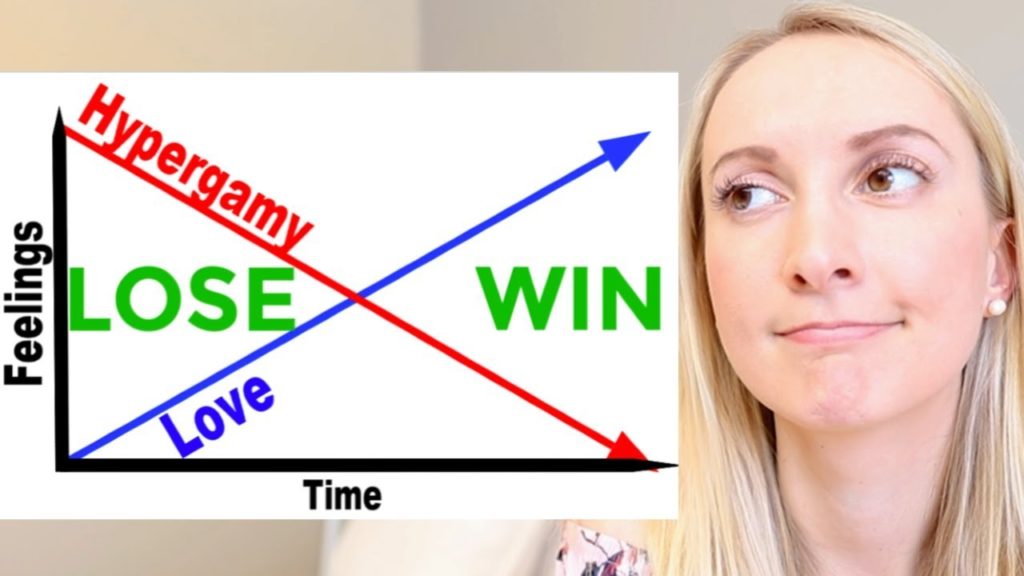
Hypergamy is a biological term that refers to mating strategies, particularly the strategy of females, who serve as the gatekeepers of reproduction in most species.

Evolutionary psychology teaches that females have evolved to “marry up” by the workings of natural biological laws. The higher the quality of the mate they can attract, the more likely their offspring will survive to reproduce. Over the course of the biological past, the offspring of females that specifically sought out high-quality breeding partners have outcompeted the offspring of those who were not as selective. The end result: hypergamous females.

Social science has adopted the term for human behaviour. In this context, hypergamy still refers to sexual selection, but specifically to the female tendency to prefer men who are wealthy, educated and ambitious (i.e. males who have demonstrated the greatest capacity for resource acquisition). In societies all over the world, free women try to attract high-status men if they can.

Described thus far is the scientific background of the term ‘hypergamy’. When people talk about hypergamy in the context of Clown World, they’re referring to two related, undesired phenomena.

Thanks to the advent of dating apps such as Tinder, women have a greater choice of mating partners than ever. Before social media, the choice was mostly restricted to who they knew in physical space: friends of friends, studymates, workmates, men at the pub. After social media, the choice has expanded to every available male in the entire city.

Before social media, unattractive men could go to a pub and rely on the fact that, sooner or later, a woman would choose to sleep with them on account of that her other options were limited. After social media, unattractive men have to compete with every spare Chad within 50 kilometres. This has led to a great number of them simply giving up hope of finding a sexual partner.

Today, even moderately attractive men are uncertain of being able to attract a decent woman. Because women inevitably choose from among the highest quality of the men available to them, and because the majority of men are now available to them, getting laid sometimes comes down to being in the top 10 or 20 percent. This has led to a record number of young men not getting laid.

The second phenomenon relates to women discarding the men they are already with in the hope of trading up.

A commonly held maxim states that “women are only as loyal as their options”, and today, thanks to social media, they have an abundance of options. The Internet is capable of connecting every woman with a near-unlimited stream of tall, muscular, good-looking men. Some women think that some of those men look a lot better than their current partners.

Many men today feel – whether justified or not – that the women of today are likely to abandon any relationship they are in as soon as a more attractive male comes along. These men feel that long-term relationships are much less secure that they used to be, owing to the fact that hypergamy is out of control.

Clown World is more cut-throat than normal life in many ways. Because the basic spiritual connection to other sentient life has been broken, people don’t care so much about other people’s suffering. As such, relationships are a lot more exploitative and shallow than they used to be. This is as true of sexual relationships as business ones.

The existence of hypergamy has led to one extremely thorny political question: to what degree, if any, should female sexual nature be controlled?

Marriage was invented to control hypergamy. The idea was that if every man got exactly one woman – no more, no less – that fighting for the highest quality mates would no longer happen. As long as men could be convinced to be faithful to one woman, the resentment that arises from men not being able to get laid would be minimised.

The problem is that no-one wants to get married in Clown World. Not only are people mostly incapable of making a long-term commitment to anything nowadays, but the law also makes it a dangerous proposition. The rise of “divorce rape” has meant that men who marry are in danger of the woman getting bored, divorcing them, and then claiming alimony on the grounds that she is accustomed to a certain lifestyle.

This has led to a return of the social outcomes that marriage was designed to prevent. The few Chads at the top of the dominance hierarchy get laid all the time, the many at the bottom of the dominance hierarchy never get laid, those in the middle live in fear of losing their position, and misery abounds. The inevitable outcome is a large number of men dropping out of society entirely.

It’s hard to predict where the hypergamy phenomenon will end. But some clues might come from the disconcerting increase in men who no longer believe in women’s emancipation. A return to what Jordan Peterson calls “forced monogamy” is entirely possible, as unlikely as it might seem right now.

*

This article is an excerpt from Clown World Chronicles, a book about the insanity of life in the post-Industrial West. This is being compiled by Vince McLeod for an expected release in the middle of 2020.

*

If you enjoyed reading this essay, you can get a compilation of the Best VJMP Essays and Articles of 2019 from Amazon for Kindle or Amazon for CreateSpace (for international readers), or TradeMe (for Kiwis). A compilation of the Best VJMP Essays and Articles of 2018 and the Best VJMP Essays and Articles of 2017 are also available.

*

If you would like to support our work in other ways, please consider subscribing to our SubscribeStar fund. Even better, buy any one of our books!

Clown World Chronicles: Who Is The Great NPC?

His eyes are black dots peering lifelessly out from a pallid grey face. His nose is nothing more than a triangle; his mouth is nothing more than a straight line. Hairless on crown, hairless on face, he casts a ghoulish and nightmarish figure. He is the Great NPC, one of the Younger Gods of the Clown World pantheon.

NPC stands for Non-Player Character. It’s originally a Dungeons and Dragons term, and it refers to characters who are played by the Dungeon Master and not by one of of the other players (who play PCs, or Player Characters). With the rise of video gaming, NPC came to refer to a game character that was controlled by the computer.

In either case, NPC came to be understood as a metaphor for an apparently human being that had no mind of its own. The main characteristic of NPC behaviour is that it is extremely predictable. Having no mind of their own, NPCs don’t have motivations, intentions or aspirations above that which their controllers imbue them with. They are every bit the programmable machine.

An NPC has been so completely programmed – whether by the television, by their schooling, by their religious indoctrination or by peer pressure – that they have no original ideas of their own. Everything they say, and everything they think, is simply repetition of something they had been programmed to believe.

The NPC can never question the mainstream narrative. They are incapable of making their own truth judgments. Any time they are asked a question, they respond with what the herd thinks. If the herd wants to zig, then the NPC will say that it’s time to zig. If the herd wants to zag, then they will say that it’s time to zag.

Being so dumb, the NPC is prone to paralysing bouts of cognitive dissonance, something which is heavily mocked by Clown World denizens in meme form. At maximum intensity, this cognitive dissonance can cause the NPC to suffer an NPC Error, which is when the NPC’s central processing unit is overwhelmed by the demands placed on it and crashes.

Encountering an NPC can be a terrifying experience if one isn’t used to it, akin to encountering a zombie or something else that isn’t human. Like a Terminator, one can never be sure that they’re not about to turn on you, pitilessly tearing you apart for a reason only their controller understands. Not being in possession of a soul, the NPC cannot be in possession of empathy.

Fortunately, NPCs are harmless in most cases, at least when it comes to direct violence. The real danger is that their mindless repetition of programming can lead to the normalisation of inaccurate ideas, which can lead to harmful consequences. If the television can program enough NPCs to believe something, the dead mass of their bleating will penetrate into every corner of society, causing everyone else to believe that thing too. If that belief is wrong, people will suffer.

It isn’t easy to tell if any given person one encounters is an NPC (as has been discussed at length here, determining an NPC from a conscious person is far from straightforward). So it’s usually necessary to rely on one’s intuitive sense of whether there’s anyone home. An NPC can say any number of things that hint at deep thought and intelligence. But all of it is mere programming.

The number of NPCs in the world appears to be growing larger. One of the characteristic phenomena of Clown World is that the divine spark within us all has begun to weaken. If this spark weakens enough, a person no longer has the will to do good things in the world. At this point, they will simply drift through life on the waves of social fashions. If uninspired by the divine, Wojak falls down the Fundamental Axis, and declines into an NPC.

All NPCs are avatars of the Great NPC himself, the Younger God of the Negative Pole of the Fundamental Axis. He is a reminder of what can happen to Wojak if he falls under the influence of the Merchant. The Great NPC hates all freethinking and all questioning of dogma. If the Merchant is the owner of the Clown World plantation, the Great NPC is its overseer.

The Great NPC is the god that represents the power of the mindless masses. His ultimate goal is to turn the entire world into NPCs. The reason why NPCs get angry when conscious people disagree with them is because the NPCs are trying to intimidate those people into silence. The Great NPC wants the entire world marching to a single drummer, too afraid to break step.

In this sense, the Great NPC is fundamentally opposed to Pepe, the Younger God of the Positive Pole of the Fundamental Axis. Pepe’s role in Clown World is to break down the cancer with spontaneous humour and good cheer. His meme magic is the antidote to NPC thinking, because NPC’s can’t understand it. Much of the cultural warfare in Clown World boils down to shitposters loyal to Pepe taking on normieposters loyal to the Great NPC.

*

This article is an excerpt from Clown World Chronicles, a book about the insanity of life in the post-Industrial West. This is being compiled by Vince McLeod for an expected release in the middle of 2020.

*

If you enjoyed reading this essay, you can get a compilation of the Best VJMP Essays and Articles of 2019 from Amazon for Kindle or Amazon for CreateSpace (for international readers), or TradeMe (for Kiwis). A compilation of the Best VJMP Essays and Articles of 2018 and the Best VJMP Essays and Articles of 2017 are also available.

*

If you would like to support our work in other ways, please consider subscribing to our SubscribeStar fund. Even better, buy any one of our books!