The Transmutation Of Copper Into Iron

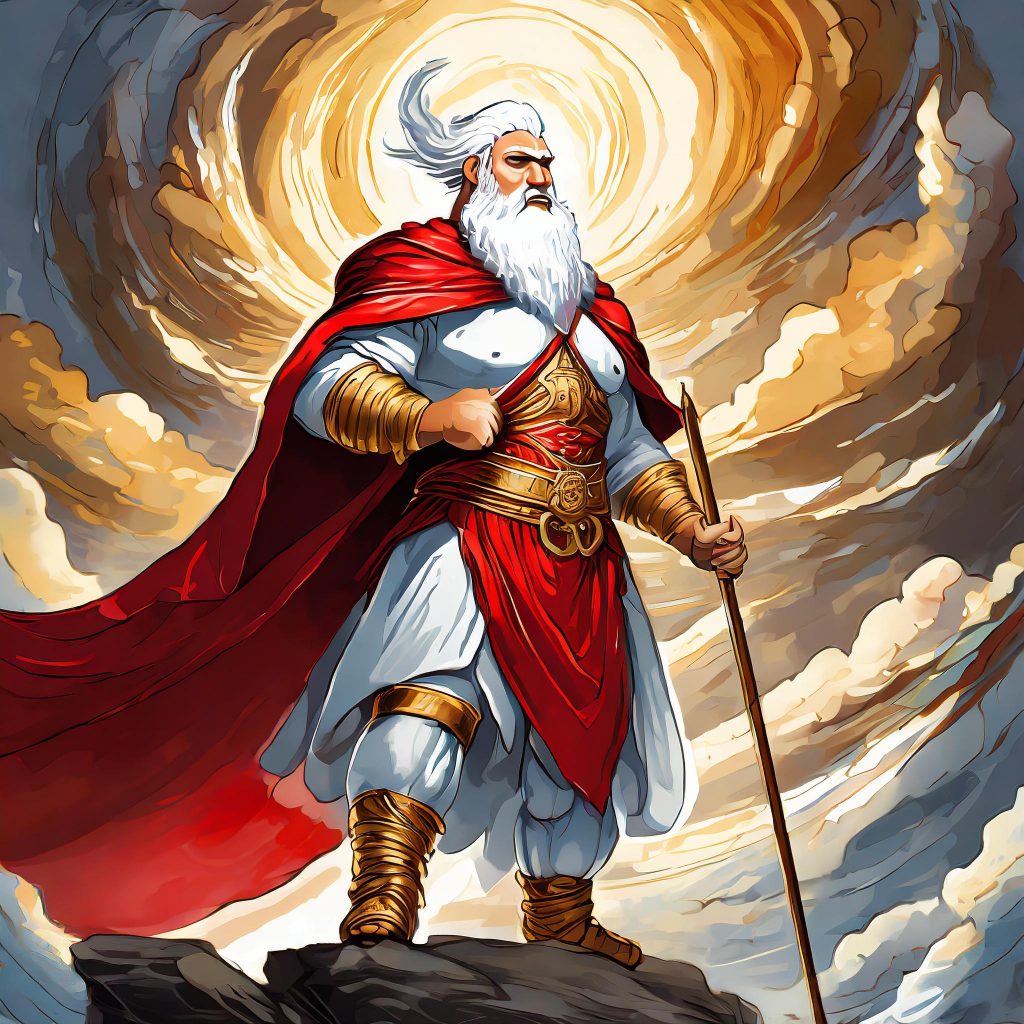
When consciousness descends below the Elemental Horizon, it begins to enter the realm of iron. In transmuting to iron, copper becomes discoloured. This discolouring represents the loss of a kind of basic humanity, the empathy that distinguishes the social from the antisocial. In so discolouring, a character’s consciousness descends to the border between the human and the animal realms.

The general thematic trend of this transmutation is from contentment to anger.

A typical example of a descent from copper to iron is that of the family man who loses everything. In a state of copper, he may have been relatively contented. But something happens to destroy that state of contentment, and in suffering the change the character drops down the Mithraic Ladder. A merchant or a sportsman who loses everything are other common examples.

The breakup of a romantic relationship is a typical way to descend from copper to iron, but this need not mean the death of a partner. It can mean a messy divorce, especially one stressful enough to cause anger to arise. It can also mean a falling out with a family member, old friend or workmate. It could be reflected in a loss of money.

An archetypal way for a family to fall out with each other is when an elder dies and everyone fights over the inheritance. Long-simmering resentments can boil over into drama if one character feels that another is acting selfishly. If one of the brothers or sisters felt that another one had been treated as the favourite, they might get really angry if the elder’s will wasn’t to their liking.

Another character’s successful Anabasis could serve as the trigger for the envy that caused another character to drop from copper to iron. Although envy is usually the preserve of the realm of silver, the lower levels are more than capable of feeling it too. A character of copper who become sufficiently envious could find themselves getting nasty.

If a merchant is your protagonist, that merchant might get robbed, and then have to decide whether to let the money go or to take it back by force. They might not like force – it might be extremely unnatural to them – but Fate compels them to fight in order to maintain their position. This could also be the story of someone forced to steal to support their family.

Socially speaking, the character transmuting from copper to iron tends to lose their sense of humour. This reflects the impatience that can be characteristic of the realm of iron. The phrase ‘hard-bitten’ can become appropriate. This can lead to a falling out with other characters if offence is taken.

Emotionally, a character descending to iron will become more wrathful. This can occur on account of frustrated lusts, which can become resentments. A deeply humiliating experience, or one in which a character is made to feel vulnerable or helpless, could tip a character from the realm of copper into the realm of iron. Revenge, especially physical revenge, is the sort of action a character descending into the realm of iron is liable to take.

Physically, the transmutation to iron brings with it a hardness and a greyness. Grey is usually associated with silver, and the transition to high social status, but it can also represent a fading of spiritual energy. This can be reflected in a sullen, low-energy appearance.

The character making this transmutation might start to dress less to impress women and more to intimidate men. They might start wearing black, shave their head, or even get a tattoo. Their body language might also reflect the change, becoming more tense, more challenging and aggressive. A female character might start smoking cigarettes.

A typical incident that might be emblematic of this transformation is that of a middle-aged man getting into a fistfight on account of some insult that a character on the Anabasis would have ignored. This is perhaps the archetypal fictional example of someone falling out of the realm of copper.

Intellectually, a character undergoing this transmutation will lose some of the wider social vision that had been achieved by reaching the level of copper. Instead of thinking of their family and long-term needs, the character will start to think more about themselves and short-term needs. As with the other steps of the Katabasis, they become more egotistical.

Some of the hobbies or luxury pastimes that a character may have engaged in will be forgotten in the transmutation of copper to iron. Such things might come to seem as frivolities to someone whose focus is tightening and hardening.

This is similar to how a character transmuting from tin to iron loses interest in frivolities, only in a tragic way. The character transmuting upwards from tin loses interest in childish games; the character transmuting downwards from copper loses interest in social obligations. It can thus be said that characters during the Katabasis mistakenly lose interest in their own lives, and this is reflective of the discolouration process.

In falling into the realm of iron from a higher frequency, a character can easily forget some of the moral lessons or realisations from earlier in life. In particular, they can forget the long-term value of behaving compassionately. This might have bad consequences for the character, but it can make for some great drama!

This transmutation need not have negative connotations, or at least not extremely so.

A character could, in so transmuting, become highly physically fit, as per the nature of characters of iron. It could be that, in the initial transmutation from iron to copper during the Anabasis, a character became physically soft and didn’t like it. Perhaps they longed to feel physically strong again when they got fat as a wealthy merchant. Viewed through the lens of iron, which prizes physical power above other forms, a fall to iron from copper might actually be a win.

It could also be that, in getting cast down from the level of copper to the level of iron, a character learns the rage that allows them to achieve things they previously couldn’t. This lack of rage may have prevented them from overcoming certain social barriers – and now they can break through them.

At this point it’s worthwhile to restate that the Hero’s Journey, in alchemical terms, need not be linear. The Katabasis refers to a general tendency: downward. But an interesting story will have a multi-dimensional character arc. The lover may be forced to become a fighter, but the fighter can redeem himself.

It’s also worthwhile to restate here that iron, despite being a low level compared to gold, mercury, silver and copper, is not the lowest, and a character of iron still has a lot of honour in comparison to those of lead.

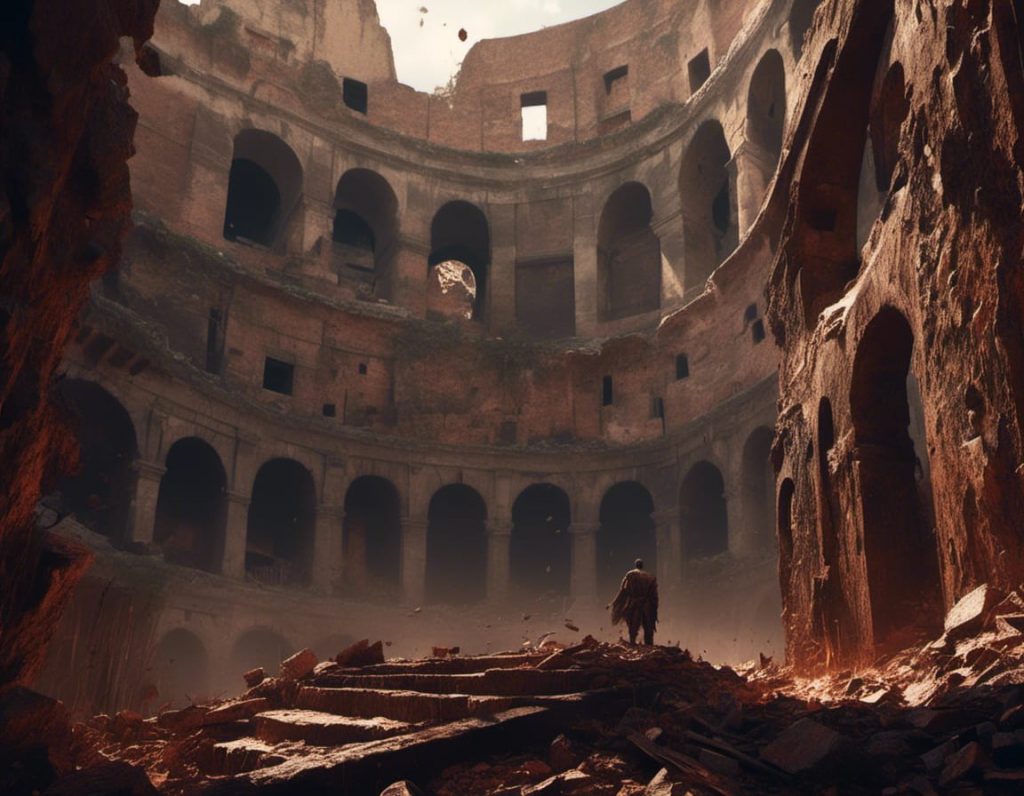
Perhaps the most famous depiction of this transmutation in popular culture is Russell Crowe’s character in Gladiator. A greatly respected leader of men as a Roman general, Maximus Decimus Meridius is betrayed and cast down to the level of a mere gladiator, forced to fight hand-to-hand.

*

This is an excerpt from Vince McLeod’s The Alchemy of Character Development, the sixth book in VJM Publishing’s Writing With Psychology series. This book will show you how to use alchemy to create deep, realistic and engaging characters for your creative fiction.

*

If you enjoyed reading this piece, buy a compilation of our best pieces from previous years!

Best VJMP Essays and Articles of 2023
Best VJMP Essays and Articles of 2022
Best VJMP Essays and Articles of 2021
Best VJMP Essays and Articles of 2020
Best VJMP Essays and Articles of 2019
Best VJMP Essays and Articles of 2018
Best VJMP Essays and Articles of 2017

*

If you would like to support our work in other ways, make a donation to our Paypal! Even better, buy any one of our books!
The Insanity At The Heart Of Western Culture In 2024

Mainstream media has made clear to every one of us that our current rates of material consumption are destroying the planet. If we don’t stop raping the limited resources of Planet Earth, we will induce a biosphere collapse that will probably kill us all. But there are very powerful forces preventing us from not pillaging the world.

Earth Overshoot Day is the day by when humans have used up all the resources that the planet can regenerate in a year. In 2024, that day was May 27. New Zealanders consume at such at rate that, if everyone consumed like us, we’d use up a year’s worth of resources by April 11.

The fact that an overshoot day even exists is proof that the world is insane. It means that we’re living in an unsustainable manner, much like a crackhead living on a giant ball of crack. We have to change course or we’re all going to die. But there are structural reasons why our global society can’t stop consuming the planet.

It’s not just a matter of resource depletion either. This March was the tenth straight month of record temperatures. The mainstream scientific consensus is that human activity has heated up the planet by almost 1.7 degrees Celcius since the late 1800s. If we don’t rein that activity in by reducing overconsumption, we will eventually cook the planet (and us with it).

The problem is that most of this consumption is motivated by the necessities of going to work and maintaining a state of work-readiness. A person must maintain a private vehicle, professional clothing and footwear, professional standards of grooming and body care, potentially all manner of tools and equipment, as well as pay for entertainment to destress from the demands of working. All of this costs resources – resources that are only used because of the obsession with working.

Realistically what we need is for a large number of people to go on something like a UBI, so that instead of driving to work every day and flying to meetings every week, and then spending the income they make from a forty-hour workweek on all kinds of consumer crap they don’t need, they can cut down both their work rate and their consumption rate.

The problem is that it’s simply not allowed to not work.

Our entire culture appears to be based on the logic that people not employed for wages are “not pulling their weight”, as if widespread starvation was imminent. There are dozens of words that can be employed to humiliate someone into working harder: bum, bludger, leech, moocher, parasite, lazy, shirker, grifter etc. To not be working for a wage is considered a great shame.

It could even be said that we live in a “workiarchy” where whoever works the most has the highest status. People brag about waking up extremely early in the morning to work, as if it was central to their moral value. This mentality has given us absurd humour like the “100 hours a week” meme, wherein it’s assumed that if you work less than 100 hours a week you’re taking it easy.

Mass abandonment of work is also not socially possible. The identities of most people are so closely bound with their work that they would suffer a catastrophic loss of personality structure if they were asked to give it up. In the same way that many people die shortly after they retire, because they no longer see a purpose to life, many people would lose the will to live if they were asked to stop working for the environment’s sake.

We’re killing the planet by consuming as much as we are. Yet it’s impossible to just simply not work. This irreconcilable conflict is causing immense levels of undiagnosed schizophrenia among Westerners, and especially younger ones, who are facing the existential dilemma of climate change head-on.

It is apparent from the widespread despair and malaise in Western society today that people want a change of direction. But who can change that direction, when most people are too busy working to pay rents to organise protest, and the people receiving the rents don’t want to change anything?

For the insanity at the heart of Western culture to be cured, we need to collectively come to the realisation that time spent in unpaid work can be just as valuable as time spent in paid work. We don’t need capitalists ordering us around for our lives to have value or meaning. We need to completely revalue the importance of work and industriousness in the light of the total ecological impact of humanity.

*

For more of VJM’s ideas, see his work on other platforms!
For even more of VJM’s ideas, buy one of his books!

*

If you enjoyed reading this piece, buy a compilation of our best pieces from previous years!

Best VJMP Essays and Articles of 2023
Best VJMP Essays and Articles of 2022
Best VJMP Essays and Articles of 2021
Best VJMP Essays and Articles of 2020
Best VJMP Essays and Articles of 2019
Best VJMP Essays and Articles of 2018
Best VJMP Essays and Articles of 2017

*

If you would like to support our work in other ways, make a donation to our Paypal! Even better, buy any one of our books!

The Transmutation Of Tin Into Iron

The second transmutation on the path up the Mithraic Ladder is that of tin into iron. The jovial, laid-back energy of tin becomes the martial and grim energy of iron. This second transmutation completes the physical realm, and produces a character who is optimised for war and combat.

As a character enlargens when they transmute from lead into tin, they sharpen as they transmute into iron. This sharpening is the characteristic action of this third level. The character thereby becomes harder and more warlike. The person of iron is, of course, the warrior.

The transmutation of tin into iron begins when a character comes to see recreation and play, characteristic of the second level, as childish. No longer are the frivolities of tin seen as an esacpe from the cruel pressures of survival. A character starts to yearn for more than just recreation. A character aspiring to the realm of iron years to test themselves, to test their strength against opposition.

As such, the attitude of a character transmuting to iron sharpens as well. Iron is the frequency of maximum possible cruelty – but it doesn’t have to be cruel. It’s also the frequency with which a man protects his family. That might involve cruelty, but it can also involve acts of the most extreme physical rectitude. A character might come to learn this rectitude when they first have a family, giving them something to defend.

This stage can involve a character who has lapsed into gluttony getting fit and strong. Getting off the couch, and starting to lift weights, is an example of the sort of transformation that occurs in physical space at this stage. Thus the sharpening can involve pain – the pain of weakness leaving the body (as the US Marines would put it).

Motivation to get stronger comes mostly from the archetypal motivation of the stage of iron, which is honour. If a character comes to feel humiliated and dishonoured on account of being fat and unfit, the reader will easily understand that character’s motivation to become lean and fit instead. If a woman rejects them, or if they can’t climb a set of stairs, or if a child laughs at them, they might develop a powerful desire to get fit.

The transformation of tin into iron occurs primarily within the physical realm, being mostly a matter of sharpening the body. The two classic ways this can be achieved is through conflict against the environment or conflict against other people.

Conflict against the environment can come through means such as climbing a mountain, traversing a desert or sailing a vessel through stormy waters. The same way a blacksmith purifies iron by continually striking it, so can a person purify their body by continually taking one more step up the mountain.

Conflict against other people, in this context, primarily means battle. Many a man of tin has gone into battle with a distant grin, only to harden up quick when the man next to them got a spear through the chest. The deprivations of war will reliably harden a person more than anything.

The typical background of the transmutation of tin into iron is the gym. The fat of tin becomes the iron of muscle through repeated action.

This is especially true if the gym is a martial one. The line in Fight Club goes “A guy who came to Fight Club for the first time, his ass was a wad of cookie dough. After a few weeks, he was carved out of wood.” That line summarises the nature of the transformation of this stage. One puts the drinking vessel away and picks up the rifle.

A character who has transmuted their consciousness into that of iron will look at the pastimes that obsessed them in youth, and see childishness of no importance. Games in which defeat used to upset them now only evoke laughter. If a person can lose a game to a child with complete indifference, they might have passed into the realm of iron.

Although the transmutation of tin into iron is primarily a physical phenomenon, there are mental and spiritual aspects to it. A character that has mastered iron will be much harder to intimidate than one who has not. That character’s physiology will be like iron, in that they will not be nervous in the face of physical danger. They could stand on the edge of a precipice without feeling fear.

The character who has successfully developed a soul of iron will also be more inclined to think about eternity than the characters of lead and tin. To a character of iron, the character of tin seems like a degenerate and the character of lead seems like a wretch. The character of iron is the first on the ascent up the Mithraic Ladder to actually enjoy their life, i.e. not to suffer significantly.

The major mental transformations, however, are still to come, the mental realm being that which lies inbetween iron and silver. A character that completes the transmution into iron might have become an awesome fighter and the master of themselves, but they will only master themselves. Iron is still too low a level to command from. So a successful transmutation into iron will come with a new set of ambitions.

A famous example of this transmutation in popular culture is that of Rocky in Rocky 3. He starts the film fat and out of shape, and ends it super-fit. Another example is that of Conan in Conan the Barbarian. He gets put to work on the slave wheel as a boy, so that by the time he is a man he is exceptionally strong.

When the character of iron feels like they have truly proven their physical courage, they can begin the transmutation to copper.

*

This is an excerpt from Viktor Hellman’s The Alchemy of Character Development, the sixth book in VJM Publishing’s Writing With Psychology series. This book will show you how to use alchemy to create deep, realistic and engaging characters for your creative fiction.

*

If you enjoyed reading this piece, buy a compilation of our best pieces from previous years!

Best VJMP Essays and Articles of 2023
Best VJMP Essays and Articles of 2022
Best VJMP Essays and Articles of 2021
Best VJMP Essays and Articles of 2020
Best VJMP Essays and Articles of 2019
Best VJMP Essays and Articles of 2018
Best VJMP Essays and Articles of 2017

*

If you would like to support our work in other ways, make a donation to our Paypal! Even better, buy any one of our books!

The Working-Class White Question

Conventional political understanding is that the left wing is for the working class and the right wing is for the ruling class. But conventional understanding is in the process of being replaced by an alternative politics. In the politics of the 21st Century, the left wing is for browns and blacks. This has raised a number of, until now, unanswered questions.

Perhaps the foremost of those questions is: what is the position of working-class whites in the new paradigm?

The labour movements that formed in the West in the 19th and early 20th Centuries were almost entirely white. They formed in opposition to the capitalist interests that were also almost entirely white. But when globalists won World War Two, and began the mass importation of cheap Third World labour to the West, the white working class were put in a bind.

According to the Marxists, the white working class were obliged to embrace their replacements. The world’s working class were prophecised by Marx to come together across international borders, and so the destruction of national consciousness through mass cheap labour imports was a good thing. The white working class would have to recognise that they and the newcomers were of a shared mission: to destroy the capitalist system.

Working-class whites, however, didn’t feel like they had much in common with the newcomers. For one thing, the vast majority of working-class whites have at least some middle-class people in their extended family. For another, the newcomers usually hated the working-class whites and made that hatred obvious.

This caused working-class white sentiments to split: some embraced working-class culture, some embraced white culture, and others bunked down into an exclusivist working-class white culture that was hostile to outsiders. The net result was the shattering of working-class white solidarity and the neutralisation of working-class whites as a political force.

Today, we see working-class whites, on account of being white, forced to take a back seat to everyone else, even when those others are wealthier. Working-class whites are excluded from racial scholarships just as much as Bill Gates’s kids are. Working-class whites can also be, and often are, excluded from certain jobs under Diversity, Inclusion and Equity initiatives.

Naturally, this has led to immense resentment among working-class whites towards the Western political establishment. This resentment is strongest for those leftists who claim to be fighting for the white working class, but who in reality are fighting for an ideology that doesn’t care at all about working-class whites.

The working-class white question, then, is a way of distinguishing sane leftists from insane wokists.

If a person truly supports the underdog, they will support the working-class whites upon whose backs industrial civilisation was built, and who still bear the majority of the intergenerational trauma incurred through the various wars of the past 100 years: the same working-class whites who are currently getting squeezed out of housing all over the West.

If they are an insane wokist, by contrast, they might consider working-class whites traitors for their refusal to support the globalist revolution. Thus they will not care about the suffering of working-class whites from the mass importation of Third World cheap labour. That suffering is just a means to the end of globalist revolution.

Thus sane leftists can be distinguished from insane ones, simply by asking them what they think about working-class whites.

A leftist might make the argument that some particular racial group is disadvantaged because of colonisation, and therefore deserves special treatment by way of compensation. Very well. But what, then, explains the disadvantage of working-class whites?

If a left-wing politician makes the argument that browns and blacks are disadvantaged by colonisation, but working-class whites, who may be poorer than those browns and blacks, are advantaged by that same colonisation, and therefore are obliged to pay some of the reparations that are due from the whites to the browns and blacks, that politician is the enemy.

Likewise if a politician says that browns and blacks are poor because they have not had a chance yet, but working-class whites are poor because they have had a chance and have already blown it, that politician is the enemy. This is akin to saying that working-class whites are the only truly low-IQ faction of society, and therefore deserve a place at the very bottom of the ladder.

Working-class whites need to realise that, if a left-wing politician doesn’t support working-class whites explicitly, they will not support working-class whites at all. The fact that they are on the left cannot be taken to mean that they implicitly support working-class whites.

The working-class white question is a way for working-class whites to determine if a given leftist is a friend or a foe.

*

If you enjoyed reading this piece, buy a compilation of our best pieces from previous years!

Best VJMP Essays and Articles of 2023
Best VJMP Essays and Articles of 2022
Best VJMP Essays and Articles of 2021
Best VJMP Essays and Articles of 2020
Best VJMP Essays and Articles of 2019
Best VJMP Essays and Articles of 2018
Best VJMP Essays and Articles of 2017

*

If you would like to support our work in other ways, make a donation to our Paypal! Even better, buy any one of our books!