

The Elementalist Conception Of Time (redux)

1. Most people assume, as if it were self-evident, that space and time exist and that we move around in them.

2. This assumption holds that space is three dimensional (the x, y and z axes), and that time adds another dimension, so that spacetime can be said to be the four-dimensional space in which we all live.

3. We are born at one point in spacetime and, over the course of our lives, move through it as time progresses.

4. This materialist conception of time creates a number of logical quandaries, such as: when did time begin? How did it start? If it started 13.7 billion years ago, with the Big Bang, what happened before then? Did time exist before the creation of the physical Universe?

5. Is time an inherent property of the Universe or does it exist as the result of the will of some divine creator? If an inherent property of the Universe, what makes it progress at the speed it does, and not a greater or a lesser speed? Why progress at all? And – most frightening of all – if it begins and progresses then will it end?

6. All of these questions create great confusion in the minds of materialists and non-Elementalists.

7. The Elementalist, who understands that consciousness is the prima materia and that it explores the Great Fractal to entertain the gods in perpetuity, has no such confusion.

8. To the Elementalist, time is an illusion. It simply doesn’t exist.

9. Time is an illusion brought about by the movement of consciousness through the Great Fractal.

10. Because the sets of perceptual impressions experienced by consciousness appear to change in a rule-based manner, it seems that time exists and flows at a uniform rate. The reality is different.

11. The illusion of a moving picture on film is created by displaying a number of still frames in quick succession. If these frames are displayed rapidly enough, the image on the screen will appear like it is moving. But they aren’t – they just appear to, as if in a flipbook.

12. Our fragments of consciousness navigate the Great Fractal in a comparable manner.

13. Our perceptions cycle through a cosmically large number of static universes in extremely short order. Entire universes blink in and out of perception at such a speed that it feels like we’re moving fluidly through one single Universe.

14. This movement through time is, however, no more fluid than that of a horse running in a motion video. It’s also an illusion.

15. The Great Fractal, in its unspeakably majestic, all-encompassing nature, is static.

16. Because the fragment of consciousness that each of us possesses can only be aware of a tiny section of the Great Fractal, and because the tiny section that we are aware of keeps changing, it seems like time exists.

17. In reality, there is only one ever-present and unchanging now, and it exists within consciousness.

18. In this eternal now, perceptions change, and that’s all that time is.

19. The contents of consciousness are ever-changing, but consciousness itself is not, serving as an unwobbling pivot around which the entire drama of material existence unfolds.

20. The common perception of time as something real follows naturally from the common assumption of materialism – and this assumption is neither accurate nor rational.

21. Dilemmas like the Grandfather Paradox are easily solved by the Elementalist. A world in which your grandfather lives and gives rise to one of your parents exists in the Great Fractal, and will always exist there, and will always be experienced by at least one fragment of consciousness, forever.

22. Somewhere in the Great Fractal are worlds in which your grandfather is killed before reproducing, but this doesn’t negate the fact that there are still an infinitude of worlds in which he was not killed before reproducing.

23. Therefore, you could kill your grandfather a million times and it wouldn’t change a thing.

24. His vibration would still exist in the Great Fractal, so consciousness would still be perceiving him at all times, and would still perceive pathways through the Great Fractal in which he existed and gave rise to progeny.

25. Likewise, dilemmas about how time started and where it will end are easily resolved.

26. To the Elementalist, there is only one eternal now, and in that now we navigate the Great Fractal.

27. Knowing that time is an illusion, questions about how it started or where it will end are meaningless.

28. Consciousness exists outside of time and is more fundamental than time.

29. Therefore, time is a phenomenon limited to the contents of consciousness.

30. All dilemmas of time have Elemental solutions.

*

This chapter is an excerpt from Elemental Elementalism, the foundational scripture of the new religion of the Age of Aquarius.

*

If you enjoyed reading this essay/article, you can get a compilation of the Best VJMP Essays and Articles of 2020 from Amazon for Kindle or Amazon for CreateSpace (for international readers), or TradeMe (for Kiwis). A compilation of the Best VJMP Essays and Articles of 2019, the Best VJMP Essays and Articles of 2018 and the Best VJMP Essays and Articles of 2017 are also available.

*

If you would like to support our work in other ways, subscribe to our SubscribeStar fund. Even better, buy any one of our books!

The Elementalist Conception Of The Meaning Of Life (redux)

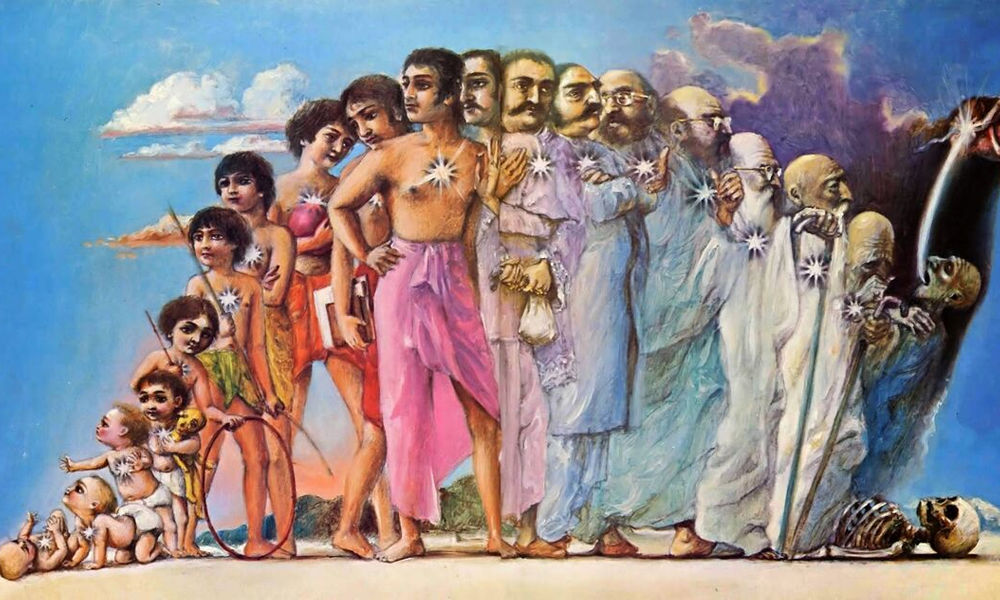
1. Elementalists believe that every person is entirely free to choose what the meaning of their life is.

2. Broadly speaking, the meaning of life that a person chooses will fall into one of four categories, each corresponding to one of the feminine elements.

3. Some people choose domination. This corresponds to fire. These people are the most masculine and have the most energy to expend.

4. People in this group are likely to become professional sportsmen, business tycoons, politicians or military/law enforcement/security.

5. If someone chooses domination as the meaning of life, they are likely to see other people as weak.

6. Some people choose exploration. This corresponds to air. These people are masculine, and like to go forward, but they are more subtle about it than the dominators.

7. People in this group are likely to become backpackers, scientists or psychonauts.

8. If someone chooses exploration as the meaning of life, they are likely to see other people as boring.

9. Some people choose pleasure. This corresponds to water. These people are feminine, because they will shy away from adversity, but they are also attracted to the possibility of pleasure.

10. People in this category are likely to become epicureans, hedonists and artists.

11. If someone chooses pleasure as the meaning of life, they are likely to see other people as masochistic.

12. Some choose survival. This corresponds to earth. These people are the most feminine, and are prone to retreating.

13. People in this category are likely to become hermits, homebodies or fitness and health enthusiasts.

14. If someone chooses survival as the meaning of life, they are likely to see other people as foolish.

15. In principle, every person could be assigned to one of these four groups based on how they choose or desire to live, even if they haven’t consciously chosen that group themselves.

16. This is because every person who chooses to go forwards – in other words, every person who chooses to live – must have a reason to do so, and the potential range of those reasons is finite.

17. However, all of these reasons can only ever provide a secondary meaning to a life.

18. The primary meaning of every life is to entertain the gods.

19. Elementalists believe in higher dimensions that are populated by beings of higher frequencies. These beings are capable of observing us without our being aware of it, much like we might observe a creature under a microscope.

20. To us, they are the gods: higher frequencies in higher realms of the Great Fractal. It is to entertain these gods that our lives have meaning.

21. If our futile struggles to dominate, or to explore, or to enjoy, or to survive the Great Fractal entertain the gods, then our lives have meaning despite being finite.

22. All of us are mortal, therefore every meaning that we could ourselves give to life is ultimately futile and pointless.

23. Most never overcome this dilemma, withdrawing from life and saying No to it. Such people appall, disgust and bore the gods.

24. Some others do overcome this dilemma, engaging with life and saying Yes to it. Such people delight and entertain the gods.

25. In the Elementalist conception, we live so that the gods might regard us as they once regarded Alexander.

26. Overcoming evil cannot possibly be the meaning of life, because evil will always be a part of the world as long as it’s possible for God to will it.

27. Neither can purifying one’s soul (understood by the Elementalist as raising the frequency of one’s consciousness) be the meaning of life. If it was, then life would be no longer possible once this had been achieved.

28. Nor can escaping the Great Fractal be the meaning of life. There’s ultimately nowhere for consciousness to escape to, other than reunion with God, and in such a case there’s no going forward without re-entering the world again.

29. Alexander understood the overwhelming importance of behaving heroically for the sake of the gods’ attention. He understood that the gods and goddesses watch over us from a higher place.

30. This knowledge has mostly been lost today, which is one reason why most people today live in such a pitiful manner, struggling for purpose and meaning.

*

This chapter is an excerpt from Elemental Elementalism, the foundational scripture of the new religion of the Age of Aquarius.

*

If you enjoyed reading this essay/article, you can get a compilation of the Best VJMP Essays and Articles of 2020 from Amazon for Kindle or Amazon for CreateSpace (for international readers), or TradeMe (for Kiwis). A compilation of the Best VJMP Essays and Articles of 2019, the Best VJMP Essays and Articles of 2018 and the Best VJMP Essays and Articles of 2017 are also available.

*

If you would like to support our work in other ways, subscribe to our SubscribeStar fund. Even better, buy any one of our books!
The Law Of Assortative Reincarnation (redux)

1. Knowing consciousness to be the prima materia, the Elementalist is not interested in the question of whether consciousness survives the death of the physical body.

2. The really interesting question is what the order of reality looks like on the far side of death.

3. A person’s frequency of consciousness determines the sort of reality they manifest. This is true in life, and this is true in death.

4. In life, this rule is known as the Law of Attraction. This holds that, among other things, a person’s frequency of consciousness repels both higher and lower frequencies, so that people tend to attract other people like themselves.

5. Desperate people attract desperate people, happy people attract happy people, angry people attract angry people, curious people attract curious people, sedulous people attract sedulous people, glorious people attract glorious people and humble people attract humble people.

6. In life, the Law of Attraction holds that the energy one puts out into the Great Fractal will be the same as the energy that returns to one from the Great Fractal.

7. In death, the same logic applies.

8. The rule that the energy one put out into the Great Fractal in life becomes the energy that returns to one from the Great Fractal after death is known as the Law of Assortative Reincarnation.

9. This is a very similar concept to the biological concept of assortative mating.

10. In other words: we attract, on the other side of death, the same sort of beings that we attract on this side of death. This we do by means of the frequency that we project into the Great Fractal.

11. When a person’s physical body dies, their ego dies with it, and so the person is no longer influenced by the part of the mind that tells lies to further its own impulses and which makes unjustified excuses for itself.

12. After the death of one’s physical body, one’s fragment of consciousness returns to God – and to God’s judgment.

13. Being without ego on the other side of death, people don’t question God’s judgment there. Consequently, they accept their fate without qualification.

14. Although God is without malice, the fact is that every person, when stripped of ego, will agree that they ought to get what they deserve.

15. The fairest thing for every sentient being is to live in a reality filled with beings on the same frequency of consciousness as themselves. God facilitates this.

16. Some call this facilitation the Law of Karma, and this law underpins both the Law of Attraction and the Law of Associative Reincarnation.

17. A person’s frequency of consciousness upon the death of their physical body is the same frequency as the part of the Great Fractal that person will next reincarnate into.

18. All the beings that populate the next world that a person reincarnates into are fractal expressions of that person’s own frequency of consciousness – and that person is a fractal expression of all those other beings.

19. The Law of Assortative Reincarnation holds that people reincarnate into worlds with the same frequency as themselves.

20. This means that people reincarnate into worlds populated by beings at a similar frequency. Some will be lower, and some will be higher, but the average will be similar to that of the person incarnating.

21. Thus, each being is assigned, when reincarnating, to the part of the Great Fractal that is appropriate for their frequency of consciousness.

22. The Great Fractal is perfectly just – but this is only apparent at high levels of resolution, such as when one observes series of multiple lifetimes.

23. At low levels of resolution, such as a mere decade, the Great Fractal can appear extremely unjust. This is why short-sighted and materialistic people are usually preoccupied with some grievance or other.

24. Truly, people get what they deserve.

25. People who are cruel will develop a frequency that reflects cruelty. Consequently, they will attract cruel people into their lives and will repel kind ones.

26. People who are kind will develop a frequency that reflects kindness. Consequently, they will attract kind people into their lives and repel cruel ones.

27. These facts are true on both sides of death.

28. A person may or may not get punished legally for acts of cruelty, but they always get punished spiritually, on this side of death or the other.

29. If a person wants to reincarnate into one of the Heaven Realms after they die, or at least wants to reincarnate into a world with less egregious suffering than here on Earth, they need to perform enough works of alchemy to transmute their consciousness into a level where it would be heavenly to be around that person.

30. Understanding the Law of Assortative Reincarnation means that one should never complain about the nature of life on this Earth.

31. This Earth may be cruel, and it may be brutal, but the reason why we all incarnated here is because of the frequency of consciousness that we cultivated in our past lives.

32. Should one wish to escape suffering, the correct thing to do is to transmute one’s frequency of consciousness from the basest, most egotistical level to the highest, most noble level.

33. The easiest way to do this is to focus on alleviating the suffering of one’s fellow sentient beings.

34. This will ensure that one attracts other beings on that level, whether on this side of death or the other side of death.

*

This chapter is an excerpt from Elemental Elementalism, the foundational scripture of the new religion of the Age of Aquarius.

*

If you enjoyed reading this essay/article, you can get a compilation of the Best VJMP Essays and Articles of 2020 from Amazon for Kindle or Amazon for CreateSpace (for international readers), or TradeMe (for Kiwis). A compilation of the Best VJMP Essays and Articles of 2019, the Best VJMP Essays and Articles of 2018 and the Best VJMP Essays and Articles of 2017 are also available.

*

If you would like to support our work in other ways, subscribe to our SubscribeStar fund. Even better, buy any one of our books!

Navigating The Great Fractal (redux)

1. The vastness of the Great Fractal cannot be described in words, but describing how to navigate through it is much simpler.

2. Those unfortunate wretches who don’t know how to navigate the Great Fractal are condemned to live lives of maddening confusion as they are hurled to and fro by the winds of change.

3. Because the materialist paradigm is currently dominant, most people are used to thinking about setting goals in terms of time.

4. According to the received wisdom, time passes, and eventually when enough time has passed and enough effort has been expended, the goal is achieved.

5. Elementalists understand that both the material world and time are illusions. So how, then, does one get from Point A to Point B?

6. Everything that one could possibly wish for is in the Great Fractal: every possible situation in every possible world. One simply has to find a way to navigate there.

7. Getting to where one wishes is not easy, primarily because most people are used to thinking of reality as a planet that one walks around, and are unused to thinking of reality as a metaphysical fractal that one navigates through.

8. Understanding this navigation is a matter of understanding frequency and how frequencies match with similar frequencies.

9. A person’s frequency is the frequency of their consciousness. This can be estimated on a scale from 0 to 1, where 0 is pure unconsciousness (like an NPC) and 1 is pure consciousness (like Buddha).

10. The lower the frequency, the closer to psychopathic behaviour will be exhibited. The higher the frequency, the more it will ease the suffering of the beings around them.

11. A person’s frequency is the sum total of their actions, in both this life and in previous ones.

12. If that person has taken selfish actions that ignore the divinity of others, their frequency will be dark and heavy. If they have taken actions that respect the divinity of others, their frequency will be bright and light.

13. People incarnate into this world because the actions that they have made in previous lives has caused their consciousness to resonate at a particular frequency. This frequency happens to be a close match to the frequency of this world.

14. Every part of the Great Fractal has a frequency that matches closely to the frequency of consciousness possessed by its inhabitants.

15. Given that there are a practically infinite number of worlds in the Great Fractal, there is a world to match every possible frequency that a consciousness might resonate on.

16. In every person’s previous lives, they have been presented with a string of moral dilemmas, just as they have been in this one. In response to those dilemmas, they have made a variety of decisions.

17. The sum total of the correctness or otherwise of those decisions is now represented by every person’s frequency of consciousness.

18. Thus, if you have lived a life where you were selfish and cruel, you will incarnate in a universe populated with other beings on a similar frequency. And this will be perfectly fair – after all, you justified those behaviours by performing them yourself.

19. Therefore, you decreed that such actions were legitimate – even when they’re performed against you.

20. Elementalists call this process assortative reincarnation. It’s an application of divine justice, because every individual consciousness gets assorted to a universe that is appropriate to their frequency.

21. As such, navigating through the Great Fractal is simple. All one has to do is resonate at a frequency of consciousness that matches one’s desired destination.

22. Altering the frequency of consciousness at which one resonates is primarily a matter of applied will.

23. The longer and harder one applies one’s will to the achievement of a goal, the more one’s frequency of consciousness will alter to match the expression of that will.

24. If one’s frequency of consciousness matches one’s desired destination, eventually one will find oneself manifesting there, whether in this life or a life to come – this is actually unavoidable.

25. The laws of the Great Fractal demand that this must be the case, for it is unjust for a high frequency of consciousness to be cast among the lower, or for a low frequency of consciousness to be cast among the higher. This applies on the scale of both one lifetime and a hundred thousand.

*

This chapter is an excerpt from Elemental Elementalism, the foundational scripture of the new religion of the Age of Aquarius.

*

If you enjoyed reading this essay/article, you can get a compilation of the Best VJMP Essays and Articles of 2020 from Amazon for Kindle or Amazon for CreateSpace (for international readers), or TradeMe (for Kiwis). A compilation of the Best VJMP Essays and Articles of 2019, the Best VJMP Essays and Articles of 2018 and the Best VJMP Essays and Articles of 2017 are also available.

*

If you would like to support our work in other ways, subscribe to our SubscribeStar fund. Even better, buy any one of our books!