The Transmutation Of Mercury Into Gold

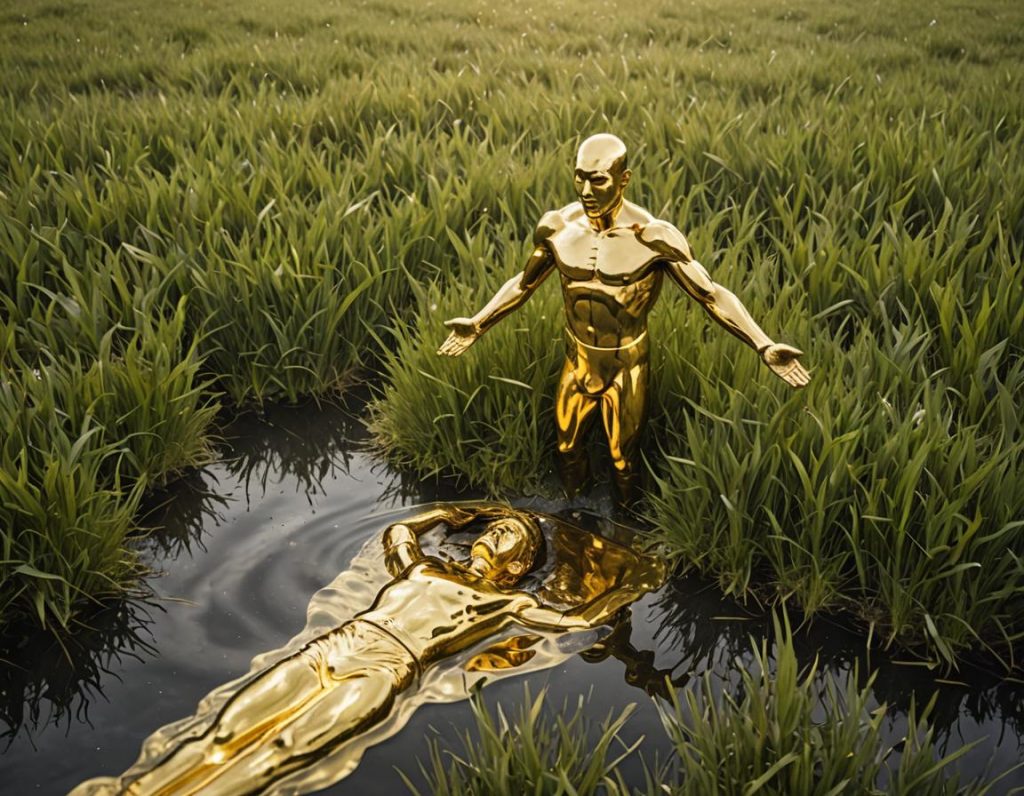
In becoming gold, mercury becomes perfected. This sixth stage of the ascension completes the spiritualisation that was begun in the fifth stage. In becoming gold, a character becomes perfect, meaning that their every thought and action is in accordance with the will of the divine. The transmutation process of this final step is extremely subtle.

The major difference between mercury and gold is that the latter is egoless. Characters of mercury might be truly great and good people who alleviate the suffering of those around them – but they usually have egos to match their position. The transmutation to gold, therefore, entails an elimination of the grandiosity that characterises the realm of mercury.

When the mercurial is so triumphant, so awe-inspiring, that it might weep for there are no more worlds to conquer, the gold is perfectly satisfied with its life journey. Characters of gold have learned a humility such that there is no longer any need for self-aggrandisement. Learning such humility is crucial to perfecting one’s consciousness. But this is not the beaten-down, resentful humility of the characters of lead and tin. The humility of the character of gold is something divine.

If the stage of mercury represents the solve of the spiritual phase of the alchemical journey, the stage of gold represents the coagula. So the breaking apart of the spirit involved in the stage of mercury is followed by the resetting together of that spirit in the stage of gold. This resetting together implies the perfection of that spirit, in that the spirit has been reconstructed according to eternal truths.

The great challenge of this stage is that the more energy one has in the realm of mercury, the more difficult it can be to transform any of that energy into the realm of gold. A character with a natural mercurial frequency might rise quickly through the lower levels of the Mithraic Ladder, being impelled upward by a powerful force at the sixth level. But upon attaining that sixth level, a powerful mercurial frequency will not help attain the seventh level. It often hinders.

Physically, what is striking about the character of gold is that they are at peace. Thus, the awesome impulses that lead a character to the heights of the realm of mercury finally become sated. The visage of such a character will transform from terrifying to peaceful. They will smile a lot – not the intoxicated grinning of the character of tin, but a smile of contentment.

It is possible, but for from essential, for a character of gold to be elderly. This is for the simple reason that many people don’t learn any real humility until they become physically vulnerable, which often doesn’t occur until senescence. Such a late transmutation might not be particularly interesting for the reader. It can be more interesting to read about those who achieve great things while still young.

In terms of body language, the transmutation to gold brings with it a serene bearing. Whereas the character of mercury carries themselves as if something dramatic could happen at any moment, the character of gold is perfectly relaxed, content with any outcome. Knowing that the will of the divine will out eventually, no matter what obstacles may have been dreamed up for the sake of overcoming the boredom of eternity, the character of gold expresses physical, intellectual and spiritual tranquility. This differs greatly, but subtly, from the gravitas expressed by the characters of mercury.

Emotionally, the transmutation from mercury to gold reflects the achievement of inner peace. The character of gold feels ataraxia. Again this is greatly, but subtly, different to the supercharged emotions of the character of mercury. Thus, the internal world becomes very quiet, desireless, allowing divinity to shine through.

None of this means that characters of gold are passive or weak. It’s true that gold is the softest of metals – but it is still a metal. A character of gold is still capable of kicking arse – one who is too old to do that has degraded to a character of lead (see Part Three). They just never kick someone’s arse unless doing so truly accords with the divine. Unlike a character of mercury, a character of gold won’t be seen leading a conquering army. But they can still fight, if necessary, to defend that which they love.

Socially, characters of gold can play the role of characters of mercury in retirement. When a character of mercury loses interest in worldly concerns, pleasures and attainments, and starts thinking more about what frequency they will take with them into the afterlife, they transition into gold.

A character of mercury, then, might transition to gold by escaping society and its strictures, and retiring into the mountains to become a wise person. By climbing into a cave far from civilisation they might find the serenity necessary to perfect their consciousness.

However, the transition to gold does not imply indifference to material suffering. A character of gold is not merely religious, or concerned with religion: they truly live so that their every action is in accordance with the will of the divine. Thus, they do not neglect their family and friends. Rather, they seek to guide those family and friends through wisdom, as opposed to the direct leadership of the realms of mercury, silver, copper and iron.

In a sense, gold is the realm of the divine and of heroes, and not ordinarily attainable by mere humans. Thus it’s possible to transmute mercury into gold by means of an exceptionally glorious death. A character might not be able to express being of a frequency of gold if they’re dead, but other characters will still be able to honour them as if they did.

Thus, it can be possible to transmute into gold through one single glorious act of perfection. Confucius once said that “If for a full day you can overcome selfishness and keep to propriety, everyone in the world will return to humaneness.” An act of sublime selflessness could transform the entire world for centuries to come. If it is characteristic of the lower stages that transmutation is achieved through a great number of repetitions of small acts, it is the opposite at the higher stages. So one single great act can be what’s necessary to effect the change from mercury to gold. This could involve martyrdom, or giving all one’s property away.

Unlike characters of mercury, who usually play important roles in society, characters of gold have no desire to be the centre of attention. They are perfectly content with not being high in the social hierarchy. A character of gold could even be a homeless person living under a bridge. Emblematic of gold is that it is rare and hard to find. Thus a character, in transmuting to gold, might make themselves scarce.

Alchemically, mercury bonds closely to gold to form gold amalgam. To the outside observer, it can almost seem as if the mercury devours the gold in doing so. This is analogous to how a sense of grandiosity, typical of characters of mercury, can devour those characters’ chances of attaining the level of gold. Pride is the last obstacle to be overcome in the perfection of the consciousness.

For this reason, the transmutation to gold is something that is generally achieved in isolation. The archetypal literary example is Nietzsche’s Zarathustra, from Thus Spake Zarathustra. This Zarathustra was a prophet who brought tidings of the Overman; an Overman who would institute a new set of moral values in the wake of the death of the god of Abraham. A character of mercury could transmute to gold through prophecising a new era of humanity to come.

*

This is an excerpt from Vince McLeod’s The Alchemy of Character Development, the sixth book in VJM Publishing’s Writing With Psychology series. This book will show you how to use alchemy to create deep, realistic and engaging characters for your creative fiction.

*

If you enjoyed reading this piece, buy a compilation of our best pieces from previous years!

Best VJMP Essays and Articles of 2023
Best VJMP Essays and Articles of 2022
Best VJMP Essays and Articles of 2021
Best VJMP Essays and Articles of 2020
Best VJMP Essays and Articles of 2019
Best VJMP Essays and Articles of 2018
Best VJMP Essays and Articles of 2017

*

If you would like to support our work in other ways, make a donation to our Paypal! Even better, buy any one of our books!

The Transmutation Of Copper Into Silver

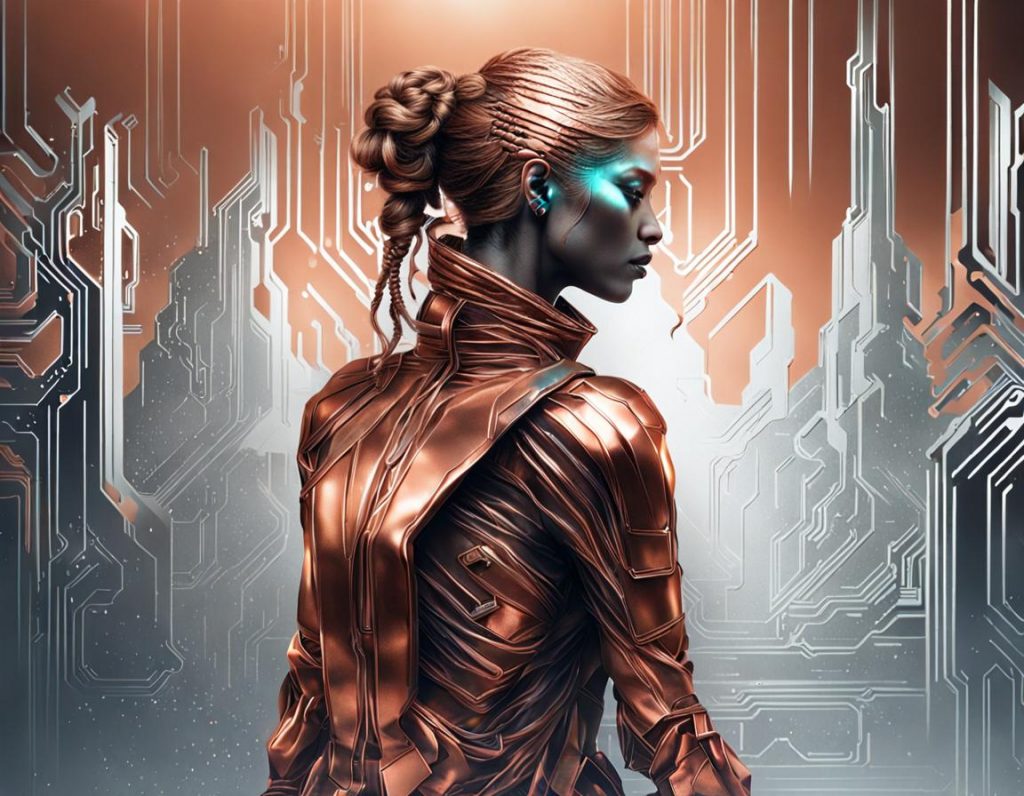
The fifth stage of ascent up the Mithraic Ladder is silver. Alchemically speaking, copper brightens as it transmutes into silver. The colourful, ruddy copper becomes the white-grey silver as a person transcends a focus on materialist concerns such as nuclear family for (slightly) more abstract concerns.

This brightening reflects a broadening, and a raising, of horizons. The characters of lead, tin, iron and copper all look downward in a sense, because they’re most worried about dangers that arise from the Earth. But the character of silver looks over them all, to the distant horizons, and the rising and setting Sun.

A person of copper works to transmute themselves into silver when they start to take an interest in the welfare of those outside their immediate family. Once a person with a small family is asked to speak or act on behalf of a larger group, such as a village or clan, they start to raise their frequency of consciousness beyond that which is found in a state of Nature. They start to become actually civilised – not merely passive, but an active bearer of the light of civilisation.

A second method of transmutation is the accumulation of knowledge. The character of silver is traditionally the one that has taken an interest in history, geography and culture. They are able to look beyond their immediate environment and understand the context into which their family has been thrust by circumstance. As such, they are able to understand individuals much better than those who cannot take such a broad view.

They can also transmute by means of a third way: voluntary celibacy. Upon reaching the apex of the realm of copper, a person might find that they no longer feel they have much left to experience sexually. Perhaps they have lived out every fantasy they ever had by this time. They might then, rather than expending sexual energy in the pursuit of more offspring, sublimate it into something higher.

The decision to sublimate sexual energy into spiritual energy is one of the most powerful decisions a person can ever make. It is the key to attaining the level of silver (and above). The sexual energy is fundamental to physical life, and therefore fundamental to fighting and violence and the non-consensual assertion of will. By sublimating that energy into something higher, a person moves beyond the beast and towards the god.

Chronologically, when a person is in the copper stage, they tend to have children who are in the lead stage, i.e. just learning to survive. Of people who die, a high proportion of them die in the first twelve years of life, owing to all the survival challenges that have to be met and overcome for the first time.

When their children pass into the realm of tin, there’s no longer such a worry that they might immediately die. When it does, a person of copper might cast their mind to wider things than just their nuclear family – such as their extended family. In doing so, their horizons broaden from the home to the community, and a change can begin, from copper to silver. Deep knowledge can be attained by those who throw themselves into the task once they no longer need to worry about their children.

The character of silver is mostly concerned with the clan. They are the sort of person who would become a clan chieftain. Thus they must engage in politics to some extent. They will inevitably find themselves called to settle disputes between other family members.

Occupationally, silver is associated with jobs where a degree of brilliance is required, such as doctor or judge. If copper if the boss of the front-facing roles such as Army captain, silver is the major, a back-facing role in an important office. The transition to silver, then, is a kind of retirement, from the physical realm and its conflicts.

Silver is a precious metal. This reflects the fact that characters of silver play a precious role in maintaining civilisation. They are concerned with “the wider collective”. As such, a large number of the people involved in government bureaucracy tend to be characters of silver (even if their leaders tend to be characters of mercury).

A character of copper might discover that, thanks to the reputation they have developed from raising their children well, they are offered a position as an official in a government somewhere. Such a promotion might occupationally reflect an inner change from copper to silver.

Socially, the person of silver is much less preoccupied with sex. The person of copper is specifically trying to create a family, and so is obsessed with sex. The person of silver, by contrast, no longer feels an imperative to have children. Hence, the prime virtue that transmutes copper to silver is chastity.

Physically, the transition from copper to silver is marked by silver (or grey) hair. It can also be marked by becoming more slender. Characters of silver are most likely to have the long, willowy bodies typical of the upper classes. If the muscle man of the realm of iron first relaxes into the teddy bear of the realm of copper, upon then entering the realm of silver he might become neither muscular nor fat, but lean and slender.

It’s necessary to note here that merely getting old doesn’t guarantee a transition to silver. The nature of the alchemy here is spiritual and not material. A person can therefore have silver hair but still be stuck at an earlier level of spiritual development. For example, if a 55-year old is still mostly concerned with looking tough, they are stuck at the level of iron. If they are still mostly concerned with partying, they are stuck at the level of tin.

Neither is it necessary to be old to develop a frequency of silver. It’s generally true that, the higher the frequency of the consciousness, the later in life it comes to full fruition. However, a character of an unusually high frequency of consciousness can manifest aspects of silver at an early age. This is often seen intellectually through an interest in art.

An archetypal moment that is emblematic of the transition from copper to silver is when a parent starts caring more about paying for their child’s college tuition than they do about keeping them alive. Guiding the child towards life, rather than away from death, becomes the focus. In a way, then, they transition from the guardian of their offspring to an advisor of them.

Another such moment is when a person starts wondering if there’s more to life than just sex and children. Once a person doesn’t want any more children, they have to start asking some deep, existential questions that are typically postponed by the imperative to win territory and breeding partners. A character stops following instincts like a lower animal, and starts asking themselves questions about the meaning of life.

The essence of the transition from copper to silver is a brightening that hints at the presence of solar energy. The character of silver plays a minor role in upholding civilisation itself. As such, their lives are heroic in a subtler way than those of copper and iron. In the transition to mercury, the character of silver becomes less subtle.

*

This is an excerpt from Viktor Hellman’s The Alchemy of Character Development, the sixth book in VJM Publishing’s Writing With Psychology series. This book will show you how to use alchemy to create deep, realistic and engaging characters for your creative fiction.

*

If you enjoyed reading this piece, buy a compilation of our best pieces from previous years!

Best VJMP Essays and Articles of 2023
Best VJMP Essays and Articles of 2022
Best VJMP Essays and Articles of 2021
Best VJMP Essays and Articles of 2020
Best VJMP Essays and Articles of 2019
Best VJMP Essays and Articles of 2018
Best VJMP Essays and Articles of 2017

*

If you would like to support our work in other ways, make a donation to our Paypal! Even better, buy any one of our books!

The Transmutation Of Lead Into Tin

The initial stage of the alchemist’s journey is the stage of lead. This is represented by the bottommost step of the Mithraic Ladder. It’s also represented by the colour black. The transmutation of lead into tin is the transmutation of a black metal into a grey one.

In the Roman pantheon, the stage of lead was represented by Saturn, the god who devoured his own offspring. Madness and death are two of the key themes of this lowest stage, which represents the unimproved consciousness. Overcoming madness and death are two of the main ways that a protagonist can transmute lead into tin.

The primary orientation of the stage of lead is survival. The drive for survival naturally creates a hardened, brutal, mirthless sort of person. This is why lead is the lowest level. The survival stage is the same one that all of the other creatures on this planet are born into. The man of lead is, to a major extent, a wild animal still. He might be able to to speak but his frequency is still one of brutality.

Diligence is the primary virtue through which a character at the level of lead can transmute themselves into tin. Through repeated and dedicated application of will, a person can achieve something and thereby overcome the resentment that characterises the level of lead. This repeated application builds the belief that there is something worth working towards in this life. This might only be a small amount of positivity, but it can be enough to get off the bottom of the Mithraic Ladder.

The survival pressures in your story don’t have to come from without. The character of lead can struggle with their own self-destructive impulses. At the lowest level of the Mithraic Ladder, struggles against addiction, self-destruction or suicide are common. That the energies of death flow from the inside as well as the outside is one of the lessons of the level of tin.

It’s not until the survival pressures start to relax that a character can develop above this lowest of the seven stages. A character who starts to pass their survival challenges easily will soon start to become joyful. This transformation into joyousness is the same as transmuting one’s consciousness to the frequency of tin. The joylessness of pure survival is replaced with something higher.

The alchemical process of transmuting lead into tin is a process of enlarging. Hence, the stage of tin is represented by the larger-than-life Zeus. The process of becoming like tin can be represented by enlargement. A skinny, starving man of lead indulges in food and thereby becomes much bigger: so could an author portray this change in caricature.

If a character in your story is met with repeated survival challenges of a similar type, such that after overcoming enough challenges they start to develop a sense of mastery, then that sense of mastery ought to bring joy with it. Being the master of previously terrifying survival challenges ought to bring a sense of playful relief, the essence of the level of tin.

Such a character will also stop taking themselves so seriously. A character at the level of lead will snap and snarl if someone jokes with them, but one at the level of tin will join in with the joking. As joviality is the primary emotion of the character of the level of tin, an ability to banter is indicative of the successful transmution of lead into that soft, light grey metal.

One of the areas in which this transformation will be the most noticable will be social. People tend to avoid the men of lead, because their desperation and suffering is frightening and intimidating. But as a character of lead transmutes their frequency into that of tin, they will find themselves making more friends as they become more approachable.

Someone undergoing the transformation from sullenness into joyfulness can be said to have ‘brightened’. This will be apparent in their aura, not just their face. They will smile when they used to frown. Their gait will appear lighter. Brightening is the fundamental change when lead changes into tin. As tin is brighter than lead, characters of tin will be happier than characters of lead.

In order to brighten, the character has to see the value in joy. They have to learn, whether through their own realisation or simply through experience, that joy and the attainment of joy have inherent value. Through repetitively doing something they enjoy, a character can overcome the pain and trauma of the level of lead and to manifest the joviality of the level of tin through their actions.

The transmutation will be complete when the character can look back on their old self and see something lesser. When they realise that joviality represents a higher level of being than the saturnine wild beast of the level of lead.

Physically, the transmutation from lead into tin can be represented by getting fat. The man of lead is scrawny and lean because he deals with the everyday presence of starvation. The man of tin, by contrast, lives on the level of feasting and merriment. His body can represents that by becoming portly and ruddy-cheeked.

Environmentally, the typical place of the level of tin is the tavern. The journey from the wilderness to the tavern is the archetypal expression of the journey of transmuting spiritual lead into spiritual tin. The unrestrained joy of partying at a tavern is a typical expression of the frequency of the level of tin. The phrase “feast or famine” captures the energies of the levels of tin and lead.

An example of the transmutation of lead into tin would be Benno Furmann’s character Bodo in the film Der Krieger und die Kaiserin. Bodo begins the story traumatised, frightened, angry, and ends it joyous, relaxed and confident. Although tin is still a relatively low level, it’s a lot better place to be than lead is.

*

This is an excerpt from Viktor Hellman’s The Alchemy of Character Development, the sixth book in VJM Publishing’s Writing With Psychology series. This book will show you how to use alchemy to create deep, realistic and engaging characters for your creative fiction.

*

If you enjoyed reading this piece, buy a compilation of our best pieces from previous years!

Best VJMP Essays and Articles of 2023
Best VJMP Essays and Articles of 2022
Best VJMP Essays and Articles of 2021
Best VJMP Essays and Articles of 2020
Best VJMP Essays and Articles of 2019
Best VJMP Essays and Articles of 2018
Best VJMP Essays and Articles of 2017

*

If you would like to support our work in other ways, make a donation to our Paypal! Even better, buy any one of our books!

The Drop Of The Penny

by Simon P. Murphy

There is a trajectory within you like a hunger. That hunger is the drive to reconnect with what is true. It is not about belief, simple or complex, and is not about being holy or righteous. It is about one thing only – seeing clearly, and revealing that which is true and whole. Another way of putting this is that it is the drive to come to the full conclusion of your existential seeking.

Why would someone be averse to seeing clearly? Because usually, there is a whole raft of illusion at stake. If you chose to see clearly, through inner eyes unfettered by illusion, you might discover that what you have invested years into will someday end, despite your best efforts to the contrary. You might see that the knowledge will disappear, or the money, the health, the relationships, the career, the house, the identities, the religious or philosophical commitments. Why else would something feel fragile or impermanent, unless it carried within it the promise of its ending?  Why would it not feel like inherently immutable truth?

That is something we often choose not to look at, because it tends to render the scope of the illusion far less satisfactory than it already is. If we found ourselves examining the contents of our inner lives, which consist in the relationship we have with our illusions and what we think they afford us, we might find all of our illusions quite rapidly deteriorating or becoming displaced. And who would want that?

Interestingly, the part of us that is real actually wants that. Not to get rid of what is around us – but to critically examine our relationship to everything we hold to be real,  permanent and meaningful in order to make space for what is actually real to shine through our inner world. That is basically the entire spiritual project in a nutshell – the discovery, sudden or gradual, that there is not one true thought.

What is real that shines through has a curious origin – we are responsible for none of it. We can choose to be instrumental to its coming forth. This is where the sense of existential dissatisfaction and dislocation in life issues from – not from being alone, not from not belonging, or not knowing or believing the right things, but from having not been willing to see how things are clearly. This asks that we meet all the things that we have been responsible for. All of our choices, all of our beliefs, our cultural creations that we have been party to, all that was formed out of darkness in the strange refusal to look at who and what we truly are in our essence.

Most everyone would prefer to be told who and what they are in their essence, because that is simply the way that humans have become accustomed to living a conditioned life. We are used to being told who and what we are by our various cultural institutions, and then moving ahead with our lives. Those sources have presumed to give us everything we thought we needed by giving us what we are ultimately not – our names, roles, etc. The Truth of who you are, however, isn’t like that at all – not in the slightest. You absolutely cannot be told who you are, nor can you be given who you are. You also cannot have a belief so sophisticated or clearly refined that would provide the detail of who you are in a neat envelope.

There is a way of knowing for certain that you have not met the vital recognition of who and what you are in truth. It will be this: the question of who you are will continue to have some appeal to you. In other words, you want to know who you are, because you are under the impression that you don’t already know. The reason for this is simple: absolutely nothing else in your life has been able to tell you what you are with any degree of satisfaction. When you know who you are in truth, the question has fallen away completely- you have no question to ask about who you are – period. That is how you will know. No one alive has partial knowledge as to who they are; they either know who they are at this level, or they don’t.

The next question is: now that you know that you don’t know, that you have not yet met the recognition of who and what you truly are, what do you want to do with that?

Chances are, it will be one of the following – either you don’t want to look at it just yet, in which case you probably will not have read this far, or, you are so hungry to know the truth of who you are, that you are willing to push ahead in your integrity, even if it might mean losing everything that you know. Because after all, if you don’t know who you are, how much of your inner or outer world can you be certain is illusion? How much can you really say for certain will remain or fall away as a result of your discovery of your true identity?

If you are like most people, including myself, you will have gone a lifetime of feeling a sense of grave unease about not being sure of who you are, to a greater or lesser degree. You will have attempted to establish it through many courses of action which haven’t quite settled the matter. All of these ways have been tried before by people of all times and places, and without effect. This is because there is only one certain way of settling the whole question once and for all, and that is by coming to a true meeting with who and what you are.

Discovery of who you are is a milestone of what we might call spiritual evolution. It doesn’t begin there, and it certainly doesn’t end there – but it is the vital step forward. I like to frame this discovery to the drop of the penny. The penny drops, a realisation is forged, and a connection that wasn’t made before in this life suddenly clicks into place, and you can never, ever see the world or your place in it quite the same way as you did before. This experience will leave you altered, even if you do your best to forget it ever happened. There is also no guarantee whatsoever that your life will turn out great or awful as a result of this discovery- but you do have to decide how much you want to know, because the fact is, it could cost you everything.

It cost you your personal future, it could certainly cost relationships, and it could cost everything you thought you knew was real. The question is: just how much are you willing to know who you are? What is the deepest calling guiding you? For myself, there were certain moments in my childhood that led me on  paths of discovery that gave me a hunger to know who I was that in some ways seemed almost an inevitable collision course. But that only relates to me. What about you? Can the hunger within you, the divine yearning, be set aside for another few years? Or maybe for the rest of your life? Or are you willing to come to the truth of the matter now, in this moment? Is the yearning for self-knowledge diminishing of its own accord, or is it making itself known in more pressing ways?

I truly don’t have anything of value to say to anyone who isn’t genuinely interested in the truth of who we are. There is simply no capacity to help. For my part, there is no sales pitch, there is no ‘ought’ or ‘should’, no prescription for what you should be interested in, nor how you should be managing your life. There is nothing to teach those who aren’t curious.  However, if what you actually feel within yourself is being geared toward waking up into you-don’t-know-what, then what I can tell you is this: in no way can you force this process or make it happen, but you can invite a meeting with your true self. In other words, you can facilitate a space within yourself, your inner being, to become available to that which is living and true, that which has always been ready and available if we were simply to take the time to look and listen with an attitude of open attention.

What will happen, with time, is a true meeting with yourself. How that will look, I cannot tell you. In my own experience, I can tell you that there is an encounter with Being possible that is dependent on no time, no thought, no belief, no self. When you meet this for the very first time, after even a second you will no longer question the nature of who and what you truly are. The penny will have dropped, and all of the abstract and philosophical questions about your being you once found so ineluctable, so pressing, so heavy and urgent, simply cease, like engines which have been exhausted of fuel. All of the momentum of your endlessly tiring self seeking and self definition simply ends, and you probably never realised just how desperate and tiring it all was, until the relief of it ending – at which point, there is usually years worth of psychological mess to clean up.

You are suddenly in completely new territory. You come to ask yourself new questions, such as “what happens to my energy and attention that has gone into this absurd, erroneous pursuit?”

You may be surprised to find just how much of that energy was allocated into the seeking of your true identity via fictionalised structures. How many of your life choices have consisted in some version of “I will invest in this because this will tell me who I am, as well as show others who I think I am or how I want others to perceive me”. What if the very bssis for those kinds of investment of energy, the sense of derived identity, were very suddenly gone, like the floor taken out from underneath you? You have to understand that to thoroughly reveal your identity is a life-altering event, some might even say a catastrophic spiritual and psychological event. Once the horse has bolted, there is absolutely no putting it back, for better or for worse. However, if you look closely enough within yourself, you will know exactly how much this discovery really means to you. You will know what price you would be willing to pay.

To discover who you are can leave you with a lifetime of cleaning up the inner and outer detritus. The great news is that the energy from every illusion you ever invested in, every inner scam, is returned to you and becomes fuel for the glowing fire of your awareness. Nothing real can be lost, only illusion can fall away – and eventually it will anyway, with physical death. All it takes for you to discover the truth of your being now is your willingness to take that first step into the unknown. You aren’t even coming into something new. The strange thing about this experience is that it is a re-membering. You are pooling together once more the parts of you that somehow became divided. You are certainly not adding something new; you are removing something that has served as an obstacle to that which was always already here and available. It is not complicated, it is simple. Complexity and simplicity are like directions in self-inquiry. If you follow complexity further, you are moving further away from the truth. If you are following the direction of simplicity, you are always moving closer toward truth, being the recognition of that which is already here in unity and wholeness.

There are many who have gone before you, as there are many who are making the same journey now. The encouragement I would give is this: the only thing you will ever have to lose is that which you aren’t going to keep anyway.

*

Simon P Murphy is a Nelson-based esotericist and philosopher, and author of His Master’s Wretched Organ, an astonishing and surreal collection of weird fiction stories.

*

If you enjoyed reading this essay/article, you can get a compilation of the Best VJMP Essays and Articles from 2021 from Amazon as a Kindle ebook or paperback. Compilations of the Best VJMP Essays and Articles of 2020, the Best VJMP Essays and Articles of 2019, the Best VJMP Essays and Articles of 2018 and the Best VJMP Essays and Articles of 2017 are also available.

*

If you would like to support our work in other ways, subscribe to our SubscribeStar fund, or make a donation to our Paypal! Even better, buy any one of our books!