My Belief in The Supreme Being

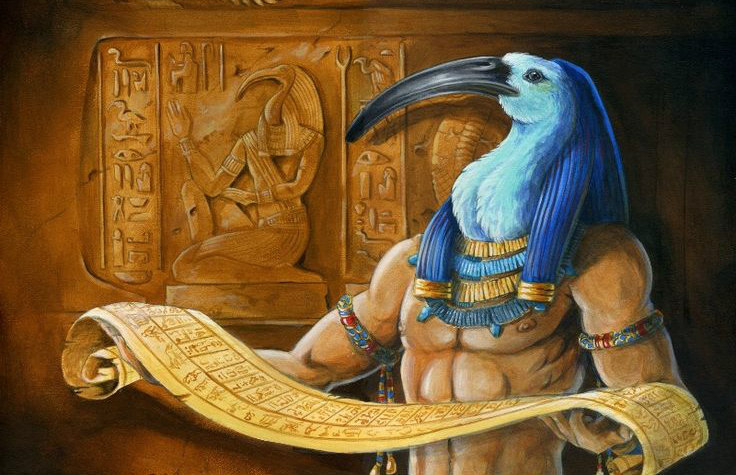
In very simple terms, my belief is that the supreme being is one that not only knows all but understands all, as to simply know is not enough. While my belief in the supreme being is somewhat my own thing the closest person that comes to mind is Thoth the Atlantean who was hailed in Ancient Egypt as the God of writing, magic and wisdom. Coincidentally (or not) my plan in life is to become like him in that sense as much as I can, and I do this through continued study through every field prioritized by usefulness at present time against the potential value of understanding something, and then to some extent applying such information.

In my own reality, I classify the fields of acquiring knowledge into two categories:

  • Knowledge of the physical universe of matter, what we can observe
  • Knowledge of the spiritual and high universes, for most this, what we cannot observe in the present time

Knowledge of the physical universe is simply the world around us and what we can, in terms of the natural malleable environment. For myself, I go about acquiring this knowledge through continuous and rigorous study of the STEM sciences in order to understand more about the world around us and bring myself closer to the state of the supreme being. Science to learn about the various areas of the physical universe and specific knowledge of every area in existence. Technology to be able to apply any piece of man-made or other technology in the space of the various universes for the benefit of me and my allies. Engineering to learn how to control and manipulate matter and be cause to the world around us and Mathematics to be able to both understand the various rules of the universe and be able to communicate new ones in a clear cohesive manner to other scholars. While not strictly required, Education is good for being able to train others in each of these areas.

You can go about your entire life simply doing the above and make reasonable tracks whilst being validated at various steps of the way, there is no strict path to accomplish this. I myself traverse the world of academia and plan to study at least a Bachelor’s degree (with Honours) in each of the STEM fields and then perhaps subsequent Masters and Ph. Ds allowing me to both learn and contribute to the knowledge base for each one in my own time. This can take an entire lifetime to accomplish and is a ‘good enough’ purpose for one to truly bring themselves closer to understanding.

However, I myself yearn for greater pastures and in my risk-seeking nature opt for higher bridges of learning. Knowledge of the spiritual and higher universes consists of study into practices which involve those that are not necessarily observable. This may be controversial, but I take each area of spirituality as a viewpoint and then in my own reality I synthesize and bring them together to my own viewpoint, my own being something I would publish as my own area of study in maybe 20-30 years, once I have understood as many as I possibly could.  

The controversial part being you could take and hold viewpoints in various spiritual practices, and then synthesize them based on what you have observed and what is useful. for example, Reiki, Bowen and perhaps one you may not have heard of, but I would recommend the Melchizedek Method which all has a primary component of application of the various techniques.  

You may ask why I do this. Well, I have a high-risk band and I want to win. If something like levitation or teleportation is possible, I want to be the first one to do it. It either is possible in this form or not or maybe I have to take another form, who knows. I take pleasure in studying both classifications of knowledge, as the most obvious is that, even if taking the spiritual viewpoints to fall through, then I at least have a comprehensive understanding of the physical plan and can boast through my retirement years that I achieved a lot with this model I created while enabling me to take the risk of studying things which perhaps may not come to pass. I believe that there is a disconnect from, my own observation, that many spiritual people lack knowledge in the physical universe while many safe and risk-free individuals lack the bravado to venture into the realm of possibility and theory. Of course, there is nothing wrong with this, but it could be better.

I personally have benefited from studying the various spiritual beliefs across the world and have personally observed these in action. However, the main limitation from studying these is that I cannot actively validate these for the average person, partially due to it being in another dimension and partially because some are incapable of observing such marvels in the present universe. One of my life purposes is to validate some of these on a physical level, perhaps I think levitation would be the honours and comparatively more realistic compared to teleportation, and, if not, then a measurable honours significant effect of using healing techniques could be achievable as time goes on.

In the end, you can take this viewpoint I have constructed as something that is self-evident but further as a viewpoint in a field of many. I believe one could follow this model and do no wrong save if they follow a school and become so focused on that one area that they neglect others, and to some extent, this purpose requires a lot of vigour and information to learn how to learn to achieve a high outcome in life. Me, I want it all, and my first objective is to determine how to live as long as I want to without my body deteriorating so I have control over myself, without having to commit bad acts.

*

Daymond Goulder-Horobin is an academic in Economics and Data Analytics and holds a Master of Business in Economics and a Graduate Diploma in Data Analytics. He is also an executive member of the Internet Party NZ and plans to follow them to the 2020 election.


Overcoming the Black Pill

Many are familiar with the paralysing despair that seems to leak from the stomach, into the bloodstream, and into all the other organs, especially the brain. One looks around and examines the world, and the resulting despair makes life seems hopeless and pointless, and suicide like a viable way of ending the suffering. Those who recognise it call it the Black Pill. This essay looks at how to overcome it.

It’s worth noting that getting black pilled is very different to being depressed from a chemical imbalance or similar. The Black Pill is not the same thing as depression, which usually arises as a consequence of brain damage brought about by childhood neglect and abuse. Depression is a clinical condition; the Black Pill is an existential one.

Black pills arise for a variety of reasons. They can be generalised into three groups, however, which crudely correspond to the spiritual challenges that this column has described as the Three Hurdles.

The first major black pill is the realisation that no-one knows what the fuck they’re doing on this planet. Basically everything you’ve ever been told by an authority figure (with the exception of a few scientists and similar) has been a crock of horseshit. The world’s politicians, priests and captains of industry don’t see reality accurately. And they’re leading us to disaster.

The environmental situation on Planet Earth is a black pill so large that it has to be taken as a suppository. It’s apparent to anyone who looks at the climate science that we’re currently exhausting the Earth, and some major lifestyle changes are necessary for the human species. The alternative is, potentially, ecological collapse – a collapse that will take us with it.

Anyone searching for meaning in this place eventually realises that it’s impossible to ask any authority for this, because none of them know what the fuck’s going on either, and asking them for direction will only lead to one’s own enslavement. Authority is achieved by understanding the rules of politics and the political environment, not by understanding reality accurately. Therefore, none of our rulers can be said to be legitimate.

The second major black pill is that this life ends, and it isn’t obvious what happens then. The fact that we’re all going to die is about the only material phenomenon that we can predict with absolute certainty. Although many of us entertain thoughts of an afterlife, there are very few who are absolutely certain that they will reincarnate somewhere else.

It really seems that we can take nothing with us from this world into the next, and therefore there is nothing to be won here, nothing to be achieved, collected or hoarded. Therefore, it isn’t obvious that there’s any meaning to life in this material plane. To know that all one’s works are to be dust is not a pleasant experience, but that appears to be the fate before us.

Many who realise that all of their works will be lost with their own death try to get around this by reproducing, but the inescapable fact is that one’s offspring will all themselves die, as will theirs. Simply spawning like any other animal may be a massive distraction that lasts for decades, but it doesn’t make it meaningful. It doesn’t take the black pill away, it just distracts you from feeling it.

The third major black pill is that living for pure pleasure is not fulfilling in anything but the immediate short term. It might be possible to accept that the world is going to end and that we’re all going to die, if only we could enjoy ourselves while we’re here. But it doesn’t seem to be as simple as that.

The human brain is wired up in such a way that repeated exposure to a particular stimulus eventually leads to a weakened response to that stimulus (at least, under normal circumstances). In less technical terms, too much of the same thing eventually becomes boring. This is the reality that every hedonist has tried to escape in vain. You can’t chase the dragon forever.

It might be true that the brain has a reward/punishment system built in that makes us feel good or bad, but there’s no real meaning in just stimulating this system until we die. At least, not in the sense of trying to maximise pleasure. It’s impossible for a mortal being to maximise pleasure because their mortality, and inevitable decline into death, inherently means that their life will be one of misery.

The combined effect of these three black pills has been too much for millions of people throughout history. The butcher’s bill for suicide is attestation enough to that. As a consequence, people have devoted an incredible amount of time and effort into overcoming black pills.

The art and science of overcoming black pills is, more or less, the same thing as spirituality.

All suffering arises from the illusion of separation from God. Where it gets tricky is that all life itself is the illusion of separation from God. It was understanding this grim calculus that caused Buddha to conclude that life itself was suffering. Indeed, life itself is suffering – that is the biggest black pill of all. But the fact is that, once one has accepted this, it’s white pills all the way back up again.

Life, after all, is temporary, and if life is suffering then it follows that suffering is also temporary. No matter what might be afflicting one in this material plane, there is no guarantee that it will continue to afflict one outside of it.

In fact, if life in this material plane is both temporary and suffering, that means that the true state of consciousness is one of bliss, and only through temporarily becoming enthralled in the illusions of the material world do we ever leave it. Therefore, a return to eternal bliss is inescapable. This realisation is the true Good News of spirituality.

Understanding this requires understanding that materialism is a false ideology, borne of the same simplicity that caused people to once declare the world is flat. Just because something appears to be so, doesn’t mean that it actually is so. That is just as much true of the existence of the material world as of the shape of it.

Materialism causes black pills because it insists that the brain generates consciousness and so consciousness is extinguished with the death of the brain. This leads directly to the assumption that nothing has any meaning, and therefore that causing suffering to oneself and others is just as good as doing the opposite.

The truth is that this reality in which we find ourselves is not material, but the dream of a God, whose consciousness has been split into an infinite number of individual consciousnesses, whereupon each of those individual consciousness falls under the delusion that it is the only consciousness that exists. This is for the sake of maximising the sense of novelty arising from exploring the metaverse of illusion, something otherwise known as the Great Fractal.

The meaning of this existence is not to achieve anything in particular, because God is already perfect and there is nothing to achieve. In reality, there is nothing more to do than to entertain ourselves for eternity. God seems to be of the opinion that the game of forgetting the great spiritual truths of reality, and then remembering them again, is exciting enough to repeat over and over again, forever.

We can take our frequency of consciousness with us from moment to moment, and it may be true that we take it past the death of the physical body as well. The Black Pill can thus be overcome by focusing on being the kind of energy that one would like to see expressed in the world. This will cause one to eventually incarnate in a part of the Great Fractal that reflects this energy.

*

If you enjoyed reading this essay, you can get a compilation of the Best VJMP Essays and Articles of 2018 from Amazon for Kindle or Amazon for CreateSpace (for international readers), or TradeMe (for Kiwis). A compilation of the Best VJMP Essays and Articles of 2017 is also available.

Zomblique’s Philosopher

"The mind is like a cellar,” Zomblique's philosopher Mr. Boggs opined in a hollow voice which seemed to ring out from inside a tin can.

"The mind is like a cellar," he repeated with self-assured gusto after a long pause.

Zomblique's right hand shuddered as it hovered above the blank paper pad, the great plume of the quill wavering like a strutting peacock.

"The mind is like a cellar," Zomblique repeated deflatedly and set his pen back in the inkpot, drumming his fingers on the desk in frustration. "Boggs by name, Boggs by nature," he muttered through his teeth.

The mechanical philosopher was not working out. He could never afford another, for there would never be sufficient coin. Not so long as the only thing the wretched clockwork theorist was spouting was precisely such nonsense as this.

Truism after truism, empty beatitude after beatitude, triteness, passing conjecture, idle wonder.

Sellard's Philosopher, a dedicated aphorist belonging to his neighbour, had run like a top since it had first come into his possession. Dourf owned a verifiable man of letters, a clockwork vintage of one hundred and fifty years in age, still putting forward no less than three sweeping theories per week, publications in major journals at least once per month. His wife and children did not go hungry. Creech had a model that was a patent Fool, not even a Philosopher and it still managed to successfully produce biting satire of a somewhat dark although entertaining tone.

Zomblique bit into the lace sleeve that covered his hand and attempted to stifle the misery that clutched at his throat. A lone tear escaped. The swine rustled impatiently in the sty, the baby cried plaintively.

Fitting on his leather gloves to avoid the philosopher's sharp edges, Zomblique set his chest of pauper's tools next to the chair in which the automaton was seated.

Tuning the fickle machines was more art than science, or so he had been told, and each model was unique. No more than one was ever produced by any one craftsman. Which combination hadn't he tried? Dourf had suggested alternately tightening and loosening the brace that held the mandible in place, to no avail. His grandfather who had been the original owner of the philosopher suggested setting the misericord beneath its left shoulder deep enough so that it was pressing upon, but not puncturing, the diaphragm corresponding to the human heart. 

It made no difference. He had measured the cranium and expanded and contracted the skull with drift punch and tongs – nothing. Although walking models were said to fare better, the sitting and reclining models also had their strong suits. Zomblique's philosopher had not responded favorably to any variation in positioning. He had tried setting him as if gazing aloofly out of a window, as though aspiring to grasp the heavens. He had tried posing the thumb and forefinger to thoughtfully cradle the chin.

"Hungry dogs will eat dirty pudding," Mr. Boggs mumbled.

Dourf climbed down the ladder, followed by his lanky companion, the artifice known as Vesselius. Brass bones encased in handsomely-grained walnut, studded with small levers and dials, emblazoned with esoteric glyphs and almost perfectly silent but for the quiet whirring of gears. A darkly shining monocle regarded the limp philosopher with what appeared to be sympathy.

"Vesselius, something inspiring please," Dourf requested in his unusually soft tone.

The mechanical thinker stood in silence for some moments before adopting a theatrical stance and looking to the skies as though there were no ceiling, he spoke:

"It is only the deepest motivation which inspires each and every human action, and it is the vain fear of vulgarity which lies the deepest and closest to man's heart."

Zomblique slapped his face with both palms and began to weep.

There was a long silence. The animatron maintained its pose as gears whirred, quietly contriving another profound aphorism.

"A little cynical," Dourf offered by way of consolation.

"I would cut off my thumbs for cynicism," moaned Zomblique. “Please leave us be."

Dourf and his machine crept back up the ladder to the sunlight above, a realm where Zomblique would perhaps occasionally visit, but never dwell.

To his surprise, Mr. Boggs suddenly stood up. Zomblique's jaw nearly dropped. With clacking wooden feet he made his way to the ladder and followed after Dourf and Vesselius.

"Yes, that's right you wretch. Go with them, you're of no use to me."

Mr. Boggs awkwardly clambered up the ladder. Before his head went through the trapdoor he turned to Zomblique with his typical empty expression and issued his parting words.

"The mind is like a cellar."

The mechanism left, never to return.

Through the swinging doors, the sullen Zomblique returned to the stink of the underground sty, and the croaking and barking of angry swine.

All that remained was the empty cellar, a fine chair and writing desk. Finally without either the consternations of Zomblique nor the dubious adages of Mr. Boggs there was a beautiful silence - a silence that belonged there.

*

Simon P Murphy is a Nelson occult philosopher and the author of His Master's Wretched Organ.

Did The World End on December 21st, 2012?

Many people thought that the end of the calendar year 2012 would mark the end of the world. Not only had it apparently been predicted by ancient Mayan astronomers that the world would end then, but Terence McKenna’s Timewave Zero program supported those predictions. This essay examines a terrifying possibility: that the world actually did end on December 21st, 2012 – we just haven’t realised it yet.

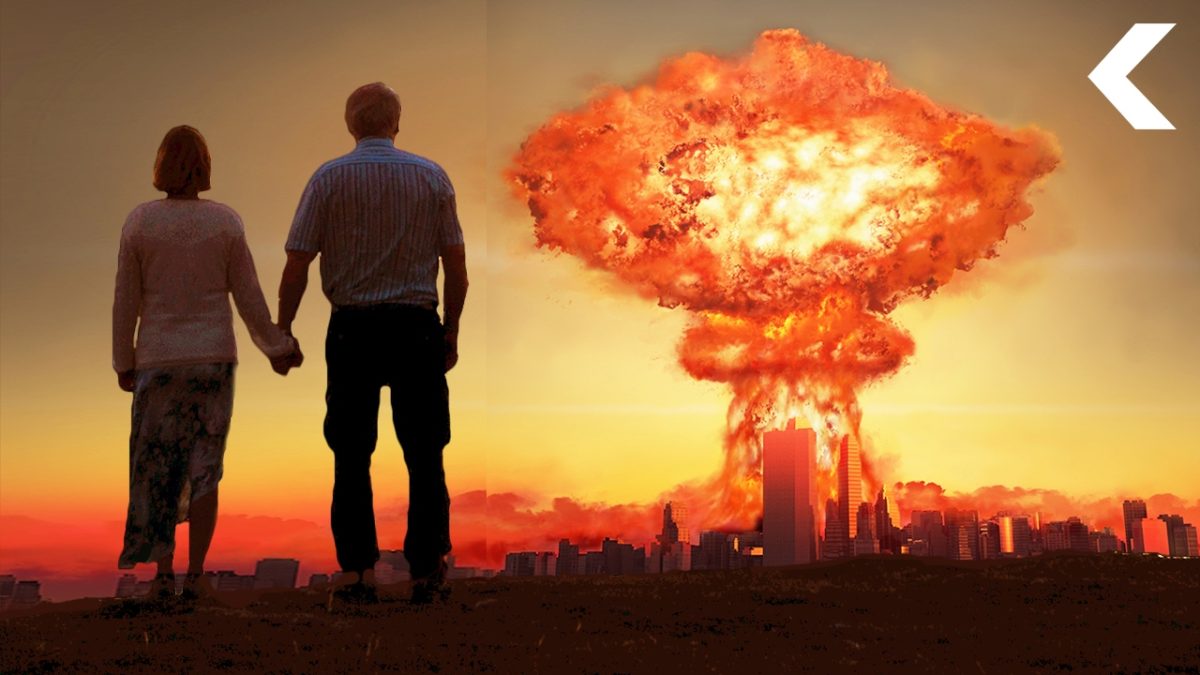
People have been conditioned to believe that if an end of world scenario arose, it would look a particular way. Nuclear war, comet strike, zombie virus or mass tsunami are the most popular examples, but we have been made to think that it would be spectacular and cinematic. Chest-rattling explosions and flashes of light and fire come to mind.

Therefore, when December 21st 2012 came and went, and no-one got engulfed in a firestorm, most people assumed that the world did not end, and that it was business as usual. However, there are other, much subtler ways for the world to end.

Leading up to the end of 2011, televangelist Harold Camping ran an extensive fear campaign about an upcoming apocalyptic event called the Rapture. This event would involve all of God’s chosen being “raptured” up into heaven, leaving us sinners behind.

Could something like this really have happened?

Since the end of 2012, many people have been struck with a sense that something is going wrong. It seems like something took a dark turn at some point in the recent past. Since then, there has been less kindness in the world – less light, love and laughter. Things seem to have become unusually grim and serious.

This is reflected in the rising suicide rates. The suicide rate in America has increased by 33% since 1999, and the rate in New Zealand is the highest since records began. Not only suicide, but phenomena correlated to suicide have also increased. There is more depression, more opiate addiction, more loneliness throughout all levels of society.

Some commentators have chalked it up to the lingering financial effects of the Global Financial Crisis of 2008, something which bankrupted many businesses and created mass unemployment. The problem is, of course, that the unemployment rate has since recovered: in America it’s an almost nonexistent 3.6%, and in New Zealand it is 4.2%. The malaise has not.

Many feel like we have been forsaken by God. It’s possible that the world really did end in this manner: God’s presence may well have withdrawn from the material world.

It’s possible that the world ended in the sense that the forces that constrained the evil and chaos of the world are no longer present.

Something like Camping’s Rapture may really have happened at the end of 2012. It may be, however, that instead of being pulled into the sky in rapture, those of us who had pleased God enough simply disappeared, their consciousness returning to God’s embrace while the rest of us continued our lives.

After all, we don’t know which of our fellows are conscious and which are not. So it’s entirely possible the consciousness of many people, perhaps a large percentage of people, withdrew from the material world and reunited with God, leaving the rest of us here.

The effect that this would have on the remainder of the world would be subtle, but over time it would become clear.

Absent a divine spark, people will come to make decisions based on the raw programming of their bodies. This means instincts and conditioning, with no higher functions. Apart from sheer intelligence, such people have no tools with which to moderate their behaviour. Not being conscious, they are incapable of using empathy. Metaphysical gold is absent.

Consciousness is essential for empathy because, without it, it’s impossible to truly imagine that another person is conscious, and therefore it’s impossible to realise that causing harm to that person causes suffering to their consciousness.

This means that raw animal lusts, particularly for wealth, status and women, start to reign. When they take over, concern for suffering caused to other people is thrown by the wayside, and the world becomes a much nastier place.

It could be that, on December 21st 2012, a significant amount of consciousness was withdrawn from the world, leaving the rest of us here in a place that had essentially ended.

*

If you enjoyed reading this essay, you can get a compilation of the Best VJMP Essays and Articles of 2018 from Amazon for Kindle or Amazon for CreateSpace (for international readers), or TradeMe (for Kiwis). A compilation of the Best VJMP Essays and Articles of 2017 is also available.