

Clown World Chronicles: What Is ‘Solipsism’?

Clown World is a mess for many reasons: physical, emotional, economic, political, spiritual. Some of the reasons are philosophical. These philosophical reasons relate to popular delusions that have arisen as a result of faulty logic. One of the most harmful of those delusions is solipsism.

Solipsism is the belief that the only consciousness that exists is one’s own. To the solipsist, the material world may or may not be real, but other people are not conscious. All other humans are what is called a philosophical zombie – a non-conscious being.

There is soft solipsism, which is the belief that the existence or otherwise of other consciousnesses is unknowable. There is also hard solipsism, which is the belief that it is known for certain that other consciousnesses don’t exist.

Solipsism is a major philosophical issue, for reasons that become apparent when one thinks through the implications.

Developmental psychologists believe that infants are born solipsistic, and this explains why they are so selfish. Most of them, however, grow up to assume that other people are conscious. This assumption is made by way of analogy. I have a body, and I am conscious. Other people have bodies, therefore they must be conscious too.

When most people reach what Jean Piaget called the formal operational stage, at the start of adolescence, they gain the ability to start thinking in abstract terms. When they do, they often question previous assumptions. If they do this, they soon realise that they don’t actually have any hard proof, whatsoever, that other people are conscious.

The realisation that consciousness has never been detected or measured by any scientific instrument leads to the realisation that no-one really knows if other people are conscious. One’s own consciousness might be entirely alone in this universe, surrounded only by shadows. This is arguably the most terrifying existential thought of all time.

Some people respond to this thought by becoming a variant of solipsist, i.e. someone who believes that they might be the only consciousness in the world. These people believe that other bodies might exist, but those bodies are not conscious and so there is no-one who experiences the suffering or joy of that body.

Others adopt a strange kind of balance position. Other bodies exist, and those bodies may or not be conscious, and so there may or may not be anyone who experiences the suffering or joy of that body. Therefore, that suffering doesn’t need to be taken as seriously as one’s own, because one knows for certain that one’s own suffering is experienced.

The degree to which a person discounts the suffering of other people is the degree to which they are a danger to those others. These beliefs – that one might be the only consciousness in the world, or that only one’s own consciousness is valuable – lie behind all kinds of atrocities and crimes.

If one thinks about it logically, a person’s level of empathy is related to whether or not they think other people are conscious. If other people aren’t conscious, or if their consciousness is of a lower quality, then there’s no reason to take their suffering into account when making decisions. Any measure that decreases the suffering of conscious beings while increasing the suffering of non-conscious beings is permissible.

This logic underpins exploitation of all kinds, from that of animals to that of people considered subhuman. The idea that animals/women/black people aren’t conscious (usually expressed as the idea that they don’t have souls) has underpinned exploitation since the beginning of civilisation. Today, exploitation continues under the logic that, although animals/women/black people may be conscious, the quality of that consciousness is significantly lower.

A psychopath acts as if theirs was the only consciousness that existed. This leads them to act as if other people’s suffering doesn’t matter. As a result, they take decisions that are characteristically psychopathic, such as causing great suffering to other people for marginal benefit to themselves. All exploitation is quasi-psychopathic in nature, and solipsism encourages this exploitation by justifying it.

Solipsism, then, is a major social issue. An increase in solipsism will lead to people making more selfish decisions, which will in turn lead to an increase in suffering. Social decline and solipsism follow each other. If everyone was a solipsist, this world would be hellish, because no-one would ever take other people’s suffering into account. It would be purely dog-eat-dog.

In a normal, healthy state of reality, living beings can sense the consciousness of others. This leads them to behave in ways that minimise the suffering of those others. In Clown World, people are so self-obsessed that they might as well be solipsists. Materialism and spiritual decay have led us to a state where many people are indifferent or oblivious to the suffering of other people. The result of this apathy is Clown World.

There are two ways to solve the problem of other minds.

The first is faith. This is the way that most people overcome solipsistic dilemmas. One simply has faith that other people are conscious. With sufficient faith, questions about whether the brain generates consciousness don’t need to be asked. The risk is that faith wavers, which can lead to ‘solipsistic crises’ where the existence of other consciousnesses is doubted.

The second is gnosis. This way is extremely difficult, and very few have done it. Gnosis involves knowing that other consciousnesses exist. To realise this requires stepping outside the bounds of ordinary consciousness and having a mystic revelation. The risk here is that one can stray too far from normal society. It’s difficult to live the mystic truths and not be considered insane by the masses.

The advantage of the gnosis method is that it leads to a life that’s in tune with the Tao. The person who has achieved theognosis knows that God self-expresses as the multitude of different beings that inhabit this world (and more). As such, the enlightened consciousness regards all other beings as expressions of God, their suffering equally meaningful as one’s own.

*

This article is an excerpt from Clown World Chronicles, a book about the insanity of life in the post-Industrial West. This is being compiled by Vince McLeod for an expected release in January 2021.

*

If you enjoyed reading this essay, you can get a compilation of the Best VJMP Essays and Articles of 2019 from Amazon for Kindle or Amazon for CreateSpace (for international readers), or TradeMe (for Kiwis). A compilation of the Best VJMP Essays and Articles of 2018 and the Best VJMP Essays and Articles of 2017 are also available.

*

If you would like to support our work in other ways, please consider subscribing to our SubscribeStar fund. Even better, buy any one of our books!

Clown World Chronicles: What Is ‘Virtue Signalling’?

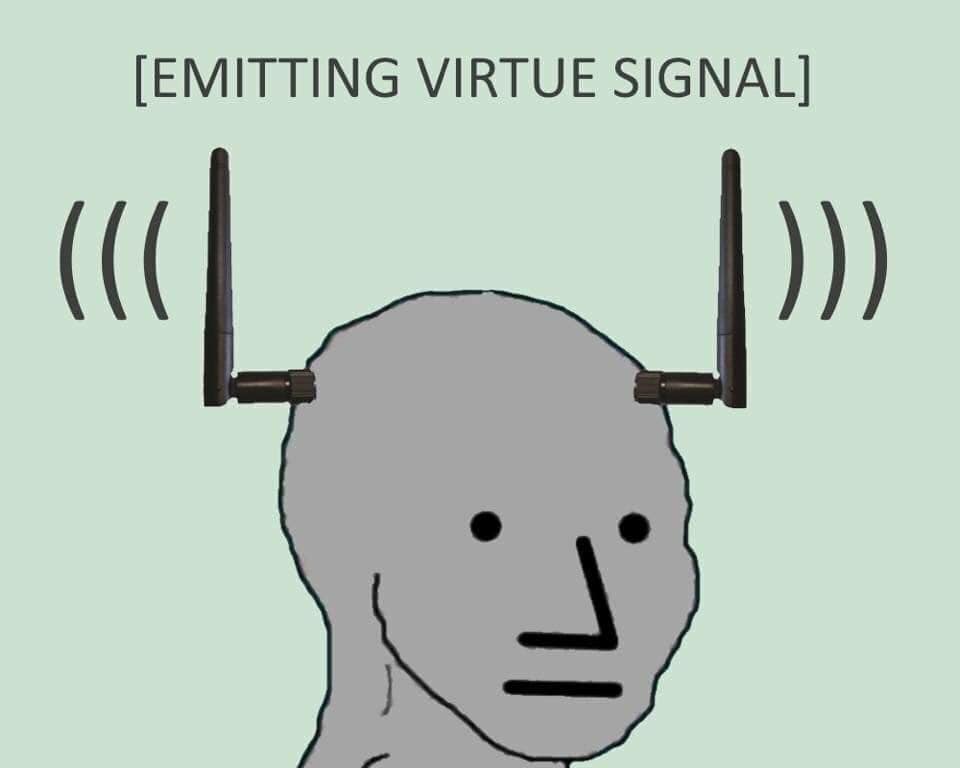
Anyone spending any time in social forums recently will have observed people making passionate defences of mass Muslim immigration, of ten-year old drag queens or of transfaggotry, despite not really believing in the truth of their own assertions. This behaviour might seem strange, or even paradoxical. But it’s a long-observed behavioural pattern known as virtue signalling.

In short, virtue signalling is when you show off how wonderful you are. In Clown World, this usually manifests as an overt attempt to communicate one’s moral rectitude to other people.

It’s originally a biological term referring to the efforts of male suitors to impress potential breeding partners. Being well-groomed and smelling good is a way of demonstrating one’s physical health to females. So is performing vigourous physical activity, or posing in a way that displays one’s muscles. These actions signal one’s physical virtue and suitability as a breeding partner.

In the discourse of Clown World, virtue signalling refers to the ubiquitous moral grandstanding that has infected public discussion. In everyday conversation today it’s normal for people, instead of contributing to an exchange of knowledge, to promote themselves as a moral authority. This phenomenon is especially acute on social media and at universities.

In practice, there are three forms of virtue signalling in Clown World.

The first is the aforementioned biological one, of trying to demonstrate one’s genetic quality through superior health and conditioning. When a man raises a curled arm with clenched fist to show off his biceps, or when a woman grows her hair long to show off her youthful vigour, it’s virtue signalling. Although these behaviours happen in Clown World, they are not what is usually meant when ‘virtue signalling’ is used as a pejorative.

The second form is intellectual. The most common expression is using unnecessarily large or uncommon words when speaking or writing. The purpose of doing so is to ascend the intellectual dominance hierarchy by intimidating lesser minds. Although this also happens in Clown World, it’s also not what is usually meant by ‘virtue signalling’.

The third form is moral. This moral grandstanding is usually associated with political and religious figures. It involves presenting oneself as if one possessed a more sophisticated, more refined, more educated moral sense. In Clown World, this third form of virtue signalling is extremely common. When Clown Worlders refer to virtue signalling, they’re probably referring to this.

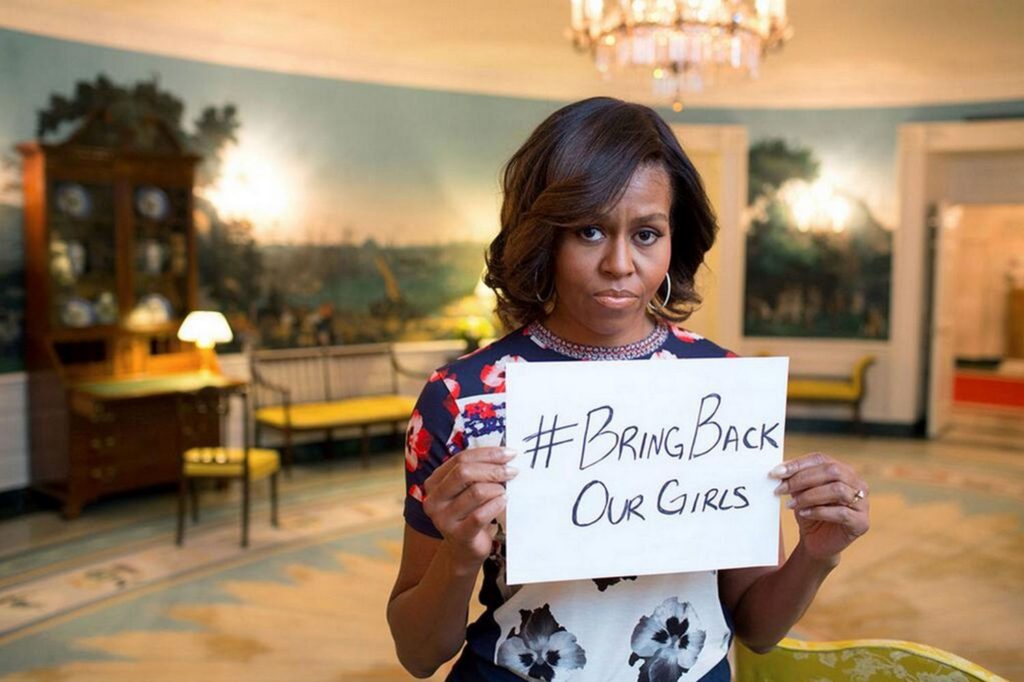
Am important corollary to this third form is that the virtue signaller does precisely fuck-all about solving the issue they’re beating their chests over. Even when presented with an easy opportunity to help, they will not take it. Actions risk going wrong and lowering one’s social standing – by comparison, virtue signalling is risk-free.

Understanding this form of virtue signalling is essential if one wants to understand Clown World behaviour. It’s so common today that, in 2019, the brilliant American psychologist Geoffrey Miller was able to write an entire book about it.

Virtue signalling is especially common among gutmenschen, baizuos, simps, soyboys, dhimmis and Social Justice Warriors. The undisputed king of virtue signalling, however, is the Christcuck. The Christcuck’s entire gambit is to present himself as a moral authority of such distinction that everyone else is obliged to submit to his instruction.

The origins of virtue signalling, in a human context, reflect our social origins. In the biological past, when we lived as tribes, human societies were more like criminal gangs. If one got offside with the wrong people, one could get ostracised, which probably meant death. Because of resource scarcity and the ever-present threat of famine, people have always needed to get other people to think of them as valuable.

Human societies, whether they admit it or not, are all obsessed with the question of which individuals are the most valuable. This is true from the village to the imperial level. It seems to be hard-wired into the human brain to both rank other people in terms of value, and to strive to be seen as higher value.

All forms of virtue signalling are intended in increase the social position of the signaller. The purpose of loudly proclaiming virtue is that other people will see you as a moral authority.

Intelligent people correctly understand virtue signalling to be a sign of weakness. In practice, high-value people don’t need to virtue signal, because their value is either clearly apparent to everyone, or other people make it apparent to everyone. This is the reason why most professional workers dress without ostentation.

Anyone who does virtue signal, then, is probably low-value. If they weren’t, they’d let their own actions do the talking.

Dumb people, on the other hand, believe that virtue signalling increases their social standing. They are so anxious about being seen as moral authorities, or at least with not being seen as moral reprobates, that they can’t resist a chance to talk themselves up. The act of talking up one’s moral qualifications is the essence of virtue signalling.

Virtue signalling is not going away, because resources are becoming scarcer, and this will intensify the fear of getting ostracised. Also, globalisation has led to steeper and steeper social dominance hierarchies, which require ever-more effort to ascend. Worst of all is the opportunity afforded by social media to effortlessly virtue signal to more and more people.

*

This article is an excerpt from Clown World Chronicles, a book about the insanity of life in the post-Industrial West. This is being compiled by Vince McLeod for an expected release in January 2021.

*

If you enjoyed reading this essay, you can get a compilation of the Best VJMP Essays and Articles of 2019 from Amazon for Kindle or Amazon for CreateSpace (for international readers), or TradeMe (for Kiwis). A compilation of the Best VJMP Essays and Articles of 2018 and the Best VJMP Essays and Articles of 2017 are also available.

*

If you would like to support our work in other ways, please consider subscribing to our SubscribeStar fund. Even better, buy any one of our books!
Clown World Chronicles: What Is ‘Learned Helplessness’?

Of all the psychological tricks that the ruling class uses against us, instigating learned helplessness might be the nastiest. Learned helplessness, as the name suggests, is a particularly abject form of conditioned apathy. In Clown World, it’s everywhere.

The concept of learned helplessness comes from a series of studies performed with dogs by psychologist Martin Seligman. The dogs were placed into boxes and given electric shocks until they learned that there was no escape from the suffering. At this point, a strange apathy came over them. These animals later refused to escape the shocks even when an obvious opportunity was presented to do so.

The dogs that refused to escape electric shocks were said to be suffering from “learned helplessness”. This was a conditioned state of extreme passivity. Further experiments demonstrated that most people will become depressed if exposed to extended suffering without being able to do anything about it.

Learned helplessness is also seen in elephant training. A young elephant can be tethered by a chain or strong rope, and soon learns that it cannot escape its bonds. Eventually it becomes passive. An elephant can remain so conditioned for the rest of its life, so that even as an adult it can be tethered by a thin cord and will not try to escape, despite being easily strong enough to break free.

When it comes to learned helplessness, humans behave in the same manner as other mammals. Given repeated adverse stimuli with no chance of escape, the human animal will also “give up”. This occurs for the same neurophysiological reasons as in other animals, namely a kind of nervous exhaustion. Learned helplessness feels a lot like depression, and it arises for similar reasons.

Learned helplessness explains, to a major extent, why we don’t resist the rulers of Clown World.

Most people are conditioned into being helpless through schooling. School teaches us – and is designed to teach us – that defying authority can only lead to suffering. Anyone who stands out from the crowd is ruthlessly abused back into position, either through physical or social violence. This is why depressive apathy is so common among high school students.

The purpose of all this abuse is to induce a state of learned helplessness.

School graduates can then be passed over, like broken-in slaves, to those who are effectively their masters. Sometimes these are military officers, who can then command the graduates to charge machinegun emplacements, safe in the knowledge that they would never dare to disobey. More usually, the new masters are employers, who can work the graduate all day for a wage on which they can’t raise a family, likewise safe in the knowledge that no protest will be forthcoming.

The leadup to the Iraq War intensified the widespread sense of helplessness in Clown World. The millions of people protesting the war had no influence on its course. We learned that, no matter how earnestly we expressed our lack of consent for a war being waged in our name, our supposedly democratic representatives would simply do as they liked. Protests and petitions didn’t matter and there was nothing any of us could do about it.

This state of advanced apathy endured for some years. In the end it seemed like war was going to be part of everyday life from then on. We simply got used to daily reports of drone strikes hitting weddings, schools and hospitals, and of Islamic terror attacks.

The rise of Barack Obama brought hope back. Obama campaigned on a ‘Hope and Change’ platform and there was no doubt that a black man, of all things, would mean a definitive change from the status quo. His 2009 Nobel Peace Prize win reinforced these sentiments, leading the whole world to feel that the dark days of George W Bush’s psychotic indifference to human suffering were over.

However, Obama turned out to be just as much part of the Establishment as everyone else. He surrounded himself with the same people as had surrounded the previous Presidents, and continued along an equally megalomaniacal path. With the destruction of Libya and murder of Muammar Gaddafi in 2011, Clown World realised that not even voting the Republicans out of power was going to change anything.

The realisation that Obama was actually another bad guy coincided with the realisation that the Global Financial Crisis had condemned a whole generation to be poorer than their parents were. For so many in that generation to put their hopes in a messiah-like figure, only to have them dashed like that, caused many to simply give up in despair. And that was all part of the plan.

When it comes to the subject of inducing a state of learned helplessness, we almost move out of the realm of psychology and into the realm of black magic. It is by so inducing a state of helplessness that the ruling class manufactures acquiescence. With their psychological hold then established over the population, the ruling class can do as it likes without interference.

This is partly the reason for the ongoing refusal to legalise cannabis. The point of cannabis prohibition – and many similar arbitrary and cruel laws – is to show who’s in charge. Putting someone in a cage for an act that doesn’t harm anyone might be immoral and it might increase the net suffering in the world, but that’s the whole point – they’ll learn to obey next time if they know what’s good for them.

Overcoming learned helplessness is mostly a matter of understanding that we do, in fact, have the agency to prevent our own suffering. This requires that we recondition ourselves to become more optimistic. Although this is a process that may take some time, the key aspects are threefold. One must learn to see problems as external to oneself, as temporary and as specific to the situation one is in at the moment.

*

This article is an excerpt from Clown World Chronicles, a book about the insanity of life in the post-Industrial West. This is being compiled by Vince McLeod for an expected release in January 2021.

*

If you enjoyed reading this essay, you can get a compilation of the Best VJMP Essays and Articles of 2019 from Amazon for Kindle or Amazon for CreateSpace (for international readers), or TradeMe (for Kiwis). A compilation of the Best VJMP Essays and Articles of 2018 and the Best VJMP Essays and Articles of 2017 are also available.

*

If you would like to support our work in other ways, please consider subscribing to our SubscribeStar fund. Even better, buy any one of our books!
Clown World Chronicles: Gender Relations In Clown World

Dave Chapelle once lamented that “men and women don’t get along anymore“. The sad reality is that men and women in Clown World are seldom complimentary, as are yin and yang. In Clown World, men and women are locked in a struggle for supremacy that has had dire consequences for our collective happiness.

The division between male and female is the most fundamental division in the human species. Not even the division between good and evil is as great, because that is a matter of degree and a function of environmental pressure, whereas the division between male and female is categorical and innate.

Although it’s denied by the SJWs and the baizuos, there is a male way of thinking and a female way of thinking. The male way of thinking evolved to hunt and protect and later developed into warfare; the female way of thinking evolved to gather and nurture and later developed into civilisation. Although we are all humans, these different gender-based ways of thinking create challenges for those who want peace and order.

When gender relations are good and tensions are dissolved with humour and good cheer, you have a golden age. This is what existed in ancient Greece when it was possible for playwrights such as Aristophanes to write Lysistrata. In such a time, it’s possible to gently make fun of the foibles of the other gender while still acknowledging their value and the ultimate importance of co-operating.

When gender relations are marked by the perceived need to get revenge for centuries of oppression, you have Clown World. Like much of Clown World, gender relations today are the way they are because of a massive overreaction to a lengthy period of Abrahamic shitness.

Abrahamic culture is male supremacist, and women’s awareness of their historical oppression at the hands of Abrahamists has created deep resentment. This deep resentment has led to support for measures benefitting women at the expense of men, on account of the belief that they settle some historical scorecard.

Measures such as restricting scholarships to female students are readily accepted by the middle-class women who are the primary beneficiaries. The working-class men who have to watch those middle-class women get exclusive advantages on account of some supposed greater need, however, become extremely resentful.

This resentment is typical of gender relations in Clown World.

The discord between men and women is the primary reason why Clown World is so fucked up. Because healthy gender relations are fundamental to a healthy society, the dysfunction here has led to dysfunction at every scale. It has led to family discord, which has led to community discord, which has led to national discord.

On a family level, more children than ever are growing up to see fighting and arguing between their parents. This has led to an increased perception that violence and aggression are normal, acceptable ways of conducting human relations. These children then grow up and bring their unhealthy attitudes to their wider community, making those communities hostile, suspicious and violent.

For a nation to have a healthy national sentiment it needs healthy communities, which requires healthy families, which requires healthy gender relations. So deteriorating gender relations serve the nefarious interests of globohomo. The more disharmony there is between men and women, the easier the entire population can be reduced to consumerist NPCs. This is why the mainstream media is always pushing a “gender wars” narrative.

Gender relations have now become so bad that it’s possible to speak of an “incel epidemic“. The proportion of American adults that don’t have sex at all has doubled since 2008, and has tripled for men under 30. This means that there are a lot of lonely people out there who have never experienced affection from the opposite gender.

This has happened for a number of reasons, but two are foremost. First, the advent of dating apps such as Tinder has made it easier than ever before for mediocre women to reject all suitors besides the most attractive Chads. Second, the perception that women are now more promiscuous than ever (see: roastie) had led to a number of men avoiding women out of disgust.

Unfortunately, the male mind does not respond well to lengthy periods of involuntary celibacy. The tendency in such cases is for it to become sadistic. Lengthy periods of involuntary celibacy can lead to a particularly bilious form of resentment that soon becomes the blackest of hates, a hate so powerful that it revels in the suffering of others.

The increase in sadism brought about by a widespread lack of sexual satisfaction has society-wide ramifications. It has made a large proportion of men unwilling to work towards the greater good, in any sense. Some men are so bitter about not being able to get laid that they have become happy to see people suffer, in any context. Incelibacy leads to men who just want the world to burn.

There’s little doubt that many of the men involved in the rioting of recent years are incels. But so far their actions have had little influence. The real danger is that the incel community, if they became numerous enough, could forcibly subjugate women again. This could easily be achieved by political violence, given the readiness and the ability of incels to use it.

The current social climate exacerbates this threat. Thanks to the MeToo movement and the feminist weaponisation of cancel culture, some men have become afraid to hit on women at all. Although this is not necessarily a bad thing, it has had consequences: it has added to the number of men who have become afraid to talk to women, as well as to those who have resigned themselves to a life of inceldom.

Complicating matters even further is the rise of transgenderism. The presence of trans people has blurred the boundaries between men and women, adding yet another reason to hesitate before interacting. The fear of ending up with a penis-wielding “woman” has led some men to give up on dating in general. Others are so horrified by the trans phenomenon that they become reclusive, doing their best to shut Clown World out of their minds.

Gender relations will stay bad in Clown World until a new foundational philosophy arises. This philosophy will have to root out the last vestiges of Abrahamic male supremacism and replace it with a more Taoist sense of masculine and feminine as complementary. Not until then will males and females be able to work together in harmony.

*

This article is an excerpt from Clown World Chronicles, a book about the insanity of life in the post-Industrial West. This is being compiled by Vince McLeod for an expected release in the middle of 2020.

*

If you enjoyed reading this essay, you can get a compilation of the Best VJMP Essays and Articles of 2019 from Amazon for Kindle or Amazon for CreateSpace (for international readers), or TradeMe (for Kiwis). A compilation of the Best VJMP Essays and Articles of 2018 and the Best VJMP Essays and Articles of 2017 are also available.

*

If you would like to support our work in other ways, please consider subscribing to our SubscribeStar fund. Even better, buy any one of our books!