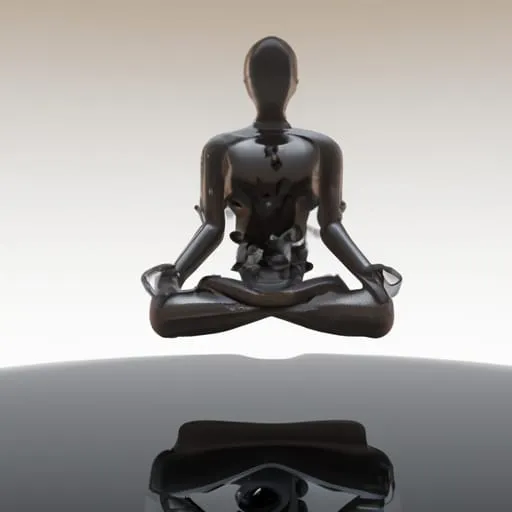
The Choice Between Fear and Love

The choice between love and fear is the most vital choice available to us as human beings, although it is typically misunderstood or misconstrued. Fear and love don’t always look like you would expect them to.

Fear we equate with horror movies, or material fears pertaining to the physical world. You may be surprised just how many of these inner machinations of fear are purely ethereal or intellectual- the mind simply being afraid of ideas that it has construed as threatening.

Love, too, is greatly misunderstood. We often characterise it as arriving in the form of affection, but this is just our human patina colouring our world. If we are lacking an existential sense of connection, then we feel we need to be affirmed to be worthy or loved, so we continue to seek this outwardly in manifold ways, most of which are merely fantasies. We find ways to move in the world that encourage other people to tell us we are special, we seek out soulmates and endlessly outsource our need for specialness to others, when really all that is needed is a supremely deep dive inward.

The game of fear cannot be won. To engage it at all represents an inherent loss, hence the state of the world. There is no hierarchy within fear – the bully or tyrant is just as much a victim as those he abuses. To step into the game of fear is therefore to choose to court misery. It cannot be foisted upon you; it can only be chosen. This is because we are ultimately responsible for our own states of relative wisdom or ignorance.

Fear is regularly chosen out of conditioned habit and miseducation. Recognize every small decision of fear, and choose to disengage from that illusion into the truth of love where you already are, the truth of I AM. Awareness is the golden key to this. The truth of who you are cannot be trapped in darkness against your will.

The game of love, by stark contrast, cannot be lost. To choose it represents an inherent victory. There is no hierarchy in the participation of the love of the divine. To enter it, in other words, to choose to engage it, is to experience immediate success. You are not granted external reward – it constitutes its own reward. It must be chosen eventually, because the only other choice begets sorrow, loneliness and misery. Real love is never separate, real love is shared amongst all or it is nothing.

Look at all the tiny ways fear continues to dominate our thoughts, and therefore our lives. The great teachers consistently taught that the kingdom of heaven, whether they called it ‘moksha’, ‘liberation’ or ‘nirvana’, was always all around us, but they were also careful to add that no one is typically willing to look at it, because the price would be giving up all that you think you know. What we are afraid to give up in this equation is the paltry kingdom of our own making, the constellation of our egoic arguments, arrogant conclusions and our blithe confidence about the way the world appears to us at this level.
That is because those who do not understand their true nature are loath to look through the eyes of anything but fear. The opposite of this eternal teaching is simultaneously true – hell is all around us, but none can understand that it is both temporary and illusory. In this self-imposed blindness, people resort to the only solutions they have learned in their life-long ignorance, all of which serve to dig them into an ever-deeper hole. For one who chooses fear, suffering is their constant companion. Is there any among us who has ears to hear this timeless message? This is what the teachers of the past across the globe have implored us in unison.

There is no moral ‘ought’ in choosing love over fear, or unity over separation. This is simply the choice that is always freely available to you. If you know your true nature, the light that you are doesn’t really have much of a choice anymore, because what is good chooses the good, and what is light moves toward the light. Do you choose your thoughts, actions, and attitudes to confirm the deeper nature of love and unity? Or, do you choose that which separates us indefinitely from that simple realization? With what ongoing result? No one will judge you for what you have chosen – they don’t need to, because it would be of no use. Pointing out how you were wrong cannot make love feel better about itself, because love is not an insecure ego.

Are you choosing the love that is the source of all, or are you choosing the denial of love which is fragmentation and disunity? Are you choosing the same thing over and over and somehow expecting miraculously different results? You are free to sow your fields with any seeds you wish, but don’t sow them with nettles and expect a bumper crop of apples.

Fear is above all a prodigious liar. It shows you not only glimpses by way of mental images, but also glimpses of projected feelings pertaining to what your choices and actions might lead to, such as the projected feeling of ultimate contentment, peace, or sweet success. Furthermore, because it was born inside your mind, it knows your weaknesses. It promises you results entirely different than it is capable of producing. Most people are unaware that it was fear that glued together their entire worldview.

The ongoing purpose of fear is to create more fear. Like love, it is self-propagating. Do not believe this, because that would be of no help to you – observe it in your thoughts and actions and experiment with it. Have you ever seen an evangelist spread a message of fear? Why are those who promote fear so loud and obnoxious? Why are the peaceful, tolerant, compassionate and inclusive so quiet? Because they don’t stand on soap boxes exhorting change from everyone around them on pain of exclusion. The message that ‘all is well’ is an exceptionally quiet but powerful message. It is extremely difficult to make that out amongst the clamour of the deluded masses shouting themselves hoarse.

People nevertheless continue to feed fear. This is because in some way, those empty promises about the survival of the frightened fragment you had assumed yourself to be have been believed and invested in. You repeated the choices again and again, which bought you more of the same. There is no use in claiming you were swathed in darkness of ignorance because what is past is past – what counts is what you are choosing now in the light of awareness. Perhaps you were ignorant and in darkness, but you are not now. This is what is meant by putting one’s hand to the plough and not looking back.

This is also why the great teachers and mystics placed such an emphasis on the dictum ‘know thyself’. The contents of your soul need to be made clear to you, no matter what. It is the number one primary good to be self-knowing, in other words to be ‘awake’. Being awake has nothing to do with being a walking encyclopaedia of conspiracy theories. It has to do solely with your access to the depth of your own truth in the flow of this eternal now, moment to moment.

Thankfully, for many of you reading this, the time for choosing fear has actually ended. Further investment in fear is no longer tenable in your life, and the deeper part of you knows this to be so.

Examples of fearful thoughts:

Get them to like you, then you will feel conditionally worthy.

Put yourself first, and you will be safe.

Use reverse-psychology, then you can manipulate your partner into giving you more of what you want.

Tell your partner you can change or become a different person, then they will not leave you.

Treat them respectfully now so that they will look after you when you are in trouble.

Do what they say you ought to, and then you will fit in and not be excluded.

Make them think your role is more important than it is, then they will respect you.

Bury the problem and ignore it for long enough, and it will leave you alone.

Notice how many of these are consequentialist in nature. Fear projects horror into the future and asks you to fritter away the only thing that is real, the ‘now’, in cascading delusions. It casually disrespects the well-being of others in favour of short-sighted self-preservation and self-promotion. Anything that depends upon a projected result in this way does not touch the realm of love, which is about service and the inherent value of doing, not consequence. I would rather refrain from giving too many examples of love, because I don’t wish to imply that you are being given a moral prescription, however, take the following example. A mother bird pushes her fledgling out of the nest because she trusts her offspring is mature enough to spread its wings and attempt flight. Is it bad to push, or is it loving to respect what another is capable of?

The same kind of love may be available to you when for example your friend or spouse refuses to agree with your claim of being a victim to a particular situation. Maybe that doesn’t feel immediately nice, as how we often portray love, because you aren’t being shown affection. Despite this, maybe you really are being supported and given exactly what you need for your continued growth and liberation. Such is love; it doesn’t always look the way we think it will, and sometimes it can appear less like being wrapped and swaddled and more like being dunked into cold water.

If you knew you were eternally loved, worthy, valid, and included, and you were never once considered by the divine source to be a candidate for exclusion, what would you do in light of that unconditional love and acceptance?

The traditional argument is that if there were no tough rules, people would just do whatever they want. Don’t forget that the only reason tough rules are even introduced in the first place is in response to an already dysfunctional society poisoned by the very institutions placed to protect it. Throwing more dysfunction into play will do nothing to heal the core failure.

A society can function perfectly without harsh rules if it is founded upon love. This has nothing to do with dancing around in circles wearing daisy chains saying ‘anything goes, man’. Love is not laissez-faire; it is intelligent, cohesive and wise. It attends to specific situations with a high respect for context, because love means that aware attention is given, unlike the vacuous bureaucratic processes we are all-too familiar with. If society is founded upon separation and inequality, then those harsh rules will convey the optical illusion of their necessity.

Disengage fear and you are in your authentic, natural state, the great ‘I am’. Unbeknownst to almost everyone, this is the core message that the world’s highest teachers have brought to us. They all had to skirt around this core message, because it was so simple that people wouldn’t accept it. The human mind craves narrative and substance around messages, hence all of the mystical parables and stories we have inherited. The kingdom of heaven is at hand, not reserved for those who are morally good and conform to authority, but for those who remember their heritage in spirit and choose to leave fear behind along with all the other things of the past that did more harm than good, such as bloodletting and prefrontal lobotomy.

The very remembrance of this heritage is sufficient to elicit in us all of the virtues that the world traditions have valued and promoted – not acting so as to become good, but because this is how goodness itself naturally acts when given the appropriate encouragement. This represents the final layer of self-inquiry and self-discovery – that we in our natural state are divinely free and unblemished. The ego fearfully misinterprets such a statement as mere arrogance, but what it really represents is the final challenge of love to confront and therefore understand who you truly are – this is the timeless meaning of the dictum ‘know thyself’. This vital ‘I AM’ marks the eternally available choice to participate in Love, which is by the same turn to permanently deny the movement of fear.

*

Simon P Murphy is a Nelson-based esotericist and philosopher, and author of His Master’s Wretched Organ, a brilliant collection of weird fiction stories.


Left-Wing Nationalism, Right-Wing Nationalism, Left-Wing Globalism and Right-Wing Globalism

For many people – especially Germans – nationalism is equated with right-wing politics. We are told that nationalism is necessarily ethnosupremacist, and that nationalists must necessarily hate and want to destroy outsiders. Like most aspects of the popular narrative, this is total bullshit. This essay explains.

Following their victory in World War II, Communist forces realised that they could silence all of their enemies by calling them Nazis. So they did. Anyone opposing the globalist left – whether nationalist right, nationalist left or globalist left – was called a Nazi, and hounded into silence.

When those same Communists completed their Long March Through the Institutions at the turn of the century, and took control of the mainstream political narrative, the Communist weltanschauung was normalised, to the exclusion of all others. By today, we’re expected to believe that the left wing are inherently globalist and that the right wing are inherently nationalist.

The truth is more like the following:

The globalism vs. nationalism axis and the right vs. left axis are orthogonal. So it’s entirely possible to have left-wing nationalists and right-wing globalists. Having one Nazi/Commie right-wing nationalist/left-wing globalist axis only tells half of the story.

Nationalism comes from the word ‘nation’, which is a cognate with ‘natural’, ‘nativity’ and ‘nature’. It refers to the fact that, as tribes expanded beyond provinces, they came to organise themselves as nations, so that it was possible to speak of French, English, German, Russian etc. nations.

A nation, then, is the natural organisational model of a people.

Like everything else natural, a nation has a masculine, yang aspect and a feminine, yin aspect. In microcosm, this is reflected in the way that families have a father and a mother. Analogous to parents, there is a right-wing nationalism that reflects nationalist approaches to masculinity, and a left-wing nationalism that reflects nationalist approaches to femininity.

Right-wing nationalism, then, is about being a father for the nation. In the same way that the father of a family protects that family from external threats, and gathers the resources that family needs to survive, right-wing nationalism is primarily concerned with defence, immigration and economics.

That right-wing nationalists have a reputation for opposing mass immigration is not surprising. The father of the family is the one tasked with keeping dangerous outsiders away from the family home, and, by analogy, the right-wing nationalists are tasked with keeping dangerous outsiders away from the national home.

Left-wing nationalism, by contrast, is about being a mother for the nation. So in the same way that the mother of a family creates and nurtures the next generation, left-wing nationalism is primarily concerned with education, health and housing.

Taxation is not a concern for left-wing nationalists. Right-wing nationalists don’t like paying taxes, reasoning that it’s better for families to learn how to be self-reliant. But left-wing nationalists are happy to crank taxes up, reasoning that the children of the nation need taking care of now.

In any case, whether right-wing or left-wing, nationalism is the natural form of governance.

Globalism is an unnatural form of governance. Only in the case of empire does a person become subject to decisions made by others who are neither blood nor language kin. Indeed, it can be argued that globalist consciousness is inevitably the enemy of the natural, nationalist, consciousness.

Right-wing globalism is about plundering and exploiting the nations in the service of international capital. Right-wing globalists want low corporate taxes, few regulations and reduced barriers to the flow of international capital and labour. The more immigration, the higher the house prices and the lower the labour costs, so the greater the bank profits.

Modern slavery was created by right-wing globalists looking for people to exploit for profit. The transatlantic slave trade, involving African slaves, Jewish merchants and white plantation owners, was one of the first major globalist enterprises. The East India Company was another famous one. Both were concerned primarily with maximising return to shareholders.

Left-wing globalism is about plundering and exploiting the nation in the service of international communism. So the left-wing globalists will demand that the nations burden themselves with refugees, and will demand that local workers be taxed to pay for it. They will constantly push for refugee resettlement and foreign aid.

The left-wing globalists don’t use economic arguments to convince nations to take in foreigners, but rather moral ones. Much like Christians (their fellows in slave morality) left-wing globalists heap shame on those unwilling to accept their logic. Anyone who doesn’t want the refugee quota is labelled cruel and callous. The fact that people already in the country need resources is of no matter to the left-wing globalist.

What both right-wing and left-wing globalists agree on is importing foreigners. This always serves globalist interests because foreigners only rarely have true solidarity with their host nations, and so mass immigration reliably weakens national consciousness, and weakening national consciousness makes it more difficult for nations to organise to resist globalist depredation.

Nationalists don’t actually have a problem with foreigners in general, any more than someone who cares about his family has a problem with people outside his family. They merely demand that the foreigners that do come provide a net benefit to their host nation. In practice, this primarily means: no cheap labour driving down working-class wages and driving up working-class housing.

In summary, it’s entirely possible for a left-wing person to call themselves a nationalist, and to oppose both right-wing and left-wing globalism. Understanding this requires that people look past the crude Nazi vs. Commie narrative and realise that globalism vs. nationalism is the true political struggle of our times.

*

If you enjoyed reading this essay/article, you can get a compilation of the Best VJMP Essays and Articles from 2021 from Amazon as a Kindle ebook or paperback. Compilations of the Best VJMP Essays and Articles of 2020, the Best VJMP Essays and Articles of 2019, the Best VJMP Essays and Articles of 2018 and the Best VJMP Essays and Articles of 2017 are also available.

*

If you would like to support our work in other ways, subscribe to our SubscribeStar fund, or make a donation to our Paypal! Even better, buy any one of our books!

Experiments Toward Self-Discovery

The title is necessarily misleading here, because for reasons that will hopefully one day become quite clear to you, you cannot discover yourself any more than the eye can see itself directly. Where we do have space to act is in introducing novelty to our otherwise well habituated lives.

The following exercises, whilst beneficial, are not designed with comfort or accomplishment in mind. In fact, many of these exercises will feel about as comfortable and familiar as stepping into a shower fully dressed. There is an enormous comfort in the tried and true, and conversely there can be great discomfort in the discovery of that which is unfamiliar, even when it is wholesome.

The problem with truth is that it is the slipperiest thing in the known universe if your goal is to arrive at it. We can’t grab hold of it for inspection, or to congratulate ourselves upon having caught it. We are it, but it is not ours to own. We can however consent to look with the eyes of innocence, but it asks something in return, and that is postponing our insistence upon asserting the presumed known, which includes the comfortable and the familiar.

One day, all of the familiar could suddenly be gone. This could come by way of death, but not necessarily. The important thing to know is that death, like any other psychic or physical upheaval, is not an obstacle to your ongoing existence. If you ever become determined to uncover that which lies beneath your mind by whichever method, you may end up with these discoveries in spades. For our purposes here, as an introductory exercise in which you are by small degrees introduced to the nature of your soul, it is sufficient to look for the light shining through tiny cracks in the walls of our minds.

Exercise One: Do not justify your choices or actions before other people and do not give in to the temptation to defend your image.

This one is simple and straightforward, yet the core message of this exercise, if explored to its fullest capacity, will reveal the most brilliant jewel of your being; it will also completely suck at first. Make no mistake, it is going to feel terrible – but so would detoxing off of a drug such as nicotine or heroin.

Anything by way of action in defending your ego you thought was going to work in fact didn’t, so what do you have to lose? People berate, judge and insult us in many ways, but what does defending our image actually achieve? Is that which we are defending even real? Really? Do you know that for certain? And if it is indeed real and factual, why should the truth require your defense? Is it temporary nuisance, or do the same issues keep cropping up again and again? Do we really need to either become thick-skinned, or a master of witty comebacks? What about not participating, inwardly or outwardly?

We often feel like defending our image and justifying ourselves is not only so familiar, but feels like coming up for air when we have been trapped under water for a time. It is less an activity than it is a compulsion attached to suffering.

The reason that this feels so central to the way you are used to functioning in social situations is that because of the way humans have been conditioned in our upbringing, you have grown up having conflated the ideas about who you are, with who you truly are.

This is an error of the first order – something you thought was real was not. That has a lot of repercussions, and it is going to take some getting used to once you really see through it. The not so well-hidden secret is that your justifications and personal defenses are intimately linked with your suffering and your sense of separateness. That is what makes you feel like you ought to defend yourself.

The promotion and defense of your false image is the ongoing cause of great pain.

Choosing to not act upon even these often forceful compulsions of psychic activity initially presents a unique discovery when ventured into, which is that you don’t actually have to follow your each and every compulsion. Not only that, but because it is not even really you, it will not ultimately impact you. In other words, the real you cannot be hurt by this. In fact, you can only be liberated by this. Try this often enough and you will eventually discover that whatever people say about you, doesn’t touch upon that which is observably and changelessly true about who you are. We have it collectively wired internally that the complete opposite is true, and the cultural world we inhabit is more than happy to encourage this lie. 

If you decide to keep going with this, it could lead you to enormous discoveries. You may also decide that this isn’t for you quite yet. Ego or false self can even in some instances lead to a very buoyant and upbeat life while things seem to be going right for it. The common varieties of ego, however, I find to be quite run-down, generally miserable and exhausted, and very much in need of retirement.

It is relatively easy to stay true to inquiry when there is great pain, but we often don’t recognise what pain includes. It also includes augmentations to our ego such as being told we are wonderful, intelligent, or otherwise special. A more advanced version of this exercise is not to allow compliments to influence your inner states, not because they are true or untrue, but because your worth is elsewhere and independent. Whether you are being insulted or complimented, and you accept it, what is really happening is that you are being presented with a power differential, and you are going into agreement with it. That is a game, and you aren’t being forced to play it, it is a proposition.

All you are doing in this exercise is not agreeing to the power differential being proposed. Do this often enough and it will soon be very clear that what is changelessly real is not subject to personal, social and cultural tides.

Another way of looking at all of this is that one day, your body will be deceased and likely either buried in the ground somewhere, reduced to ashes, or perhaps even strewn out in the open for wild animals to pick amongst. In that situation, if people continue to say upsetting or hurtful things about you, what is going to happen then? One day you will not have any power over this, so you might as well introduce yourself to the truth of the situation now in order to get some benefit out of it.

Exercise Two: Observe the wave-like nature of the present moment

Place your attention on the fact that as time passes, or seems to pass, it consists of an energetic wave, very much like the waves upon the ocean. In the case of water, it appears to be the case that water is moving along, whereas really it is the energy moving through the water itself that seamlessly composes the wave in each instance.

That wave you occupy is very, very special. It is not just an idea. You are always at the peak of this movement, and it is impossible not to be. This is why it is always the present moment whether your body is five, fifty, or one hundred years old. We are all here now, and there is no option but to be here now. This makes this moment supremely worth paying attention to.

All activities, all birth and death come through this one gateless gate. Notice it with diligence and it will reward you with insights beyond what you currently conceive of as knowable. This is not a ploy, and it is not a trick of perspective.

Exercise Three: Become aware of the stream of thought and emotions passing through awareness

Notice at every available opportunity the nature of thought and feeling. You do not need to apply analysis to this, simply observe. Eventually what will begin to happen is that in a very tangible way, it will sink in that you are not a person at all – although being a person is included in the space you currently inhabit as awareness. All things, people, thoughts, emotions and events, real or imagined, come to pass within the theatre of this space. This awareness itself is not localised in space and time, at least not in our usual way of thinking, and its contents are capable of endless permutations whilst that which is unchanging remains shiningly, eternally changeless.

Such is the power of the psyche.

At some point in human history, as well as in our ‘personal’ history, we decided something else was more important, or more worthy of attention. Once you see this, you will not be able to fathom why, nor will you be able to return to the world’s illusions with anything like unwavering commitment. Awareness will become the primary value of your life, your most treasured am-ness.

Plato used the Analogy of the Cave in which the dedicated troglodytes who eventually made it out of the darkness were blinded by the sunlight above, and were thus unable to see the contents of the cave in the same way ever again. The difficulty of seeing this is that your perception of the things that you thought were so important before will be greatly altered. Most people I know who have seen this have had major personal upheavals as their perspective shifts.

You will likely find the majority of cultural institutions and things everyone else is enamoured by quite trivial and uninteresting by comparison. Be forewarned, this isn’t a game. The perception of the soul is a serious business, even though this experience on earth is something of a temporary game. Perhaps it would be more accurate to say that you would be unwise to seek this for thrills, or for a mere change in scenery.

Dedicated inquiry can and will turn your comfortable inner world upside-down. The only way to stomach the often disruptive results is to have touched upon either an insatiable desire for Truth for its own sake, or a total dissatisfaction with the flimsy and shallow offerings of the material world. You are warned, but you are also encouraged and supported. Eventually every entity on this planet will have to proceed beyond this point anyway, so you may as well start as soon as you sense that you are ready.

Exercise Four: challenge the authority of displacement.

Have you ever noticed within yourself a kind of internal lockdown where you suddenly go into unconscious, automatic and usually negative patterns or thoughts or behaviours? One word for this is displacement. You are being shut down and kicked off your seat of consciousness so that the real ‘you’ is no longer there to observe, learn and act anymore.

This habit is very deeply ingrained. It is a dysfunctional habit of the psyche that has been encouraged by a deeply confused and misled society. It happens most often when emotions which are very powerful such as anger or fear arise. They are strong stimuli that threaten to tug you down into unconsciousness like a swimmer being drawn into a swift, strong undercurrent.

The feeling when this is about to happen is a sense similar to when you first start to fall asleep at night. Witness it in action and get a feel for it so that you can understand the warning signs and remain seated for the coming events as consciousness.  You will surprise yourself. Your willingness alone to pursue this will begin to net you immediate results. I know of no one person who has applied themselves willingly to the discipline of awareness whose life was not immeasurably enriched, and usually within a matter of months if not weeks.

For example: someone starts to insult you or imply something facetious about your actions or your motives. You feel the inner urge to react in some way, so you feel the pull to duck down behind a psychic shield. Now your psychological defense mechanisms are active. You are blind, in fact you are not there. Your third eye is squeezed shut whilst fear takes over to run its well scripted code. You begged the mind to keep you safe, and it is dutifully trying to do just that in the only way it knows how. It doesn’t work – at least not for the real you.

The mind’s habituation to withdraw from suffering IS what keeps suffering happening.

Originally, it is the misperception of separation that causes suffering, but it is our panicked reaction to escape that really keeps the fire of suffering alight. Psychological suffering is always represented in our body by some form of discomfort, physical pain or tension, and it is an excellent gauge of the truthfulness of our inner state.

Suffering is how the separate sense of self, being the false self, attempts to convince you that you are not whole, that you should withdraw like a snail into its shell, shrinking from reality. When believed and thus obeyed, it gives birth to inner hells. When firmly rejected, there comes a strange peace that passes all understanding. Despair cannot touch you.

Do you want to give anyone the power over you to turn you into an unconscious, reactive idiot? Does that line up with your inmost sense of who you truly are in spirit? Have you seen those plastic toy animals whose limbs are held erect by cable tension, and when you press the button, all the tension releases and the animal crumples into a heap? That is what you give people the power to do to you, even when you get very angry and respond with what we call ‘assertiveness’.

No one wants this slavery, because it is a lie against the truth of who we are. Once you know about it, that is sufficient motivation to act from a space of wisdom.

If you can stay awake during these episodes of rage, anger, anxiety and fear- and I guarantee that you have the capacity to – what a joy and wonder you will discover! None of it is real. It isn’t a real threat, it is all a mass hallucination. It is instructional in educational terms, yes, but not ultimately real. It is a dream of form we were all born into, with our consent. That birth didn’t happen ‘once upon a time’, it is repeated every day – this is the nature of re-birth. It is happening in every waking moment, every day.

You never need to let yourself throw a tantrum over a dream. Spend some time addressing the illusions of yourself and others – not with more arguments, but with awareness itself – then see what problems you have. Your efforts will be recognized as reality shifts around you to accommodate one who has eyes to see and ears to listen. You will encounter more and more openings and insights until there is only one timeless, uninterrupted seeing. Then, instead of piloting an insane ego that insists upon the totality of the universe being beaten into its preferred shape, you will become a willing student of reality.

*

Simon P Murphy is a Nelson-based esotericist and philosopher, and author of His Master’s Wretched Organ, a brilliant collection of weird fiction stories.

*

If you enjoyed reading this essay/article, you can get a compilation of the Best VJMP Essays and Articles from 2021 from Amazon as a Kindle ebook or paperback. Compilations of the Best VJMP Essays and Articles of 2020, the Best VJMP Essays and Articles of 2019, the Best VJMP Essays and Articles of 2018 and the Best VJMP Essays and Articles of 2017 are also available.

*

If you would like to support our work in other ways, subscribe to our SubscribeStar fund, or make a donation to our Paypal! Even better, buy any one of our books!

What Is Meditation?

In the most basic sense, meditation could be said to be attending to what is actually happening for you here and now. There are many methods, techniques, schools and goals. The one thing I would like to emphasise is that meditating ‘for’ something is completely different to meditation in its proper sense. The main question is: what do you want out of it? This question, when answered honestly, should reveal important information about where your experience with meditation will lead.

There are many potential outcomes associated with meditation practice. It could be oriented toward health, longevity, stress-reduction, or it could be to experience blissful or altered states. It is important to note that when we are really interested in paying attention to what is, i.e. Truth, there is no outcome or goal associated with it. If you do want to meditate for some of the reasons specified above, there is really no problem with that, have away at it. All I want to make clear is that meditation is not a prescription for an outcome of how we or anyone else thinks things should be.

Over the past twenty years or so there has been a global shift toward mindfulness, which is really a kind of prescribed meditation practice. It holds onto limitation, and in fact issues from limitation – which isn’t to say that it is wrong, only that it is limited. It is encouraged by big business and educational institutions among others and touted as a way to boost inner health and overall productivity.

The reason it must be anchored in limitation is that groups with special interests such as maintaining productivity and satisfaction levels have an agenda.

Mindfulness has indeed been shown in the literature to have measurable benefits upon human well-being. A corporation or institution can achieve much by way of letting out the leash, however it simply cannot afford to throw out the baby with the bathwater. Progressive religions are also generally comfortable with mindfulness, just so long as it doesn’t push you over into questioning the main tenets of their ideology, in which case the leash is very firmly brought back in.

Corporations are happy to implement measures of mindfulness in the same capacity as they promote regular hand-washing, loud-shirt Wednesdays and sneezing into your elbow. Mindfulness is a prescribed form of limited meditative awareness that promotes mental and physical well-being. It makes for a more well-behaved, cohesive team environment, and staff are less apt to flip out and require stress leave.

Please recognise that you are not being blessed with the keys to the kingdom in this scenario.

At the end of the day, the ultimate interest is minimising loss and maximising profit. If you are the CEO of a multinational corporation, your investors and share-holders aren’t going to be terribly sympathetic to you waking up one morning having discovered that you are unconditionally connected with the source of all life and that your deepest being is as timeless, immortal spirit that feels no need to define itself through achieving material goals.

Meditation by contrast does not have a capped limit placed upon it. In fact, if there is any goal or outcome attached to it, you can say it isn’t really meditation in the true sense.

About twenty or so years ago, a group of Buddhist monks were visiting New Zealand. They visited a cathedral and remarked that it was a very holy place. They noted that there was a small chapel off to the side which was clearly labelled ‘Meditation Room’. Naturally, they asked if they could be permitted to use the room for – you guessed it – meditation.

The clergy responded kindly that no, they may not use the room because they didn’t think the kind of meditation that they were planning to do in the chapel would be appropriately Christian in nature. From that point on, the name ‘Meditation Room’ was abruptly changed to the name ‘Contemplation Room’, underscoring with wonderful irony the requirement of established authorities and institutions to maintain limitation, and therefore control. 

This story perfectly encapsulates the issue surrounding meditation being held as something in abeyance to something else; some other hierarchy of values. True meditation cannot be this, because there can’t be a fixed itinerary on where you are being taken, otherwise it is not really meditation, it is something else.

So, the question arises, should we meditate? I find people struggle with this question, because it really can’t be prescribed. I personally don’t meditate, but that is because it would be redundant for me to set aside time to engage in awareness when I am committed to that every waking moment. The more interesting question would be, are you curious as to the fact that in spite of all the odds, you just happen to exist? Are you curious that perhaps one of the least possible things in the universe is directly observable within you and as you? If not, there isn’t much reason to advise someone to meditate. You may as well be asking them to join you in going to a movie they have no interest in seeing.

I’m not saying that having no interest in meditation is necessarily a terrible thing. It is admittedly a mystery to me why someone would not have their interest piqued by something that seems so profoundly fascinating as the existence of a universal force which is eternally self-aware, but there are reasons for everything. A simple life with no questions may be just as precious or pleasant to participate in as one filled with inquiry or reflection.

I can’t see why the lives of trees and plants shouldn’t be a perfectly valid form of existence, it’s just that the realm of the vegetable doesn’t share any overlap with my current interests and lifestyle.

As humans, the orientation of the intellect and the judging, perceiving mind is such a powerful and often heavy burden to bear. Meditation can certainly be said to provide perspective on the realm of the mind without turning itself inside out and trying ever unsuccessfully to come at itself from a non-intellectual angle. When minds engage in self-examination and analysis, all kinds of twists, ties, and knots are possible.

That is often what the majority of neurosis is, simply thought wrapping around itself again and again until there is an unbroken knot that results in an anxiety loop.

Meditation offers the promise of space and relief from this kind of insanity. Rather than reformulating new solutions within the structure of the known, it opens the doorway to the possibility of reviewing all of our mental content from a broader phenomenological space in which the contents of our inner lives seem relatively small by comparison.

Whilst meditation can provide the space for the entire spectrum of states possible within the human mind, it needs to be understood that so long as your notion of meditation is fixed upon seeking to experience certain states, it will ultimately fail, even if you get very good at it. This isn’t to do with me being pessimistic about your abilities, but concerns a feature of reality itself, specifically the law of impermanence.

No state lasts forever, so at some point or another it needs to be faced that what we are doing in meditation is not ultimately about attaining states or even insights. These will all come and go. Ultimately, meditation in its purest form is coming into a real relationship with what is true and changeless, that within which all states come to pass, including all those states associated with birth and death.

This is why meditation draws your attention to what is happening directly here and now, because 99% of people will miss the significance of it every time. It really does no justice to truth for me to attempt to describe that which you may come into if you persist – I may as well be trying to describe a sunset in binary code. 

I once took it on a heuristic basis that there was more to the world than what was immediately tangible and visible. My curiosity could not be swayed.

A man in the foothills of the Himalayas once said that the best thing that ever happened to him was to have his legs shattered by an avalanche forcing him to live in poverty and solitude, because this allowed him to come into contact with who he truly was. I couldn’t let go of the impetus to understand what inner force could prove that important to a human life. The possibility captivated my attention that something could be so important that it could even be worth losing everything familiar in order to touch upon. Having now looked into this matter satisfactorily, I now hold this to be self-evidently true.

Rather than ask you to believe it, I invite you to consider the possibility that maybe there is as yet undiscovered depths to you that defy description. Awareness is the doorway to understanding the depths of your true nature, and meditation is the opportunity to embrace the awareness of that which is always here, right now. 

*

Simon P Murphy is a Nelson-based esotericist and philosopher, and author of His Master’s Wretched Organ, a brilliant collection of weird fiction stories.
*

If you enjoyed reading this essay/article, you can get a compilation of the Best VJMP Essays and Articles from 2021 from Amazon as a Kindle ebook or paperback. Compilations of the Best VJMP Essays and Articles of 2020, the Best VJMP Essays and Articles of 2019, the Best VJMP Essays and Articles of 2018 and the Best VJMP Essays and Articles of 2017 are also available.

*

If you would like to support our work in other ways, subscribe to our SubscribeStar fund, or make a donation to our Paypal! Even better, buy any one of our books!