The Case For Cannabis: Prohibition Is Cruel

There are a lot of differing political philosophies in the world, and they disagree on a great many matters. The closest we’ve been able to get to a universally agreed-upon value is that the Government ought to act to minimise human suffering. This article will make the argument that prohibition ought to be relaxed because it is cruel.

Cruelty is a malicious disregard for the suffering of other sentient beings. It was cruel to perform electroshock therapy on people without their consent. It is cruel not to summon medical help when one encounters a person in distress. It was cruel to not allow homosexuals to express their genuine regard for each other. Cannabis prohibition falls into the same category.

Some people will argue that not being allowed to use cannabis doesn’t constitute cruelty because it’s not really a big deal. There are many other things that we’re not allowed to do, so what does it matter if cannabis is another one of those things?

But that’s looking at it around the wrong way. People naturally live, and part of life is to explore what comes your way. People will naturally use cannabis, because others will offer it to them. Some of those people will find they really like it, perhaps even enough to use it daily. Punishing people for an act that they do naturally – especially when that act harms no-one – is an act of cruelty.

It’s cruel to cage a bird, or keep a cat inside, because it’s a violation of their natural instincts to be free. The natural instincts of a human being is to explore consciousness. Isn’t it, then, an act of cruelty to prevent them? Preventing a human from exploring their consciousness is as unnecessarily restrictive as keeping a cat or dog in a small cage for their whole life.

Forcing people to follow arbitrary laws and dictates is cruel, because it makes those people feel like they are of less value than those imposing the rules. Putting someone in a cage where they suffer intensely from being in close physical contact with extremely dangerous people, just because they don’t follow those arbitrary decrees, is beyond cruel. Yet, that is what our system does in the pursuit of enforcing cannabis prohibition.

Perhaps the worst cruelty is that done to the family members of those who are incarcerated for cannabis offences. For a family member who is relying on certain other members of their family for income or support, it seems almost egregious for the state to incarcerate those others on account of a cannabis offence.

It’s unlikely that many cannabis prohibitionists would like to explain to a small child how the supposed dangers of cannabis are so great that it necessitates putting their parent in jail. They would much rather prefer that social workers and Police officers explained that to the children of parents imprisoned for cannabis offences. This cowardice exposes that cannabis prohibition is underpinned by an absence of compassion.

Some people ought to think about what sort of world they want to live in, because the compassion or cruelty of the laws under which we live have an impact on whether people act to ameliorate each other’s suffering or not. The legal system, whether we like it or not, sets the standard for whether we are compassionate or harsh towards those who really crash out.

Passing a law that says a person has to go in a cage if they grow a medicinal plant sets a precedent for what the appropriate level of compassion in our society is. And it’s a low one. Locking people up for using medicinal flowers shows that we are a brutal people. It shows that even if a person can provide a fair reason for using a medicinal substance, the Government can just bulldoze through and imprison them anyway.

Some of the older prohibitionists might like to consider that they themselves will soon be in need of compassion, because their bodies will continue to decline towards death. In a person’s final few years, they are just as dependent on the goodwill of others as they are in their first few years. If one is old, therefore, it’s to one’s own benefit to normalise compassion and empathy.

Even if the argument is made that the point of the cannabis laws is to prevent suffering (by way of preventing addiction and mental illness), the reality is that there are hundreds of millions of cannabis users who are happy to tell you that their use of cannabis prevents suffering. It’s cruel not to listen to these people, to tell them that their claims of being helped by cannabis are delusions and that they should be in a cage for their own good.

Ultimately, this argument asserts that there’s enough cruelty in the world, and that we don’t need any more. Cannabis should be legalised because it’s cruel to punish people for using a medicinal flower that doesn’t harm anyone. This would contribute to a world with less suffering in it – something that we all benefit from.

*

This article is an excerpt from The Case For Cannabis Law Reform, compiled by Vince McLeod and due for release by VJM Publishing in the summer of 2018/19.

21st Century Masculinity

To say that the world is suffering a crisis of masculinity is an understatement. The kind of man who Doug Stanhope once described as a “half-faggot” is now a majority. Our old models of what it means to be masculine have to be updated for the fact that we live in a high-technology age of physical comfort. This essay will explore the need for a masculinity appropriate for a new century.

Masculinity has always been represented by the straight line, or number 1, and is opposed to the feminine that is represented by the circle or the number 0. This is why the masculine has always been represented by the Sun (whose rays strike us as straight lines and which impose order) and the feminine by the Earth (upon whose watery surface no straight lines naturally exist).

In the purest esoteric sense, masculinity is the ability to impose order upon chaos. This means the ability to impose straight lines and rules upon the natural world, which is, in its raw state, made up of curves and which only acknowledges laws of iron. The masculine is that force which clears jungles and plants wheat fields, and which builds stone walls around the home city and temples in mountain caves.

When the masculine instinct goes too far, it imposes such a strict order upon the world that life is strangled out of existence. This sort of environment can be found in the equatorial deserts, which is why these areas have produced so many cruel and hypermasculine ideologies. When it doesn’t go far enough, there are no limits to how life carelessly spawns. This sort of environment can be found in the deep seas.

Back in the old days, the most masculine was the man who went out and explored. He was the Viking who got into a longboat and came back with silver and slave women. He was the navigator who led those rowing the great canoes across Polynesia to an island even further than those already known. He was the king who brought the rule of law to neighbouring barbarian tribes.

This masculinity may have reached its apogee in the centuries leading up to 1969, as it led men to conquer the world, then each other, then space. But then, man ran out of space. In the 21st century, there is no longer any physical space to explore. We have been to the ends of the Earth, we have been to the bottom of the deepest ocean trenches, we have been to the Moon.

Even more crucially, we have imposed order not only in a horizontal sense but also a vertical one. We now live in an extreme of comfort, where the vast majority of us can count on living to be elderly if we don’t do anything stupid. Each of us can access a more sumptuous range of food at the local supermarket than anything Queen Victoria could have dreamed of, and our options for entertainment are even vaster.

All of these things are, however, only physical phenomena.

The masculinity of the 21st century will be fundamentally the same as the masculinities of previous ages. The core of it will still be the ability to impose order upon chaos. But it won’t be the physical world that we impose order upon – that doesn’t need any more order imposed upon it. The terrain that needs to be set to order is the forgotten metaphysical.

We’ve spent so long focusing on mastery of the physical world that other, more subtle, disciplines have been lost. This hyperfocus on physical dominance has caused us to lose our orientation in the metaphysical planes. We’ve drifted so far from our spiritual groundings that most of us no longer believe in God. The prevailing metaphysics is purely material; the Earth existed, then we evolved upon it, and so here we are.

We are our bodies, and nothing else – when the body dies, then we are dead. This belief is taken for granted by the majority of people nowadays.

The majority of people don’t understand that this materialism is a primitive superstition that has only arisen because our metaphysical order has collapsed. It isn’t accurate, and not only is it not accurate, it’s a laughably crude and ignorant simplification. The worst of all is that it is a superstition that has driven millions of good people into a state of existential despair, on account of the belief that their inevitable physical death renders all actions meaningless.

Therefore, the future involves spirituality.

That these new spiritual vistas are dangerous ones can be seen from the attitudes that many have towards spiritual sacraments such as cannabis and the other psychedelics. The majority of people are terrified of the effects of psychedelics, much as they were once terrified of the beasts and savages that lay across the sea. But this is precisely why such vistas will be the target of 21st century masculinity.

In the new century, those who channel masculine energy into the world will be the same brave and adventurous individuals that they always were. The difference is that the vistas they explore and map out will not be physical, but will be the terrain of the mind and the soul. The 21st century masculinity will involve less Mars and more Hermes; the 21st century man will be a warrior of the soul first and foremost.

*

If you enjoyed reading this essay, you can get a compilation of the Best VJMP Essays and Articles of 2018 from Amazon for Kindle or Amazon for CreateSpace (for international readers), or TradeMe (for Kiwis). A compilation of the Best VJMP Essays and Articles of 2017 is also available.
Old Colonialism and New Colonialism

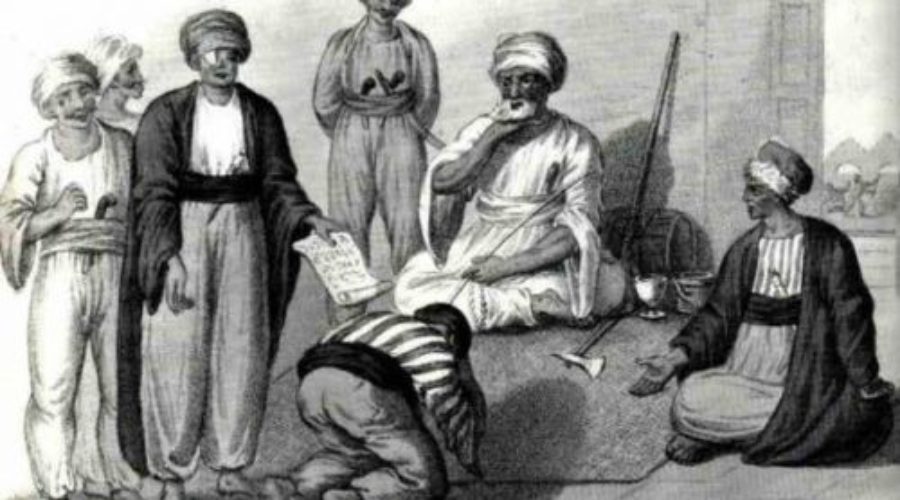
‘Colonialism’ is one of the dirtiest of dirty words nowadays, bringing to mind images of Belgian Congolese getting their hands chopped off for failing to meet the day’s rubber quota. The problem with this simple sentiment, as this essay will explore, is that colonialism is still going strong. We used to plunder the world for its natural capital – now we plunder the world for its human capital.

Back in the Age of Discovery, there were great riches to be had from despoiling the world of its reserves of gold and silver. There was the minor problem of the people who lived on top of these gold and silver reserves, but in most cases they could either be driven off the land or enslaved to help mine it.

This didn’t stop once we ran out of gold and silver – we simply switched to Africa and plundered them of diamonds, slaves, rubber, more gold, cocoa, coffee etc. By the end of World War II, and in the aftermath of this great slaughter, we had come to realise that this course of behaviour was wrong, and we were very sorry – or at least pretended to be.

Since about 1960, the economic equation of production had permanently changed. No longer were the fattest profits in raping developing countries of their natural resources. We had moved from manufacturing economies to service economies, and that meant the fattest profits were now in raping developing countries of their human resources. This we do through the immigration system, and it’s the new colonialism.

It costs a lot of money, time and effort to raise a small child to the point where they can make a meaningful economic contribution to society. From kindergarten to the end of a Bachelor’s degree is usually 16 years of education, and for a professional degree even more than this. Every year requires, at a minimum, teachers and school infrastructure. The total cost is inevitably in the hundreds of thousands of dollars.

With the new form of colonialism, we don’t send troops to developing countries and force the locals to build mines and collect rubber. As mentioned above, human capital is now more valuable than natural capital. Instead, we just let the developing countries stagnate – or cause them to – making it much harder for them to keep hold of the talented individuals who naturally arise among the population. Then the capital comes to us.

Proof that the new colonialism is no less nasty than the old comes from observing the actions that the West takes to cause those developing countries to stagnate. It’s common for Western countries to offer massive “loans” to developing countries, supposedly out of goodwill. Inevitably, the loan money gets stolen by local elites, and the country remains indebted with no way to pay the loans back. The Western countries who offered the loans then try to bargain this debt for influence.

In other words, developing countries are now enslaved by debts instead of by force of arms. Chains of iron have simply been replaced with chains of silver. One of the men who was employed to do this, a John Perkins, described his occupation as “Economic Hit Man“. This enslavement naturally leads to those with the greatest human capital trying to escape so as to get the best return.

When they do escape (usually to the West), they bring their human capital with them, depriving their home nations of the benefits of it. They also grant the West all the benefits of that human capital, despite that the West paid nothing to produce it.

Of course, it is spun as if we are generously granting rights to these unusually productive people. The propaganda tells a story of draconian immigration restrictions holding these people back from being able to make a real contribution to the world, and that we’re doing a great and moral thing by allowing them to emigrate and to work in the West.

The reality is that the nations of the West are impoverishing the developing world by sucking out its human capital. This means that the developing world now lacks the human capital that it needs to develop its own means of production and become wealthy themselves. This locks them in a vicious cycle of poverty.

Ironically, the West usually ends up getting a two-for-one deal from all this. Because we take in the most productive people from these countries, they are often left without the engineers, physicists and chemists that they need to develop their own natural resources. As a consequence, those resources often sit undeveloped until a Western company comes in to exploit them.

Desmond Morris makes an extremely insightful point in The Human Zoo. He writes that the moral values of any time and in any place are always dictated by the ruling classes to serve their own interests. In every time and place, the people tend to believe that their moral values are an expression of themselves, or the result of some process of moral development, but this is an illusion.

Many of today’s moral values have, likewise, been forced on us to suit the wishes of the ruling class, the new colonialists.

The reason why we are being encouraged to accept diversity is not because we realised that it’s the morally correct thing to do. It’s because accepting diversity makes divesting the developing world of its prime human capital a smoother process. There’s no need for blackbirding when you can induce the labour to voluntarily emigrate to the West instead.

Colonialism never went away – it simply changed form. In the same way that slavery still lives on in the private prison system and in people being paid less than they can live on for a full day’s work, so too does colonialism live on, in the rape of the human resources of the developing world. Much like colonialism was in the 19th century, this new colonialism is spun to us as being the morally correct thing to do. The lie is exposed by the fact that the new colonialists are the same people as the old ones.

*

If you enjoyed reading this essay, you can get a compilation of the Best VJMP Essays and Articles of 2018 from Amazon for Kindle or Amazon for CreateSpace (for international readers), or TradeMe (for Kiwis). A compilation of the Best VJMP Essays and Articles of 2017 is also available.

The Case For Cannabis: Effectiveness of The Prison System

One of the major problems with cannabis prohibition is that it makes other parts of society function sub-optimally. In the same way that prohibition makes policing more difficult, and makes a mockery of the justice system, it also makes a mockery of the prison system. This article looks at the argument for cannabis law reform from the point of view of the prison system.

The prison system, in practice, serves a wide variety of objectives. Ideally speaking, however, it needs to fulfill one primary and one secondary objective. The primary objective is to keep society safe from the predations of criminals. The secondary objective is to rehabilitate those criminals so that they don’t come back.

Cannabis prohibition is in direct conflict with this primary objective. The idea of keeping society safe from someone who grew a medicinal flower doesn’t make any sense, because growing medicinal flowers helps people and doesn’t harm them. In fact, doing so makes society more dangerous, for a number of reasons.

The most obvious harm is caused by taking a person who probably wasn’t malicious (a cannabis user), and putting them in close contact with genuinely dangerous people, who are apt to teach that cannabis user how to become dangerous themselves. Prisons serve as a university of crime, because crime is the one thing that anyone in a prison can count on having in common with other people in a prison.

There’s no overall benefit to putting someone who has grown a cannabis plant in prison with people who are going to teach him how to manufacture methamphetamine, or to embezzle, or to commit other serious crimes. The end result will only be an actual criminal. From the perspective of harm reduction, it’s counter-productive to take a person who wasn’t harming anyone and turn them into a person who does harm people. It’s madness.

Even worse is the harm done to the families of the people incarcerated for cannabis offences. The stress on the partner or parent of someone imprisoned is great, and lasts for at least the time of the sentence. Perhaps the worst of all is the damage done to the children, who, after seeing one of their family members locked up for nothing, inevitably come to see the state as their enemy.

One other consideration is that a person sentenced to prison for a cannabis offence may become embittered. Getting locked in a cage like an animal for an action that caused no harm is not the sort of thing can easily be forgiven. It’s the sort of thing that a person tends to resent for the rest of their lives, making them a nastier person. Everyone loses from this.

In the context of cannabis prohibition, the concept of rehabilitation – the second major objective of the prison system – doesn’t make any sense either.

The idea of rehabilitation involves convincing a criminal that their previous actions caused unwarranted suffering to innocent people, should not have been done, and should not be repeated. If a criminal can learn this, then they can be released into the community and be expected to not commit that crime again. As a result, the community becomes safer.

In the case of a cannabis offence, however, what’s to rehabilitate? How can one go about “rehabilitating” a person who hasn’t caused any harm to anyone? The fact is that it’s all but impossible to convince a normal person that they are a criminal on account of cannabis. It’s impossible to appeal to the harm caused, unlike a genuine crime, because there isn’t any.

Many people who are in prison for cannabis offences grew cannabis to meet other people’s medicinal needs. These people are the opposite of criminals – they are heroes. Although they might not be seen as such by the “Justice” System, they are certainly heroes in the eyes of the people with medical conditions who couldn’t otherwise access an effective medicine.

Every honest person knows that the cannabis laws are an example of illegitimate, unjust dictates, and therefore there’s no “rehabilitating” a person who defies them. The laws make our prison system into a sham by putting non-harmful people there. This causes harm to everyone related to the cannabis user, as well as harm to the average person’s faith in authority.

Legalising cannabis would return our prison system to its primary objective of keeping people free from harm. This would mean that our prisons were only populated by those willing to harm others, and not medicinal flower growers. This would not only make the prison system more effective, but also less cruel.

*

This article is an excerpt from The Case For Cannabis Law Reform, compiled by Vince McLeod and due for release by VJM Publishing in the summer of 2018/19.