Clown World Chronicles: What Is ‘Brown Communism’?

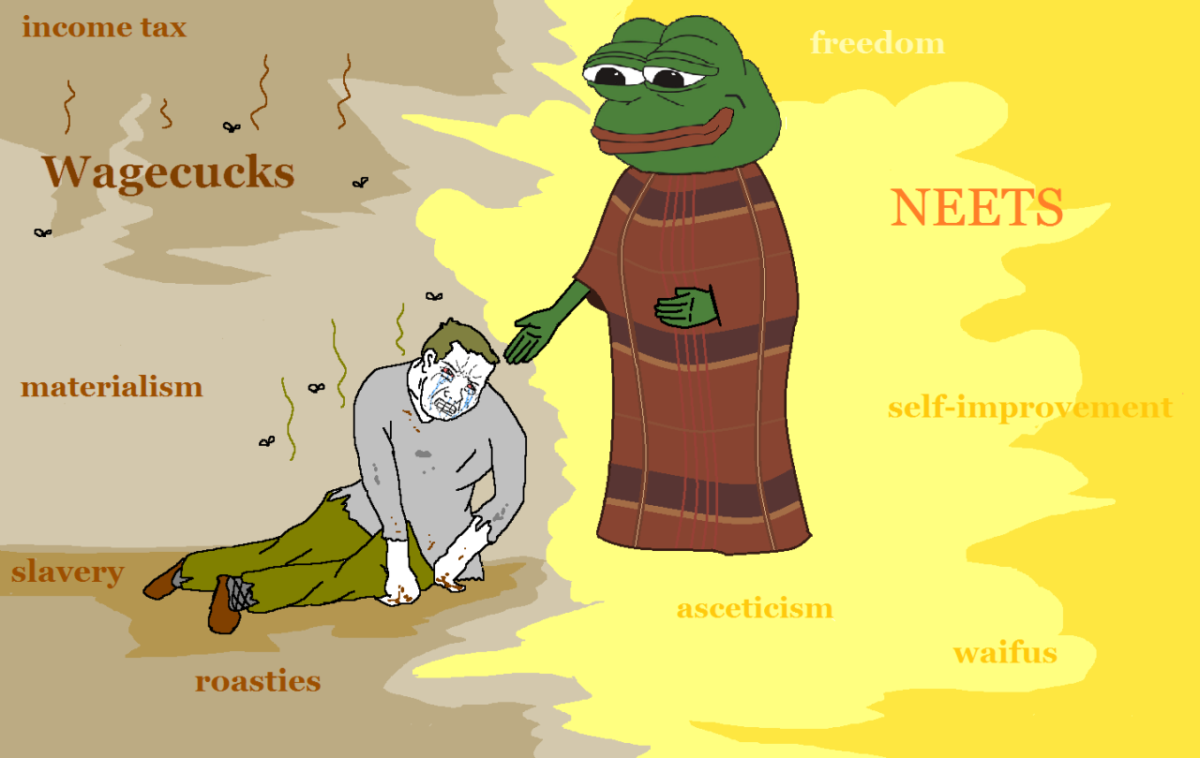
A new political alliance is forming out of the spatterings of gutter vomit that is globalism. This motley crew of grifters, race-baiters, religious fundamentalists, social justice warriors and other shit-stirrers are united by little apart from their hatred of the white man, but they are united under one ideology. This article describes what will become one of the foremost hate ideologies of the 21st century – Brown Communism.

Original Communism began in Europe after the 1848 publication of The Communist Manifesto by Karl Marx and Friedrich Engels. This short tract summarised the basic tenets of Communism. Among others, this includes the ideas that history is the story of class struggle, that private property should be abolished and that Communism is explicitly a globalist movement.

Like all other hate ideologies, Communism needed an enemy. In the case of the original European Communism, the enemy was the bourgeoisie – the men of silver, or what we would today call the middle class.

The original Communism appealed explicitly to the men of iron, or the working class whose labour built the factories and railways of the Industrial Revolution. It told a story about how the men of silver had stolen the rightful wealth of the men of iron, who were fortunate that the men of gold (Communists) had enlightened them as to who the true enemy was.

After uniting under the wise and benevolent guidance of the Communists, the working-class would come to reclaim their rightful property and rightful position in society.

Brown Communism is a very similar memeplex. The difference is that, instead of appealing to the Western working class, it appeals to non-whites as a quasi-racial bloc. Its major proponents are usually young/youngish women such as Alexandria Ocasio-Cortez and Ilhan Omar in America, and Golriz Ghahraman and Marama Davidson in New Zealand.

In the case of Brown Communism, the enemy is the white man. The basic story is the same as regular Communism – evil, intelligent people have tricked the good-natured but naive worker out of his wealth – but the white man has replaced the bourgeoisie, and the non-white has replaced the proletariat. All of the honest labour is done by non-white people, according to this mindset, while whites cheat and swindle unearned income.

The means of production have been replaced here by land. ‘Seizing the means of production’ now means the same thing as opening the borders (this leads to one major point of disagreement between Brown Communism and non-white nativist movements). Jumping the border is equated to a revolutionary act, like occupying a Police station, the border being a delineation of property and therefore bourgeois.

Brown Communists have no time for the argument that mass immigration of cheap labour should be restricted to shore up working-class wages. As long as a brown person wins and a white person loses, it’s all good. The irony, of course, is that holding this position causes Brown Communists to stand shoulder-to-shoulder with the same capitalists that the original Communists rejected.

In Brown Communism, white people are the kulaks. The greater wealth of white people has nothing to do with valuing education or working hard – it’s simply been stolen from the non-whites (Asian people are also kulaks, but as of yet there is no mass immigration into Asian countries. With Chinese involvement in Africa now imperial in all but name, chances are good that Brown Communism will come to China in the future).

This means that the property of white people, being the neo-bourgeoisie, can fairly be expropriated. This is achieved in two major ways: immigration (as mentioned above), which serves to share the social capital of Western societies, and taxation, which serves to share the financial capital.

Much of the electoral appeal of Brown Communists comes from their promises to tax “the rich” (i.e. the kulaks) and to redistribute this windfall to non-whites. This is achieved by means of a long march through the institutions – in other words, to strive for high positions in government, academia and media and to use those positions to benefit the ideology and its supporters.

Brown Communists try to get into Government and use their influence there to agitate for open borders and shifting the tax burden to rural areas (where white people live). Opening the borders also has the ancillary effect of increasing the voter base. Because the sort of person who votes for a communist movement very seldom has the initiative to get a degree and go through regular immigration channels, Brown Communists consider raising the refugee quota to be of utmost importance.

A central tenet of Brown Communism is that all of the ills of the world can be traced back to white people. The white man replaces the devil as the font of all evil. His pale hand lies behind all suffering on Earth. This means that the ultimate origins of all underachievement by non-white people can be traced back to the malicious actions of whites at some point.

If Africans score poorly on IQ tests, this is because the tests are biased to favour whites on account of white racism. And if Japanese people score higher than whites, thus proving the tests are not biased, then the lower performance of Africans is due to the poverty inflicted upon them by whites. And if poverty can be accounted for by an analysis of variance that proves most of the difference comes from genetic causes, then you are a racist.

Another central tenet of Brown Communism is that any of the property of white people can be fairly expropriated by non-whites at any time. In the same way that the kulaks were believed to be hoarding all the wealth to the detriment of the common good, and therefore that it was righteous for the masses to confiscate it, so too Brown Communists feel about the wealth of white people.

Only in Zimbabwe and South Africa (thus far) have Brown Communists achieved so much power that they were able to expropriate white people directly, but in many places they are able to do so indirectly. In almost every Western country, taxation acts to ensure a net transfer of wealth from whites to non-whites. Brown Communists who achieve government in the West inevitably seek to both raise the tax burden on whites (thus expropriating them) and to increase welfare spending on non-whites.

Essentially, Brown Communism is an anti-white movement that is every bit as much a resentment-fuelled slave morality as the original Communism. Not only does it use the same narratives as Communism, but it appeals to the same sort of rejects and misfits who cannot find a place in decent society. The only major difference is that it explicitly rejects the white working class, and embraces non-white people of all but the most egregiously aristocratic bent.

This ideology will inevitably continue to rise in the West as the West continues to become more polarised along racial lines. If the social democratic movements keep demonising white people, they will keep losing support among the white working class. Those working-class people, finding that mainstream conservatism also rejects them, may find they have no other home but fascism.

*

If you enjoyed reading this essay, you can get a compilation of the Best VJMP Essays and Articles of 2018 from Amazon for Kindle or Amazon for CreateSpace (for international readers), or TradeMe (for Kiwis). A compilation of the Best VJMP Essays and Articles of 2017 is also available.
Hate Speech Laws Will Lead New Zealand to Misery and Servitude

The Sixth Labour Government is in no hurry to change the cannabis laws, which has seen New Zealand fall behind Zimbabwe and South Africa in terms of personal freedom. This reluctant approach to liberty helps explain why Andrew Little is so enthused about bringing in hate speech laws. As this essay will show, hate speech laws will only increase the suffering of the New Zealand people – but that may be by design.

Last week, Danish politician Rasmus Paludan was sentenced to two weeks in prison for breaking the Danish hate speech laws. He received this conviction after speaking in a video where he said that the average IQ of South Africans was 70, and that this intelligence level was too low to properly run the country. The conviction was upheld on appeal.

The video of him saying this was available on the homepage of Paludan’s party, Stram Kurs, and someone who viewed it reported it to the Police (some readers will have already sensed a red flag here – yes, in Denmark you can rat other people out for racism, and they’ll go to prison if they’re found guilty of it).

What Paludan said about the IQ of South Africans is accurate, as shown in the table below, taken from Professor Richard Lynn’s latest book, The Intelligence of Nations. Accuracy and truth, however, will be no defence against a hate speech accusation. The case of Paludan shows that New Zealand risks losing basic freedoms to speak if we introduce hate speech laws.

The scientific facts suggest some unpalatable truths – now stating these truths is illegal in Denmark

If hate speech laws were introduced in New Zealand, we could expect to see headlines like “Don Brash/Brian Tamaki/David Seymour Convicted of Racism” as certain political statements became illegal. It might sound ridiculous, and the Government will deny it, but literal facts will become grounds to put people in prison. This is the inevitable consequence of bringing in hate speech laws.

As shown by Paludan’s example, it won’t matter if you can back up what you say with science. A bunch of politicians and their assorted arse-lickers, none of who have any background in the science of intelligence testing, will decide what you’re allowed to say and what you are not. The definition of hate will be entirely up to them, and they will choose the definition that best suits their interests.

In the judgment against Paludan, the judges decided that it was not illegal to say “neger” (c.f. ‘Negro’), as he does several times in the video. The fact that they considered the possibility, however, is telling. It exposes that such a prohibition is under consideration: there are many who would like to make it illegal to say certain words, or to state certain things.

Imagine a world where it’s a crime to say a word that your Government has forbidden you to say, or a crime to draw logical conclusions that your Government has forbidden you to draw. If you dare do either of these things, you have to go in a cage.

It sounds like the kind of law that might have been parodied by Monty Python or Comic Strip Presents as an example of cruel and unreasonable punishment. But it’s the world that we are heading towards if we let Andrew “The Ditherer” Little and his fellow short-sighted control freaks override our right to free speech.

Hate speech laws mark the death of free speech. Once they are introduced, eventually anything that goes against the Government’s agenda will be classified as “hate speech”. Saying things that are scientific facts, backed up by decades of research and by the experts in the field, will be classed as hate speech if they alert people to the failures of the Government.

The reason why the Government wants to make it a crime to point out facts – like the low IQ of Africans – is because they want to import cheap labour. They are in bed with the globalist corporations. They know that if we’re allowed to openly speak the truth about the effects of globalist immigration policy on the well-being of our nation, more and more people will come to resist that globalist policy.

Every globalist knows that a nation will sooner-or-later go down the toilet if it imports large numbers of people with an IQ of 70. But they don’t care about that. All they want is cheap labour so that they can extract a quick profit from New Zealand. Then they move on, and leave us to clean up the mess. This is parasite capitalism, and it’s the pre-eminent paradigm of our age.

Hate speech laws will lead to people getting sent to prison for pointing out scientific facts that the Government doesn’t want attention given to. They will also lead to a culture of snitching as the Government employs people to handle the complaints. The end result is an East Germany-style hell society plagued by snitches and secret police. We should resist the introduction of hate speech laws at any cost, on the grounds that they are a violation of our inherent human rights.

*

If you enjoyed reading this essay, you can get a compilation of the Best VJMP Essays and Articles of 2018 from Amazon for Kindle or Amazon for CreateSpace (for international readers), or TradeMe (for Kiwis). A compilation of the Best VJMP Essays and Articles of 2017 is also available.

The Case For Cannabis: Prohibition Does Not Serve The Good of Society

Cannabis prohibitionists have a fallback position when none of the usual rhetoric succeeds. It’s a vague appeal to some kind of “good of society”. This argument encompasses a variety of different sentiments, most of them fear-based. As this article will examine, this argument is no more true than any of the others.

At the time this article was being composed, it was in the news that a Dunedin man named Harley Brown had just been sentenced to two years and three months in prison for growing over a hundred cannabis plants. Meanwhile, another man named John-Boy Rakete had been sentenced, two weeks previously, to two years and two months in prison for bashing a man into a coma from which he is expected to never recover.

Imagine going to prison for growing a medicinal flower at the same time as a gang member who beat someone into a vegetable state, and seeing that gang member get out of prison before you. It sounds like something out of a Kafka novel, but it’s the reality of our current legal approach to cannabis. Can it fairly be argued that this arrangement serves the good of society?

It’s hard to see where the benefit to society is in this arrangement. Brown will be incarcerated at the cost of $100,000 per year, which is greater than the total value of the cannabis plants he had, even if this value is calculated using Police maths. As a result of his incarceration, a number of people will be made to suffer without the medicine they would otherwise have had.

How does this serve the good of society?

Rather than serving the good of society, prohibition puts us at each other’s throats. The friends and family of Harley Brown will probably have contempt for the system for the rest of their lives. Most people who compare the two cases above and their respective sentences will conclude that something is fundamentally rotten with our justice system, which appears to dish out punishments with no consideration given to how much suffering the perpetrator may have caused.

The good of society is served by alleviating the suffering of the people in that society. Education is a public good because ignorance causes suffering. Healthcare is a public good because disease causes suffering. Infrastructure is a public good because mobility restrictions cause suffering. Anything that is genuinely a public good alleviates suffering somewhere.

Prohibition serves no such good. As has been demonstrated in the previous chapters of this book, it doesn’t prevent suffering, but, to the contrary, it causes suffering. There is no social good served by arresting people who aren’t harming any one. Neither is any good served by imprisoning these people. Least of all is any good served by lying about how cannabis causes harm to the community.

The ultimate reason why cannabis prohibition does not serve the good of society is that the people will never accept not being allowed to use cannabis. The people will always intuitively feel that they have the right to use cannabis, because it alleviates suffering, because it’s a social tonic and because it can connect people to God. Because of this, prohibition can only ever cause conflict between the people and those tasked with enforcing it.

The idea that people will eventually “come to their senses”, realise that cannabis is a dangerous drug, and stop using it, is nonsense. Cannabis prohibitionists have gone all-in on this puritanical delusion, and they have lost. It’s time to admit that reality does not reflect the idea that cannabis is dangerous, or that the harms of cannabis are in any way ameliorated by making it illegal.

The good of society is best served by honesty. Honesty is one of the most fundamental virtues, because it’s only through honest discussion that we can come to see the world accurately. Without being able to see the world accurately, we will make mistakes that lead to conflict.

This honesty would cause us to have a look at Colorado, where they legalised cannabis in 2012. In Colorado, none of the terrible things that the prohibitionists predicted came to pass. There wasn’t an outbreak of violence or other crimes, there wasn’t an epidemic of cannabis addiction and it didn’t become easier for young people to get. Everything continued the same as normal, only there was much more money on account of it no longer being wasted on enforcing prohibition.

Legalisation would serve the good of society much better than prohibition. A system of legal cannabis would not only increase social cohesion by removing one of the major wedges that drives us apart, but it would also increase the respect that the average person has for the Police, the Justice System and the Government. Not least of all, it would save us a ton of money.

*

This article is an excerpt from The Case For Cannabis Law Reform, compiled by Vince McLeod and due for release by VJM Publishing in the summer of 2018/19.

Is There Room For A Nationalist Green Party In New Zealand?

The Green Party of New Zealand, like the other Green parties of the West, is so closely associated with globalism that the two seem inseparable. This, however, doesn’t mean that environmentalist movements are necessarily globalist. In fact, as Dan McGlashan will examine in this article, a nationalist environmentalist movement might get even more support than a globalist one.

The Green parties of the West have grown to occupy a permanent place on the far left of the political spectrum. In New Zealand, the Green Party supports the current Government and is polling at around 5 to 6%. Incredibly however, the Greens in Germany – where the environmentalist movement began in earnest – are now the highest polling party. They could well climb from their current 26%.

There is one striking paradox about the Greens: despite being, on average, considerably wealthier than the average Kiwi, they claim to represent the poor and disadvantaged. The correlation between median personal income and voting for the Green Party in 2017 was 0.36, not that much less than for the National Party (0.49). Despite this, most of their rhetoric is aimed at helping the disadvantaged.

The poor who they claim to represent are not well served by the globalism that the Greens otherwise promote. Importing a great supply of cheap labour can only lead to the deterioration of working-class incomes, but the Greens flat-out deny this fact. The working-class individuals that the Greens claim to be representing, however, are well aware of the economic logic, which is why they are much more likely to vote New Zealand First.

The problem with all of the current Green movements in the West at the moment is that they are globalists. Many of them explicitly so. The logic is that the world’s environment is global, and environmental effects like pollution often cross borders. Because environmental problems are global, global solutions must be required. This means giving more power to, for example, the United Nations and its ancillary bodies.

The problem arises when the Green Party starts to forget whether globalism is a means to the end or the end itself. This can be seen when the New Zealand Greens introduce polices such as raising the refugee quota to 5,000. Such a policy can only bring great suffering to the New Zealand people, as evidenced by the results of similar policies in Europe.

It doesn’t make any sense, from an environmental perspective, to transport people from poor countries to rich ones, especially when those people are to live in the rich countries forever. That would entail that those people start consuming like people in rich countries do – great for the banks, terrible for the environment.

A more logical environmental perspective would reduce the refugee quota to zero. The $130 million this would save could then be used to grant tax-free status to the first $14,000 of every New Zealander’s income. Such a proposal would gain much more support from the working-class that the Greens claim to represent. However, a globalist Green party would never propose this.

If environmentalism is to continue to grow in support (as the current polling results from Germany suggest may happen), then the internal tensions within the Green movement might cause it to split. This would likely entail a split between the urban elites who form the core of the party loyalists (and who are much more likely to be globalists) and the working-class rural dweller who actually lives on the land (who are much more likely to be nationalists).

All of this suggests that there might be room in the electoral landscape for a nationalist environmentalist movement. Such a movement would be similar to that of the pre-existing Greens, but instead of being run by urbanites who place the emphasis on global solutions, it would be run by ruralites who would put the emphasis on local solutions.

This might involve focusing on local beautification programs, or revitalisation of threatened local ecologies. It might even involve collective labour efforts such as mass planting of trees. What it would mean more of is consultation with Kiwis and genuine grassroots movements, and what it would mean less of would be United Nations directives.

Any nationalist environmentalist movement would have to cope with being called Nazis by the globalist-controlled mainstream media. This would especially be true if they made the argument that opening the borders to the undeveloped world was a bad idea from an environmental perspective. It’s all but inevitable that the media would describe such concerns as a ruse to disguise racist sentiments.

However, there are ways around this.

Any nationalist environmentalist movement that would arise in New Zealand would have a high proportion of Maori support. The suggestion given above, to reduce the refugee quota to zero and make the first $14,000 of every Kiwi’s income tax-free, would benefit them heavily, on account of that a high proportion of Maoris are working-class. Their support would counter such accusations.

This hints at another point of divergence: a nationalist environmentalist movement might incorporate a return to native spirituality, celebrating Matariki and the solstices and equinoxes. This suggests an embrace of cannabis, because cannabis is a favourite not only of Kiwis but of the sort of Kiwi who cares about the environment.

They may have to go even further, and allow for the full-scale legalisation of psychedelics such as psilocybin and dimethyltryptamine. This would allow for a unique point of difference with the globalist environmentalist movement, because the United Nations is not at all interested in legalising psychedelics. It would also appeal to the rural voter who makes up a large part of such a movement’s likely target audience.

Environmentalist concerns will likely grow as the old unionism represented by the Labour Party continues to decline. If they become large enough in New Zealand, this will open up space for a nationalist environmentalist movement that appeals to those ignored by the globalism of the existing Green parties. Such a movement could become a major player in an age of mass refugee movements.

*

Understanding New Zealand, by Dan McGlashan and published by VJM Publishing, is the comprehensive guide to the demographics and voting patterns of the New Zealand people. It is available on TradeMe (for Kiwis) and on Amazon (for international readers).