
The Young Perish, and the Old Linger

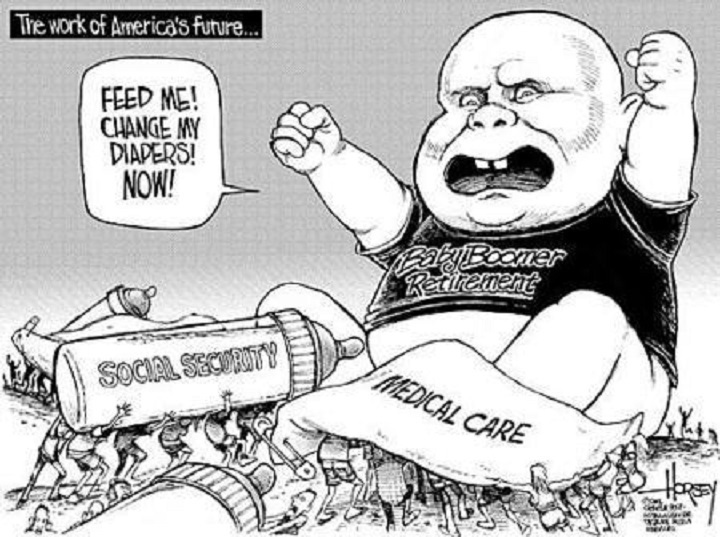
In the Lord of the Rings trilogy, King Theoden uses the phrase “The young perish, and the old linger,” to describe the accursed state of his kingdom of Rohan. The phrase strikes a chord, because most people can intuitively understand that society ought to exist to further the young, and that the old ought to gracefully let go of power when their time is up. As this essay will examine, New Zealand has become a place every bit as rotten as Tolkien’s fictional kingdom.

Provisional suicide statistics released this week by the New Zealand Chief Coroner are frightening in many ways. Not only do they reveal the highest suicide numbers on record (685 deaths in one year), but they also reveal a number of patterns once you drill down a level or two. The data is broken down by demographic factors, and these can be compared to previous years’ statistics.

Perhaps the most disturbing of these patterns is that the young are committing suicide at greater rates, while the old are committing it less.

The suicide rate for Kiwis aged between 20-24 was 26.87 deaths per 100,000 people last year. By way of comparison, the murder rate in Mexico was 24.80 deaths per 100,000 people in 2017. Some might be shocked to hear that, even with all the cartel violence and gang warfare in Mexico, our young adults are killing themselves at an even greater rate than Mexicans.

The suicide rate for Kiwis aged between 65-69 was 8.72 per 100,000 people – less than a third of the rate for people aged between 20-24. Old people in New Zealand don’t start to kill themselves in significantly higher numbers than this until they get to 90. The quarter century between the ages of 65 and 90 is now the prime of life for a New Zealander.

Compared to 2010, young people are killing themselves more often – the suicide rate among 20-24 year olds in 2010 was only 21.23 per 100,000. For all Kiwis aged between 15 and 29, the suicide rate was 18.88 in 2010 and 23.62 in 2018. All this means that young people are now killing themselves about 25% more often than they were in 2010.

However, old people are killing themselves less often. The suicide rate in 2010 for people in their golden years (between 65 and 84) was 9.20 per 100,000. By 2018, this had fallen to 8.36 per 100,000 – a decline of some 10%. The young perish, while the old linger.

These suicide statistics reveal a fact about our society that is rarely spoken of: New Zealand is an awesome place to be old, and is increasingly getting more awesome for old people as the economic balance tilts ever-further in their favour. However, it is a truly shit place to be young, and is increasingly getting more shit for young people.

New Zealand is an awesome place to be over 65 because there is a universal basic income for such people, of $370 a week. As Dan McGlashan showed in Understanding New Zealand, there is a correlation of 0.82 between being on the pension and living in a freehold house in New Zealand. This means that the vast majority of pensioners don’t have to worry about paying rent out of that $370 – most of it is disposable income.

If you already own a house, getting paid $370 a week just to hang out in it for a quarter century when you are aged between 65 and 90 is a sweet deal. Anyone owning their own house also has a permanent community, and therefore gets a strong sense of social inclusion. To get $370 a week, no questions asked, to enjoy that lifestyle is an incredible privilege.

There’s little wonder that the suicide rate is so low among people who have got it so good.

New Zealand is a shit place to be young, on the other hand, because they are the ones who have to work and pay for the luxurious retirements of the old. In order for our elderly to get $370 a week of free money for a quarter century, the young have to be taxed brutally. This makes it much harder for them to pay back their student loans, to own their own house or to raise a family.

Most pensioners in New Zealand are homeowners because it used to be possible to buy a house on the average wage in this country. Analysis shows, however, that the average wage would now have to be almost $80 an hour for young people to have the same chance of owning a house that their parents’ generation had. Young people nowadays face a level of financial desperation that their parents never came close to experiencing.

Studies have shown that financial pressures are the second most common contributing reason to suicide attempts, behind only depression. Stressful life events are powerful predictors of future suicide attempts. These stressful life events are much more common for the young, who face unprecedented levels of uncertainty over housing and employment. Unfortunately for them, high stress is all but inevitable as the Boomers demand to be catered for to the level at which they are accustomed.

In a normal, properly-functioning nation, the elderly will happily sacrifice themselves so that the younger generations can prosper. Knowing that the young are the next generation of themselves, the elderly are happy to lay the foundations for the prosperity of the young, even at their own discomfort. This has always been the case in healthy nations.

In New Zealand, the elderly throw the young to the wolves so that they can have more for themselves. Many of the suicides of young people could be prevented if we had a properly-funded mental health system. The old people who control the national purse strings, however, have directed almost every penny towards ensuring their own comfort, and have left the young to go without.

New Zealand spends $15,000,000,000 a year on pensions, much of that going out to people who don’t need it. Many people in their sixties and seventies run a business and get $370 of pension money a week on top of that. This colossal expenditure is evidence that our society is run to the benefit of the old, at the expense of the others.

Precise figures for mental health funding are impossible to find for New Zealand because of our district health board system. In Australia, though, some 5% of total health spending goes on mental health care specifically. We can assume a similar figure for New Zealand. Because we spend about $17,000,000,000 a year on healthcare, 5% of our total health budget works out to be about $850,000,000.

It’s not clear exactly what percentage of funding goes to those aged between 15 and 29, but assuming a figure roughly equal to that age bracket’s proportion of the population, we arrive at roughly $200,000,000 per year. Considering that New Zealand spends $400,000,000 per year on enforcing cannabis prohibition, $200,000,000 for the mental health care needs of an entire generation seems absurdly little.

And it is – it’s an absolute disgrace.

The solution to this state of injustice, and a partial solution to our increasing suicide rates among young people, is to lower the age of universal basic income from 65 to 18. This would allow relief from the insane financial stresses that are now levied on those young people.

Lowering the universal basic income age from 65 to 18 necessitates that today’s wealthy Boomers will have to share their pie with others, so we can expect that they will fight this suggestion tooth-and-nail to the bitter end. The overall outcome, however, would be a reduction in suffering, as the Boomers’ loss of luxury would be compensated for by the younger generations’ emancipation from poverty.

*

If you enjoyed reading this essay, you can get a compilation of the Best VJMP Essays and Articles of 2018 from Amazon for Kindle or Amazon for CreateSpace (for international readers), or TradeMe (for Kiwis). A compilation of the Best VJMP Essays and Articles of 2017 is also available.

The Government Should Legalise Cannabis For The Rugby World Cup

Kiwis are rejoicing at the news that our owners have permitted us extended hours to drink alcohol on licensed premises while Rugby World Cup games are on this Spring. It’s true that anything that facilitates New Zealanders coming together in a spirit of goodwill is a good thing, and VJM Publishing applauds this move for the sake of the nation’s mental health. The really great move, however, would be to legalise cannabis for the Rugby World Cup.

A famous half-truth about New Zealand culture is that rates of domestic violence spike every time the All Blacks lose. The full truth is that domestic violence rates spike when the All Blacks win, too, because every time the All Blacks play, men get together and drink alcohol. When they do this, a certain proportion of them will end up bashing their wives and girlfriends (or kids, parents, brothers/sisters etc.).

Alcohol is great fun, and the value it has in facilitating socialisation and enjoyment of life cannot be measured. It’s impossible to quantify the quality of life improvements that follow having a really excellent time partying with alcohol, or the warm memories that come from having a great time drinking with friends, or the value of the friendships made because alcohol broke the ice.

On balance, alcohol is a good thing – but the negatives of it are considerable nonetheless.

As mentioned in Chapter 12 of The Case For Cannabis Law Reform, alcohol is present in an estimated 30% of domestic violence incidents that the Police attend, and is believed to be responsible for 3.9% of all deaths in New Zealand. Including sicknesses caused by it and lost work days to hangovers or other alcohol-related conditions, the monetary cost of alcohol use runs into the billions.

Again, in no way is this to make the argument that alcohol is bad or should be further restricted. The problem is that there is no recreational alternative to it. You’re not allowed to go into town and watch the All Blacks at a cannabis cafe, and you’re not allowed to sit in a town square and watch a public big screen while smoking a joint. You’ll get arrested and put in a cage.

If you want to socialise with other people this Rugby World Cup, you get the same deal as at all other times. Drink alcohol or just fuck off back home.

Imagine a Rugby World Cup where Kiwis could come together without being pressured into consuming alcohol in order to socialise. This would finally mean that there was a recreational alternative for all those people who knew that they weren’t good on alcohol (arguably some 20% of the population).

It’s not a secret that the participants in most of those 30% of domestic violence incidents will be people who already know that sometimes they don’t behave well on alcohol. Imagine if these people were able to use a recreational substance that allowed them to be part of the festivities but which did not have the side effect of inducing them to get violent or aggressive. Many of them would take it – to everyone’s benefit.

Liberalising drinking hours for the duration of the Rugby World Cup might lead to more violence, sexual assaults and people killed in car wrecks, but it need not do so. If the purpose of liberalising such laws is to create a festival atmosphere for the duration of the tournament (and nothing can bring the country together like a Rugby World Cup), then it is possible for us to have our cake and eat it.

The way to achieve this is to legalise cannabis for the duration of the Rugby World Cup.

This would not mean a repeal of cannabis prohibition, at least not yet. What it would mean is a moratorium on arrests for public outdoors cannabis use for the duration of the tournament (or at least for as long as the All Blacks are still in it). We could pass a law that said, while the World Cup was in progress, Police would ignore public possession, use and personal trading of cannabis (although commercial enterprises would still be illegal).

This would mean that people could smoke cannabis in public as they can now smoke tobacco. They could meet in bonds of love, and share good cheer with a smile and a laugh, as alcohol users are permitted to do.

One can confidently predict the result of such a move, because one can observe how people behave in places where cannabis is already legal. Making cannabis legal for the duration of the Rugby World Cup would serve to create a relaxed, convivial, celebratory atmosphere for what is arguably the Kiwi nation’s most cherished quadrennial religious festival. It would create many good memories.

This will have several benefits over and above creating a festive atmosphere. It would also show New Zealanders that they don’t necessarily have to shit and piss their pants in fear at the thought of cannabis law reform. If cannabis users were given the opportunity to show that their behaviour was preferable to drunks they would probably take it. It would allow for a much better-informed cannabis referendum debate.

*

If you enjoyed reading this essay, you can get a compilation of the Best VJMP Essays and Articles of 2018 from Amazon for Kindle or Amazon for CreateSpace (for international readers), or TradeMe (for Kiwis). A compilation of the Best VJMP Essays and Articles of 2017 is also available.
The First Shall Be Last And The Last Shall Be First

The phrase “The first shall be last and the last shall be first” is mentioned in many different spiritual or religious contexts, perhaps most famously in the Bible. It refers to a Nietzschean revaluation of all values, where the existing social order is completely inverted. This essay takes a detailed look at the various ways that such an inversion can happen.

There are four realms of elemental alchemical energy: the realm of clay, the realm of iron, the realm of silver and the realm of gold.

When one transitions from one realm to another, it inevitably means that the previous social order is upset, often to the point of being completely reversed. Sometimes it means that the very actions that led to success (or failure) in the one realm lead to the exact opposite result in the new realm.

For instance, large men with big muscles dominate in the realm of iron, because they are better at fighting. But if their group should transition into the realm of clay, the base survival level, being big is a disadvantage. In a state of resource scarcity, the largest individuals have the greatest stress trying to obtain enough resources to meet their metabolic needs. The best fighters tend to be the worst scavengers.

When Jesus used this phrase, he was referring to the transition from the realm of silver to the realm of gold. The time that Jesus lived in was one when the advances of civilisation had led to a grossly materialistic culture. He was warning those who benefitted from that materialism that their positions at the top of the hierarchy weren’t as secure as they wanted to think.

There are other transitions: from iron to silver reflects the imposition of an age of peace, from silver to iron represents the collapse of a peaceful age into a one of war etc.

In all of these transitions, there is an element of the first shall be last and the last shall be first. The man of silver, whose gregarious and social nature makes him the dominant party during peacetime, usually becomes a weakling when society transitions into the realm of iron. Likewise, the man of iron, whose physical courage and unyielding nature makes him a war hero, becomes a criminal delinquent when society transitions into the realm of silver.

On Earth, it’s possible to accumulate vast wealth and power. Doing so for the sake of rising in social status is something that is common to all social animals, and in the realm of silver it will increase your position on the hierarchy. Upon the death of the physical body, however, the connection to all of that wealth is lost, and one’s soul stands before God once again.

Should it be God’s judgment that your wealth was accumulated at the cost of other people’s suffering, then your likely fate is to be reincarnated into a world where people behave like you did. Your next life, then, will be fraught with the suffering caused by greed. You will, of course, not complain, because before God you will understand that it’s perfectly fair for you to reincarnate in a world full of beings on the same frequency as yourself.

By this means, a man who could have been the very highest of all in one material world might become the very lowest of all in the next one.

This is not at all to imply that it’s immoral to be wealthy. It’s entirely possible that a person’s great wealth is the result of being showered in gratitude by the multitudes who that person has helped. There’s no reason to automatically assume that any given fortune was acquired by crime. It’s simply a fact that advantage in one realm does not correlate with advantage in the next one.

On the other side of the divide, there are many people today who possess vast spiritual knowledge but who sit at the bottom of the social hierarchy on account of that such knowledge is not valued. We may live in a degenerate age, perhaps even a Kali Yuga. This means that the sort of person who once concerned themselves with spiritual knowledge is now inevitably an outcast.

The knowledge that is valued today is that which causes one to grow in material power or wealth. Spiritual knowledge, and the desire for spiritual knowledge, are more or less considered mental illness. Those who currently rule the West are so utterly Godless that they have pathologised the very belief in God. We have fallen very far from the realm of gold.

Once upon a time the spiritual man would have been a shaman or a sage, and warrior-kings would come to speak to them about things that no-one else understood, and their advice would thereby lighten the suffering of many myriads. Great witches, likewise, would have been consulted on decisions that set the course of kingdoms and empires.

Today we look at the shaman or witch and, instead of seeing a person whose mind is set on the spiritual at the expense of the material (and therefore holy), we see one whose mind is set on delusions at the expense of the real (and therefore diseased). We see a psychotic to be treated with disdain rather than a visionary to be treated with regard.

However, the time may come when a revolutionary spirit is stoked and when the shackles of materialism are thrown off. It’s already apparent to many that the obsessive focus on GDP growth at the expense of all else is causing more misery that it’s alleviating. A transition to another realm could involve the introduction of a new Golden Age onto the Earth.

The world is rapidly approaching a revolutionary transition between realms in any case. The elite governments of our world are hopelessly corrupt, and awareness of this is spreading faster than ever (a process that some are describing as The Great Awakening). The pre-existing fractures in our society will not be able to survive the stresses that are coming.

Perhaps the first shall become last in the sense that the elites of one corrupt system are cast down when it is overthrown, and the last shall become first in the sense that the good people who were kept down by corruption will rise to their natural place in the hierarchy. The best thing is to work on raising one’s own frequency so that one can take the right measures when the time comes.

*

If you enjoyed reading this essay, you can get a compilation of the Best VJMP Essays and Articles of 2018 from Amazon for Kindle or Amazon for CreateSpace (for international readers), or TradeMe (for Kiwis). A compilation of the Best VJMP Essays and Articles of 2017 is also available.

The Advertising Standards Authority is Becoming the Ministry of Truth

In George Orwell’s 1984, one of the major departments of the Big Brother government is the Ministry of Truth. Ostensibly, the purpose of this division is to determine truth from falsehood, and to discourage the latter from being spoken or written. The reality, of course, is much more sinister. New Zealand is seeing the emergence of its own Ministry of Truth, in the form of the Advertising Standards Authority.

New Zealand doesn’t have a constitution, but we do have a Bill of Rights Act. Modelled on the American constitutional version, our Bill of Rights Act is meant to clearly delineate the areas in which the Government may not act to restrict our freedoms. Section 14 of this Act describes the right of every New Zealander to “freedom of expression, including the freedom to seek, receive, and impart information and opinions of any kind in any form.”

The right to freedom of expression includes the right to say things that aren’t true. I’m allowed to say that the world is flat. I’m allowed to say that cannabis has no medicinal value. I’m allowed to say that the Germans started World War Two. I’m allowed to say that a warlord who raped a nine-year old was the perfect man, that consciousness is extinguished when the physical body dies or that anyone who doesn’t worship Rabbi Yeshua ben Yosef is going to burn in eternal hellfire.

I’m even allowed to write an entirely fictional novel about a two Anzac machine cultists and a machine that can control minds by satellite (as I did here), and present it as if were true for the sake of taking the reader for a ride.

Not only am I allowed to express any number of false ideas, but I’m allowed to express them in any form.

The first sign that alerted New Zealanders to the monster that the Advertising Standards Authority was becoming was the actions it took over the One Treaty One Nation flyers, published by the 1law4all movement. In an incredible act of arrogance, the Advertising Standards Authority ruled that these flyers were not allowed to be distributed.

Incredibly, they ruled that speaking of the benefits of colonisation to the various Maori tribes “was likely to cause offence”, and was therefore verboten. Maori alt-media figure Tim Wikiriwhi wrote about how he did not find the flyer offensive, calling the Advertising Standards Authority’s move “yet another example of patent hypocrisy and pretentious arrogance against a legitimate political perspective that is calling for the abolition of treaty separatism.”

New Zealanders have the right to freedom of expression. Therefore, there is no Governmental agency that can arrogate to itself the right to decide when we’re not free to express ourselves. Unfortunately, evil individuals and groups have the free will to defy and deny these rights if we can’t stop them.

The Advertising Standards Authority shows no sign of wanting to end their power trip any time soon. Their latest effort involves forcing themselves into the political arena, by claiming the right to decide which political statements are permissible and which are not. Ominously, the Advertising Standards Authority has ruled that an advertisement made by the National Party “will be investigated for being potentially misleading.”

This move is in line with the wider agenda of the Sixth Labour Government to crack down on free speech by censoring everything that doesn’t suit their narrative. Megalomaniacal “Justice” Minister Andrew Little has already suggested as much. He weighed in on the issue to promote his pet project of criminalising hate speech by saying that the flyer “peddled myths” and calling its author an “ignorant fool”.

Given that it’s a fairly extreme move for a Government Minister to take to the mainstream media to insult and threaten a private citizen who is acting within his rights, many will be astonished to find out what the flyer actually claims. It’s actually a very tame document that merely asserts obvious and well-known truths, such as the fact that Maoris benefitted from colonisation.

The grim fact is that New Zealand is rapidly moving towards the point where we will only be allowed to express opinions that are on a pre-approved Government list. We are aided towards this miserable goal by entities such as the Advertising Standards Authority, who are acting exactly like 1984‘s Ministry of Truth.

The solution is to organise around the Sevenfold Conception of Inherent Human Rights. This would involve all true Kiwis agreeing that we have the God-given right to free expression, and that this right cannot be abrogated by arrogant shitheads in Parliament, no matter how narcissistic they are.

This would necessitate that all Kiwis agree to what is known as the Right of Silver, which is that all of us have the right to free expression, and that no Kiwi shall act to abrogate the right of any other Kiwi’s free expression. This means we agree that anyone acting to abrogate this right is an enemy of the New Zealand people on account of that they cause us suffering.

*

If you enjoyed reading this essay, you can get a compilation of the Best VJMP Essays and Articles of 2018 from Amazon for Kindle or Amazon for CreateSpace (for international readers), or TradeMe (for Kiwis). A compilation of the Best VJMP Essays and Articles of 2017 is also available.