Is It Time For New Zealand To Embrace Apartheid?

Most people consider apartheid to be one of the recent century’s many evils. Elderly Kiwis speak with pride of opposing the 1981 Springbok tour and helping to bring the regime in South Africa to its knees. Today, though, it’s apparent that race-based policies are making a comeback. This essay asks the inevitable question.

To Kiwis in Generation X, apartheid was placed along the Holocaust as an example of the worst of all possible crimes – racism. We were made to write essays in school denouncing it. The television and radio told us every day that ending it was one of the world’s most pressing issues. So when apartheid ended with the democratic elections in 1994, we all cheered.

In recent years, however, apartheid has surged back into fashion. The powers that be, for reasons nefarious, have encouraged a renaissance in racial consciousness. In 2020, most people’s identities are once again based primarily around their racial heritage. It’s once again common for people to think of themselves as their race first and as a Kiwi second.

In New Zealand, successive strategic Government decisions have rejected the idea that New Zealanders are one people under one law. They have enshrined separatist sentiments, promulgating the belief that the essential nature of relations between whites and Maoris is one of oppression, deceit and exploitation.

Part of the New New Zealand history is that white people have stolen some innumerable wealth from the Maoris, and that justice demands therefore that the Maoris get their own back on white people whenever they can. This blatantly racist narrative has inspired an anti-racist counter-reaction, as the nation has been set against itself.

Anti-racists were appalled by recent news that the Sixth Labour Government was allocating coronavirus support funding on the basis of race. GPs of Maoris and Pacific Islanders were given $4.50 per patient, but GPs of white people were only given $1.50 unless those patients had been previously marked out as belonging to the poorest quintile. This is a blatantly racist policy, and some were surprised it was even legal.

Given that the most recent Budget allocated $1,000,000,000 to Maori causes alone, some could be forgiven for thinking that the Sixth Labour Government had given up on the white working class completely, and had settled for being a brown party. If this is the case, then we’re arguably on our way to an apartheid system where political factions argue for racial interests first and foremost.

This news came in the context of the realisation that the Police had no intention of stopping certain Maori tribes from blockading public roads, particularly roads in Northland. Despite the fact that blockading a public road is a crime, the Police have not made any arrests, and have even said that they weren’t going to do anything about it.

So many people have supported these actions that it seems as if New Zealand is taking tentative steps towards a fully apartheid system, where different laws apply depending on one’s skin colour.

The question raised by this essay is: should New Zealand embrace this shift, and institute full apartheid? Should we organise our society to reflect a fundamental and unbreachable difference between Maoris and non-Maoris, such that the two different groups cross each others’ paths as little as possible?

The first step would be to entrench the Maori Roll. This would mean that all Maoris were forced to vote in the Maori electorates whether they wanted to or not. Their race being their defining quality, they would no longer be eligible for the General Roll. Correspondingly, Maori voters would not be permitted any influence over non-Maori affairs.

The second step would be to declare certain areas as tribal reservations. In principle, these already exist. The areas being blocked by roadblocks are, by virtue of that residents are allowed to block them, effectively the same as North American-style reservations. Eventually, Maoris would be transported from the cities into these tribal enclaves.

Future steps would entail the institution of separate drinking fountains, toilets and beaches. Sports leagues would also be segregated, with a special Maori league for rugby. Maori players would no longer be eligible for the All Blacks or Black Caps.

The reality, of course, is that apartheid between Maoris and whites in New Zealand is impossible on account of that they’re already too mixed together.

At least 25% of New Zealanders – including the author of this piece – are some kind of mixed-race Northern European/Polynesian. Those of us who are cannot reasonably be expected to pick a side in the great race war that so many seem to be agitating for.

If you’re a mixed race white-Maori, you are probably the result of a relationship in which a white person and a Maori loved each other. Your entire existence is an expression of co-operation and goodwill between these two peoples. Therefore, it’s impossible for a Kiwi of mixed blood to choose one side over the other, any more than they could choose their left hand over their right one.

The majority of New Zealand already has white ancestry. Sooner or later, the majority of the country will also have Maori ancestry – this is inevitable given that Maori ancestry is already carried by many Kiwis who are indistinguishable from fully white people, and that interbreeding rates between Maoris and whites are extremely high (the average Maori woman is more likely to breed with a non-Maori than with another Maori).

Seeing as there is no reproductive barrier between the two groups, it seems inevitable that mixed-race white-Kiwis will eventually comprise a majority of Kiwis. From that point, there’s no looking back.

If apartheid really is impossible, then it’s a mistake to take steps towards it. That means that all separatist measures have to be opposed, both intellectually and legally. No Treaty favouritism, no race-based funding, no Maori roadblocks, no official narrative of hatred, division and revenge. It’s time to replace our national narrative with Esoteric Aotearoanism.

*

If you enjoyed reading this essay, you can get a compilation of the Best VJMP Essays and Articles of 2019 from Amazon for Kindle or Amazon for CreateSpace (for international readers), or TradeMe (for Kiwis). A compilation of the Best VJMP Essays and Articles of 2018 and the Best VJMP Essays and Articles of 2017 are also available.

*

If you would like to support our work in other ways, please consider subscribing to our SubscribeStar fund. Even better, buy any one of our books!

Clown World Chronicles: What Is A ‘Simp’?

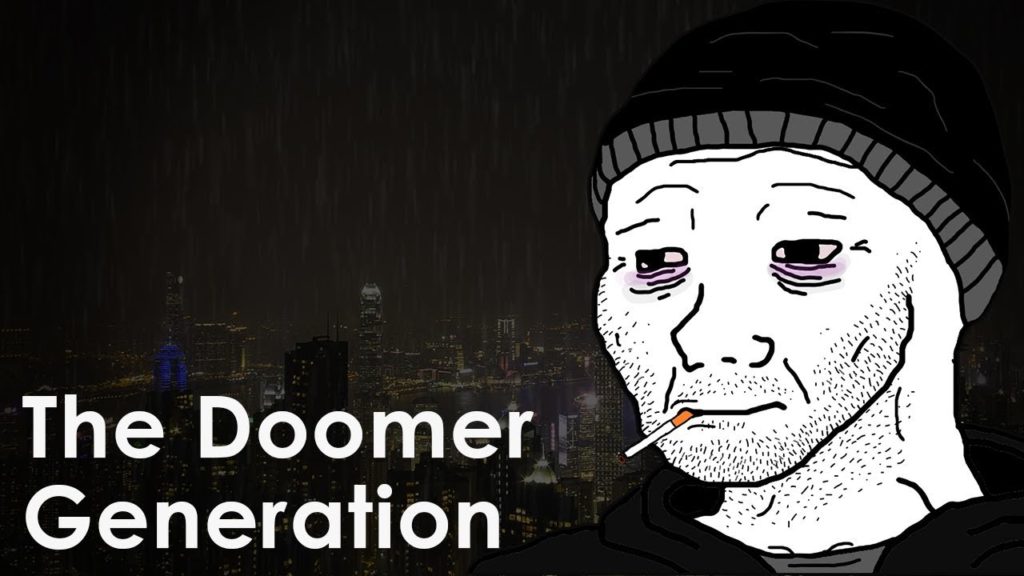
Many people are getting called ‘simps’ nowadays, thanks to a marked rise in simping all across the world. Simping is another phenomenon that increases the further a civilisation decays, so in today’s West it’s all around us. This article explains what simps are and what role they play in Clown World.

Life in Clown World can be characterised by a lack of rectitude. Confucius considered rectitude to be the fundamental characteristic of the masculine, that which attracted the devotion of the feminine. For society to function, men have to have rectitude, because it is this quality that imposes correct order upon society.

In Clown World, men are no longer capable of rectitude. Now, like women, they exhibit devotion instead.

In some cases, gender role reversals can be healthy. But when the masculine principle comes to show devotion to the feminine principle, chaos can be the only result. Confucius spoke about this over 2,500 years ago, having observed that the feminine, being an expression of Nature, cannot order itself.

The masculine, being an expression of Heaven, can order itself. Its doing so is the virtue known as rectitude. In a healthy society, the masculine is esteemed for doing this, in the same way that the feminine is esteemed for devotion in a healthy society.

In Clown World, everything masculine is torn down with venom. Rectitude itself is shunned and mocked, seen as highly unfashionable. As such, there is nothing to correctly be devoted to. In the absence of rectitude, people become devoted to crude material pleasures and base instincts instead, and in doing so they lose touch with the spiritual.

One of the characteristic aspects of the Kali Yuga prophecised in Hindu eschatology is spiritual darkness. Leaders no longer take measures to promote spirituality in their lands, being more concerned with money and power. This absence of correct spiritual order is why Clown World is so rotten in so many aspects.

A simp is specifically someone who actively enables someone else’s bullshit on account of that they lack the rectitude to resist. Enabling is, according to this Psychology Today article, “offering help that perpetuates rather than solves a problem.” An enabler is someone who contributes to another person’s dysfunction.

A common example is a person who enables another person’s drinking by shouting them drinks, or who helps another person score drugs. Just about any vice can be – and is – enabled by friends, including any imaginable form of neglect or abuse. When this enabling is done by a person who should know better, it’s simping.

The archetypal example of a simp is a horny incel who donates money to a roastie‘s OnlyFans account. Society doesn’t really need 15-year old girls selling nude pictures of themselves over the Internet to sex-crazed old men, but the prevalence of simping means that there’s a niche for it.

It’s possible to simp for women, for blacks, for Muslims, Jews or Christians, for drug users, for homosexuals, for rednecks, for children – in principle it’s possible to simp for anyone who behaves poorly and who should know better. Any obsequious behaviour that tolerates that which should not be tolerated falls into the simp category.

That so much shitty behaviour is normalised in Clown World is because of all the simps out there. In a world with the usual amount of rectitude, shitty behaviour gets dealt to in short order. As rectitude declines, this behaviour starts going unpunished. By the time society has turned into Clown World, simping is widespread.

Simping is one of the main drivers of the Weimarisation of the West. As such, it is indirectly one of the main reasons for the rise of authoritarianism – too many simps lead to the dissolution of the social order, and when society falls into chaos people start searching for a man of iron to impose that order.

‘Simp’ is a noun, but it’s common to see it used as a verb. ‘To simp’ for someone is to enable their pathological behaviour. It’s often used in the present continuous tense, in forms such as “X is simping for Y”. It’s usually apparent from the wider context that ‘simp’ is a derogatory term.

It’s unclear whether the contemporary use of the word ‘simp’ derives from its original use in the 2000 A.D. comic strip. The simps in the 2000 A.D. series were passive, dysfunctional degenerates who lived in a cyberpunk dystopia, much link the simps today. The relation may be coincidental.

The difference between a soyboy and a simp is that the former are just weak, whereas the latter have enough strength to actively make the world worse. A soyboy can perhaps be forgiven for his weakness, but the simp is morally defective. Subsequently, his weakness has a much more corrosive effect.

*

This article is an excerpt from Clown World Chronicles, a book about the insanity of life in the post-Industrial West. This is being compiled by Vince McLeod for an expected release in the middle of 2020.

*

If you enjoyed reading this essay, you can get a compilation of the Best VJMP Essays and Articles of 2019 from Amazon for Kindle or Amazon for CreateSpace (for international readers), or TradeMe (for Kiwis). A compilation of the Best VJMP Essays and Articles of 2018 and the Best VJMP Essays and Articles of 2017 are also available.

*

If you would like to support our work in other ways, please consider subscribing to our SubscribeStar fund. Even better, buy any one of our books!

Why Stuff Is Worth Less Than VJM Publishing

Many New Zealanders were surprised last week by reports that the Stuff news portal at www.stuff.co.nz was worth less than one dollar. How could it be possible that our foremost media portal, which employs hundreds of people, has a lower net value than a ramshackle outfit like VJM Publishing? This essay explains.

Stuff has a world Alexa rank in the top 4,000, and was ranked 7th in New Zealand at time of writing. They get hundreds of times more traffic than VJM Publishing does. They have been legitimised in most people’s minds as the “mainstream media” and, despite being shit, are considered to be “proper” journalism.

So how can they make less money? The simple answer comes down to who owns Stuff and what they have bought ownership for.

The VJM Publishing strategy is not to churn out vast numbers of shitty articles, with clickbait headlines, about vapid celebrities, in the hope of tricking some pleb into clicking on some more clickbait in the form of an advertisement.

No wonder advertising revenue is plummeting, if that is the business model.

VJM Publishing doesn’t make money from spamming Google ads through every page or by having banks of them at the bottom of every article like Stuff does. In fact, we don’t make any money from advertising revenue – we make it from selling books. Every page on this website has a set of links to our book sale pages on Amazon and TradeMe.

Making a living selling books is tough, but it’s possible. The trick is to produce material of a high enough quality that it promotes and advertises itself. This is the secret to ranking well in the Google algorithm, because that algorithm can estimate a page’s quality by measuring the responses of its readers. If the readers tend to click away quickly, it’s probably a low-quality page, and vice-versa.

This is a different business plan to that of Stuff, but we are in fact a publishing company, not an advertising seller (or reseller). As such, we compete on quality and not on volume.

This company operates under the logic that if we can provide quality articles about esoteric subjects and alternative psychology, as well as intelligent political commentary from an alt-centrist perspective, that this will give us an edge. As long as this edge leads people to become aware of our books, some people will buy them, and we make profits.

All of this sounds so obvious, that the question has to be asked: why doesn’t Stuff do similar?

The first thing is to look at who owns the New Zealand media: essentially it’s owned by international banking and finance interests. This was demonstrated by us here at VJM Publishing, in an example of the kind of journalism that the mainstream media will never give you.

These international banking and finance interests don’t care if they lose money from Stuff. They gain something of far, far greater value: control of the narrative. Thanks to having control of the narrative, they can normalise all kinds of things that are in their benefit. In principle, every article on Stuff has been calculated to suit the agenda of its owners.

By directing Stuff to constantly cry and scream about racism, those owners achieve several objectives.

The international banking and finance interests make enormous profits from mass immigration. Not only does every new immigrant push the price of housing up and generate one new mortgage account, but their cheaper labour also pushes the cost of running a business down. On top of all that, their presence destroys the solidarity of the host nation, making it easier to rule over. Win-win-win.

The major opponents to the mass importation of cheap labour are the native working class. They lose the most heavily as they don’t tend to own houses, and they tend to sell rather than hire labour. As such, the mainstream media makes a great effort to paint these people as ignorant bigots who oppose mass immigration out of nothing but pure hatred.

It has to be understood that the mainstream media stokes up hysteria about racism for money. Not only does it generate clicks and traffic, but it also normalises the idea that mass immigration is normal and that anyone objecting to it is evil. Multiculturalism destroys the ability of the host nation to resist the predations of the international banking and finance classes – and the latter know this intuitively.

By directing Stuff to fill space with crap about Meghan Markle, they also achieve several objectives.

Foremost of these are wasting people’s time and conscious awareness on shit. If the mainstream media informed people about issues that directly impacted their well-being, it would agitate them. This might lead to chaos, which is bad for business. Much better to have a passive population who can be milked for profits without protest.

The best thing for business is for the populace to be induced into maximum docility. Perfection would be a herd of consumers that only get excited when the next product is released. So the mainstream media is directed to fill their pages with fluff pieces about irrelevant people. Meghan Markle, who has no connection to New Zealand at all, is the ideal subject.

All of these objectives serve one greater meta-objective: to gain control over our minds. Whoever controls the mainstream media – otherwise known as the apparatus of propaganda – controls the minds of the people. They control what the people hear, what the people think, what the people consider normal. Effectively they control how the people react to every stimulus that is put before them.

It’s an enormous power, perhaps the archetypal modern expression of what Elementalists call silver magic.

In summary: the international banking and finance interests who own the mainstream media are happy to lose money from it as long as they gain control of the narrative, because this confers a great deal of power. The elites run Stuff as a loss-leader to capture the attention of the masses in the same way that supermarkets run chocolate specials as loss-leaders. The losses from it are written off against greater profits elsewhere.

VJM Publishing, by contrast, is run as an actual business, whose mission is to provide quality information, forecasting and analysis in exchange for money. As such, we have to maintain a net worth above zero.

*

If you enjoyed reading this essay, you can get a compilation of the Best VJMP Essays and Articles of 2019 from Amazon for Kindle or Amazon for CreateSpace (for international readers), or TradeMe (for Kiwis). A compilation of the Best VJMP Essays and Articles of 2018 and the Best VJMP Essays and Articles of 2017 are also available.

*

If you would like to support our work in other ways, please consider subscribing to our SubscribeStar fund. Even better, buy any one of our books!

Clown World Chronicles: What Is A ‘Gutmensch’?

For Clown World to be possible, the people building it have to have popular support. It has plenty of support, of course, among the ruling elites and the great capital interests that profit from the alienation, despair and fragmentation of the people. But how does it get support from the common person, who doesn’t benefit from Clown World? This essay explains.

‘Gutmensch’ is a German term that literally means ‘good human’. It’s a pejorative term that means something akin to “do-gooder” or “goody two-shoes”.

The gutmensch is someone who tries very hard to be seen to be doing the right thing, but who lacks the intellect to actually discern what the right thing is. They are not intelligent enough for philosophy, and they are not intelligent enough to understand the material world and to extrapolate from that, and they do not have a natural moral sense. So they have to take cues from the social world.

The process of determining right from wrong by way of observing the social world is an error-strewn one that takes decades to become any good – and is inaccurate at the best of times. As such, the gutmensch learns right from wrong from learning what the authorities say it is. Their parents, the government, their church, the boss, doesn’t matter – the authorities are always right.

The great weakness of this approach, of course, is that the social world can easily be manipulated by malicious actors. Most people older than children understand that there are many malicious people out there, and that it’s common for these malicious people to seek power in institutions that give them authority over others.

By the time intelligent people are 15 years old, they have figured out that hierarchies of power attract evil people and therefore it’s unwise to ever trust police officers, politicians, psychiatrists or priests. These intelligent people naturally distrust anyone who appears motivated to exult themselves or to assert control over other people.

The gutmensch never figures this out. He will go on blindly parroting what these authority figures say as if it were the word of God. For him, social dominance hierarchies can only be climbed by competence, and people can only become authorities if they were better than others. This child-like naivety makes it possible for all kinds of malicious actors to get support from gutmenschen.

These malicious actors prey on the sheep-like nature of the gutmensch to induce him to support policies which are in the interests of those malicious actors, but not in the interests of the gutmensch. Mass immigration is the foremost example. As such, the gutmensch can be herded to his doom, like a deer driven over a cliff.

The big problem with that is that the gutmenschen take the rest of us down with them. Their overwhelming mass support for the status quo and for the established rulers of society means that, in order to effect positive change, one has to fight against society itself. The gutmensch serves as a mindless drone guarding the elites, something that has to be overcome if Clown World is to be overcome.

Another way that the gutmensch weakens society is from his fear of taboos. There are so many things that the gutmensch forbids themselves from speaking about that, sometimes, talking to them feels like talking to a religious fundamentalist. Topics of race, religion, sex and gender differences cannot be discussed, and if they can be, only the most blue-pilled, Government-approved opinions can be offered.

All these taboos have the final effect of destroying conversation and making communication more difficult. In the final analysis, the gutmensch is, despite his intentions, a destroyer.

Although the gutmensch thinks himself an upstanding citizen who wouldn’t harm anyone, he was on the front lines of the Nazi and Communist battles against their own people, comprising a large proportion of those who ratted out their neighbours. The gutmensch is capable of committing any atrocity while thinking that, because the Government approved of them, they were doing a good thing.

Fundamental to gutmensch psychology is a terror of being judged, especially of being found unworthy. This is because the gutmensch has no real self esteem, and must find it elsewhere. Because his social equals are also pathetic, the gutmensch must seek approval from authority figures. This is why he is so eager to please them.

Underneath it all, gutmenschen are massively egotistical losers, so incredibly precious that they’ll happily go along with any mob, no matter how destructive, rather than risk disapproval. In their hearts, they know they are pathetic, which is why they resent those who are not. Fundamentally, then, gutmensch mentality is a slave morality.

In most cases, gutmenschen turn out the way they do because they have lived extremely sheltered lives. The typical gutmensch will never have travelled outside of their comfort zone, much less backpacked through the third world or lived in countries where they speak another language. They have never been challenged, and as such remain men of clay.

These gutmenschen evoke plenty of hate on account of that their self-righteous moralising makes people want to punch them. These sentiments are well warranted, because it is the gutmensch who normalises every government abuse, from those of the Nazis and Communists to the War and Drugs and alcohol prohibition.

The difference between a gutmensch and a baizuo is subtle, and mostly a matter of age and education. Perhaps the best way to explain the difference is by analogy to the animal kingdom. The baizuo is like a peacock: it preens, it appears vain, and its elaborate virtue signalling does more harm than good. The gutmensch, by contrast, is a simple herd animal. It doesn’t care about anything other than fitting in.

*

This article is an excerpt from Clown World Chronicles, a book about the insanity of life in the post-Industrial West. This is being compiled by Vince McLeod for an expected release in the middle of 2020.

*

If you enjoyed reading this essay, you can get a compilation of the Best VJMP Essays and Articles of 2019 from Amazon for Kindle or Amazon for CreateSpace (for international readers), or TradeMe (for Kiwis). A compilation of the Best VJMP Essays and Articles of 2018 and the Best VJMP Essays and Articles of 2017 are also available.

*

If you would like to support our work in other ways, please consider subscribing to our SubscribeStar fund. Even better, buy any one of our books!