
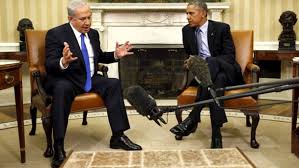
The Palestinian Paradox

The more a person knows about certain political issues, the less likely they are to present information about those issues in an honest manner

When listening to people talk about the Israel-Palestine Conflict, it’s possible to observe the following pattern. The more knowledge a person has about the conflict, they less likely they are to present that knowledge objectively to a listener. This presents us with a curious paradox that makes it necessary to unlearn some of our educational conditioning.

In the educational system, it’s rare that a student considers the possibility that their teacher is lying to them. In the vast majority of cases they don’t need to do so, and paranoia about the teacher is not optimal from the perspective of learning efficiency, because the most efficient learning method is to accept everything unquestioningly.

The political world, however, is infinitely more cutthroat than any educational system could ever be, and one result of this is people constantly lying. The average politician will lie about absolutely anything if they perceive that it is somehow to their advantage to do so. Truth is not a goal in the way it is for an academic. To the average politician, honesty is a slave morality, fit only for simple-minded suckers.

In the political world, people don’t become experts, because that implies an honest effort to communicate truth. Politicians merely become effective manipulators of truth-like statements. Information is not learned because it has truth value; information is learned because data can be used to manipulate listeners into obeying one’s directives and working for one’s agendas.

The Palestianian Paradox arises in the case of the Israel-Palestine conflict, where there are rarely neutral observers for the reason that almost everyone hates at least one of either Jews or Arabs. The result of this is that people are usually only interested in learning about the history of the conflict in the first place if they have already committed to one side or the other.

Many people hate Jews and this leads to them learning about the conflict from a perspective that emphasises Palestinian rhetoric; many people hate Muslims and this leads to them learning about the conflict from a perspective that emphasises Israeli rhetoric. Indeed, the very choice of descriptor for the disputed area in question gives away a bias (I have chosen “Palestinian Paradox” for the sake of alliteration).

The paradox, then, is the more a person knows about the Israel-Palestine conflict the less likely they are to be motivated to tell the truth about it, because only a person with an established bias would be motivated to learn about the conflict in the first place.

If a person knows a lot about the history of the conflict and the major names involved, they are more likely to selectively omit some of this information when telling you about the conflict for the sake of supporting the objectives of their side. Finding a truly neutral observer is extremely difficult, which makes learning about the conflict difficult, because the more someone is an expert the more likely they are to be biased.

This is also true of many (if not most) other conflicts throughout the history of the world.

In terms of elementalism, the distinction described here corresponds to the distinction between the realm of gold and the realm of silver. In the realm of gold, truth is appreciated for its own value and is recognised as valuable in its own right. In the realm of silver, it is the appearance of truth that matters. The actual truth is hidden away behind the glare of the appearance of truth.

This reflects the distinction between the gold of honest truth-seeking for its own ideal reasons and the silver of educating oneself so that one might use one’s knowledge as a weapon to further material objectives.

*

If you enjoyed reading this essay, you can get a compilation of the Best VJMP Essays and Articles of 2017 from Amazon for Kindle or Amazon for CreateSpace (for international readers), or TradeMe (for Kiwis).

The Yin-Yang of History

Traditionally speaking, when men like this start appearing among your youth, it’s the beginning of the end

The postwar period was a good one for the West. The major Anglo powers had seen all the challengers and potential challengers to their world hegemony bombed flat – partially by them, mostly by each other. With Nazism and Communism both falling to their knees, the liberal democratic order ushered in some good times for the people of the world. Peace and prosperity reigned… but the yin-yang of history tells us that nothing lasts.

The 1990s might be seen, from the vantagepoint of history, as the apogee of these good times. The Soviet Union had fallen, and China and India were yet to rise. Those of us who knew the course of history, however, knew this: good times create weak men. Weak mean create hard times. Hard times create strong men. Strong men create good times.

This is the yin-yang of history.

Good times are the equivalent of summer. Here, people don’t have to think very hard about how to survive and thrive. In the same way that it’s warm and sunny in summertime and so people don’t have to think very hard about what clothing to put on before they go outside, political conditions are favourable in the sense that the ruling class doesn’t have to think very hard about security without and solidarity within.

In the summertime of history, wealth abounds from the increased energy in the atmosphere. To most, these good times seem like they’re going to last forever. The more perceptive of people, however, even if they don’t know about the yin-yang of history, can often see the signs of collapse coming in advance.

The problem with good times, as Plato observed in The Republic, is that they create weak men. When times are good, the tendency is to let minor infractions slide, and although this can lead to an atmosphere of joy it also leads to indiscipline. This indiscipline is why the weak men are weak, and it’s this indiscipline that leads to the hard times.

It might be argued that this is the stage that the West finds itself in 2018 A.D. Our Baby Boomer leaders, who were raised with all the laxness of a generation that had got its fill of violence in World War II and had decided to bring up the Boomers with as little harshness as possible, clearly do not possess the mental discipline to educate themselves properly about the matters of the world.

In our age, it’s entirely possible to find a Western minister or higher who doesn’t know the basics about history or science. There is ample opportunity to learn about such things, of course, but our leaders would rather drink alcohol and watch television. Some, like the Belgian Minister of Health, have lost control of their weight entirely.

These weak men cast a shadow on their nations: the same as the shadows of autumn, who they represent. Their enemies observe this absence of intellectual power, and they move to take advantage.

Because the leaders have no discipline to educate themselves properly, they don’t understand what’s really happening in the world. This results in decisions getting made on the basis of how things used to be a long time ago (but no longer are), or how things might be in some idealised future world (instead of how they now are).

These poor decisions lead naturally to hard times. This stage in the cycle of history corresponds to the wintertime. Leaders lead the people in the wrong direction, causing them to dissipate their energies on follies or to spill them on battlefields for no reward. Here there is poverty – in fact, there is never enough of anything, and people learn to live with want.

Hard times can lead to bitterness, but in the same way that the bitterest cold of winter leads to a hardening in the form of ice, so too do the bitterest lows of life lead to a hardening of the heart. These hard men do not, at first, bode well for the people who they live among. To the contrary – the pitiless, ruthless nature of hard men make them natural criminals and killers.

But the hardness of hard men leads to discipline in those who come after them. This discipline – true iron discipline – is a matter of Will and therefore it is ultimately generated from within. These disciplined men are the opposite of the men we have in 2018 A.D. These disciplined men impose order upon their minds by devoting themselves to the correct course of study and behaviour.

Disciplined people who study hard represent the springtime of a people. It is for these people that VJM Publishing exists. These are the people who will rise up and make good decisions. They will come to occupy positions of leadership not because their backers paid for the best advertising, but because they are asked by their peers to occupy these positions on the basis of demonstrated wisdom.

Because of this wisdom, these leaders are not afraid to shy away from the knowledge necessary to make the correct decisions. This leads to increasing wealth and prosperity. So when the men of gold are recognised as such and are placed into positions of leadership on account of this, then the people will enter another golden age, or another age of summer.

*

If you enjoyed reading this essay, you can get a compilation of the Best VJMP Essays and Articles of 2017 from Amazon for Kindle or Amazon for CreateSpace (for international readers), or TradeMe (for Kiwis).
The Left Are the New Christians – For Better or Worse

The essence of Jesus Christ, as he appears to the modern Left, can be summed up in the word ‘nice’

In the West, most of us associate Christianity with the political right. It’s the right – especially in America – that makes the most overt appeals to the Bible and to Jesus. But if one looks past these appeals to the Christian religion, it seems that the political left is more interested in virtue signalling in general. Have they become the new Christians?

People profess Christian beliefs in order to virtue signal. The idea is that Jesus Christ was the perfect man and without blame, and therefore the more Christ-like a person appears to be the more perfect they are.

The problem with this mentality is that a people’s perception of what Jesus was like – and therefore, their conception of what entails moral perfection – is an artifact of the time and place they live in. Even worse, the popular perception of what Jesus was like is usually fabricated wholesale to suit the needs of the ruling classes.

It has now become fashionable to associate Jesus with socialism. Pope Francis, when not covering up for the numerous child abusers within his institution, makes a concerted effort to link his church with progressive attitudes to refugees, homosexuals and climate change. These are all trendy, left-wing issues that promote globalist solutions – which is what Francis really wants.

The idea is to recast Jesus as the “Lord of Nice,” and since it would be really nice to open your borders to anyone who wanted to wander in and claim welfare for the next 50 years, it’s presumed to be the sort of thing Jesus would have done. Jesus wouldn’t let refugees into his actual home, of course, or even his neighbourhood, because of the imperative to keep house prices up, and he definitely wouldn’t have opened the doors of his church to them, but he surely would have at least dumped them in poor neighbourhoods and offered to pay some tax to go towards their upkeep.

When Jesus was cast as the Lord of morally upstanding and wholesome, then it was the right wing that virtue signalled about how much they were like this. Now, the Baby Boomers that comprise the right don’t care about anything other than money, and Generation X don’t even care about that, so it’s left to the Millennials to virtue signal about how much they are like Christ.

In much the same way that the Biblical Christ taught people to give up concerns for pleasure in this material life, so does 21st-Century Jesus teach that we give up concern for maintaining basic law and order in our societies and protecting our women from rape and our vulnerable youth from physical abuse.

These are mere physical, material concerns, and will naturally dissipate. So it doesn’t matter if Muslims and Africans flood into the country in their millions and rape and destroy everything in sight – the fools simply don’t understand that the real pleasures are in the afterlife!

Of course, this is the reason why the Romans threw Christians to the lions in the Colosseum – the presence of any Abrahamic cult will inevitably cause the society that hosts it to rot from within unless action is taken. The left do not realise that they are controlled by whoever controls their perception of what Jesus Christ was like – and these people tend to be the major moneyed interests who control the mass media.

In other words, their sworn enemies.

The purity spiral of the neo-Christian Left has led to them breathlessly supporting the importation of rapists and religious fanatics into the West, in the hope that this masochistic niceness will be seen and appreciated as Christ-like and rewarded. In this sense, they are much like the original Christians who were too concerned with moral posturing to do anything about the hordes of Germanic invaders that ended up destroying the Roman Empire.

*

If you enjoyed reading this essay, you can get a compilation of the Best VJMP Essays and Articles of 2017 from Amazon for Kindle or Amazon for CreateSpace (for international readers), or TradeMe (for Kiwis).

The Four Kinds of Warfare

When a person hears the word ‘warfare’, it usually conjures up images of fire and explosions, bombs, tanks, blood, death, bayonets and bullets. This is what most people mean by ‘warfare’. As this essay will examine, there are four different elementalist perspectives that we can take towards the subject of war, depending on the realm of reality that we are in.

The element of iron corresponds to the kind of warfare that we are used to. In the natural world, iron represents the strength that came to dominate over the clay. It is the strength of muscle, claws and fangs, and later bone clubs and spears, and then swords, axes and knives and then firearms.

When we talk about warfare we’re usually talking about warfare on this level. Here the goal of the warfare is to reduce one’s opponent to chaos by destroying the coherence of (and therefore the order in) their physical body. The element of iron is especially useful here because it can be hammered into a tool that can pierce or slice through an opponent’s body of clay.

Much of modern warfare in this sense is really a logistical challenge that seeks to optimise how quickly iron can be moved from one part of the battlefield to another. Hence, bullets move as fast as possible and tanks move as fast as cars despite weighing several tons. The apogee of this process might be the aircraft carrier, many of which can carry dozens of strike fighter jets plus other armaments.

The element of silver corresponds to economic warfare. This means that it is a warfare of primarily unseen things: debt and interest rates being the foremost of them. In the same way that a man with an iron instrument can reap a field of wheat, a man with a silver instrument (such as a bank charter) can reap a field of men.

The nature of this economic warfare is silvery like the gossamer of a spider’s web. Its power does not come from crushing and slicing, like the iron, but from dazzling and entangling. It has been used ever since Babylon and bases itself on things that people with ordinary intellects have trouble understanding, like fractional reserve banking.

So people with low levels of financial literacy find themselves bedazzled by the promise of, for example, an instant loan no-questions-asked-right-now, and this leads to them becoming entangled in scams like payday loans that they take out to blow on something like a holiday, and then getting bled for a small amount every week forever to service the interest.

The element of clay corresponds to demographic and biological warfare. This does not mean biological in the sense of nerve agents and genetically engineered viruses, but in the sense that the most powerful weapons of any group of people over the long term are the wombs of their women.

Most refuse to acknowledge it, but Europe is in the process of being conquered by an r-selected, equatorial enemy that primarily wages war by reproducing at a high rate and ensuring that the children produced are brainwashed into willingly serving as soldiers for the furtherance of the meme complex. This is warfare of clay because it’s the same way that plants and insects outcompete each other: by spitting out as many offspring as possible.

It has been said that “demography is destiny”, and this is clearly true if one looks back over history and notes how high birth rates inevitably lead to the surviving offspring seeking out new territories (and usually killing the existing occupants of them). The British Empire was also founded on high birth rates and it has been the same for every previous empire in history.

The element of gold corresponds to spiritual warfare. This is the hardest perspective to understand, and it is the perspective that is the most valuable.

The reason why it is the most valuable is the battlefield in question here is the human will, absent which, no force can triumph in any of the other three areas of warfare, no matter how vigorous, strong or smart.

It isn’t a simple matter to describe how warfare is conducted on this level, but it’s enough to say that the spiritual birthright of every human being is to understand that their core essence is pure consciousness, and that this consciousness is immortal, invulnerable and eternal and is the same as God.

*

If you enjoyed reading this essay, you can get a compilation of the Best VJMP Essays and Articles of 2017 from Amazon for Kindle or Amazon for CreateSpace (for international readers), or TradeMe (for Kiwis).