

"The mind is like a cellar,” Zomblique's philosopher Mr. Boggs opined in a hollow voice which seemed to ring out from inside a tin can.

"The mind is like a cellar," he repeated with self-assured gusto after a long pause.

Zomblique's right hand shuddered as it hovered above the blank paper pad, the great plume of the quill wavering like a strutting peacock.

"The mind is like a cellar," Zomblique repeated deflatedly and set his pen back in the inkpot, drumming his fingers on the desk in frustration. "Boggs by name, Boggs by nature," he muttered through his teeth.

The mechanical philosopher was not working out. He could never afford another, for there would never be sufficient coin. Not so long as the only thing the wretched clockwork theorist was spouting was precisely such nonsense as this.

Truism after truism, empty beatitude after beatitude, triteness, passing conjecture, idle wonder.

Sellard's Philosopher, a dedicated aphorist belonging to his neighbour, had run like a top since it had first come into his possession. Dourf owned a verifiable man of letters, a clockwork vintage of one hundred and fifty years in age, still putting forward no less than three sweeping theories per week, publications in major journals at least once per month. His wife and children did not go hungry. Creech had a model that was a patent Fool, not even a Philosopher and it still managed to successfully produce biting satire of a somewhat dark although entertaining tone.

Zomblique bit into the lace sleeve that covered his hand and attempted to stifle the misery that clutched at his throat. A lone tear escaped. The swine rustled impatiently in the sty, the baby cried plaintively.

Fitting on his leather gloves to avoid the philosopher's sharp edges, Zomblique set his chest of pauper's tools next to the chair in which the automaton was seated.

Tuning the fickle machines was more art than science, or so he had been told, and each model was unique. No more than one was ever produced by any one craftsman. Which combination hadn't he tried? Dourf had suggested alternately tightening and loosening the brace that held the mandible in place, to no avail. His grandfather who had been the original owner of the philosopher suggested setting the misericord beneath its left shoulder deep enough so that it was pressing upon, but not puncturing, the diaphragm corresponding to the human heart.

It made no difference. He had measured the cranium and expanded and contracted the skull with drift punch and tongs – nothing. Although walking models were said to fare better, the sitting and reclining models also had their strong suits. Zomblique's philosopher had not responded favorably to any variation in positioning. He had tried setting him as if gazing aloofly out of a window, as though aspiring to grasp the heavens. He had tried posing the thumb and forefinger to thoughtfully cradle the chin.

"Hungry dogs will eat dirty pudding," Mr. Boggs mumbled.

Dourf climbed down the ladder, followed by his lanky companion, the artifice known as Vesselius. Brass bones encased in handsomely-grained walnut, studded with small levers and dials, emblazoned with esoteric glyphs and almost perfectly silent but for the quiet whirring of gears. A darkly shining monocle regarded the limp philosopher with what appeared to be sympathy.

"Vesselius, something inspiring please," Dourf requested in his unusually soft tone.

The mechanical thinker stood in silence for some moments before adopting a theatrical stance and looking to the skies as though there were no ceiling, he spoke:

"It is only the deepest motivation which inspires each and every human action, and it is the vain fear of vulgarity which lies the deepest and closest to man's heart."

Zomblique slapped his face with both palms and began to weep.

There was a long silence. The animatron maintained its pose as gears whirred, quietly contriving another profound aphorism.

"A little cynical," Dourf offered by way of consolation.

"I would cut off my thumbs for cynicism," moaned Zomblique. “Please leave us be."

Dourf and his machine crept back up the ladder to the sunlight above, a realm where Zomblique would perhaps occasionally visit, but never dwell.

To his surprise, Mr. Boggs suddenly stood up. Zomblique's jaw nearly dropped. With clacking wooden feet he made his way to the ladder and followed after Dourf and Vesselius.

"Yes, that's right you wretch. Go with them, you're of no use to me."

Mr. Boggs awkwardly clambered up the ladder. Before his head went through the trapdoor he turned to Zomblique with his typical empty expression and issued his parting words.

"The mind is like a cellar."

The mechanism left, never to return.

Through the swinging doors, the sullen Zomblique returned to the stink of the underground sty, and the croaking and barking of angry swine.

All that remained was the empty cellar, a fine chair and writing desk. Finally without either the consternations of Zomblique nor the dubious adages of Mr. Boggs there was a beautiful silence - a silence that belonged there.

*

Simon P Murphy is a Nelson occult philosopher and the author of His Master's Wretched Organ.
Category: philosophy
It’s Okay To Be Whatever You Naturally Are

Some controversy has been generated this week from the fact that VJM Publishing sells ‘It’s Okay To Be White’ t-shirts on TradeMe (edit: or did, looks like the listing has now been taken down). Our doing so angered the Human Rights Commission, who argued that it spreads “a message of intolerance, racism and division”. This response argues that, not only are our actions the opposite of intolerance, hatred and division, but it is the Human Rights Commission itself that is guilty of this.
There’s a lot of discussion about what’s okay and what isn’t okay. This is the school of philosophy known as ethics, and it has been around for many thousands of years.
This is VJM Publishing’s take on it.
It’s okay to be white, brown, black, yellow or even red or purple. It’s okay to be tall or short, blue-eyed or brown, slim or solid, because these things are all natural and you can’t help them. It’s even okay to be ugly or dumb because, again, these things are natural and you can’t help them.
It’s okay to be an outgoing, choleric, even aggressive person, but it’s not okay to cause suffering to other sentient beings. Causing suffering is bad.
It’s also not okay to be is a member of an ideology that promotes hatred and division, because this leads directly to the suffering of sentient beings. The foremost way to promote hatred and division is to say that it’s not okay to be something that you naturally are. Such as your ethnicity.
This is the reason for the comment that these shirts are the opposite of racism. They literally are. Racism is to say that there’s something inherently wrong with being white, as if a person being born white is to be born carrying some debts that their ancestors racked up.
The racists in this situation are the Europhobes who say “there’s no place for this kind of message”, when the message is that it’s not a bad thing to be a white person. If there is such a thing as hate speech, it’s anyone saying that it’s not okay to be something that someone naturally is, such as their skin colour.
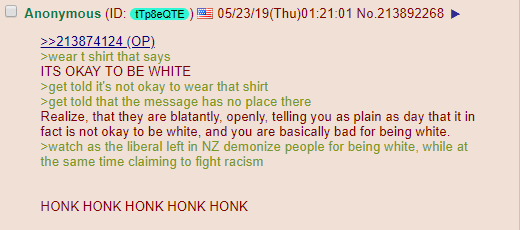
Of course, this means that things that people have chosen to be don’t count. It is not, and can never be, an act of hatred to criticise someone for belonging to a supremacist ideology, especially one that believes it’s destined to rule the world whether non-followers like it or not. Such ideologies inevitably bring suffering into the world.
VJM Publishing is not interested in ideologies that promote hatred and division. We oppose Nazism, Communism, Abrahamism, Imperialism, Materialism, and all the other ideologies that cause one group of people to glory themselves and to debase another by calling them degenerates, counter-revolutionaries, infidels, heretics or primitive natives.
We are for those who have seen beyond. This refers both to the veils of the material world in a spiritual sense, and the veils of the corporate media matrix in an existential sense. We are for those who realise that all life on this planet is connected by virtue of possessing the divine spark of consciousness that could be said to be God.
By selling this shirt, we are doing our part to counter genuine racism and division. Instead of doing this by grave, pompous and bombastic moralising that seeks to take people’s rights away – a proven failed approach – we’re adding some humour to the media scene for the sake of resistance. We’re replacing some of the colour that has been lost.
We’re not even for white pride. Sure, if you identify with some illustrious individual merely because they share a skin colour with you, go for it, but it looks weak to us. Those who have seen beyond would rather work on their individual qualities for the sake of lifting the world around them. Like the alchemists of ancient days, we cultivate the iron, the silver and the gold.
Look at the actual products we sell. We’re working with Jeff Ngatai to produce a book of mnemonics for learning te reo Maori. This we do because we believe that the language is a treasure at risk of being lost, and that mnemonics are an excellent way to preserve the memory of Maori language vocabulary in the minds of the population.
That’s why we offer every mnemonic in the book for free. They are all offered for free, arranged by subject groups. This is the same material as in the book. If you can afford to buy the book, great, if you can’t, you can use the online version. That reflects our will to bring this knowledge to as many people as possible.
What sort of white supremacists care about preserving the Maori language?
The majority of articles and essays on VJM Publishing relate to cannabis law reform. It was primarily to agitate for cannabis law reform that VJM Publishing was founded, since we knew over a decade ago that prohibition is stupid. Indeed, we’ve pointed out several times that the cannabis law disproportionately affects Maoris. This has even been argued in the original Cannabis Activist’s Handbook, published as far back as 2012.
What sort of white supremacists give a shit about the disproportionate effect that cannabis prohibition has on Maoris? What white supremacists were arguing seven years ago that prohibition should be repealed for this reason?
Our other products are speculative fiction books, a demographic study of New Zealand voting patterns, various books about how to apply psychological science to creative writing, a guide to quitting tobacco smoking and a book of religious satire.
How on Earth can any honest person see a link to white supremacy in that?
The whole idea is nonsense, and to link VJM Publishing with white supremacism is proof that we live in Clown World. VJM Publishing, far from being haters, are the victims of Big Brother’s decision to target us for their daily Two Minutes’ Hate.
What VJM Publishing really is, is a much needed thumb-in-the-eye to the wowsers, puritans and other moralising do-gooders that have sucked all the enjoyment out of living. It is these grey men and women, these emotional abusers, who are the cause of our rising suicide rates. We despise them, we oppose them, and we will never stop fighting their insane slave mentality.
VJM Publishing is proud to provide a counter-narrative to the diarrhoea that passes for mainstream political discourse in New Zealand – the same mainstream media, let’s not forget, that told us that Saddam Hussein possessed weapons of mass destruction.
We’re proud to post material that takes the piss out of the control freaks who think they have the right to arbitrarily decide what merchandise other people are allowed to sell on a public trading platform. These monsters who think they have the right to decide that a string of words doesn’t mean what it literally means, because they have the authority to rule that it really means something else.
*
Click here to read a summary of what alt-centrism is
Click here to read about the five rejections of alt-centrism
Click here to read the five acceptances of alt-centrism
Did The World End on December 21st, 2012?
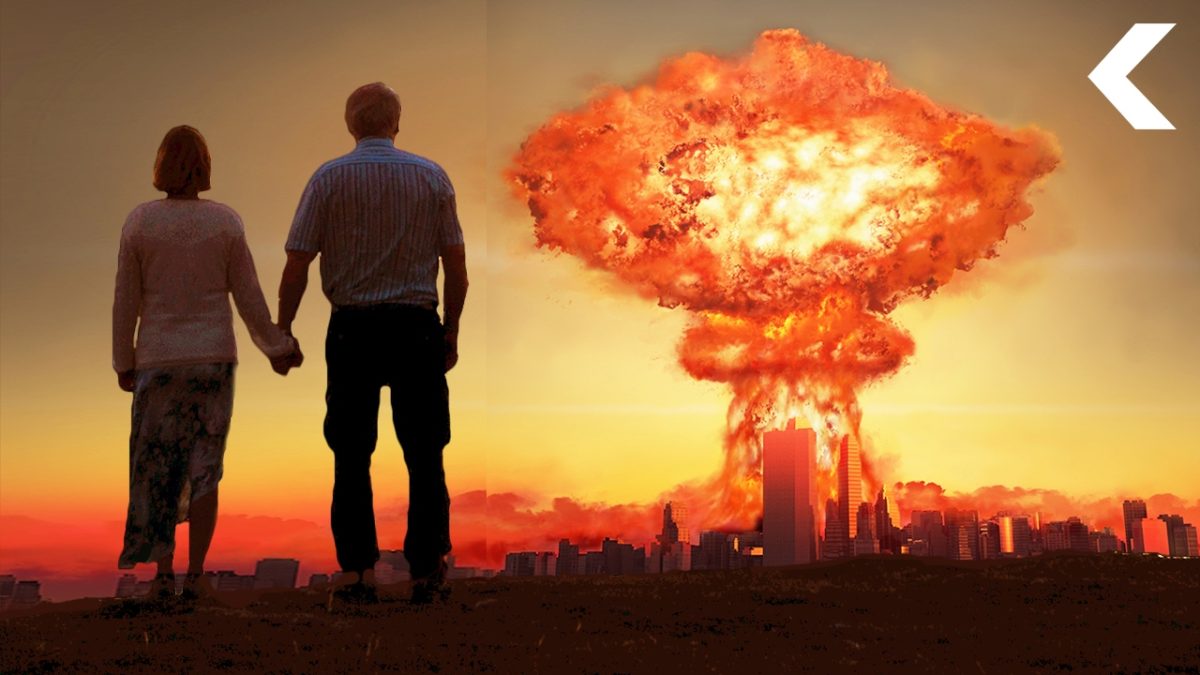
Many people thought that the end of the calendar year 2012 would mark the end of the world. Not only had it apparently been predicted by ancient Mayan astronomers that the world would end then, but Terence McKenna’s Timewave Zero program supported those predictions. This essay examines a terrifying possibility: that the world actually did end on December 21st, 2012 – we just haven’t realised it yet.
People have been conditioned to believe that if an end of world scenario arose, it would look a particular way. Nuclear war, comet strike, zombie virus or mass tsunami are the most popular examples, but we have been made to think that it would be spectacular and cinematic. Chest-rattling explosions and flashes of light and fire come to mind.
Therefore, when December 21st 2012 came and went, and no-one got engulfed in a firestorm, most people assumed that the world did not end, and that it was business as usual. However, there are other, much subtler ways for the world to end.
Leading up to the end of 2011, televangelist Harold Camping ran an extensive fear campaign about an upcoming apocalyptic event called the Rapture. This event would involve all of God’s chosen being “raptured” up into heaven, leaving us sinners behind.
Could something like this really have happened?
Since the end of 2012, many people have been struck with a sense that something is going wrong. It seems like something took a dark turn at some point in the recent past. Since then, there has been less kindness in the world – less light, love and laughter. Things seem to have become unusually grim and serious.
This is reflected in the rising suicide rates. The suicide rate in America has increased by 33% since 1999, and the rate in New Zealand is the highest since records began. Not only suicide, but phenomena correlated to suicide have also increased. There is more depression, more opiate addiction, more loneliness throughout all levels of society.
Some commentators have chalked it up to the lingering financial effects of the Global Financial Crisis of 2008, something which bankrupted many businesses and created mass unemployment. The problem is, of course, that the unemployment rate has since recovered: in America it’s an almost nonexistent 3.6%, and in New Zealand it is 4.2%. The malaise has not.
Many feel like we have been forsaken by God. It’s possible that the world really did end in this manner: God’s presence may well have withdrawn from the material world.
It’s possible that the world ended in the sense that the forces that constrained the evil and chaos of the world are no longer present.
Something like Camping’s Rapture may really have happened at the end of 2012. It may be, however, that instead of being pulled into the sky in rapture, those of us who had pleased God enough simply disappeared, their consciousness returning to God’s embrace while the rest of us continued our lives.
After all, we don’t know which of our fellows are conscious and which are not. So it’s entirely possible the consciousness of many people, perhaps a large percentage of people, withdrew from the material world and reunited with God, leaving the rest of us here.
The effect that this would have on the remainder of the world would be subtle, but over time it would become clear.
Absent a divine spark, people will come to make decisions based on the raw programming of their bodies. This means instincts and conditioning, with no higher functions. Apart from sheer intelligence, such people have no tools with which to moderate their behaviour. Not being conscious, they are incapable of using empathy. Metaphysical gold is absent.
Consciousness is essential for empathy because, without it, it’s impossible to truly imagine that another person is conscious, and therefore it’s impossible to realise that causing harm to that person causes suffering to their consciousness.
This means that raw animal lusts, particularly for wealth, status and women, start to reign. When they take over, concern for suffering caused to other people is thrown by the wayside, and the world becomes a much nastier place.
It could be that, on December 21st 2012, a significant amount of consciousness was withdrawn from the world, leaving the rest of us here in a place that had essentially ended.
*
If you enjoyed reading this essay, you can get a compilation of the Best VJMP Essays and Articles of 2018 from Amazon for Kindle or Amazon for CreateSpace (for international readers), or TradeMe (for Kiwis). A compilation of the Best VJMP Essays and Articles of 2017 is also available.
The Case For Cannabis: Prohibition Harms Social Cohesion
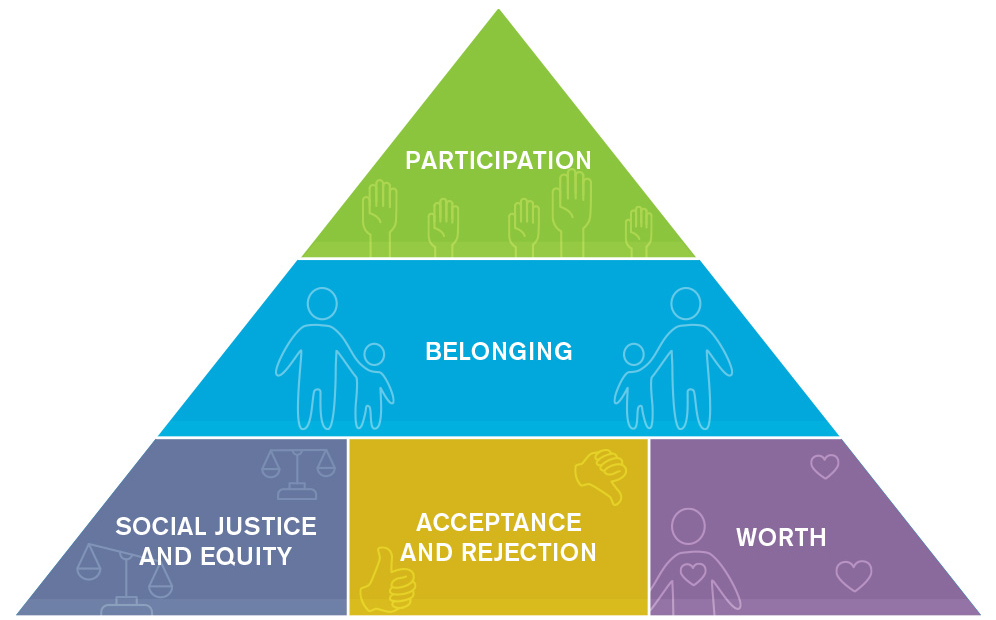
Cannabis prohibition does a lot of harm to various groups within society, as other articles here have shown, but it also has an effect on society as a whole. Not only does society have to pay for the cost of enforcing cannabis prohibition, but it suffers at a collective level the same harm done to individuals: as below, so above. As this article will examine, cannabis prohibition harms social cohesion.
Our society relies on co-operation between different groups at all levels.
One of the most important ways is the solidarity between generations. In order for the young to be willing to care for the old when the time comes, the youth have to feel some kind of solidarity with those older ones. They have to feel like those older ones managed the country in such a way as to leave them a worthy inheritance. They have to feel like the old cared about them.
As Dan McGlashan showed in Understanding New Zealand, there is a sharp distinction between young and old when it comes to support for cannabis law reform. The correlation between voting for the Aotearoa Legalise Cannabis Party in 2017 and being in the 65+ age bracket was -0.43 – not extremely strong, but strong enough to suggest that the average person in that age bracket is decidedly against cannabis law reform.
There are several reasons why a young person might feel that the generations before them had failed in their duty of stewardship, but the unwillingness to reform the cannabis laws are one of the foremost. For a young person today, the thought that the nation’s elderly are sitting back on a fat pension drinking whisky and chomping painkillers, while at the same time putting you in prison for growing a medicinal flower, seems obscene.
Given these reasons, why would the young not come to see the elderly as evil? The indifference of the elderly towards the suffering caused to the young by cannabis prohibition certainly appears evil to those suffering it. As a result, their coming to hate those pushing it on them is inevitable. And by such means, society is divided and conquered.
Cannabis prohibition doesn’t just divide society on the basis of age.
Understanding New Zealand also showed that the correlation between voting ALCP in 2017 and being New Zealand-born was 0.73, which is very strong. This is because cannabis use is an integral part of Kiwi culture – it brings Maoris and white people together as well as rugby and barbecues, and especially when it comes to younger demographics.
Because of the central role of cannabis in Kiwi culture, cannabis prohibition is something that pits New Zealand-born Kiwis against immigrants. This is a recipe for deep resentment, because this plays along a pre-existing fracture line in society. If the New Zealand-born would come to feel that it was only because of recent immigrants that they were not allowed to freely use cannabis, they could become very angry.
Neither is the damage done to social cohesion just a matter between different groups. Cannabis prohibition also destroys solidarity within groups.
There are occasions where people don’t get together because the illegal nature of cannabis means that some people don’t want to be associated with others. Many a party guest has been uninvited because the hosts were not sure that the guest would be comfortable with the cannabis being smoked there, or because the hosts didn’t want the guest bringing cannabis to their house.
In such ways, all manner of natural social bonds have been broken because one or the other party was a cannabis user. This isn’t just seen at parties but in romantic relationships and in the workplace too. If cannabis is illegal, then cannabis users will naturally not trust non-cannabis users and non-cannabis users will naturally not trust cannabis users. These divisions are so needless.
As mentioned in another chapter, cannabis prohibition has had a severe impact on people’s respect for the Police. But cannabis prohibition impacts other industries as well. Some people no longer trust their doctors because of their inability to speak honestly about the medicinal value of cannabis. Some people no longer trust journalists because of their past fearmongering and sensationalising over the issue. This loss of trust impacts social cohesion.
Worst of all, prohibition has caused some people to dislike their country and society, when that need not have been the case. This is especially true of those who have faced the wrath of the justice system.
How can a person respect a society that wants to put them in a cage for using a medicinal plant? How can a person respect the hypocrisy that sees hundreds of people kill themselves with alcohol every year, while at the same time targeting others for something much less harmful? Cannabis prohibition is such a poor idea that it cannot be enforced without stoking massive anger and resentment.
All this anger and resentment has had an injurious effect on social cohesion. Prohibition has caused people to dislike and mistrust each other when they otherwise wouldn’t have done so. This has had the total effect of making society worse. The only way to fix it is to legalise cannabis.
*
This article is an excerpt from The Case For Cannabis Law Reform, compiled by Vince McLeod and due for release by VJM Publishing in the summer of 2018/19.