

Want Free Speech In New Zealand? Better Cultivate Your Capacity For Violence

When Posie Parker tried to speak at Albert Park on Saturday, and was attacked and silenced by a frenzied mob of far-left extremists, a dark and cold wave washed through the nation. Many Kiwis, lost in the blissful ignorance for which our country is reknown, had little idea of how precarious our rights to free speech had become. On Saturday it was driven home to us by a multitude of shrieking, hissing lunatics.

The anti-Parker protesters had been emboldened by a number of wins for the authoritarian side in recent years.

One of the first was shutting down VJM Publishing’s ability to sell ‘It’s Okay To Be White’ t-shirts on TradeMe. This was a double win for the globalist authoritarians, because not only did they silence someone who was satirising them, but they also established that they could silence their enemies at will by telling lies (there is nothing “white supremacist” about saying that it’s okay to be white).

Another big win was silencing Stefan Molyneux and Lauren Southern when they attempted to speak in Auckland in 2018. Molyneux and Southern had some redpills to share about the nature of mass immigration from certain cultures, so the globalists whipped up a crazed mob in order to stoke fears of violence, when they then used as an excuse to shut down the Canadians.

The authoritarians struck again when VJM Publishing’s best-selling book, Clown World Chronicles, was banned from TradeMe on false grounds. It seems that you can be an admitted far-leftist and former terrorist fundraiser, and still TradeMe will delist a book on your word.

These examples set the precedent: the far left decides if you get to have free speech or not.

Emboldened by these victories against free speech, the far left expected that they could shut down Posie Parker in Auckland. And they were correct. On Saturday a mob – incited to hysteria by a week of mainstream media scaremongering – attacked the rotunda on which Parker was to speak, and drove her away under Police escort.

It’s now apparent, if not publicly spoken, that your rights to free speech only exist if you have political power.

Such events underline the genius of Brian Tamaki. He never gets silenced, because he effectively travels in a gang, and this gang provides security for his talks. His entourage consists of dozens of high muscle mass males, most of who also have a past history of violence. They surround him like beta chimpanzees surround their tribal chief. Anyone mocking him for the crudeness of his approach is a fool; he gets to speak where few others do.

New Zealand is now much like an Anglo Somalia where only warlords have any true freedom of speech, and that only on account of their command of a capacity for extreme violence. Thus, anyone expecting to use their supposed right to free speech in the future best start lifting weights, training in martial arts and making friends with violent people.

The contrasting examples of Parker and Tamaki prove that anyone who wants the right to speak freely in New Zealand needs their own gang to protect them. So if there’s anyone out there who dreams of providing a genuine alternative to the political Establishment: don’t start with a manifesto or a million-dollar donation. Start by assembling a fighting community of high muscle mass men who are willing and capable of following orders.

If a fighting community of honourable and loyal men sounds like something out of the 1920s, that’s because it is.

In the same way that German Communists in the 1920s were inspired by the Bolshevik Revolution in Russia and the German Revolution of 1918-19, the far-left extremists of 2023 have been emboldened by the victories of recent years. Just like in Russia, ultimate victory for the far left means physically destroying the people they hate.

Antifa terrorists have been known to stalk freethinkers and attack them with hammers and metal bars, as they did on six separate occasions in Hungary last month. This is the sort of thing that any free-thinking person (right-wing or otherwise) now needs to deal with.

If you want to exercise your free speech in New Zealand today, you need to get fit and strong. Lift weights. Get used to receiving blows to the head. Study the basics of all the major martial arts. Find like-minded men and create bonds of solidarity with them through ritual and spending quality time with each other. When you have a group, learn some basic drills.

Today’s Albert Park protests taught us that anyone who wants to prevent New Zealand from sliding into tyranny needs to study the Laws of Iron.

*

If you enjoyed reading this essay/article, you can get a compilation of the Best VJMP Essays and Articles from 2021 from Amazon as a Kindle ebook or paperback. Compilations of the Best VJMP Essays and Articles of 2020, the Best VJMP Essays and Articles of 2019, the Best VJMP Essays and Articles of 2018 and the Best VJMP Essays and Articles of 2017 are also available.

*

If you would like to support our work in other ways, subscribe to our SubscribeStar fund, or make a donation to our Paypal! Even better, buy any one of our books!

The Choice Between Fear and Love

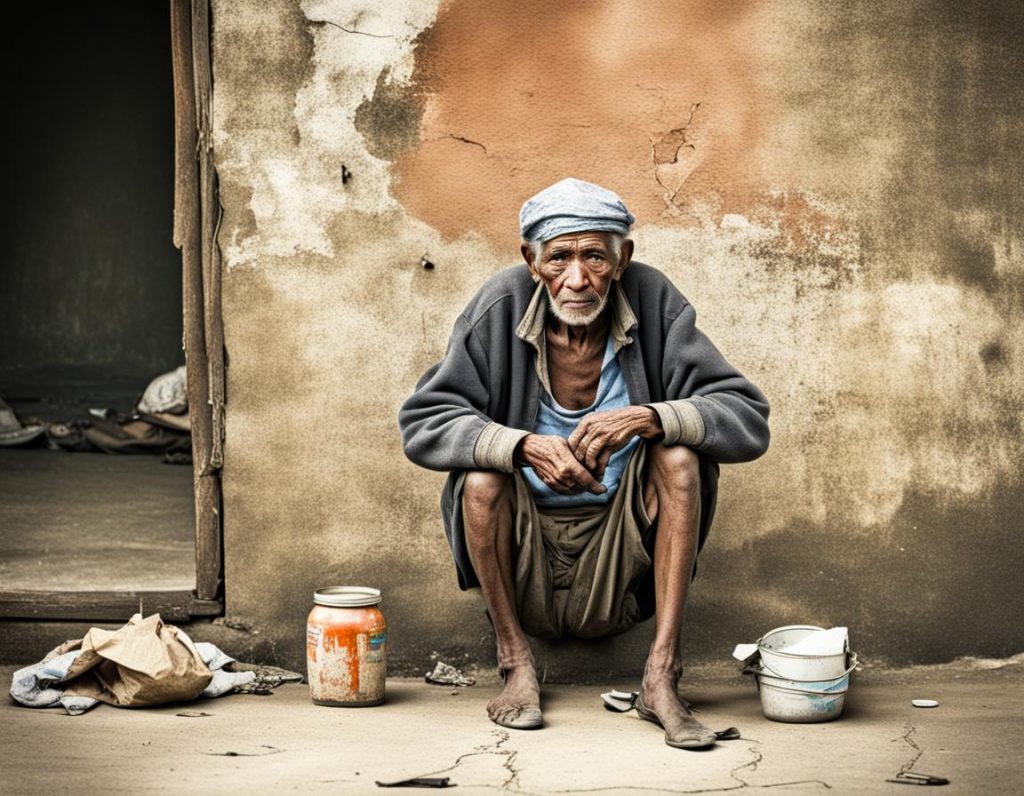
The choice between love and fear is the most vital choice available to us as human beings, although it is typically misunderstood or misconstrued. Fear and love don’t always look like you would expect them to.

Fear we equate with horror movies, or material fears pertaining to the physical world. You may be surprised just how many of these inner machinations of fear are purely ethereal or intellectual- the mind simply being afraid of ideas that it has construed as threatening.

Love, too, is greatly misunderstood. We often characterise it as arriving in the form of affection, but this is just our human patina colouring our world. If we are lacking an existential sense of connection, then we feel we need to be affirmed to be worthy or loved, so we continue to seek this outwardly in manifold ways, most of which are merely fantasies. We find ways to move in the world that encourage other people to tell us we are special, we seek out soulmates and endlessly outsource our need for specialness to others, when really all that is needed is a supremely deep dive inward.

The game of fear cannot be won. To engage it at all represents an inherent loss, hence the state of the world. There is no hierarchy within fear – the bully or tyrant is just as much a victim as those he abuses. To step into the game of fear is therefore to choose to court misery. It cannot be foisted upon you; it can only be chosen. This is because we are ultimately responsible for our own states of relative wisdom or ignorance.

Fear is regularly chosen out of conditioned habit and miseducation. Recognize every small decision of fear, and choose to disengage from that illusion into the truth of love where you already are, the truth of I AM. Awareness is the golden key to this. The truth of who you are cannot be trapped in darkness against your will.

The game of love, by stark contrast, cannot be lost. To choose it represents an inherent victory. There is no hierarchy in the participation of the love of the divine. To enter it, in other words, to choose to engage it, is to experience immediate success. You are not granted external reward – it constitutes its own reward. It must be chosen eventually, because the only other choice begets sorrow, loneliness and misery. Real love is never separate, real love is shared amongst all or it is nothing.

Look at all the tiny ways fear continues to dominate our thoughts, and therefore our lives. The great teachers consistently taught that the kingdom of heaven, whether they called it ‘moksha’, ‘liberation’ or ‘nirvana’, was always all around us, but they were also careful to add that no one is typically willing to look at it, because the price would be giving up all that you think you know. What we are afraid to give up in this equation is the paltry kingdom of our own making, the constellation of our egoic arguments, arrogant conclusions and our blithe confidence about the way the world appears to us at this level.

That is because those who do not understand their true nature are loath to look through the eyes of anything but fear. The opposite of this eternal teaching is simultaneously true – hell is all around us, but none can understand that it is both temporary and illusory. In this self-imposed blindness, people resort to the only solutions they have learned in their life-long ignorance, all of which serve to dig them into an ever-deeper hole. For one who chooses fear, suffering is their constant companion. Is there any among us who has ears to hear this timeless message? This is what the teachers of the past across the globe have implored us in unison.

There is no moral ‘ought’ in choosing love over fear, or unity over separation. This is simply the choice that is always freely available to you. If you know your true nature, the light that you are doesn’t really have much of a choice anymore, because what is good chooses the good, and what is light moves toward the light. Do you choose your thoughts, actions, and attitudes to confirm the deeper nature of love and unity? Or, do you choose that which separates us indefinitely from that simple realization? With what ongoing result? No one will judge you for what you have chosen – they don’t need to, because it would be of no use. Pointing out how you were wrong cannot make love feel better about itself, because love is not an insecure ego.

Are you choosing the love that is the source of all, or are you choosing the denial of love which is fragmentation and disunity? Are you choosing the same thing over and over and somehow expecting miraculously different results? You are free to sow your fields with any seeds you wish, but don’t sow them with nettles and expect a bumper crop of apples.

Fear is above all a prodigious liar. It shows you not only glimpses by way of mental images, but also glimpses of projected feelings pertaining to what your choices and actions might lead to, such as the projected feeling of ultimate contentment, peace, or sweet success. Furthermore, because it was born inside your mind, it knows your weaknesses. It promises you results entirely different than it is capable of producing. Most people are unaware that it was fear that glued together their entire worldview.

The ongoing purpose of fear is to create more fear. Like love, it is self-propagating. Do not believe this, because that would be of no help to you – observe it in your thoughts and actions and experiment with it. Have you ever seen an evangelist spread a message of fear? Why are those who promote fear so loud and obnoxious? Why are the peaceful, tolerant, compassionate and inclusive so quiet? Because they don’t stand on soap boxes exhorting change from everyone around them on pain of exclusion. The message that ‘all is well’ is an exceptionally quiet but powerful message. It is extremely difficult to make that out amongst the clamour of the deluded masses shouting themselves hoarse.

People nevertheless continue to feed fear. This is because in some way, those empty promises about the survival of the frightened fragment you had assumed yourself to be have been believed and invested in. You repeated the choices again and again, which bought you more of the same. There is no use in claiming you were swathed in darkness of ignorance because what is past is past – what counts is what you are choosing now in the light of awareness. Perhaps you were ignorant and in darkness, but you are not now. This is what is meant by putting one’s hand to the plough and not looking back.

This is also why the great teachers and mystics placed such an emphasis on the dictum ‘know thyself’. The contents of your soul need to be made clear to you, no matter what. It is the number one primary good to be self-knowing, in other words to be ‘awake’. Being awake has nothing to do with being a walking encyclopaedia of conspiracy theories. It has to do solely with your access to the depth of your own truth in the flow of this eternal now, moment to moment.

Thankfully, for many of you reading this, the time for choosing fear has actually ended. Further investment in fear is no longer tenable in your life, and the deeper part of you knows this to be so.

Examples of fearful thoughts:

Get them to like you, then you will feel conditionally worthy.

Put yourself first, and you will be safe.

Use reverse-psychology, then you can manipulate your partner into giving you more of what you want.

Tell your partner you can change or become a different person, then they will not leave you.

Treat them respectfully now so that they will look after you when you are in trouble.

Do what they say you ought to, and then you will fit in and not be excluded.

Make them think your role is more important than it is, then they will respect you.

Bury the problem and ignore it for long enough, and it will leave you alone.

Notice how many of these are consequentialist in nature. Fear projects horror into the future and asks you to fritter away the only thing that is real, the ‘now’, in cascading delusions. It casually disrespects the well-being of others in favour of short-sighted self-preservation and self-promotion. Anything that depends upon a projected result in this way does not touch the realm of love, which is about service and the inherent value of doing, not consequence. I would rather refrain from giving too many examples of love, because I don’t wish to imply that you are being given a moral prescription, however, take the following example. A mother bird pushes her fledgling out of the nest because she trusts her offspring is mature enough to spread its wings and attempt flight. Is it bad to push, or is it loving to respect what another is capable of?

The same kind of love may be available to you when for example your friend or spouse refuses to agree with your claim of being a victim to a particular situation. Maybe that doesn’t feel immediately nice, as how we often portray love, because you aren’t being shown affection. Despite this, maybe you really are being supported and given exactly what you need for your continued growth and liberation. Such is love; it doesn’t always look the way we think it will, and sometimes it can appear less like being wrapped and swaddled and more like being dunked into cold water.

If you knew you were eternally loved, worthy, valid, and included, and you were never once considered by the divine source to be a candidate for exclusion, what would you do in light of that unconditional love and acceptance?

The traditional argument is that if there were no tough rules, people would just do whatever they want. Don’t forget that the only reason tough rules are even introduced in the first place is in response to an already dysfunctional society poisoned by the very institutions placed to protect it. Throwing more dysfunction into play will do nothing to heal the core failure.

A society can function perfectly without harsh rules if it is founded upon love. This has nothing to do with dancing around in circles wearing daisy chains saying ‘anything goes, man’. Love is not laissez-faire; it is intelligent, cohesive and wise. It attends to specific situations with a high respect for context, because love means that aware attention is given, unlike the vacuous bureaucratic processes we are all-too familiar with. If society is founded upon separation and inequality, then those harsh rules will convey the optical illusion of their necessity.

Disengage fear and you are in your authentic, natural state, the great ‘I am’. Unbeknownst to almost everyone, this is the core message that the world’s highest teachers have brought to us. They all had to skirt around this core message, because it was so simple that people wouldn’t accept it. The human mind craves narrative and substance around messages, hence all of the mystical parables and stories we have inherited. The kingdom of heaven is at hand, not reserved for those who are morally good and conform to authority, but for those who remember their heritage in spirit and choose to leave fear behind along with all the other things of the past that did more harm than good, such as bloodletting and prefrontal lobotomy.

The very remembrance of this heritage is sufficient to elicit in us all of the virtues that the world traditions have valued and promoted – not acting so as to become good, but because this is how goodness itself naturally acts when given the appropriate encouragement. This represents the final layer of self-inquiry and self-discovery – that we in our natural state are divinely free and unblemished. The ego fearfully misinterprets such a statement as mere arrogance, but what it really represents is the final challenge of love to confront and therefore understand who you truly are – this is the timeless meaning of the dictum ‘know thyself’. This vital ‘I AM’ marks the eternally available choice to participate in Love, which is by the same turn to permanently deny the movement of fear.

*

Simon P Murphy is a Nelson-based esotericist and philosopher, and author of His Master’s Wretched Organ, a brilliant collection of weird fiction stories.

The Concept Of Christian Nationalism Is Nonsensical

With the release of Andrew Torba’s book titled ‘Christian Nationalism’, the subject is now prominent in the popular consciousness. Kanye West’s recent appearances in the alternative media, with assistance from Nick Fuentes’s America First channel, boosted the concept. But Christian Nationalism is nonsensical, an oxymoron.

To begin with, Christianity and nationalism are direct contradictions.

Nationalism is all about bonds of blood and soil. The word ‘nationalism’ shares a root with the words ‘Nature’ and ‘natural’. Nationalism is the natural form of organisation for an extended collection of families. Indeed, a nation can be considered an extremely extended family, in the sense that all members of it are related, however distantly.

Christianity, by contrast, is all about bonds of faith. The Christian Bible states that bonds of blood and soil are meaningless because all are one in Rabbi Yeshua. Christians are even encouraged to turn their backs on their own families if those families don’t worship the magical rabbi: they must hate non-Christian members of their own family to be worthy.

Rejecting one’s own blood because of a Jewish religion is utterly incompatible with nationalism.

Many Christians believe that their non-Christian ancestors are suffering eternal punishment as a result of their refusal to worship Rabbi Yeshua. The Christian belief that non-Christians are doomed to an eternity in Hell also applies to their own kin. They feel no shame at holding such contempt for their own people.

Neither do Christians feel any shame at their preference for sharing an eternity in Heaven with hordes of 70-IQ Africans over sharing an eternity with their own kin. Cult before kin is the motto of the Christian. This is fundamentally a traitor’s mindset. It’s the same mentality that led to acts of treason such as those committed by the Rosenbergs or the Cambridge Five.

If white Christian Nationalists are asked whether they would prefer a non-Christian white nation or a Christian non-white nation, they will opt for the latter. Some so-called Christian Nationalists would be happy for every non-Christian member of their own nation to be replaced with Africans, as long as those Africans were Christian.

Christians are more than happy to knife their own nationals in the back if they believe it will further their cult. This is one of the main reasons why Christian churches and NGOs are obsessed with refugee resettlement. Every sub-Saharan Christian they can import means another kick in the guts for nationalist sentiments, which depend on solidarity to exist, which itself depends on kinship intensity.

The deeper motivations behind this new wave of Christian Nationalism are twofold.

The first is to bring back theocracy. Christian Nationalists aren’t honest enough to admit that they want to go back to theocracy, so they hide it behind the label of nationalism. The truth is that they don’t want nationalism, they want theocracy. To them, the Dark Ages were good times: people may have been forbidden to read, but at least they were all Christian.

Christian Nationalism is identical to theocracy in almost every respect. Women are to be subjugated, non-Christians are to be banned from public office, pre-Christian spiritual traditions are to be destroyed, and Christianity is to be forced on everyone consenting or otherwise, as Christians did to Europeans between the Fall of the Roman Empire and the Renaissance.

The second is to lure nationalists into Christianity. Being a universalist cult, and having the tenet that everyone on Earth will be made to worship Rabbi Yeshua whether they like it or not, Christianity endeavours to insert itself into every possible niche. So in the same way there are Christian Anarchists, Christian Communists and Christian Capitalists, there are also Christian Nationalists.

Christian Nationalists make a strenuous and immensely dishonest effort to shoehorn Christianity into nationalism. They will claim that all of the nation’s problems exist because of an absence of Christianity. They will twist any line from the Christian Bible to create the appearance of support for nationalism, even lines like Isaiah 40:17, which states that national divisions are as nothing to Yahweh.

They will even go as far as claiming that Christianity is a white supremacist movement if they think this will gain converts. Those who put on this act are in the habit of calling critics of Christianity Jews, even when it’s the Jewish origins of Christianity that provoked the criticism.

Ultimately, then, Christian Nationalism is merely the latest variant of the Abrahamic hydra. Christians will not rest until all competing religious or spiritual traditions are destroyed, and pretending to be nationalists is just the latest way they plan to wreak this destruction. But Christianity is, and always will be, a universalist cult, beholden to globalists, and in opposition to all natural interests.

*

If you enjoyed reading this essay/article, you can get a compilation of the Best VJMP Essays and Articles from 2021 from Amazon as a Kindle ebook or paperback. Compilations of the Best VJMP Essays and Articles of 2020, the Best VJMP Essays and Articles of 2019, the Best VJMP Essays and Articles of 2018 and the Best VJMP Essays and Articles of 2017 are also available.

*

If you would like to support our work in other ways, subscribe to our SubscribeStar fund, or make a donation to our Paypal! Even better, buy any one of our books!
Mythologising Retirement

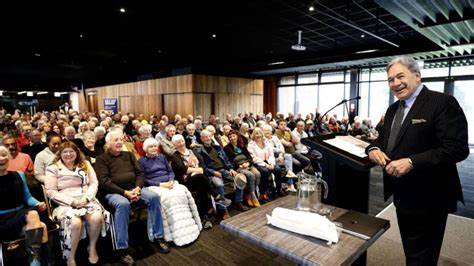
Such a great portion of our human lives involves paid work. There is an important sense in which we have been convinced that the ultimate goal of work is to pay off our debts, only to then retire. There is value in challenging the assumptions beneath this kind of myth, because so much of our lives are invested in what is at stake. Unless we come to a very clear understanding of what it is that we feel and what the outcomes are of our participation in this life, we will never arrive at any kind of satisfactory point, nor will we have divined any beneficial understanding of our place in the world.

Firstly, we have inherited a cultural premise that tells us that ultimate well-being can be postponed to the future. This is a very large assumption with far-reaching implications.

Your learned capacity to be happy in the future is a clear reflection of how you have learned to be happy now. Obviously, when the future seems to have arrived, that will also be ‘now’, so your appreciation of your present environment must be managed skilfully. 

Have you ever come across people who are retired who cannot stop for one moment? The garden, the housework, the motorhome. These people are continuing the education of a lifetime of work, which is an ethic of keeping busy. People will object: ‘What is wrong if this is what they want?’, but do we really know what we want? Do we know what is best for us, and where we may have misunderstood?

For example, there is hidden assumption that many people have accepted which is that a lifetime of work is also a lifetime involved with suffering, therefore retirement from working life will also equate to retirement from a lifetime of suffering. Just how true is this assumption? It is true that much work, being the expenditure of effort under often physically or mentally stressful conditions, can promote much in the way of personal suffering.

What a lot of people fail to see is that leaving daily work behind is allowing the departure of only one source of suffering, it is not a salvation from suffering as a whole. In fact, the point at which we are accepted to have earned the right to withdraw from a lifetime of work is also the same point at which our mind as well as our physical body is beginning to deteriorate, marking the onset of all kinds of potential physical and medical challenges.

Suffering still follows at our heels from other sources, most notably the illness and death of friends, peers and loved ones who are also subject to the ravages of time. In this respect, retirement enjoys the benefit of a kind of afterlife mythology, in which all of our pain and effort on a daily basis will one day be ultimately vindicated and returned in full measure.

This raises an alarming question: just how much daily tolerance of misery does this mythology support? How many of us are laboring under the illusion that all of our effort is guiding us toward somewhere ultimate where we will have eternal peace and we can finally kick up our heels?

I share a couple of examples of this from my own life which I believe touch upon something relevant here.

I have a friend whose father is in his seventies, and despite remaining reasonably physically fit, he still works himself to the bone every day of his life. He is still in full time employment, despite that fact that he has been given the nod of approval that he could leave his work if he wanted to. Now, you might say ‘If he is doing what he wants to, why not?’ And I would naturally agree, except that all he ever seems to talk about is how much of a welcome change it is going to be when he finally retires.

This poses an odd kind of paradox in which he is on the cusp of retirement, and really past his culturally accepted retirement age, but the actual notion of stopping work seems to terrify him. His insistence on the myth of retirement has been well noted – he has waxed eloquent about the benefits of not having to get up in the morning, to not have to do anything, to have the freedom to kick back with a beer in his hand and watch TV (incidentally, this mythology is also recounted in minor form in the notion of the weekend, almost like a mythic foretaste of Valhalla).

The sad irony is, these are things he has not given himself the permission to enjoy. He may literally never arrive at the point at which he is comfortable with letting go of the ethic of early rising and hard work before he dies. To have lived this way for over seventy years, with no substantial appreciation for being able to allow himself to get a real break, is quite a confounding and yet exceptionally ubiquitous social phenomenon.

We could surmise it comes down to a person’s character and their ethos of being a hard worker, which unsurprisingly is a highly respected social value in any country. It could also be that like the rest of us, he has been successfully indoctrinated into a program of lifelong drudgery, being strung along by an imaginary dangling carrot.

Another example I will give was when I was working out of town one day, an older man came up to me struggling to walk with a stick and specifically wanted to tell me his story. We were the only two people around for at least a kilometer, and he specifically made the effort to approach me from a distance of about three hundred meters.

He told me that he was a keen hunter and fisherman, and that shortly after retiring, he had experienced a stroke which meant that there was no aspect of his retirement he felt he could enjoy. He told me that he worked his whole life, expecting to be able to retire and do what he wanted, except now he felt he had been cheated out of it.

While I don’t believe there is nothing he could have left of value in his life, the fact remains that we do place an inordinate amount of good faith in the application of effort over decades of our lives hoping to have something tangible to show at the end of the process. How does this contribute to us putting off our lives now, and how are we foregoing our responsibility to live wisely and skilfully today?

Are we collectively so enamoured by the prospect of the future holding some form of salvation, either material or spiritual, that we can justify subjecting ourselves to misery today? What would we do differently today, what changes would we be willing to allow in our lives if we discovered the possibility that our imagined future with its ease, relaxation and distance from suffering would never eventuate?

*

Simon P Murphy is a Nelson-based esotericist and philosopher, and author of His Master’s Wretched Organ, a brilliant collection of weird fiction stories.

*

If you enjoyed reading this essay/article, you can get a compilation of the Best VJMP Essays and Articles from 2021 from Amazon as a Kindle ebook or paperback. Compilations of the Best VJMP Essays and Articles of 2020, the Best VJMP Essays and Articles of 2019, the Best VJMP Essays and Articles of 2018 and the Best VJMP Essays and Articles of 2017 are also available.

*

If you would like to support our work in other ways, subscribe to our SubscribeStar fund, or make a donation to our Paypal! Even better, buy any one of our books!